

 English
 日本語
 Español



Shen Yueqiao — After-Sales Quality Support Supervisor

Home / Author / Shen Yueqiao — After-Sales Quality Support Supervisor / Ice Silk Gel Memory Foam Sponge Pillow: Cooling Comfort, Adaptive Support, and Custom Manufacturing Excellence
Product Category
NEW Category
Contact us
Ice Silk Gel Memory Foam Sponge Pillow: Cooling Comfort, Adaptive Support, and Custom Manufacturing Excellence
Choosing the right pillow is an important part of creating a comfortable and supportive sleep environment. A pillow must do more than provide softness. It should help maintain a natural head and neck position, release pressure, manage heat, remain comfortable through repeated use, and complement the overall style of a bedroom or hospitality space. The Ice Silk Gel Memory Foam Sponge Pillow has been developed to address these requirements through a combination of slow-rebound memory foam, scattered sponge filling, cooling ice silk fabric, and a practical rectangular design.
This product is positioned within the shredded foam pillow category, but it offers a more sophisticated structure than a basic loose-fill pillow. Its design combines a high-density memory foam core with shredded sponge material to create a balance between stable support and flexible comfort. The memory foam conforms to the curves of the head and neck, while the scattered filling introduces more air movement and a lighter, fluffier sensation. The result is a pillow intended for adult single-person use in homes, guesthouses, hotels, and other sleep environments.
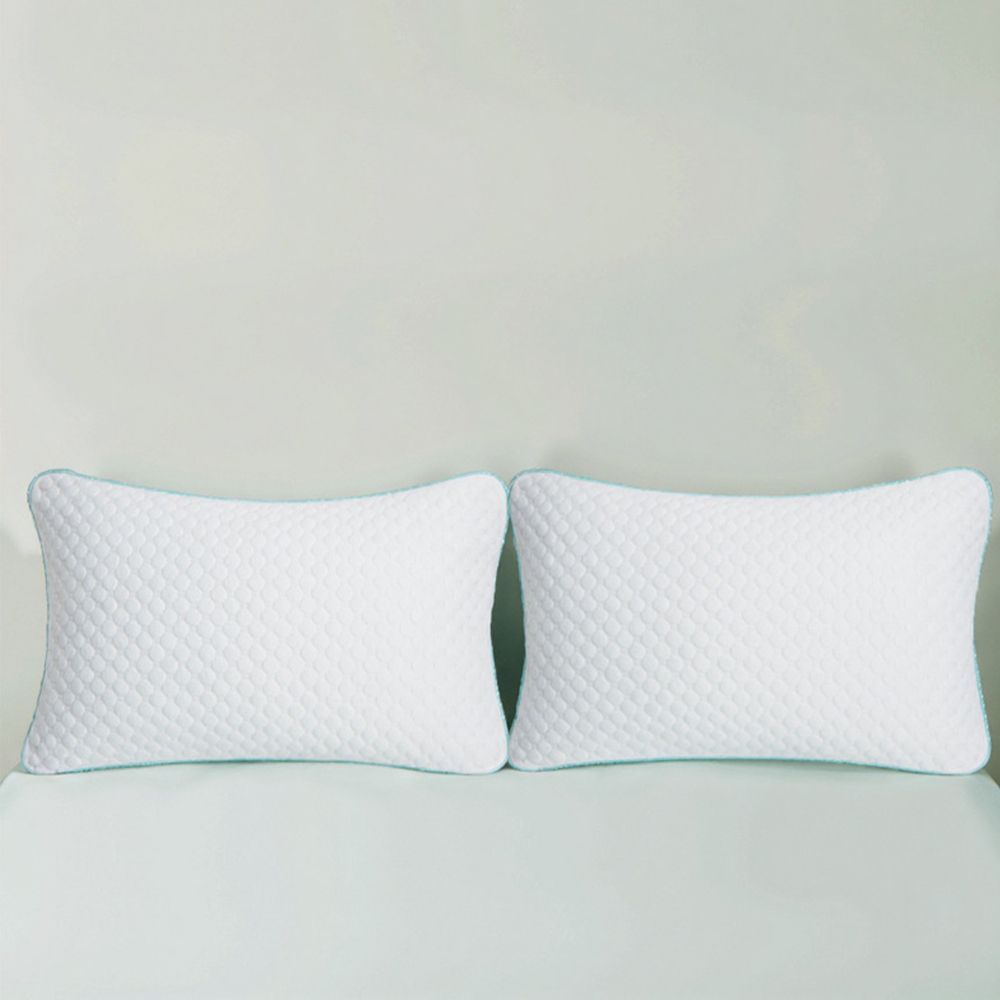
The pillow measures approximately 76 cm × 50 cm × 12 cm and weighs between 0.55 kg and 1 kg. Its 12 cm core height provides a substantial support profile for many adult sleepers, while the rectangular shape offers broad coverage across the sleeping surface. The outer appearance features a light blue and white gradient with a three-dimensional geometric quilted texture. This visual treatment allows the pillow to coordinate easily with modern bedrooms, minimalist interiors, guest rooms, and hotel bedding collections.
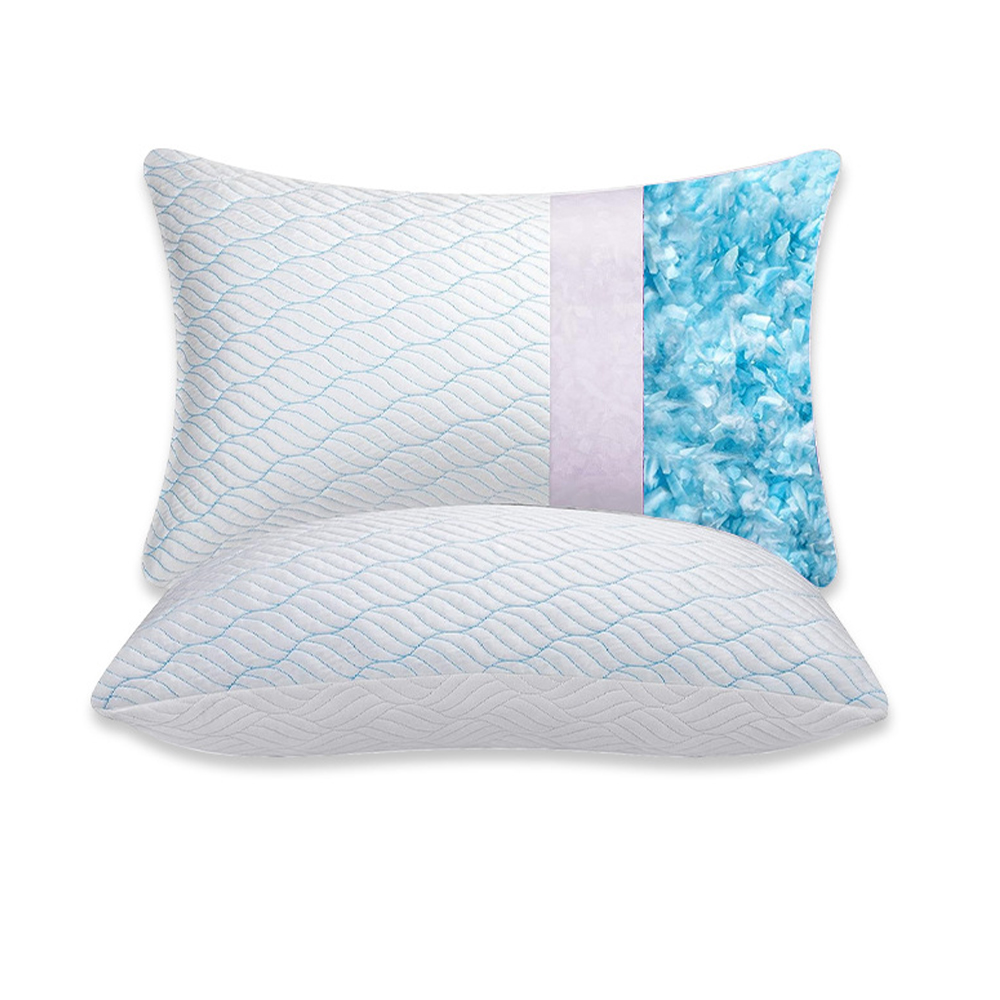
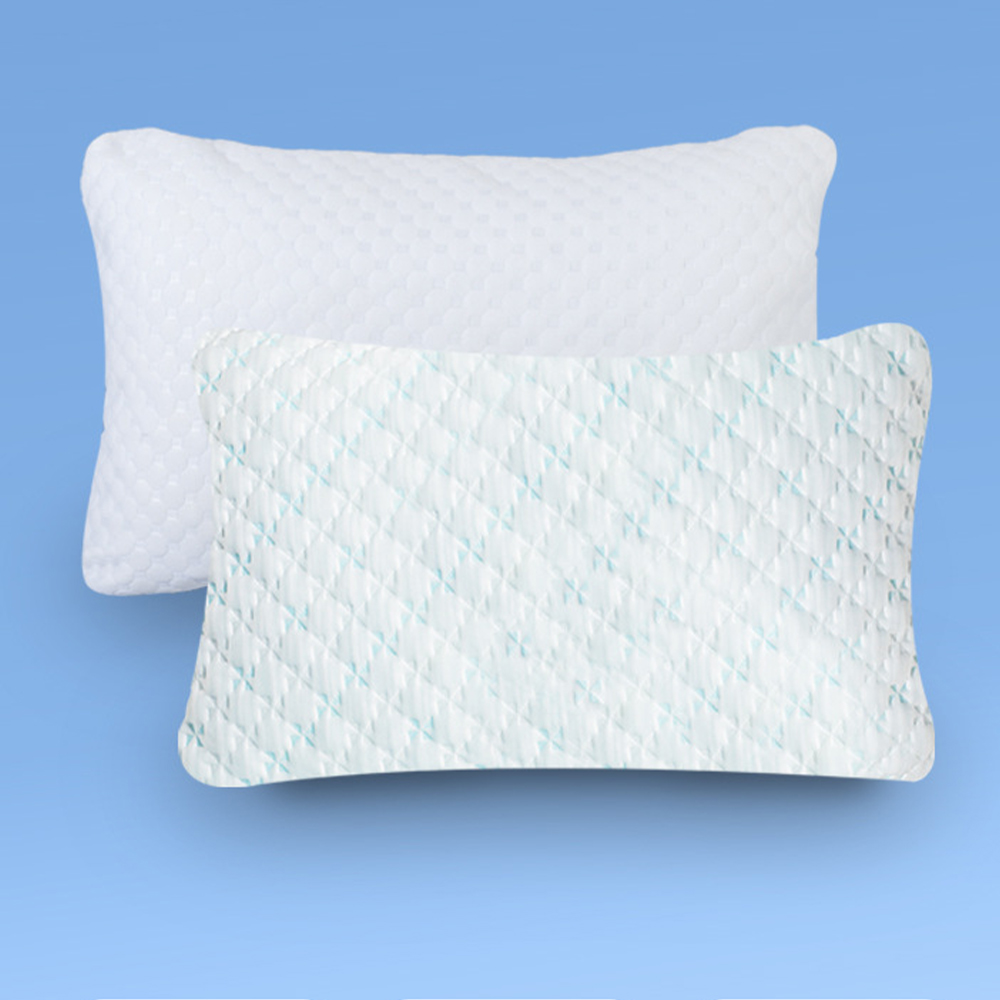
Ice silk gel memory foam sponge pillow
Why Pillow Construction Matters
A pillow’s performance is influenced by several factors, including the type of filling, the density of the material, the cover fabric, the shape, the height, and the way internal components interact. A pillow made from only one material may perform well in one area but have limitations in another. For example, a solid memory foam pillow may provide consistent support but can feel warmer than a highly ventilated fiber or shredded-fill pillow. A very loose fiber pillow may feel soft and airy but may not provide enough stable support for the neck.
The Ice Silk Gel Memory Foam Sponge Pillow is designed around a hybrid approach. Its slow-rebound memory foam provides a supportive foundation that responds gradually to body pressure. The scattered sponge filling helps reduce the dense, closed sensation sometimes associated with solid foam products. At the same time, the ice silk fabric adds a smooth surface with a naturally cool hand feel. Each component contributes a distinct function rather than depending on one material to meet every comfort requirement.
This construction is especially relevant for sleepers who prefer a pillow that feels soft and enveloping without becoming completely flat. It is also suitable for people who are sensitive to heat or who tend to sweat during warmer seasons. By combining conforming support with improved airflow, the design attempts to create a more balanced sleep experience than conventional single-layer pillow formats.
Core Advantage: Slow-Rebound Memory Foam Support
Memory foam is valued for its pressure-responsive behavior. When the head rests on the pillow, the material gradually adjusts to the contours of the head and neck. This allows the pillow to distribute pressure across a broader area rather than concentrating it at a few contact points. The slow-rebound characteristic also allows the material to return to its original form after the load is removed.
In this pillow, the high-density memory foam core is intended to provide a stable support base. The core helps prevent the pillow from immediately collapsing under the weight of the head. This is an important advantage over very soft loose-fill products that may shift rapidly during the night. A more stable base can help the pillow maintain its general height and shape during use, supporting a more consistent sleeping position.
The gradual response of the foam can be particularly comfortable for the neck area. Instead of creating a hard barrier, the material gently follows the body’s contours. This creates a pressure-relieving sensation while still retaining enough resilience to support the head. The result is a supportive feel that is softer and more adaptive than traditional rigid foam or hard synthetic filling.
Another benefit of slow-rebound foam is shape retention. With proper use and care, the material is designed to return toward its original profile after compression. This helps the pillow remain useful over a longer period compared with low-resilience materials that quickly become permanently flattened. Actual service life depends on factors such as usage frequency, indoor humidity, washing practices, and storage conditions, but the material selection provides a strong foundation for long-term performance.
Support Without Excessive Firmness
Support and firmness are not identical. A pillow can be firm but poorly shaped, or soft but sufficiently supportive if it distributes pressure effectively. The slow-rebound core in this product is intended to provide structural support without creating an excessively hard sleeping surface. The addition of scattered sponge filling further softens the tactile experience and helps create a more cushioned transition between the head and the main foam structure.
For adult users, the 12 cm height offers a relatively substantial profile. The appropriate height for an individual depends on sleeping posture, shoulder width, mattress firmness, and personal preference. Side sleepers often prefer more height to fill the space between the head and shoulder, while back sleepers may prefer moderate support. Stomach sleepers commonly require a lower profile. Because comfort is personal, the stated dimensions should be treated as a reference rather than a universal recommendation.
Cooling Ice Silk Fabric for Warm-Weather Comfort
The pillow’s outer fabric is described as ice silk, a material selected for its smooth texture, breathable feel, and cooling sensation when first touched. The fabric is designed to feel comfortable against the skin and can help reduce the stuffy sensation often associated with warm bedding. This makes it especially suitable for summer use, warm climates, air-conditioned rooms, and sleepers who are prone to sweating.
The cooling effect of a fabric is influenced by its surface smoothness, thermal conductivity, moisture behavior, and contact with the skin. A smooth textile can feel cooler because it creates a clean, even contact surface. The pillow cover also works together with the internal filling. A cooling cover alone cannot eliminate all heat, but it can improve the first-touch experience and contribute to a more comfortable microclimate around the head.
Compared with ordinary brushed or heavily textured pillow fabrics, ice silk offers a lighter and smoother surface sensation. This can be an advantage for users who dislike rough or overly warm materials. It also gives the pillow a clean visual appearance that supports both residential and hospitality applications.
Breathability and Moisture Considerations
Breathability is one of the central design objectives of the pillow. The scattered sponge structure creates spaces inside the filling, helping air move more freely than it may in a completely compact foam block. Improved internal circulation can assist heat dissipation and reduce the feeling of trapped warmth. The structure also contributes to the pillow’s light and fluffy character.
Breathability does not mean that the pillow is waterproof or immune to moisture accumulation. Users should still use appropriate bedding protection and follow care instructions supplied with the finished product. Regular ventilation, a dry sleeping environment, and proper laundering of the removable cover, if included in the final configuration, can help maintain freshness.
For hotels and guesthouses, breathability can be an important part of the guest experience. A pillow that feels fresh and cool at first contact may improve perceived room quality, particularly during warm seasons. The clean blue-and-white color scheme and quilted surface also support a visually hygienic impression when used with coordinated bedding.
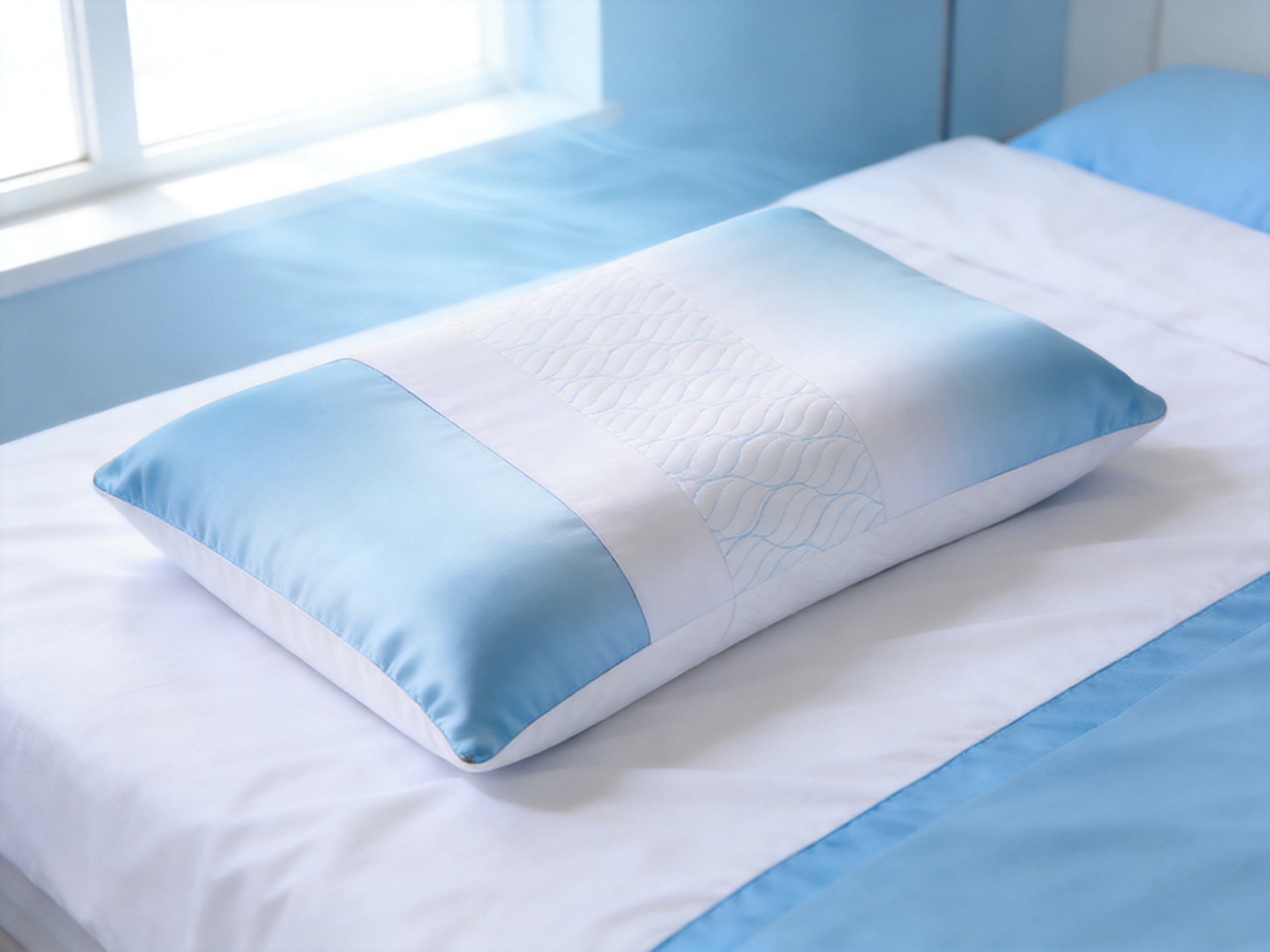
Hybrid Filling: The Balance Between Stability and Fluffiness
The scattered sponge filling is one of the product’s most important differentiating features. Traditional solid foam pillows offer a uniform internal structure, but they may feel dense and can have limited air movement. Very soft fiber or loose-fill pillows offer a fluffy feel, but they may require frequent reshaping and may provide less consistent support. The hybrid structure seeks to combine the useful characteristics of both formats.
The slow-rebound memory foam contributes adaptive support and pressure relief. The scattered sponge material helps introduce volume, flexibility, and ventilation. When the pillow is compressed, the filling can adjust around the support core, creating a more yielding surface. When pressure is removed, the internal materials help the pillow recover its loft and maintain a comfortable appearance.
This type of design can appeal to users who want a pillow that is neither completely rigid nor excessively loose. It provides a more dynamic feel than a single-piece foam block while retaining more structural integrity than a conventional soft-fill pillow. The result is a versatile product that can serve personal bedrooms, family guest rooms, hotels, serviced apartments, and other accommodation settings.
Comparison with Conventional Pillow Formats
| Comparison Factor | Ice Silk Gel Memory Foam Sponge Pillow | Solid Memory Foam Pillow | Conventional Loose-Fill Pillow |
| Support | Adaptive memory foam base with flexible surface comfort | Consistent and contouring support | Soft support that may shift during use |
| Air Movement | Enhanced by scattered sponge spaces and breathable cover | May be more limited because of compact foam structure | Can be high, depending on the filling and cover |
| Surface Feel | Cool, smooth, light, and gently enveloping | More uniform and denser | Usually soft and compressible |
| Shape Retention | Supported by slow-rebound foam and structured filling | Generally stable when properly manufactured | May require regular fluffing |
| Warm-Weather Suitability | Designed for cooling touch and improved ventilation | Depends heavily on cover and foam ventilation | Varies by filling and textile construction |
| Customization Potential | Size, color, and fabric customization supported | Usually customizable by mold and cover specification | Often customizable by fill weight and cover |
| Best Application | Homes, guesthouses, hotels, and summer-use bedding | Users who prefer a more uniform foam feel | Users who prefer highly soft and adjustable loft |
This comparison does not suggest that one pillow type is ideal for every sleeper. Instead, it shows how the hybrid structure occupies a useful position between solid foam and traditional loose fill. Its main advantage is balance. It seeks to provide stable support without sacrificing softness, and it seeks to improve ventilation without abandoning the shape-retaining behavior of memory foam.
Design and Visual Versatility
Functional bedding products also contribute to the appearance of a room. The pillow uses a light blue and white gradient that creates a fresh, clean, and calm visual effect. Blue is commonly associated with coolness and relaxation, while white provides a simple and versatile foundation. The combination can coordinate with neutral, contemporary, coastal, minimalist, and hotel-inspired interior styles.
The three-dimensional quilted texture adds depth to the cover. Rather than appearing flat or purely utilitarian, the pillow has a more finished decorative presentation. This can be valuable for direct-to-consumer products, showroom displays, guest rooms, and hospitality procurement programs where visual presentation influences purchasing decisions.
The rectangular shape is familiar and practical. At approximately 76 cm long and 50 cm wide, it provides generous surface coverage for an adult user. The design can be used alone or incorporated into a layered bedding arrangement with decorative cushions and standard sleeping pillows. Since customization is supported, buyers can also request changes to dimensions, colors, and fabrics for specific market or project requirements.
Customization for Different Markets and Projects
Customization is a significant commercial advantage for buyers who do not want to sell or use a completely standardized item. The product supports custom processing, including adjustments to size, color, and fabric. This creates opportunities for bedding brands, hotel groups, home furnishing retailers, interior designers, and institutional buyers.
Custom sizing can help a buyer match regional bed dimensions or specific hospitality standards. A buyer may require a longer pillow for a decorative bed arrangement, a narrower size for compact accommodation, or a special dimension for a coordinated bedding collection. The ability to adjust the size can reduce the need to compromise between the product and the intended application.
Color customization can support private-label collections and interior design programs. Although the standard presentation uses a light blue and white palette, buyers may request neutral colors, seasonal colors, brand-specific shades, or coordinated textile combinations. Fabric customization can also be used to modify surface texture, appearance, hand feel, and market positioning.
Customization should be finalized through technical communication before production. Important details include finished dimensions, tolerance ranges, foam density, fill quantity, cover construction, zipper or closure requirements, labeling, packaging, carton specifications, testing requirements, and target-market regulations. Clear specifications help reduce variation between samples and mass production.
Private-Label and Cross-Border Supply Potential
The manufacturer offers authorized own-brand availability and exclusive cross-border export supply. These capabilities may be useful for buyers developing a distinct product identity or managing distribution in international markets. A private-label program can include customized labels, packaging, colors, product names, and coordinated product lines, subject to commercial and production agreements.
The product is listed for major downstream platforms such as Amazon and independent websites, with main sales regions including Europe and North America. These markets often require careful attention to packaging, labeling, product photography, dimensions, materials disclosure, and consumer instructions. A supplier with experience in cross-border supply can help buyers organize these requirements more efficiently, although the importer or seller remains responsible for confirming all applicable legal obligations.
Dropshipping is not supported for this product. This means the pillow is better suited to wholesale orders, private-label programs, inventory-based e-commerce, retail distribution, hospitality procurement, and project supply than to single-unit direct fulfillment by the manufacturer. Buyers should plan warehousing, order quantities, freight arrangements, and inventory turnover accordingly.
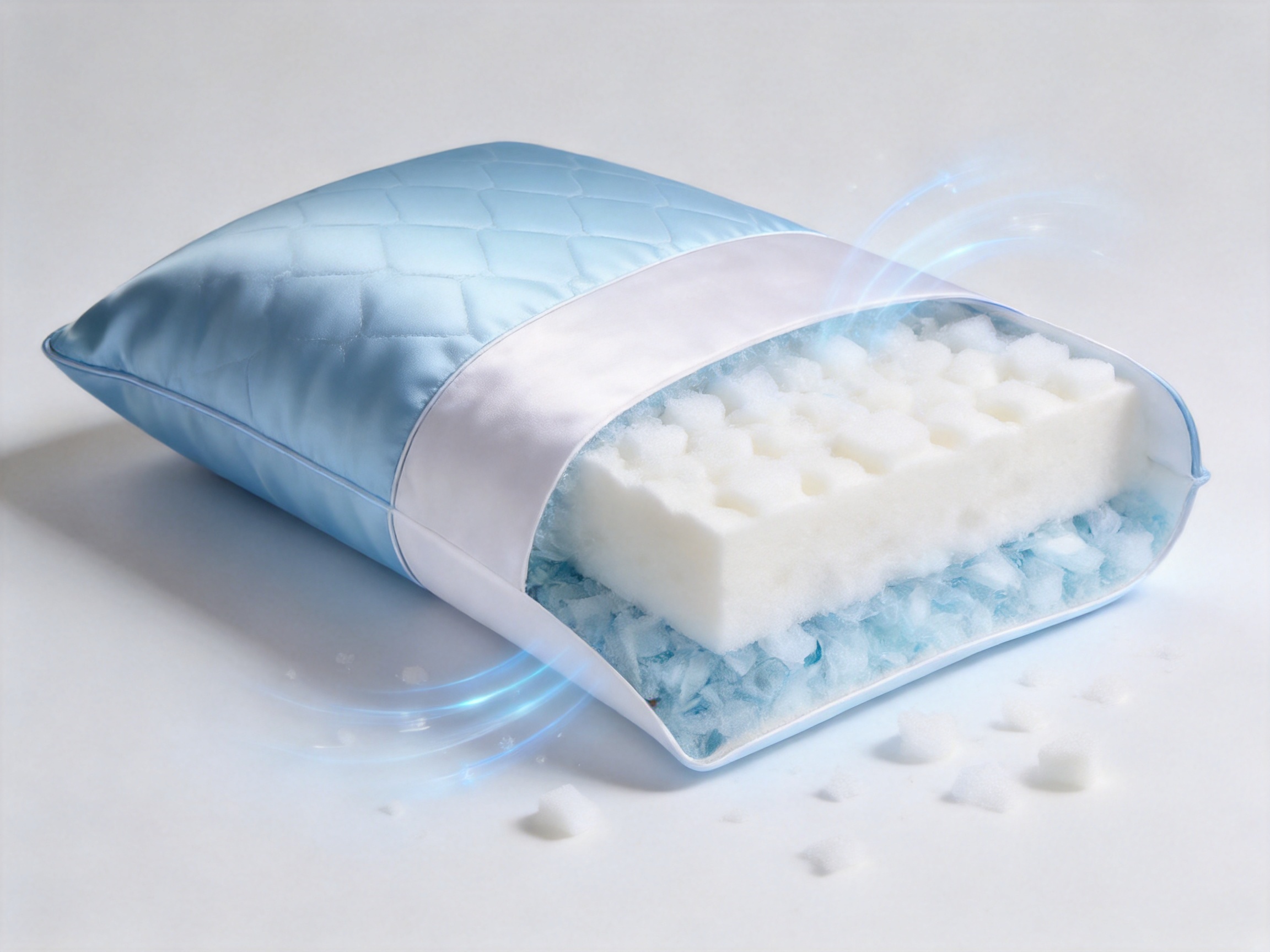
Manufacturing Expertise in Foam Materials
The manufacturer behind this product has a long history in foam research, development, and production. Its development began in 1993 as a school-run scientific research enterprise. In 2003, it acquired a 12,000-square-meter factory building and worked with Huai'an Institute of Technology to develop new sponge materials. In 2008, it purchased 50,000 square meters of land, creating a larger foundation for production and expansion.
The company has operated under the WELLCARE name since 2003 and focuses on high-performance sleep materials and healthy home products. Its product development is supported by a doctor-led research and development team. The company reports developing more than one hundred new foam materials each year, demonstrating a strong emphasis on formulation research and material optimization.
Its material portfolio includes ordinary sponge, memory foam, gel foam, temperature-insensitive memory foam, quick-dry memory foam, flame-retardant sponge, antibacterial sponge, and other foam solutions. This breadth is relevant to the Ice Silk Gel Memory Foam Sponge Pillow because the product combines several material goals: pressure-responsive support, cooling comfort, breathability, softness, and stable structure.
A manufacturer with experience across multiple foam categories can evaluate the relationship between density, resilience, cell structure, recovery speed, firmness, temperature response, and processing behavior. These factors must be coordinated carefully. Increasing density may improve support but can affect ventilation. Increasing softness may improve initial comfort but reduce stability. Adding cooling components may change the tactile response or manufacturing process. Material expertise helps create a more balanced finished product.
Research-Led Product Development
Research and development are especially important in memory foam products because the performance of the finished pillow depends on more than the name of the material. Two products may both be described as memory foam but feel very different because of differences in formulation, density, cell structure, processing conditions, and cover design.
A research-led development process can include material selection, laboratory testing, sample production, compression testing, recovery evaluation, temperature response analysis, odor assessment, and user feedback. For a hybrid pillow, developers must also examine how the foam core interacts with the shredded sponge filling and how the cover influences the overall feel.
The manufacturer’s history of cooperation with educational and scientific institutions supports a development model based on technical collaboration. This can help connect laboratory research with practical production requirements. Commercial success depends not only on creating a promising material but also on repeating its properties consistently at scale.
Production Scale and International Experience
The manufacturer’s products have been supplied to cross-border supermarkets in the United States, Germany, and Japan since 2010. Later export markets included the United Kingdom, Canada, Australia, and Kuwait. This international experience suggests familiarity with varied customer expectations, climate conditions, packaging requirements, and distribution environments.
In 2018, the company became an Alibaba-certified Gold Supplier and expanded its e-commerce activities. In 2020, it became a designated supplier for five-star hotels. These milestones are relevant to buyers seeking a supplier capable of serving both online retail and professional hospitality procurement channels.
Hotel supply places particular importance on consistent quality, appearance, replenishment, packaging, and reliable communication. A pillow used in a hotel must be comfortable for a broad range of guests and visually compatible with the room environment. It also needs to withstand repeated handling and meet the buyer’s operational requirements. The product’s rectangular form, clean gradient appearance, and customizable materials make it suitable for tailored hotel bedding programs.
For online retail, product presentation and specification accuracy are equally important. Buyers need clear descriptions of dimensions, materials, cover composition, care instructions, available customization, and packaging. The Ice Silk Gel Memory Foam Sponge Pillow has a distinct product story that can be communicated through its cooling surface, hybrid filling, pressure-responsive foam core, and modern appearance.
Quality and Process Considerations
Consistent manufacturing requires control at multiple stages. Raw materials should be inspected before production to confirm that they meet the agreed specifications. Foam formulation and processing should be managed to achieve the intended density, resilience, and recovery characteristics. Cutting and shaping should be controlled so that finished dimensions remain within the agreed tolerance.
For the scattered sponge filling, consistency in particle or piece size, fill distribution, and fill weight is important. Uneven filling may create differences in firmness across the pillow. Excessive compression during packaging may also influence the recovery process. A controlled production and packing procedure helps ensure that the pillow reaches the customer in an acceptable condition.
The cover requires attention to fabric quality, stitching, quilting depth, color consistency, seam strength, and overall appearance. The three-dimensional geometric quilting is part of the product’s visual identity, so alignment and workmanship can affect perceived quality. If buyers request a different fabric or color, pre-production samples should be approved before bulk manufacturing.
Quality control may include dimension checks, weight checks, visual inspection, seam inspection, compression recovery evaluation, odor review, packaging inspection, and random sampling from completed lots. Specific testing depends on the buyer’s market, application, and contract requirements. For export programs, additional documentation may be required for materials, labeling, packaging, and regulatory compliance.
Packaging and Logistics
Memory foam products are often compressed or packed in ways that reduce shipping volume. However, the packing method must be selected carefully for a hybrid pillow containing both foam and scattered sponge materials. Excessive or prolonged compression may affect recovery time or the initial appearance of the product after opening.
Packaging should protect the ice silk cover from abrasion, staining, moisture, and compression damage. Retail packaging may require barcode labels, product inserts, care information, and multilingual instructions. Hospitality orders may use bulk cartons with internal separators or protective bags, depending on the buyer’s handling process.
Because dropshipping is not supported, buyers should plan a complete supply chain from factory to warehouse, distributor, retailer, or hotel property. Factors may include minimum order quantity, lead time, production scheduling, inspection arrangements, freight mode, customs documentation, carton dimensions, and storage conditions. Accurate planning helps protect product quality and control landed costs.
Sustainability and Responsible Manufacturing
Foam manufacturing should be considered not only from the perspective of comfort and cost but also from the perspective of environmental management. The manufacturer states that it invests in advanced eco-friendly energy systems and works to improve environmental management practices. Its stated goal is to integrate respect for nature into business operations and create lasting environmental value.
Responsible manufacturing can include energy efficiency, emissions management, waste reduction, process optimization, safer material handling, and improved production planning. These initiatives can reduce the environmental impact associated with manufacturing while also improving operational stability.
Buyers interested in sustainability should request specific documentation relevant to their markets. Depending on the intended destination, this may include material declarations, chemical compliance documents, packaging information, factory environmental records, or third-party certifications. General sustainability statements are useful as a starting point, but detailed purchasing decisions should be based on verifiable product and process documentation.
Product durability is another part of sustainability. A pillow that maintains its shape and comfort for a longer period may reduce the frequency of replacement. The slow-rebound memory foam and structured hybrid filling are intended to support useful service life, although performance will depend on care, user weight, climate, and manufacturing specifications.
Suitable Applications
Residential Bedrooms
For home users, the pillow provides a combination of cooling surface comfort and supportive foam response. It can be used in master bedrooms, children’s guest rooms for appropriate adult supervision and sizing considerations, vacation homes, and seasonal bedding collections. The standard dimensions provide broad coverage, while the customizable format can accommodate different household preferences.
Guesthouses and Serviced Accommodation
Guesthouses and serviced apartments often need bedding that feels comfortable to a wide range of users while maintaining an attractive appearance. The pillow’s fresh color palette, smooth cover, and adaptive support make it a practical option for rooms designed around a clean, modern aesthetic. Custom colors and labels can help property operators create a more coordinated presentation.
Hotels
Hotels may use this pillow as a standard sleeping pillow, a summer bedding option, or part of a broader pillow menu. Its breathable construction and cool-touch surface can be useful in warm climates or rooms where guests are sensitive to heat. The ability to customize dimensions and fabrics also makes it easier to align the product with existing bedding specifications.
Retail and E-Commerce
For online sellers, the pillow has several marketable features: slow-rebound memory foam, scattered sponge filling, ice silk fabric, cooling comfort, breathable construction, customizable options, and a visually distinctive quilted cover. Product descriptions should accurately explain the material structure and should avoid promising medical treatment or guaranteed temperature control. Clear photography and precise dimension information are important for reducing consumer uncertainty.
How This Pillow Compares with Competing Products
Competition in the pillow market includes traditional fiber pillows, latex pillows, solid memory foam pillows, gel-infused foam pillows, shredded memory foam pillows, and cooling textile products. The Ice Silk Gel Memory Foam Sponge Pillow competes by combining several familiar technologies into one coordinated structure.
Against a basic fiber pillow, it offers more structured support and greater shape retention. Against a solid memory foam pillow, it emphasizes improved air circulation and a lighter, fluffier feel. Against a standard shredded foam pillow, it adds a more stable memory foam support base and a specialized cooling fabric. Against a pillow with only a cooling cover, it offers internal ventilation and pressure-responsive support rather than relying solely on surface sensation.
Its advantage is therefore not based on one isolated feature. The product’s value comes from the interaction of the cover, core, scattered filling, shape, height, and customization options. This integrated approach can make it more attractive to buyers who want a differentiated product without moving into an entirely unfamiliar pillow category.
At the same time, buyers should evaluate competing products using objective criteria. These include foam density, fill weight, recovery performance, cover composition, washing instructions, odor level, packaging method, dimensional tolerance, testing documentation, order quantity, customization capability, and delivered cost. A well-designed product must also be matched with suitable marketing claims and appropriate customer expectations.
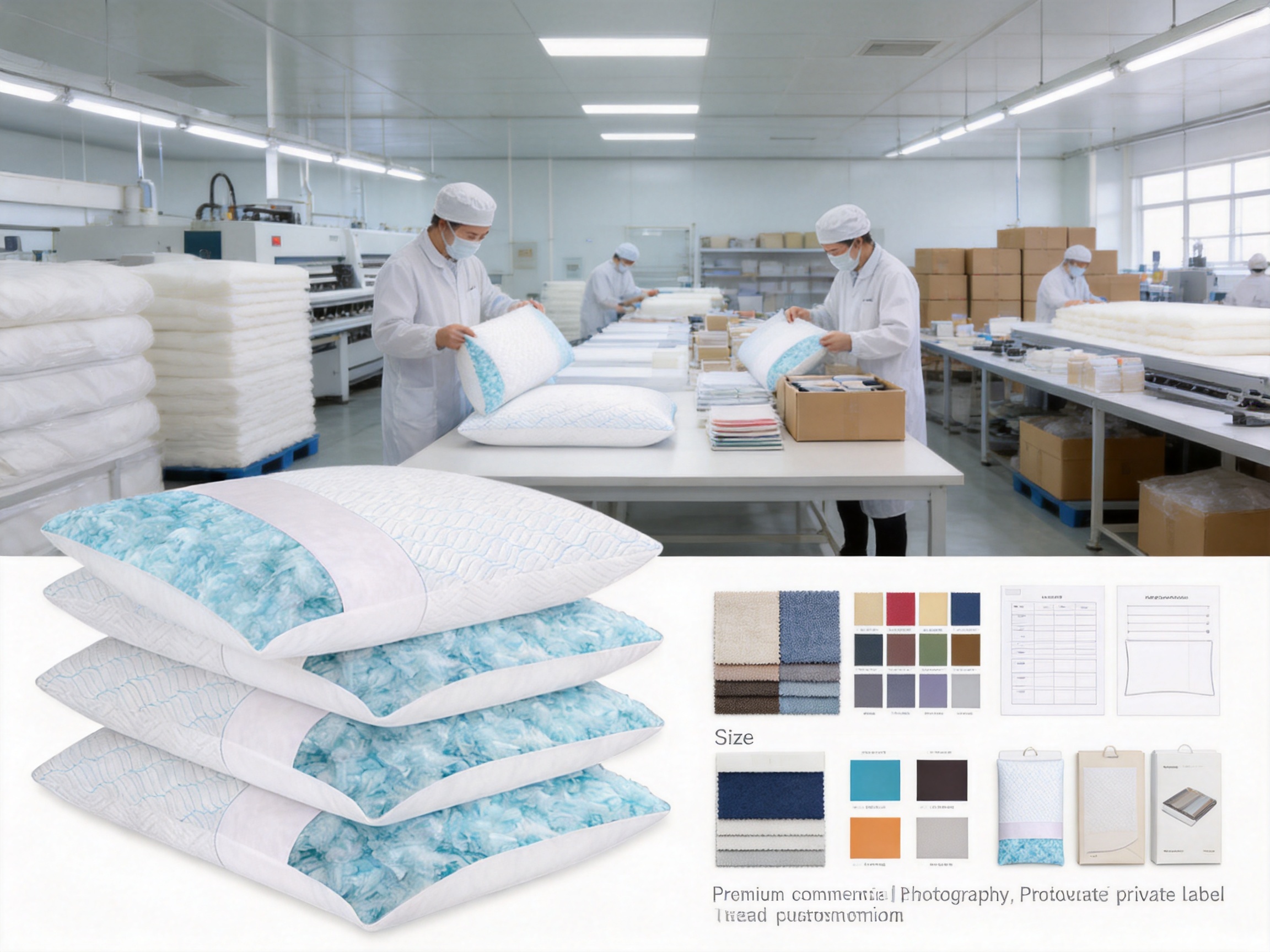
Recommended Product Positioning
The pillow can be positioned as a cooling comfort product for warm seasons, a premium guest-room pillow, a hybrid memory foam pillow for adults, or a customizable private-label bedding product. The most persuasive product message should emphasize the balance between support and breathability.
For consumers, the key message may focus on the cool and smooth ice silk surface, pressure-responsive memory foam, fluffy scattered filling, and fresh modern appearance. For hotels, the emphasis may shift toward consistent dimensions, customized fabrics, professional supply, visual coordination, and suitability for guest rooms. For retailers, the product story can focus on differentiation from ordinary pillows and the growing consumer interest in cooling sleep products.
Marketing materials should describe the product accurately. The pillow is not a medical device, and the available information does not establish that it treats neck pain, insomnia, allergies, or other health conditions. It is more appropriate to describe the pillow as designed to provide adaptive support, pressure distribution, cooling touch, and improved breathability.
Care and Use Guidance
Users should follow the final care instructions provided with the purchased version because cover construction and customization may affect cleaning requirements. In general, foam products should be protected from unnecessary soaking unless the manufacturer specifically confirms that washing is suitable. The cover and inner pillow should be handled according to their individual care labels.
After unpacking, a compressed pillow may need time to recover its full shape. It should be placed in a well-ventilated area and allowed to expand according to the supplier’s instructions. Temporary packaging odor can vary by materials, packaging duration, and ventilation conditions. Allowing the product to air out before use may improve the initial experience.
Regular ventilation can help maintain freshness. Users should avoid placing the pillow near excessive heat sources or exposing it to prolonged direct sunlight unless the care instructions permit this. A breathable pillow protector can help reduce contact with body oils and moisture while preserving the comfort of the outer cover.
For hotels and commercial users, a defined care procedure should be established before deployment. The procedure may include cover replacement, inspection for deformation, storage in dry conditions, rotation of inventory, and replacement criteria. These steps help preserve consistent guest comfort and support efficient housekeeping operations.
Technical Specification Summary
| Product Name | Ice Silk Gel Memory Foam Sponge Pillow |
| Category | Shredded Foam Pillow |
| Material | Memory Foam with Scattered Sponge Filling |
| Cover or Core Fabric | Ice Silk Fabric |
| Shape | Rectangular |
| Core Height | Approximately 12 cm |
| Dimensions | Approximately 76 cm × 50 cm × 12 cm |
| Weight Range | Approximately 0.55 kg to 1 kg |
| Standard Color | White with a light blue gradient appearance |
| Target User | Adults |
| Recommended Occupancy | Single Person |
| Customization | Size, color, and fabric customization supported |
| Patent Availability | No patent listed |
| Item Number | PW001 |
| Dropshipping | Not supported |
| Primary Sales Regions | Europe and North America |
| Primary Downstream Platforms | Amazon and independent websites |
Frequently Asked Questions
What type of pillow is this product?
It is a hybrid shredded foam pillow that combines a slow-rebound memory foam support core with scattered sponge filling and an ice silk fabric cover. The structure is designed to balance adaptive support, softness, breathability, and cooling surface comfort.
Does the pillow feel cool?
The ice silk fabric is designed to feel cool and smooth when touched. The scattered sponge filling also supports internal air circulation. The actual temperature experience depends on room temperature, humidity, bedding, personal metabolism, and airflow, so the pillow should be understood as a cooling-comfort design rather than a guarantee of constant temperature control.
Is the pillow suitable for summer?
Yes. Its cool-touch ice silk fabric and breathable scattered filling make it particularly suitable for summer use, warm climates, and sleepers who tend to feel hot or sweat during sleep.
Does the pillow provide neck support?
The slow-rebound memory foam core is designed to conform to the curves of the head and neck and provide pressure-relieving support. The most suitable support level depends on the user’s sleeping position, shoulder width, mattress firmness, and personal preference.
Is the pillow firm or soft?
It is designed to combine stable support with a soft, fluffy surface sensation. The memory foam core provides structure, while the scattered sponge filling creates a more yielding and breathable feel than a completely solid foam pillow.
What is the pillow’s height?
The listed core height is approximately 12 cm. Final height can vary slightly depending on compression, cover construction, customization, and measurement method.
Can the product be customized?
Yes. Customization of size, color, and fabric is supported. Buyers should confirm the exact specifications, tolerance, sample approval process, labeling, packaging, and order requirements before production.
Is private labeling available?
Authorized own-brand availability is listed for the product. Private-label requirements should be discussed in advance, including labels, packaging, color standards, artwork, inserts, and carton markings.
Is dropshipping available?
No. Dropshipping is not supported. The product is more suitable for wholesale, retail inventory, private-label orders, hospitality supply, and other planned distribution models.
Where is the product manufactured?
The product is manufactured by Jiangsu Wellcare Household Articles Co., LTD., located in Huai'an, Jiangsu Province, China. The manufacturer has experience in foam research, sleep materials, healthy home products, export supply, e-commerce, and hotel procurement.
What foam materials does the manufacturer develop?
The manufacturer’s material portfolio includes ordinary sponge, memory foam, gel foam, temperature-insensitive memory foam, quick-dry memory foam, flame-retardant sponge, antibacterial sponge, and other foam solutions.
Is the pillow patented?
The listed product information states that no patent is available for this item. Buyers requiring intellectual property protection or exclusivity should discuss contractual arrangements and market-specific requirements separately.
Which markets are currently emphasized?
The listed main sales regions are Europe and North America, with Amazon and independent websites identified as primary downstream platforms. The manufacturer also reports export experience in several other international markets.
Can hotels use this pillow?
Yes. Its rectangular form, clean appearance, cooling surface, customizable fabric options, and professional supply capabilities make it suitable for hotels, guesthouses, serviced apartments, and other accommodation projects. Commercial buyers should confirm durability, laundering, packaging, and compliance requirements before placing a large order.
Conclusion
The Ice Silk Gel Memory Foam Sponge Pillow is designed as a balanced alternative to both solid memory foam pillows and conventional loose-fill products. Its slow-rebound memory foam core provides adaptive support and pressure distribution, while the scattered sponge filling improves fluffiness and encourages internal air circulation. The ice silk fabric adds a cool, smooth, skin-friendly surface that is particularly appropriate for warm seasons and heat-sensitive sleepers.
Its advantages extend beyond the immediate sleeping experience. The fresh gradient design, three-dimensional quilting, rectangular shape, and customization options give the product commercial flexibility. It can be developed for residential bedding, hotel rooms, guesthouses, private-label collections, and cross-border retail programs. The lack of dropshipping support makes it a planned-inventory product rather than a single-unit fulfillment item, but this structure can suit professional buyers seeking organized wholesale supply.
The manufacturer strengthens the product proposition through long-term experience in foam research and production. Its doctor-led research and development team, broad foam material portfolio, institutional cooperation, international export history, hotel supply experience, and stated investment in environmentally responsible systems provide a substantial manufacturing foundation.
For buyers comparing suppliers, the most important next steps are to confirm sample performance, foam specifications, cover composition, dimensions, packaging, testing documents, customization details, minimum order requirements, and delivery schedules. When these factors are aligned, the Ice Silk Gel Memory Foam Sponge Pillow can serve as a differentiated, cooling, supportive, and adaptable product for modern sleep markets.
References
1. Product specification and technical description for the Ice Silk Gel Memory Foam Sponge Pillow, Item No. PW001.
2. Manufacturer-provided company profile and development history of Jiangsu Wellcare Household Articles Co., LTD.
3. General principles of memory foam pressure distribution, resilience, density, and recovery performance in sleep products.
4. General textile considerations relating to cool-touch fabrics, breathability, moisture comfort, and skin contact.
5. General manufacturing quality-control practices for foam products, quilted covers, filling distribution, packaging, and export supply.
6. General sustainability considerations for foam material production, energy management, waste reduction, and product durability.
Product: Ice silk gel memory foam sponge pillow

PREV:Advanced Gel Memory Foam Bun Pillow for Cooler, More Supportive Sleep
NEXT:Student Memory Foam Seat Cushion: Ergonomic Comfort for Study, Work, and Everyday Seating
NEXT:Student Memory Foam Seat Cushion: Ergonomic Comfort for Study, Work, and Everyday Seating
Interested in cooperation or have questions?
Related News
WELLCARE was founded in 2003, boasting over a decade of profound and extensive experience.
Quick Links
Product
Media Centre
Contact Information
- [email protected]
- +86-517-84998062
- +86-15152354988
- No. 168 Nenjiang Road, Huaiyin District, Huai'an City, Jiangsu Province, China
Copyright © Jiangsu Wellcare Household Articles Co., LTD. All Rights Reserved.
Custom Memory Gel Mattress Manufacturers
