

 English
 日本語
 Español


Shen Yueqiao — After-Sales Quality Support Supervisor

Home / Author / Shen Yueqiao — After-Sales Quality Support Supervisor / Student Memory Foam Seat Cushion: Ergonomic Comfort for Study, Work, and Everyday Seating
Product Category
NEW Category
Contact us
Student Memory Foam Seat Cushion: Ergonomic Comfort for Study, Work, and Everyday Seating
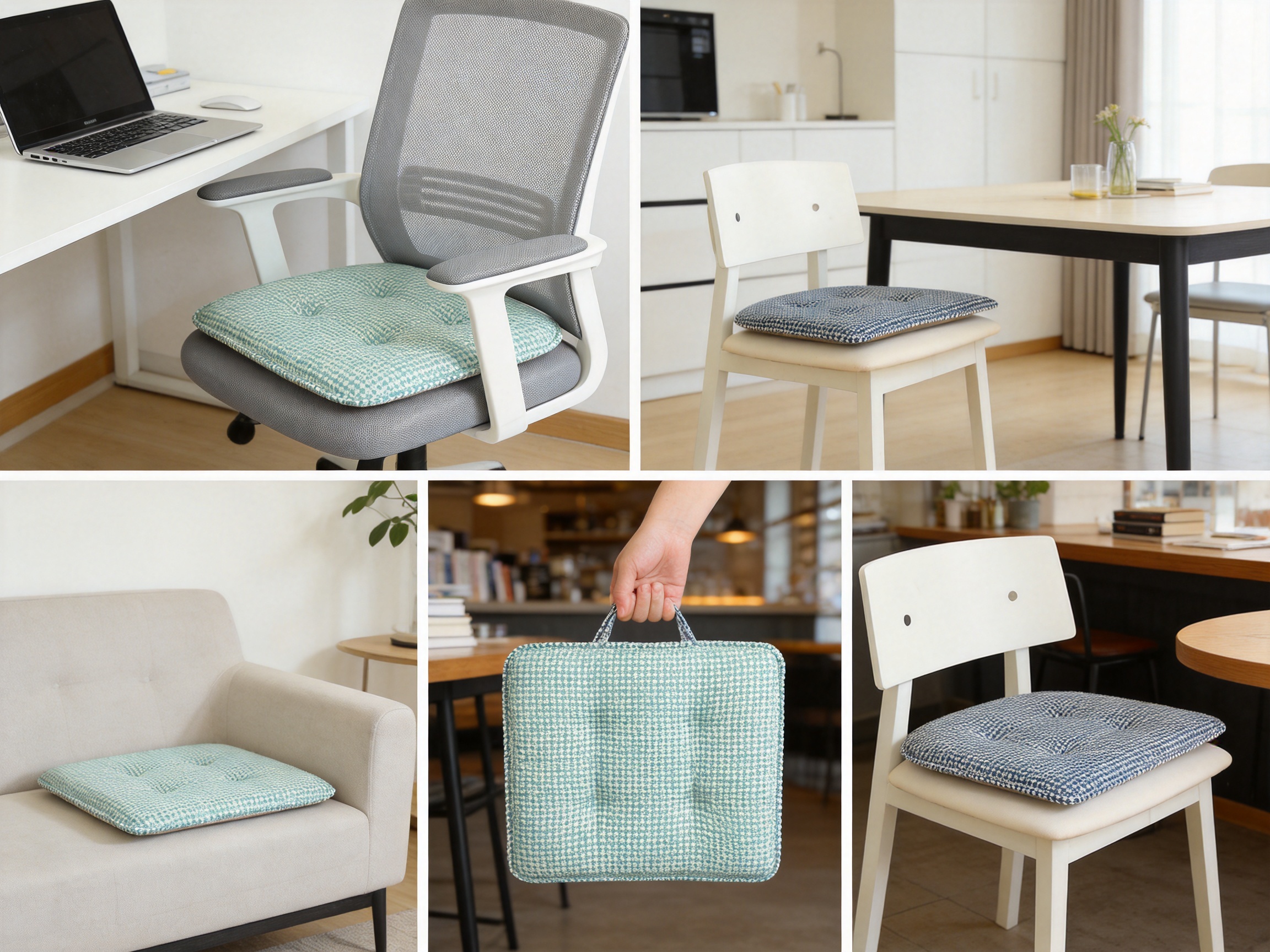
Choosing the right seat cushion can make a meaningful difference in daily comfort, especially for students, office workers, and anyone who spends long periods sitting. A hard classroom chair, a firm dining chair, a basic desk seat, or a café stool can create pressure around the hips and lower back. Over time, this pressure may contribute to discomfort, fatigue, poor sitting habits, and reduced concentration. The Student Memory Foam Seat Cushion is designed to address these everyday challenges with a supportive memory foam core, a soft fabric cover, a portable structure, and a simple modern appearance.
This cushion combines practical ergonomic support with a fresh, adaptable design. Its high-density, slow-rebound memory foam is intended to conform to the user’s body shape, distribute pressure more evenly, and maintain dependable support during extended sitting. The 40 x 40 centimeter size gives the cushion a practical footprint for chairs, study seats, single-seat sofas, dining chairs, and selected outdoor seating areas. Its light green checkered appearance provides a softer visual character than many plain black, gray, or industrial-style seat pads.
Although compact, the cushion is developed for multiple environments. It can be used in a student dormitory, home study, office, living room, dining area, children’s room, café, or temporary outdoor seating location. Its lightweight format allows users to carry it with one hand, move it between rooms, or store it when it is not needed. Custom colors, sizes, and patterns are also available, which makes the product suitable for individual consumers, furniture projects, hospitality applications, educational environments, and customized purchasing programs.
Understanding the Product Concept
A chair cushion is more than a decorative layer placed on top of a seat. A well-designed cushion must balance softness, resilience, stability, breathability, appearance, and ease of use. If the filling is too soft, the user may sink excessively and lose stable support. If it is too firm, it may fail to reduce pressure on contact areas. If the cover is rough or poorly ventilated, the cushion may become uncomfortable during long periods of contact. The Student Memory Foam Seat Cushion addresses these factors through the combination of slow-rebound memory foam and a skin-friendly polyester fiber cover.
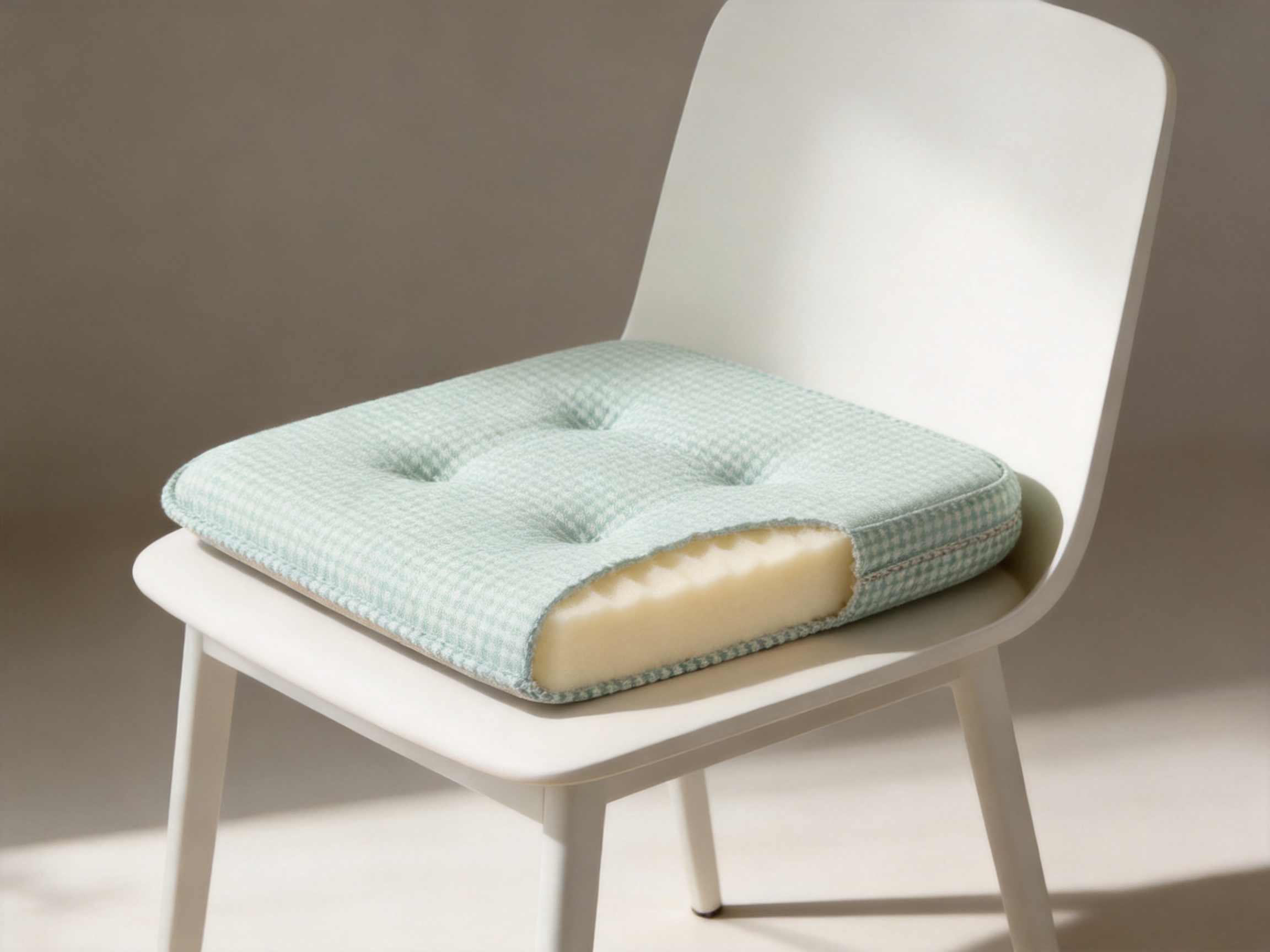
The memory foam core is the primary functional component. Unlike ordinary loose fiber filling, memory foam responds to body heat and pressure by gradually adapting to the shape of the user. This slow-rebound behavior allows the cushion to conform to the curves of the hips and upper legs. When the user changes position or stands up, the material gradually returns toward its original shape, helping the cushion preserve its intended structure.
The cushion is not intended to diagnose, treat, or cure a medical condition. Instead, it is a comfort-oriented seating accessory designed to improve pressure distribution and support during ordinary daily activities. People with persistent or serious back, hip, or leg pain should consult an appropriate healthcare professional rather than relying solely on a seat cushion.
Pressure Distribution Through Slow-Rebound Memory Foam
One of the most important advantages of memory foam is its ability to distribute load over a broader area. When a person sits on a hard or uneven chair, pressure tends to concentrate at the ischial tuberosities, commonly known as the sitting bones. This concentrated pressure may cause discomfort and encourage the user to shift repeatedly, lean to one side, or adopt a slouched posture.
The Student Memory Foam Seat Cushion uses a slow-rebound foam structure to reduce the intensity of these pressure points. As the foam compresses under the user’s weight, it conforms to the contours of the body rather than acting as a completely rigid surface. This creates a more gradual transition between the body and the chair. The result is a seating experience that feels more cushioned while still maintaining a stable base.
The phrase “high-density” refers to the substantial structure of the foam rather than a loose or quickly flattened filling. A higher-density foam can provide a more supportive feel and better shape retention than low-quality, loosely packed materials. Proper density selection is important because the foam must support the user without becoming excessively hard. WELLCARE’s experience in foam material development allows the product to be designed around the balance between resilience, pressure response, and everyday comfort.
Slow rebound also offers a different experience from conventional sponge cushions. Standard foam may compress quickly and return rapidly, while memory foam responds more gradually. This slower response can help the cushion remain in closer contact with the user’s body. It may also reduce the sensation of immediate spring-back when the user shifts position, creating a calmer and more stable seating surface.
Support for Long Study and Work Sessions
Students often spend hours reading, writing, using a computer, attending online classes, or completing assignments. These activities may take place on chairs that were not designed for prolonged sitting. Dormitory furniture, classroom seats, library chairs, and dining chairs can vary significantly in firmness and contour. A portable cushion provides a practical way to improve the comfort of these different surfaces without replacing the furniture itself.
The 40 x 40 centimeter dimensions are suitable for many standard personal seating applications. The cushion is large enough to cover the main sitting area of a typical chair while remaining compact enough for transport. Students can move it from a desk chair to a library seat, from a dormitory room to a study hall, or from indoor seating to an outdoor activity. This flexibility makes it more useful than a cushion designed for only one fixed piece of furniture.
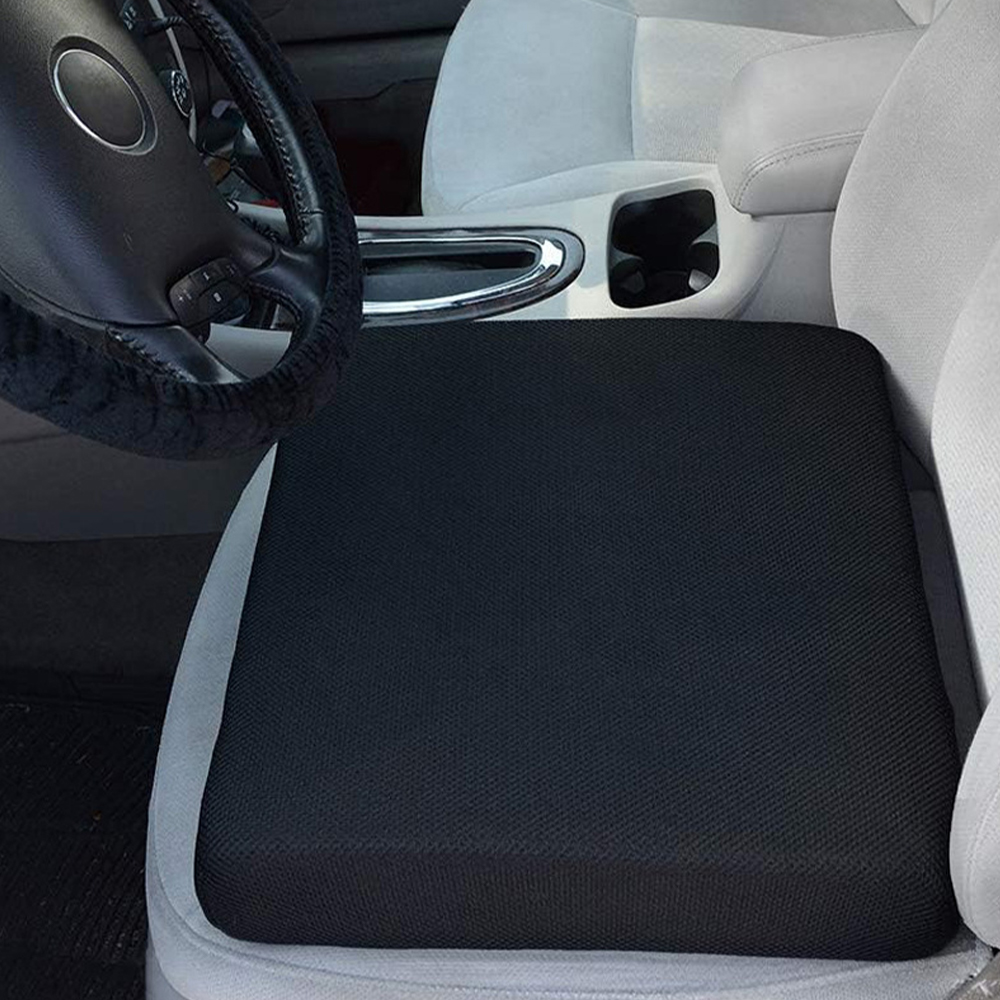
For office workers, the cushion can be placed on a task chair, conference chair, reception seat, or temporary workstation chair. It may also be useful in shared offices where users cannot modify the furniture permanently. Its removable and portable concept enables a personal comfort solution without requiring installation, tools, or special adjustments to the chair.
A comfortable cushion may help users remain more focused because they are less distracted by pressure and hardness beneath them. It cannot replace good posture, regular movement, suitable desk height, or proper workstation arrangement, but it can complement these habits. Users should still stand, stretch, and change positions regularly during extended sitting.
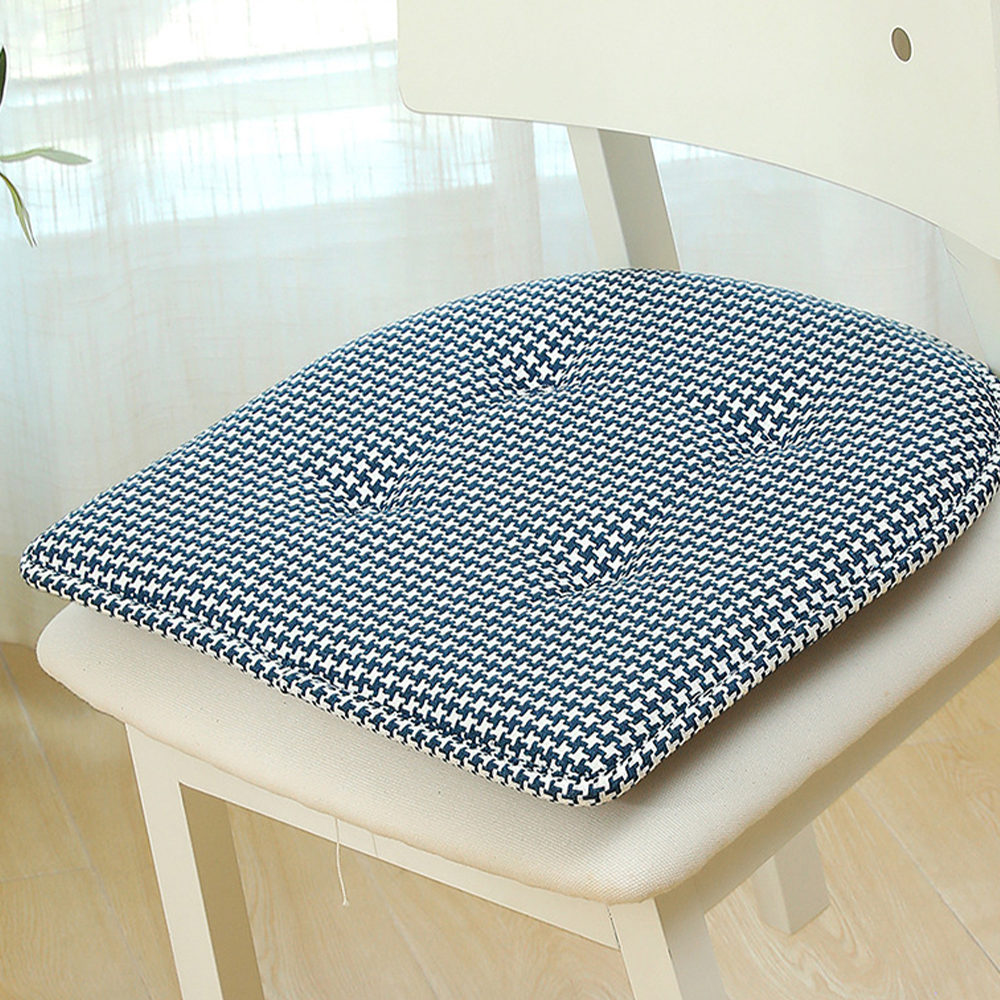
Student Memory Foam Seat Cushion
Comfortable Surface Materials
The outer fabric is the part of the cushion that remains in direct contact with the user. The product uses polyester fiber, also known as terylene, for its cover material. Polyester is commonly selected for seating products because it can offer a useful combination of durability, color stability, easy handling, and a soft surface feel when properly woven and finished.
The cover is described as skin-friendly, breathable, and comfortable to the touch. This makes it suitable for extended contact during studying, working, reading, dining, or relaxing. A fabric surface also creates a warmer and more welcoming user experience than exposed foam or a hard plastic shell. The checkered diamond-style appearance adds visual texture while helping the cushion look like a coordinated home accessory rather than a purely functional support product.
In the supplied product information, the pattern is listed as a stripe pattern, while the visual concept is described as a classic diamond or checkered design. Buyers who require exact pattern consistency should confirm the final fabric specification, sample, and production details before placing a customized order. This is especially important for projects involving coordinated furniture, branded interiors, or large quantities.
The light green color provides a refreshing alternative to conventional dark upholstery. It can blend with modern minimalist interiors, student rooms, study spaces, and relaxed living areas. Additional colors, including gray and red, can be requested according to customization requirements. Color selection may be particularly valuable for schools, cafés, hotels, dormitories, interior design projects, and retailers that want a coordinated product range.
A Modern Minimalist Appearance
The appearance of a chair cushion influences whether it feels integrated into a room or looks like an afterthought. The Student Memory Foam Seat Cushion uses a restrained form, a soft light green palette, and a patterned textile cover. This combination supports a modern minimalist style that can work in both practical and decorative settings.
In a student dormitory, the cushion can introduce a small amount of color and softness to a basic study area. In a home office, it can add comfort without competing with the desk or chair. In a living room, it can be used on a single-seat sofa, occasional chair, or firm accent seat. In a children’s room, it can provide a comfortable surface for reading or sitting, subject to appropriate supervision and care.
The cushion’s design is also suitable for commercial spaces. Cafés, study lounges, libraries, tutoring centers, and flexible workspaces can use coordinated cushions to make seating more welcoming. Because colors and sizes can be customized, commercial buyers may be able to develop a product that matches a particular interior design scheme.
Portability for Flexible Daily Use
Many seat cushions are purchased for one chair and then remain in the same location. This product is designed with greater mobility in mind. Its lightweight structure allows users to carry it by hand and move it between different seating areas. A student may use it at a desk in the morning, in a reading area in the afternoon, and on a dormitory lounge chair in the evening.
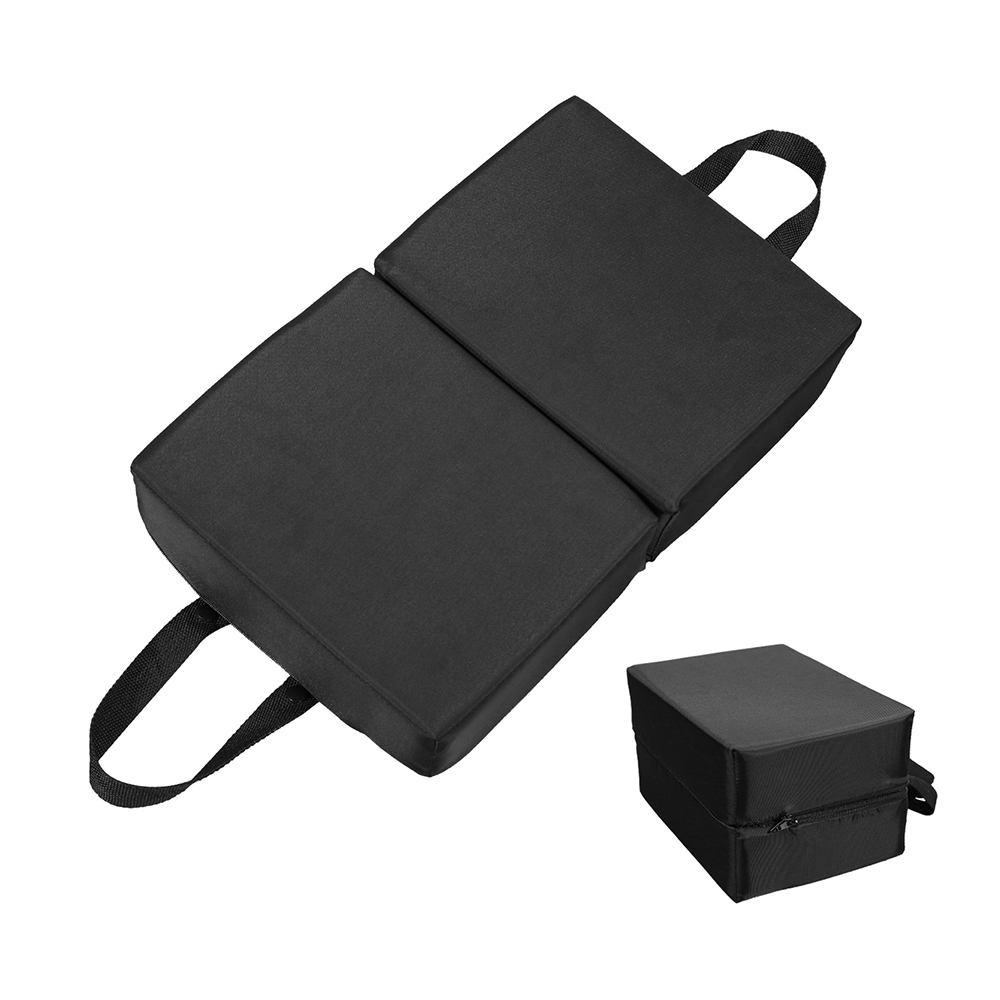
Portability is especially helpful for people who use shared or temporary seating. Office employees working between departments, students studying in multiple locations, and families using different rooms can take the cushion wherever it is needed. The compact size also makes storage easier. It can be placed in a closet, under a desk, beside a sofa, or in a travel bag when not in use.
The product may also be suitable for selected outdoor activities, such as sitting on a firm bench, attending an outdoor event, or using a temporary chair. However, memory foam and textile covers should be protected from rain, moisture, mud, and prolonged direct sunlight. Outdoor use should be understood as occasional portable use rather than permanent exposure to outdoor conditions.
Advantages Compared with Ordinary Chair Cushions
Consumers can find many inexpensive chair pads made from cotton, polyester fiber, basic polyurethane foam, inflatable materials, or loose filling. These options may be suitable for certain needs, but they do not all provide the same performance characteristics as a slow-rebound memory foam cushion.
Loose fiber cushions often feel soft at first, but the filling may shift or gather over time. This can create uneven support and require frequent adjustment. A structured memory foam core remains more unified and responds consistently beneath the user. The result is a more stable seating experience.
Basic low-density foam may compress quickly under repeated use. Once the material loses thickness, the user may feel more of the chair beneath the cushion. The high-density memory foam design is intended to improve resilience and shape retention, helping the cushion remain useful during regular sitting.
Inflatable cushions can be easy to transport, but they may feel unstable or require pressure adjustments. They can also be vulnerable to puncture and temperature changes. Memory foam offers a more familiar solid seating surface and does not require pumping or inflation before use.
Hard or thin decorative pads may improve the look of a chair but provide limited pressure relief. The Student Memory Foam Seat Cushion places functional support at the center of its design while retaining an attractive fabric appearance. It therefore offers a practical combination of comfort and decoration.
Advantages Compared with Oversized or Fixed Cushions
Large sofa cushions can provide generous coverage, but they may be difficult to carry, store, or use on different chairs. A compact 40 x 40 centimeter format is easier to handle and more adaptable to personal seating. It focuses support on the main contact area rather than adding unnecessary bulk.
Fixed seat inserts may offer strong support for a particular chair, but they usually require precise sizing and installation. They are less suitable for renters, students, shared offices, or users who change seating locations. The portable cushion avoids permanent modification and can be used immediately on many suitable surfaces.
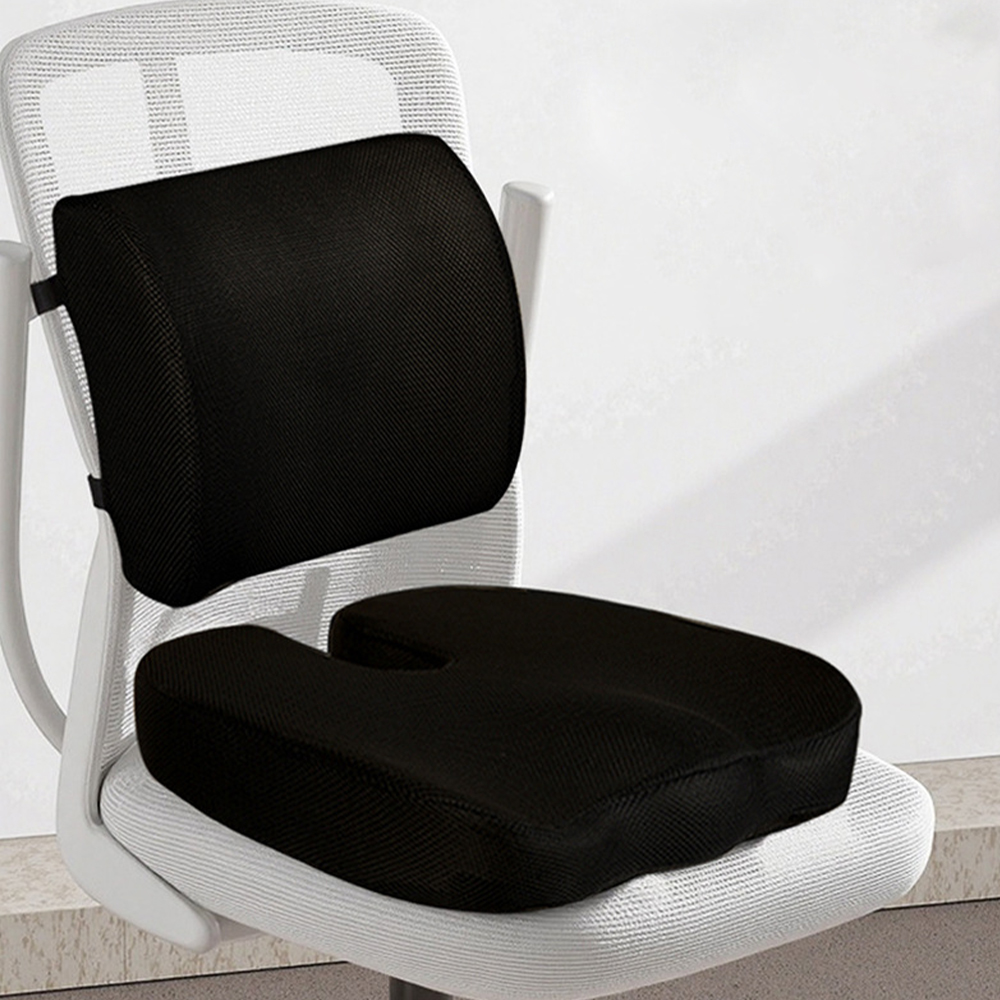
Some ergonomic cushions use complex contours, straps, handles, or rigid structures. These features may be valuable for specialized applications, but they can also make a product heavier or visually prominent. The Student Memory Foam Seat Cushion uses a straightforward design that emphasizes ease of use and everyday versatility.
Material Innovation Behind the Product
WELLCARE was founded in 2003 and focuses on the research, development, and manufacturing of sleep materials and healthy home products. Its work is centered on foam innovation and the creation of materials designed to provide comfort, safety, and dependable performance for home and commercial applications.
The company’s research and development activities are supported by a doctor-led team. According to the supplied company information, WELLCARE develops more than one hundred new foam materials each year. Its material portfolio includes ordinary sponge, memory foam, gel foam, temperature-insensitive memory foam, quick-dry memory foam, flame-retardant sponge, antibacterial sponge, and other specialized foam solutions.
This broad material background is relevant to the Student Memory Foam Seat Cushion because a comfortable product depends on more than the word “memory foam.” Foam performance is influenced by formulation, density, cell structure, rebound speed, compression behavior, temperature response, durability, and processing accuracy. A manufacturer with experience across multiple foam categories can evaluate these factors more systematically.
The company’s history began in 1993 as a school-run scientific research enterprise. In 2003, it purchased a 12,000-square-meter factory building and jointly developed new sponge materials with Huai’an Institute of Technology. In 2008, it acquired 50,000 square meters of land, expanding its base for production and development. These milestones show a long-term investment in technical capability and manufacturing infrastructure.
WELLCARE later supplied products to cross-border supermarkets in the United States, Germany, and Japan, and developed cooperation with Qingdao University of Science and Technology. Its products have also been exported to the United Kingdom, Canada, Australia, and Kuwait. In 2018, the company became an Alibaba-certified Gold Supplier, and in 2020 it became a designated supplier for five-star hotels. These experiences indicate familiarity with international purchasing expectations and varied application requirements.

Manufacturing Process and Quality Considerations
The manufacture of a memory foam seat cushion typically begins with material formulation and foam block production. Chemical components are carefully combined to create a foam system with a selected density, resilience, rebound speed, and support profile. The formulation must be controlled so that the finished material behaves consistently throughout the block or molded part.
After the foam is produced and stabilized, it can be cut into cushion components according to the required dimensions. For a 40 x 40 centimeter seat cushion, cutting accuracy is important because uneven edges or inconsistent thickness may affect appearance and comfort. Proper cutting also reduces unnecessary material waste and helps ensure that covers fit smoothly.
Depending on the production method, the foam may be shaped through slab cutting, contour cutting, or molding. Each approach offers different benefits. Slab cutting can be practical for flexible size programs, while molding may support more specialized shapes. The appropriate method depends on the design, order quantity, customization requirements, and target performance.
The cover is produced separately through textile preparation, cutting, sewing, and finishing. Fabric panels must be cut in alignment with the selected pattern so that the checkered or diamond appearance remains visually balanced. Stitching quality affects the cover’s strength, shape, and long-term appearance. Properly finished seams also help prevent fraying and maintain a clean edge.
Before final packing, the foam insert and cover are assembled and inspected. Quality checks may include dimensional verification, surface inspection, seam review, color comparison, foam appearance, and packaging assessment. For customized orders, production teams should also confirm the approved sample, color standard, pattern direction, labeling, and carton requirements.
While exact internal formulas and process parameters are proprietary, the company’s specialization in foam materials provides a foundation for consistent product development. Buyers seeking private-label or customized production should discuss technical specifications in advance, including density range, thickness, fabric composition, closure type, washing instructions, tolerance, packaging, and testing requirements.
Customization for Different Markets
Customization is one of the product’s strongest commercial advantages. The supplied information states that colors, sizes, and patterns can be adjusted to meet individual needs. This makes the cushion suitable not only for direct consumer sales but also for business-to-business projects.
Retailers can request colors that fit their existing product collections. Furniture brands can coordinate the cushion with sofa upholstery, dining chairs, or home office accessories. Schools and dormitory operators can select colors associated with their interior standards. Cafés and hospitality businesses can develop a seating accessory that matches their visual identity.
Size customization is useful when a buyer needs a cushion for a particular chair or sofa. Although the standard product measures 40 x 40 centimeters, some applications may require a longer bench cushion, a narrower study-seat pad, or a different shape for a lounge chair. Custom dimensions should be evaluated together with foam thickness and cover construction to ensure that the finished product remains comfortable and stable.
Pattern customization can also influence the product’s market position. A subtle stripe, diamond, checkered design, solid color, or branded textile may appeal to different customer groups. For large orders, buyers can discuss pattern repeat, logo application, woven labels, printed packaging, and other presentation details with the manufacturer.
Customization may involve minimum order quantities, sample approval, additional development time, and special packaging costs. Buyers should confirm all commercial and technical terms before production. A clear specification reduces the risk of differences between the approved sample and the final shipment.
Applications in Residential Spaces
In the living room, the cushion can be placed on a single-seat sofa, accent chair, reading chair, or firm bench. Its light green fabric can soften neutral interiors and add a small decorative accent. The memory foam filling is useful when a sofa seat feels too firm or when a particular chair lacks sufficient cushioning.
In the study, the cushion can support more comfortable reading, writing, or computer use. It is particularly practical for students who use simple wooden or plastic chairs. The cushion can also be moved to a dining chair when the study area is not in use.
In a child’s room, it can be used as a soft seat for reading, drawing, or quiet activities. Adults should choose a suitable chair, supervise younger children, and keep the cushion away from unsafe climbing situations. The product is a seating accessory and should not be used as a sleeping surface, restraint, or safety device.
In the dining room, the cushion can add softness to hard dining chairs. The cover should be cared for according to the manufacturer’s cleaning instructions, especially because dining areas may expose fabric to food and drink spills. Prompt spot cleaning can help preserve the appearance of the textile.
Applications in Commercial and Institutional Environments
Businesses often need products that are comfortable, attractive, easy to move, and available in consistent quantities. The Student Memory Foam Seat Cushion meets these requirements in a compact format. Its simple design can work in study cafés, tutoring centers, waiting rooms, offices, libraries, and reception spaces.
For cafés, a coordinated set of cushions can make hard seating more comfortable while introducing color into the interior. Since cushions can be removed or rearranged, the operator can adapt the seating layout for different events or cleaning routines.
For offices, portable cushions can be provided in meeting rooms, hot-desking areas, training rooms, and temporary workstations. They may be especially useful where seating is shared and users have different comfort preferences.
For educational facilities, customized colors and sizes can help create a consistent environment. Dormitories, student lounges, reading rooms, and activity rooms can use cushions as practical comfort products without replacing existing furniture. Institutional buyers should establish suitable cleaning, storage, and inspection procedures for shared-use products.
For hotels and hospitality spaces, the cushion can serve as a small comfort accessory in rooms, lounges, or reading areas. Its appearance should be coordinated with the project’s fire, hygiene, durability, and maintenance requirements. Any special compliance standards should be confirmed before purchase.
Care, Cleaning, and Storage
Proper care helps extend the useful life of a memory foam cushion. The fabric cover should be cleaned according to its care label. If the cover is removable, it may be possible to wash it using the recommended method. If it is not removable, users should treat stains promptly with a suitable mild cleaning solution and avoid saturating the foam.
Memory foam should not generally be soaked or aggressively wrung. Excess moisture can take a long time to evaporate and may affect the internal material or create unpleasant odors. If the cushion becomes damp, it should be placed in a well-ventilated area and allowed to dry thoroughly before use.
Users should avoid placing the cushion near open flames, high-temperature heating equipment, or sharp objects. Although the company develops flame-retardant foam products within its broader portfolio, buyers should not assume that this specific chair cushion has a particular flame-retardant certification unless the manufacturer confirms it in writing.
For storage, the cushion should be kept in a dry, clean location away from prolonged direct sunlight. It should not be compressed under heavy objects for extended periods because constant compression may affect its shape. When shipped or stored in compressed packaging, buyers should follow the manufacturer’s recommended recovery time before evaluating the final size and comfort.
How to Use the Cushion Correctly
The cushion should be placed fully on the seating surface, with all four corners supported by the chair or sofa. It should not extend so far beyond the edge that it can slide forward when the user sits down. On smooth surfaces, users should check stability before beginning work or study.
The user’s feet should rest comfortably on the floor whenever possible. If the cushion raises the seating height significantly, the relationship between the seat, desk, and arm position may change. Adjusting the desk, foot position, or chair height can help maintain a more natural posture.
The cushion should be used together with healthy sitting habits. Users are encouraged to keep the shoulders relaxed, avoid prolonged twisting, change position periodically, and stand or walk at regular intervals. A seat cushion can improve the interface between the body and the chair, but it cannot compensate for an unsuitable workstation or uninterrupted sitting throughout the day.
Product Specifications
| Product Name | Student Memory Foam Seat Cushion |
| Product Category | Memory Foam Chair Cushion |
| Material | Polyester Fiber Cover with Memory Foam Filling |
| Filler | Memory Foam |
| Filler Content | 100% |
| Standard Dimensions | 40 x 40 centimeters |
| Color | Light Green |
| Additional Color Options | Gray, red, and other customized colors |
| Style | Modern Minimalist |
| Pattern | Checkered or diamond-style appearance; confirm final specification |
| Suitable Spaces | Living room, study, dining room, children’s room, office, café, and selected outdoor seating areas |
| Suitable Sofa Type | Single-seat sofa and compatible chairs |
| Customization | Colors, sizes, and patterns can be customized |
| Brand | wellcare |
| Dropshipping | Not supported according to the supplied information |
| Copyright or Patent | No patent or copyright availability stated |
Why Manufacturer Experience Matters
When purchasing foam products, manufacturer experience is an important consideration. A seat cushion may appear simple, but its performance depends on the relationship between material formulation, cutting accuracy, cover construction, packaging, and quality control. Companies that specialize in foam can draw on broader technical knowledge when developing a new product or adjusting an existing design.
WELLCARE’s development history includes cooperation with academic and technical institutions, investment in factory and land resources, and international supply experience. Its product portfolio spans general-purpose and specialized foam materials. This provides a broader platform for responding to different customer requirements than a trading company that only purchases finished cushions from unrelated sources.
The company’s research-focused approach also supports product customization. A customer may require a different rebound speed, support level, thickness, cover fabric, or environmental profile. A manufacturer with in-house material knowledge can evaluate whether these changes are technically practical and how they may affect cost, production time, and durability.
For international buyers, manufacturing continuity and communication are equally important. Clear technical documents, sample confirmation, production schedules, inspection procedures, and packaging instructions help minimize misunderstandings. WELLCARE’s export history to multiple markets suggests experience with international product coordination, although each buyer should still verify current certifications, testing, and shipping requirements for the intended destination.
Sustainability and Environmental Responsibility
Modern buyers increasingly evaluate products according to both performance and environmental responsibility. WELLCARE reports investment in advanced eco-friendly energy systems and improvements in environmental management practices. The company states that it aims to move beyond basic compliance and create lasting environmental value by integrating respect for nature into its operations.
For a foam product, sustainability can involve several areas: material efficiency, energy consumption during manufacturing, production waste, packaging design, product lifespan, and responsible facility management. A durable cushion that remains useful for a longer period may reduce the frequency of replacement. Accurate cutting and efficient production planning can also help limit avoidable material waste.
Buyers seeking detailed environmental information should request the specific documentation relevant to their project. Depending on the destination market and intended use, this may include material declarations, restricted-substance testing, emissions information, packaging details, factory environmental practices, and applicable sustainability certifications.
Environmental claims should always be matched with product-specific evidence. The company’s broader investment in eco-friendly systems is an encouraging foundation, but buyers should confirm which practices and certifications apply directly to the Student Memory Foam Seat Cushion and its chosen fabric, foam formulation, packaging, and production site.
Quality, Safety, and Purchasing Guidance
Before ordering, buyers should confirm the final product dimensions, foam thickness, density, cover material, color, pattern, seam construction, and packaging format. If the cushion will be used in a commercial or institutional setting, the buyer should also identify cleaning frequency, expected daily usage, storage conditions, and any applicable safety standards.
Samples are valuable for evaluating softness, rebound speed, color, fabric texture, sewing quality, and overall size. A sample should be tested on the intended chair because comfort can vary depending on the seat shape, firmness, height, and surface material.
Buyers should also understand that memory foam responds to temperature. It may feel firmer in a cool environment and softer in a warm environment. This is a normal characteristic of many memory foam products. Allowing the cushion to reach room temperature before evaluation can provide a more representative impression of its performance.
Packaging should protect the cushion from dust, moisture, compression damage, and deformation during transportation. If compressed packaging is used, the supplier should provide clear instructions for unpacking and recovery. The buyer should inspect cartons and products upon arrival and document any visible damage.
Q&A: Common Questions About the Student Memory Foam Seat Cushion
What is the main purpose of this seat cushion?
The main purpose is to improve everyday sitting comfort by adding a supportive memory foam layer between the user and a chair or sofa. The slow-rebound foam conforms to body contours, helps distribute pressure, and provides a more cushioned seating surface.
Is the cushion suitable for long periods of sitting?
It is designed for studying, working, reading, and other daily activities that involve extended sitting. It should be used together with regular movement, posture awareness, and appropriate workstation setup. Users with persistent pain should seek professional medical advice.
What are the standard dimensions?
The standard dimensions are 40 x 40 centimeters. Buyers requiring different dimensions can discuss customized sizes with the manufacturer.
What material is used inside the cushion?
The filler is memory foam, described as a high-density, slow-rebound sponge material. The filling content is listed as 100 percent memory foam.
What material is used for the cover?
The listed cover material is polyester fiber, also known as terylene. It is described as soft, skin-friendly, breathable, and comfortable for extended contact.
What color is available?
The standard color is light green. Gray, red, and other colors may be available through customization. Color availability, minimum order quantities, and sample requirements should be confirmed before ordering.
Does the design suit modern interiors?
Yes. The light green color, textile surface, and checkered or diamond-style appearance support a modern minimalist aesthetic. The cushion can be used in study rooms, dormitories, living rooms, dining rooms, children’s rooms, offices, and cafés.
Can the product be customized?
Yes. The supplied information states that custom colors, sizes, and patterns are supported. Buyers should provide detailed drawings, color standards, dimensions, and packaging requirements for accurate quotation and production.
Is the product suitable for outdoor use?
It can be carried for occasional use on suitable outdoor seating, but it should be protected from rain, moisture, mud, prolonged sunlight, and extreme temperatures. It is not intended as a permanently weather-exposed outdoor cushion unless a special outdoor version is developed.
Can the cover be washed?
Cleaning should follow the final product care label. If the cover is removable, the washing method should be confirmed. The memory foam itself should not be soaked, and the cushion should be dried thoroughly if it becomes damp.
Does the cushion include a non-slip base?
A non-slip base is not specified in the supplied product information. Buyers who need additional grip should ask the manufacturer whether an anti-slip fabric, silicone dots, straps, or another stabilizing feature can be added.
Is dropshipping available?
The supplied information states that dropshipping is not supported. Buyers should contact the manufacturer directly regarding wholesale, customized, or project-based purchasing arrangements.
Who manufactures the product?
The product is manufactured by Jiangsu Wellcare Household Articles Co., LTD., a Chinese company focused on foam materials, sleep products, and healthy home products.
How long has the manufacturer operated?
The company was founded in 2003, while its development history traces back to 1993 as a school-run scientific research enterprise.
What makes the manufacturer technically strong?
The company reports a doctor-led research and development team, the development of more than one hundred new foam materials each year, cooperation with educational institutions, a broad foam product portfolio, and experience serving international markets.
Can the cushion be used on a single-seat sofa?
Yes. The product information lists a single-seat sofa as a suitable sofa type. It can also be used on compatible chairs, study seats, dining chairs, and other stable seating surfaces.
Does the product have a patent?
The supplied information states that no copyright or patent is available for this product. Buyers requiring exclusive designs or intellectual property arrangements should discuss those requirements separately with the manufacturer.
Final Assessment
The Student Memory Foam Seat Cushion offers a practical answer to a common problem: uncomfortable seating during study, work, dining, and relaxation. Its slow-rebound memory foam helps conform to the user’s body and distribute pressure, while its compact 40 x 40 centimeter format makes it easy to move and store. The polyester fiber cover adds a soft contact surface, and the light green patterned appearance gives the product a decorative quality that distinguishes it from plain utility cushions.
Its advantages over many ordinary cushions include a structured memory foam core, improved contour response, stable support, portable dimensions, modern styling, and customization options. The product is suitable for individual consumers and can also be adapted for retail, furniture, education, hospitality, office, and café applications.
The manufacturer strengthens the product proposition through long-term experience in foam research and production. WELLCARE’s doctor-led research team, broad material portfolio, academic cooperation, international supply history, and stated environmental initiatives provide a substantial manufacturing foundation. These capabilities are especially valuable for customers who require more than a standard cushion and need specific dimensions, colors, patterns, materials, or performance characteristics.
For the best result, buyers should confirm detailed specifications, request samples when necessary, review care and testing requirements, and match the cushion to the intended chair and environment. With appropriate selection and maintenance, this memory foam seat cushion can provide a comfortable, attractive, and flexible seating solution for everyday life.
References
1. Product specification sheet for the Student Memory Foam Seat Cushion, including material, dimensions, filling, color, style, application, and customization information.
2. Company background information supplied by Jiangsu Wellcare Household Articles Co., LTD., including its research history, manufacturing development, export experience, and product portfolio.
3. General technical principles of viscoelastic memory foam, including pressure response, slow rebound, contour conformity, and load distribution.
4. General textile and upholstery manufacturing practices related to polyester fiber covers, pattern alignment, sewing, finishing, and product care.
5. General ergonomic seating guidance concerning posture variation, pressure management, workstation arrangement, and regular movement during prolonged sitting.
Product: Student Memory Foam Seat Cushion

PREV:Ice Silk Gel Memory Foam Sponge Pillow: Cooling Comfort, Adaptive Support, and Custom Manufacturing Excellence
NEXT:Ink Painting Style Memory Foam Mattress: Breathable Support for Modern Sleep Spaces
NEXT:Ink Painting Style Memory Foam Mattress: Breathable Support for Modern Sleep Spaces
Interested in cooperation or have questions?
Related News
WELLCARE was founded in 2003, boasting over a decade of profound and extensive experience.
Quick Links
Product
Media Centre
Contact Information
- [email protected]
- +86-517-84998062
- +86-15152354988
- No. 168 Nenjiang Road, Huaiyin District, Huai'an City, Jiangsu Province, China
Copyright © Jiangsu Wellcare Household Articles Co., LTD. All Rights Reserved.
Custom Memory Gel Mattress Manufacturers
