

 English
 日本語
 Español



Shen Yueqiao — After-Sales Quality Support Supervisor

Home / Author / Shen Yueqiao — After-Sales Quality Support Supervisor / Advanced Gel Memory Foam Bun Pillow for Cooler, More Supportive Sleep
Product Category
NEW Category
Contact us
Advanced Gel Memory Foam Bun Pillow for Cooler, More Supportive Sleep
Sleep quality is strongly influenced by the support, shape, and thermal performance of a pillow. A pillow that is too soft may allow the head to sink excessively, while one that is too firm can create pressure around the neck and shoulders. Traditional fiber-filled pillows may flatten with use, and ordinary memory foam pillows can sometimes retain heat during warm nights. The gel memory foam bun pillow is designed to address these common concerns through a combination of slow-rebound memory foam, a three-dimensional ergonomic profile, and a temperature-regulating gel surface.
Designed for adult sleepers, this pillow combines the conforming behavior of high-density memory foam with the cooling characteristics of a high-thermal-conductivity gel layer. Its concave center supports the head, while its raised side areas help support the neck and shoulders. This structure is intended to encourage a more natural sleeping position and reduce the uncomfortable feeling associated with poor cervical alignment.
The pillow measures approximately 60 by 40 by 10 centimeters and weighs between 0.55 and 1 kilogram. Its white exterior and blue gel areas create a clean, modern appearance suitable for bedrooms, guesthouses, hotels, and other hospitality environments. Custom processing is available, including adjustments to size, color, and fabric, allowing buyers to adapt the product to different markets and applications.
1. Product Overview
The gel memory foam bun pillow is a specialized memory foam pillow developed for users who want a balance of support, softness, and surface cooling. Its central design concept is simple: the head should rest in a stable, comfortable position while the neck receives enough support to avoid excessive bending or twisting during sleep.
The pillow core uses memory foam with slow-rebound properties. When pressure is applied, the foam gradually adapts to the contours of the head and neck instead of immediately springing back. This allows the pillow to distribute pressure over a wider area and provide a more personalized feel. When the pressure is removed, the material slowly returns toward its original form, helping the pillow preserve its structure over repeated use.
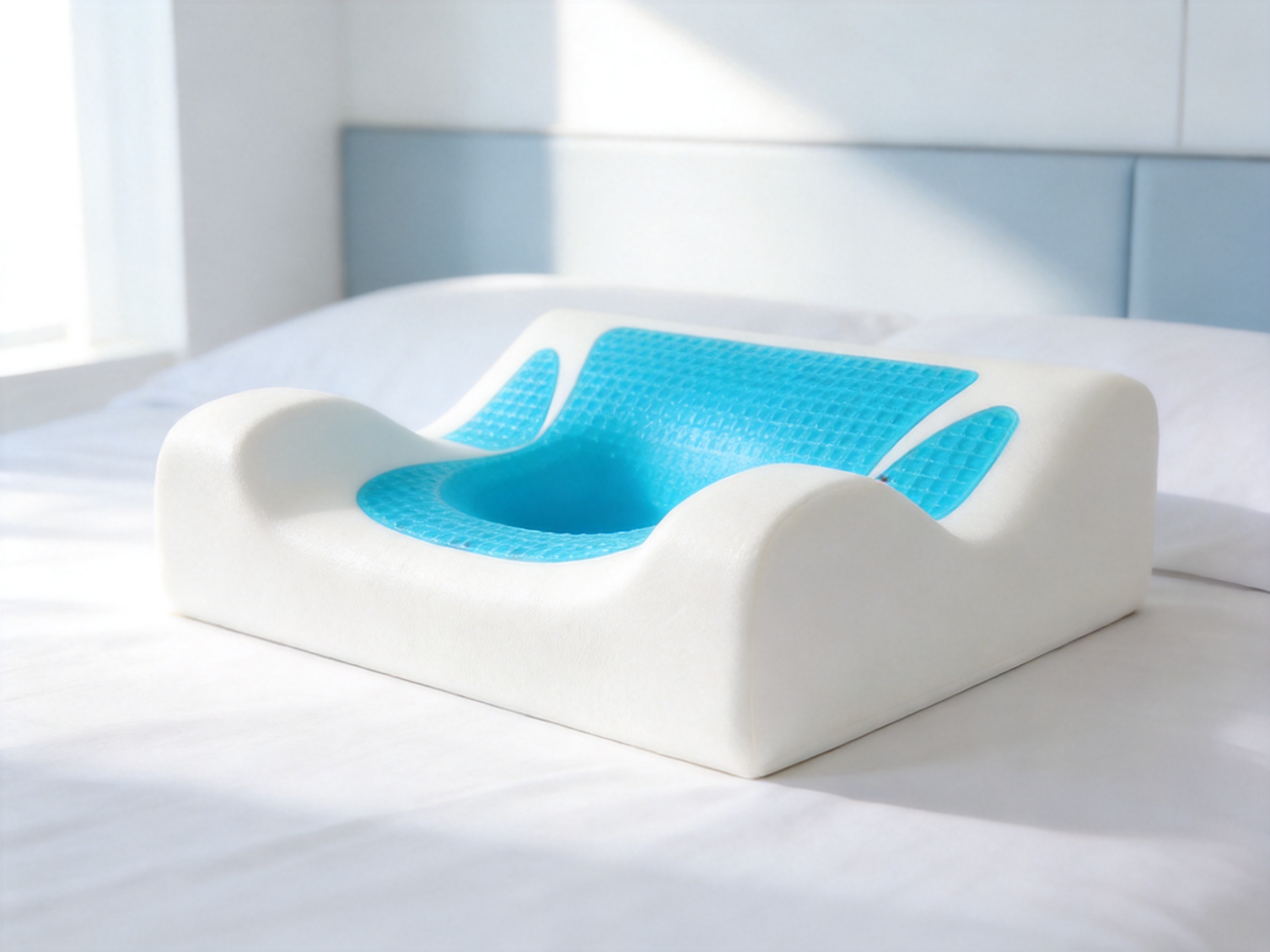
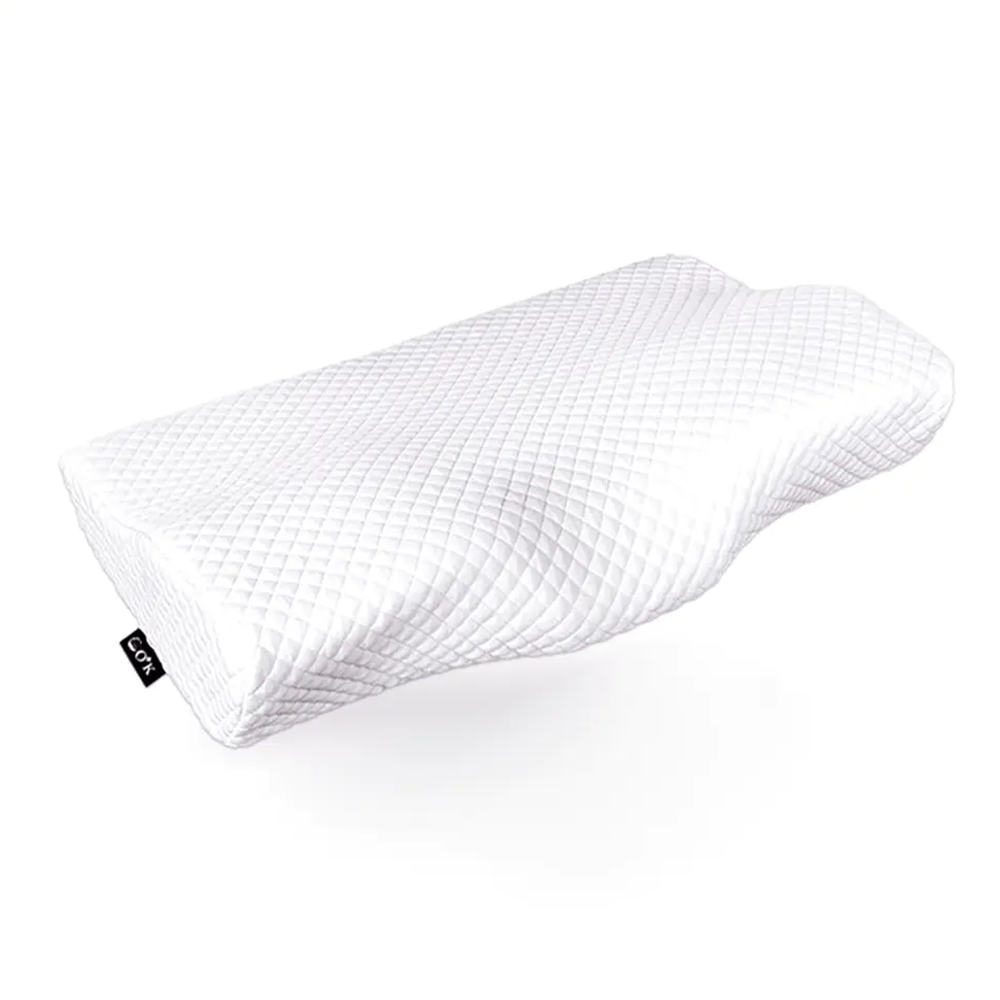
The bun-inspired three-dimensional shape gives the product a distinct ergonomic profile. The center is lower than the surrounding areas, forming a supportive cradle for the head. The elevated sides create additional contact around the neck and shoulder region. In practical use, this configuration is intended to reduce excessive movement and promote a more stable sleeping posture.
Unlike a conventional rectangular pillow with a relatively uniform height, this design uses different zones to perform different support functions. The center focuses on head placement, the side areas help support the neck, and the outer structure contributes to overall stability. This zoning approach is one of the product’s primary points of differentiation.
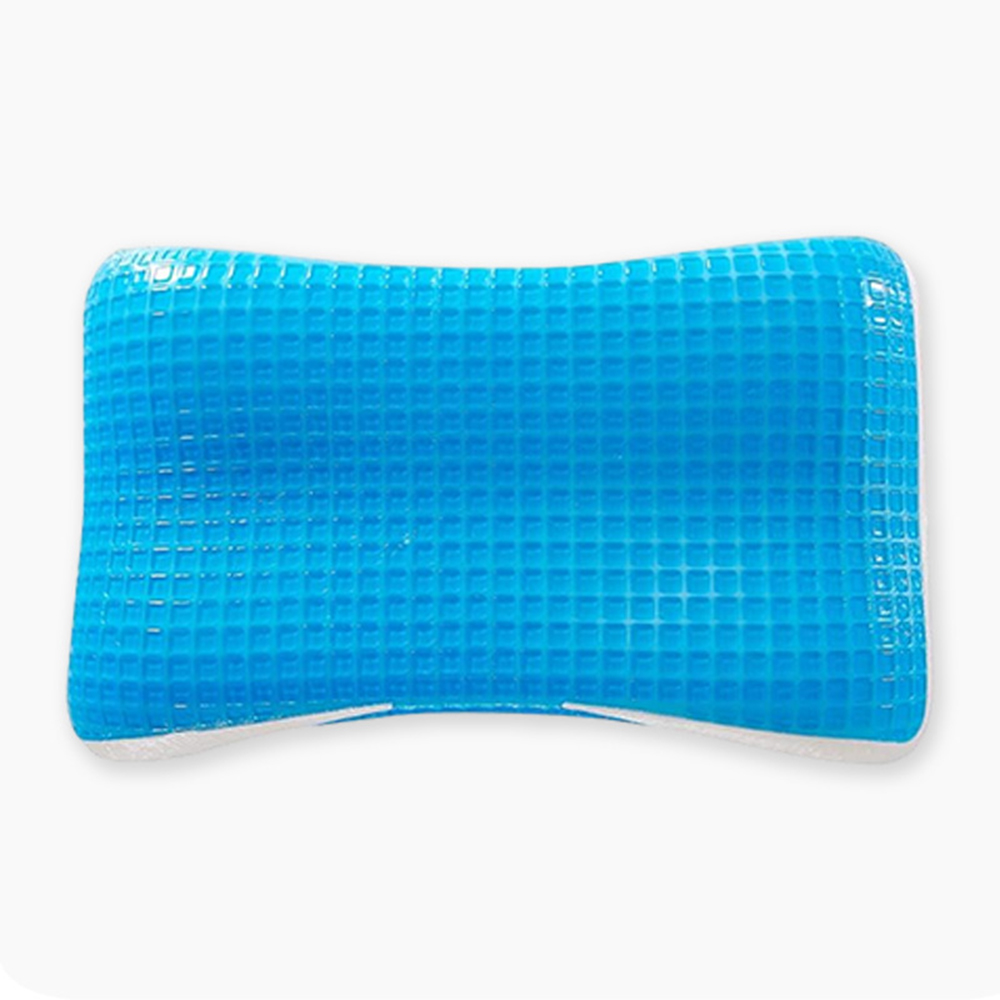
The upper surface includes a gel-textured layer with heat-absorbing characteristics. Gel materials with high thermal conductivity can help move heat away from the immediate contact area more efficiently than many conventional textile or foam surfaces. This feature is especially relevant for warm climates, summer conditions, air-conditioned hotel rooms, and sleepers who tend to feel hot at night.
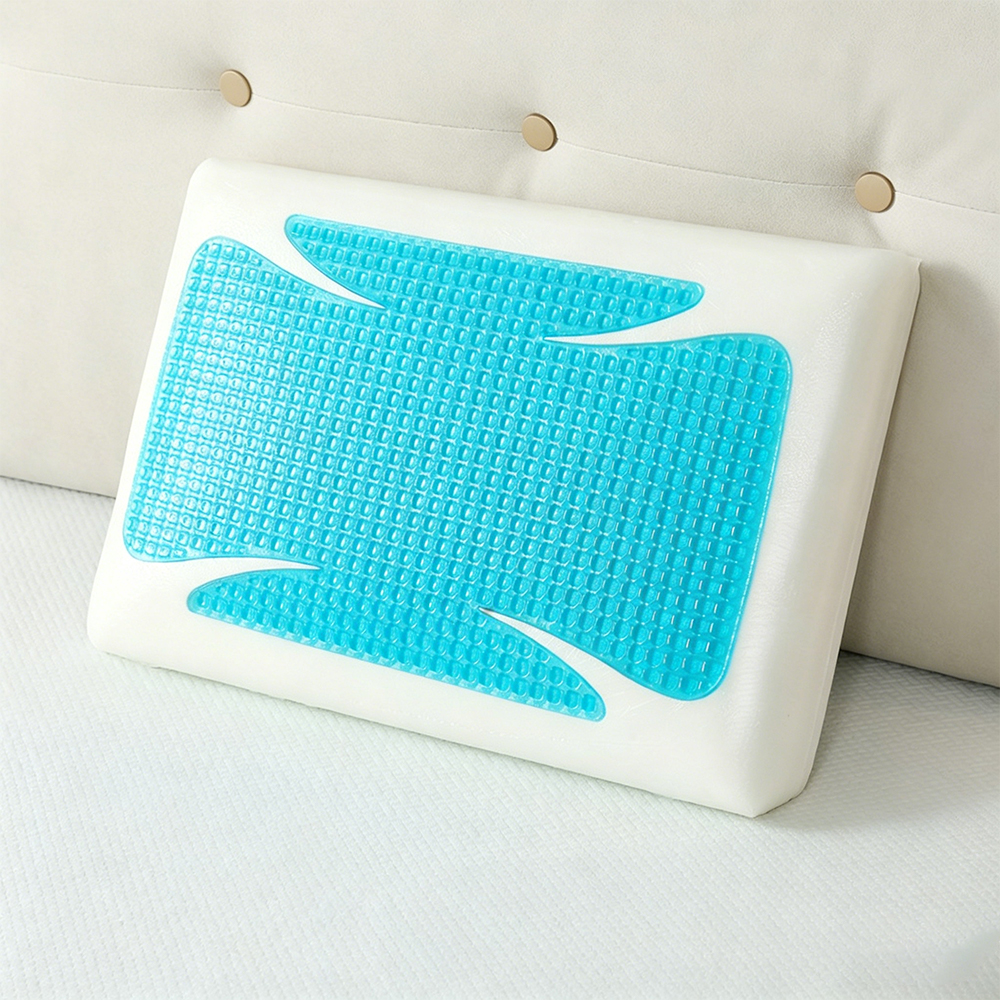
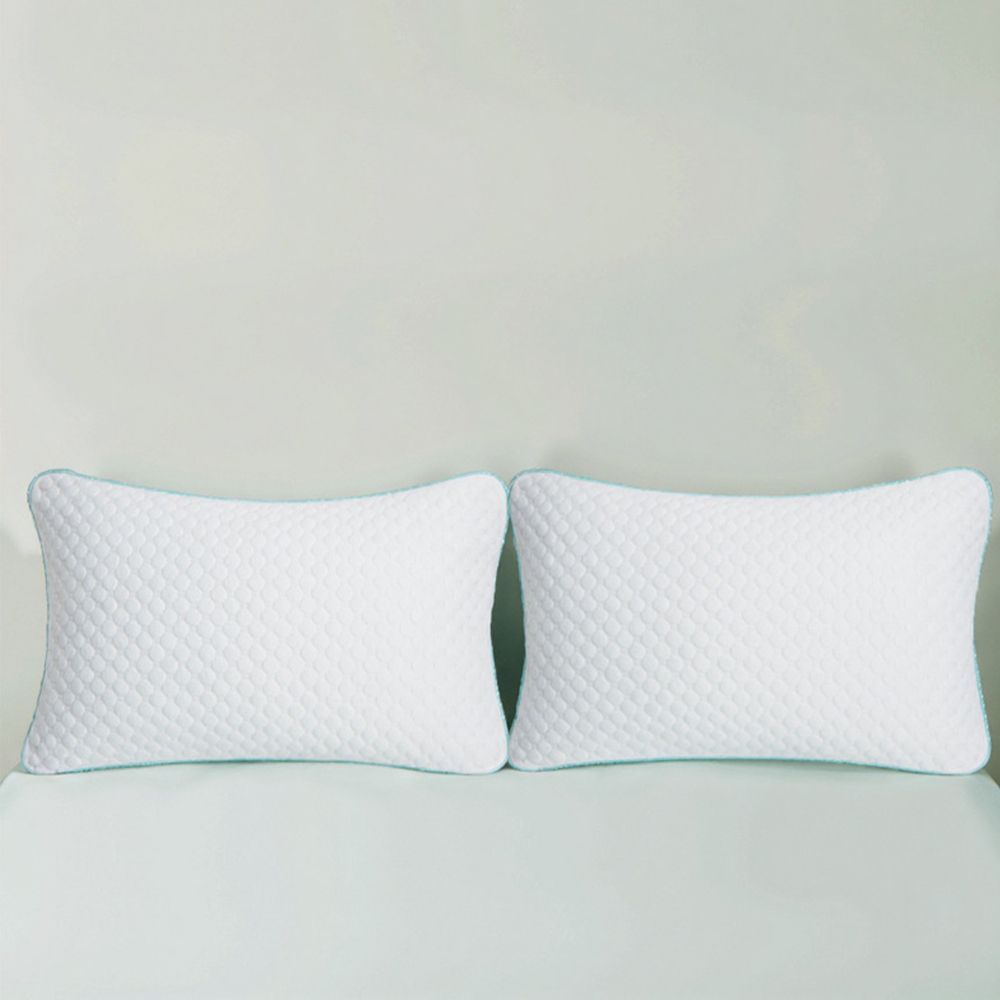
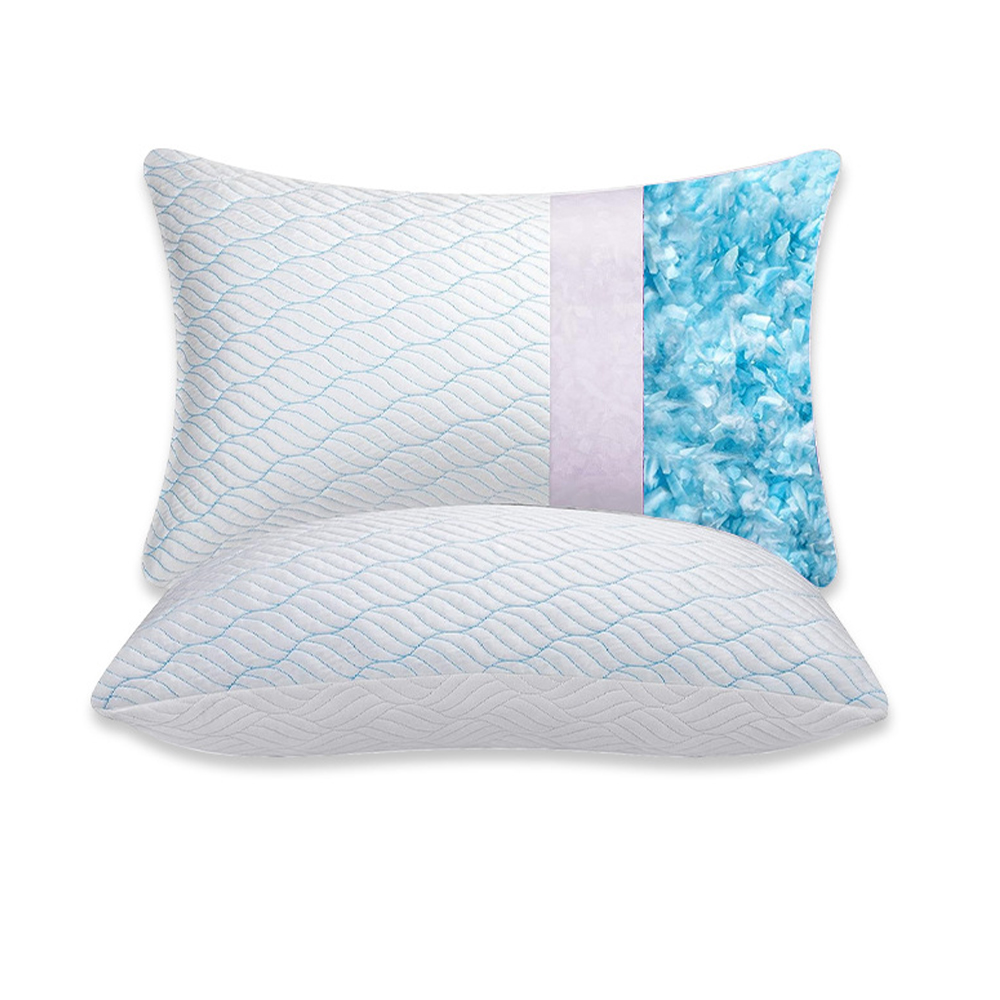
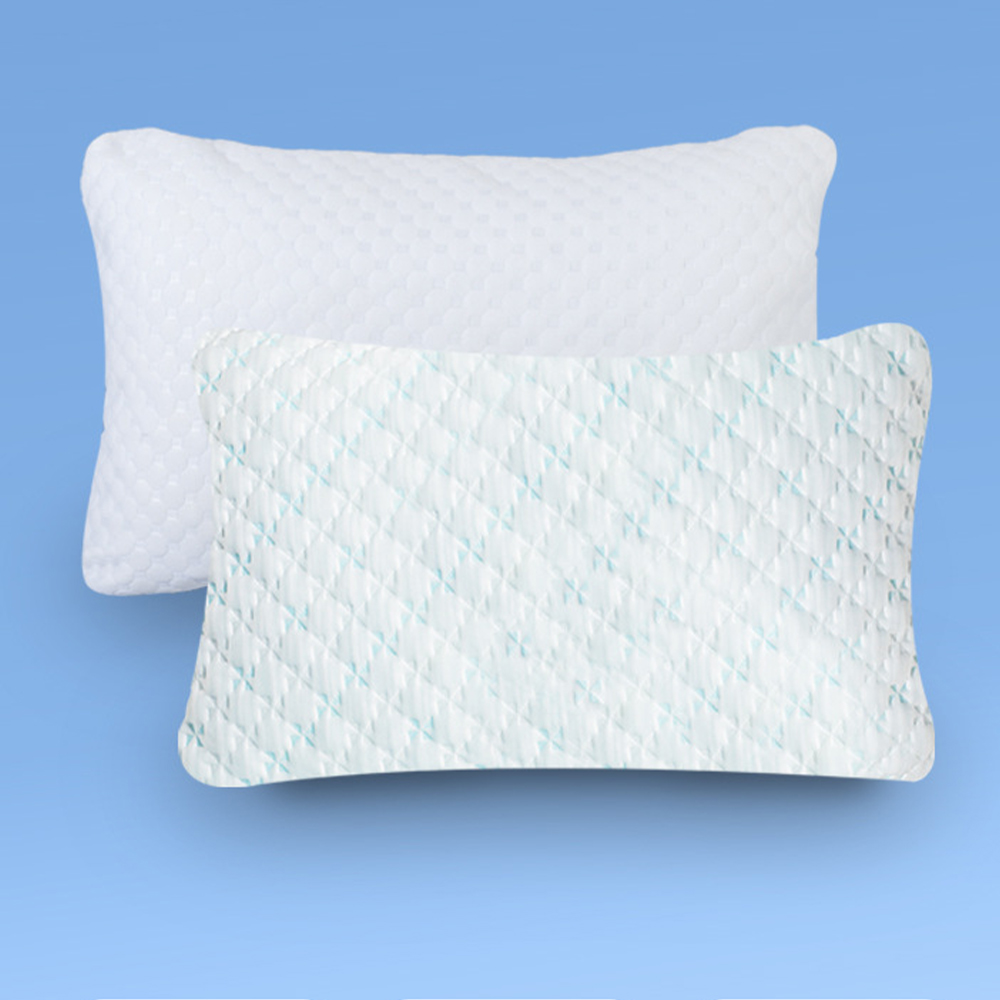
Gel memory foam bun pillow
2. Ergonomic Support and Cervical Comfort
One of the most important functions of a pillow is to help maintain a relatively neutral relationship between the head, neck, and upper spine. The ideal height depends on body shape, sleeping position, shoulder width, mattress firmness, and personal preference. Nevertheless, a pillow that can conform to the user’s shape may provide more consistent support than a pillow that remains rigid or collapses unevenly.
The slow-rebound memory foam core responds gradually to body pressure. Rather than simply pushing the head upward, it conforms around the contact area. This conforming action can help reduce gaps between the neck and pillow surface, which may otherwise cause the muscles to work continuously to stabilize the head.
The concave center of the bun-shaped profile is designed to help position the head. A stable center can be useful for sleepers who move during the night or who prefer a pillow that feels less likely to slide away from the head. The raised side sections provide additional support when the sleeper’s head turns slightly or when the neck rests near the edge of the central cradle.
The design may be particularly attractive to side and combination sleepers. Side sleepers often need a pillow with sufficient height to fill the space between the head and mattress created by the shoulder. Back sleepers may prefer the lower central section because it can support the head without creating excessive forward tilt. Combination sleepers can benefit from the gradual transition between the center and side support zones.
It is important to recognize that no pillow is universally suitable for every sleeper. Individuals with specific medical conditions, persistent neck pain, or diagnosed spinal concerns should consult a qualified healthcare professional. The product is designed as a comfort and support solution, not as a medical treatment.
2.1 Slow-Rebound Memory Foam Performance
Memory foam is known for its viscoelastic response. It becomes more responsive under pressure and gradually conforms to the shape of the user. In a pillow application, this behavior can create an enveloping feeling while reducing abrupt pressure points.
The slow-rebound behavior also helps the foam recover after use. Compared with low-quality filling materials that can become uneven or lumpy, a well-formed memory foam core maintains a more consistent support profile. The performance of the pillow depends on foam density, formulation, temperature, manufacturing precision, and correct use, but the memory foam structure provides a strong foundation for long-term shape retention.
The core is especially valuable for buyers seeking a more stable alternative to loose fiber fillings. Fiber pillows can be adjustable and soft, but they may require regular reshaping. Memory foam does not need to be manually redistributed throughout the night, which can make the sleeping experience more consistent.
2.2 Head and Neck Conforming Action
The product is designed to conform to the natural curves of the head and cervical area. When the head rests in the central depression, the foam distributes contact pressure across a broader surface. When the neck meets the raised support area, the pillow helps reduce the unsupported space that can occur with a flat cushion.
This conforming action may help users feel less strain caused by an unsuitable pillow height. The material does not force the head into a single rigid position. Instead, its gradual response allows the body to settle into the support surface while the pillow retains its general ergonomic shape.
The result is intended to be a floating or cradling sensation. This description refers to the feeling that the head is supported from below and around the sides without being pressed firmly against a hard surface. The experience combines contouring with controlled stability.
3. Cooling and Temperature-Management Features
Heat accumulation is a common concern with foam pillows. Conventional memory foam can feel warm because its dense structure may restrict the movement of air through the material. The gel memory foam bun pillow addresses this issue through a surface layer designed to absorb and dissipate heat.
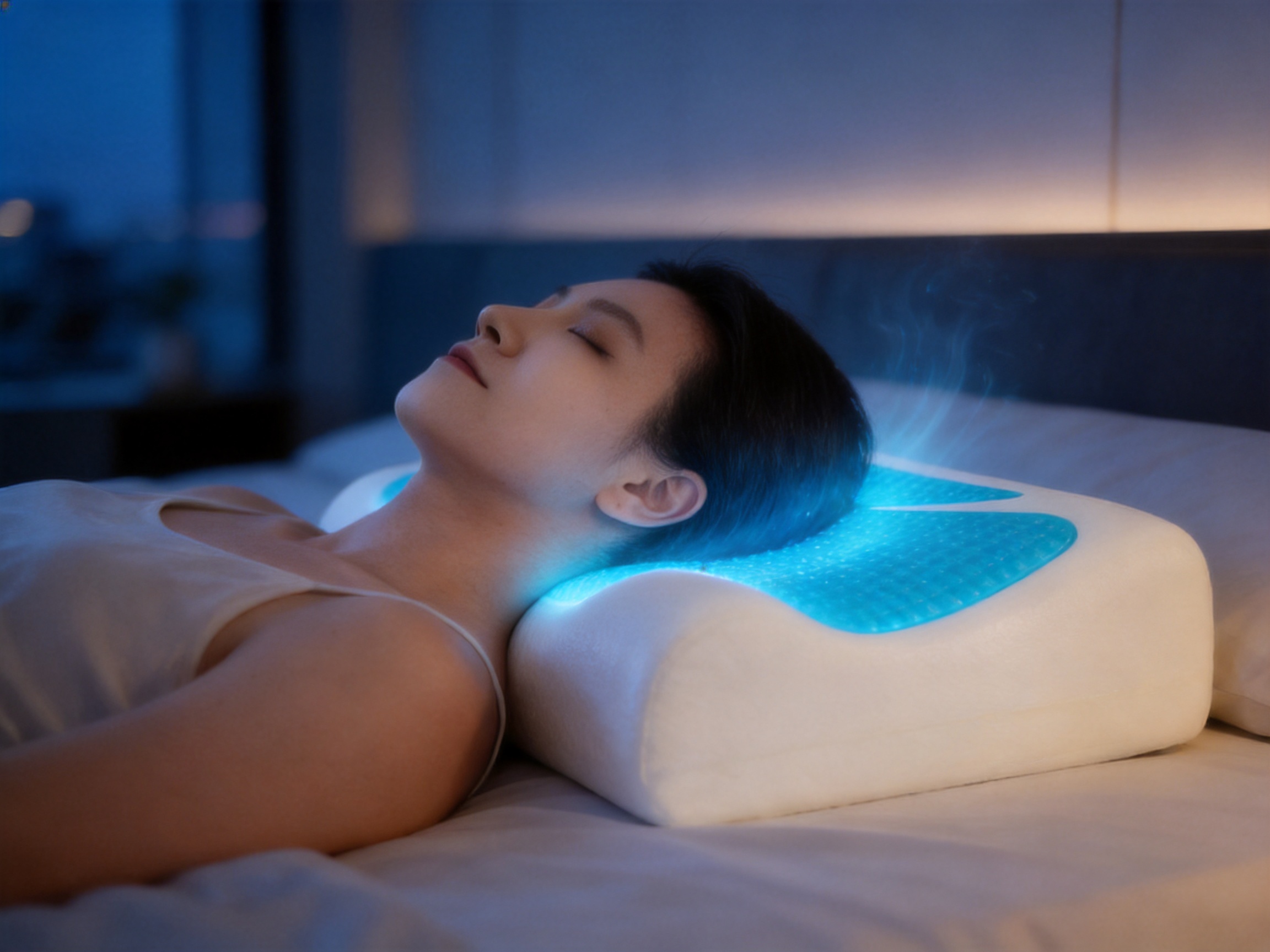
The gel-textured layer uses a high-thermal-conductivity material intended to move heat away from the contact area. When the head initially touches the surface, the gel can absorb some of the perceived warmth. Over time, the material helps distribute heat so that the surface feels less concentrated and less stuffy.
This cooling function is especially useful during summer, in humid environments, and for people who naturally generate more heat while sleeping. It may also provide a more comfortable experience in hotels and guest rooms where users have different temperature preferences.
The cooling effect should not be interpreted as active refrigeration. The pillow does not produce cold air or operate through electricity. Instead, it uses passive heat absorption and thermal transfer. The actual performance will vary according to room temperature, humidity, bedding, user body temperature, and ventilation.
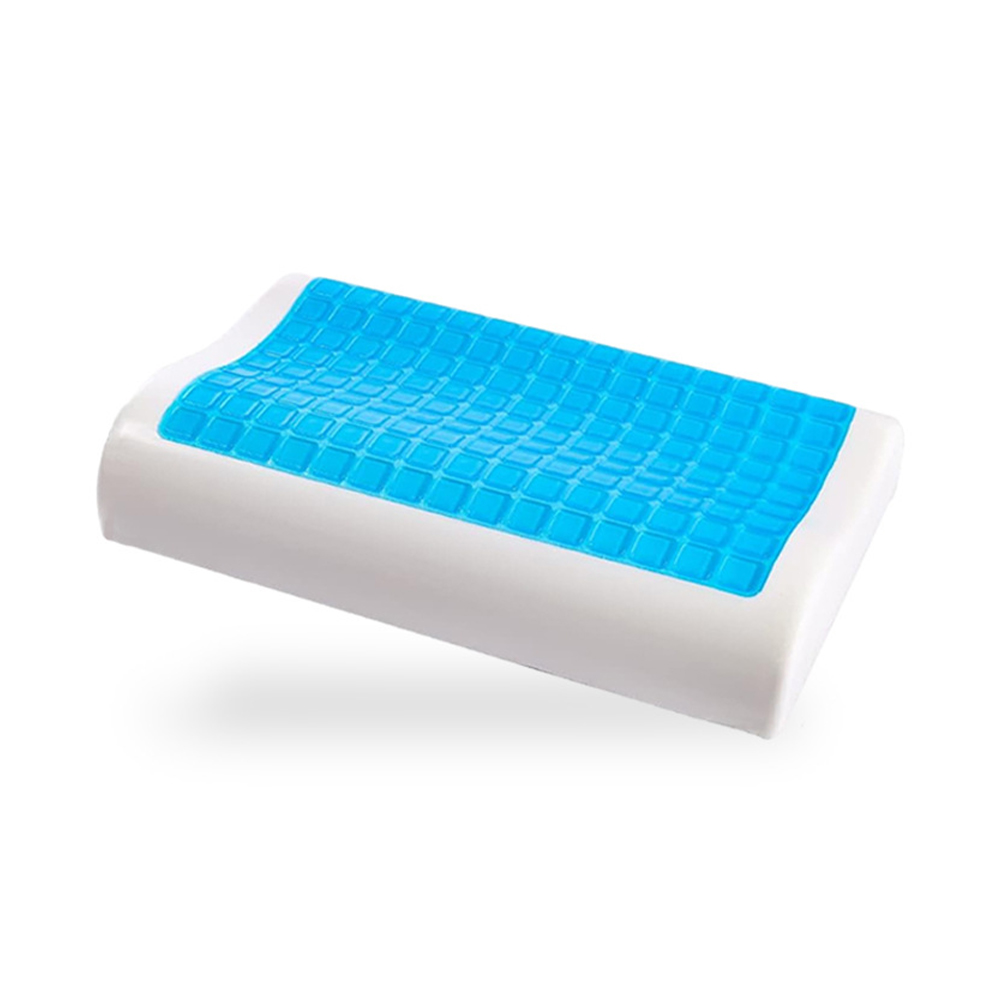
The surface design also contributes to the visual identity of the product. Transparent or semi-transparent blue gel areas contrast with the white exterior, giving the pillow a fresh and technologically oriented appearance. This can be beneficial for brands and hospitality buyers that want products to communicate cleanliness, innovation, and modern comfort.
3.1 Advantages in Warm Climates
Warm-climate consumers often seek bedding materials that do not trap excessive heat. A pillow that feels comfortable at the beginning of the night but becomes hot later may interrupt sleep and encourage frequent repositioning. The gel layer is intended to reduce this discomfort by helping disperse accumulated warmth.
For distributors serving Southeast Asia, the Middle East, southern Europe, and other warm regions, cooling performance can be an important selling point. It gives the product a clear functional message that is easy for consumers to understand: memory foam support combined with a cooler contact surface.
The same advantage applies to hospitality projects. Hotels may prefer bedding products that offer a comfortable experience across a broad range of guest preferences. A cooling pillow can complement climate-controlled rooms and improve the perceived quality of the sleep environment.
3.2 Surface Comfort
In addition to thermal performance, the surface is designed to provide a soft and skin-friendly touch. The exterior fabric and gel structure work together to create a smoother contact experience. A comfortable cover can make the difference between a pillow that feels technically advanced and one that feels pleasant during daily use.
Custom fabric options allow buyers to select materials that match their market positioning. Depending on the intended application, a buyer may request a soft consumer-oriented cover, a durable hospitality fabric, or a surface with specific visual and tactile characteristics.
4. Product Design and Appearance
The pillow has a modern white-and-blue appearance. White communicates cleanliness and simplicity, while the blue gel areas add a distinctive visual feature. This combination can fit contemporary bedrooms, minimalist interiors, wellness spaces, hotel rooms, and retail packaging designed around health and comfort.
The three-dimensional texture gives the product a more advanced appearance than a basic flat pillow. The visible gel zones can help consumers understand that the pillow includes a cooling function rather than ordinary memory foam alone. The shape also provides an immediate visual explanation of the product’s support concept, with a central cradle and raised side sections.
Although the product is classified in the information as having a rectangular shape, its functional surface includes a contoured bun profile. This combination enables efficient use of standard bedding dimensions while retaining differentiated ergonomic geometry.
The approximate dimensions are 60 by 40 by 10 centimeters. The height range is listed as 5.1 to 10 centimeters, reflecting the contoured profile rather than a uniform thickness. The central zone and side zones may therefore offer different effective support heights.
4.1 Suitable User Groups
The primary target users are adults seeking an ergonomic memory foam pillow. The product is suitable for individual use and can be positioned as an upgrade from conventional pillows. It may be relevant to people who value cervical support, people who sleep hot, and consumers who prefer a shaped pillow rather than a loose-fill design.
The product is also suitable for business buyers. Hotels, guesthouses, furnished apartments, bedding retailers, online sellers, and private-label brands may use the pillow as part of a broader sleep-product range. Its modern appearance and customizable specifications make it appropriate for different sales channels.
Because the product is not listed as a children’s pillow, it should be marketed primarily for adults. Children’s bedding requires age-appropriate design, materials, dimensions, and safety assessment, so buyers should not assume that the adult specification is suitable for young users.
4.2 Home and Hospitality Applications
For home users, the pillow can serve as a daily sleep accessory in the master bedroom, guest bedroom, or seasonal bedding collection. Its cooling surface may be promoted for summer use, while its memory foam core can be positioned as a comfort upgrade.
For guesthouses and hotels, the pillow can support a more consistent room experience. Businesses may order customized dimensions or fabrics to match existing bedding programs. Branding, packaging, and color adjustments can also help create a coordinated product presentation, subject to the agreed manufacturing specifications.
Online retailers may present the product as a combination of three benefits: contoured support, slow-rebound memory foam, and heat-dissipating gel. This concise positioning allows consumers to understand the product without needing extensive technical knowledge.
5. Advantages Compared with Conventional Pillow Designs
The gel memory foam bun pillow offers several functional advantages when compared with ordinary fiber pillows, flat foam pillows, and basic memory foam pillows. These advantages should be understood as design benefits rather than absolute claims that apply to every competing product.
| Feature | Gel Memory Foam Bun Pillow | Conventional Fiber Pillow | Basic Flat Memory Foam Pillow |
| Support structure | Contoured center with raised support zones | Generally uniform and dependent on filling distribution | Usually consistent thickness with limited contouring |
| Pressure response | Slow-rebound conforming memory foam | Soft compression with possible reshaping | Memory foam conformity without specialized bun shaping |
| Thermal feature | Gel-textured heat-absorbing surface | Depends mainly on cover and filling ventilation | May retain heat depending on foam formulation |
| Shape retention | Structured foam core designed to preserve contour | May flatten or become uneven over time | Generally stable, but without zoned support |
| Customization | Size, color, and fabric customization supported | Often available but varies by supplier | May be limited to standard dimensions |
| Visual positioning | Modern white-and-blue technical appearance | Traditional and less distinctive | Usually simple foam or textile appearance |
5.1 Compared with Fiber-Filled Pillows
Fiber-filled pillows are popular because they are soft, lightweight, and often economical. However, their support may change as the filling shifts or compresses. Some users need to fold, pat, or reshape them regularly. The memory foam core in this product provides a more stable internal structure and does not depend on loose filling distribution.
The bun shape further distinguishes the product from a conventional fiber pillow. Instead of offering one general surface, it creates a central head area and supporting side sections. This design may be more suitable for users who want a pillow that feels intentional and structured.
5.2 Compared with Ordinary Memory Foam Pillows
Basic memory foam pillows already offer pressure-conforming benefits, but a flat block of foam may not provide the same level of zoning. The contoured profile of this product adds a deliberate relationship between head placement and neck support.
The gel surface is another point of differentiation. Not every memory foam pillow includes a heat-absorbing layer, so the combination of support foam and cooling gel can make this product more appealing in warm-weather markets.
5.3 Compared with Traditional Flat Pillows
A traditional flat pillow generally has a uniform height. This can be comfortable for some users, but it may not provide differentiated support for the head and neck. The three-dimensional structure of the bun pillow is intended to reduce this limitation by using a shaped surface.
The shaped construction can also contribute to product identity. Retail buyers and consumers can immediately see that the pillow has a specific ergonomic purpose rather than being a generic rectangular cushion.
6. Manufacturing Strengths and Material Innovation
The product is manufactured by Jiangsu Wellcare Household Articles Co., LTD., a company with experience in sleep materials and healthy home products. The company was founded in 2003 and focuses on research, development, and manufacturing related to foam materials, mattresses, pillows, cushions, and other home-comfort products.
The company’s technical foundation extends beyond the production of finished pillows. Its material portfolio includes ordinary sponge, memory foam, gel foam, temperature-insensitive memory foam, quick-dry memory foam, flame-retardant sponge, antibacterial sponge, and other specialized foam materials. This breadth is important because pillow performance depends heavily on the underlying foam formulation.
A manufacturer that understands both raw material development and finished-product construction can make more informed decisions about density, rebound speed, resilience, surface feel, thermal behavior, and structural stability. These capabilities support the development of products tailored to different climates, consumer expectations, and sales channels.
6.1 Research and Development Capability
The company is led by a doctor-led research and development team and develops more than one hundred new foam materials annually. This level of material activity indicates a strong focus on formulation improvement and application-based innovation.
For the gel memory foam bun pillow, research capability can support the coordination of several requirements that must work together: the foam must conform without feeling unstable, the structure must retain its shape, the surface must remain comfortable, and the gel layer must integrate effectively with the overall design.
Material innovation also enables manufacturers to respond to market-specific needs. A buyer selling in a hot region may prioritize thermal management. A hotel buyer may emphasize durability and easy maintenance. A private-label brand may request a particular color, cover fabric, or customized dimension. A technically capable manufacturer is better positioned to evaluate these requirements.
6.2 Production Experience
The company’s development history began in 1993 as a school-run scientific research enterprise. In 2003, it acquired a 12,000-square-meter factory building and worked with Huai’an Institute of Technology to develop new sponge materials. In 2008, it acquired 50,000 square meters of land, creating a broader foundation for manufacturing and development.
This long-term development path provides experience in scaling material research into commercial production. Foam products must be manufactured with attention to mixing, foaming, curing, molding, cutting, bonding, inspection, packaging, and storage. Consistency across these stages is essential for maintaining product performance from one production batch to the next.
The company’s past cooperation with universities and technical institutions also reflects an approach based on applied research. Such cooperation can help connect laboratory-level material development with practical manufacturing requirements.
6.3 International Market Experience
The company began supplying products to cross-border supermarkets in the United States, Germany, and Japan by 2010. Its products were later exported to the United Kingdom, Canada, Australia, Kuwait, and other markets. International distribution experience can help a manufacturer understand differences in packaging, product expectations, logistics, and market positioning.
In 2018, the company became an Alibaba-certified Gold Supplier and entered e-commerce. In 2020, it became a designated supplier for five-star hotels. These milestones demonstrate experience serving both online channels and professional hospitality customers.
The gel memory foam bun pillow is listed for sales regions including Europe, Southeast Asia, North America, the Middle East, and other markets. It is also suitable for downstream platforms such as eBay, Amazon, Wish, AliExpress, independent websites, Lazada, and other channels, depending on the buyer’s distribution strategy.
7. Manufacturing Process Considerations
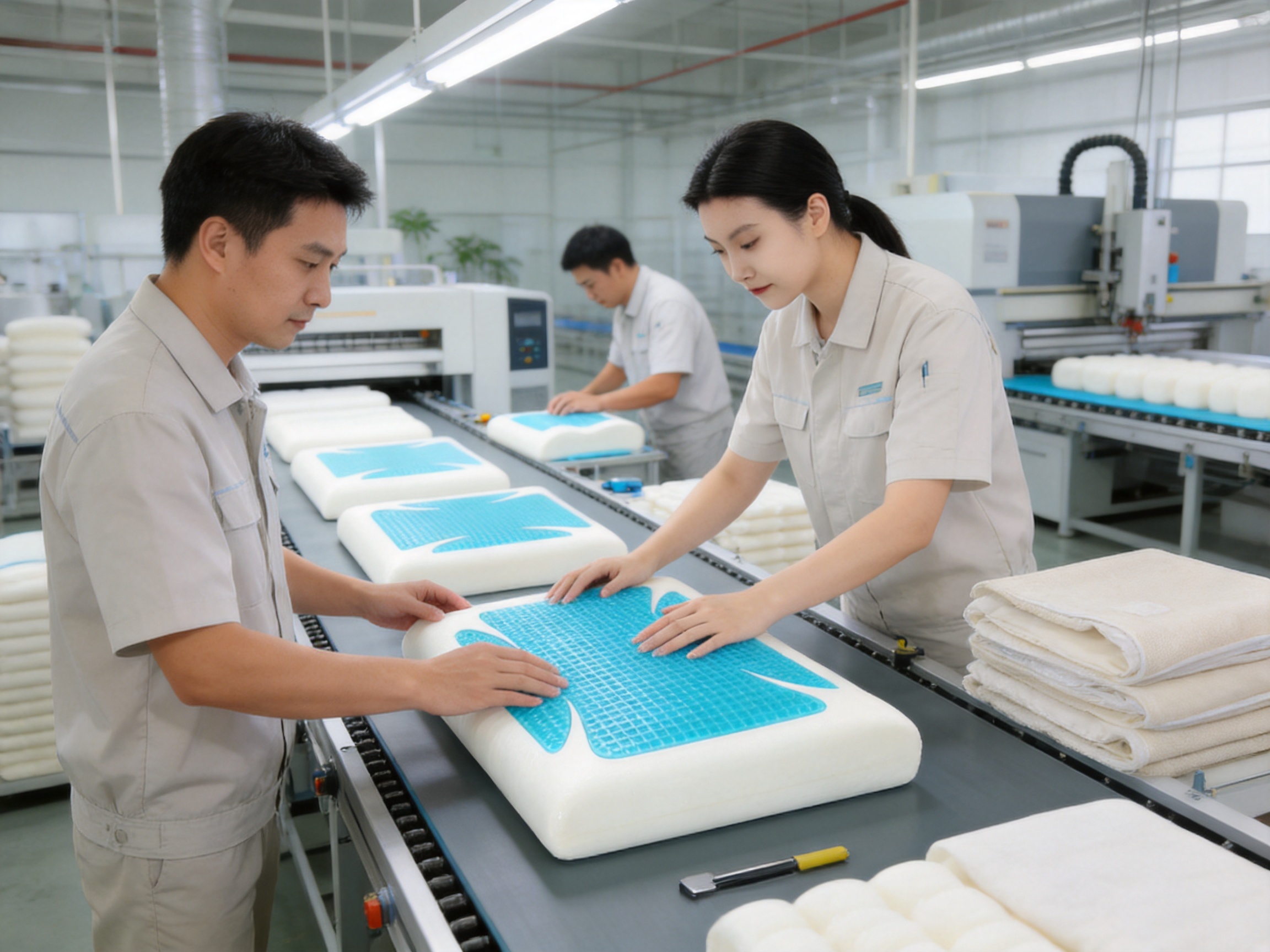
Although the exact proprietary formula and production parameters are not disclosed, the development of a product like this generally requires close control over multiple manufacturing stages. The foam core must be formed to the correct density and dimensions, and the contour must be accurately maintained so that the center and raised support zones perform consistently.
7.1 Foam Formulation and Foaming
The first major consideration is the formulation of the memory foam. Raw materials are selected and mixed according to the required density, elasticity, rebound speed, firmness, and durability. A slow-rebound pillow needs a formulation that provides gradual recovery while still offering adequate support.
Foaming conditions influence the internal cell structure of the material. Cell structure affects softness, resilience, breathability, and long-term stability. Manufacturing control is therefore important to reduce variation between batches and to ensure that the finished pillow meets its intended specifications.
7.2 Molding and Contouring
The bun-shaped profile requires accurate molding or shaping. The central concavity, raised sides, outer dimensions, and transition areas must be coordinated. If the contour is too shallow, the support effect may be reduced. If it is too pronounced, some users may find the pillow difficult to adapt to.
Precision in molding also supports visual consistency. For commercial buyers, consistency matters because photographs, samples, packaging, and delivered goods should present the same product identity. Accurate shaping makes it easier to maintain stable quality across production orders.
7.3 Gel Layer Integration
The gel surface must be integrated with the pillow in a way that preserves comfort and durability. The material should remain securely positioned during normal use while maintaining a smooth contact surface. The connection between gel, cover, and foam must be considered during design and testing.
The gel layer also needs to complement the flexibility of the memory foam. A surface that is too rigid may interfere with the conforming sensation. A surface that is too thin or poorly bonded may not provide the desired thermal or tactile benefit. Proper material selection and process control are therefore important to the final user experience.
7.4 Cover Production and Finishing
The cover is responsible for much of the pillow’s direct contact feel and visual presentation. Cutting, sewing, fitting, and finishing must be completed carefully to avoid wrinkles, loose seams, or uneven tension. A well-fitted cover allows the contours of the foam and gel surface to remain visible and functional.
Different markets may require different fabric characteristics. Some buyers may prefer a soft, breathable textile, while others may prioritize durability, color stability, or easy-care performance. Because custom fabrics are available, the cover can be adapted to the requirements of a specific project.
7.5 Quality Inspection
Quality inspection for a contoured memory foam pillow may include checks of dimensions, weight, shape, surface finish, cover workmanship, material appearance, and packaging condition. Buyers may also request sampling procedures or additional quality documentation according to their purchasing requirements.
Inspection helps confirm that the pillow corresponds with its declared specifications. For this product, important reference points include the approximate 60 by 40 by 10 centimeter size, the adult-oriented design, the white color, the memory foam material, and the presence of the cooling gel surface.
8. Customization and Private-Label Opportunities
Custom processing is supported for the gel memory foam bun pillow. This is valuable for distributors and brands that need more than a standard catalog product. Customization can involve size, color, fabric, packaging, and other details subject to technical discussion and order requirements.
Size customization may help buyers serve different bed sizes, consumer preferences, or regional expectations. A smaller version may be suitable for compact bedding collections, while a larger version may be positioned as a premium hotel pillow. Any size change should be evaluated together with the foam contour, support height, cover fit, packing method, and shipping volume.
Color customization can help align the pillow with a private-label brand or hospitality interior. The standard white exterior with blue gel areas creates a modern look, but buyers may request alternative colors depending on the product line and target market.
Fabric customization can influence softness, breathability, appearance, and maintenance. Buyers should communicate their priorities clearly, including whether the pillow will be sold for home use, hospitality use, seasonal use, or online retail.
Private-label buyers can also develop a broader sleep collection around the product. The pillow may be combined with memory foam mattresses, gel foam cushions, functional pillows, pet products, or other foam-based home articles. A consistent material platform can help create a unified product family.
8.1 Customization Questions Buyers Should Confirm
Before placing a customized order, buyers should confirm the target dimensions, material specification, surface construction, cover fabric, color, logo requirements, packaging format, order quantity, lead time, inspection standard, shipping method, and applicable market regulations.
It is also advisable to request a sample before mass production. A sample allows the buyer to evaluate the firmness, height, cooling surface, cover feel, contour, color, and packaging. For hotel projects, it may be useful to test the pillow in a representative room environment.
Because dropshipping is not supported for this product, buyers should plan for inventory management, direct shipment, or cooperation with their own fulfillment partners. This specification is important for online sellers who are deciding whether the product fits their operating model.
9. Sustainability and Responsible Manufacturing
WELLCARE also emphasizes sustainability and environmental management. The company has invested in advanced eco-friendly energy systems and continues to improve its environmental practices. Its stated objective is to go beyond basic compliance and create lasting environmental value by integrating respect for nature into business operations.
For foam-product buyers, sustainability is becoming increasingly relevant. Customers want to know more about materials, manufacturing conditions, product life, packaging, and responsible business practices. A manufacturer that incorporates environmental management into its operations can provide a stronger foundation for sustainable product development.
Responsible manufacturing does not depend on a single feature. It includes efficient resource use, process control, waste reduction, responsible energy management, safe material handling, and continuous improvement. Buyers should discuss the specific environmental documentation and certifications required for their market.
The durability of a product can also contribute to more responsible consumption. A pillow that maintains its support and shape for a reasonable service life may reduce the need for frequent replacement. Actual service life depends on usage, hygiene, storage, compression, climate, and care, but structural quality remains an important consideration.
10. Marketing Positioning for Different Sales Channels
The product can be presented through several main selling points: ergonomic contouring, slow-rebound memory foam, cooling gel technology, modern appearance, and customization availability. These points can be adapted to different customer groups without making unsupported medical claims.
10.1 E-Commerce Positioning
For online marketplaces, the product title and images should communicate the main benefits quickly. Suggested themes include “cooling gel memory foam,” “contoured neck support,” “three-dimensional bun shape,” and “adult ergonomic pillow.” Product descriptions should clearly state dimensions, material, color, and care information.
Consumers often compare pillows based on height, firmness, cooling, cover feel, and return expectations. Clear diagrams and accurate measurements can help reduce misunderstandings. Buyers should explain that the pillow has a contoured profile and that the listed height represents the overall product range rather than a uniform thickness.
10.2 Hotel and Guesthouse Positioning
For hospitality buyers, the product can be positioned as a modern comfort upgrade. The cooling surface may be attractive for rooms in warm regions, while the contoured support design can add differentiation to the bedding program.
Hotels may also request larger quantities, customized fabric, coordinated colors, or packaging suitable for storage. Consistency, delivery planning, and after-sales communication are particularly important in this channel.
10.3 Distributor and Brand Positioning
Distributors can use the pillow as part of a broader sleep-material portfolio. The product’s combination of foam innovation and visible gel technology makes it suitable for retailers that want to offer both functional and premium bedding products.
Private-label brands can develop their own packaging and marketing language while retaining the core product structure. They should ensure that all performance claims are supported by product testing and applicable regulations in the intended sales region.
11. Care, Handling, and Use Recommendations
New memory foam products may have a temporary manufacturing odor after unpacking. Buyers should follow the supplier’s ventilation and unpacking recommendations before use. Allowing the pillow to recover its shape after transportation can help it reach its intended profile.
The pillow should be used with a suitable pillowcase or cover unless the supplied cover is specifically designed for direct use. A washable outer cover can help protect the surface from skin oils, perspiration, dust, and accidental spills.
Memory foam should generally not be aggressively twisted, folded for extended periods, or exposed to excessive heat. These actions may affect the foam structure or cover. Cleaning instructions should be followed according to the actual cover and gel-layer construction.
Users should place the pillow on a stable mattress and select a sleeping position that feels natural. During the first several nights, the body may need time to adapt to the contoured design. If the pillow produces persistent discomfort, the user should discontinue use and reassess the size, height, or sleeping arrangement.
12. Frequently Asked Questions
Q1: What is the main function of the gel memory foam bun pillow?
The main function is to provide conforming head and neck support through a slow-rebound memory foam core, while the gel-textured surface helps absorb and dissipate heat. Its three-dimensional shape is designed to create a central head cradle and raised support areas around the neck and shoulders.
Q2: Is the pillow suitable for hot weather?
Yes. The pillow includes a high-thermal-conductivity gel layer intended to improve heat dissipation and reduce a stuffy feeling. It is especially suitable for summer use and warm climates, although the actual cooling experience depends on room temperature, humidity, bedding, and individual sensitivity to heat.
Q3: Is this pillow suitable for side sleepers?
The raised side support areas may be useful for side sleepers because they provide additional height around the neck and shoulder region. However, individual comfort depends on shoulder width, mattress firmness, sleeping position, and personal preference.
Q4: Is the pillow suitable for back sleepers?
The concave center may suit back sleepers who prefer a cradling surface and moderate central height. Users should confirm that the pillow allows the head and neck to remain in a comfortable, neutral position.
Q5: What material is used for the core?
The core is made from memory foam with slow-rebound characteristics. The product information lists memory foam as the main material and identifies the brand as wellcare.
Q6: What are the standard dimensions?
The listed dimensions are approximately 60 by 40 by 10 centimeters. The pillow core height is listed as 5.1 to 10 centimeters because the shaped profile includes different height zones.
Q7: What is the pillow’s approximate weight?
The listed weight is between 0.55 and 1 kilogram, corresponding to the stated range of 1.1 to 2 Jin.
Q8: Can the product be customized?
Yes. Custom processing is supported. Buyers may discuss adjustments to size, color, and fabric, along with packaging and other specifications subject to production feasibility and order requirements.
Q9: Is dropshipping available?
No. The product information states that dropshipping is not supported. Buyers should plan for inventory, wholesale shipment, or their own fulfillment arrangements.
Q10: Can hotels and guesthouses purchase the pillow?
Yes. The product is suitable for homes, guesthouses, hotels, and other hospitality environments. Custom sizes and fabrics may help buyers align the pillow with their bedding program.
Q11: Does the company manufacture other foam products?
Yes. The company’s portfolio includes ordinary sponge, memory foam, gel foam, temperature-insensitive memory foam, quick-dry memory foam, flame-retardant sponge, antibacterial sponge, mattresses, cushions, and other healthy home products.
Q12: Is the pillow a medical device?
No. It is a consumer sleep product designed for comfort and support. It should not be marketed as a treatment or cure for a medical condition. People with persistent pain or diagnosed cervical problems should seek professional medical advice.
Q13: What makes this product different from a standard memory foam pillow?
It combines several features: a three-dimensional bun-shaped profile, a concave center, raised neck-support areas, slow-rebound memory foam, and a heat-absorbing gel surface. A standard memory foam pillow may provide conformity but not necessarily the same contour or cooling layer.
Q14: What should buyers confirm before ordering?
Buyers should confirm dimensions, firmness, cover material, color, gel-layer construction, packaging, order quantity, production lead time, inspection requirements, shipping arrangements, and any market-specific compliance documentation.
13. Conclusion
The gel memory foam bun pillow is designed around two major sleep concerns: support and heat management. Its slow-rebound memory foam core conforms to the head and neck, while its three-dimensional shape creates differentiated zones for head placement and cervical support. The gel-textured surface adds a thermal-management feature that may be particularly valuable in warm climates and for sleepers who feel hot at night.
Compared with conventional fiber pillows, the structured foam core can provide more consistent shaping. Compared with a basic flat memory foam pillow, the bun profile offers a more deliberate ergonomic design. Compared with ordinary foam products, the gel layer creates a visible and functional point of differentiation.
The manufacturer strengthens the product proposition through material research, foam-development expertise, international market experience, customization capability, and sustainability initiatives. Its experience with memory foam, gel foam, quick-dry foam, temperature-insensitive foam, flame-retardant sponge, and antibacterial sponge supports a broad technical platform for sleep and home-comfort products.
For consumers, the pillow offers a modern combination of contouring, stable support, surface softness, and cooling performance. For distributors, hotels, guesthouses, and private-label brands, it provides a customizable product that can be adapted to different markets and sales channels. With correct specification, quality control, and product communication, the pillow can serve as a practical addition to contemporary sleep-product collections.
References
1. Product specification sheet for the Gel Memory Foam Bun Pillow, Item No. PW032.
2. Manufacturer-provided information on memory foam, gel foam, temperature-management materials, and healthy home products.
3. Manufacturer-provided company history and development timeline, including factory expansion, research cooperation, and international supply experience.
4. General technical references on viscoelastic memory foam behavior, pressure distribution, and slow-rebound materials.
5. General technical references on thermal conductivity, passive heat absorption, and cooling surfaces used in bedding products.
6. General product-development references concerning ergonomic pillow contouring, sleeping posture, and cervical support considerations.
7. Manufacturer-provided information on customization, international sales regions, downstream platforms, and hospitality supply.
8. Manufacturer-provided sustainability statement concerning eco-friendly energy systems and environmental management practices.
Product: Gel memory foam bun pillow

PREV:Anti-Slip Memory Foam Bed Rail Strips for Safer Children’s Sleep
NEXT:Ice Silk Gel Memory Foam Sponge Pillow: Cooling Comfort, Adaptive Support, and Custom Manufacturing Excellence
NEXT:Ice Silk Gel Memory Foam Sponge Pillow: Cooling Comfort, Adaptive Support, and Custom Manufacturing Excellence
Interested in cooperation or have questions?
Related News
WELLCARE was founded in 2003, boasting over a decade of profound and extensive experience.
Quick Links
Product
Media Centre
Contact Information
- [email protected]
- +86-517-84998062
- +86-15152354988
- No. 168 Nenjiang Road, Huaiyin District, Huai'an City, Jiangsu Province, China
Copyright © Jiangsu Wellcare Household Articles Co., LTD. All Rights Reserved.
Custom Memory Gel Mattress Manufacturers
