

 English
 日本語
 Español



Pan Ruoxi — Product Sales Consultant

Home / Author / Pan Ruoxi — Product Sales Consultant / Why Anti-Slip Pet Stairs Make Everyday Mobility Safer and More Comfortable
Product Category
NEW Category
Contact us
Why Anti-Slip Pet Stairs Make Everyday Mobility Safer and More Comfortable
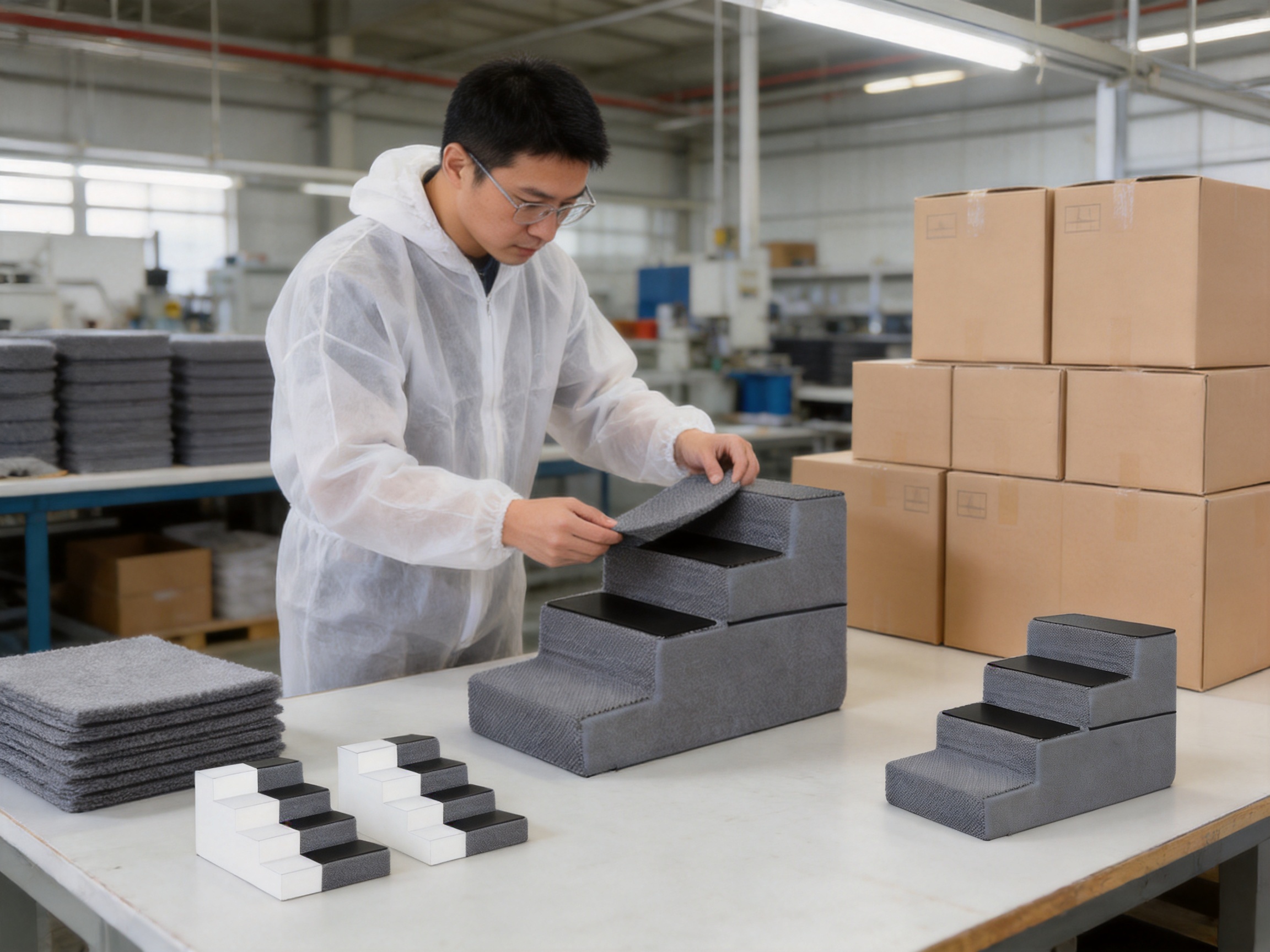
Pet stairs are becoming an increasingly important home accessory for dogs and cats that need help reaching beds, sofas, vehicle seats, and other elevated surfaces. While many pets are naturally agile, repeated jumping can place unnecessary pressure on the hips, knees, shoulders, and spine. Older animals, small breeds, pets recovering from injury, and animals with sensitive joints may find ordinary furniture difficult to access safely. A well-designed staircase provides a gradual, controlled route that supports mobility without requiring a high-impact jump.
The anti-slip pet stairs described in this article are designed around three essential requirements: secure footing, structural stability, and practical integration into the home. The product combines a rigid internal support structure with a widened base and a thickened granular surface that helps improve traction. Its gray minimalist appearance allows it to fit naturally into bedrooms, living rooms, vehicles, and other modern environments.
Manufactured by Jiangsu Wellcare Household Articles Co., LTD., the product benefits from the company’s long experience in foam research, material development, and healthy home products. The manufacturer has developed expertise in ordinary sponge, memory foam, gel foam, temperature-insensitive memory foam, quick-dry memory foam, flame-retardant sponge, antibacterial sponge, and other specialized foam materials. This background provides a strong foundation for producing pet products that require a balance of comfort, resilience, support, and cleanliness.
This article examines the product’s construction, safety benefits, usability, maintenance advantages, manufacturing capabilities, and competitive position. It also explains how buyers, distributors, and private-label customers can evaluate pet stairs for quality rather than relying only on appearance or price.
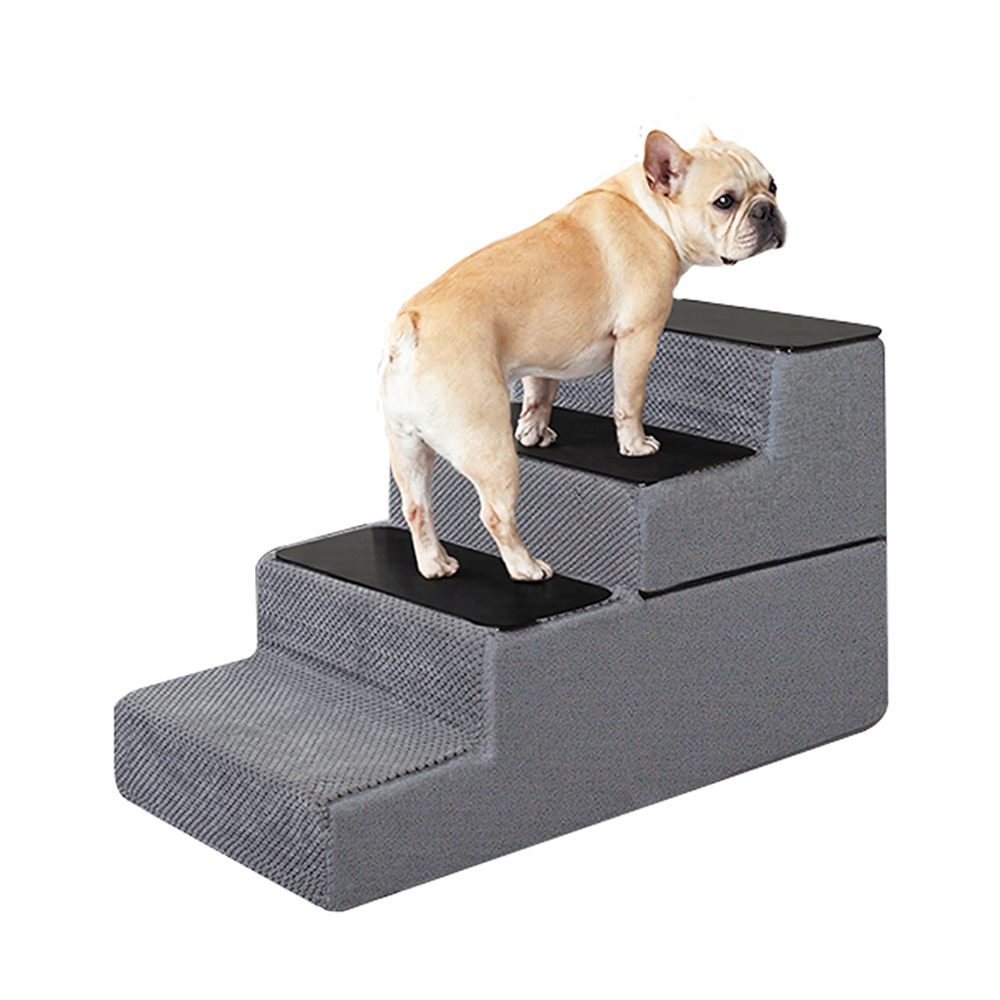
Anti-slip pet stairs
1. The Role of Pet Stairs in Safer Daily Mobility
Many household surfaces are significantly higher than a pet’s natural stepping height. A sofa or bed may be easy for a large, healthy dog to reach, but the same surface can represent a demanding obstacle for a small dog, a cat with reduced mobility, or an older animal. When a pet repeatedly jumps down from a height, the landing impact can be greater than the effort required to jump up. Over time, these movements may contribute to discomfort, hesitation, or reduced confidence.
Pet stairs divide a single large movement into several smaller steps. Each step lowers the required height difference and allows the animal to place its paws more deliberately. This controlled movement is particularly valuable for pets with short legs, sensitive joints, limited balance, or reduced muscle strength. It can also benefit healthy pets by reducing unnecessary impact during frequent access to favorite resting areas.
A staircase is not intended to replace veterinary advice or treatment. However, it can be a useful environmental support that makes the home easier to navigate. By changing the route to a sofa, bed, or car seat, owners can reduce the need to lift pets repeatedly and can give animals more independence during everyday routines.
Supporting different stages of a pet’s life
The need for mobility assistance can arise at many stages. Puppies and small dogs may be unable to reach elevated furniture because of their size. Adult pets may benefit from stairs when they spend much of the day moving between the floor and a sofa. Senior dogs may need a lower-impact route because their joints are less flexible or because they are more cautious when jumping.
Cats can also benefit from structured access, especially when they are recovering from an injury or adapting to reduced mobility. Nevertheless, each animal has a different temperament. Some pets immediately recognize stairs as a useful route, while others require gradual introduction, positive reinforcement, and supervision during the first several uses.
Reducing hesitation and improving confidence
A pet may hesitate before jumping because the landing area is narrow, slippery, or visually unclear. A staircase with a broad, stable footprint and textured stepping surface can make the route appear more predictable. When each step feels secure, the animal is more likely to move naturally instead of making a sudden leap or turning back.
Confidence is especially important for older animals. A pet that has slipped once may become reluctant to approach a sofa or vehicle. Consistent traction and a stable structure can help restore familiarity with the movement, although owners should always monitor the pet and avoid forcing use.
2. Product Design Overview
The anti-slip pet stairs are categorized as foam pet stairs and use sponge as the main material. The listed specification is approximately 38 cm by 60 cm by 46 cm, subject to the manufacturer’s final dimensional confirmation and any customized size requirements. The design includes a high-strength rigid inner core, a widened base, and a thickened non-slip granular surface.
These components work together rather than functioning as isolated features. The surface helps the paw maintain contact. The internal structure helps the steps retain their shape under normal use. The widened base distributes weight over a larger area and helps reduce movement or tipping. A staircase that includes all three elements can provide a more complete mobility solution than a soft, lightweight product that depends only on cushioning.
| Product Attribute | Specification or Feature |
| Product Name | Anti-slip pet stairs |
| Category | Foam pet stairs |
| Brand | wellcare |
| Item Number | P003 |
| Approximate Specification | 38 cm × 60 cm × 46 cm |
| Main Material | Sponge |
| Color | Gray |
| Primary Use | Access to beds, sofas, cars, and other elevated surfaces |
| Recommended Users | Dogs, especially small to medium-sized dogs; suitable for selected cats |
| Surface | Thickened non-slip granular surface |
| Support | High-strength rigid inner core and widened base |
| Maintenance | Wipeable surface for routine cleaning |
| Available Markets | Europe, Southeast Asia, North America, and the Middle East |
A structure designed for repeated use
Pet stairs are used repeatedly, often several times per day. This means the product must be evaluated for more than initial appearance. Repeated stepping can compress weak foam, loosen surface materials, or cause a narrow base to shift. The rigid inner core in this design is intended to provide more consistent support than a completely soft construction. It helps the stair retain its form and provides a more dependable platform for the animal’s weight.
The internal core is also important for maintaining the relationship between individual steps. If a soft product changes shape after repeated loading, the height or angle of each step may become less predictable. A stronger internal structure helps preserve the intended geometry, which may make the staircase easier for pets to learn and use.
A widened base for improved balance
Stability begins at the floor. A staircase with a narrow base may shift when a pet approaches from the side or moves quickly between steps. The widened base of this product increases the area in contact with the floor and helps resist tipping. It is particularly useful for active pets that do not move slowly or cautiously.
Owners should still place the stairs on a level, suitable surface and check that no loose rugs, cables, or objects interfere with the base. No pet staircase should be treated as completely tip-proof in every environment. Proper placement remains part of safe use.
3. The Importance of the Non-Slip Granular Surface
Traction is one of the most important differences between a useful pet staircase and a decorative step unit. Smooth fabric, polished plastic, and slick coated surfaces may be comfortable to touch but can offer insufficient grip, especially when a pet’s paws are wet, its nails are long, or its movement is quick.
The product uses a thickened non-slip granular surface intended to increase friction between the paw and the step. The granular texture creates a more secure contact area and helps reduce sliding during ascent and descent. This is especially useful for dogs that rush toward furniture or cats that place only part of a paw on each step.
Why traction matters during descent
Descending can be more challenging than climbing. When moving downward, the animal’s weight shifts forward, and the paws must control the body rather than simply push upward. If a step is slippery, the front paws may slide toward the edge, creating a sudden loss of balance. A textured surface helps the paw remain positioned long enough for the animal to transfer weight to the next step.
The granular texture also provides tactile feedback. Pets can feel a difference between the step and the surrounding floor, which may help them recognize where to place their feet. This does not eliminate the need for supervision, but it can make the route more understandable and predictable.
Comparison with common alternative surfaces
Compared with smooth plastic steps, a granular surface generally offers a more purposeful grip-oriented design. Compared with loose blankets or towels, it is less likely to bunch under the paw when correctly installed and maintained. Compared with highly plush surfaces, it can be easier to wipe and inspect for dirt.
Soft fabric coverings may provide warmth and visual comfort, but they can absorb moisture, collect hair, and become slippery when compressed. A wipeable textured surface offers a practical compromise between traction and maintenance. It is particularly suitable for homes where the stairs are used near entrances, vehicles, food areas, or pet sleeping zones.
4. Materials, Safety, and Healthy Home Use
Pet products are used in close proximity to animals for long periods. Pets may touch the surface with their paws, rest against the sides, or investigate the product by smell and contact. For this reason, material safety and odor control are important considerations alongside structural performance.
The product information identifies the materials as safe and environmentally friendly and states that the materials are OEKO-TEX® certified. Such certification is associated with testing requirements for harmful substances in certified textile and related product components. Buyers should review the specific certification scope and current documentation for the final product configuration, particularly when different surface materials, colors, adhesives, or customized components are selected.
Low-odor expectations
New foam products may have a temporary manufacturing odor after packaging. Responsible production, appropriate curing, ventilation, and packaging management can help reduce this issue. The supplied product information describes the materials as non-toxic and odorless. Even so, distributors and end users should follow sensible procedures: unpack the product in a ventilated area, allow it to air out if necessary, and prevent pets from using it until any noticeable odor has dissipated.
Material selection for everyday contact
The sponge construction offers a useful combination of low weight, cushioning, and design flexibility. Foam can be shaped into steps without the sharp corners often found in rigid plastic or metal products. This may make it more comfortable in a household setting, especially when the staircase is positioned beside a bed or sofa.
At the same time, foam must be engineered carefully. A product that is too soft may compress excessively, while a product that is too lightweight may move during use. The rigid inner core addresses the support requirement, while the external surface provides traction and protection. The result is a layered construction rather than a simple block of soft foam.
5. Advantages Compared with Competing Pet Stair Designs
The pet stair market includes plastic steps, wooden structures, fabric-covered foam ramps, soft stackable cushions, and hybrid products. Each category has its own advantages. A meaningful comparison should consider stability, traction, comfort, cleanability, appearance, and suitability for different pets.
Compared with lightweight soft cushions
Soft cushion stairs are usually easy to carry and may feel comfortable when touched. However, some cushion-only products can lose their shape under repeated pressure. Their steps may become uneven, and the entire unit may shift when a pet climbs quickly. The anti-slip pet stairs are positioned as a more supportive alternative because the rigid internal core is designed to reinforce the shape and the widened base improves stability.
The granular surface also offers a clearer grip advantage over a smooth cushion cover. Instead of relying solely on fabric friction, the product uses a deliberately textured stepping area. This can be valuable for pets that need additional confidence or for households where the stairs receive heavy daily use.
Compared with smooth plastic steps
Plastic stairs may be easy to wipe, but smooth plastic can become slippery, particularly when exposed to moisture or pet hair. Hard edges can also be less visually compatible with bedrooms and living rooms. The foam-based construction provides a softer visual and physical presence, while the textured surface is designed specifically to improve paw traction.
Plastic may offer strong resistance to scratching, but it can create noise when moved across hard floors. A foam product may be quieter during use and easier to place beside upholstered furniture. The best choice depends on the pet and the environment, but the combination of support and softer construction gives this product a distinctive position.
Compared with wooden pet stairs
Wooden stairs can be robust and attractive, yet they may be heavier and more difficult to relocate. They often require additional carpet or rubber coverings to provide sufficient traction. If a wooden step uses a loose covering, the covering may need regular adjustment and cleaning. The foam pet stairs simplify the design by integrating support and a non-slip stepping surface into one product.
Foam also allows the product to present a less visually imposing profile. The gray color and clean lines are intended to blend with modern interiors instead of appearing like a separate piece of heavy furniture.
Compared with ramps
Ramps can be helpful for pets that cannot manage steps, but they require more floor length. In small bedrooms, apartments, or cars, a long ramp may not be practical. Stairs use vertical space and can provide a shorter route to the same destination. The choice should depend on the animal’s mobility, balance, and willingness to use steps.
For pets with severe joint limitations or neurological problems, a ramp may still be more suitable. The anti-slip staircase is best understood as a practical option for pets that can step but should avoid high jumps.
6. Practical Use in the Home and Vehicle
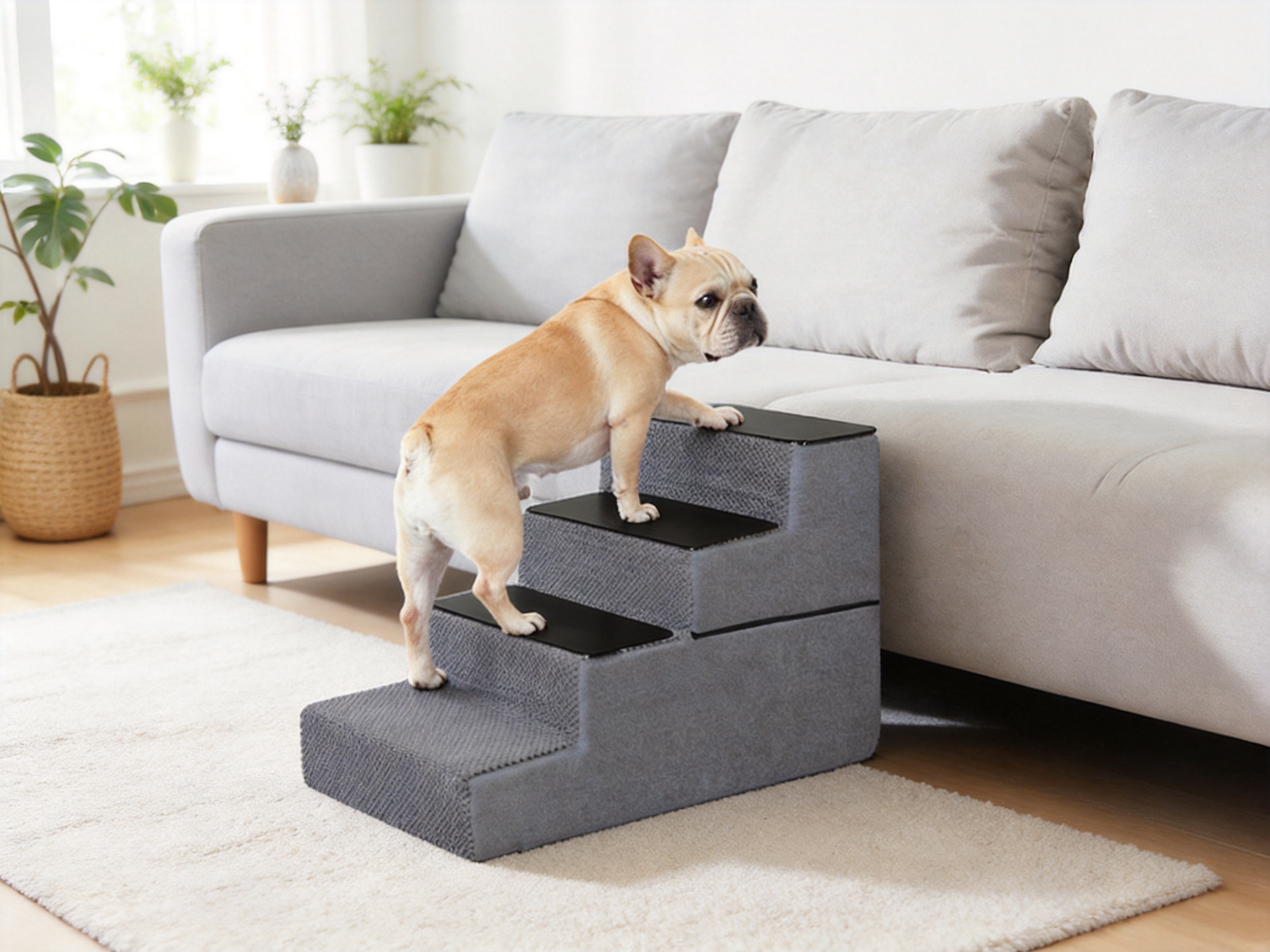
The listed product design is intended for several common environments. Beside a bed, the stairs can provide a controlled route for pets that sleep near their owners. Beside a sofa, they can reduce the frequency of jumping onto and off the furniture. In a vehicle, they can assist with access to a seat or cargo platform, provided the product fits securely and does not interfere with vehicle operation.
Bedroom use
Bedrooms often contain elevated beds and limited floor space. A compact staircase with a widened base can be placed beside the bed while maintaining a neat appearance. The gray finish can coordinate with neutral bedding, wood furniture, and contemporary interiors. Because the surface is wipeable, owners can remove ordinary paw marks without laundering a large textile cover.
Living room use
In the living room, appearance and noise matter. A pet staircase may remain visible throughout the day, so a simple shape and neutral color can be preferable to bright patterns or bulky upholstery. Foam construction can also reduce the noise associated with repeated movement, although the exact sound level depends on the floor and the pet’s behavior.
Vehicle use
Some pets find it difficult to climb into a vehicle, particularly when the entry height is greater than that of a sofa. A staircase can offer a series of smaller movements. Before use in a vehicle, owners should confirm that the base sits securely, that the steps do not obstruct doors or controls, and that the product is removed or secured during driving. It should never become a loose object that can move dangerously inside a vehicle.
Space-saving benefits
The product’s vertical structure uses less floor length than a ramp. This can be helpful in apartments, compact rooms, and narrow spaces. Its simple lines also reduce visual clutter. Multiple sizes are available for customization, allowing the staircase to be matched with different furniture heights and room layouts.
7. Customization for Different Furniture Heights
Furniture varies considerably in height. A staircase that works well beside a low sofa may not provide an appropriate final step for a tall bed. If the last step is too low, the pet may still need to jump. If it is too high, the animal may be unable to use it comfortably. Customized dimensions can help distributors and end users select a more suitable solution.
The manufacturer indicates that multiple sizes are available for customization. This creates opportunities for retailers, hospitality businesses, pet brands, and e-commerce sellers that need product variations for different customer groups. Customization may involve total height, width, step depth, covering details, packaging, labeling, or color, subject to technical review and minimum order requirements.
Important customization questions
Before confirming a customized order, buyers should clarify the intended furniture height, the pet’s size and weight, the preferred number of steps, the available floor area, and the expected usage frequency. They should also confirm whether the customized version retains the same rigid support structure, non-slip surface, and material certification coverage.
Packaging dimensions and shipping requirements should be evaluated at the same time. Foam products may be compressed or specially packed to reduce transport volume, but the recovery process and inspection standard should be agreed upon in advance. Clear specifications help prevent differences between a sample and mass production.
8. Cleaning, Hygiene, and Product Maintenance
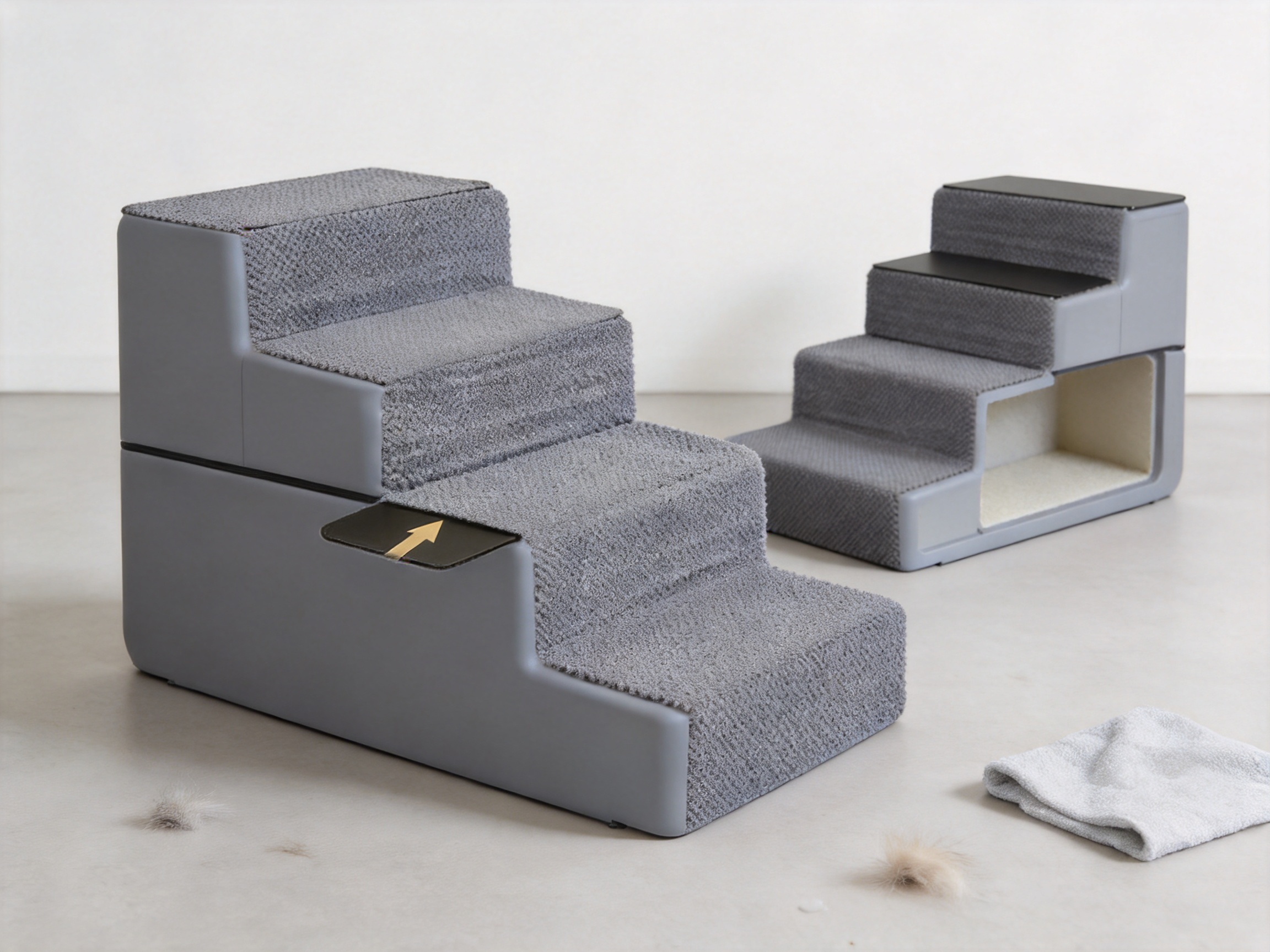
Pet stairs are exposed to paw dirt, fur, saliva, food particles, and occasional moisture. A wipeable surface is therefore a practical advantage. Routine cleaning can help maintain appearance and reduce the accumulation of contaminants. Owners should use cleaning methods recommended for the specific surface material and avoid aggressive chemicals that may damage the coating or create an unpleasant residue.
Daily maintenance can be simple. Loose hair can be removed with a soft brush or vacuum attachment. Small marks can be wiped with a slightly damp cloth. If the product becomes wet, it should be dried thoroughly in a ventilated area before returning to use. The internal foam should not remain damp, as prolonged moisture may affect hygiene and material performance.
Inspection for long-term safety
Regular inspection is as important as cleaning. Owners should check whether the surface remains firmly attached, whether the internal structure shows signs of deformation, and whether the base still sits evenly on the floor. A product that has been damaged by chewing, scratching, moisture, or excessive loading should be removed from use until its safety is evaluated.
Cleaning requirements are also relevant to commercial buyers. Retailers can promote the product more effectively when they provide clear care instructions. Hotels, pet boarding facilities, veterinary environments, and grooming businesses may need a more frequent cleaning schedule than ordinary households.
9. Manufacturing Strengths Behind the Product
The quality of a foam pet staircase depends heavily on the manufacturer’s ability to control materials, density, shaping, bonding, surface treatment, inspection, and packaging. Jiangsu Wellcare Household Articles Co., LTD. has a long background in foam research and manufacturing, beginning with a scientific research enterprise established in 1993 and expanding through factory investment, material development, and international supply.
The company was founded in 2003 and focuses on high-performance sleep materials and healthy home products. Its product portfolio includes ordinary sponge, memory foam, gel foam, temperature-insensitive memory foam, quick-dry memory foam, flame-retardant sponge, antibacterial sponge, and other foam materials. This breadth indicates experience with different performance requirements rather than dependence on a single commodity foam formula.
Research-led material development
A doctor-led research and development team develops more than one hundred new foam materials each year, according to the supplied company information. This research orientation can support faster improvement in resilience, recovery, density control, comfort, safety, and application-specific performance. Although a pet staircase does not require the same properties as a mattress, knowledge developed for sleep materials can be adapted to products that need reliable foam behavior and healthy contact surfaces.
Material research is particularly important when a product must balance softness and support. A staircase should not feel excessively hard, but it also should not collapse under the pet’s weight. The use of a rigid inner core further demonstrates that the product has been designed as a structural foam accessory rather than as a simple soft cushion.
Factory development and production experience
The company purchased a 12,000-square-meter factory building in 2003 and later acquired 50,000 square meters of land in 2008. These investments reflect a long-term approach to manufacturing capacity. The company also jointly developed sponge materials with Huai’an Institute of Technology and cooperated with Qingdao University of Science and Technology, connecting industrial production with technical and academic resources.
By 2010, its products were supplied to cross-border supermarkets in the United States, Germany, and Japan. Later export destinations included the United Kingdom, Canada, Australia, and Kuwait. This international experience can help a manufacturer understand different packaging expectations, product documentation requirements, market preferences, and quality communication practices.
Experience with multiple foam technologies
The company’s experience with gel foam, quick-dry foam, antibacterial sponge, and flame-retardant sponge suggests the ability to develop products for specialized environments. For pet stairs, the relevant strengths include material selection, surface compatibility, recovery behavior, and durability under repeated loading. Buyers seeking private-label or customized products can benefit from discussing which existing foam technologies may be suitable for a particular target market.
The product described here uses sponge as its principal material, but the manufacturer’s broader material portfolio may support future versions with different comfort, moisture-management, or functional requirements. Any such version should be validated through testing and should not be assumed to have the same specifications as the standard product.
10. Environmental Management and Responsible Production
Environmental responsibility is increasingly important in the home and pet product sectors. Foam production can involve energy use, chemical management, packaging decisions, and material waste. The company states that it invests in advanced eco-friendly energy systems and improves environmental management practices. It aims to move beyond basic compliance by integrating respect for nature into business operations.
For buyers, environmental claims should be evaluated through specific documentation, production records, certification scope, and measurable policies. A responsible purchasing process may include questions about material composition, production waste, packaging reduction, energy use, worker safety, and end-of-life handling.
The product’s durability also has an environmental dimension. A staircase that retains its shape and remains usable for a longer period may reduce the need for frequent replacement. Better maintenance and a wipeable surface can further extend useful life. Longevity should always be balanced with safety: once the structural or surface components are compromised, replacement is preferable to continued use.
11. Quality Control Considerations for Buyers
Distributors and importers should evaluate pet stairs using objective criteria. Visual inspection alone cannot confirm structural reliability. A quality review should include dimensional accuracy, surface adhesion, step consistency, base stability, load testing, odor assessment, packaging integrity, and documentation of materials.
Dimensional consistency
Each step should have a consistent height and depth. Variations can make the staircase more difficult for pets to learn and may create an unexpected trip point. The total height should correspond to the intended furniture application, and the finished dimensions should be checked after unpacking and recovery from compression packaging.
Structural and load testing
Testing should consider the expected pet weight, movement pattern, and repeated-use conditions. A pet may not distribute its weight evenly, particularly when turning or jumping onto the top step. Testing should therefore assess static loading as well as movement-related stress. The widened base should be evaluated for resistance to rocking and tipping on the floor types expected in the target market.
Surface and bonding inspection
The non-slip granular surface should be securely attached and free from loose particles that could become a hygiene or ingestion concern. Edges and corners should be checked for peeling, gaps, or sharp transitions. If adhesives are used, the manufacturer should provide appropriate material and safety information for the final configuration.
Packaging inspection
Pet stairs can be exposed to pressure, moisture, and impact during cross-border transportation. Packaging should protect the surface and preserve the shape of the internal structure. Carton strength, moisture protection, compression recovery instructions, and labeling should be agreed upon before shipment.
12. Positioning for Retailers and E-Commerce Sellers
The product is suitable for sales channels including eBay, Amazon, Wish, AliExpress, independent websites, and Lazada, according to the supplied information. These channels serve customers who often compare products quickly. Clear presentation of the product’s functional advantages is therefore essential.
Retail descriptions should emphasize the high-strength inner core, widened base, textured non-slip surface, wipeable construction, gray minimalist appearance, and availability of multiple sizes. Product images should show the stairs beside common furniture and should communicate scale without making unsupported claims about a pet’s medical condition or guaranteed injury prevention.
Clear customer guidance
Online buyers should be told how to choose a size, where to place the stairs, how to introduce a pet to the product, and how to maintain the surface. This information reduces returns caused by incorrect expectations. Sellers should also state the recommended pet size range and explain that individual animals may respond differently.
Descriptions should avoid absolute terms such as “completely slip-proof,” “suitable for every pet,” or “guaranteed to prevent injury.” A more accurate approach is to explain that the textured surface is designed to improve grip and that the rigid structure and widened base are intended to enhance stability when the product is used correctly.
Private-label potential
The manufacturer’s foam expertise and customization capability may be useful for private-label customers. Retailers can request branded packaging, market-specific instructions, selected colors, modified dimensions, or product bundles, subject to agreement. A private-label program should include prototype approval, quality standards, testing records, packaging confirmation, and a clear process for handling production changes.
13. Introducing a Pet to the Stairs
Even a well-designed staircase may require a short learning period. Owners should place the stairs on a stable surface and allow the pet to investigate without pressure. Treats, toys, or praise can be used to create a positive association. It is usually better to begin with the lowest step or with the staircase positioned beside a familiar resting place.
During early use, supervision is important. The owner should watch for hesitation, slipping, side-stepping, or attempts to leap over the steps. If the pet appears frightened, the training session should stop and resume later at a slower pace. Some animals learn in a few minutes, while others require several days of short, calm practice.
The stairs should not be placed where they create a new hazard, such as beside a sharp corner, unstable table, open stairwell, or obstructed doorway. The top step should align reasonably with the furniture surface, and the base should remain flat throughout use.
14. Suitability for Different Pets
The product information identifies dogs as the main suitable users and describes the product as especially appropriate for small to medium-sized dogs and selected cats. Suitability depends on more than body weight. Leg length, confidence, joint condition, paw size, temperament, and movement style all influence whether an animal can use stairs comfortably.
Small dogs may benefit from the reduced height between steps. Medium-sized dogs may appreciate the stable base when accessing a sofa or vehicle. Older dogs may use the stairs when they can still walk independently but should avoid repeated jumping. Cats may use the stairs if they accept the design and if the step dimensions match their body size.
For very large, extremely active, or medically compromised animals, buyers should request specific load and suitability guidance before purchase. The product should never be used beyond its tested capacity. When a pet has severe mobility problems, owners should consult a veterinarian or animal rehabilitation professional about whether steps, a ramp, lifting support, or another solution is most appropriate.
15. Frequently Asked Questions
Q1: What is the main purpose of these pet stairs?
The stairs provide a gradual route to elevated furniture, beds, sofas, vehicles, and similar surfaces. They are designed to reduce the need for pets to make high-impact jumps and to support more controlled daily movement.
Q2: What helps the product resist slipping?
The staircase has a thickened non-slip granular surface intended to increase friction under the paws. Proper placement on a level, clean floor is also necessary for safe performance.
Q3: Why does the product have a rigid inner core?
The rigid inner core helps support the steps, preserve their shape, and reduce excessive deformation during repeated use. It works together with the widened base to create a more stable structure.
Q4: Is the staircase suitable for cats?
The product is primarily listed as suitable for dogs, especially small to medium-sized dogs. It may also be suitable for some cats, depending on their size, confidence, health, and willingness to use steps. Owners should supervise initial use.
Q5: What are the approximate dimensions?
The listed specification is approximately 38 cm × 60 cm × 46 cm. Buyers should confirm the final dimensional interpretation and any customized measurements with the manufacturer before placing an order.
Q6: Can different sizes be ordered?
Yes. Multiple sizes are available for customization to match different furniture heights and usage environments. Custom dimensions, packaging, and other requirements should be confirmed during the quotation and sampling process.
Q7: Is the surface easy to clean?
The product information describes the surface as wipeable. Routine cleaning can generally include removing loose hair and wiping ordinary marks with an appropriate cloth. Users should follow care instructions for the final surface material and dry the product thoroughly after contact with moisture.
Q8: Is the product certified for material safety?
The supplied information states that the materials are OEKO-TEX® certified and describes them as non-toxic and odorless. Buyers should request current certification documentation and confirm that it applies to the exact product configuration, including surface materials and customized components.
Q9: Can the stairs be used in a car?
The product is described as suitable for use in cars and other settings. Before use, the owner should confirm that it fits securely, does not obstruct doors or controls, and cannot shift dangerously. It should be removed or properly secured during driving.
Q10: What makes this product different from a simple foam cushion?
The product combines foam construction with a high-strength rigid inner core, a widened base, and a dedicated granular non-slip surface. This design is intended to provide more structural support, consistent stepping, and improved traction than a cushion that relies only on soft filling.
Q11: Is the staircase completely slip-proof?
No product should be described as completely slip-proof in every situation. The granular surface is designed to improve grip, but safe use also depends on the pet, floor condition, moisture, placement, maintenance, and supervision.
Q12: What should buyers ask before ordering in bulk?
Bulk buyers should confirm dimensions, load expectations, foam composition, surface material, certification scope, color, packaging, inspection standards, customization options, lead time, minimum order quantity, and shipping requirements. They should also approve a production sample where appropriate.
Q13: Who manufactures the product?
The product is manufactured by Jiangsu Wellcare Household Articles Co., LTD., a Chinese company focused on foam materials, sleep products, and healthy home products. The company has a history of foam research, factory development, international supply, and customized material innovation.
Q14: What color is available?
The listed color is gray. Its neutral tone and minimalist appearance are intended to blend with contemporary bedrooms, living rooms, vehicles, and other home environments.
16. Overall Evaluation
The anti-slip pet stairs provide a carefully balanced solution for households that want to reduce jumping while preserving a clean and modern appearance. Their principal advantages are the textured granular surface, rigid internal support, widened base, wipeable construction, and customizable sizing. These features address common weaknesses found in basic soft cushions, smooth plastic steps, and bulky ramps.
The product also benefits from a manufacturer with broad foam expertise. Jiangsu Wellcare Household Articles Co., LTD. has developed a portfolio covering ordinary sponge, memory foam, gel foam, quick-dry foam, flame-retardant sponge, antibacterial sponge, and other materials. Its research-led approach, factory investments, cooperation with technical institutions, international supply experience, and environmental initiatives provide a strong foundation for both standard production and customized development.
For end users, the product can provide a more controlled route to beds, sofas, and vehicles when used on a suitable surface and selected according to the pet’s needs. For retailers and distributors, it offers clear selling points that can be communicated through e-commerce listings and offline displays. For private-label buyers, its customization potential and foam manufacturing background may support market-specific product programs.
The most important consideration is responsible use. Pet stairs should be placed securely, introduced gradually, inspected regularly, and replaced when damaged. When these practices are followed, a stable, textured, and well-supported staircase can become a useful part of a pet-friendly home while helping animals move with greater confidence and less reliance on high-impact jumps.
References
1. Product specification and technical description supplied for the anti-slip pet stairs, item P003.
2. Jiangsu Wellcare Household Articles Co., LTD. Company profile and manufacturing history supplied for this article.
3. OEKO-TEX® Standard 100 general principles and product safety framework.
4. General principles of companion-animal environmental enrichment and mobility support.
5. General product quality considerations for foam goods, pet accessories, and household mobility aids.
Product: Anti-slip pet stairs

PREV:Eight-Piece Foldable Children's Building Block Sofa Set: A Flexible, Safe, and Creative Seating Solution
NEXT:Breathable Memory Foam Pillow: Pressure Relief, Airflow, and Custom Comfort
NEXT:Breathable Memory Foam Pillow: Pressure Relief, Airflow, and Custom Comfort
Interested in cooperation or have questions?
Related News
WELLCARE was founded in 2003, boasting over a decade of profound and extensive experience.
Quick Links
Product
Media Centre
Contact Information
- [email protected]
- +86-517-84998062
- +86-15152354988
- No. 168 Nenjiang Road, Huaiyin District, Huai'an City, Jiangsu Province, China
Copyright © Jiangsu Wellcare Household Articles Co., LTD. All Rights Reserved.
Custom Memory Gel Mattress Manufacturers
