

 English
 日本語
 Español



Pan Ruoxi — Product Sales Consultant

Home / Author / Pan Ruoxi — Product Sales Consultant / Breathable Memory Foam Pillow: Pressure Relief, Airflow, and Custom Comfort
Product Category
NEW Category
Contact us
Breathable Memory Foam Pillow: Pressure Relief, Airflow, and Custom Comfort
A pillow influences far more than head position. It affects the alignment of the neck, the distribution of pressure across the head and shoulders, the amount of heat retained during the night, and the overall sense of relaxation that supports quality sleep. For this reason, selecting a pillow requires more than choosing a soft surface. The internal material, shape, ventilation, cover fabric, manufacturing quality, and suitability for different sleeping environments all matter.
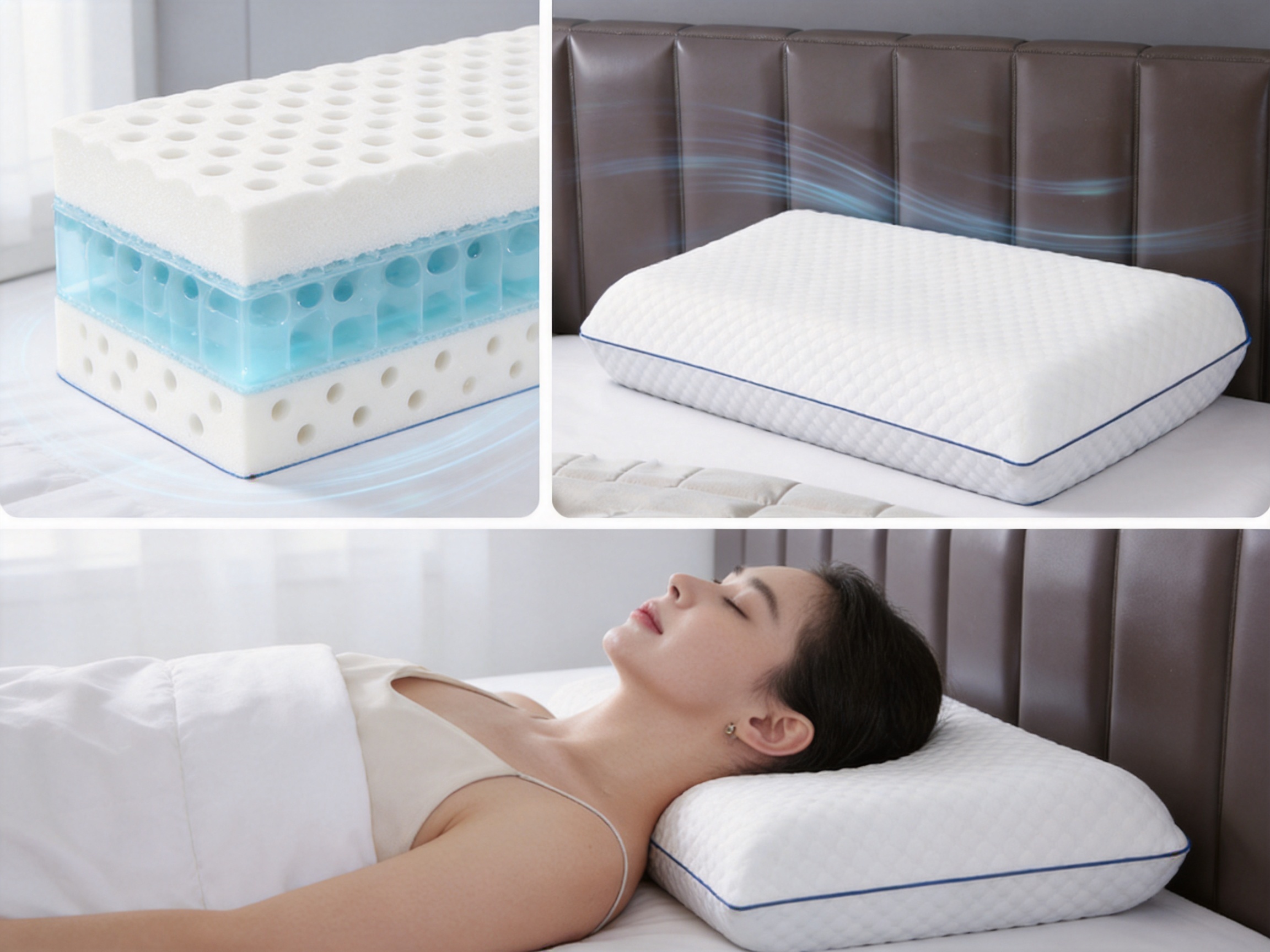
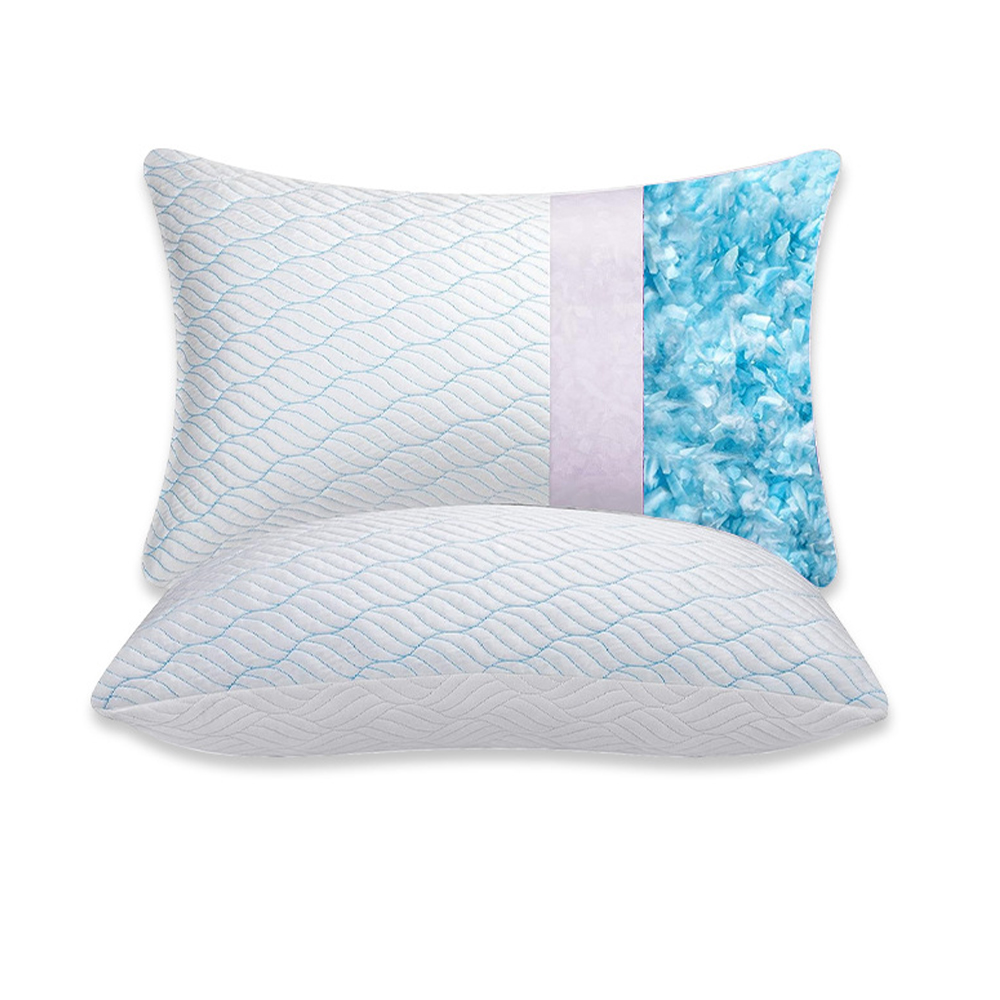
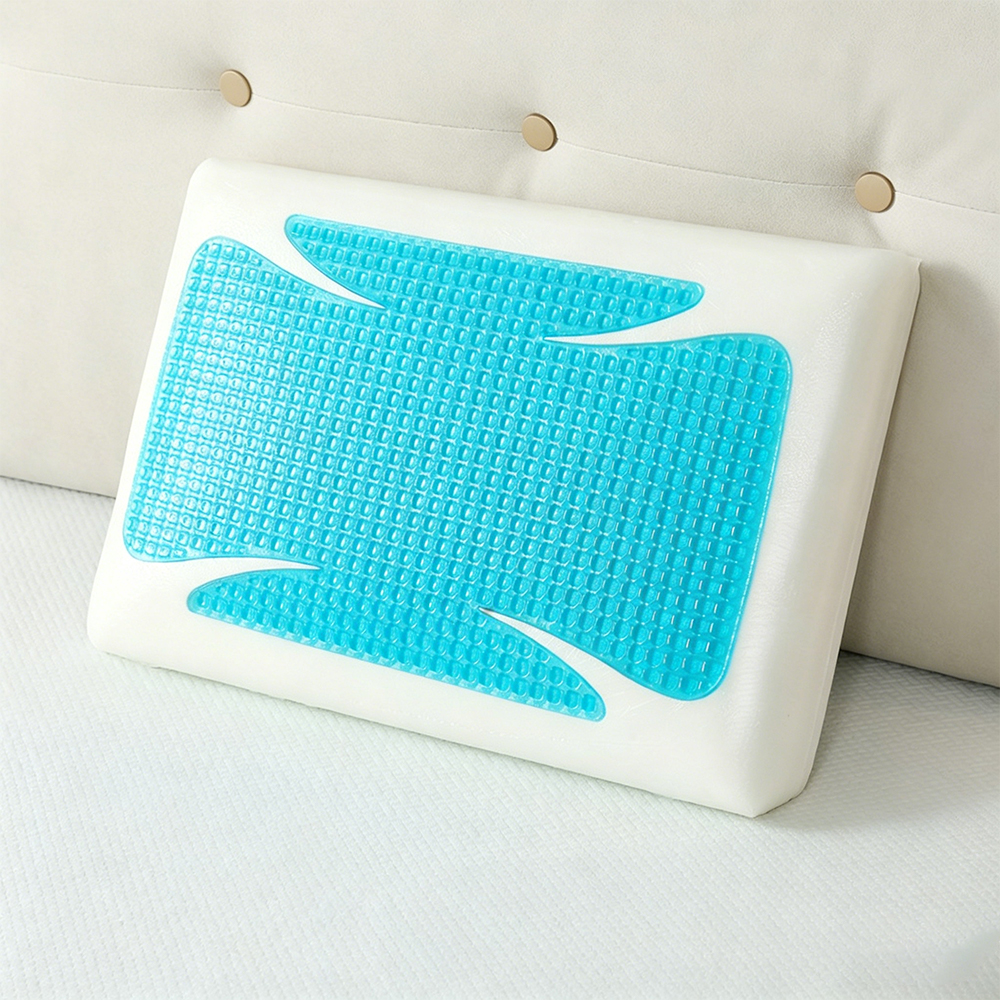
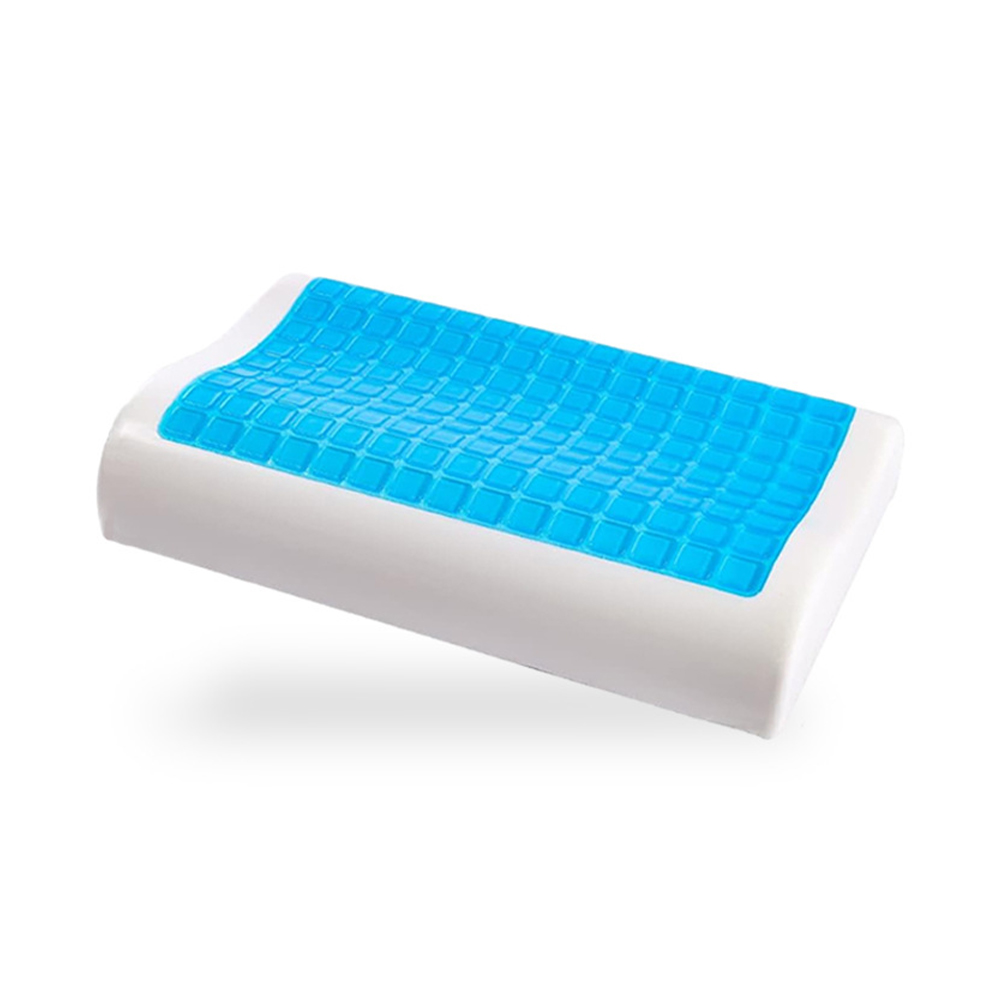
The Breathable Memory Foam Pillow is designed as a modern solution for users who want the supportive contouring of memory foam without the stuffy feeling sometimes associated with dense foam products. Its construction combines a high-density slow-rebound memory foam core with gel material and a surface featuring three-dimensional breathable holes. Together, these features are intended to distribute head pressure, follow the natural curve of the cervical area, improve ventilation, and create a more comfortable sleeping experience.
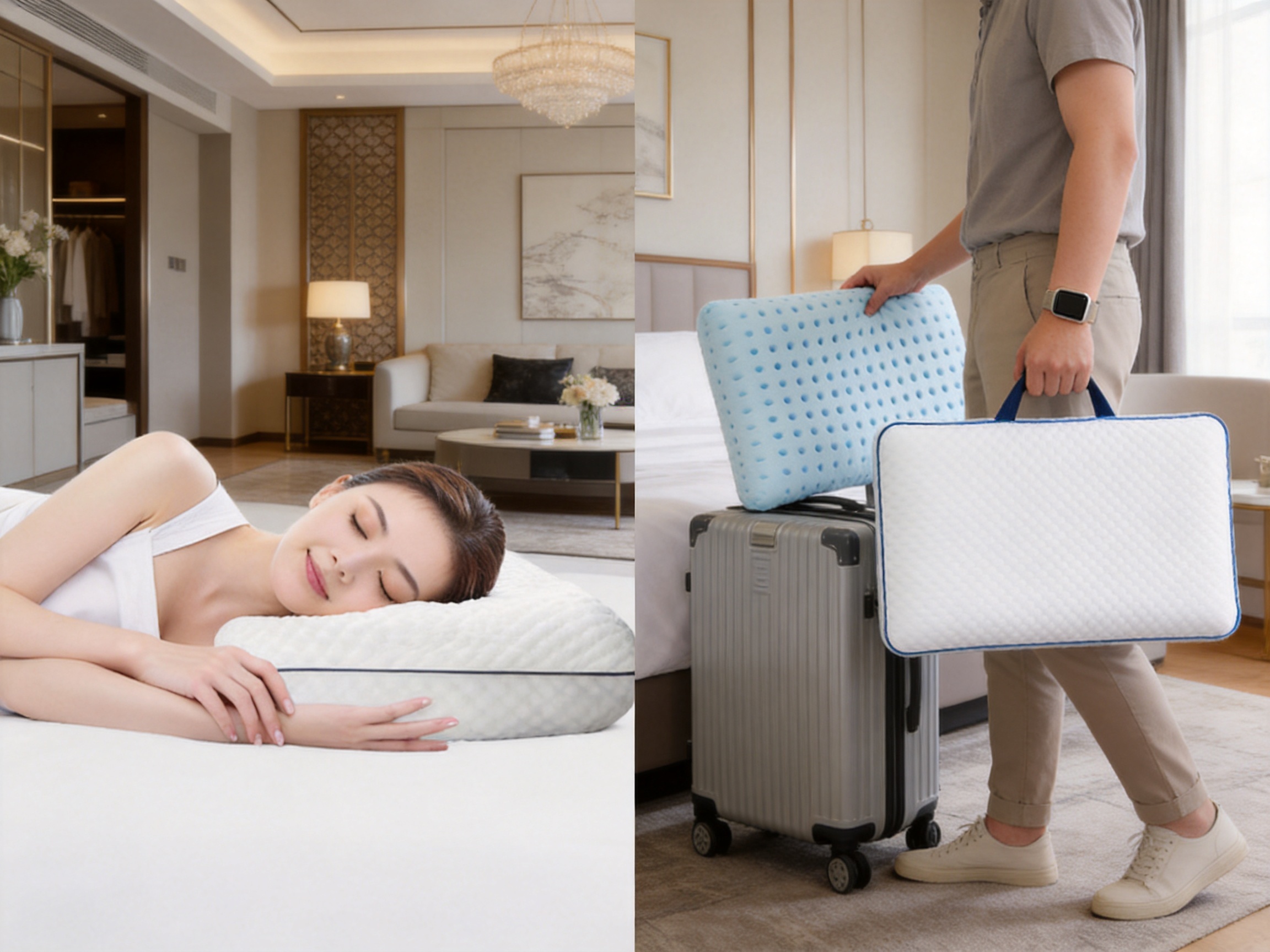
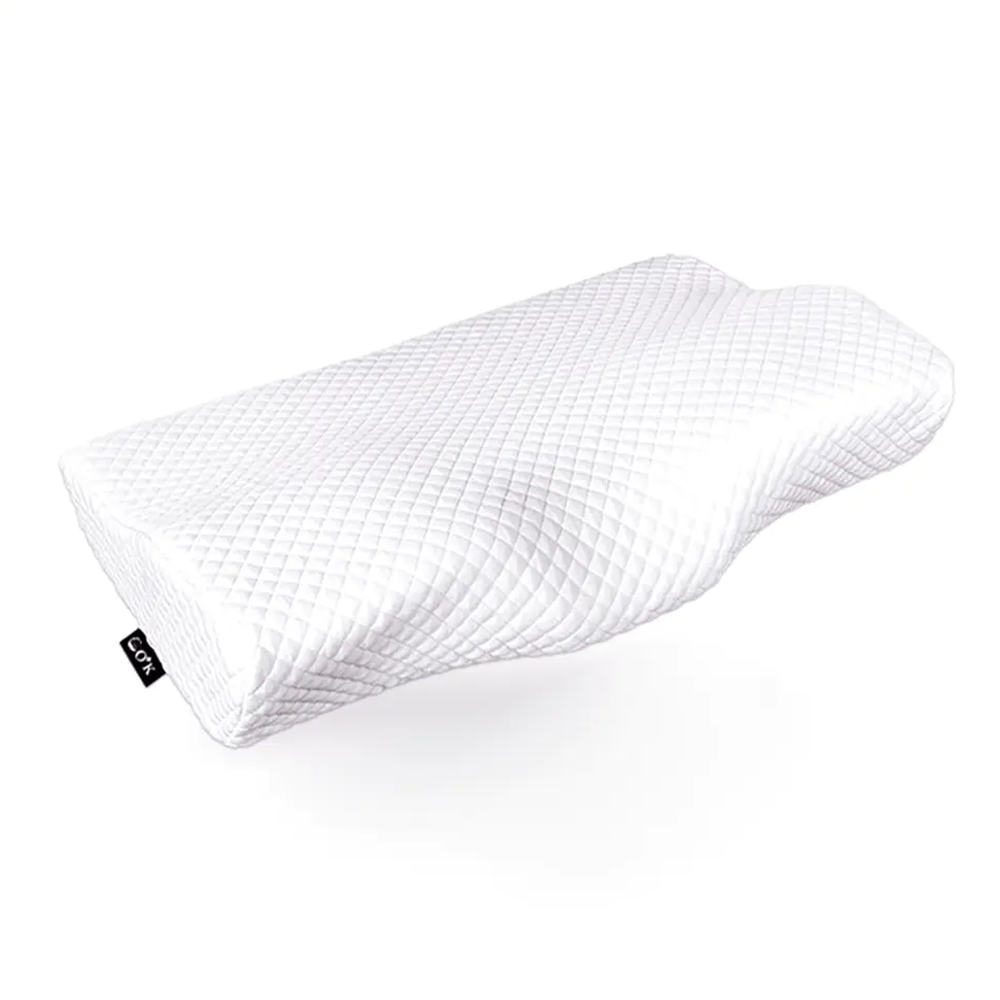
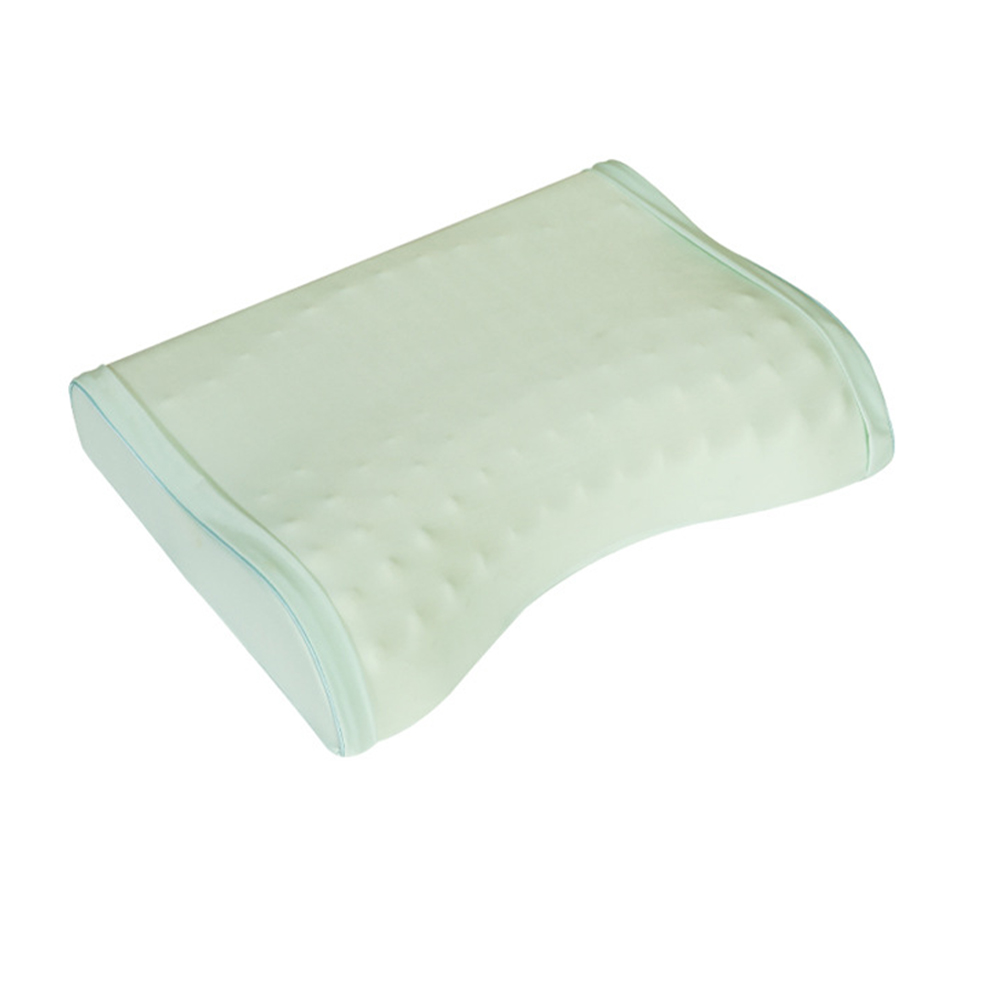
With a rectangular shape, an approximately 10.1–15 cm core height range, a lightweight structure, and a soft fabric cover, the pillow is suitable for individual adult users in homes, guesthouses, hotels, and travel settings. White and light blue color options provide a clean appearance, while customization of dimensions, fabrics, and packaging allows buyers to adapt the product to different markets and customer preferences.
The product is manufactured by Jiangsu Wellcare Household Articles Co., LTD., a company with a long-term focus on foam materials, sleep products, and healthy home applications. Its material research capabilities, manufacturing history, export experience, and product customization services provide an important foundation for buyers seeking more than a basic pillow.
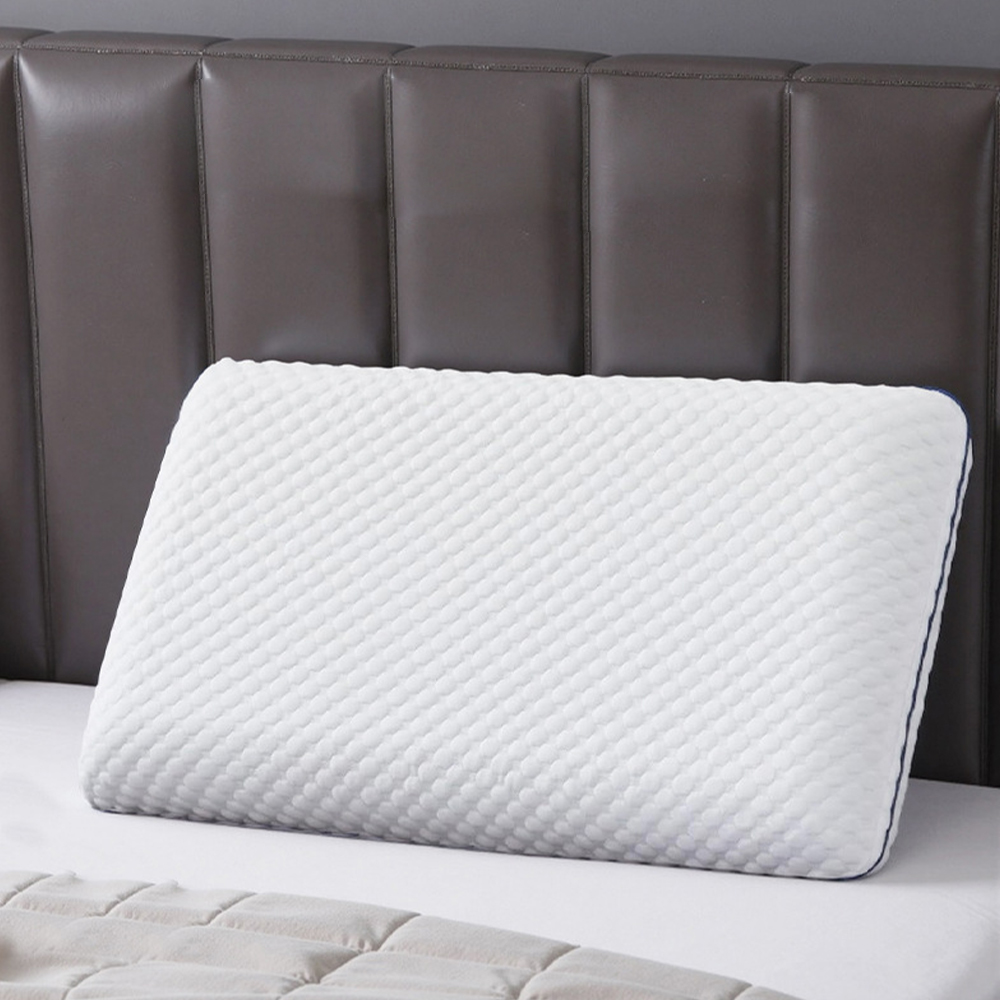
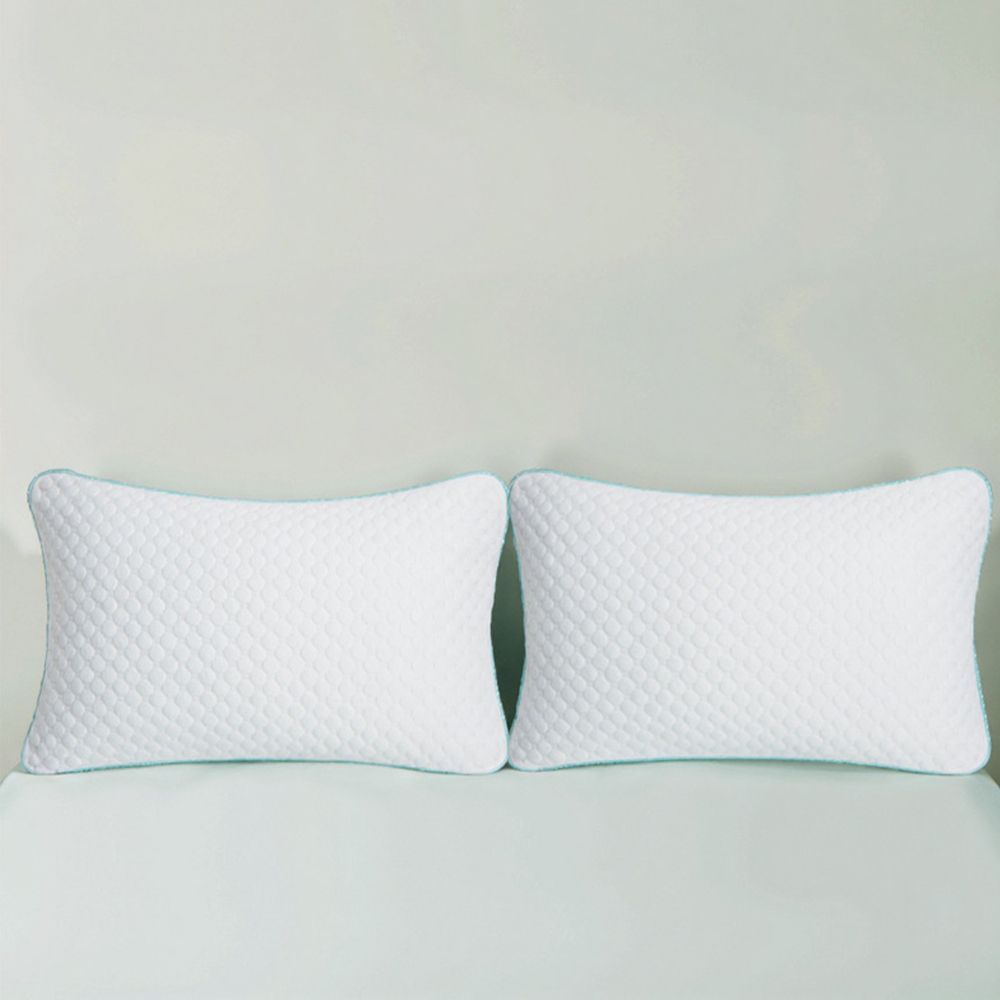
Breathable memory foam pillow
1. Why Pillow Construction Matters
A conventional pillow may provide temporary softness while offering limited support. Some low-density fillings compress quickly, leaving the head lower than intended. Other materials may feel firm but fail to adapt to the contours of the head and neck. The result can be uneven pressure, a poorly supported cervical area, or the need to repeatedly adjust the pillow during the night.
Memory foam addresses this issue through pressure-responsive behavior. When exposed to body heat and weight, slow-rebound foam gradually conforms to the shape of the user’s head and neck. Instead of simply collapsing under pressure, it distributes contact forces across a broader area. This can help reduce the concentrated pressure that occurs when the head rests on a flat or overly rigid surface.
The Breathable Memory Foam Pillow is based on this conforming principle. Its high-density foam core is designed to retain its shape after repeated use while providing a supportive, enveloping feel. The purpose is not to create a completely rigid sleeping surface. Rather, the pillow is intended to balance support and softness so that the head is held comfortably without feeling trapped on a hard material.
Core height is another important factor. The listed height range is approximately 10.1–15 cm, a range commonly associated with adult pillow applications. The appropriate feel will depend on sleeping position, body proportions, mattress firmness, and individual preference. A side sleeper may prefer more height to fill the space between the shoulder and head, while a back sleeper may prefer a moderate elevation. Buyers can also discuss customized sizes when a standard configuration is not suitable for a particular market or user group.
2. Slow-Rebound Memory Foam and Gel Material
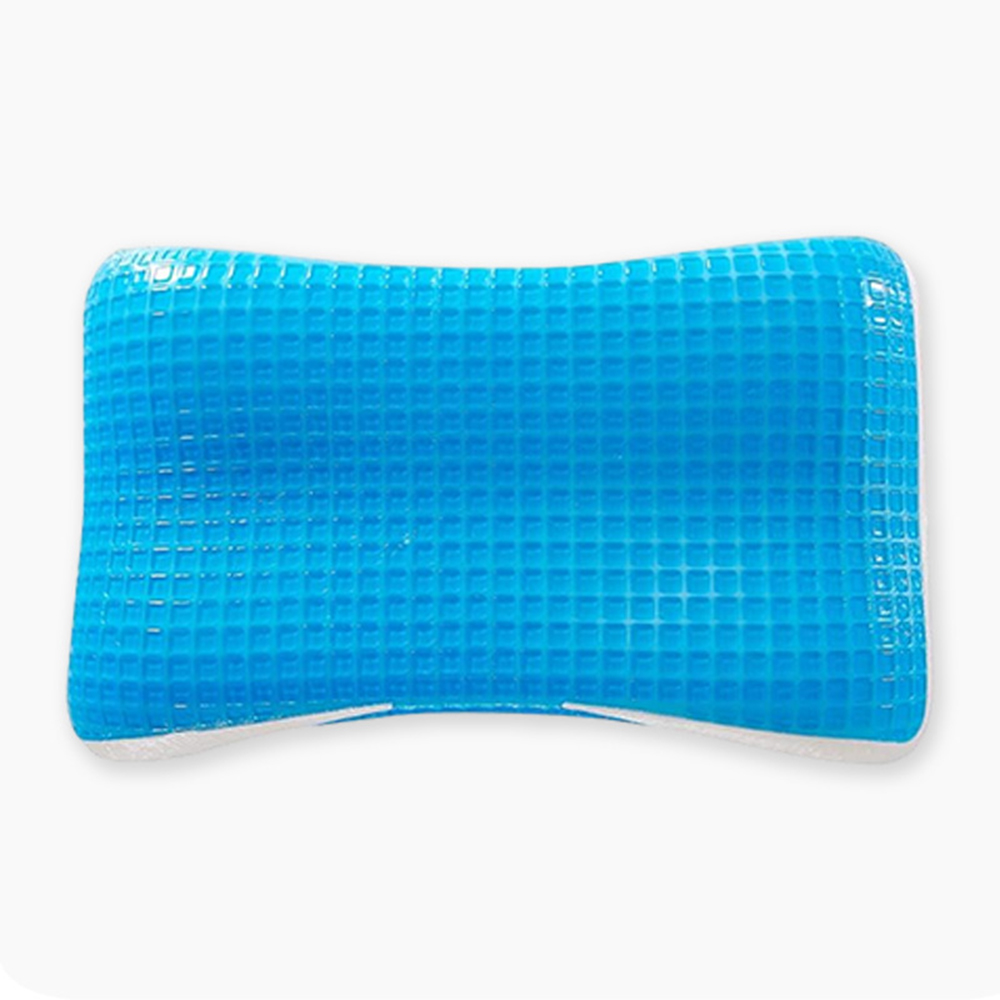
The central advantage of this pillow is the combination of slow-rebound memory foam and gel material. Each component contributes a different function. Memory foam supplies adaptive support and pressure distribution, while gel material is used to help improve the feel of the surface and support thermal comfort.
High-density slow-rebound foam responds gradually rather than springing back immediately. This behavior allows it to follow the curve of the head and the upper neck. The material can reduce the sensation of pressure points that may occur with ordinary filling materials. It also helps the pillow maintain a more consistent shape during use, which is useful for buyers looking for a product with a stable, supportive structure.
The gel layer complements the foam by contributing to a cooler and more balanced contact experience. Dense foam can retain warmth if it is designed without sufficient airflow or heat-management features. Integrating gel material into the construction helps the product compete more effectively with pillows that offer only basic foam support. The gel component does not replace ventilation, but works with the breathable surface and fabric cover to create a more comfortable overall design.
The combination also creates a differentiated product position. A basic polyester-filled pillow may be inexpensive and soft at first, but it may compress or shift during use. A standard foam pillow may offer support but lack airflow. A gel memory foam pillow with ventilated construction seeks to combine the advantages of conforming support, structural stability, and improved breathability in a single product.
For commercial buyers, this combination may be especially attractive because it creates a clear product story for retail and hospitality markets. The pillow can be presented as a supportive memory foam product with cooling-oriented features, rather than as a generic cushion with limited functional differentiation.
Pressure Distribution and Cervical Support
The shape of the human head and neck is not flat. A pillow that fails to follow these contours may concentrate pressure in a small contact area or leave a gap beneath the neck. The memory foam core is designed to respond to these differences in shape, helping create more even contact.
By conforming to the user’s curves, the pillow can provide a gentle supporting effect while reducing the need for constant repositioning. The intended result is a smoother transition between the head and neck rather than a sharp pressure point. This feature may be valuable for adults who spend long periods sleeping in one position or who prefer a pillow with a more stable feel.
It is important to understand that a pillow cannot replace professional medical care or guarantee the prevention of neck pain. Comfort depends on many factors, including sleep posture and mattress support. Nevertheless, adaptive foam construction can provide a more anatomically responsive foundation than many simple, non-contouring pillow fillings.
3. Breathable Three-Dimensional Surface Design
Breathability is one of the product’s most visible functional advantages. The pillow surface is covered with three-dimensional breathable holes that are designed to encourage air circulation. These openings help reduce the accumulation of heat and moisture that can make a pillow feel stuffy, particularly during warm weather or in rooms with limited ventilation.
Many users experience discomfort not because a pillow lacks softness, but because its surface becomes warm or damp during the night. A breathable structure can help air move through the contact area, supporting a fresher sleeping environment. This is especially relevant for summer use, warm climates, hotel rooms, and users who are sensitive to heat.
The ventilation system is supported by the other materials in the product. The slow-rebound foam provides the main support, the gel material contributes to a more balanced thermal feel, and the breathable holes assist airflow at the surface. The result is a multi-layer comfort strategy rather than dependence on one feature alone.
Compared with a solid, unventilated foam pillow, this construction offers a practical answer to a common consumer concern. It also gives distributors a strong point of differentiation in competitive markets where many pillows appear similar from the outside. Breathable performance can be emphasized in product descriptions, seasonal campaigns, hotel purchasing programs, and sleep-product collections.
The three-dimensional surface also contributes to the visual identity of the pillow. It communicates a technical and functional design while remaining compatible with a clean, minimalist appearance. The surface structure is intended to improve performance without making the product visually complicated.
4. Cover Fabric and Everyday Comfort
The cover uses a soft, skin-friendly fabric selected to provide a delicate touch against the face and neck. Textile comfort is important because the pillow remains in direct contact with the user for many hours. Even a well-designed foam core may feel less comfortable if the outer fabric is rough, overly warm, or difficult to maintain.
The soft fabric supports an enveloping, cloud-like sensation while allowing the internal support characteristics of the foam to remain noticeable. This balance helps position the pillow between a firm orthopedic-style product and a very soft decorative cushion. It is intended for practical everyday sleeping rather than occasional display.
The fabric is also suitable for use across different seasons. In warmer weather, the breathable-hole structure helps reduce stuffiness. In cooler seasons, the soft surface provides a comfortable layer between the user and the foam core. The product therefore has broad year-round potential instead of being restricted to a single seasonal application.
For commercial customers, the fabric can be customized according to market requirements. Custom material selection may help buyers coordinate the pillow with a hotel bedding program, a private-label collection, or a specific retail positioning. Fabric selection can influence touch, appearance, washing requirements, packaging, and cost, so buyers should confirm the intended specifications before production.
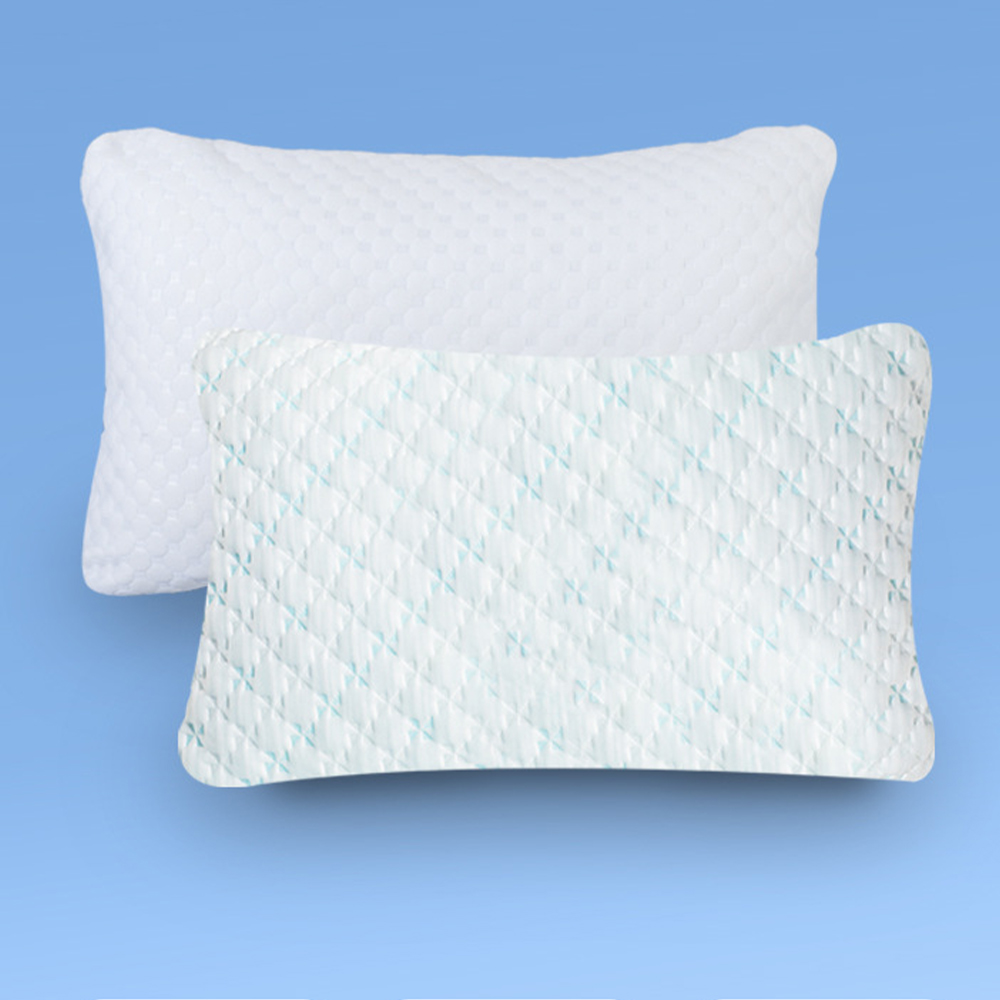
The available color presentation includes white and light blue. White offers a clean and familiar bedding appearance, while light blue creates a fresher and more relaxed visual impression. These colors can fit modern bedrooms, guest rooms, hospitality interiors, and simple home décor styles. Customized fabric and color options may be discussed for larger or specialized orders.
5. Design, Size, and Portability
The pillow uses a rectangular form that fits standard sleeping arrangements and is easy to place on beds, sofas, guest beds, and hotel bedding systems. Its modern minimalist design allows it to blend into different room styles without drawing excessive visual attention.
The listed dimensions are presented as 60 × 40 × 12 cm, although the source specification notes that the unit should be confirmed as centimeters or millimeters when ordering. This point is important for professional buyers. Dimensions should always be verified in the final product specification, especially when the pillow will be used with standard pillowcases, compressed packaging, hotel linens, or automated warehouse systems.
The pillow weight is listed in the range of 1.1–2 jin, approximately 0.55–1 kg. This lightweight profile supports convenient handling and storage. It can be moved easily between rooms, packed for travel, or included in hospitality supply shipments without the handling burden associated with heavier bedding products.
Portability is a practical advantage for several types of customers. Individual users may take the pillow on trips or use it in guest accommodations. Hotels and guesthouses can store replacement units without requiring excessive warehouse space. Cross-border retailers can also benefit from a product that is relatively easy to pack and manage in distribution channels.
Depending on the selected packaging method, the pillow may be suitable for compact shipment and organized storage. Packaging customization is available, allowing buyers to consider retail presentation, protection during transport, brand positioning, and regional labeling requirements.
Applications in Homes and Hospitality
In a home environment, the pillow can be used in adult bedrooms, guest rooms, reading areas, and temporary sleeping spaces. Its support-oriented construction makes it more functional than a purely decorative cushion, while its clean appearance allows it to remain visually compatible with modern furnishings.
Guesthouses and hotels may use the pillow as part of a standard bedding package or as an upgraded option for guests who prefer memory foam. The combination of pressure-responsive support and breathability can improve the perceived value of the sleeping environment. The availability of customized sizes and fabrics also makes it possible to coordinate the pillow with existing room standards.
For online retailers, the product offers multiple selling points that can be communicated clearly: memory foam support, gel material, breathable holes, soft fabric, modern colors, adult suitability, and customization. These features can support product listings aimed at consumers seeking comfort, heat management, and long-term shape retention.
6. Advantages Compared with Common Pillow Alternatives
The product’s competitive advantages are most apparent when it is compared with common pillow categories. Each alternative has its own strengths, but the Breathable Memory Foam Pillow combines several desired functions in one design.
| Comparison factor | Breathable Memory Foam Pillow | Basic fiber-filled pillow | Ordinary solid foam pillow | Decorative soft cushion |
| Support behavior | Slow-rebound, contour-following support | Soft compression with possible flattening | Stable support but less adaptable airflow | Primarily designed for softness or appearance |
| Pressure distribution | Designed to spread pressure across the head and neck area | Depends on filling density and distribution | May create firmer contact points | Usually not optimized for sleeping support |
| Airflow features | Three-dimensional breathable holes and breathable-oriented construction | May allow airflow depending on filling | Can retain heat if unventilated | Varies according to fabric and filling |
| Thermal comfort | Memory foam combined with gel material and ventilation | Generally neutral, but may lose loft | May feel warmer in dense construction | Depends on materials and intended use |
| Shape retention | High-density core designed to retain form | May require regular reshaping | Usually stable but may lack contouring | Not necessarily designed for prolonged nightly use |
| Customization | Size, fabric, and packaging adjustments are available | Often limited to standard formats | May vary by supplier | Usually focused on appearance or size |
Against fiber-filled pillows, the main advantage is structural consistency. Fiber can provide a soft and familiar feel, but it may shift, compress, or require frequent fluffing. Memory foam maintains a more defined support surface, which can be useful for users who prefer predictable positioning.
Against ordinary solid foam, the principal advantage is the combination of adaptive support with a breathable surface and gel material. A solid foam pillow may be supportive but can feel warm when air circulation is limited. The ventilated construction of this product addresses that concern without abandoning the stability of foam.
Against decorative cushions, the product provides a more functional sleep-oriented design. Its rectangular shape, adult target user, support-focused core, and ventilation features are intended for regular use rather than occasional decoration.
No pillow is universally perfect for every person. However, the product’s combination of material performance, surface ventilation, soft fabric, compact dimensions, and customization creates a broad competitive position for both consumer and business applications.
7. Material Safety and Environmental Considerations
Material safety is a significant consideration for products used close to the face and body. The product information states that the materials are OEKO-TEX® certified, non-toxic, and odorless. Certification details, applicable standards, and documentation should be confirmed with the supplier for the specific production batch and destination market.
A certification-oriented approach gives buyers greater confidence when evaluating bedding products for homes, hotels, guesthouses, and cross-border distribution. It can also support compliance and communication requirements in markets where consumers increasingly pay attention to textile safety and material transparency.
The company also emphasizes environmental management and eco-friendly energy systems. Its sustainability approach includes investment in advanced environmental systems and an effort to integrate respect for nature into business operations. These initiatives are relevant to buyers seeking suppliers that consider environmental performance alongside product quality.
Environmental responsibility in foam manufacturing involves more than one factor. It can include production efficiency, energy management, material selection, waste reduction, packaging decisions, and the durability of finished goods. A pillow that retains its useful form for a longer period may reduce the frequency of replacement, although actual service life depends on usage, care, and storage conditions.
Buyers should request relevant technical and compliance documentation when preparing a commercial order. Important items may include material composition, test reports, packaging specifications, labeling requirements, odor evaluation, and applicable regional standards. Such documentation supports responsible product claims and improves transparency throughout the supply chain.
8. Manufacturing Strengths and Research Capabilities
The product is supported by the manufacturing and research background of Jiangsu Wellcare Household Articles Co., LTD. The company was founded in 2003 and focuses on high-performance sleep materials and healthy home products. Its product development is centered on foam innovation, with the objective of creating materials that are more comfortable, safer, and more reliable for global sleep applications.
One of the company’s key strengths is its doctor-led research and development team. According to the company information, the team develops more than one hundred new foam materials each year. This level of ongoing material development indicates an emphasis on formulation research, performance optimization, and the ability to respond to changing market needs.
The company’s material portfolio includes ordinary sponge, memory foam, gel foam, temperature-insensitive memory foam, quick-dry memory foam, flame-retardant sponge, antibacterial sponge, and other specialized materials. This range allows the manufacturer to approach product development from a material-platform perspective rather than relying on one standard foam formula for every application.
For the Breathable Memory Foam Pillow, this research background is relevant because pillow performance depends on the interaction of several variables. Foam density influences support and shape retention. Rebound speed influences the user’s perception of contouring. Gel integration influences the surface feel and thermal response. Cell structure and ventilation influence airflow. Fabric selection affects touch and moisture management. A manufacturer with experience across multiple foam categories is better positioned to evaluate these elements together.
Research capability can also support customization. If a buyer requires a different firmness, height, fabric, color, packaging configuration, or application-specific material, the supplier can use its broader technical resources to explore suitable options. Custom processing is listed as supported, providing a basis for discussions about private specifications and market adaptation.
Development History
The company’s development history extends back to 1993, when it began as a school-run scientific research enterprise. In 2003, it purchased a 12,000-square-meter factory building and jointly developed a new sponge material with Huai’an Institute of Technology. This connection between industrial manufacturing and technical cooperation reflects the company’s long-term interest in applied material research.
In 2008, the company purchased 50,000 square meters of land, creating a larger foundation for expansion. By 2010, its products were supplied to cross-border supermarkets in the United States, Germany, and Japan. The company also cooperated with Qingdao University of Science and Technology, further supporting its connection with academic and technical resources.
Its products later reached markets including the United Kingdom, Canada, Australia, and Kuwait. In 2018, the company became an Alibaba-certified Gold Supplier and entered e-commerce. In 2020, it became a designated supplier for five-star hotels. These milestones demonstrate experience in both international commercial distribution and hospitality supply.
Such experience can be valuable to buyers who need a supplier familiar with export requirements, product consistency, packaging coordination, and professional purchasing procedures. International sales also expose a manufacturer to different climate conditions, consumer preferences, standards, and product expectations.
9. Manufacturing Process Considerations
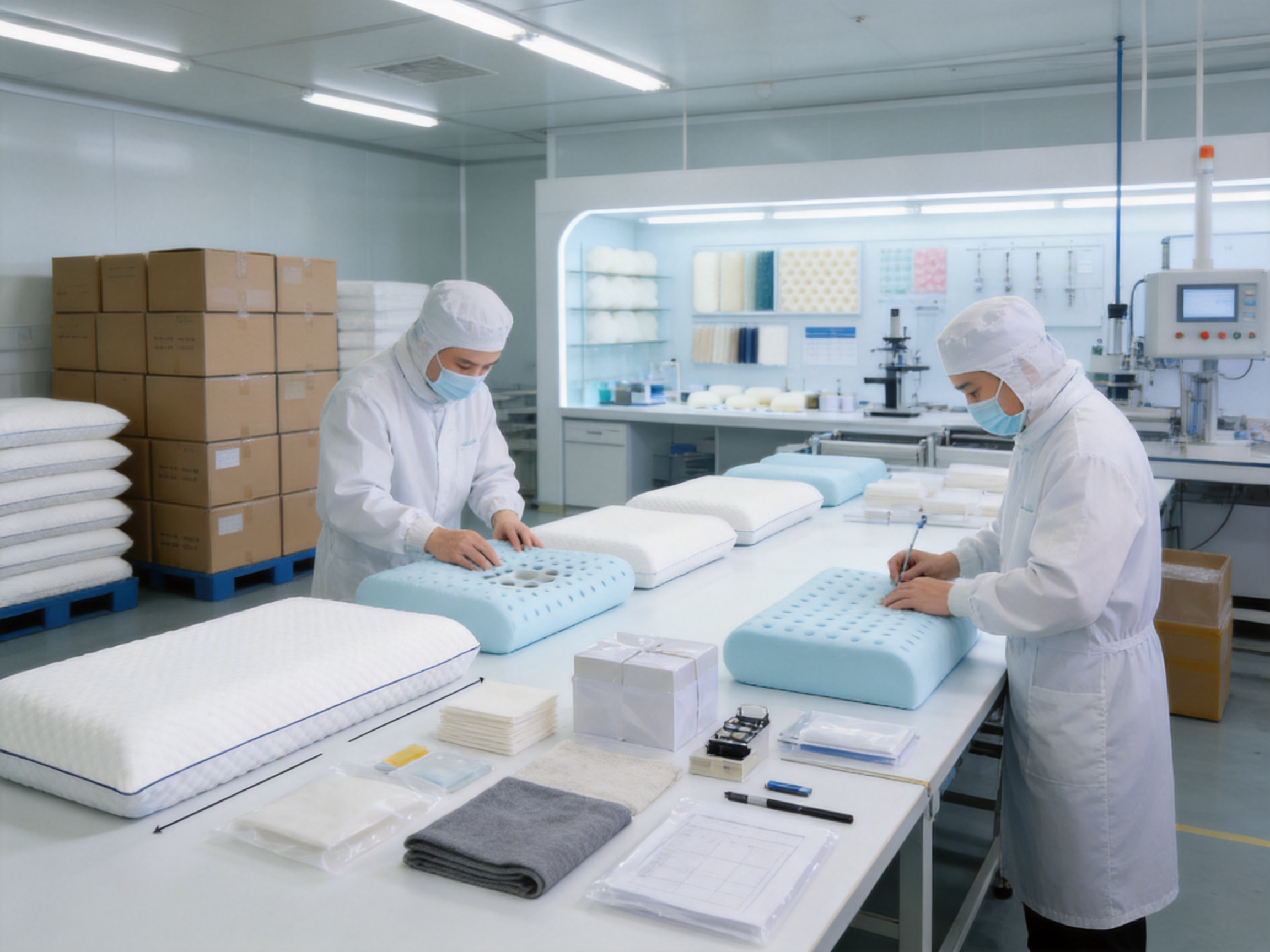
A high-quality memory foam pillow is the result of coordinated manufacturing stages rather than one isolated production step. The process begins with material planning and formulation. Foam density, rebound characteristics, resilience, and suitability for the intended application must be considered before the material enters the forming stage.
After material preparation, the foam is produced and shaped according to the required dimensions. The core must meet the intended height, density, and tolerance range. For a rectangular pillow, consistent cutting and dimensional control are important because the finished product must fit pillowcases and maintain a uniform appearance across a shipment.
Ventilation features require additional attention. The three-dimensional breathable-hole structure must be formed or applied consistently so that the surface supports airflow without compromising the integrity of the foam. The pattern should remain visually even and functionally stable after handling, packaging, and normal use.
The gel material must also be integrated in a controlled manner. Its placement, thickness, and compatibility with the foam influence the final comfort experience. Proper bonding or layered construction helps ensure that the components work together rather than separating or creating uneven contact areas.
The cover is prepared separately and then fitted to the finished core. Sewing quality, dimensions, fabric tension, seam placement, and closure design all affect appearance and usability. A well-fitted cover should support the shape of the pillow without excessive compression or looseness.
Quality control may include checks for dimensions, weight, appearance, rebound behavior, surface consistency, fabric defects, odor, packaging condition, and order-specific requirements. For customized products, the inspection process should also compare the production output with approved samples or technical drawings.
The company’s broad foam portfolio and research orientation provide a strong foundation for these processes. Buyers can further strengthen quality assurance by establishing written specifications, approving samples before mass production, confirming acceptable tolerances, and identifying the tests required for their sales region.
10. Customization for International Buyers
Customization is one of the product’s important commercial advantages. The available options include size, fabric, and packaging adjustments. These options allow the same basic pillow concept to serve different retail channels, hospitality programs, and consumer preferences.
Size customization may be useful when a buyer wants to match regional pillowcase standards, hotel bedding dimensions, or a specific ergonomic profile. It can also support product families with multiple heights for back, side, and combination sleepers. Because core height affects the feel and positioning of the pillow, any change should be reviewed carefully with the supplier.
Fabric customization can support different levels of softness, appearance, breathability, care requirements, and price positioning. A private-label retailer may request a specific color or textile finish, while a hotel buyer may prioritize durability, easy maintenance, and compatibility with laundry procedures.
Packaging customization can include retail boxes, protective bags, shipping cartons, labels, inserts, and other presentation elements. For e-commerce, packaging may need to withstand parcel handling and communicate product benefits clearly. For hotel supply, simple protective packaging may be more practical than elaborate retail presentation.
Buyers should provide complete information at the quotation stage. Useful details include target market, order quantity, desired dimensions, foam requirements, cover fabric, color, packaging format, labeling language, delivery destination, and required compliance documents. Clear communication reduces the risk of misunderstandings and helps the manufacturer evaluate feasibility accurately.
The supplier supports cross-border export supply and lists sales coverage in Europe, South America, Southeast Asia, North America, and the Middle East. Its products are also associated with downstream platforms such as eBay, Amazon, Wish, AliExpress, independent websites, Lazada, and other channels. This broad market orientation may benefit buyers planning to distribute the pillow across multiple regions.
11. Product Positioning for Retail and Hospitality
For online retail, the pillow can be positioned around three core benefits: adaptive support, breathable comfort, and practical customization. Consumers often compare pillows based on how well they support the neck, whether they retain heat, how soft the cover feels, and whether the product can maintain its shape. This product addresses each of these concerns through a clear material and design structure.
Product descriptions should explain the difference between the foam core, gel material, breathable surface, and cover fabric. Clear explanations are more useful than general claims such as “premium comfort.” Buyers should also provide accurate information about dimensions, weight, color, cover care, and customization availability.
For hotels, the pillow can be introduced as a durable, modern bedding option that combines support with ventilation. The white and light blue appearance fits many neutral room designs, while customized fabrics can support a consistent visual standard across a hotel group or guesthouse network.
For distributors, the product can fill a middle or upper-middle category between basic fiber pillows and highly specialized ergonomic products. It offers functional features that are easy to understand without requiring complicated user instructions. This can simplify sales training and product communication.
For private-label projects, the combination of a proven product structure and adjustable packaging provides a practical starting point. Buyers can maintain the core design while adapting the appearance and presentation to their own market identity. Before launching a private-label product, the buyer should confirm trademark, packaging artwork, labeling, and authorization requirements separately.
12. Care, Handling, and User Expectations
Memory foam products should be handled according to the supplier’s care instructions. The cover and foam core may have different cleaning requirements, so users should avoid treating the entire pillow as if it were a conventional washable fiber pillow unless the product documentation specifically permits it.
Regular airing in a clean, dry environment can help maintain freshness. The pillow should be kept away from excessive moisture, direct high heat, open flames, and harsh chemicals. A removable cover, if included in the selected configuration, can generally be managed according to its textile care label.
Memory foam may respond differently depending on room temperature. In a cooler environment, slow-rebound foam can feel firmer and may take longer to return to its original shape. In a warmer environment, it may feel softer and respond more quickly. These characteristics are normal for temperature-responsive materials and should be explained to end users when appropriate.
Users should also allow adequate time to adjust to a new pillow. A memory foam pillow can feel different from a traditional fiber-filled product because it supports the head with a more stable, contouring surface. Comfort is subjective, and the best experience depends on whether the pillow height and firmness suit the sleeper’s posture and body structure.
For commercial orders, packaging and storage conditions should be reviewed carefully. Products should be stored in a dry, clean location and protected from crushing or prolonged exposure to unsuitable temperatures. Any compression or vacuum packaging method should be confirmed with the supplier to ensure that it is compatible with the foam structure and expected recovery time.
13. Purchasing Checklist for Wholesale Customers
Wholesale customers should evaluate the product through both technical and commercial criteria. A sample inspection is recommended before confirming a large order. The sample should be checked for dimensions, surface quality, fabric feel, rebound behavior, odor, color, stitching, cover fit, and overall workmanship.
Buyers should confirm whether the listed dimensions are in centimeters and whether the final production dimensions have defined tolerances. The specified height range should also be clarified, because a difference in height can significantly affect the perceived support of the pillow.
The exact composition of the gel material and its position in the structure should be documented. Buyers may also wish to ask about density, firmness, rebound time, ventilation pattern, fabric composition, cover removal, and cleaning recommendations. These details help ensure that product descriptions accurately reflect the delivered goods.
Certification and compliance requirements should be reviewed according to the destination market. The product information refers to OEKO-TEX® certification, but buyers should request current supporting documentation and confirm which components are covered. Additional requirements may apply to packaging, labeling, chemical restrictions, fire safety, or textile care instructions.
Packaging specifications should be agreed upon before production. This includes the number of units per carton, carton dimensions, protective materials, barcode placement, language requirements, and whether the product will be sold through retail or hospitality channels.
Finally, buyers should confirm lead time, minimum order quantity, payment terms, shipping method, inspection arrangements, and after-sales procedures. A detailed purchase agreement creates a stronger basis for consistent supply and helps avoid disputes related to customization or quality expectations.
14. Why Manufacturer Experience Matters
Manufacturing experience has a direct effect on product development and supply reliability. A supplier that understands only one finished product may struggle when a buyer requests changes in height, firmness, fabric, or packaging. A company with broader foam knowledge can evaluate these adjustments in relation to material behavior and production feasibility.
WELLCARE’s history in foam research, production, export, and hotel supply gives the Breathable Memory Foam Pillow a wider support structure. The company has worked with various foam technologies and has developed materials for different functional requirements. Its experience with international markets also provides exposure to different buyer expectations and distribution environments.
The company’s research activities are particularly relevant to future product improvement. Foam materials continue to evolve as consumers seek better temperature management, faster drying, antibacterial properties, flame resistance, and more stable performance. A research-led manufacturer is better positioned to explore these directions and adapt product solutions to emerging needs.
Manufacturing scale and facility development also matter. The company’s historical expansion from a 12,000-square-meter factory building to a larger land base demonstrates investment in production infrastructure. While facility size alone does not guarantee product quality, it can support equipment, material handling, testing, storage, and process organization when properly managed.
Its designation as a supplier for five-star hotels further indicates experience with professional purchasing requirements. Hospitality buyers generally expect consistent quality, reliable delivery, appropriate packaging, and the ability to meet repeat-order specifications. This background can be valuable for distributors serving hotels, resorts, serviced apartments, and guesthouses.
15. Frequently Asked Questions
Q1: What is the main benefit of this breathable memory foam pillow?
The main benefit is the combination of contouring memory foam support, gel material, and a three-dimensional breathable surface. The foam is designed to follow the curves of the head and neck, while the ventilation structure helps improve airflow and reduce stuffiness.
Q2: Is the pillow suitable for adults?
Yes. The listed target user is adults, and the core height range of approximately 10.1–15 cm is intended for adult pillow applications. Users should select a suitable height based on sleeping posture, shoulder width, mattress firmness, and personal comfort.
Q3: Is the product suitable for hot weather?
The product is designed with breathable holes and gel material to support airflow and a cooler-feeling sleep environment. It is especially suitable for users who are concerned about heat and stuffiness, including those sleeping in warm climates or during summer.
Q4: Does the pillow retain its shape?
The high-density slow-rebound memory foam core is designed to retain its shape after prolonged use. Actual service life depends on usage frequency, body weight, environmental conditions, care, and storage.
Q5: What colors are available?
The listed colors are white and light blue. The white option is described as including the pillow core and cover, while the light blue option is listed for the pillow core. Buyers should confirm the exact color configuration before placing an order.
Q6: Can the size be customized?
Yes. Custom processing is supported, and the supplier states that size, fabric, and packaging can be adjusted. Buyers should provide detailed dimensions and confirm production tolerances, pillowcase compatibility, and minimum order requirements.
Q7: Can the fabric be customized?
Yes. Customized fabrics are available to suit different needs. Fabric selection may influence softness, appearance, breathability, durability, cleaning, packaging, and cost, so it should be finalized during product development.
Q8: Is the pillow suitable for hotels and guesthouses?
Yes. Its modern minimalist design, adult-oriented support, breathable construction, and customization options make it suitable for homes, guesthouses, hotels, and other hospitality environments. The supplier also has experience supplying five-star hotels.
Q9: Is the pillow certified?
The product information states that the materials are OEKO-TEX® certified, non-toxic, and odorless. Buyers should request the current certification documents and confirm the scope of certification for the specific product and production batch.
Q10: Is dropshipping available?
The listed specification states that dropshipping is not supported. Buyers interested in e-commerce distribution should discuss wholesale purchasing, packaging, shipping, and inventory arrangements directly with the supplier.
Q11: What sales regions can the supplier serve?
The listed main sales regions include Europe, South America, Southeast Asia, North America, and the Middle East. The supplier also identifies cross-border export supply as available. Exact shipping arrangements should be confirmed for each order.
Q12: What should buyers confirm before ordering?
Buyers should confirm dimensions and units, foam specifications, gel construction, fabric, colors, packaging, certification documents, order quantity, delivery schedule, shipping method, labeling, and any regional compliance requirements. A production sample and written technical specification are recommended for customized orders.
16. Overall Evaluation
The Breathable Memory Foam Pillow offers a balanced combination of support, ventilation, softness, and flexible customization. Its high-density slow-rebound memory foam core is designed to conform to the head and neck, while the gel material and three-dimensional breathable holes address the common concern of heat retention. The soft, skin-friendly fabric adds everyday comfort and supports year-round use.
Its competitive position comes from combining several functions that are often separated across different pillow categories. Compared with basic fiber pillows, it offers a more stable contouring structure. Compared with ordinary solid foam pillows, it provides a stronger focus on ventilation and thermal comfort. Compared with decorative cushions, it is designed specifically for adult sleeping support and repeated use.
The product is also supported by a manufacturer with experience in foam research, material development, export distribution, and hospitality supply. The company’s doctor-led research team, broad material portfolio, environmental focus, and history of industrial development provide important advantages for buyers seeking a long-term supplier rather than a simple trading source.
For retailers, the pillow offers clear and marketable features. For hotels and guesthouses, it provides a practical bedding option that can be adjusted for size, fabric, and packaging. For distributors, it creates opportunities to serve consumers who want memory foam comfort with improved airflow. For private-label buyers, it provides a customizable platform that can be adapted to regional requirements and brand presentation.
As with any sleep product, comfort depends on individual preference and correct product selection. Buyers should verify technical details, certification documents, packaging, and samples before placing commercial orders. When these factors are properly managed, the Breathable Memory Foam Pillow can serve as a versatile and competitive addition to modern sleep-product collections.
References
1. Product specification and technical description for the Breathable Memory Foam Pillow, including material, dimensions, color, customization, and application information.
2. Company profile and development history of Jiangsu Wellcare Household Articles Co., LTD., including foam research, manufacturing expansion, export markets, and hospitality supply experience.
3. OEKO-TEX® Standard 100 guidance concerning the evaluation of harmful substances in textiles and textile-related components.
4. General technical literature on viscoelastic memory foam, pressure distribution, rebound behavior, and sleep-support applications.
5. General textile and bedding manufacturing guidance concerning fabric selection, ventilation, packaging, care, and product quality control.
Product: Breathable memory foam pillow

PREV:Why Anti-Slip Pet Stairs Make Everyday Mobility Safer and More Comfortable
NEXT:Gray Double Sofa: A High-Performance Foam Seating Solution for Modern Interiors
NEXT:Gray Double Sofa: A High-Performance Foam Seating Solution for Modern Interiors
Interested in cooperation or have questions?
Related News
WELLCARE was founded in 2003, boasting over a decade of profound and extensive experience.
Quick Links
Product
Media Centre
Contact Information
- [email protected]
- +86-517-84998062
- +86-15152354988
- No. 168 Nenjiang Road, Huaiyin District, Huai'an City, Jiangsu Province, China
Copyright © Jiangsu Wellcare Household Articles Co., LTD. All Rights Reserved.
Custom Memory Gel Mattress Manufacturers
