

 English
 日本語
 Español



Luo Jinyi — Senior After-Sales Service Specialist

Home / Author / Luo Jinyi — Senior After-Sales Service Specialist / How a Neck-Support Silicone Pillow Helps Create a More Comfortable Sleep Environment for Young Children
Product Category
NEW Category
Contact us
How a Neck-Support Silicone Pillow Helps Create a More Comfortable Sleep Environment for Young Children
Sleep products for babies and young children must combine comfort, support, hygiene, safety, and practical everyday maintenance. A pillow that looks attractive but does not provide appropriate support may fail to meet the needs of a developing child. Similarly, a pillow made from a soft material may become uncomfortable if it traps heat, absorbs moisture, or cannot be cleaned properly. The neck-support silicone pillow for children described in this article is designed to address these concerns through a combination of baby-grade silicone, slow-rebound memory foam, a central hollow structure, breathable fabric, and a removable washable cover.
With compact dimensions of approximately 27 by 25 centimeters and a lightweight construction of less than 0.5 kilograms, the pillow is suitable for use at home, in nurseries, during travel, or in other supervised sleeping environments. Its design is intended for young children, with the supplied product information identifying children over one year old as an applicable user group while also listing suitability for children under two. Because age, development, sleep position, and medical needs differ from child to child, parents and caregivers should always follow current pediatric sleep recommendations and seek professional advice when necessary.
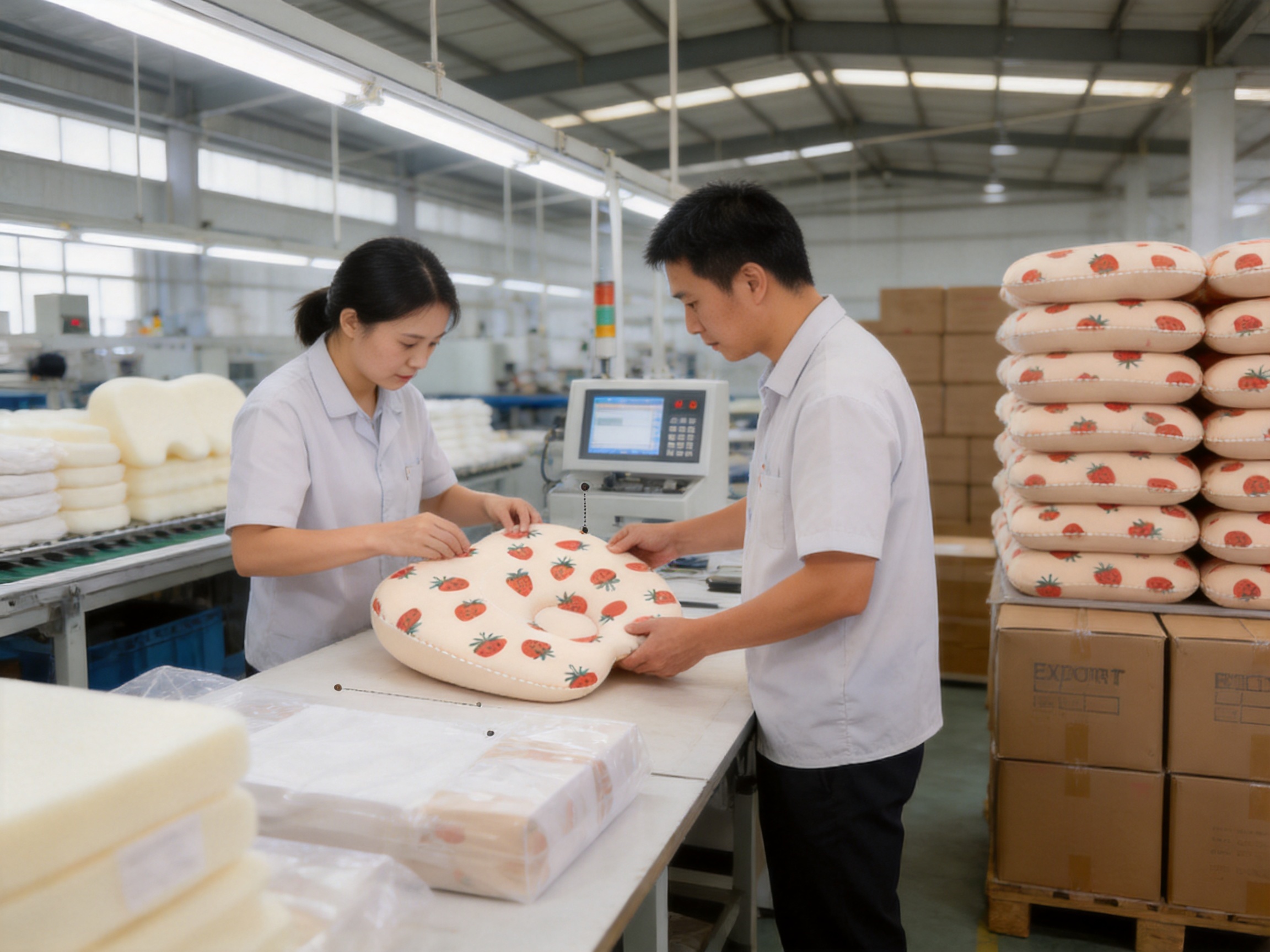
The product also reflects the material-development capabilities of its manufacturer, Jiangsu Wellcare Household Articles Co., LTD. The company has worked in sleep materials and healthy home products for many years, developing various foam technologies and supplying products to multiple international markets. Its research-driven approach supports the development of foam products that are designed for comfort, stability, breathability, hygiene, and long-term usability.
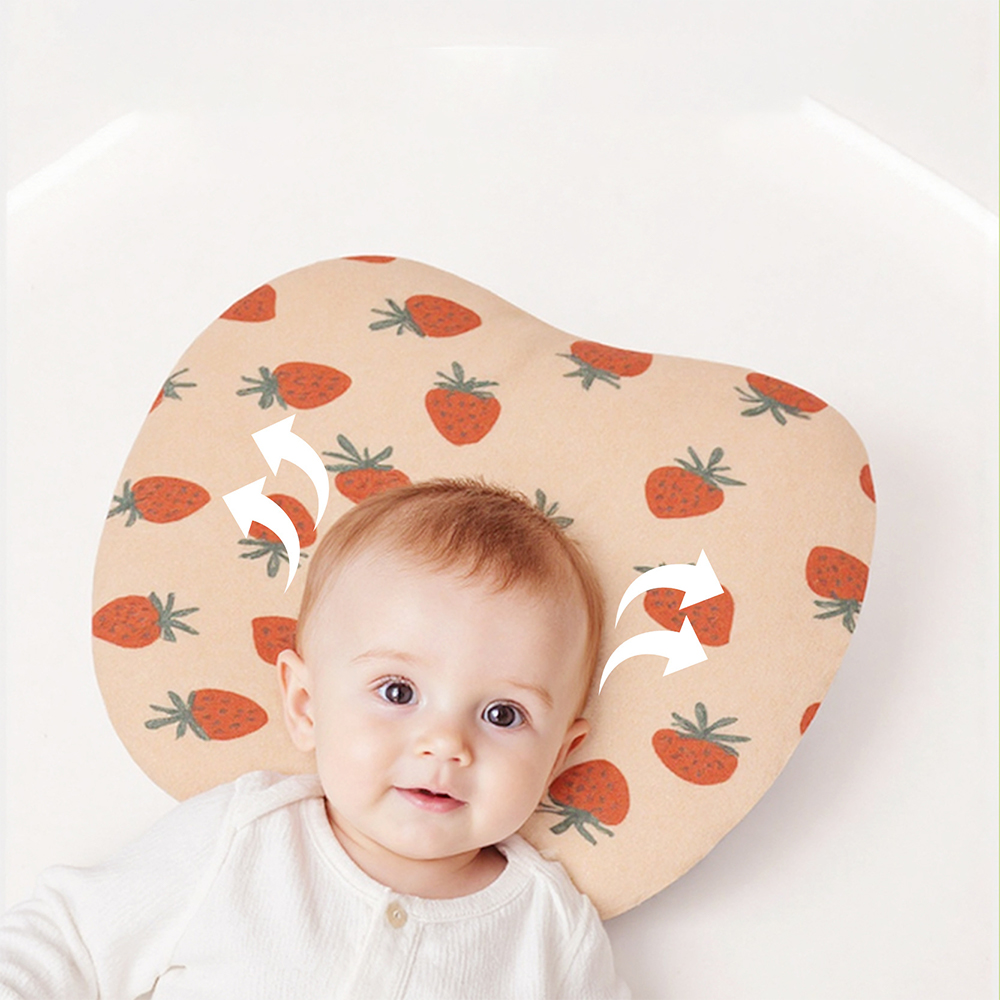
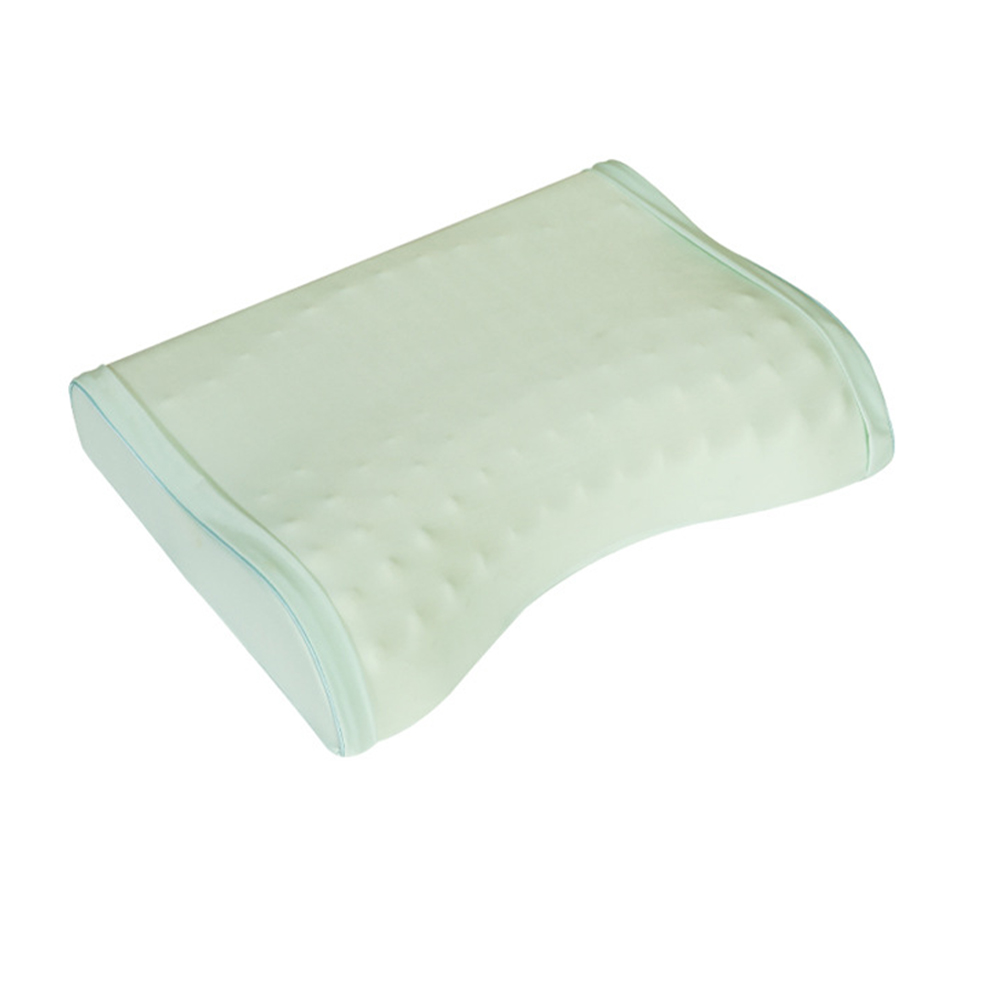
Neck support silicone pillow for children
Why Children’s Pillow Design Requires Special Attention
A pillow for a young child is not simply a smaller version of an adult pillow. Children have different body proportions, developing muscles, sensitive skin, and different sleeping habits. The relationship between the head, neck, shoulders, and sleeping surface must be considered carefully. A pillow that is too high may place the neck in an uncomfortable position, while one that is too flat may fail to provide useful support. Excessive firmness can create pressure points, while excessive softness may allow the head to sink unevenly.
For these reasons, a children’s pillow should be evaluated as a complete system rather than by one feature alone. The filling, shape, fabric, ventilation, height, dimensions, cleaning method, and intended age range all influence the user experience. The neck-support silicone pillow combines several structural elements to create a balanced design. Its internal core is made with slow-rebound memory foam, while the exterior is associated with baby-grade silicone and a soft fabric covering.
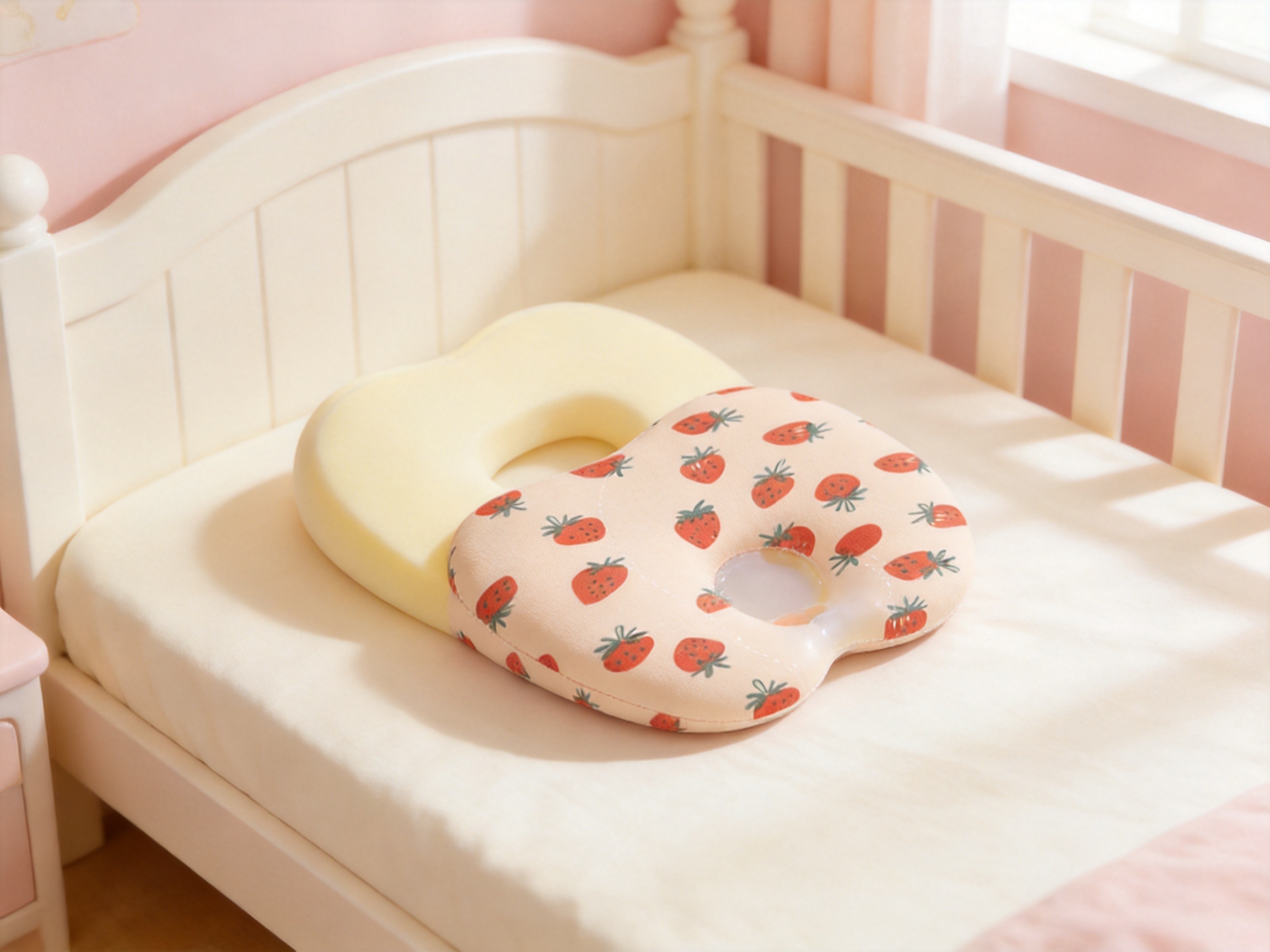
The central hollow design is one of the most distinctive features. Instead of placing a uniform cushion beneath the entire head, the pillow uses a shaped structure to help distribute pressure around the head and neck area. This can reduce direct contact pressure around the ears and face and may allow the child to rest more naturally. The curved surrounding support is intended to help stabilize the head without creating an overly rigid sleeping surface.
Children may also change positions frequently during sleep. A useful pillow therefore needs to offer support across a reasonable range of movement. The curved design and slow-rebound foam work together to create a surface that responds gradually rather than collapsing immediately. This can provide a more consistent feel when the child turns or adjusts position.
Baby-Grade Silicone and Skin-Conscious Material Selection
Material safety is a central consideration for products that remain in close contact with a child’s skin for extended periods. The product information describes the pillow as using food-grade or baby-grade silicone that is non-toxic, odorless, environmentally friendly, and skin-friendly. Silicone is valued in many household and childcare applications because it can be formulated to provide a smooth, resilient, and relatively stable material surface.
The use of silicone-related components can contribute to the pillow’s durability and resistance to ordinary household use. The material is not intended to replace responsible cleaning or supervision, but it can support a product design that is easier to maintain than some traditional fillings. The silicone cotton filling specification supplied for this product indicates that silicone-based material is an important part of its construction.
The product is also identified as OEKO-TEX® certified in the supplied description. Textile and material certifications can help buyers evaluate whether a product has been assessed against specified harmful-substance requirements. Certification should always be verified against the current documentation and the exact product version, but the inclusion of this information demonstrates an emphasis on material transparency and skin-contact suitability.
Children’s skin can be more sensitive than adult skin, particularly when exposed to heat, sweat, dust, detergent residue, or rough textiles. A pillow that uses a soft and breathable cover may help reduce friction and improve comfort. The fabric is described as breathable and moisture-wicking, which is useful in warm climates and during seasons when children are more likely to sweat during sleep.
Another benefit of a carefully selected surface fabric is that it can make the pillow feel less clinical and more familiar. The soft cream background and strawberry pattern provide a warm visual appearance, while the red and floral-print specifications offer a cheerful color direction. A friendly appearance can help the pillow fit naturally into a child’s bedroom, nursery, kindergarten nap area, or travel kit.
Slow-Rebound Memory Foam for Gradual Support
Memory foam is widely used in sleep products because it responds to body heat and pressure by gradually conforming to the user’s shape. In a children’s pillow, slow-rebound foam can help create a supportive cradle for the head and neck. Rather than pushing sharply against the body, the foam is intended to distribute contact more evenly and reduce the sensation of isolated pressure points.
The internal foam core is described as conforming to the curves of the head and neck. This design objective is particularly relevant for children because their necks are smaller and their postural alignment can be affected by relatively small changes in pillow height or shape. A responsive foam core can adapt to the child’s position while maintaining a more stable support profile than loose fiber filling.
Slow rebound also contributes to a controlled recovery process. When pressure is removed, the foam gradually returns toward its original form. This helps the pillow maintain its shape during normal use and can reduce the uneven settling that sometimes occurs with low-density or poorly contained fillings. Consistent shape retention is important for a structured pillow with a central hollow area because the support zones must remain properly positioned.
The memory foam used in a children’s product must be selected and processed with attention to density, resilience, odor control, and ventilation. A technically advanced manufacturer does not rely only on a generic foam formula. It must evaluate how the material behaves under different temperatures, loads, humidity conditions, and repeated compression cycles. These factors influence whether the pillow remains comfortable across different seasons and usage environments.
The manufacturer’s wider material portfolio includes ordinary sponge, memory foam, gel foam, temperature-insensitive memory foam, quick-dry memory foam, flame-retardant sponge, antibacterial sponge, and other foam materials. This range indicates an ability to adjust foam performance according to a particular application. A pillow for young children may require a different balance of softness, recovery, breathability, and stability than a mattress, cushion, or adult pillow.
The Central Hollow and Curved Neck-Support Structure
The central hollow construction is designed to address a common challenge in pillow design: supporting the head and neck while avoiding unnecessary pressure on sensitive areas. A fully filled pillow can create continuous upward pressure beneath the head. In contrast, a hollowed central area can provide a more structured resting zone, with surrounding contours helping to stabilize the head.
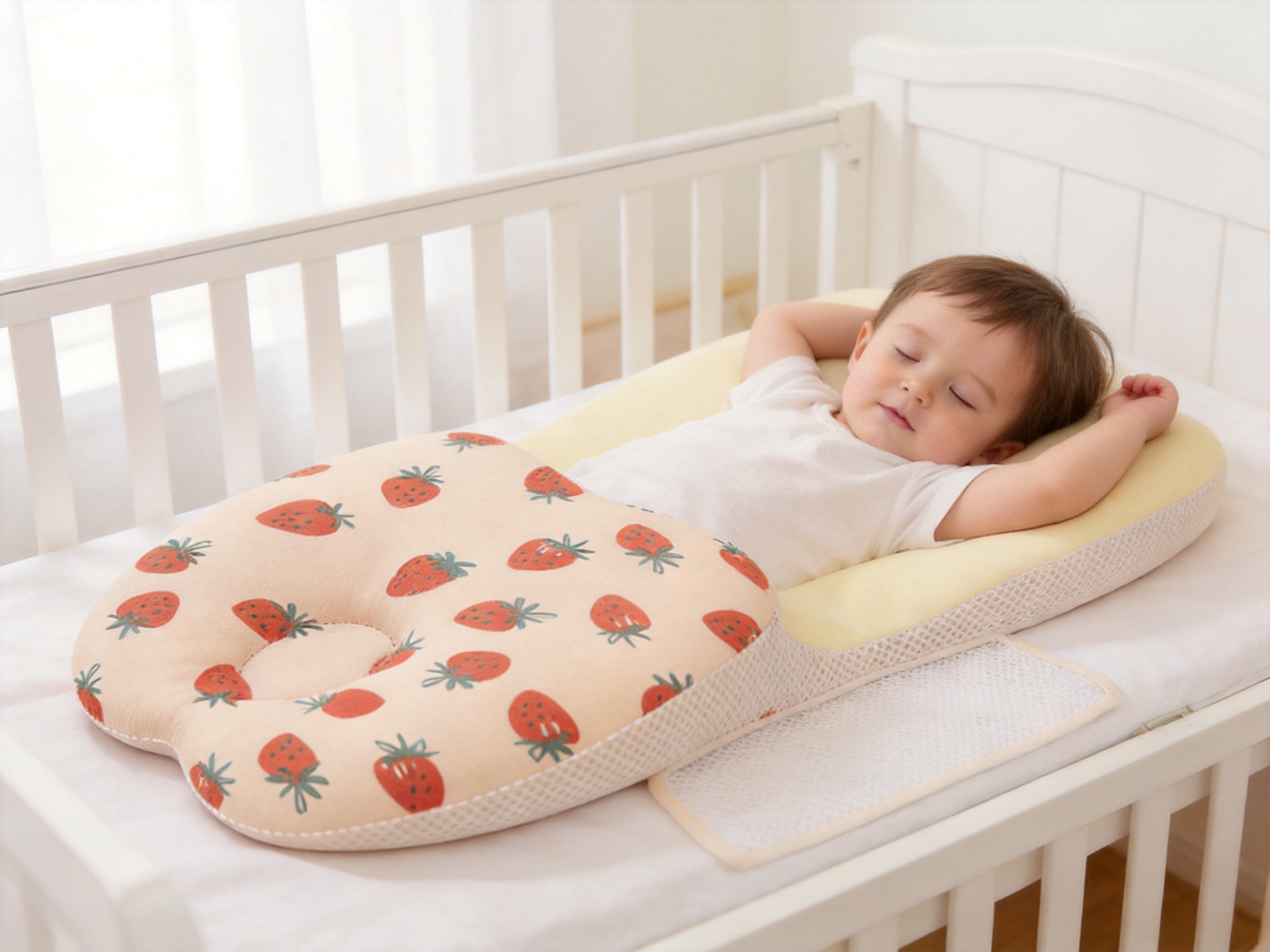
The curved wrapping structure is intended to provide support from the sides and lower neck area. This does not mean that the pillow immobilizes the child. Instead, it offers a gentle boundary that may help maintain a more balanced resting position. The design can be particularly useful for children who move frequently during sleep and need a surface that recovers its form after each movement.
The supplied product description states that the structure is designed to help prevent flat head syndrome and improve sleeping posture. Such statements should be understood as design objectives rather than medical guarantees. A pillow cannot diagnose, treat, or prevent every condition. Head shape development is influenced by many factors, and infants and young children require age-appropriate sleep environments. Parents should consult a qualified pediatric professional if they have concerns about head shape, neck movement, posture, or sleep safety.
From a comfort perspective, the central hollow may reduce direct contact around the back of the head, ears, and face. Pressure distribution can influence how long a child remains comfortable in one position. A design that spreads contact across the surrounding support areas may help reduce localized discomfort, although individual experiences will vary according to body shape, sleeping position, and personal preference.
The compact 27 by 25 centimeter format is intended to create a child-focused support area rather than an oversized adult sleeping surface. A smaller, purpose-designed pillow can be easier to position correctly and may fit more naturally in a child’s bed or nap space. It is also convenient for travel because it occupies less room than a standard adult pillow.
Breathability and Temperature Comfort
Thermal comfort is an important part of sleep quality. Young children may become uncomfortable when a pillow retains too much heat or moisture. A breathable fabric cover allows air to move more freely around the surface, while moisture-wicking properties can help manage ordinary perspiration. These features are especially valuable in warm regions, humid climates, and rooms where children sleep without heavy bedding.
The pillow’s breathable, skin-friendly fabric is intended for use throughout the year. In warmer weather, the fabric can help reduce a stuffy sensation. In cooler weather, it can still provide a soft contact layer between the child and the foam core. Breathability does not make the pillow completely temperature-neutral, but it can contribute to a more comfortable microclimate around the head and neck.
Foam construction must also be considered from a ventilation perspective. A dense material that is not properly engineered may feel warm or retain manufacturing odors. Manufacturers with experience in foam development can improve performance through formulation, cell structure, curing, cutting, and finishing processes. The objective is to produce a core that offers supportive recovery while maintaining acceptable air movement for the intended application.
Families should allow a newly unpacked foam product to ventilate according to the manufacturer’s care instructions. The product should be inspected before use, and it should not be used if there is an unusual persistent odor, visible damage, or a defect in the cover or core. Proper room ventilation and routine laundering are also important for maintaining a clean sleeping environment.
Removable and Washable Construction
Cleanability is one of the strongest practical advantages of this children’s pillow. The removable cover is designed to be taken off and washed, making it easier to manage perspiration, dust, food residue, saliva, and other everyday contamination. A washable cover is particularly valuable in households with young children because accidents and spills are normal parts of daily life.
Regular cleaning can also support a fresher sleep environment. The cover should be washed according to its care label, using a suitable detergent and water temperature. It should be dried completely before being placed back on the pillow. Incomplete drying may create unwanted moisture retention, which can affect both fabric freshness and the underlying foam.
The foam or silicone core should not be machine-washed unless the manufacturer specifically states that it is safe to do so. In most cases, spot cleaning, gentle surface wiping, and thorough air drying are more appropriate. Harsh bleach, aggressive solvents, and excessive heat may damage the materials or change their performance.
The washable design can extend the useful life of the pillow because the outer cover can be maintained without replacing the entire product. This may also reduce the need for disposable protective layers. For nurseries, kindergartens, and hospitality environments, removable covers can make cleaning routines more systematic and help staff manage shared or frequently used sleep products.
Hygiene depends on more than the pillow alone. The sleeping surface, bedding, room ventilation, and laundering schedule should all be considered. Families should also avoid sharing a child’s pillow between users without cleaning the cover and inspecting the product. If the pillow becomes misshapen, torn, excessively compressed, or otherwise damaged, it should be replaced.
Child-Friendly Appearance and Everyday Acceptance
Children often respond positively to products that look friendly and familiar. The strawberry print and cream-colored background create a playful appearance without relying on overly bright or visually harsh colors. The red and floral-print design can coordinate with children’s bedding, nursery décor, or travel accessories.
Visual design can influence whether a child accepts a new sleep product. A pillow that appears soft, colorful, and approachable may feel less unfamiliar than a plain technical product. The strawberry pattern also gives the product a distinctive identity in a nursery or family bedroom, making it easier for parents and caregivers to recognize.
At the same time, decorative elements must not compromise function. The print should remain comfortable against the skin, and the cover should be securely manufactured without loose components that could become detached. A reliable children’s product balances appearance with construction quality, seam integrity, surface softness, and ease of maintenance.
Advantages Compared with Conventional Children’s Pillows
Traditional children’s pillows are often made with loose polyester fiber, cotton batting, or basic foam. These materials can be comfortable, but they may not provide the same combination of shaped support, pressure distribution, and recovery. Loose fillings can shift over time, creating uneven thickness. Basic flat pillows may also provide limited neck contouring and may place more direct pressure beneath the head.
The neck-support silicone pillow offers several design advantages over a simple flat cushion:
First, the slow-rebound memory foam core is designed to conform to the head and neck gradually. This can create a more personalized support profile than a uniform fiber-filled pillow.
Second, the central hollow and curved structure are intended to distribute pressure and reduce direct contact around the ears and face. This creates a more deliberate support geometry than a conventional rectangular cushion.
Third, the silicone-based material specification provides a focus on skin contact, durability, and material stability. When combined with appropriate certification and quality control, this can be reassuring for families seeking a more carefully engineered children’s product.
Fourth, the breathable fabric cover and removable washable construction address practical problems that are often overlooked in basic pillow designs. Families can remove and clean the cover instead of treating the entire pillow as a disposable item.
Fifth, the compact size and lightweight format make the pillow easier to use in multiple settings. It can be placed in a child’s bed, used for a supervised nap, taken to a kindergarten, or packed for travel.
Finally, the product combines technical features with a friendly strawberry pattern. Many competitors focus either on functional construction or decorative appearance. This design aims to provide both, making it suitable for families who want a supportive product that still feels appropriate for a child’s personal space.
Product Specifications at a Glance
| Product title | Neck Support Silicone Pillow for Children |
| Product category | Children’s silicone pillow and baby pillow |
| Recommended application | Children over one year old, subject to professional and caregiver guidance |
| Dimensions | Approximately 27 × 25 centimeters |
| Pillow weight | Approximately 0–0.5 kilograms |
| Main filling ingredient | Silicone cotton |
| Core description | Slow-rebound memory foam support structure |
| Pillow core fabric | Cotton |
| Structural design | Central hollow with curved neck-support contour |
| Cover | Breathable, skin-friendly, removable, and washable |
| Color direction | Red and floral or strawberry print with a cream background |
| Brand | Wellcare |
| Item number | PW047 |
| Custom processing | Available according to supplied product information |
| Cross-border supply | Available according to supplied product information |
| Main sales regions | Europe, Southeast Asia, and North America |
| Typical downstream platforms | eBay, Amazon, Wish, AliExpress, independent websites, Lazada, and other channels |
Manufacturing Strengths Behind the Product
The quality of a foam pillow depends heavily on manufacturing control. A good concept must be translated into consistent material density, accurate dimensions, stable contours, reliable seams, and dependable packaging. Jiangsu Wellcare Household Articles Co., LTD. has developed its business around sleep materials and healthy home products, giving it experience across a broad range of foam applications.
The company’s history includes research and manufacturing activities that began before its current large-scale operations. Its development reportedly began in 1993 as a school-run scientific research enterprise. In 2003, the company purchased a factory building measuring approximately 12,000 square meters and jointly developed sponge materials with Huai’an Institute of Technology. In 2008, it acquired approximately 50,000 square meters of land, supporting continued expansion of production capacity.
Research capability is a major advantage in the foam industry. According to the supplied company information, the manufacturer is led by a doctor-led research and development team and develops more than one hundred new foam materials each year. This suggests an approach based on ongoing experimentation, formulation improvement, and performance testing rather than dependence on a single standard material.
The company’s material portfolio includes ordinary sponge, memory foam, gel foam, temperature-insensitive memory foam, quick-dry memory foam, flame-retardant sponge, antibacterial sponge, and other specialty materials. This diversity can support customized product development. For example, a manufacturer that understands quick-dry foam may be better positioned to develop products for humid environments, while experience with temperature-insensitive memory foam can help address seasonal changes in firmness.
For a children’s pillow, several manufacturing stages require careful control. The foam formulation must produce an appropriate combination of resilience and softness. The molding or cutting process must create a consistent central hollow and curved support area. The cover must fit accurately without excessive looseness or compression. Seams and closures must be finished cleanly, and the finished product must be inspected for contamination, damage, and dimensional variation.
Packaging and logistics also influence product quality. Foam products may be compressed or packed for transport, but the compression method must be compatible with the material’s recovery characteristics. Excessive or prolonged compression can affect the shape of a structured pillow. International supply requires attention to moisture protection, packaging strength, labeling, carton organization, and regional compliance requirements.
The company has supplied products to cross-border supermarkets in the United States, Germany, and Japan, and its products have also been exported to the United Kingdom, Canada, Australia, and Kuwait according to the supplied history. Experience across different markets can help a manufacturer understand varied customer expectations, packaging standards, documentation requirements, and product testing procedures.
Quality Management and Product Development
Product development for children’s sleep goods should begin with the intended user and the use environment. A manufacturer must consider age range, body proportions, skin sensitivity, expected cleaning frequency, room temperature, travel conditions, and the likelihood of repeated compression. These factors influence material selection and structural design.
Testing may include dimensional checks, compression and recovery evaluation, cover seam inspection, colorfastness assessment, odor review, wash-cycle testing, and material safety verification. The exact tests required will depend on the destination market and product classification. Importers and distributors should request current technical files, test reports, certification documents, and care instructions before making regulatory or safety claims.
Customization is another manufacturing strength identified in the product information. Custom processing is listed as available, which may allow business customers to discuss packaging, colors, printing, dimensions, fabrics, or other product details. Any customization should preserve the essential safety and performance characteristics of the original design. Changes to foam density, pillow height, cover materials, or structural contours may require additional validation.
The product is also identified as suitable for cross-border export supply. This is useful for distributors, retailers, hospitality buyers, childcare suppliers, and online sellers seeking a children’s pillow for international markets. However, export readiness should not be interpreted as universal regulatory approval. Each market may have its own requirements covering labeling, chemical restrictions, textile composition, flammability, advertising language, and age-related product guidance.
Applications in Homes, Nurseries, and Travel
At home, the pillow can be incorporated into a child’s regular bedding arrangement when appropriate for the child’s age and sleep environment. Its compact dimensions allow it to fit into smaller beds and children’s nap areas. The removable cover is useful for families that maintain frequent washing schedules.
In nurseries and kindergartens, clearly identified personal pillows can help organize nap-time supplies. The floral or strawberry print makes the pillow easy to distinguish, while the washable cover supports routine hygiene management. Institutions should establish their own policies regarding pillow use, cleaning, storage, and supervision.
For travel, the lightweight design can be more convenient than carrying a full-size pillow. It may be used during supervised rest periods in hotels, family visits, or other familiar environments. The product can help maintain a consistent sleep routine, although caregivers should always evaluate the safety of the particular sleeping location before use.
The pillow may also be considered by retailers and distributors specializing in baby products, healthy home goods, memory foam products, functional pillows, and children’s bedding. Its combination of technical construction, decorative styling, and washable maintenance gives it a broad commercial positioning within the children’s sleep-product category.
Care, Inspection, and Responsible Use
Before first use, caregivers should inspect the pillow, cover, seams, zipper or closure, and surface condition. The product should be used only when it is intact and clean. Any loose threads, torn sections, exposed filling, unusual deformation, or strong persistent odor should be addressed before the pillow is given to a child.
The cover should be removed and washed according to the care instructions. A gentle cycle and mild detergent are generally preferable for delicate fabrics, but the exact instructions supplied with the product should take priority. The cover should be completely dry before reassembly.
The core should be kept away from excessive moisture and high heat unless specific cleaning instructions state otherwise. Direct exposure to strong sunlight for long periods may affect some fabrics and foam materials. Proper storage in a dry, ventilated location can help preserve the pillow’s condition.
Caregivers should monitor the child’s comfort and posture. If the child appears uncomfortable, overheated, restricted, or unable to move naturally, the pillow should be removed and the sleep setup reassessed. The pillow is a comfort and support product, not a substitute for medical treatment or professional assessment.
Particular caution is necessary for infants and very young children. Safe sleep recommendations can vary by age and circumstance, and many authorities advise a clear, firm sleep surface without loose bedding or pillows for young infants. The product information identifies children over one year old as a suitable user group, but parents should confirm the appropriate timing of pillow use with a pediatric professional and follow local guidance.
Why Manufacturer Transparency Matters to Buyers
When purchasing children’s sleep products, buyers often want more than a product photograph and a short list of features. They may need information about materials, manufacturing experience, export history, customization, cleaning, certification, and quality control. A manufacturer that can explain its product development process gives distributors and end users a stronger basis for evaluation.
WELLCARE’s company information presents a history centered on foam research, material innovation, and healthy home products. The company has reportedly cooperated with academic institutions and has supplied products to international retailers and hospitality customers. In 2018, it became an Alibaba-certified Gold Supplier, and in 2020 it became a designated supplier for five-star hotels according to the supplied company profile.
These milestones indicate commercial experience, but buyers should still evaluate the specific children’s pillow independently. A company’s general capabilities do not automatically confirm every claim for every product. Responsible sourcing includes checking the current specification sheet, sample quality, test documentation, production consistency, packaging, and after-sales support.
The company also describes investments in environmentally friendly energy systems and improved environmental management. Sustainability is increasingly relevant to buyers of household and children’s products. Efficient production, responsible material selection, reduced waste, and appropriate packaging can contribute to a lower environmental impact. Environmental claims should be supported by verifiable records, but a commitment to ongoing environmental improvement is a positive direction for modern manufacturing.
Commercial Potential for International Distributors
The children’s pillow can be positioned within several growing product categories, including memory foam pillows, functional pillows, baby bedding, healthy home products, and travel sleep accessories. Its central hollow design gives it a clear functional story, while the strawberry print provides a visual merchandising advantage.
Retailers can present the product as a combination of neck support, pressure-conscious shaping, breathable comfort, and washable convenience. Product descriptions should remain accurate and should avoid absolute medical promises. Claims such as “designed to support the head and neck” or “made with a central hollow structure to help distribute pressure” are generally more responsible than claims that guarantee the prevention or treatment of a medical condition.
The product may appeal to parents, grandparents, childcare centers, travel retailers, baby-product stores, and online customers looking for an alternative to ordinary flat pillows. Its lightweight construction can help reduce shipping complexity, while the removable cover can be highlighted as a practical feature for families.
For private-label or customized programs, buyers can discuss color themes, printed patterns, labels, packaging formats, and market-specific documentation. Since the supplied information states that the company supports custom processing but does not support dropshipping, business customers should plan for suitable order quantities, warehousing, fulfillment, and inventory management.
Comparison of Key Design Benefits
| Design consideration | Conventional basic pillow | Neck-support silicone pillow |
| Support profile | Often flat and uniform | Curved support with a central hollow |
| Filling behavior | May shift or settle unevenly | Slow-rebound foam is designed to recover gradually |
| Pressure management | May concentrate pressure beneath the head | Structured contour aims to distribute contact more evenly |
| Surface care | May require full-product cleaning or replacement | Removable and washable cover |
| Skin-contact focus | Depends on the selected fabric and filling | Baby-grade silicone and skin-friendly breathable fabric |
| Portability | Varies, often larger or heavier | Compact 27 × 25 centimeter format and lightweight construction |
| Visual appeal | Often plain | Strawberry or floral print with a soft cream background |
| Customization potential | Depends on supplier | Custom processing is listed as available |
Frequently Asked Questions
Who is this pillow designed for?
The supplied product information identifies the pillow as suitable for children over one year old and also lists suitability for children under two years old. Since children develop at different rates, caregivers should consider age, mobility, sleeping habits, and professional guidance before use. It is not presented as a universal pillow for newborns.
What is the main filling material?
The main filling ingredient is listed as silicone cotton, while the product description also identifies a slow-rebound memory foam core. Buyers should request the current technical specification if they need a detailed percentage breakdown or a complete material composition.
How does the central hollow design work?
The central hollow creates a shaped resting area, while the surrounding curved structure provides support around the head and neck. The goal is to distribute pressure more comfortably and reduce direct pressure around the ears and face. Individual results may vary depending on the child’s size and sleeping position.
Can the entire pillow be washed?
The cover is designed to be removable and washable. The foam or silicone core should not be machine-washed unless the official care instructions specifically allow it. Spot cleaning and air drying are generally safer for structured foam components.
Is the pillow breathable?
The outer fabric is described as breathable and moisture-wicking. This can help reduce stuffiness and manage ordinary perspiration. Breathability also depends on the surrounding bedding, room temperature, and how the pillow is used.
Does the pillow prevent flat head syndrome?
The product is designed to support the head and neck and to reduce pressure in selected areas. However, no pillow should be treated as a guaranteed method for preventing or treating flat head syndrome. Parents with concerns about head shape or development should consult a qualified pediatric professional.
What are the pillow’s dimensions?
The listed dimensions are approximately 27 by 25 centimeters. This compact format is intended for children and can be convenient for small beds, nap areas, and travel.
What colors and patterns are available for this model?
The supplied information refers to a red color category, a floral print, and a strawberry print on a cream background. Buyers interested in bulk orders or private-label programs should confirm the available colorways and printing options with the manufacturer.
Is customization available?
Custom processing is listed as available. Customization may include selected colors, patterns, packaging, labels, or other approved details. Any change to the core structure or materials should be evaluated to ensure that performance and safety remain appropriate.
Can customers use a dropshipping service?
The supplied product information states that dropshipping is not supported. Retailers should therefore plan for standard wholesale purchasing, inventory, and fulfillment arrangements.
Where can the product be sold?
The listed downstream platforms include eBay, Amazon, Wish, AliExpress, independent websites, Lazada, and other channels. It is also identified for sales in Europe, Southeast Asia, and North America. Retailers remain responsible for meeting the rules and labeling requirements of each market.
What should buyers request before placing an order?
Buyers should request a current product specification, sample, material and certification documentation, care instructions, packaging details, minimum order quantity, lead time, customization conditions, and quality-control procedures. They should also confirm the exact intended age guidance for their market.
Conclusion
The neck-support silicone pillow for children combines several features that distinguish it from a basic flat children’s pillow. Its slow-rebound memory foam core is designed to conform gradually to the head and neck, while the central hollow and curved support structure aim to distribute pressure and promote a more comfortable resting position. Baby-grade silicone, breathable fabric, and a removable washable cover address material sensitivity, temperature comfort, and everyday hygiene.
The strawberry or floral print adds a warm child-friendly appearance, and the compact lightweight format makes the pillow suitable for home use, supervised naps, nurseries, kindergartens, and travel. These benefits create a balanced product proposition for families and international distributors seeking a combination of functional design and visual appeal.
Behind the product is a manufacturer with experience in foam research, material innovation, international supply, customized processing, and environmentally conscious development. Its broader range of ordinary sponge, memory foam, gel foam, temperature-insensitive foam, quick-dry foam, flame-retardant sponge, and antibacterial sponge reflects the technical foundation needed to develop specialized sleep products.
As with all children’s sleep accessories, responsible use is essential. Caregivers should follow age-appropriate sleep guidance, inspect the pillow regularly, keep the cover clean and dry, and consult a pediatric professional when medical or developmental concerns arise. Used appropriately and evaluated alongside reliable documentation, this pillow offers a thoughtfully engineered option for children’s comfort and daily sleep routines.
References
1. Product specification and descriptive materials supplied for the neck-support silicone pillow for children, item number PW047.
2. OEKO-TEX® Standard 100 principles concerning the assessment of textiles and materials for harmful substances.
3. General pediatric sleep-safety guidance concerning age-appropriate bedding and the use of pillows for infants and young children.
4. Technical literature on viscoelastic memory foam, pressure distribution, resilience, and temperature response in sleep products.
5. Manufacturer-provided company profile covering foam research, product development, manufacturing history, international supply, and environmental management.
6. General textile-care and foam-product maintenance practices for removable covers, moisture control, inspection, and storage.
Product: Neck support silicone pillow for children
PREV:Striped Pet Staircase: A Safer, More Comfortable Route for Dogs and Cats
NEXT:Gel Memory Foam Sponge Pillow: Breathable Support, Custom Comfort, and Reliable Manufacturing
NEXT:Gel Memory Foam Sponge Pillow: Breathable Support, Custom Comfort, and Reliable Manufacturing
Interested in cooperation or have questions?
Related News
WELLCARE was founded in 2003, boasting over a decade of profound and extensive experience.
Quick Links
Product
Media Centre
Contact Information
- [email protected]
- +86-517-84998062
- +86-15152354988
- No. 168 Nenjiang Road, Huaiyin District, Huai'an City, Jiangsu Province, China
Copyright © Jiangsu Wellcare Household Articles Co., LTD. All Rights Reserved.
Custom Memory Gel Mattress Manufacturers
