

 English
 日本語
 Español



Deng Caiwei — International Sales Manager

Home / Author / Deng Caiwei — International Sales Manager / U-Shaped Removable Memory Foam Neck Pillow for Comfortable Travel and Everyday Support
Product Category
NEW Category
Contact us
U-Shaped Removable Memory Foam Neck Pillow for Comfortable Travel and Everyday Support
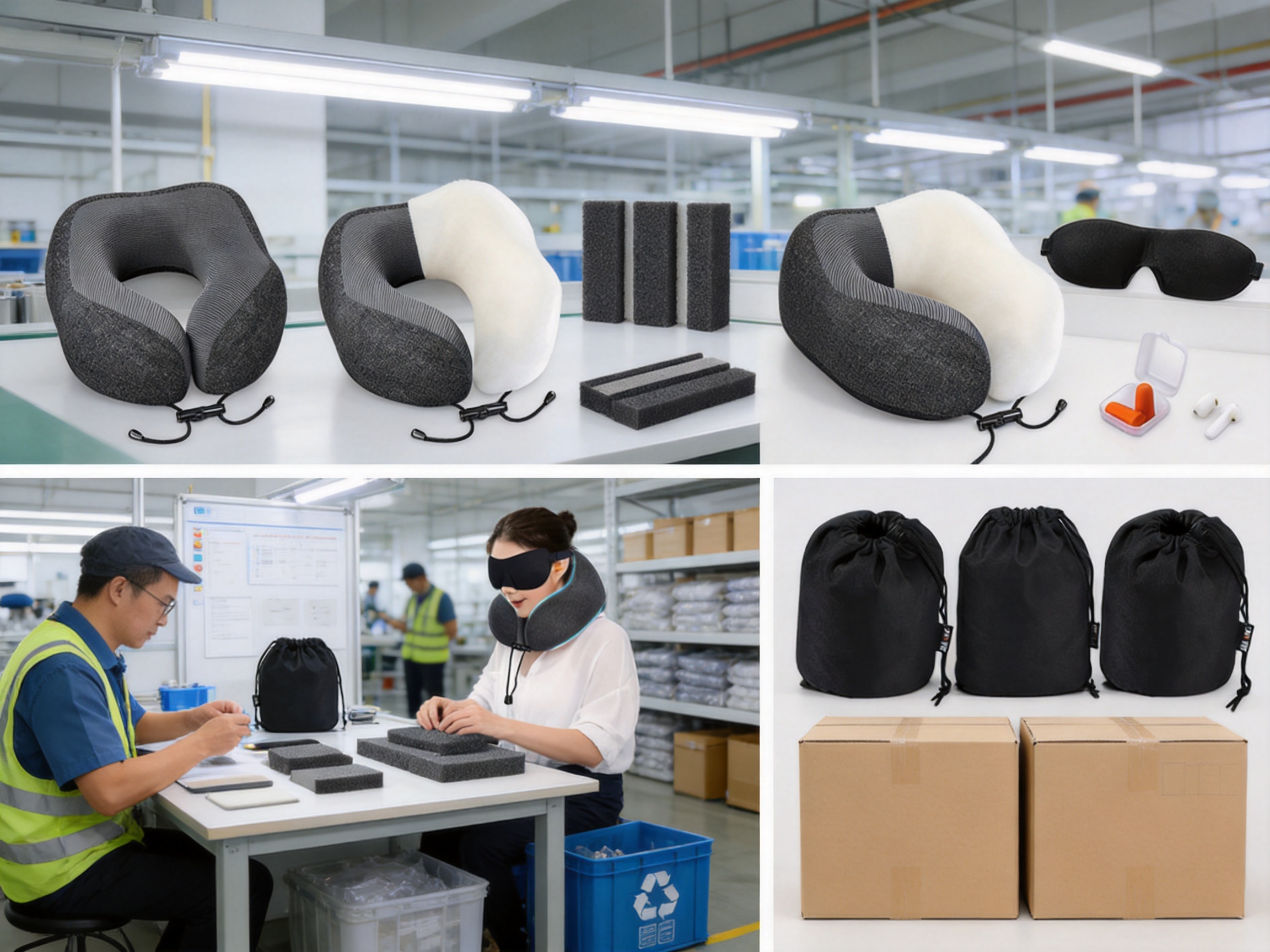
Long-distance travel, extended office hours, daily commuting, and frequent use of mobile devices can place considerable strain on the neck. When the head remains in a fixed or forward-leaning position for a prolonged period, the muscles around the cervical spine may become tired and uncomfortable. A well-designed travel pillow can help improve posture, distribute pressure, and make periods of sitting more comfortable.
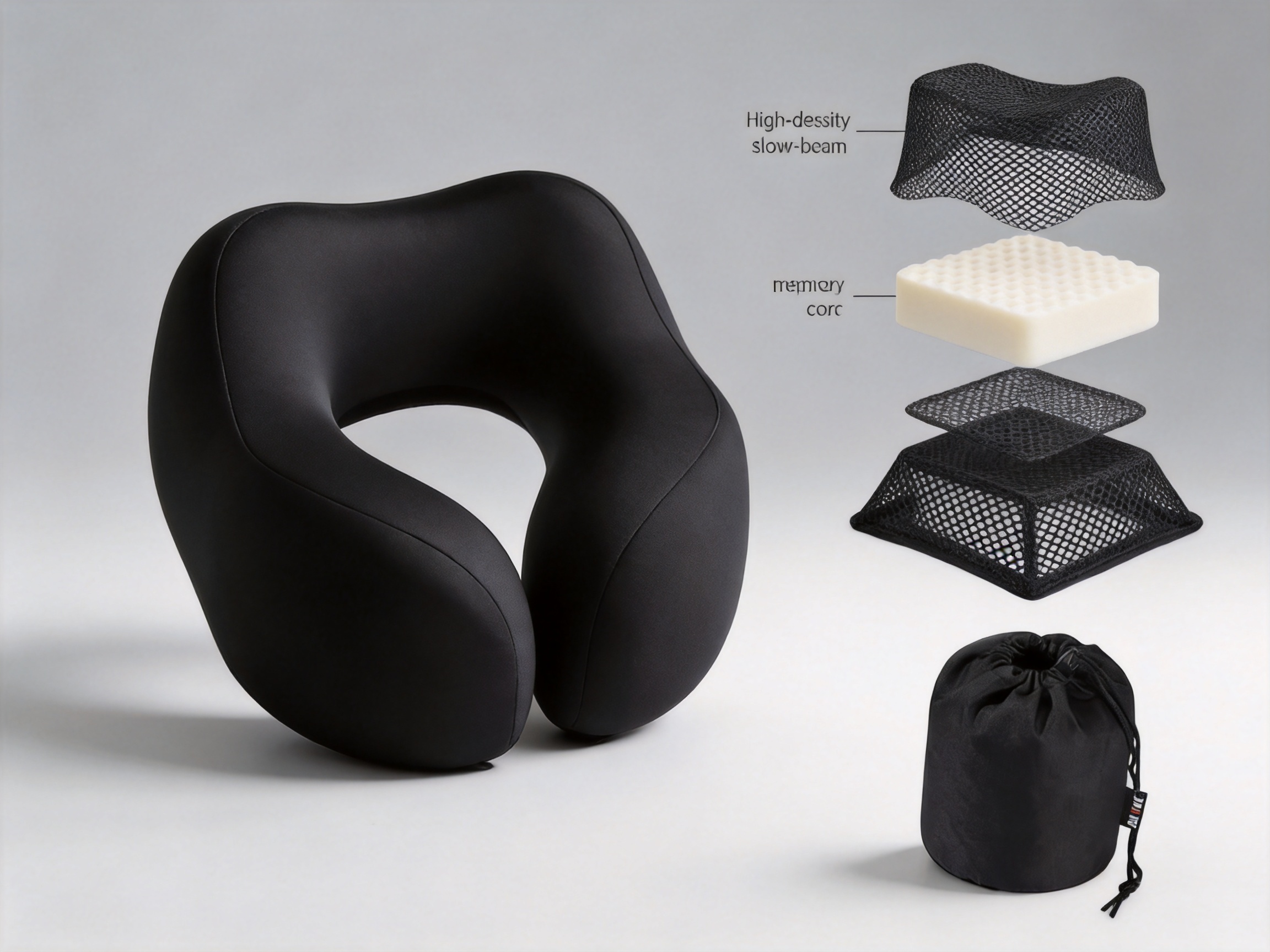
The U-shaped removable memory foam neck pillow described in this article is designed for adults who want portable neck support without sacrificing comfort, breathability, cleanliness, or appearance. It combines a high-density slow-rebound memory foam core, a three-dimensional breathable mesh cover, a removable structure, and a compact storage bag. The result is a practical neck-support product for cars, airplanes, high-speed trains, offices, business trips, and rest breaks.
Unlike basic inflatable travel pillows or low-density fiber-filled alternatives, this product is built around a shaped memory foam core. The foam conforms gradually to the user’s neck, while the U-shaped design helps support the sides and rear of the cervical area. Its matte black exterior and streamlined contour also give it a modern appearance suitable for both travel and everyday use.
Product Overview
The product is a U-shaped removable memory foam neck pillow with the item number JZ001. It is manufactured by Jiangsu Wellcare Household Articles Co., LTD., a Chinese producer focused on foam materials, sleep products, healthy home products, and customized manufacturing. The pillow is intended for adult users and is suitable for both domestic and cross-border sales.
The pillow’s main filling ingredient is memory foam, with the supplied product information indicating a 100% main filling content. Its core height is approximately 11 centimeters, and its weight falls within the 0–0.5 kilogram range. This relatively light construction makes it easier to carry than many bulky support cushions while still providing a substantial foam structure.
The pillow is covered with 3D breathable mesh fabric. This type of cover uses a three-dimensional structure to create small air channels between the surface and the user’s skin. Air circulation can help reduce heat and stuffiness during extended wear, particularly in warm cabins, vehicles, offices, and crowded transit environments.
The cover is removable, which provides an important practical advantage. Travel products frequently come into contact with skin, hair, clothing, luggage, seat surfaces, and other shared environments. A removable cover can be taken off for cleaning, helping users maintain better hygiene and extend the usable life of the pillow.
The product also includes a built-in storage bag. When not in use, the pillow can be stored more neatly and transported in a backpack, handbag, carry-on case, or suitcase. This feature is particularly valuable for travelers who need to conserve space while moving between airports, hotels, offices, trains, and vehicles.
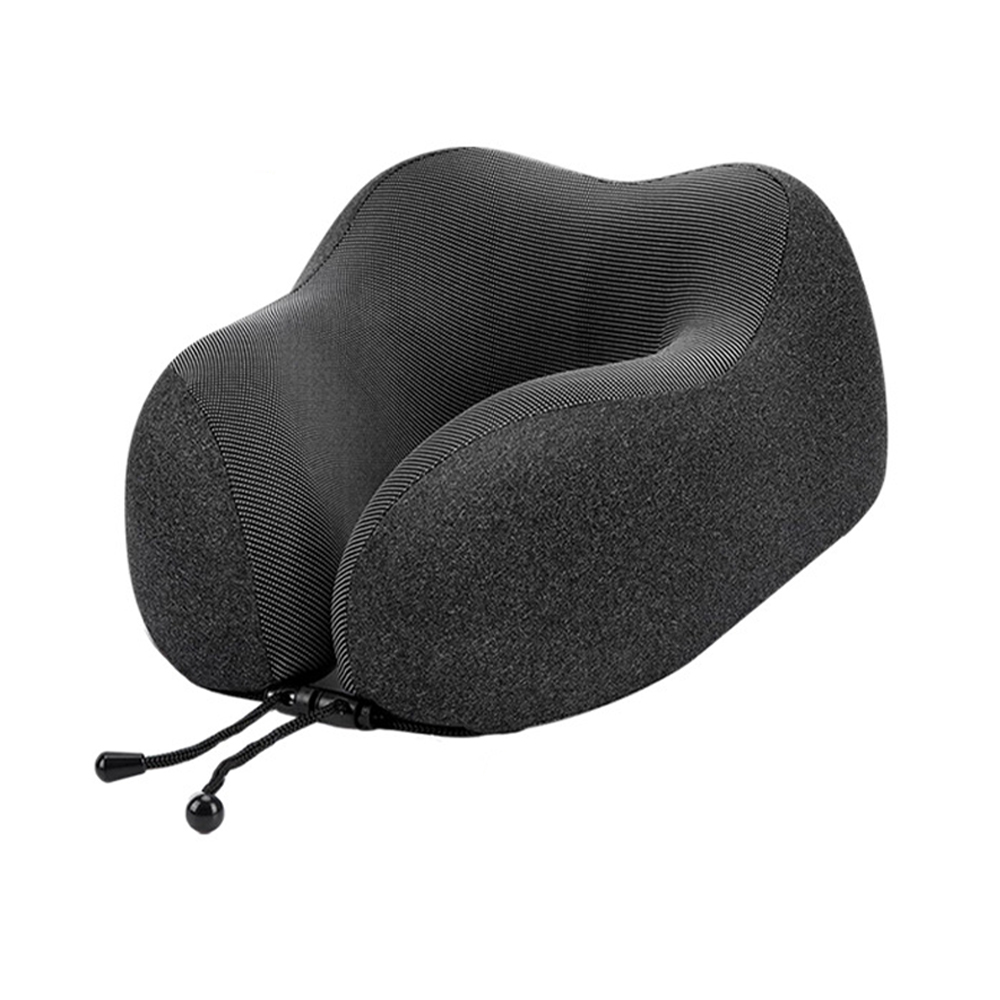
U-shaped removable memory foam neck pillow
How the Memory Foam Core Supports the Neck
The central feature of the pillow is its slow-rebound memory foam core. Memory foam is a viscoelastic material that responds gradually to body heat, pressure, and shape. When the user places the neck inside the U-shaped opening, the foam compresses and conforms to the contours of the neck and lower head area.
This conforming action helps distribute contact pressure across a broader area rather than concentrating support at a few hard points. A conventional pillow with a rigid or poorly shaped filling may create gaps or push unevenly against the neck. By contrast, a shaped memory foam core is able to adapt to different neck contours while maintaining a stable form.
The slow-rebound characteristic also allows the pillow to recover its original shape after use. This is useful during travel because the pillow may be compressed briefly in luggage or under a storage arrangement. Once released, the foam can gradually return toward its designed profile, helping preserve its support function over repeated use.
The pillow is not intended to diagnose, treat, or cure a medical condition. However, its structure is designed to help reduce the feeling of neck fatigue and discomfort associated with prolonged sitting. The U-shaped profile offers support around the cervical region, while the foam’s pressure distribution can make rest positions feel more stable.
For travelers, stability is especially important. On a moving vehicle, the head may naturally fall forward or to one side when the user relaxes or sleeps. A neck pillow cannot eliminate all movement, but the raised sides and shaped foam can help limit uncontrolled lateral movement and provide a more supported resting position.
Slow-Rebound Performance
Fast-rebound foam can feel springy and may push back quickly when compressed. Slow-rebound memory foam behaves differently. It responds more gradually, allowing the material to adapt to the user’s shape before returning to its original form. This creates a softer, more enveloping sensation while retaining structural support.
For a travel pillow, the balance between softness and stability is important. Excessively soft filling may collapse under the weight of the head, while excessively firm material may produce pressure around the jaw, shoulders, or sides of the neck. The use of high-density slow-rebound memory foam is intended to provide a middle ground: gentle contouring combined with dependable support.
Designed Cervical Contour
The 3D contour design gives the pillow a more structured appearance than a simple rounded cushion. Its shape is intended to follow the natural area around the neck and improve contact with the user. This can help reduce empty spaces between the neck and pillow, particularly when the user sits upright in a plane seat, car seat, train seat, or office chair.
A contoured shape also helps the product retain its visual identity. Retailers and consumers can distinguish it from generic U-shaped pillows that use the same basic form without a defined profile. The matte black surface, shaped edges, and clean silhouette support a contemporary product presentation.
Breathable 3D Mesh for Longer Wear
Comfort during extended use depends on more than the filling. A pillow that feels supportive but traps heat can become uncomfortable after a short period. The 3D breathable mesh fabric addresses this issue by promoting airflow across the outer surface.
The three-dimensional construction creates a small ventilated layer. As the user moves or as air circulates through the surrounding space, heat and moisture can disperse more effectively than they may through a dense, non-breathable fabric. This is beneficial during flights, road trips, train journeys, and office breaks when the pillow may remain in contact with the neck for a prolonged period.
Breathability is also useful for users who prefer to wear a travel pillow in warm climates. The product is suitable for major sales regions including South America, Southeast Asia, and North America, where temperatures and humidity can vary considerably. A ventilated cover can make the pillow more adaptable across different travel conditions.
The mesh surface contributes to the product’s tactile character as well. It offers a technical, modern appearance that matches the functional purpose of the pillow. Combined with the black color scheme, the fabric helps create a simple and versatile design that can coordinate with casual clothing, business travel attire, and outdoor garments.
Why Airflow Matters in Travel Products
Travel often means sitting in environments where ventilation is limited. Aircraft cabins, buses, trains, waiting lounges, and car interiors may expose the user to warmth generated by clothing, body contact, and restricted movement. A breathable pillow cover can help reduce the sensation of heat accumulation around the neck.
Improved airflow does not replace regular cleaning or appropriate use. Users should still follow the care instructions for the cover and foam components. Nevertheless, a ventilated fabric is a meaningful design improvement over sealed plastic-like surfaces that may feel hot and sticky during long periods of contact.
Removable Construction and Easier Maintenance
The removable structure is one of the product’s most practical advantages over many low-cost neck pillows. Some basic travel pillows have fixed covers that cannot be removed. After repeated contact with skin and clothing, such products can be difficult to clean thoroughly. The detachable construction of this model makes routine maintenance more manageable.
A removable cover allows the user to separate the washable outer component from the foam core. This is important because memory foam should generally be protected from excessive moisture and should not be treated in the same way as a fabric cover. Separating the components helps users clean the surface while protecting the foam’s internal structure.
Regular care may help reduce the buildup of perspiration, dust, cosmetic residue, and travel-related contaminants. It can also help preserve the appearance of the black mesh fabric. For retailers, the removable design provides a clear selling point because it connects directly with consumer concerns about hygiene, durability, and long-term value.
The detachable structure may also support product longevity. If the cover eventually becomes worn or if a customer wants a different fabric specification, a customizable pillow core fabric is listed among the product attributes. This provides potential flexibility for private-label programs, branded collections, hospitality orders, and other customized applications.
Care Considerations
Users should remove the outer cover according to the product’s closure design and follow the cleaning instructions provided by the seller or manufacturer. The memory foam core should be kept away from harsh chemicals, high heat, and prolonged soaking unless a specific care method has been approved.
After cleaning, the cover should be completely dry before it is placed back on the foam core. The pillow should also be stored in a dry, well-ventilated environment. These simple practices can help maintain the resilience, shape, and odor characteristics of the materials.
Portable Storage for Modern Travel
A travel pillow must be easy to carry if it is to be used consistently. The supplied product includes a storage bag that helps organize the pillow when it is not around the user’s neck. This prevents the product from being loosely placed in a suitcase or left exposed on a seat.
The storage bag supports several use scenarios. A passenger can place the pillow inside a backpack before entering an airport. A business traveler can keep it in a carry-on case between meetings. A commuter can store it under a desk or in a vehicle. A student or office worker can keep it nearby for a short lunch-break rest.
Compact storage also makes the product easier for retailers to package, display, and ship. Its weight category of up to 0.5 kilogram is suitable for e-commerce logistics and cross-border distribution. A lightweight, space-conscious product can help reduce the inconvenience associated with bulky travel accessories.
Compared with inflatable pillows, the memory foam version does not require inflation or deflation. Users can take it out of the storage bag and use it immediately. Compared with loose fiber pillows, it has a more defined shape and is less likely to become uneven after repeated packing and unpacking.
Multi-Scene Use
The product is designed for more than airplane travel. Its U-shaped format and portable construction make it suitable for various seated environments where the neck may benefit from additional support.
Airplanes
Airplane seats often limit head movement and may not provide sufficient lateral support. During a flight, the pillow can be positioned around the neck to create a more stable resting area. The breathable cover is useful in enclosed cabin conditions, while the storage bag makes it easy to carry through airports and transfer points.
Cars and Road Trips
Passengers on long car journeys may experience neck fatigue from maintaining the same position for an extended time. The pillow can provide additional comfort during rest stops and passenger travel. Drivers should never use a neck pillow if it interferes with visibility, head movement, seat-belt positioning, or vehicle control.
High-Speed Trains and Commuter Rail
Rail passengers frequently spend several hours seated with limited opportunities to change posture. The pillow can support short naps and reduce the feeling of an unsupported neck. Its neutral black appearance is appropriate for commuting, business travel, and leisure journeys.
Office Use
Office workers may use the pillow during breaks, business trips, or extended periods of seated work. It can be placed around the neck during a short rest or used when traveling between customer locations. The removable cover is especially valuable in shared work environments where hygiene is a consideration.
Lunch Breaks and Rest Periods
Some users need a compact product for a brief midday rest. A portable neck pillow can be kept in a drawer, locker, or work bag. Because the product is designed to be lightweight and easy to store, it can support a more comfortable rest routine without requiring a full-size cushion.
Advantages Compared with Common Alternative Neck Pillows
The market includes inflatable pillows, polyester-filled pillows, basic foam pillows, and premium molded support cushions. Each category has its own advantages, but this memory foam model offers a combination of features that can be difficult to find in a basic product.
| Feature | U-Shaped Removable Memory Foam Pillow | Inflatable Pillow | Loose Fiber-Filled Pillow | Basic Fixed-Cover Foam Pillow |
| Support structure | Contoured slow-rebound memory foam | Air pressure-based support | Soft filling with less defined shape | Foam support with limited maintenance flexibility |
| Setup | Ready to use without inflation | Requires inflation and deflation | Ready to use | Ready to use |
| Shape retention | Designed to retain its contour after use | Depends on air pressure and valve condition | May flatten or shift over time | Depends on foam quality |
| Air circulation | 3D breathable mesh cover | May use less breathable outer materials | Depends on fabric and filling density | Depends on cover construction |
| Cleaning convenience | Removable structure supports easier cover care | Often limited by construction | May require full-product cleaning | Often fixed or partially removable |
| Portability | Lightweight and includes a storage bag | Very compact when deflated | Usually more bulky | May be bulky without a storage solution |
| Appearance | Matte black, 3D contoured, minimalist design | Often sporty or inflatable in appearance | Usually soft and informal | Varies by model |
Compared with inflatable alternatives, this pillow provides immediate use without a pump or manual inflation. It also avoids the feeling of an air chamber that may become too firm or too soft depending on pressure and temperature. The memory foam core offers a more consistent physical structure during use.
Compared with loose fiber-filled models, the memory foam core offers clearer shape definition. Fiber filling can feel soft, but it may shift inside the cover or compress unevenly over time. The molded or shaped foam approach is better suited to users who prefer stable support around the cervical area.
Compared with fixed-cover foam products, the detachable cover provides better maintenance flexibility. This is a valuable difference for frequent travelers, shared office use, hospitality programs, and customers who prioritize cleanliness.
Compared with visually plain support cushions, the 3D contour design and matte black finish offer a more refined appearance. Product appearance matters in e-commerce because customers often evaluate a travel accessory as both a functional item and part of their personal travel equipment.
Material Safety and Product Reliability
The product information states that the materials are OEKO-TEX® certified and designed to be non-toxic and odorless for safe contact. Certification claims should always be verified through current manufacturer documentation, applicable certificates, and the specific material or product scope. When properly documented, such certification can provide additional confidence for distributors and end users.
Material safety is particularly important for products that remain close to the face and neck. Foam, fabric, thread, closures, labels, and packaging components should be selected and controlled carefully. Manufacturing consistency is necessary to ensure that the finished product meets the intended material and performance requirements.
The use of memory foam also requires attention to odor management. Newly produced foam may have a temporary manufacturing odor, depending on formulation, curing, packaging, and storage conditions. Proper production controls, ventilation, aging procedures, and packaging practices can help improve the consumer experience.
For importers and professional buyers, documentation may include material specifications, test reports, chemical compliance records, production inspection reports, packaging details, and batch information. These documents can support responsible sourcing and make it easier to evaluate product suitability for different markets.
Manufacturing Strengths of the Supplier
Jiangsu Wellcare Household Articles Co., LTD. has developed a business centered on foam materials and healthy home products. The company’s history, as provided, dates back to 1993, when its development began as a school-run scientific research enterprise. In 2003, it purchased a 12,000-square-meter factory building and jointly developed new sponge material with Huai'an Institute of Technology.
The company later purchased 50,000 square meters of land in 2008. Its expansion indicates a long-term focus on production capacity, material research, and industrial development rather than simple product assembly. For buyers seeking a stable supplier, this background can be meaningful because a travel pillow’s performance depends heavily on the consistency of its foam formulation and processing.
The company reports that it is led by a doctor-led research and development team and develops more than one hundred new foam materials each year. Its material portfolio includes ordinary sponge, memory foam, gel foam, temperature-insensitive memory foam, quick-dry memory foam, flame-retardant sponge, antibacterial sponge, and other foam solutions.
This range of material capabilities can support more than one fixed product specification. Depending on customer requirements, a supplier with broad foam development experience may be able to adjust density, rebound speed, firmness, resilience, surface feel, color, thickness, or functional additives within appropriate technical and regulatory limits.
Research and Development Capability
Research and development is particularly important in memory foam manufacturing. The user experience depends on several interacting variables, including foam density, viscoelastic response, cell structure, temperature sensitivity, compression behavior, resilience, odor, and aging performance.
A product intended for travel must also balance support and portability. Excessively dense foam may improve durability but increase weight. Excessively soft foam may be lightweight but fail to provide stable support. A skilled development team can evaluate these trade-offs and create a specification suitable for the intended application.
The supplier’s development of temperature-insensitive memory foam is relevant to international markets. Conventional memory foam may feel different in cold and warm conditions. Temperature-responsive behavior can influence firmness during winter travel, air-conditioned flights, or hot climates. Although the supplied pillow is specified as slow-rebound memory foam rather than explicitly temperature-insensitive foam, the company’s broader capability may support future product development.
Foam Formulation and Processing
High-quality foam products require controlled formulation and processing. Raw materials must be measured accurately, mixed consistently, and processed under suitable temperature and environmental conditions. The foam must then be cured, inspected, cut, shaped, and assembled according to the product design.
For a U-shaped neck pillow, dimensional accuracy is important. The opening must be comfortable for adult users, the side supports must remain balanced, and the core height must be consistent. Variations in cutting or contouring can affect both appearance and performance. Proper tooling, production control, and inspection help maintain uniformity across batches.
The memory foam core should also be evaluated for compression recovery. Testing may include repeated compression, dimensional stability checks, density verification, rebound behavior, and visual inspection. These procedures help determine whether the foam can withstand regular travel use without quickly losing its designed profile.
Cover Manufacturing and Assembly
The cover is not merely a decorative component. Its fabric, stitching, closure, and fit influence comfort, breathability, durability, and cleaning convenience. A well-fitted cover should remain secure around the foam core without creating excessive tension or wrinkles.
The 3D mesh fabric must be cut and sewn carefully so that its air-permeable structure is not unnecessarily compressed. Seams should be neat, and the removable mechanism should operate smoothly. The cover must be easy enough for the user to remove while remaining secure during normal travel.
Assembly inspection can identify loose threads, uneven stitching, damaged mesh, discoloration, zipper or closure problems, and shape irregularities. These details affect customer satisfaction and are especially important for products sold through online marketplaces where product reviews strongly influence future sales.
Quality Control and Batch Consistency
Quality control can be performed at multiple stages. Incoming material inspection verifies that foam, mesh, thread, labels, closures, and packaging components meet approved specifications. In-process checks monitor cutting, sewing, filling, assembly, and finishing. Final inspection evaluates the completed pillow before packaging.
Typical inspection points for this product may include core dimensions, pillow weight, cover fit, seam strength, zipper or closure operation, foam recovery, surface appearance, color consistency, odor, cleanliness, and packaging integrity. Buyers can request a quality-control plan that identifies sampling levels and acceptance criteria.
Batch consistency is important for distributors who reorder the same item. If the firmness, dimensions, or fabric changes noticeably between shipments, customer complaints may increase and product listings may become inaccurate. A supplier with established manufacturing systems can help reduce these variations through standardized materials, process records, and inspection procedures.

Customization and B2B Supply Potential
The product information indicates that custom processing is supported and that the pillow core fabric is customizable. This creates opportunities for wholesalers, retailers, hotel suppliers, travel-accessory brands, corporate gift programs, and e-commerce sellers that require a product adapted to their market.
Customization may involve fabric selection, logo application, labels, packaging, color details, storage-bag design, hangtags, instruction cards, or carton printing. It may also include adjustments to the foam specification, subject to technical feasibility, minimum order quantities, tooling requirements, and compliance considerations.
A buyer may request a different cover color for a seasonal collection, a private-label logo for an online store, or a custom package for a hotel or airline amenity program. Matte black is a versatile starting point, but other colors may be considered for targeted retail segments.
When developing a customized version, buyers should define the product specification clearly. Important details include the foam density, pillow dimensions, core height, cover fabric, closure type, logo method, packaging style, carton dimensions, product labeling, washing instructions, and required certificates.
Samples should be evaluated before mass production. A sample review can confirm the neck opening, support height, side contour, cover fit, tactile comfort, color, logo placement, storage-bag size, and packaging appearance. It is also an opportunity to identify potential issues before they become expensive production changes.
Cross-Border Distribution
The supplier identifies North America, South America, and Southeast Asia among its main sales regions and indicates exclusive cross-border export supply. The company’s products have also been supplied to markets including the United States, Germany, Japan, the United Kingdom, Canada, Australia, and Kuwait, according to the provided company history.
Experience with international markets can support more efficient communication about packaging, labeling, documentation, shipping terms, and marketplace requirements. However, importers remain responsible for confirming the regulations of their destination country and the requirements of their selected sales platform.
The pillow is listed for supply to Amazon as one of its main downstream platforms. Online sellers may benefit from its clear product story: slow-rebound memory foam, breathable mesh, removable cover, storage bag, adult travel use, and minimalist black design. These features can be organized into product images, bullet points, packaging copy, and customer education content.
Dropshipping is listed as unsupported. This means buyers should plan for wholesale purchasing, inventory management, or another distribution arrangement rather than assuming that individual orders can be shipped directly from the factory to each consumer.
Sustainability and Environmental Management
The company states that it invests in eco-friendly energy systems and improves environmental management practices. It aims to go beyond basic compliance by integrating respect for nature into its business operations. These efforts are relevant to buyers who evaluate suppliers not only on price and product quality but also on environmental responsibility.
Foam manufacturing can involve energy consumption, chemical management, production waste, packaging materials, and transportation impacts. Responsible manufacturing requires attention to resource efficiency, workplace safety, emissions management, waste handling, and regulatory compliance.
Product durability is also connected to sustainability. A neck pillow that retains its shape and remains comfortable for an extended period may reduce the frequency of replacement. The removable cover can further support a longer service life by allowing the outer component to be cleaned and maintained.
Buyers seeking stronger sustainability documentation should request specific information rather than relying only on general statements. Useful documents may include environmental management certificates, material declarations, energy-management records, packaging specifications, recycled-content statements where applicable, and third-party test reports.
Design Benefits for Retail and E-Commerce
The product has several characteristics that are easy to communicate in retail environments. Its U-shaped silhouette immediately indicates its intended use. The matte black finish provides broad appeal, while the 3D contour design gives the pillow a more premium visual impression.
Product photography can show the pillow around the neck, packed inside its storage bag, separated into cover and foam core, and placed in an airplane or office setting. The supplied image set includes five product image files, which can support a product listing, catalog page, or sales presentation.
For e-commerce, the product description should focus on practical benefits without making unsupported medical promises. Suitable wording may explain that the pillow is designed to provide neck support, distribute pressure, improve travel comfort, and reduce the feeling of fatigue associated with prolonged sitting.
Retailers should also clearly explain the care method, intended user group, storage instructions, and limitations. Transparent information helps customers select the right product and reduces the possibility of misuse. It is better to describe the pillow as a comfort and support accessory rather than as a treatment device.
Suggested Selling Points
The first selling point is the slow-rebound memory foam core. It offers a shaped, supportive alternative to loose filling and provides a more stable feel than an inflatable chamber.
The second selling point is the breathable 3D mesh cover. Its air-permeable construction is intended to reduce heat and stuffiness during extended use.
The third selling point is the removable design. Users can remove the cover for easier cleaning, helping maintain hygiene during frequent travel.
The fourth selling point is portability. The included storage bag allows the pillow to be packed more neatly and carried between different destinations.
The fifth selling point is versatility. The product can be used in airplanes, cars, trains, offices, during lunch breaks, and in other seated environments.
The sixth selling point is the clean visual design. Matte black and minimalist shaping make the pillow suitable for multiple clothing styles and consumer preferences.
Recommended User Experience
For best results, the user should position the U-shaped opening around the neck so that the higher sections support the sides of the head and neck. The pillow should not be worn so tightly that it restricts comfortable movement or breathing. Users should adjust their seating position and ensure that the pillow does not interfere with a seat belt or other safety equipment.
The pillow is most effective when used as part of a comfortable sitting posture. Users should avoid remaining in one position for excessive periods and should take reasonable movement breaks during long journeys. Gentle changes in posture can complement the support provided by the product.
Every person has a different neck shape, shoulder width, sitting posture, and comfort preference. The 11-centimeter core height provides a defined support profile, but customers should consider their individual needs before purchase. Product descriptions should include accurate dimensions so users can make an informed selection.
When first removed from packaging, the pillow may need time to recover its full shape. The product should be placed in a clean, ventilated area if necessary, according to the manufacturer’s instructions. It should not be exposed to excessive heat or direct flame.
Frequently Asked Questions
What is the main filling material?
The main filling material is memory foam. The supplied specification lists the main filling ingredient content as 100% and describes the core as high-density slow-rebound memory foam.
Who is the pillow designed for?
The target user is adults. It is intended as a portable neck-support accessory for travel, commuting, office use, and short rest periods.
Can the cover be removed for cleaning?
Yes. The product has a removable structure designed to make cleaning and maintenance easier. Users should follow the recommended care instructions and keep the memory foam core protected from excessive moisture.
Is the pillow breathable?
Yes. The outer cover uses 3D breathable mesh fabric designed to enhance airflow and reduce stuffiness during extended wear.
Does the product include a storage bag?
Yes. A built-in storage bag is included to improve portability and help the user store the pillow in a backpack, carry-on bag, or suitcase.
Can the pillow be used on an airplane?
Yes. It is designed for use on airplanes and other forms of transport. Users should ensure that the pillow does not interfere with seat belts, emergency procedures, or comfortable head movement.
Can it be used in a car?
Passengers may use it in cars and during road trips. Drivers should not use any neck-support product if it affects visibility, head movement, seat-belt placement, or safe vehicle control.
Does the pillow inflate?
No. It uses a memory foam core and is ready to use without inflation. This distinguishes it from inflatable travel pillows that require air before use.
What is the approximate core height?
The listed pillow core height is 11 centimeters. Buyers should confirm finished-product dimensions and tolerances with the supplier before placing a large order.
What is the product weight range?
The listed pillow weight range is 0–0.5 kilograms. Actual shipping weight may vary depending on packaging, customization, and carton configuration.
Is custom processing available?
Yes. Custom processing is listed as supported. Buyers can discuss cover materials, labels, colors, packaging, logos, and other specifications with the manufacturer.
Is dropshipping supported?
No. The supplied product information lists dropshipping as unsupported. Buyers should plan for wholesale purchasing or another approved distribution model.
Is the product suitable for private-label sales?
Custom processing and customizable core-fabric options may support private-label programs. Buyers should confirm minimum order quantities, logo requirements, packaging options, sampling procedures, and documentation before production.
Is the pillow a medical device?
No. It should be presented as a travel comfort and neck-support product. It is not intended to diagnose, treat, or cure a medical condition.
What makes the product different from a basic neck pillow?
Its key differentiators are the slow-rebound memory foam core, shaped 3D contour, breathable mesh cover, removable construction, storage bag, lightweight design, and minimalist matte black appearance.
What should buyers verify before ordering?
Buyers should verify dimensions, foam density, firmness, cover composition, cleaning method, color, packaging, certifications, test reports, minimum order quantity, lead time, shipping terms, and customization details.
Conclusion
The U-shaped removable memory foam neck pillow combines support, breathability, portability, maintenance convenience, and modern styling in one travel-focused product. Its slow-rebound memory foam core is designed to conform to the neck and provide stable support during prolonged sitting. The 3D mesh cover promotes airflow, while the removable structure makes regular cleaning more practical.
The included storage bag enhances portability, and the compact weight range makes the pillow suitable for airline travel, high-speed trains, road trips, office use, and short rest periods. Its matte black finish and contoured shape create a versatile appearance that can appeal to both leisure travelers and business users.
From a sourcing perspective, the product benefits from a manufacturer with a long history in foam research and production. The supplier’s reported research and development capabilities, broad material portfolio, manufacturing facilities, international market experience, customization support, and environmental initiatives provide a foundation for wholesale and cross-border cooperation.
For retailers and distributors seeking an alternative to inflatable or loosely filled neck pillows, this model offers a balanced product proposition. It is ready to use, structurally supportive, easier to maintain, visually refined, and adaptable to a wide range of sales channels. With accurate specifications, responsible marketing, and appropriate quality documentation, it can serve as a practical addition to travel-accessory and healthy-home product portfolios.
References
1. Product specification and feature information supplied for the U-shaped removable memory foam neck pillow, item JZ001.
2. Manufacturer-provided company profile for Jiangsu Wellcare Household Articles Co., LTD.
3. General technical principles of viscoelastic memory foam, pressure distribution, and slow-rebound materials.
4. General product-development considerations for breathable three-dimensional mesh fabrics and removable textile covers.
5. OEKO-TEX® certification principles and textile safety guidance, subject to verification of product-specific documentation.
6. General quality-control practices for molded foam products, textile assembly, packaging, and cross-border consumer goods.
Product: U-shaped removable memory foam neck pillow

PREV:Patchwork Double Sofa: A Flexible Foam-Filled Solution for Modern Living
NEXT:Gel Memory Foam Sponge Pillow: A Breathable, Customizable Solution for Modern Sleep
NEXT:Gel Memory Foam Sponge Pillow: A Breathable, Customizable Solution for Modern Sleep
Interested in cooperation or have questions?
Related News
WELLCARE was founded in 2003, boasting over a decade of profound and extensive experience.
Quick Links
Product
Media Centre
Contact Information
- [email protected]
- +86-517-84998062
- +86-15152354988
- No. 168 Nenjiang Road, Huaiyin District, Huai'an City, Jiangsu Province, China
Copyright © Jiangsu Wellcare Household Articles Co., LTD. All Rights Reserved.
Custom Memory Gel Mattress Manufacturers
