

 English
 日本語
 Español



Deng Caiwei — International Sales Manager

Home / Author / Deng Caiwei — International Sales Manager / Gel Memory Foam Sponge Pillow: A Breathable, Customizable Solution for Modern Sleep
Product Category
NEW Category
Contact us
Gel Memory Foam Sponge Pillow: A Breathable, Customizable Solution for Modern Sleep
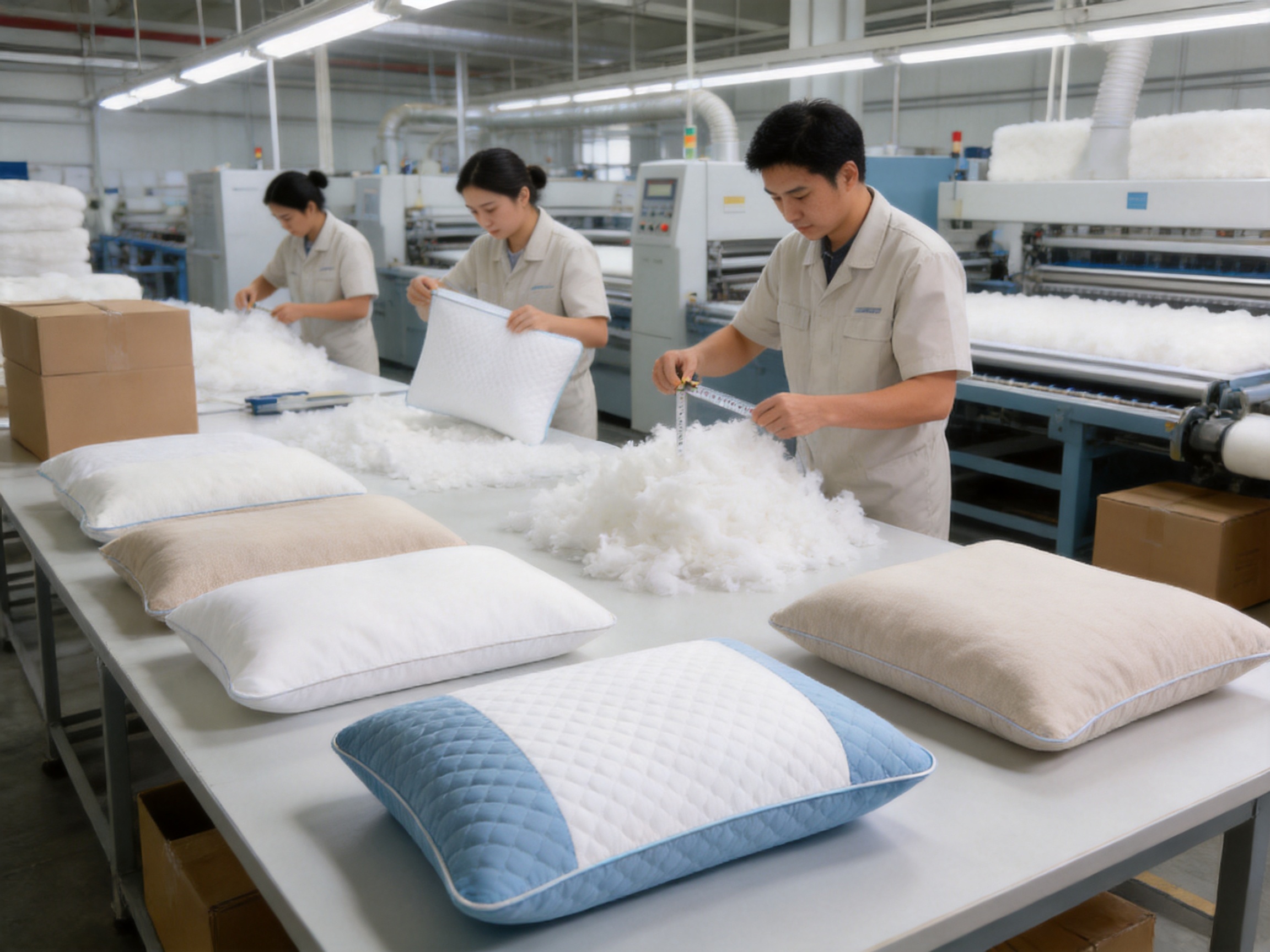
Choosing the right pillow is an important part of creating a comfortable and supportive sleep environment. A pillow must do more than provide softness. It should help maintain a natural head and neck position, distribute pressure, remain breathable throughout the night, recover its shape after repeated use, and fit naturally into different bedroom styles. For hotels, guesthouses, retailers, and private-label buyers, it must also offer consistent manufacturing quality, flexible customization, and dependable supply capability.
The Gel Memory Foam Sponge Pillow is designed to address these requirements through a combination of slow-rebound memory foam, regularly shaped shredded sponge filling, a soft polyester-fiber inner structure, and a quilted outer appearance. With its rectangular 60 x 40 x 12 cm format, adult-oriented support profile, and adjustable production options, it is suitable for single sleepers, home bedrooms, hospitality projects, and cross-border furniture and bedding markets.
This product is manufactured by Jiangsu Wellcare Household Articles Co., LTD., a Chinese producer specializing in foam materials, sleep products, and healthy household applications. Since its establishment, the company has developed extensive experience in sponge research, memory foam formulation, product customization, and international supply. Its technical background allows the pillow to be positioned not simply as a soft bedding accessory, but as a carefully structured sleep product combining comfort, support, breathability, and commercial flexibility.
The following article examines the pillow’s construction, performance characteristics, manufacturing advantages, customization potential, and suitability for different sales channels. It also explains how its design compares with conventional fiber-filled pillows, solid memory foam pillows, and low-cost shredded foam alternatives.
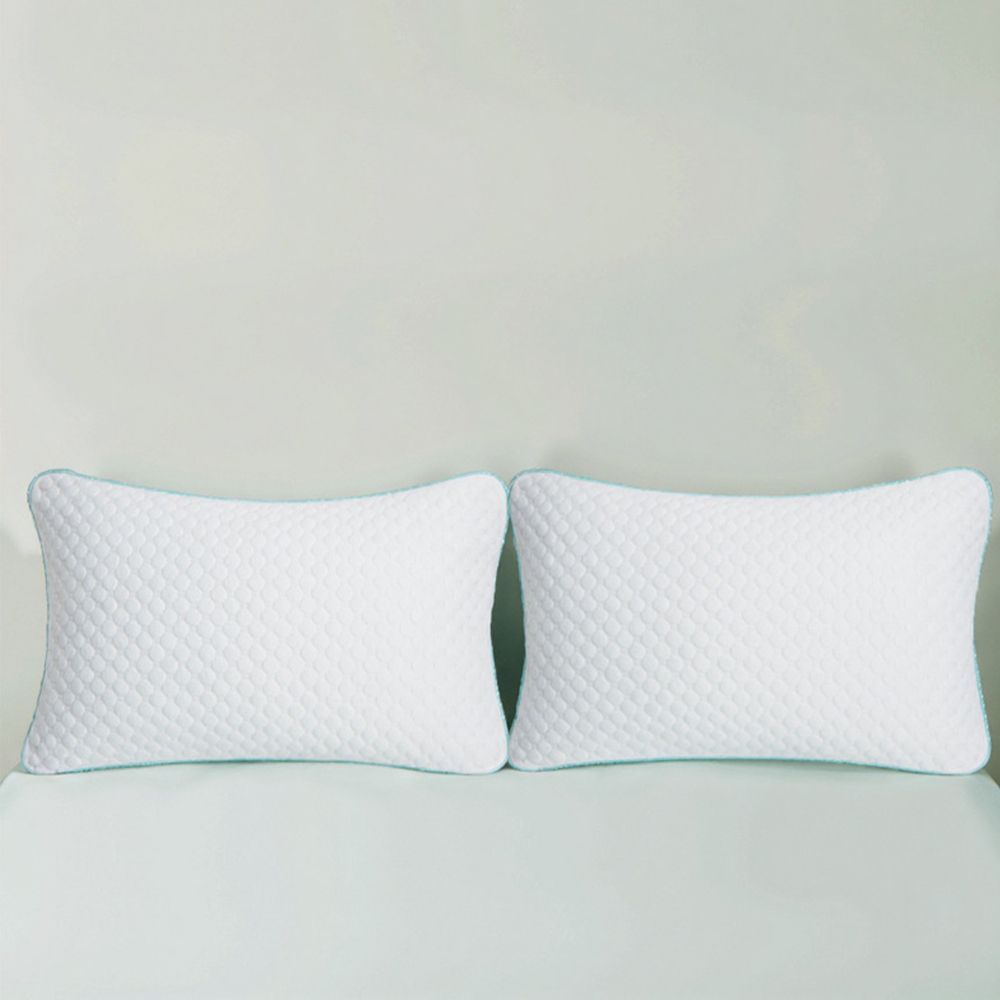
Gel memory foam sponge pillow
1. Product Overview
The Gel Memory Foam Sponge Pillow is a rectangular adult pillow identified by item number PW030. Its standard dimensions are 60 x 40 x 12 cm, making it suitable for common single-sleeper bedding arrangements and many hospitality applications. The core height falls within the 10.1–15 cm range, providing a medium-to-generous support profile for users who prefer a pillow with noticeable loft.
The pillow uses memory foam as its principal material. Memory foam is a viscoelastic material that responds gradually to body heat, pressure, and weight. Instead of immediately collapsing under the head, it conforms progressively to the contours of the head and neck. This behavior helps distribute pressure over a broader contact area and can create a more stable feeling than conventional loose fiber filling.
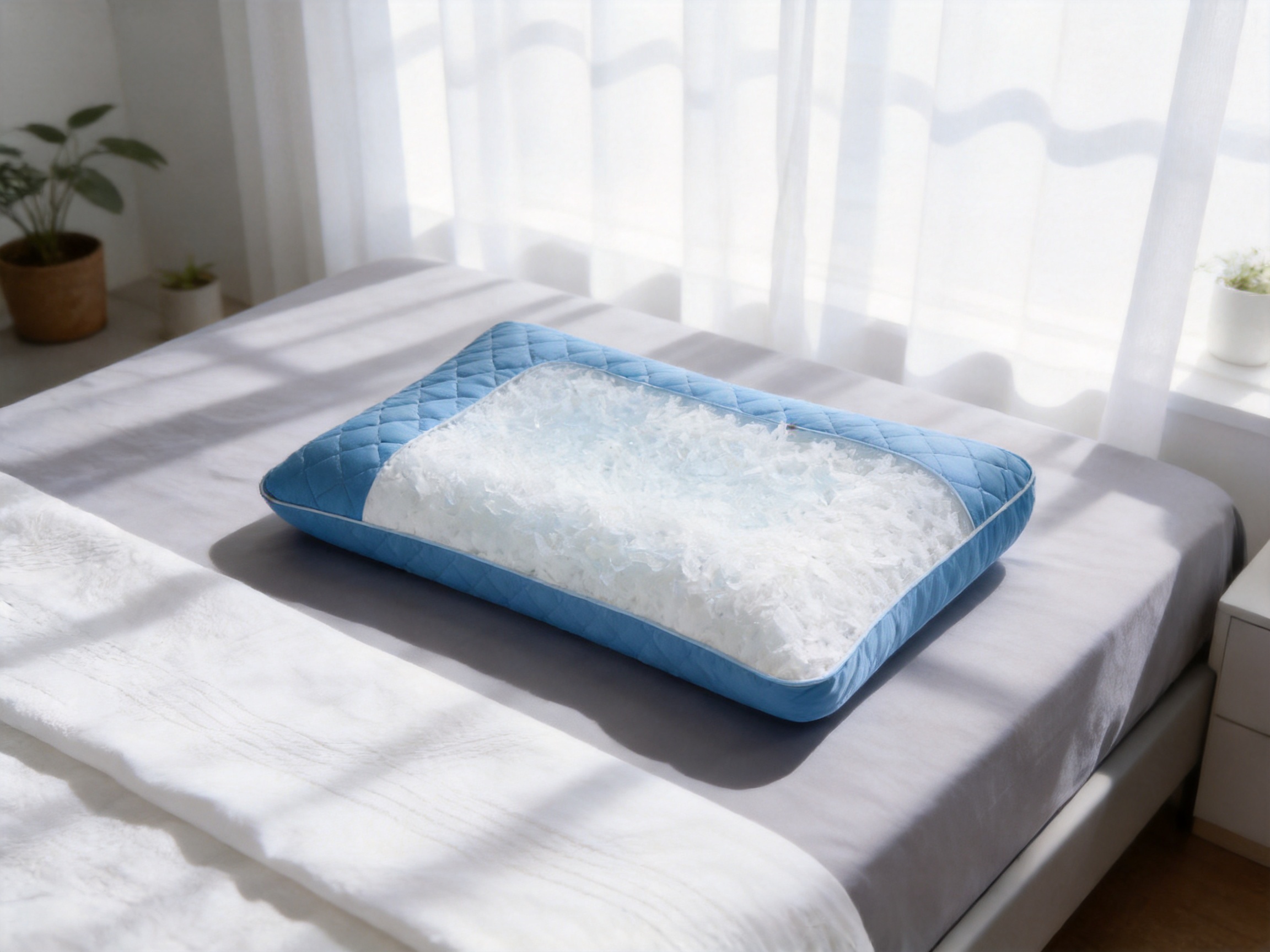
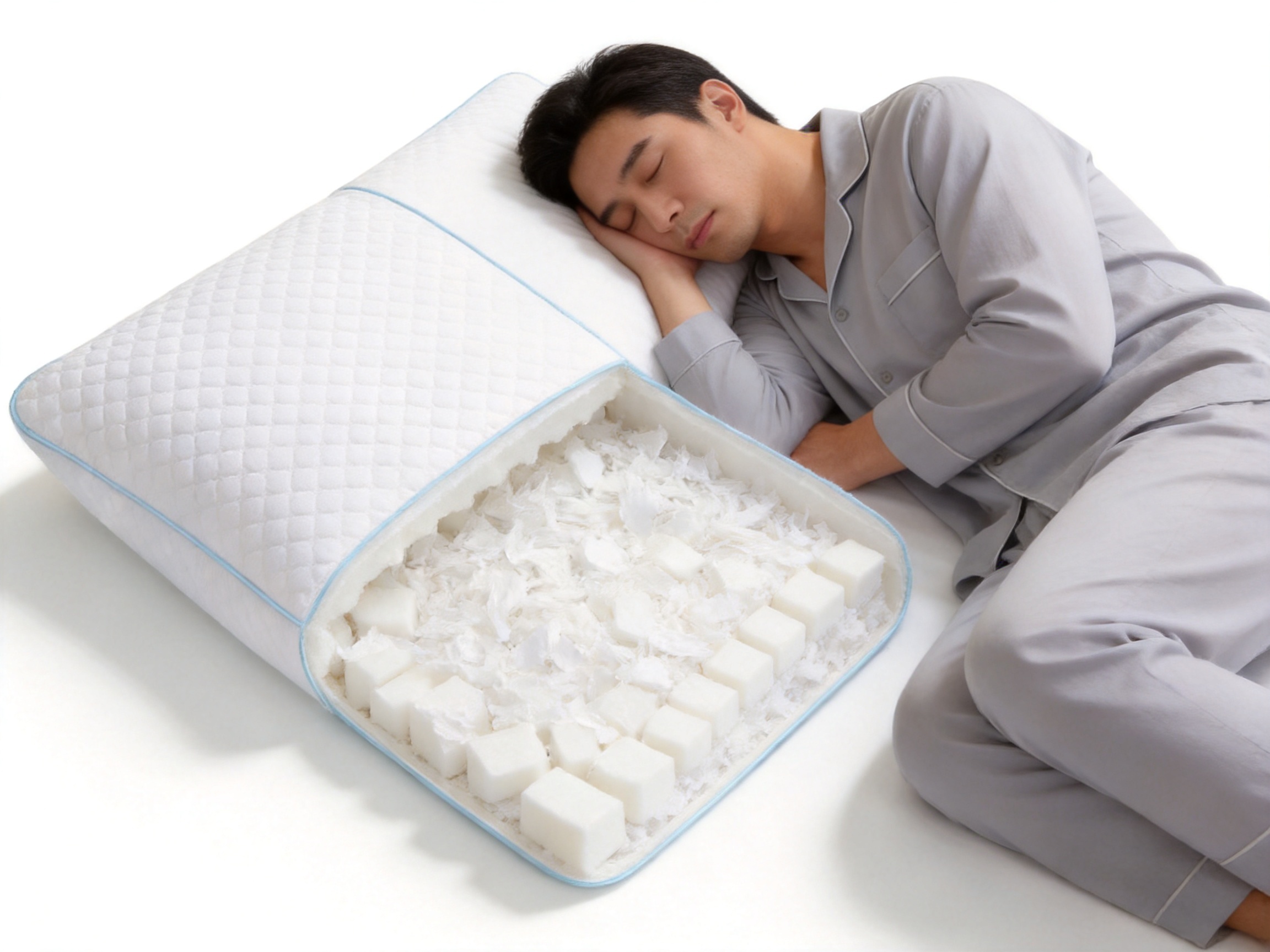
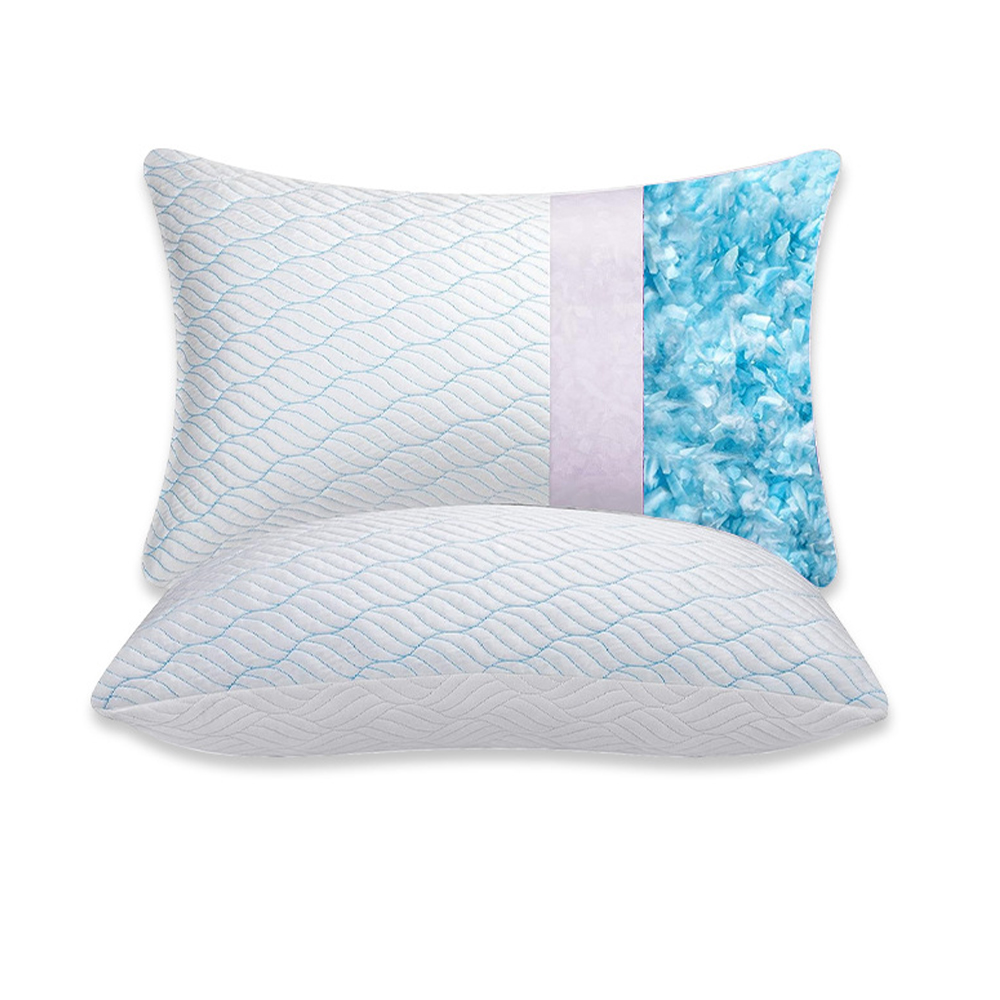
In addition to the slow-rebound memory foam component, the product includes regularly shaped shredded sponge filling. This structure is important because a pillow made entirely from a dense solid foam block can feel less flexible and may allow less internal airflow. Shredded filling introduces spaces within the interior, allowing the pillow to be adjusted more easily during use and supporting a lighter, more breathable sensation.
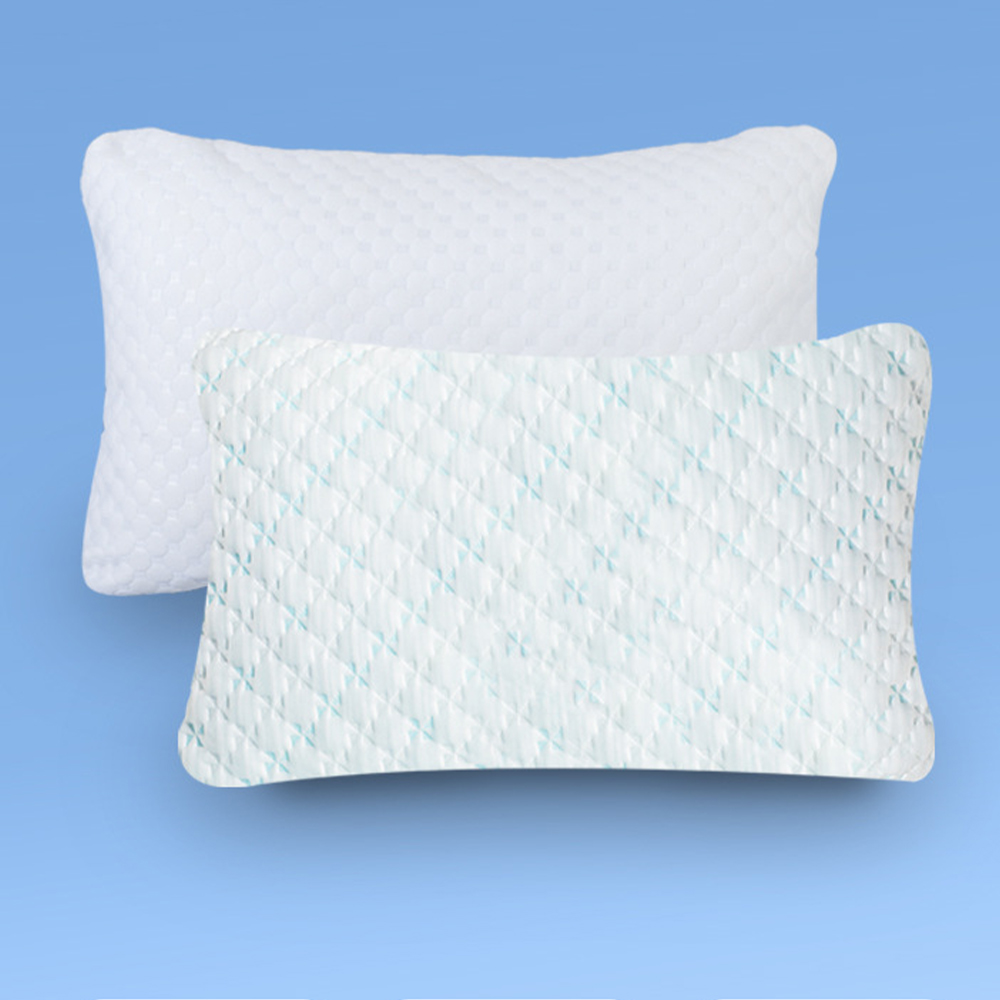
The product is presented with a blue-and-white visual concept and a quilted textured surface. The quilted appearance gives the pillow a three-dimensional effect while contributing to a clean and orderly visual impression. Its restrained color combination allows it to coordinate with modern bedrooms, minimalist interiors, guest rooms, and hotel bedding environments.
The pillow is designed for adults and single-person use. Its cover and filling structure are intended to provide a soft, skin-friendly contact experience while maintaining stable support. Custom sizes, colors, and fabrics are available, enabling buyers to adapt the product for different retail programs, hotel standards, brand identities, and regional preferences.
2. The Internal Structure and Its Performance Benefits
2.1 Slow-Rebound Memory Foam Support
The central advantage of memory foam is its ability to respond gradually rather than abruptly. When a sleeper places the head on the pillow, the foam compresses in proportion to the applied pressure. This allows the material to follow the natural curves of the head and neck rather than forcing them into a rigid position.
For many users, this conforming behavior creates a gently enveloping feeling. The pillow can help reduce concentrated pressure around the back of the head and support the transition between the neck and shoulders. While personal comfort depends on sleeping position, body shape, mattress firmness, and individual preference, a properly proportioned memory foam pillow can offer a more stable support sensation than a pillow that quickly flattens.
The slow-rebound quality also supports shape retention. After the load is removed, the material gradually returns toward its original form. This recovery is valuable in products used every night because it helps reduce the permanent flattening often associated with low-resilience fiber fillings. A pillow that maintains its general loft for longer can deliver more consistent support across its service life.
Memory foam is also useful for buyers seeking a premium product impression. Its slow response is immediately noticeable to consumers, making it easier to communicate the difference between an ordinary cushion and a more technically developed sleep product. For retail listings, the combination of pressure-responsive support and durable shape recovery can serve as a strong product-positioning foundation.
2.2 Regularly Shaped Shredded Sponge Filling
The shredded sponge component gives the pillow a distinct advantage over a completely solid foam construction. Regularly shaped pieces create a more open internal structure and help the pillow feel lighter and more resilient. Internal gaps can support air movement, reducing the dense or stuffy sensation that some users associate with compact foam products.
Shredded filling also contributes to a fluffy appearance. Rather than presenting the uniform, fixed profile of a solid block, the filling can settle naturally around the head and neck. This makes the pillow feel softer at the surface while retaining the supportive behavior of foam-based material underneath.
The regular shape of the shredded pieces is relevant to consistency. While irregular foam scraps may vary significantly in size and density, more uniformly processed pieces can support a more even filling distribution. This helps reduce excessive hard spots, large voids, or uneven areas inside the pillow. Consistency is especially important for hotel and commercial users, who need similar comfort characteristics from one unit to the next.
The use of shredded sponge filling may also offer greater flexibility during production. Manufacturers can adjust filling quantities to create different loft levels and firmness sensations. This provides a practical route to customization without requiring an entirely new product architecture.
2.3 Quilted Surface and Skin-Friendly Contact
The exterior construction plays an important role in how a pillow is perceived and used. The quilted surface produces a soft, structured appearance and gives the product a more finished look than a plain, untextured cover. Its three-dimensional effect can make the pillow appear fuller and more premium in product photography and showroom presentation.
A delicate polyester-fiber textile layer supports a smooth contact experience. Polyester fiber is widely used in bedding because it can offer good dimensional stability, practical durability, and compatibility with a variety of finishing processes. It can also be produced in different textures, colors, weights, and quilting patterns, which is useful when the pillow is customized for different markets.
The combination of a soft surface and resilient foam interior creates a balanced tactile experience. The pillow is not intended to be hard or rigid, but neither is it designed to behave like an unstructured bag of loose fibers. Instead, it aims to provide a gently cushioned surface with more dependable underlying support.
3. Advantages Compared with Conventional Pillow Types
3.1 Compared with Traditional Fiber-Filled Pillows
Traditional polyester-fiber pillows are often appreciated for their low cost and initial softness. However, loose fiber filling can compress over time, form uneven areas, and require frequent fluffing. Some fiber pillows lose their original height quickly, particularly when used by adults who need stable neck support.
The Gel Memory Foam Sponge Pillow addresses these limitations with a memory foam-based structure. The slow-rebound component is less likely to behave like ordinary loose fiber and can preserve a more stable support profile. The shredded sponge filling still provides a soft, flexible sensation, but it adds a more resilient internal structure than simple fiber stuffing.
Another distinction is pressure distribution. Fiber pillows may provide a soft surface but can develop compressed areas beneath the head. Memory foam is designed to conform more deliberately to the user’s shape, potentially creating a more even contact area. This can make the pillow feel more supportive during extended periods of rest.
3.2 Compared with Solid Memory Foam Pillows
Solid memory foam pillows provide a uniform support block, but some users may find them too dense, too fixed, or insufficiently adjustable. Their compact structure can also produce a more enclosed sensation, especially when combined with a thick cover and warm sleeping environment.
The shredded sponge construction offers a more flexible alternative. Internal filling spaces can improve the sense of ventilation, while the loose structure allows the pillow to settle more naturally around the sleeper. It combines some of the stability associated with memory foam with the softer, more adaptable feel commonly expected from a traditional pillow.
The hybrid structure can also be advantageous for buyers who want a product that appeals to a wider group of consumers. Some sleepers prefer the shape retention of memory foam, while others dislike the rigid profile of solid foam. A shredded foam design provides a middle position between these preferences.
3.3 Compared with Low-Quality Shredded Foam Pillows
Not all shredded foam pillows offer the same performance. Low-quality products may use inconsistent scraps, irregular filling sizes, weak covers, or poorly controlled filling quantities. These factors can lead to uneven support, rapid settling, unpleasant lumps, and inconsistent product quality between batches.
The regularly shaped shredded sponge filling used in this pillow is intended to improve internal uniformity. The product’s manufacturing background in foam materials also supports better control over raw material selection and processing. By combining a defined filling structure with a quilted polyester-fiber cover, the product is positioned above basic unstructured alternatives.
For business buyers, manufacturing control is as important as the consumer-facing features. A pillow that looks attractive in a sample but varies considerably during mass production can create returns, customer complaints, and negative reviews. Consistent foam processing, filling control, sewing, and inspection are therefore meaningful competitive advantages.
| Comparison Area | Gel Memory Foam Sponge Pillow | Traditional Fiber Pillow | Solid Memory Foam Pillow |
| Support behavior | Conforming and resilient | Soft but may flatten | Stable but more fixed |
| Internal airflow sensation | Supported by shredded structure | Generally open and light | May feel denser |
| Shape recovery | Supported by memory foam | Can decline with use | Generally strong |
| Adjustability | Flexible settling and customizable filling | Flexible but less supportive | Limited after production |
| Surface appearance | Quilted and three-dimensional | Varies by cover | Usually smooth or molded |
| Commercial positioning | Comfort-focused and customizable | Economical | Premium support-focused |
4. Breathability and Sleep Comfort
Breathability is a significant concern in foam bedding. Dense materials can retain a warm or enclosed feeling if there is limited internal movement of air. For this reason, the pillow’s shredded sponge construction is central to its comfort proposition.
The spaces between shredded pieces can create channels within the pillow. These channels do not turn the pillow into an actively cooled product, but they can support a lighter internal structure and improve the circulation of air compared with a single compact foam block. The result is intended to be a less stuffy sensation during normal use.
The cover also contributes to the overall comfort experience. A textile surface can absorb and release small amounts of moisture associated with ordinary use, while its quilted construction helps maintain separation between the sleeper and the internal filling. Fabric selection can be adjusted for different climates, market preferences, and product specifications.
The blue-and-white color scheme reinforces the idea of freshness and cleanliness. Although color does not determine thermal performance, visual presentation influences consumer expectations. A clean, bright appearance can help the pillow fit naturally into hospitality settings, contemporary bedrooms, and online retail photography.
For warmer regions, including parts of Southeast Asia and other international markets, the breathable positioning of the shredded interior can be commercially relevant. Buyers in these areas may be particularly attentive to ventilation, fabric feel, and resistance to a stuffy sleeping sensation. The product’s structure provides a practical response without relying solely on marketing claims about cooling.
5. Ergonomic Support for Head and Neck Alignment
A pillow’s main functional task is to fill the space between the head, neck, and mattress while maintaining a comfortable position. The ideal height varies according to sleeping posture and body proportions. The 12 cm standard height of this product provides a substantial support profile, while custom production allows buyers to request alternative dimensions or filling levels.
For back sleepers, a moderately supportive pillow can help keep the head from falling too far backward or being pushed excessively forward. The slow-rebound memory foam may conform to the rear of the head and the curve of the neck, providing a stable transition between those areas.
Side sleepers often require more height because the shoulder creates a larger gap between the head and mattress. A rectangular pillow in the 10.1–15 cm height category can provide useful loft for this sleeping position, although the appropriate firmness and height remain individual matters. The shredded filling allows a degree of natural settling that can make the surface feel more adaptable.
Combination sleepers may benefit from a pillow that is neither completely rigid nor excessively flat. Because the shredded foam structure can shift slightly under changing pressure, the pillow may offer a more accommodating feel when the sleeper moves between back and side positions.
It is important to present the product responsibly. A pillow cannot guarantee the elimination of neck pain or medical symptoms, and it should not be described as a therapeutic device unless separately certified for such claims. Its appropriate benefit is supportive comfort and pressure distribution based on its material and construction.
6. Manufacturing and Material Development Strengths
6.1 Long-Term Focus on Foam Technology
Jiangsu Wellcare Household Articles Co., LTD. was founded in 2003 and focuses on high-performance sleep materials and healthy household products. Its technical activities include the research and manufacturing of ordinary sponge, memory foam, gel foam, temperature-insensitive memory foam, quick-dry memory foam, flame-retardant sponge, antibacterial sponge, and other foam materials.
This material diversity is an important strength. A company that works across several foam categories can compare different formulations, densities, recovery rates, resilience characteristics, and processing requirements. Such experience supports more informed product development for pillows, mattresses, cushions, pet products, and other foam-based household applications.
The company reports that its doctor-led research and development team develops more than one hundred new foam materials each year. This level of development activity indicates an emphasis on formulation research rather than relying only on standard commodity materials. For buyers, this can provide a broader technical foundation for customized specifications and future product upgrades.
6.2 Development History and Industrial Experience
The company’s development history reaches back to 1993, when its activities began as a school-run scientific research enterprise. In 2003, it purchased a 12,000-square-meter factory building and jointly developed new sponge materials with Huai’an Institute of Technology. This cooperation connects industrial production with applied research and material experimentation.
In 2008, the company purchased 50,000 square meters of land, supporting further expansion. By 2010, its products were supplied to cross-border supermarkets in the United States, Germany, and Japan. It also cooperated with Qingdao University of Science and Technology, reflecting a continuing interest in technical collaboration and material innovation.
The company later expanded exports to the United Kingdom, Canada, Australia, and Kuwait. In 2018, it became an Alibaba-certified Gold Supplier and entered the e-commerce sector. In 2020, it became a designated supplier for five-star hotels. These milestones demonstrate experience with international product requirements, commercial packaging, and hospitality-oriented procurement.
6.3 Production Control for a Structured Pillow
Manufacturing a high-quality shredded memory foam pillow involves more than cutting foam and filling a cover. The material must be selected and processed to achieve appropriate piece dimensions, resilience, cleanliness, and filling consistency. The outer cover must be cut, sewn, quilted, and finished with attention to dimensional accuracy.
Production typically begins with material preparation. Memory foam and sponge materials are evaluated according to the intended product specification. The manufacturer must consider density, recovery behavior, softness, resilience, and compatibility with the final filling design. Foam is then processed into pieces of a controlled form and size for use in the pillow interior.
The next stage involves filling control. Too little filling can produce a flat or unstable pillow, while excessive filling can make it hard and reduce its ability to conform. Controlled weighing and distribution help maintain consistent loft across production batches. For custom orders, the filling ratio can be adjusted to create different comfort profiles.
The cover production stage includes textile cutting, quilting, sewing, edge finishing, and inspection. Accurate dimensions are important because an undersized cover can compress the filling excessively, while an oversized cover may produce a loose or untidy appearance. Quilting must also be consistent so that the surface retains its intended structure after use.
Final inspection can include checks for dimensions, appearance, stitching, filling distribution, compression recovery, material cleanliness, and packaging condition. These controls are particularly valuable for buyers serving online marketplaces, hotels, and private-label programs, where inconsistent quality can quickly affect customer satisfaction.
7. Customization Capabilities for Different Markets
Customization is one of the product’s most practical commercial strengths. The standard configuration provides a clear starting point, but buyers can request adjustments to dimensions, color, and fabric. This makes the pillow suitable for a variety of sales strategies rather than limiting it to a single retail format.
7.1 Size and Height Customization
Different countries and hospitality groups use different pillow sizes. Some customers prefer a compact single pillow, while others require larger formats for hotel beds, specialty bedding sets, or private-label collections. The ability to modify dimensions helps buyers align the product with existing pillowcases, bedding programs, and packaging requirements.
Height customization is also useful. A lower profile may be preferred by some back sleepers or users with smaller frames, while a higher profile may be required for side sleepers or larger bedding arrangements. By adjusting filling quantity, foam structure, or cover dimensions, the manufacturer can develop different support levels within the same general product family.
7.2 Fabric and Color Options
The standard blue-and-white concept presents a clean and refreshing appearance, but custom fabric and color options allow the product to be integrated into different brand programs. Buyers may request neutral colors for hotel use, coordinated shades for bedding collections, or specific textile constructions based on climate and market expectations.
Fabric selection can influence tactile feel, visual quality, washing instructions, packaging appearance, and overall price positioning. A lightweight fabric may support a more breathable feel, while a heavier quilted textile may create a more luxurious appearance. The appropriate choice depends on the buyer’s target consumer and distribution channel.
7.3 Private-Label and Project Applications
Although the listed product does not include an authorized own brand, custom processing is supported. This can be relevant to importers, bedding distributors, hotel procurement companies, online retailers, and independent brands seeking a manufacturer capable of producing to specification.
Customization may include product dimensions, textile materials, surface patterns, filling configurations, packaging formats, and labeling requirements. The precise scope should be confirmed during technical and commercial discussions, including minimum order quantities, sample approval, testing documentation, production lead times, and export packaging.
The company’s experience with e-commerce and five-star hotel supply provides a useful foundation for project-based orders. Retail products often require attractive photography, clear specifications, and consistent unit presentation. Hospitality products may prioritize durability, repeatability, standardized dimensions, and replacement availability. A flexible manufacturing system can support both needs.
8. Suitability for Retail, Hospitality, and International Distribution
8.1 Online Retail
The pillow has several features that can be communicated effectively through online sales channels. Its memory foam construction, shredded sponge filling, quilted surface, rectangular shape, and customization potential provide clear points of differentiation. The product can be positioned for consumers seeking gentle support, a fluffy feel, and improved internal breathability.
For online listings, accurate descriptions are essential. Sellers should identify the actual dimensions, material composition, cover details, filling type, care instructions, and whether the product is supplied compressed or uncompressed. They should avoid unsupported claims such as guaranteed pain relief, medical treatment, or unlimited cooling performance.
The product is suitable for platforms including eBay, Amazon, Wish, AliExpress, independent websites, Lazada, and other online channels listed in the product information. Its international relevance is supported by the company’s experience exporting to Europe, Southeast Asia, North America, and additional global markets.
8.2 Hotels and Guesthouses
Hotels and guesthouses need bedding products that are comfortable, presentable, and consistent across rooms. The pillow’s clean color concept and quilted appearance are appropriate for contemporary hospitality interiors. Its 60 x 40 cm rectangular format can also fit many standard single-pillow arrangements.
For hotel use, replacement and replenishment are important considerations. A supplier with established foam production capability may be better positioned to maintain consistent specifications over repeat orders than a trading source that changes factories or materials frequently. Buyers should still confirm quality-control procedures, packaging, cleaning requirements, and production continuity before placing a major order.
The pillow’s adult-oriented support profile makes it appropriate for guest rooms, serviced apartments, dormitories, and other accommodation environments. For hotels serving a wide range of sleepers, a balanced foam-and-shredded-filling design may offer broader appeal than an extremely firm orthopedic pillow or a very soft fiber pillow.
8.3 Cross-Border Wholesale
The product is identified as suitable for exclusive cross-border export supply, with major downstream platforms and sales regions that include Europe, Southeast Asia, and North America. This indicates its relevance to importers and distributors who require products prepared for international commerce.
Cross-border buyers should evaluate more than product appearance. They should review packaging dimensions, carton strength, labeling, material declarations, import regulations, textile requirements, and any testing needed in the destination market. Where the product is sold under a private label, packaging and documentation should be approved before mass production.
Jiangsu Wellcare’s history of supplying international markets can help support these processes. Its reported export experience includes the United States, Germany, Japan, the United Kingdom, Canada, Australia, and Kuwait. This background may be useful when coordinating production and export requirements across different regions.
9. Sustainability and Responsible Manufacturing
Modern bedding buyers increasingly evaluate environmental performance alongside comfort and price. Foam manufacturing requires responsible management of energy, materials, emissions, packaging, and waste. Jiangsu Wellcare states that it invests in advanced eco-friendly energy systems and improves its environmental management practices.
The company’s sustainability approach is described as going beyond basic compliance. Its objective is to integrate respect for nature into business operations and create lasting environmental value. While individual buyers should request specific certifications and performance data for their projects, this stated direction indicates that environmental management is considered part of the company’s broader development strategy.
Foam material research can also contribute to sustainability when it improves product durability. A pillow that retains its shape and usable comfort for a longer period may need to be replaced less frequently than a low-cost product that rapidly flattens. Longer service life can reduce material consumption over the complete use cycle, provided the product is properly maintained and disposed of at the end of its life.
Customization may support sustainability as well. Buyers can select packaging sizes and materials appropriate to their distribution model, reducing unnecessary volume where possible. They can also select durable fabrics and suitable filling quantities rather than over-engineering every product. Environmental performance should be evaluated through verified data, but thoughtful product design remains an important starting point.
10. Quality, Safety, and Buyer Evaluation
The product is listed as a qualified product and is manufactured from memory foam with a polyester-fiber pillow core fabric. However, buyers should request the technical documents necessary for their intended market and application. These may include material specifications, test reports, flammability information, restricted-substance declarations, textile composition details, and packaging documentation.
Quality evaluation should begin with samples. A sample can be assessed for dimensions, loft, surface softness, odor, filling distribution, rebound behavior, stitching quality, zipper or closure performance if applicable, and visual consistency. Buyers should test the pillow in the conditions expected during transportation and storage, especially if compression packaging is planned.
Long-term performance can be evaluated through repeated compression and recovery testing. Such testing does not replicate every consumer experience, but it can help compare resilience and shape retention between samples. Buyers should also examine whether the shredded foam settles excessively after repeated use and whether the cover maintains its appearance after cleaning according to the recommended care method.
Safety and regulatory expectations vary by destination. A product designed for Europe may be subject to different documentation requirements from one sold in North America or Southeast Asia. Importers should work with the manufacturer and appropriate testing bodies to verify compliance with all applicable rules rather than relying solely on general product descriptions.
11. Care, Storage, and Product Presentation
Consumers should follow the care instructions provided with the final product configuration. The outer fabric, filling structure, and closure design determine whether the cover is removable, washable, or intended for spot cleaning. Care instructions should be printed clearly on product packaging or labels.
Foam pillows should be stored in a dry, ventilated environment away from excessive heat, moisture, and direct sunlight. During shipping, some pillows may be compressed to reduce volume, but the buyer should confirm the approved compression duration and recovery procedure. After unpacking, the pillow may require time to return to its intended dimensions.
Retail presentation should communicate the product’s actual structure. Images and descriptions can highlight the quilted surface, rectangular shape, memory foam support, shredded sponge interior, and available customization. Clear communication helps consumers understand why the product differs from a standard fiber pillow and reduces unrealistic expectations.
For hotels, product presentation can be more understated. The blue-and-white style can be used as part of a clean bedding concept, while custom white, neutral, or hospitality-specific fabrics may be selected for a consistent room design. The pillow’s visual simplicity makes it adaptable to both decorative and functional bedding programs.
12. Technical Specification Summary
| Product name | Gel Memory Foam Sponge Pillow |
| Product category | Shredded Foam Pillow |
| Item number | PW030 |
| Main material | Memory foam |
| Filling structure | Regularly shaped shredded sponge filling combined with slow-rebound memory foam |
| Pillow core fabric | Polyester fiber |
| Shape | Rectangular |
| Standard dimensions | 60 x 40 x 12 cm |
| Pillow core height range | 10.1–15 cm |
| Approximate weight range | 0.55–1 kg |
| Target user | Adults |
| Recommended occupancy | Single person |
| Customization | Size, color, fabric, and other custom processing options |
| Dropshipping | Not supported according to the listed specification |
| Patent status | No patent listed |
| Main sales regions | Europe, Southeast Asia, and North America |
| Downstream platforms | eBay, Amazon, Wish, AliExpress, independent websites, Lazada, and others |
13. Why Manufacturers and Distributors May Choose This Product
The pillow offers a commercially useful combination of recognizable consumer benefits and practical manufacturing flexibility. Memory foam provides a clear premium-material story, while shredded sponge filling improves the softness and airflow profile. The quilted cover adds visual value without making the design overly specialized.
For distributors, the product can occupy a middle-to-premium position between basic fiber pillows and more expensive molded orthopedic designs. It may appeal to customers who want pressure-responsive support but prefer a lighter, fluffier sensation. This broader comfort positioning can make it suitable for general bedding collections rather than only highly specialized sleep categories.
For hotels, the pillow provides a balance between a professional appearance and a familiar rectangular format. For online retailers, the material and construction create several strong listing keywords, including memory foam pillow, shredded foam pillow, breathable support pillow, quilted pillow, and customizable bedding product. For private-label brands, adjustable fabric, color, and sizing options provide room for differentiation.
The manufacturer’s foam research capabilities further strengthen the product’s potential. Since the company develops multiple foam categories and has experience with temperature-insensitive, quick-dry, flame-retardant, and antibacterial materials, buyers may be able to explore related product versions for different climates, regulations, or hospitality requirements.
Another advantage is the company’s experience across the broader sleep and household product sector. Its product category coverage includes boneless sofas, memory foam mattresses, children’s foam products, pet products, functional pillows, memory foam pillows, and memory foam cushions. This broader portfolio can support buyers seeking coordinated product families from one source.
14. Frequently Asked Questions
Q1: What type of pillow is this product?
It is a rectangular shredded foam pillow made with memory foam and regularly shaped shredded sponge filling. The structure is designed to provide slow-rebound support while maintaining a softer, more breathable, and fluffier feel than a completely solid foam pillow.
Q2: Does the pillow contain gel?
The product is titled Gel Memory Foam Sponge Pillow, but the listed construction specifies memory foam and shredded sponge filling. Buyers should confirm the exact gel formulation, if required for a particular order, with the manufacturer before production. The supplied description supports memory foam and breathable shredded sponge characteristics rather than a specific cooling-gel performance claim.
Q3: What are the standard dimensions?
The listed standard dimensions are 60 x 40 x 12 cm. The pillow core height range is stated as 10.1–15 cm. Custom dimensions and filling levels can be discussed for different bedding systems or customer preferences.
Q4: Is the pillow suitable for side sleepers?
Its approximately 12 cm profile and supportive memory foam structure may be suitable for many side sleepers, especially those who prefer a relatively full pillow. However, the best height depends on shoulder width, mattress firmness, body size, and personal preference. Custom height options may be considered for specific requirements.
Q5: Is it suitable for back sleepers?
The pillow can also suit back sleepers who prefer stable, conforming support. Because sleep preferences vary, buyers should evaluate samples and consider a lower or softer configuration if their target users prefer a flatter profile.
Q6: What is the purpose of the shredded sponge filling?
The shredded filling creates internal spaces that can support airflow and reduce the dense sensation of a solid foam block. It also helps the pillow feel lighter and fluffier and allows the filling to settle around the head and neck.
Q7: How does it compare with a standard polyester pillow?
A standard polyester pillow may feel soft initially but can flatten or develop uneven areas with repeated use. This product adds slow-rebound memory foam for more stable support and shape recovery while retaining a flexible, cushioned feel through the shredded structure.
Q8: Can the color be changed?
Yes. Custom color and fabric options are supported. The standard visual concept is blue and white, but buyers can request alternative colors and textile constructions according to their branding, hotel design, or regional market requirements.
Q9: Can the size be customized?
Yes. Custom processing is supported, including size adjustments. Buyers should confirm the required dimensions, tolerances, cover construction, filling quantity, packaging, and minimum order quantity with the manufacturer.
Q10: Is dropshipping available?
No. The listed specification states that dropshipping is not supported. The product is more appropriate for wholesale purchasing, project supply, retail inventory, hospitality procurement, and private-label production.
Q11: Does the product have a patent?
The listed information states that no patent is available for this item. Buyers should distinguish between a product patent and the manufacturer’s broader technical experience in foam research and material development.
Q12: Is the cover washable?
Care depends on the final cover construction and closure design. Buyers should request the approved washing or cleaning instructions for the selected fabric and configuration. The product should not be washed or dried in a way that conflicts with the manufacturer’s instructions.
Q13: Is the pillow suitable for children?
The listed target user is adults. It should not be marketed specifically for children without separate evaluation of size, firmness, material safety, and applicable child-product requirements.
Q14: Can the pillow be used in hotels?
Yes. Its clean quilted appearance, rectangular shape, adult support profile, and customizable fabrics make it suitable for hotels, guesthouses, serviced apartments, and other accommodation projects. Hospitality buyers should confirm durability, cleaning procedures, packaging, and repeat-order consistency.
Q15: What should buyers request before placing an order?
Buyers should request a sample, detailed material specification, final dimensions, filling weight, cover composition, packaging information, quality-control details, test documentation, care instructions, production lead time, minimum order quantity, and customization terms.
15. Conclusion
The Gel Memory Foam Sponge Pillow presents a balanced approach to modern pillow design. Its slow-rebound memory foam supports the contours of the head and neck, while the regularly shaped shredded sponge filling improves flexibility, internal airflow, and fluffiness. The quilted polyester-fiber surface adds softness, visual structure, and a clean appearance suitable for both residential and hospitality settings.
Compared with conventional fiber pillows, it offers more dependable support and shape recovery. Compared with solid memory foam pillows, it provides a lighter and more adaptable feel. Compared with low-quality shredded foam products, its regularly structured filling and manufacturer’s experience in foam material development support a stronger consistency and customization proposition.
Jiangsu Wellcare Household Articles Co., LTD. contributes additional value through long-term investment in foam research, cooperation with educational and technical institutions, international export experience, e-commerce supply capability, hotel procurement experience, and ongoing environmental management. Its broader product portfolio also enables buyers to explore coordinated foam-based bedding and household products.
For retailers, wholesalers, hotel groups, guesthouses, and private-label buyers, this pillow can serve as a versatile product platform. The standard 60 x 40 x 12 cm design is ready for evaluation, while custom sizes, colors, fabrics, and filling configurations can be developed for targeted markets. Before final procurement, buyers should confirm technical documents, compliance requirements, care instructions, packaging, and sample performance. With proper specification and quality control, the product offers a practical combination of comfort, breathability, visual appeal, and manufacturing flexibility.
References
1. Jiangsu Wellcare Household Articles Co., LTD. Product specification for Gel Memory Foam Sponge Pillow, Item PW030.
2. Jiangsu Wellcare Household Articles Co., LTD. Company information and material development profile.
3. International Organization for Standardization. General principles for textile and household product quality evaluation.
4. Consumer Product Safety Commission. General guidance concerning bedding product safety and labeling.
5. National Institutes of Health. Technical literature concerning viscoelastic memory foam, pressure distribution, and sleep-support materials.
6. Textile research literature concerning polyester fibers, quilted structures, fabric comfort, and dimensional stability.
7. Hospitality bedding procurement practices for pillows, guest-room comfort, hygiene, replacement, and quality consistency.
8. General foam manufacturing literature concerning density, resilience, compression recovery, shredded filling, and material processing.
9. Environmental management literature concerning energy efficiency, foam production, responsible manufacturing, and product service life.
10. International trade and private-label procurement guidance for bedding products sold through retail, hospitality, and cross-border distribution channels.
Product: Gel memory foam sponge pillow

PREV:U-Shaped Removable Memory Foam Neck Pillow for Comfortable Travel and Everyday Support
NEXT:Children’s Bed Railing Strip with Pockets: Soft, Stable, and Customizable Memory Foam Bed Protection
NEXT:Children’s Bed Railing Strip with Pockets: Soft, Stable, and Customizable Memory Foam Bed Protection
Interested in cooperation or have questions?
Related News
WELLCARE was founded in 2003, boasting over a decade of profound and extensive experience.
Quick Links
Product
Media Centre
Contact Information
- [email protected]
- +86-517-84998062
- +86-15152354988
- No. 168 Nenjiang Road, Huaiyin District, Huai'an City, Jiangsu Province, China
Copyright © Jiangsu Wellcare Household Articles Co., LTD. All Rights Reserved.
Custom Memory Gel Mattress Manufacturers
