

 English
 日本語
日本語 Español


Shen Yueqiao — After-Sales Quality Support Supervisor

Home / Author / Shen Yueqiao — After-Sales Quality Support Supervisor / Triangular Memory Foam Bed Guard for Safer Children’s Sleep Spaces
Product Category
NEW Category
Contact us
Triangular Memory Foam Bed Guard for Safer Children’s Sleep Spaces
Children’s bedrooms are designed for rest, play, imagination, and growth, but they also need carefully planned protection. A bed can become a place where a child rolls, climbs, turns, sits, and plays, which means hard edges, exposed corners, and open sides may create unnecessary risks. The triangular children’s bed railing strip is developed as a soft, supportive, and practical protective solution for families, retailers, hospitality buyers, and distributors looking for a safer children’s bedding accessory made with high-density memory foam.
This product belongs to the memory foam bed guard category and is designed to fit along bed sides, bed corners, headboards, and other areas where children may bump into hard surfaces. Its triangular structure helps create a stable protective barrier, while its memory foam core provides cushioning support. Compared with ordinary rigid rails, thin foam strips, inflatable guards, or low-density cushions, this bed guard offers a more comfortable balance of softness, resilience, stability, and room-friendly appearance.
As a specialized foam product, the triangular children’s bed railing strip is not simply a decorative pillow. It is a functional protection accessory built around material performance, surface friction, structural shape, and child-friendly comfort. Its pure white appearance suits modern children’s rooms, while its customizable dimensions and packaging make it suitable for different market channels, including Amazon, independent websites, and cross-border export supply chains.
The product is manufactured by Jiangsu Wellcare Household Articles Co., LTD., a company with long-term expertise in foam materials, healthy home products, and sleep-related product development. Founded in 2003, the company has built its strength around research, formulation, production consistency, export experience, and environmentally conscious manufacturing practices. For buyers seeking dependable memory foam furniture, memory foam children’s products, functional pillows, foam pet products, boneless sofa materials, and memory foam mattress solutions, this product reflects the same technical foundation used across a broader foam manufacturing portfolio.
Triangular children's bed railing strip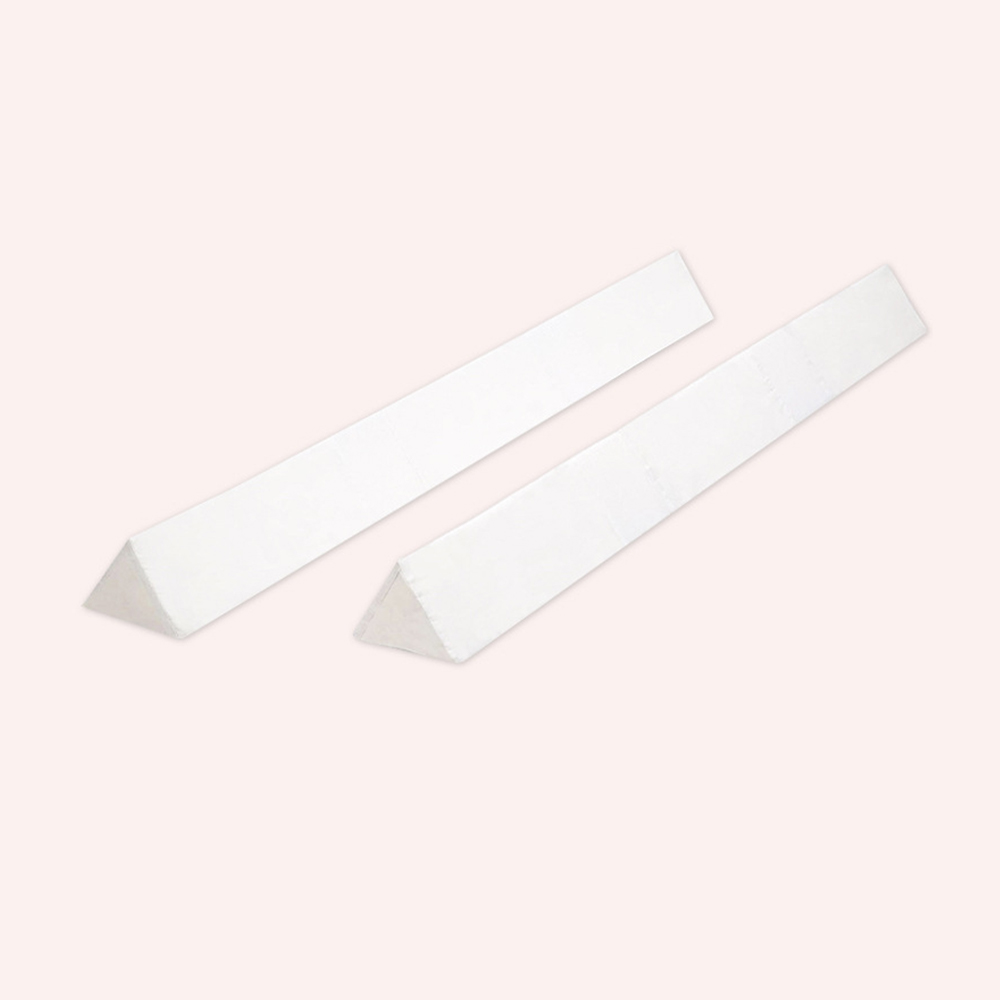
Understanding the Product: A Child-Friendly Memory Foam Bed Guard
The triangular children’s bed railing strip is a soft bed edge protection product made with a memory foam core and a polyester fiber fabric cover. Its standard reference dimension is approximately 154 cm in length, 25.4 cm in width, and 15 cm in height, while actual specifications may be adjusted according to customer needs. The product is intended for children and is designed to provide a gentle physical buffer along bed edges and vulnerable impact areas.
The triangular profile is one of the most important design features. Unlike a flat cushion that may collapse outward or a cylindrical pillow that may roll, the triangular geometry provides a broad base and an inclined support surface. This shape helps the product fit closely against mattress edges, bed corners, and headboard areas. The result is a more complete protective zone that supports practical everyday use.
At the center of the product is memory foam, a material valued for its slow rebound, pressure absorption, and contouring comfort. When a child leans against or bumps into the bed guard, the foam helps distribute force across a wider area rather than allowing direct contact with a hard frame or sharp edge. This cushioning effect can help reduce discomfort caused by accidental impacts during sleep or play.
The surface fabric features a non-slip textured design that improves friction. This is especially useful because children are active sleepers and may push bedding accessories out of place. A smoother cover may shift more easily, while a textured surface helps the guard remain more stable during normal use. Stability is a major advantage for a product intended to stay near an edge or corner.
The product’s exterior is pure white, giving it a clean and gentle visual character. Many safety accessories look bulky, highly colored, or industrial, which can disrupt a carefully designed children’s room. This bed guard is meant to blend naturally into modern interiors, including minimalist rooms, soft nursery themes, and neutral family spaces.
Why Triangular Design Matters
Many bed protection products use simple shapes, but shape directly affects safety, stability, comfort, and usability. A triangular bed guard has several practical advantages over rectangular blocks, cylindrical rolls, and thin bumper pads. It creates an inclined surface that is more comfortable to lean against, while the wider base increases contact area with the bed surface.
A rectangular foam block can provide cushioning, but it may feel abrupt and may not conform naturally to the edge of the bed. A cylindrical guard may feel soft, but it can roll or shift if not secured effectively. A very thin bumper may be easy to install, but it may not provide enough impact absorption for active children. The triangular structure solves several of these issues by combining height, base stability, and angled support.
The product’s 15 cm reference height provides a visible raised zone that helps define the edge of the bed. The height is not intended to replace adult supervision or certified crib systems, but it can help create a softer boundary for children who are transitioning to regular beds or who tend to roll toward the edge. For parents, this added boundary may offer peace of mind during everyday use.
The triangular shape also helps protect bed corners and headboards. These are common places where children may accidentally bump their heads, shoulders, knees, or elbows while climbing onto the bed, playing, or turning during sleep. When placed properly, the guard helps soften the contact area and reduces direct exposure to hard furniture surfaces.
Another benefit of the triangular structure is that it looks intentional. Some improvised safety solutions, such as rolled blankets or loose pillows, may appear temporary and may create inconsistent protection. This product provides a more professional and stable appearance, making it suitable not only for family use but also for children’s hotels, childcare-adjacent hospitality spaces, furnished apartments, and online retail product lines.
Memory Foam Core: Gentle Cushioning with Functional Support
The core filling material is memory foam, selected for its ability to offer a combination of softness and cushioning support. Memory foam responds to pressure more gradually than many conventional foams. When force is applied, it compresses in a controlled way, helping to absorb impact. When pressure is removed, it gradually recovers its original form.
For children’s products, this characteristic is especially valuable. A protective accessory should not feel hard, sharp, or rigid. At the same time, it should not be so soft that it collapses completely and loses its protective function. A high-density memory foam core gives the bed guard a balanced feel: soft enough for comfortable contact, yet supportive enough to create a meaningful protective barrier.
Compared with low-density foam alternatives, high-density memory foam generally offers better durability and a more stable hand feel. Low-density foam may flatten quickly, deform after repeated compression, or provide uneven cushioning. In contrast, a properly engineered memory foam core is designed to withstand routine compression from sleeping, leaning, and minor impacts.
The foam also contributes to skin-friendly comfort. Children often touch bedding accessories directly with their hands, face, or legs. A harsh or stiff material may cause discomfort. The soft memory foam core and textile surface help create a gentle contact experience with no hard edges.
Memory foam also supports product consistency when produced under controlled manufacturing conditions. Foam formulation, density management, curing, cutting, and quality inspection all influence final performance. A manufacturer with extensive experience in sleep materials can better control these factors, resulting in more dependable products for wholesale and cross-border supply.
Anti-Slip Textured Surface for Better Stability
One of the key functional advantages of the triangular children’s bed railing strip is its anti-slip textured surface. In children’s bedding accessories, stability is just as important as softness. A bed guard that moves away from the edge during use may not provide the intended protective benefit. The textured surface helps improve friction and supports more stable positioning.
Children may roll, kick, push, lean, and shift during sleep. Bedding layers may also move as sheets and blankets are adjusted. For this reason, a bed protection product should be designed to resist unnecessary movement under ordinary conditions. The anti-slip surface helps the guard stay closer to its intended placement, especially when positioned along a mattress or against a bed boundary.
Compared with smooth fabric covers, textured materials have a practical advantage. Smooth fabrics can feel pleasant, but they may slide more easily on sheets or mattress surfaces. A textured fabric increases surface engagement, helping the product remain more secure without making it uncomfortable to touch.
The use of polyester fiber fabric also supports durability and easy care expectations. Polyester is widely used in bedding products because it is lightweight, stable, and suitable for consistent textile processing. When combined with a carefully designed texture, it helps create a cover that is practical for everyday home environments.
For distributors and online sellers, anti-slip performance is a strong selling point because it directly addresses a common user concern. Parents want a product that stays where it is placed. By combining foam structure with a friction-enhancing surface, this bed guard offers a more complete solution than a simple cushion or loose pillow.
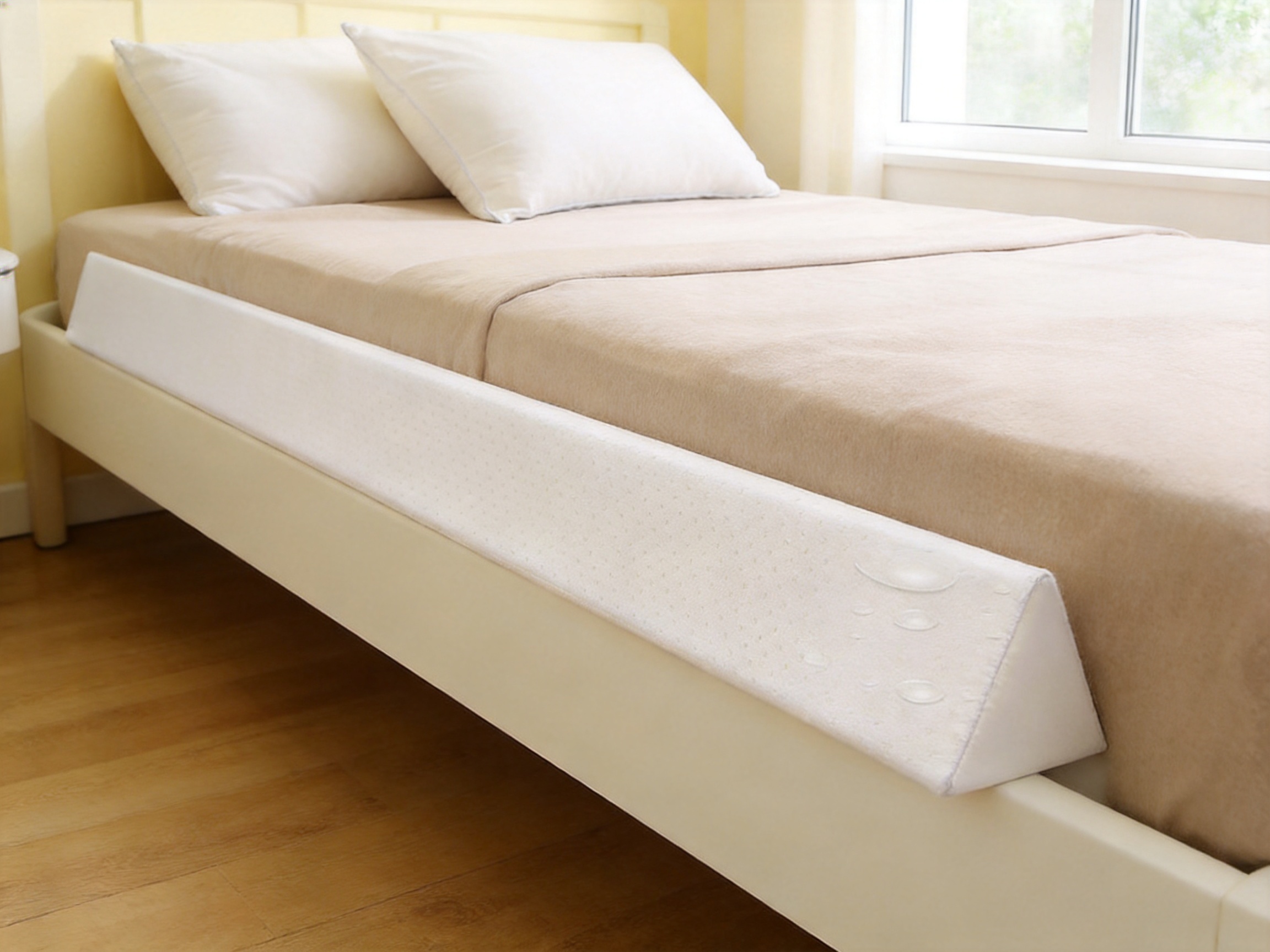
Product Specifications and Key Attributes
The following table summarizes the major product attributes and market-related information. Customization is available for size, packaging, and fabric selection, so the table should be viewed as a reference for standard product understanding rather than a limitation on possible configurations.
| Attribute | Specification | Practical Meaning |
| Product Type | Triangular Children’s Bed Railing Strip | Soft bed edge protection accessory for children’s rooms |
| Category | Memory Foam Bed Guard | Functional protection product using foam cushioning |
| Core Material | Memory Foam | Provides soft cushioning, slow rebound, and impact absorption |
| Cover Fabric | Polyester Fiber | Durable textile surface suitable for bedding accessories |
| Surface Feature | Anti-Slip Textured Fabric | Improves friction and helps reduce shifting during use |
| Target User | Children | Designed for child-friendly contact and soft protection |
| Color | White | Clean appearance that fits many children’s room styles |
| Reference Size | 154 cm Length × 25.4 cm Width × 15 cm Height | Suitable for bed edge, corner, and headboard protection layouts |
| Reference Weight | 0.55–1 kg | Light enough for handling while maintaining foam substance |
| Customization | Size, Packaging, and Fabric Supported | Adaptable for private label, export, and platform-specific needs |
| Certification Reference | OEKO-TEX Certified Materials | Supports non-toxic, odor-conscious, and skin-friendly product positioning |
| Main Sales Regions | North America and South America | Suitable for cross-border and international retail channels |
| Typical Platforms | Amazon, Independent Websites, and Other Channels | Supports e-commerce product programs and customized supply |
Advantages Over Ordinary Bed Guards and Competing Products
The children’s bed safety accessory market includes many product types, such as rigid bed rails, inflatable bumpers, long body pillows, thin edge pads, foldable barriers, and improvised cushion strips. Each category has benefits, but many also have limitations. The triangular memory foam bed guard offers a balanced combination of comfort, stability, appearance, and customization.
Compared with rigid rails, this product is softer and more comfortable for direct contact. Rigid rails may create a strong physical barrier, but they can be uncomfortable if a child bumps into them. Some rails also require complex installation, metal frames, straps, or hardware. The triangular memory foam strip provides a softer protective experience and is simpler to place in many bed environments.
Compared with inflatable bed bumpers, memory foam offers a more stable feel and avoids the risk of air leakage. Inflatable products may be lightweight and portable, but they can lose firmness over time if valves fail or if small punctures occur. Memory foam does not depend on air pressure, so its cushioning performance is more consistent under normal use.
Compared with ordinary pillows, the triangular bed guard has a purpose-built shape. A loose pillow may move, flatten, or fail to cover the intended edge area. The triangular design offers a wider base and a sloped support surface, making it more suitable for edge placement. It is a product designed specifically for protection rather than a repurposed bedding item.
Compared with thin foam strips, this product provides more substantial cushioning. Thin pads may be useful for light surface protection, but they often cannot absorb impact as effectively as a thicker foam structure. The reference height and width of this triangular guard give it a stronger protective presence.
Compared with low-cost low-density foam products, this product benefits from memory foam resilience and more controlled material performance. Low-density foam may appear similar at first glance, but long-term use can reveal flattening, uneven compression, poor rebound, or reduced comfort. A high-density memory foam core is better suited for families who want a product that remains functional through repeated contact.
Compared with highly decorative children’s safety products, the clean white appearance provides broader style compatibility. Bright colors and cartoon patterns may work for certain rooms, but they can limit market appeal. A neutral white product can fit nurseries, toddler rooms, minimalist interiors, and gender-neutral designs.
Comfort, Safety, and Responsible Use
The triangular children’s bed railing strip is designed to reduce the discomfort and risk associated with bumps, knocks, and accidental contact with hard bed areas. However, responsible product communication is important. It should be presented as a supportive protective accessory, not as a complete substitute for adult supervision, safe sleep practices, properly designed beds, or certified child restraint systems where required.
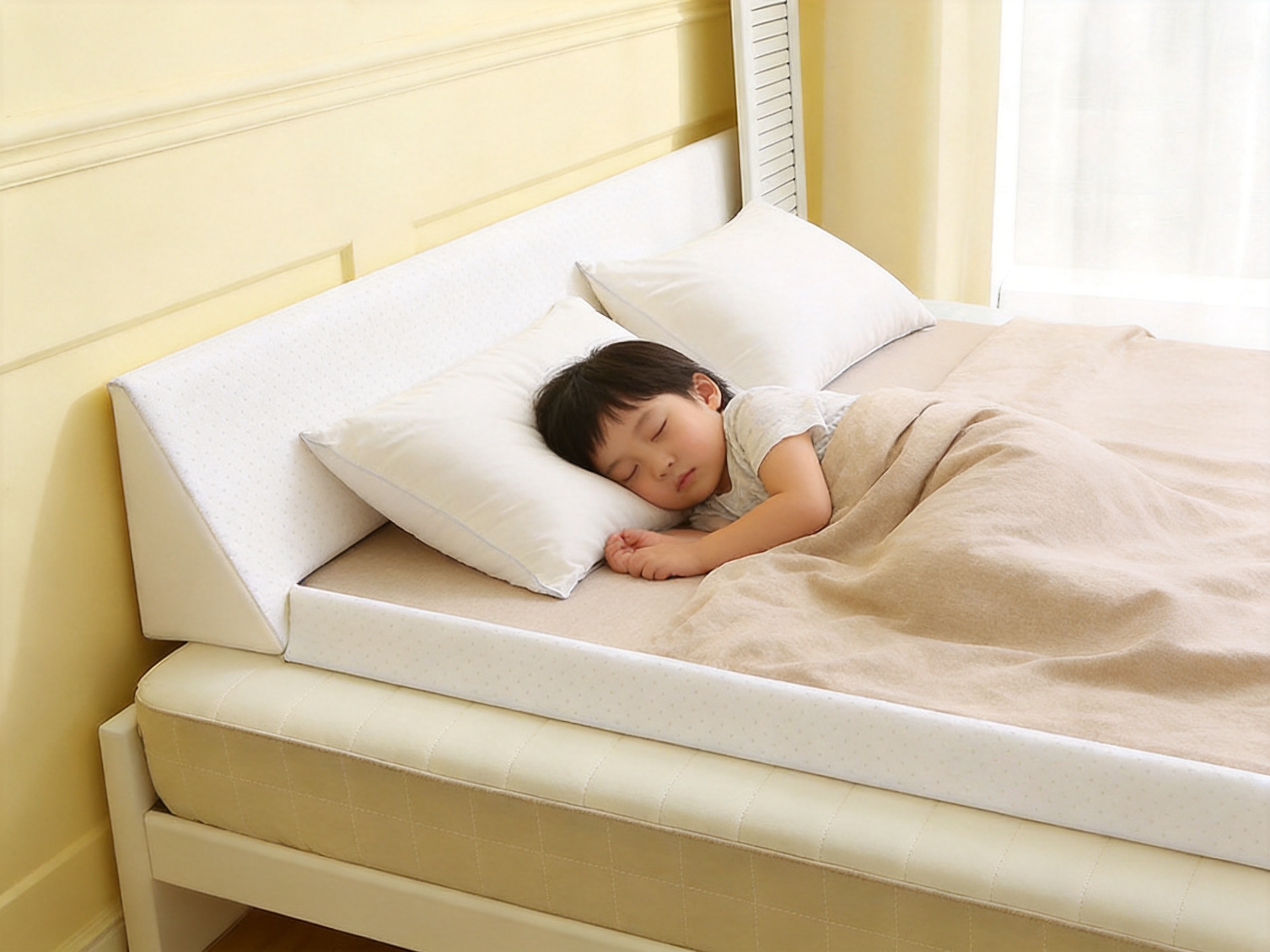
For older infants, toddlers, and children transitioning from cribs to beds, soft boundaries can help create a more reassuring sleep environment. The bed guard may help define the edge of the bed and reduce direct exposure to corners or headboards. Parents may use it as part of a broader safety arrangement that includes appropriate bed height, stable mattress placement, uncluttered bedding, and regular inspection.
The absence of hard edges is a major comfort advantage. Children may rest against the guard, brush against it while sleeping, or touch it during play. A soft and skin-friendly surface helps reduce irritation and supports everyday usability. The product’s texture is designed to improve grip while remaining suitable for bedding contact.
Material safety is also central to product positioning. OEKO-TEX certified materials support buyer confidence by indicating attention to textile safety and chemical compliance. For children’s products, non-toxic and odor-conscious materials are particularly important because users may spend long periods near the product.
Because beds, mattresses, and room layouts vary, installation and placement should be checked regularly. The product should be positioned firmly and used according to the child’s age, mobility, and sleeping habits. Families should ensure the guard is not used in a way that creates entrapment gaps or unstable sleeping arrangements.
Design Aesthetics for Modern Children’s Rooms
Function is the first priority, but appearance matters in home products. Parents increasingly look for safety accessories that do not make a room feel cluttered or visually harsh. The triangular children’s bed railing strip uses a pure white color scheme that creates a clean, soft, and calm visual effect.
White is especially versatile. It can match wooden beds, upholstered beds, metal frames, pastel rooms, Scandinavian interiors, Montessori-inspired spaces, and modern apartment bedrooms. It also works well with colorful bedding because it does not compete visually with patterns or themes.
The triangular shape has a simple geometric character that looks neat rather than bulky. When placed along a bed edge, it forms a smooth protective line. When placed near a corner or headboard, it can soften the geometry of the furniture without appearing improvised.
For e-commerce photography, the neutral color and simple structure can also be advantageous. Online shoppers need to understand a product quickly from images. A clean white triangular bed guard communicates softness, simplicity, and protection without visual confusion.
For private label programs, the simple design provides flexibility. Buyers may request different fabrics, packaging styles, size adjustments, or brand presentation while keeping the functional structure consistent. This supports different retail positions, from value-focused family products to premium child safety accessories.
Customization for Different Bed Types and Market Needs
One of the product’s strongest commercial advantages is customization. Bed sizes, mattress heights, furniture styles, and customer preferences vary across markets. A single standard size may not meet all needs, especially for international buyers serving diverse households. This bed guard supports free adjustment of size, packaging, and fabric, allowing buyers to develop products that match their sales channels.
Length customization can help adapt the product to single beds, toddler beds, bunk beds, platform beds, and custom children’s furniture. Some buyers may prefer shorter corner guards, while others may need longer strips for side protection. Height and width adjustments may also be considered based on target age group, mattress thickness, and desired protection level.
Fabric customization allows buyers to choose different tactile experiences, surface textures, colors, and decorative styles. While white is broadly compatible, some markets may prefer gray, beige, pastel tones, or themed textile covers. The manufacturer’s ability to support fabric variation is useful for retailers building differentiated collections.
Packaging customization is especially important for cross-border e-commerce. Amazon, independent websites, and other online platforms often require packaging that balances compression efficiency, presentation, shipping durability, barcode labeling, and consumer unboxing expectations. A manufacturer experienced in export supply can help buyers create packaging solutions suitable for platform requirements and warehouse handling.
Customization also supports brand positioning. A buyer targeting premium child safety products may request enhanced packaging and higher-end fabric. A buyer targeting large-volume retail may focus on efficient carton dimensions and cost-effective material options. This flexibility gives the triangular bed guard a competitive advantage over standardized products with limited modification options.
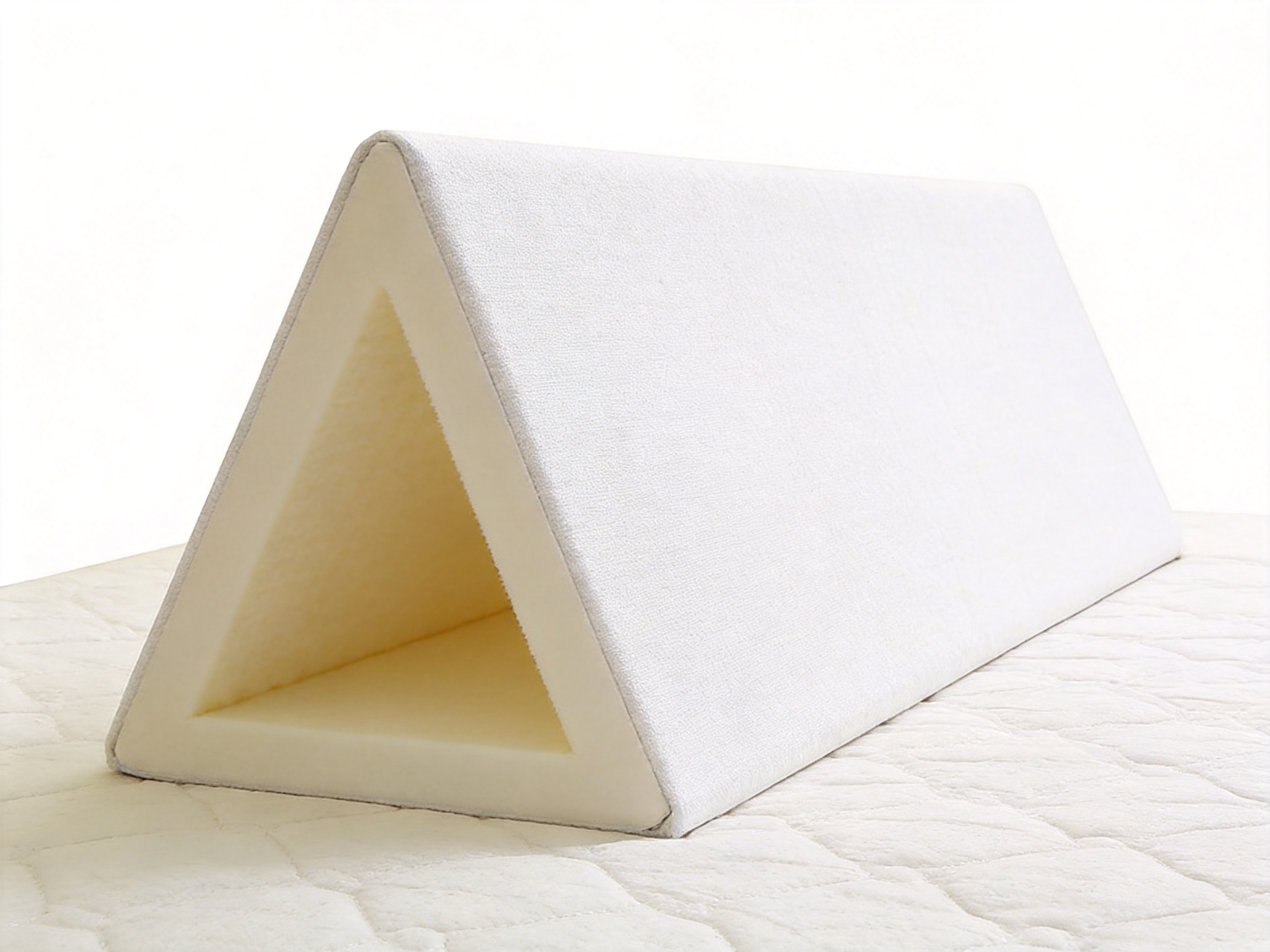
Manufacturing Strength Behind the Product
The performance of a memory foam bed guard depends heavily on manufacturing quality. Foam products may look similar externally, but internal formulation, density control, curing conditions, cutting precision, fabric processing, and inspection standards all influence the user experience. Jiangsu Wellcare Household Articles Co., LTD. brings long-term foam manufacturing expertise to this product category.
The company was founded in 2003 and focuses on research and manufacturing of high-performance sleep materials and healthy home products. Its development is rooted in material innovation, which is essential for products such as memory foam mattresses, functional pillows, children’s foam accessories, pet foam products, boneless sofa foam components, and memory foam furniture solutions.
A doctor-led research and development team supports the company’s foam material innovation. The company develops more than one hundred new foam materials every year, including ordinary sponge, memory foam, gel foam, temperature-insensitive memory foam, quick-dry memory foam, flame-retardant sponge, antibacterial sponge, and other specialized materials. This broad technical platform enables the development of products with different comfort, resilience, breathability, durability, and safety characteristics.
The triangular children’s bed railing strip benefits from this foam expertise. Selecting the right memory foam for a children’s protective accessory is different from selecting foam for a mattress or adult pillow. The product must be soft enough for contact, firm enough for boundary support, stable enough for repeated compression, and suitable for direct use in children’s environments. A strong R&D foundation helps balance these requirements.
The company’s manufacturing history also reflects scaling capability. Its background began in 1993 as a school-run scientific research enterprise, followed by the purchase of a 12,000-square-meter factory building in 2003 and later expansion through a 50,000-square-meter land acquisition in 2008. These developments show a transition from research-oriented beginnings to industrial production capacity.
By 2010, the company’s products were supplied to cross-border supermarkets in the United States, Germany, and Japan. Later export destinations included the United Kingdom, Canada, Australia, and Kuwait. This international experience is important for buyers because children’s products and bedding accessories must meet different market expectations for quality, packaging, documentation, and consistency.
Advanced Foam Development and Material Innovation
Foam manufacturing is a technical process that involves chemistry, temperature control, mixing precision, expansion behavior, curing, aging, and post-processing. Small changes in formulation can affect density, softness, rebound, odor, support, durability, and environmental performance. A manufacturer with active R&D capacity can respond more effectively to product requirements.
For memory foam products, the formulation must support pressure distribution and shape recovery. If the foam is too soft, the guard may collapse. If it is too firm, it may feel uncomfortable and reduce the benefit of cushioning. If the foam has poor recovery, it may deform after use. If the foam has strong odor or inconsistent structure, it may disappoint parents and retailers.
The company’s work with multiple foam categories provides a broader technical foundation. Gel foam experience supports temperature and comfort innovation. Temperature-insensitive memory foam development helps address performance consistency across seasonal conditions. Quick-dry memory foam can be useful in hygiene-sensitive applications. Flame-retardant and antibacterial sponge technologies reflect the ability to engineer foam for specialized performance.
Although not every specialty foam is used in this exact bed guard configuration, the availability of advanced foam knowledge strengthens product development. It allows buyers to discuss modifications and future product upgrades with a technically capable supplier rather than a simple assembly factory.
Material innovation also supports consistency. High-volume buyers need repeated batches that perform similarly. R&D knowledge helps define production parameters and quality ranges, while manufacturing systems help maintain them. This is critical for e-commerce sellers, because inconsistent product feel can lead to negative reviews and higher return rates.
Production Process: From Foam Core to Finished Bed Guard
The manufacturing process for a triangular memory foam bed guard begins with material selection and foam formulation. The foam core must match the required density, softness, resilience, and safety profile. Raw materials are prepared according to internal specifications, then processed under controlled conditions to create foam blocks or molded foam components suitable for further cutting.
After curing and stabilization, foam is inspected for structure and performance. Proper curing is important because it helps the foam reach a stable condition before cutting and assembly. Inconsistent curing can affect odor, rebound, and shape stability. Experienced manufacturers control these stages carefully to improve final product quality.
The triangular profile requires precise cutting or forming. Clean geometry is essential because the product must sit correctly along bed edges and corners. Poorly cut foam may create uneven surfaces, gaps, unstable placement, or unattractive appearance. Precision cutting helps ensure that each guard maintains the intended slope, width, and height.
Fabric preparation is another important stage. The polyester fiber cover must be cut, sewn, and finished to match the foam core. The anti-slip texture must be positioned properly so that it contributes to stability. Seam quality affects durability, appearance, and user satisfaction. A poorly sewn cover may twist, wrinkle, or fail after repeated use.
Assembly includes inserting or bonding the foam core with the cover depending on the design specification. The finished product is then inspected for size, shape, appearance, fabric condition, seam quality, and overall feel. Quality control at this stage helps prevent defects from reaching customers.
Packaging is designed according to customer needs. Some buyers may require compact packaging for shipping efficiency, while others may require premium retail boxes or customized brand labels. Because memory foam can compress, packaging must protect the product while allowing it to recover properly after unpacking. Instructions and warnings may also be included based on buyer requirements and market regulations.
Quality Control for Child-Focused Foam Products
Quality control is especially important for children’s products. Parents expect softness, cleanliness, material safety, and reliable performance. Retailers expect consistent sizing, attractive finishing, and low defect rates. Export buyers expect documentation, packaging accuracy, and production repeatability. The triangular children’s bed railing strip is supported by manufacturing processes that address these expectations.
Key quality control points include foam density verification, dimensional accuracy, rebound performance, surface fabric inspection, seam durability, odor assessment, packaging inspection, and batch consistency. Each of these factors affects the final customer experience.
Dimensional accuracy matters because the product must fit beds properly. A guard that is too low, too narrow, or uneven may not perform as expected. A product that is larger than stated may create shipping issues or customer complaints. Consistent measurement ensures that online listings and actual delivered products match.
Foam performance testing helps confirm that the product has suitable cushioning and recovery. If foam is too light or weak, it may compress excessively. If it is too hard, it may feel uncomfortable. Proper testing reduces the risk of inconsistent batches.
Fabric inspection ensures that the anti-slip surface is clean, properly textured, and free from obvious defects. Since the cover is the part consumers see and touch, its quality strongly influences perceived value. Seams must be checked to ensure they are smooth, secure, and suitable for children’s bedding environments.
Packaging inspection is also important for export and e-commerce. Damaged packaging can affect customer perception and increase returns. Correct labeling, carton strength, and product protection all contribute to a smoother supply chain.
Environmental Responsibility and Material Safety
Modern buyers increasingly consider sustainability and safety when selecting foam suppliers. Jiangsu Wellcare Household Articles Co., LTD. focuses on environmental management and has invested in advanced eco-friendly energy systems. The company aims to integrate respect for nature into business operations rather than simply meeting minimum compliance requirements.
For foam products, environmental responsibility may involve energy efficiency, waste reduction, process optimization, responsible material selection, and better production management. These practices can help reduce environmental impact while supporting long-term manufacturing stability.
Material safety is closely connected to children’s products. The triangular bed guard uses materials positioned as safe, non-toxic, odor-conscious, and skin-friendly, with OEKO-TEX certification reference for textile-related assurance. Parents and retailers value this because children may spend many hours near bedding accessories.
Safety-oriented material selection also supports market access. International buyers often require product documentation or supplier transparency. A manufacturer with experience in cross-border supply is more likely to understand these expectations and provide support for compliance preparation.
Environmental and safety practices can also become competitive advantages. Low-cost suppliers may compete mainly on price, but buyers increasingly recognize that poor material quality, strong odors, inconsistent foam, or weak packaging can create hidden costs. A responsible manufacturing partner helps reduce these risks.
Applications in Homes, Retail, and Hospitality
The primary application for the triangular children’s bed railing strip is home use. Parents can place it along bed edges, near headboards, or around corners where a child may bump into hard surfaces. It is especially useful in children’s rooms where safety and comfort need to coexist with clean interior design.
The product may also be suitable for families transitioning children from cribs to standard beds. During this stage, children may not yet have strong awareness of bed boundaries while sleeping. A soft foam guard can provide a reassuring edge and reduce direct contact with hard furniture surfaces.
For online retailers, the product is attractive because it solves a clear customer problem. It is easy to explain, visually understandable, and suitable for cross-border e-commerce. Its size, fabric, and packaging can be customized, allowing sellers to differentiate their listings from generic bed bumpers.
For independent website brands, the product can be positioned as part of a broader child-friendly sleep collection. It can be paired with memory foam pillows, children’s cushions, mattress toppers, toddler bedding, nursery accessories, or foam protection products.
Hospitality buyers may also find value in soft bed protection accessories for family-oriented rooms, serviced apartments, vacation rentals, and child-friendly accommodation concepts. While each environment must follow applicable safety rules, a soft protective strip can improve comfort and reduce hard-edge exposure in suitable settings.
Positioning Within a Broader Memory Foam Product Portfolio
The triangular children’s bed railing strip is part of a larger family of foam-based home and sleep products. The same manufacturing knowledge that supports memory foam mattresses, gel memory foam mattresses, functional pillows, memory foam cushions, foam pet products, and boneless sofa components also supports this child-focused bed guard.
This broader portfolio is important for buyers because it suggests supplier depth. A company that only produces one simple item may have limited ability to solve technical challenges. A manufacturer with multiple foam product categories can better understand density selection, ergonomic design, textile matching, compression packaging, and global shipping needs.
Memory foam furniture and memory gel mattress manufacturing require careful comfort engineering. Functional pillows require shape accuracy and support tuning. Foam pet products require durability and hygiene-aware design. Children’s foam products require softness, safety, and user-friendly finishing. These experiences overlap and strengthen the development of the triangular bed guard.
For distributors, working with a multi-category foam supplier can also simplify sourcing. Buyers may build a wider catalog from one manufacturing partner, including mattresses, pillows, cushions, bed guards, and customized foam accessories. This can reduce communication complexity and improve product consistency across a brand’s collection.
Export Experience and Cross-Border Supply Advantages
The product information indicates exclusive cross-border export supply availability and suitability for platforms such as Amazon and independent websites. Cross-border readiness is an important advantage because online retail places special demands on packaging, product consistency, imagery, documentation, and customer satisfaction.
A product sold through Amazon or similar platforms must arrive in good condition, match listing descriptions, and deliver a reliable user experience. Negative reviews often result from poor compression recovery, strong odor, inaccurate sizing, weak seams, or unstable design. Manufacturing discipline helps reduce these risks.
The company’s export history includes supply to markets such as the United States, Germany, Japan, the United Kingdom, Canada, Australia, and Kuwait. This experience suggests familiarity with different customer expectations and shipping conditions. For buyers in North America and South America, such experience can help support smoother communication and order execution.
Packaging customization is particularly valuable for cross-border sellers. The bed guard may need to be packaged compactly for freight efficiency while still protecting the foam and fabric. Retail packaging may need to include product instructions, safety notes, material information, and branding. A supplier that understands these needs can help reduce downstream operational problems.
Authorized own brand availability is another advantage. Buyers can develop private label products using the triangular bed guard structure while creating their own brand identity. This is important for e-commerce sellers seeking differentiation from generic listings.
How the Product Supports Parental Peace of Mind
Parents do not buy children’s safety accessories only for the product itself; they buy reassurance. They want to know that the bedroom environment is softer, more comfortable, and better prepared for everyday childhood movement. The triangular children’s bed railing strip supports this goal by turning exposed bed edges and corners into cushioned zones.
The memory foam core helps absorb minor impacts, while the anti-slip surface helps the product remain more stable. The triangular shape creates a clear raised boundary. The soft textile surface reduces hard contact. The clean white appearance makes the product feel integrated into the room rather than like an emergency add-on.
The product also supports practical parental routines. It is lightweight enough to handle, simple to position, and visually easy to inspect. Parents can check whether it is in the correct place before bedtime and adjust it when changing sheets. Unlike hardware-based rails, it does not necessarily require complex installation in many use scenarios.
For children, the product may feel more like a comfortable cushion than a restrictive barrier. This is important because some children resist rigid rails or bulky safety devices. A soft triangular guard can be less intimidating and more compatible with relaxed sleep routines.
For families with modern home design preferences, the product avoids the medical or industrial appearance that some safety accessories have. It offers protection while maintaining a warm and simple bedroom atmosphere.
Q&A Section
What is the triangular children’s bed railing strip used for?
It is used as a soft protective bed guard for children’s beds, bed corners, headboards, and other areas where children may bump into hard surfaces. It helps cushion minor impacts and creates a softer boundary along the bed.
What material is inside the product?
The core material is memory foam. This foam provides soft cushioning, pressure absorption, and gradual rebound, making it more comfortable than many rigid or low-density alternatives.
Why is the product triangular instead of rectangular or round?
The triangular shape provides a wider base and an inclined support surface. This helps the guard sit more stably along bed edges and makes it less likely to roll than cylindrical bumpers. It also creates a more natural protective slope.
Does the surface help prevent slipping?
Yes. The product uses an anti-slip textured fabric surface to increase friction and help reduce shifting during normal use. Placement should still be checked regularly, especially when used by active sleepers.
Is the product suitable for children’s skin contact?
The product is designed to be soft and skin-friendly, with no hard edges. Its materials are positioned as safe, non-toxic, odor-conscious, and supported by OEKO-TEX certified material standards.
Can this product completely prevent falls from a bed?
No bed guard accessory should be described as a complete guarantee against falls. This product can help create a softer boundary and reduce direct impact with hard surfaces, but it should be used together with responsible adult supervision, suitable bed height, stable mattress placement, and safe sleep practices.
Can the size be customized?
Yes. The product supports customization of size, packaging, and fabric. This makes it suitable for different bed types, retail programs, and private label requirements.
What is the standard reference size?
The reference size is approximately 154 cm in length, 25.4 cm in width, and 15 cm in height. Actual dimensions can vary according to customization and production requirements.
What color is available?
The listed product color is white, which gives it a clean and versatile appearance suitable for many children’s room styles. Other fabric and color options may be discussed for customized orders.
What makes this product better than ordinary pillows used as bed barriers?
Ordinary pillows are not shaped specifically for bed edge protection and may move or flatten easily. This product has a triangular structure, memory foam core, and anti-slip surface, making it more suitable for stable edge placement.
Is it suitable for e-commerce sales?
Yes. The product is suitable for platforms such as Amazon, independent websites, and other cross-border sales channels. Custom packaging and own-brand authorization can support online retail programs.
Who manufactures the product?
The product is manufactured by Jiangsu Wellcare Household Articles Co., LTD., a foam product manufacturer with experience in sleep materials, memory foam products, children’s foam products, mattresses, cushions, and functional pillows.
Buyer Considerations Before Ordering
Before placing a wholesale or customized order, buyers should define the target market and use scenario. A product intended for toddler bed transition may require different dimensions from one intended for larger children’s beds. A product for premium retail may require upgraded packaging, while a product for high-volume e-commerce may prioritize shipping efficiency.
Buyers should also consider fabric preference. The standard white textured fabric offers broad appeal, but some brands may want colors that match their product line. Texture, softness, cleaning expectations, and seam design should be evaluated during sampling.
Packaging requirements should be discussed early. Cross-border sellers may need carton labeling, barcodes, instruction inserts, warning labels, compression packaging, or platform-specific preparation. Clear packaging planning can reduce delays and improve customer experience.
Sampling is recommended for buyers who want to verify foam feel, size, recovery, cover quality, and overall appearance. A sample also helps confirm product photography, listing content, and retail positioning before bulk production.
Buyers should communicate safety language responsibly. The product should be marketed as a soft protective bed guard that helps reduce bumps and improves comfort around bed edges, not as a guaranteed fall-prevention device. Accurate communication builds consumer trust and reduces misuse.
Why This Product Is a Strong Choice for Modern Foam Product Buyers
The triangular children’s bed railing strip combines a clear consumer need with practical foam engineering. It offers softness, cushioning, anti-slip stability, a child-friendly surface, and a clean appearance. Its triangular structure provides a meaningful advantage over loose pillows, low-density pads, and rolling cylindrical bumpers.
The product is also commercially flexible. Custom size, fabric, and packaging support different markets and sales channels. Its neutral design makes it easy to integrate into a wide range of children’s room styles. For e-commerce sellers, the product is visually understandable and addresses a common parental concern.
Manufacturing strength further enhances its value. Jiangsu Wellcare Household Articles Co., LTD. brings decades of development history, a doctor-led R&D team, broad foam material expertise, export experience, and sustainability awareness. These strengths help support product consistency, customization, and long-term supply reliability.
In a competitive market, the best children’s bedding accessories are not only soft; they are intelligently structured, material-conscious, well finished, and responsibly manufactured. This triangular memory foam bed guard meets those expectations by combining comfort, protection, modern design, and advanced foam production capability.
Conclusion
The triangular children’s bed railing strip is a thoughtfully designed memory foam bed guard for children’s sleep spaces. Its high-density memory foam core helps cushion minor impacts, while the anti-slip textured fabric supports stable placement. The triangular structure fits naturally along bed edges, corners, and headboard areas, creating a soft protective boundary that helps reduce direct contact with hard surfaces.
Compared with many competing products, it offers a stronger balance of comfort, stability, durability, and aesthetic simplicity. It avoids the hardness of rigid rails, the instability of loose pillows, the leakage concerns of inflatable bumpers, and the limited cushioning of thin pads. Its pure white exterior makes it suitable for modern interiors, and its customization options make it practical for global buyers.
Behind the product is a manufacturer with deep experience in foam materials and healthy home products. With strong R&D capability, a broad foam portfolio, international export history, and attention to environmental responsibility, the company provides more than a single product; it provides a reliable manufacturing foundation for buyers seeking professional memory foam solutions.
For families, retailers, and distributors looking for a child-friendly bed edge protection product, the triangular memory foam bed guard is a practical and market-ready choice. It brings together gentle cushioning, stable design, clean appearance, and manufacturing expertise in one functional children’s bedding accessory.
References
OEKO-TEX Association. Standard 100 by OEKO-TEX: General Principles and Testing Criteria.
Polyurethane Foam Association. Flexible Polyurethane Foam: Properties, Performance, and Applications.
International Sleep Products Association. Bedding Materials and Consumer Comfort Considerations.
Consumer Product Safety Commission. General Guidance on Children’s Sleep Environment Safety.
Textile Institute. Performance Characteristics of Polyester Fibers in Home Textile Applications.
Furniture Industry Research Association. Design Considerations for Soft Protective Home Accessories.
Jiangsu Wellcare Household Articles Co., LTD. Internal Product Specifications and Company Manufacturing Profile.
Product: Triangular children's bed railing strip
PREV:Egg Nest Memory Foam Mattress: Breathable Support for Flexible Everyday Sleep
NEXT:Multifunctional Memory Foam Headrest Pillow for Ergonomic Back Support
NEXT:Multifunctional Memory Foam Headrest Pillow for Ergonomic Back Support
Interested in cooperation or have questions?
Related News
WELLCARE was founded in 2003, boasting over a decade of profound and extensive experience.
Quick Links
Product
Media Centre
Contact Information
- [email protected]
- +86-517-84998062
- +86-15152354988
- No. 168 Nenjiang Road, Huaiyin District, Huai'an City, Jiangsu Province, China
Copyright © Jiangsu Wellcare Household Articles Co., LTD. All Rights Reserved.
Custom Memory Gel Mattress Manufacturers
