

 English
 日本語
日本語 Español


Shen Yueqiao — After-Sales Quality Support Supervisor

Home / Author / Shen Yueqiao — After-Sales Quality Support Supervisor / Neck Support Silicone Pillow for Children: Safe Materials, Thoughtful Ergonomics, and Reliable Manufacturing
Product Category
NEW Category
Contact us
Neck Support Silicone Pillow for Children: Safe Materials, Thoughtful Ergonomics, and Reliable Manufacturing
Choosing a pillow for a young child requires more care than selecting an ordinary adult pillow. Children have smaller bodies, developing necks, sensitive skin, and different sleep needs. A suitable pillow should provide gentle support without creating excessive height or pressure. It should also be breathable, hygienic, easy to maintain, and made from materials that are appropriate for frequent contact with delicate skin.
The neck support silicone pillow for children is designed around these requirements. It combines a baby-grade silicone construction, a slow-rebound memory foam core, a central hollow structure, a curved support profile, and a removable fabric cover. Its compact dimensions of 27 × 25 centimeters and lightweight design make it suitable for children, nurseries, kindergartens, family use, and travel.
Beyond the product itself, the pillow reflects the manufacturing strengths of Jiangsu Wellcare Household Articles Co., LTD. The company has developed extensive experience in foam materials, sleep products, household articles, and customized manufacturing. Its research-driven approach includes the development of ordinary sponge, memory foam, gel foam, temperature-insensitive memory foam, quick-dry memory foam, flame-retardant sponge, antibacterial sponge, and other specialized materials.
This article examines the product’s design, materials, performance, hygiene features, manufacturing advantages, quality considerations, commercial applications, and suitability for different purchasing channels. It also explains why this children’s pillow can offer meaningful advantages over basic flat pillows, poorly shaped cushions, and products made without specialized foam research.
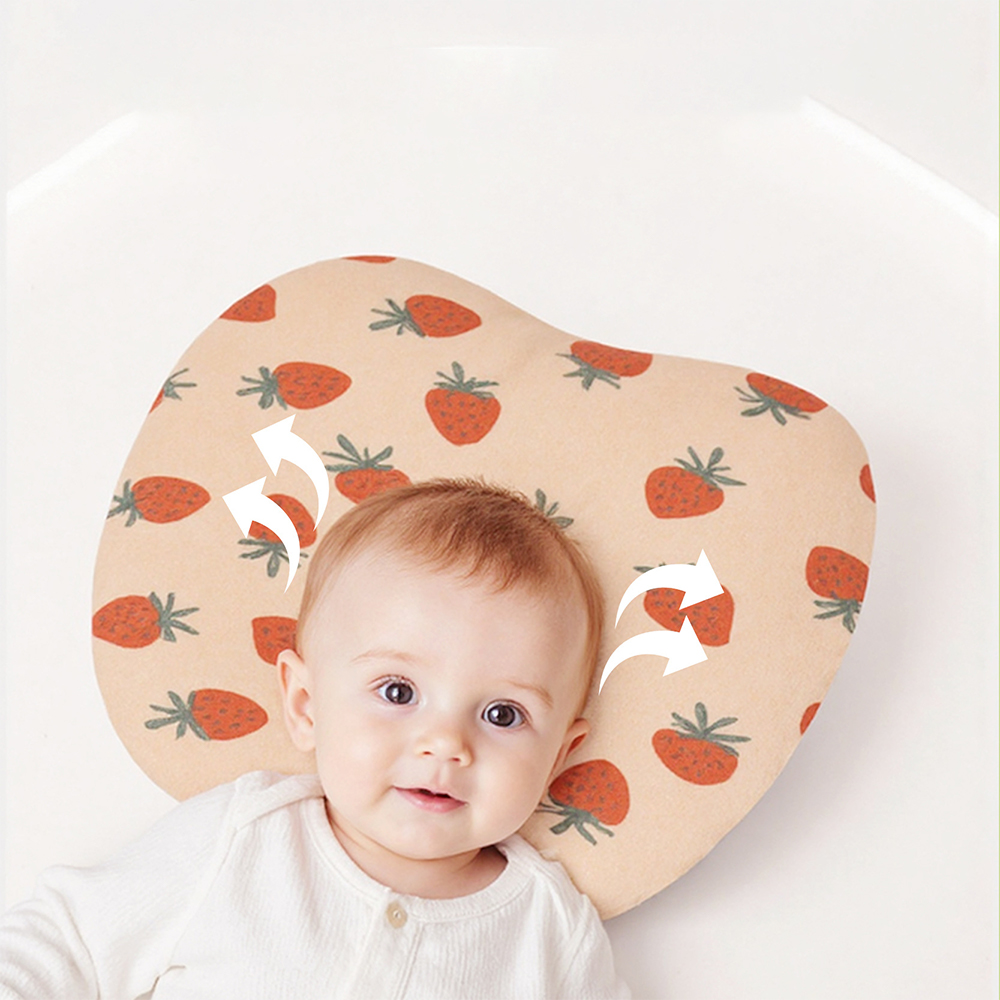
Neck support silicone pillow for children
1. Product Overview
The neck support silicone pillow for children is a compact sleep accessory intended for children over one year old, with product specifications also identifying an application range under two years old. Because children develop at different rates, caregivers should always consider the child’s individual posture, sleeping habits, physical development, and professional guidance when selecting any sleep product.
The pillow uses a structured design rather than a simple rectangular cushion. Its central hollow area helps reduce direct pressure on the back of the head, while the surrounding curved shape provides gentle support around the head and neck. This arrangement is intended to help distribute contact more evenly than a completely flat surface.
The pillow’s main filling ingredient is identified as silicone cotton, while the product description also refers to an internal slow-rebound memory foam filling. In practical terms, the construction is designed to combine resilience, softness, and controlled support. The material gradually responds to the child’s head and neck instead of collapsing immediately under pressure.
A breathable fabric cover surrounds the inner support structure. The cover features a floral or strawberry-inspired print on a cream-colored background, with red as the principal color category. The visual design is intended to create a warm, playful sleep environment without using overly bright or visually harsh colors.
The cover can be removed and washed. This is particularly important for children’s bedding because pillows may be exposed to sweat, drool, food residue, dust, and accidental spills. A removable cover makes routine cleaning more practical and can help families maintain a fresher sleep surface.
| Product Attribute | Specification or Feature |
| Product Type | Children’s neck support silicone pillow |
| Product Category | Baby pillow / children’s silicone pillow |
| Dimensions | 27 × 25 centimeters |
| Filling Description | Slow-rebound memory foam and silicone cotton construction |
| Pillow Core Fabric | Cotton |
| Color Category | Red |
| Surface Appearance | Floral or strawberry print |
| Suitable Age Information | Listed for children over one year old and under two years old |
| Pillow Weight | 0–0.5 kilograms |
| Customization | Supported |
| Item Number | PW047 |
| Brand | Wellcare |
| Manufacturing Support | Cross-border export supply available |
2. Why Pillow Design Matters for Young Children
A child’s sleeping posture is influenced by pillow height, firmness, shape, surface friction, temperature, and the surrounding bedding environment. A pillow that is too high may push the head forward and create an uncomfortable angle at the neck. A pillow that is too flat may provide little support. A pillow that is excessively soft may compress unevenly, while one that is too firm may create localized pressure.
Children also move frequently during sleep. A pillow that loses its shape quickly may fail to provide consistent support when the child changes position. For this reason, a structured pillow can be more practical than a loose filling pillow that bunches or forms uneven areas.
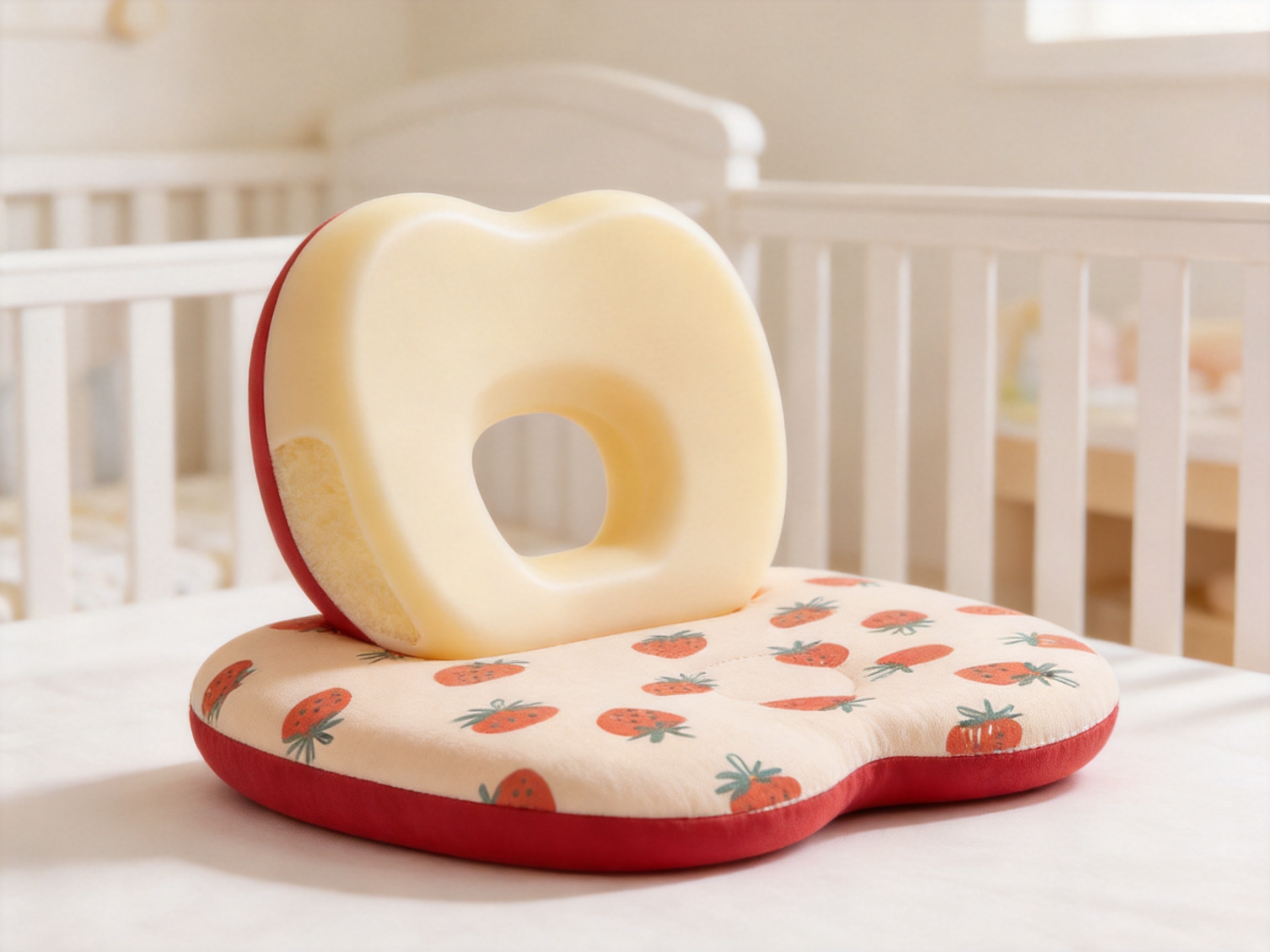
The central hollow design is one of the most distinctive features of this product. Rather than placing the full weight of the head on a single flat plane, the design creates a lower-pressure central zone and uses the surrounding contours to support the head and neck. This can be especially useful for children who prefer a defined resting area but still need a soft contact surface.
The curved wrapping structure is intended to help stabilize the head without creating a rigid enclosure. It provides a transition between the central resting area and the neck-support zones. Compared with an ordinary flat pillow, this construction offers a more deliberate relationship between the head, neck, and shoulder area.
It is important to describe these benefits responsibly. The pillow is designed to support comfortable positioning and help distribute pressure, but it should not be presented as a medical treatment. Claims related to preventing or correcting flat head syndrome, neck conditions, or other health problems should be discussed with a qualified pediatric healthcare professional. Product design can support good sleep habits, but it does not replace medical advice.
3. Baby-Grade Silicone and Skin-Conscious Materials
Material selection is one of the most important differences between a purpose-built children’s pillow and a low-cost general cushion. The product uses baby-grade silicone described as non-toxic, odorless, environmentally considerate, and skin-friendly. The material is also described as suitable for sensitive skin and intended for long-term contact with a child’s body.
Silicone can offer several practical advantages in children’s products. It is resistant to many common forms of wear, maintains a degree of flexibility, and can be formulated for soft-touch applications. When properly processed and combined with an appropriate textile layer, it can contribute to a smooth, resilient, and comfortable support structure.
The product is described as OEKO-TEX® certified. Textile and material certifications can provide buyers with additional information about testing and restricted substances, although purchasers should confirm the specific certificate scope, validity, and applicable product component before making compliance claims in commercial materials. For importers and distributors, documentation should be requested from the manufacturer as part of the sourcing process.
The skin-friendly approach continues beyond the internal material. The outer cover uses a breathable fabric intended to reduce stuffiness and manage moisture. A cotton-based pillow core fabric is listed in the specifications, adding a familiar soft-touch textile element to the construction.
Children may spend many hours in contact with a pillow, so odor control and surface comfort are especially relevant. Strong chemical smells can be unpleasant in a sleeping environment, while rough or poorly finished fabric can irritate sensitive skin. A carefully selected material system helps create a more comfortable product experience from the first use.
Material safety should always be evaluated as a complete system. This includes the foam or silicone filling, textile cover, dyes, printing inks, sewing thread, zipper or closure components, adhesives if used, packaging, and any finishing treatments. Professional manufacturers understand that a safe product is not defined by one material name alone; it depends on formulation, processing, testing, assembly, and quality control.
4. Slow-Rebound Memory Foam Support
The slow-rebound memory foam core is designed to respond gradually when pressure is applied. Instead of immediately returning to its original form, the foam temporarily conforms to the contours of the head and neck. This response can create a more personalized contact area than conventional fiber filling or low-density sponge.
For a child’s pillow, the goal is not maximum softness. The goal is balanced support. The foam needs to be soft enough to feel comfortable but stable enough to avoid complete collapse. A slow-rebound formulation can help achieve this balance by distributing pressure over a broader area and reducing abrupt changes in support.
Compared with ordinary loose-fill pillows, memory foam has a more consistent structure. Loose filling can move to the sides, form lumps, or flatten in the center. A molded or shaped foam core can maintain the intended support geometry for a longer period, provided that it is manufactured with suitable density, resilience, and dimensional stability.
Compared with a conventional hard foam cushion, slow-rebound memory foam offers a more gradual pressure response. It can reduce the feeling of a firm, unyielding surface and may make it easier for the child’s head to settle into a comfortable position.
The performance of memory foam is influenced by temperature, density, cell structure, thickness, and formulation. Standard memory foam may feel firmer in cooler conditions and softer in warmer conditions. The manufacturer’s broader research portfolio includes temperature-insensitive memory foam and other specialized foam materials, demonstrating an understanding of how formulation affects performance across different environments.
For global distribution, this knowledge is valuable. Products shipped to Europe, Southeast Asia, North America, and other regions may encounter different climates and storage conditions. A manufacturer with experience in material adjustment can better evaluate how a product behaves during transport, warehousing, and use.
Support Without Excessive Firmness
The neck support design aims to avoid the two extremes of an overly firm support and an overly soft cushion. A firm central support might cause discomfort or concentrated pressure, while excessive softness may allow the head to sink too deeply. The central hollow and curved perimeter work together to create a controlled support pattern.
This design may also help the pillow maintain a recognizable position during use. Rather than requiring parents to reshape loose filling repeatedly, the structured form provides a defined resting area. This convenience is important in family settings, where bedding may need to be arranged quickly before bedtime or after washing.
Pressure Distribution and Comfort
Pressure distribution is a central consideration in ergonomic sleep products. When pressure is concentrated on a small area, discomfort may develop more quickly. By shaping the pillow around the head and neck, the product seeks to spread contact across supportive surfaces while leaving a lower-pressure area at the center.
The design may reduce direct pressure around the ears and face compared with a pillow that places a broad, flat surface against the entire side of the head. This does not mean that every child will experience the same result. Sleeping position, head size, movement, and individual preference all affect perceived comfort.
5. Breathability and Moisture Management
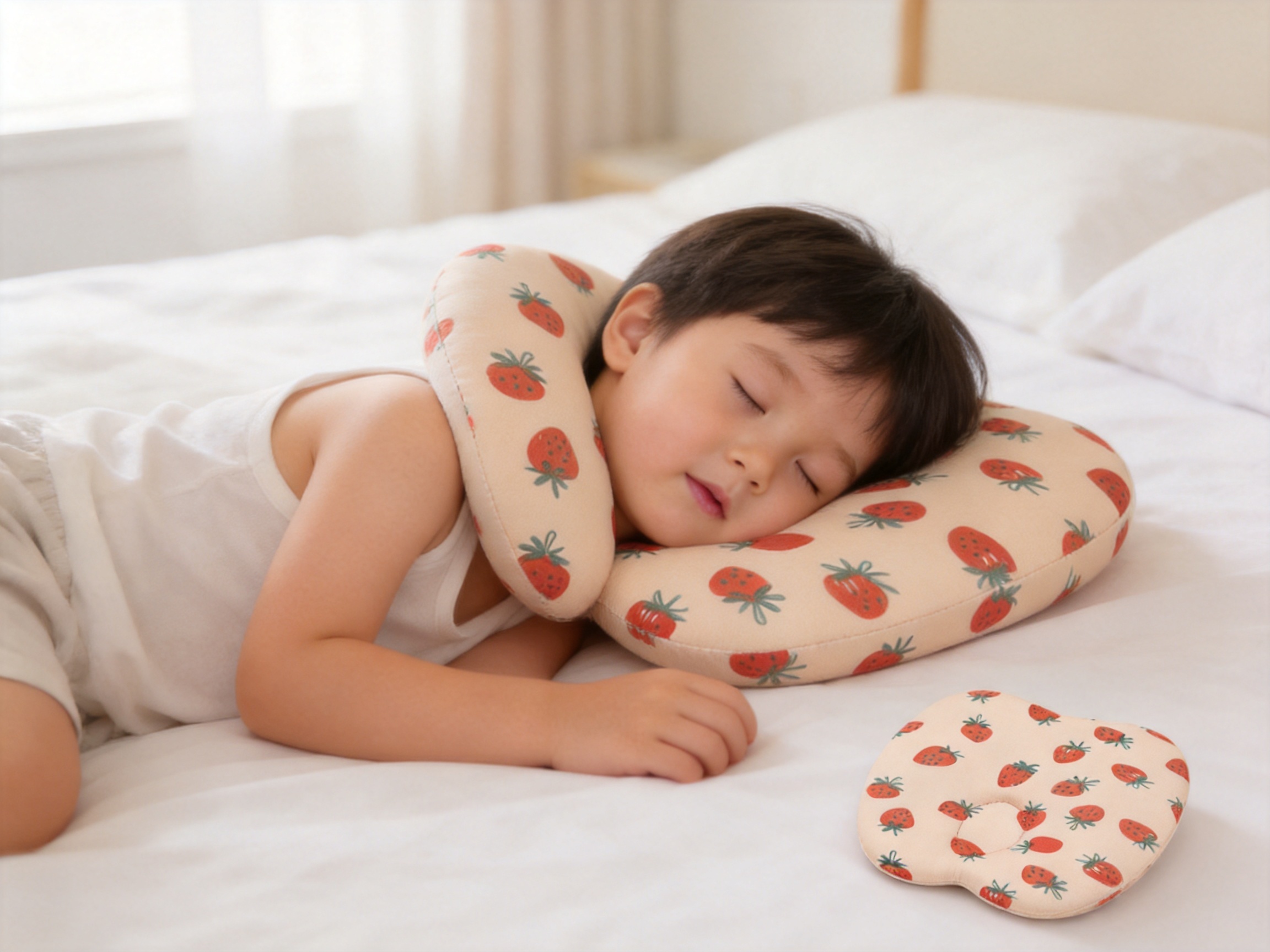
Children can become warm during sleep, particularly in rooms with high humidity or limited air circulation. A pillow that traps heat and moisture may feel uncomfortable and may require more frequent cleaning. The breathable cover on this product is intended to allow air movement and help manage moisture at the contact surface.
Breathability depends on more than the fabric label. It is influenced by the weave, thickness, finishing process, foam structure, cover fit, and overall pillow geometry. A well-designed cover should be soft against the skin while allowing sufficient ventilation around the support core.
The use of a breathable outer fabric is particularly useful for year-round use. In warmer climates, it can help reduce the feeling of stuffiness. In cooler seasons, it can still provide a comfortable soft layer without requiring a completely different pillow construction.
Moisture management also supports hygiene. A surface that dries more effectively after normal use may be easier to maintain than a fabric that remains damp for long periods. However, proper care remains essential. The pillow should be cleaned according to the manufacturer’s instructions, and the cover should be fully dried before reuse.
6. Removable and Washable Construction
Washability is one of the strongest practical advantages of this children’s pillow. The removable cover allows parents, childcare providers, and hospitality operators to clean the surface without washing the entire foam core. This helps protect the inner support material from unnecessary exposure to water and mechanical stress.
A removable cover can also extend the useful life of the product. If the cover becomes worn or heavily soiled, it may be possible to replace the cover while retaining the core, depending on the manufacturer’s supply options. For institutional customers such as nurseries and kindergartens, spare covers can help simplify rotation and maintenance.
Routine cleaning is especially important for products used by young children. Bedding may come into contact with saliva, perspiration, lotions, food, dust, and allergens. A washable cover offers a more hygienic solution than a permanently sealed cushion that can only be spot-cleaned.
Caregivers should follow the recommended washing temperature, detergent type, drying method, and closure instructions. The inner foam or silicone component should not be submerged unless the manufacturer specifically confirms that it is washable. Improper washing may cause deformation, odor retention, fabric shrinkage, or damage to the cover’s fastening system.
For commercial buyers, washability should be verified through repeated laundering tests. Important evaluation points include colorfastness, seam strength, zipper durability, dimensional stability, fabric pilling, print integrity, and the ability of the cover to return to its original fit after washing.
7. Playful Visual Design for Children
Children’s products must combine function with an appearance that feels welcoming. This pillow uses a strawberry or floral print with a cream-colored background and soft red accents. The visual style is playful without relying on overly intense colors or complicated graphics.
A warm pattern can help the pillow fit naturally into a child’s bedroom, nursery, or travel bedding set. It may also make the product more appealing to parents who want practical sleep accessories that complement a family-friendly environment.
The visual design can be adapted for different sales channels. Retail packaging may emphasize softness, washable construction, and the cheerful pattern. Nursery or kindergarten supply programs may focus more heavily on cleaning convenience, compact dimensions, and material information. Hospitality buyers may prefer neutral packaging combined with a clear explanation of the child-oriented support structure.
Customization is listed as available. Depending on the order requirements, customization may involve packaging, labels, color combinations, print patterns, product tags, or other approved details. Buyers should confirm minimum order quantities, artwork procedures, sampling requirements, testing documentation, and production lead times before placing a customized order.
8. Advantages Over Basic Competitor Products
The children’s pillow market includes many low-cost products with limited structural design. Some are made from loose polyester fiber, some use ordinary sponge, and others are simply scaled-down versions of adult pillows. These alternatives may be inexpensive, but they do not always provide the same combination of material control, ergonomic shaping, hygiene features, and manufacturing support.
Structured Ergonomics Versus Flat Filling
A basic flat pillow may offer little guidance for head and neck positioning. Its performance can vary depending on how the filling shifts during the night. The central hollow and curved wrapping design of this product create a more deliberate support profile.
Controlled Foam Response Versus Low-Cost Sponge
Ordinary sponge may compress quickly or provide a firmer, less adaptive feel. Slow-rebound memory foam is designed to respond to pressure progressively and conform more closely to the head and neck. This provides a more refined performance profile than a generic foam cushion.
Washable Cover Versus Permanently Sealed Construction
Some children’s pillows have a fixed outer shell that cannot be removed. Cleaning may then be limited to wiping or spot treatment. A removable cover offers a practical hygiene advantage because the main contact surface can be washed separately.
Material Documentation Versus Unclear Composition
Products from informal supply sources may provide incomplete information about their filling, cover, dyes, or processing. A professional manufacturer can offer more complete specifications, production records, test reports, and export documentation. This is especially important for distributors selling through regulated or international channels.
Specialized Research Versus Single-Product Production
A factory that only assembles finished pillows may have limited ability to adjust material behavior. Jiangsu Wellcare’s broader research capabilities include multiple foam categories and performance-oriented formulations. This creates a stronger foundation for product development, private-label projects, and future improvements.
Compact Child-Specific Dimensions
The 27 × 25 centimeter size is designed for a small user profile rather than simply reducing an adult pillow. Compact dimensions can make the pillow easier to place in a child’s bed, stroller, travel bag, or nursery storage area. Size should still be matched to the child and the intended sleep environment.
9. Advanced Manufacturing Capabilities
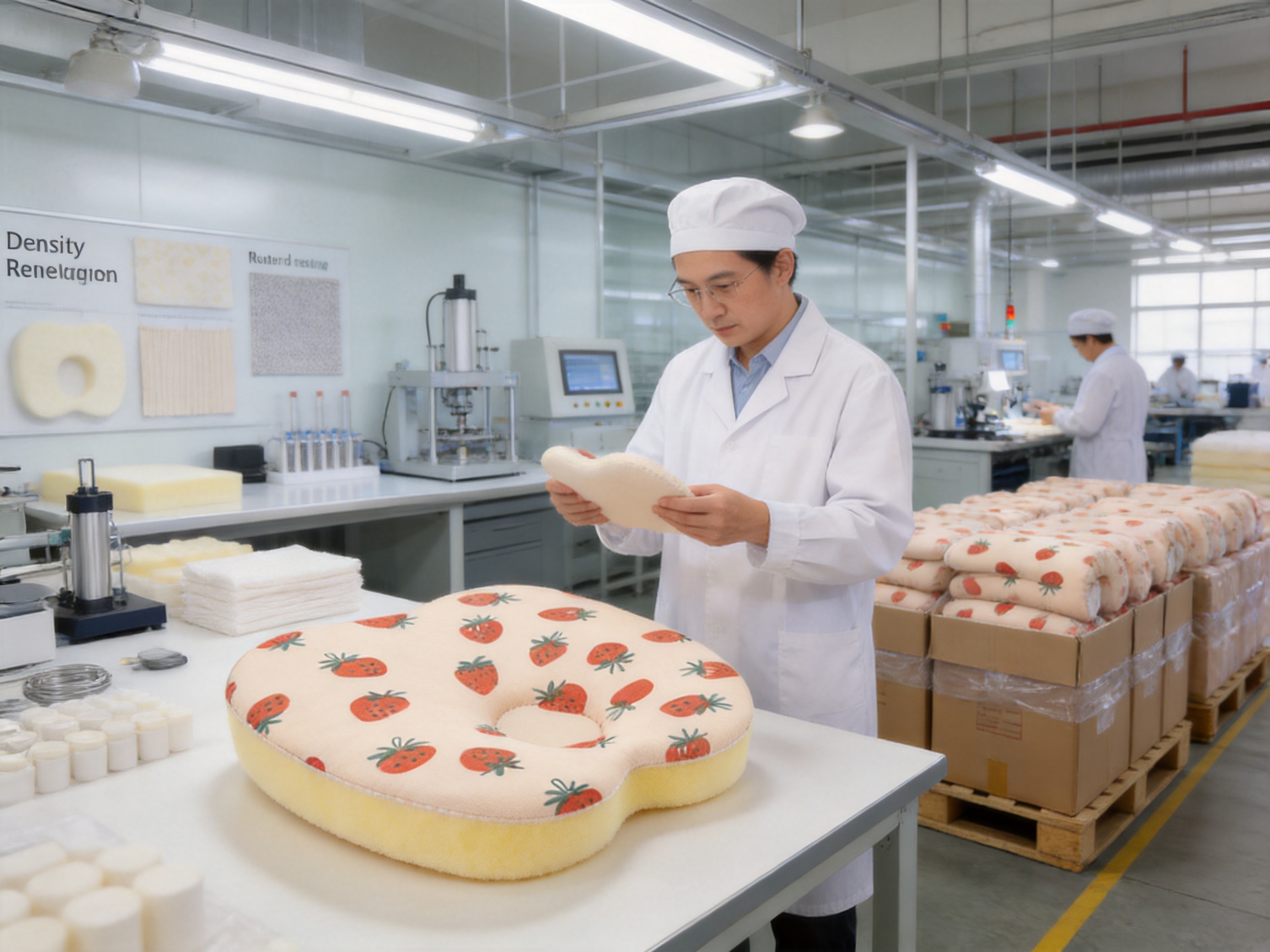
The product’s advantages are closely connected to the manufacturing capabilities behind it. Jiangsu Wellcare Household Articles Co., LTD. was founded in 2003 and focuses on research, development, and manufacturing for sleep materials and healthy home products. Its activities cover both raw material innovation and finished product production.
The company is supported by a doctor-led research and development team. According to the supplied company information, the team develops more than one hundred new foam materials each year. This level of development activity indicates a strong focus on formulation, testing, performance comparison, and application-specific design.
Research into foam materials can involve many variables, including polymer composition, cell structure, density, rebound speed, firmness, compression set, breathability, temperature response, durability, and surface interaction. A manufacturer that actively studies these variables is better positioned to create products with controlled and repeatable performance.
The company’s portfolio includes ordinary sponge, memory foam, gel foam, temperature-insensitive memory foam, quick-dry memory foam, flame-retardant sponge, antibacterial sponge, and other materials. This range supports product diversification across mattresses, pillows, cushions, furniture components, pet products, and children’s articles.
Material development is especially important for children’s products because the desired balance is different from that of an adult mattress or furniture cushion. A children’s pillow must be compact, lightweight, soft to the touch, dimensionally stable, and suitable for frequent handling and cleaning. It must also be manufactured with close attention to odor, surface finish, textile safety, and structural consistency.
From Scientific Research to Industrial Production
The company’s development history began in 1993 as a school-run scientific research enterprise. In 2003, it purchased a 12,000-square-meter factory building and jointly developed a new sponge material with Huai’an Institute of Technology. In 2008, it purchased 50,000 square meters of land, creating a larger foundation for manufacturing growth.
These stages show a progression from research activity to commercial-scale production. Cooperation with academic institutions can help connect laboratory knowledge with practical manufacturing requirements, including production efficiency, process repeatability, cost control, and product reliability.
For buyers, this background matters because foam products are sensitive to process variation. Small differences in mixing, curing, molding, cutting, or storage can affect density, resilience, odor, and dimensions. A mature manufacturer is more likely to have established procedures for managing these variables.
Integrated Product Development
An integrated development approach allows the manufacturer to consider the complete product rather than only the filling material. For this pillow, the support core, central hollow, outer cover, printed pattern, removable closure, packaging, and intended sales regions all need to work together.
The design must be evaluated for fit, hand feel, appearance, manufacturability, cleaning, shipping, and storage. If one component is changed, other components may also require adjustment. For example, a thicker cover may affect the perceived firmness, while a different zipper position may change comfort or production efficiency.
Manufacturing expertise helps coordinate these decisions. It can also support custom development for retailers, distributors, hospitality groups, nurseries, and private-label customers.
10. Quality Control Considerations
A children’s pillow should be evaluated through a complete quality control system. Incoming materials should be checked before production, and finished goods should be inspected before packing. The exact testing program may vary by market and customer requirements, but several areas are particularly important.
| Quality Area | Key Evaluation Points |
| Material Safety | Restricted substances, odor, skin-contact suitability, and available certification documents |
| Foam Performance | Density, firmness, rebound response, compression recovery, and dimensional stability |
| Shape Accuracy | Central hollow position, curved support profile, overall dimensions, and symmetry |
| Textile Quality | Fabric softness, breathability, colorfastness, pilling resistance, and print quality |
| Washability | Seam strength, closure durability, shrinkage, color retention, and post-wash fit |
| Packaging | Protection from compression damage, moisture, dust, and deformation during transport |
| Labeling | Material details, care instructions, age information, warnings, and market-specific requirements |
Dimensional inspection is important because a small pillow must maintain its intended geometry. The central hollow should be positioned consistently, and the neck-support curve should not vary excessively between units. Inconsistent shaping can lead to differences in comfort and appearance.
Foam recovery testing can help determine whether the core returns to its intended form after compression. This is relevant during both use and shipping. Products may be compressed for packaging, stacked in cartons, or stored for extended periods. Suitable packaging and recovery instructions can help reduce deformation-related issues.
Odor inspection is also important. Foam products may have a noticeable manufacturing odor immediately after production. Proper formulation, curing, ventilation, and packaging procedures can reduce this concern. Buyers should establish an agreed odor standard and conduct inspections under consistent conditions.
For international markets, documentation should be organized according to destination requirements. This may include material declarations, test reports, care labels, packaging information, and product safety records. The manufacturer’s experience exporting to Europe, Southeast Asia, North America, the United Kingdom, Canada, Australia, Kuwait, and other markets can help buyers prepare more effectively.
11. Sustainability and Environmental Management
Modern buyers increasingly evaluate not only product performance but also environmental responsibility. Jiangsu Wellcare has invested in advanced eco-friendly energy systems and environmental management practices. The company’s stated objective is to go beyond basic compliance and create long-term environmental value through respect for nature.
Foam manufacturing can involve energy use, chemical management, material waste, packaging, and transportation impacts. A responsible approach should therefore address the entire production system. Energy-efficient equipment, process optimization, controlled material use, waste reduction, and responsible handling of manufacturing residues can all contribute to better environmental performance.
Product durability is another part of sustainability. A pillow that maintains its shape, survives regular care, and remains useful for a reasonable service period may reduce the need for frequent replacement. The removable cover can also support maintenance by allowing the washable component to be cleaned without repeatedly washing the inner core.
Sustainability claims should be supported by specific evidence. Buyers may request information about energy systems, waste management, packaging materials, recycled content, chemical controls, and relevant environmental certifications. Clear documentation is preferable to broad, unsupported statements.
12. Applications in Different Settings
Family Bedrooms
For home use, the pillow provides a compact support option for a young child’s sleeping area. Its playful pattern can fit a nursery or children’s bedroom, while the removable cover makes routine care simpler. Parents may also appreciate the lightweight construction when moving the pillow between rooms or preparing bedding for travel.
Nurseries and Kindergartens
Childcare environments require products that are easy to identify, clean, store, and maintain. The washable cover is useful where bedding may be exposed to frequent use. Institutions should develop their own cleaning schedules and confirm that the product’s age guidance, dimensions, and safety documentation meet their operating requirements.
Travel
The pillow’s compact dimensions and low weight make it suitable for travel. It can be placed in luggage, a carry bag, or a child’s bedding set without taking up the space required by a full-size pillow. Consistent use of a familiar pillow may also help some children feel more comfortable when sleeping away from home.
Retail and E-Commerce
The product is suitable for online marketplaces and independent websites because its benefits are easy to communicate visually and through specification charts. Product listings can emphasize the shaped support structure, slow-rebound core, washable cover, breathable fabric, compact size, and child-friendly pattern.
Retailers should present age guidance carefully and avoid unsupported medical claims. They should also explain that the pillow must be used in accordance with local child-sleep recommendations and caregiver judgment.
Hospitality and Family Accommodation
Hotels, serviced apartments, resorts, and family accommodations may use child-oriented pillows as an optional amenity. The compact design and washable cover can make inventory management more practical. Hospitality buyers should establish procedures for inspection, laundering, replacement, and storage between guests.
13. Customization and Supply Chain Support
The product specifications indicate that custom processing is supported. Custom manufacturing can help buyers adapt the pillow to a particular market, brand identity, packaging style, or distribution strategy. Potential areas of customization may include fabric color, print pattern, label design, packaging format, instruction cards, carton markings, and product combinations.
Customization should begin with a clear technical brief. The brief should identify target users, dimensions, material requirements, visual references, test standards, packaging limitations, order quantity, and delivery expectations. Clear specifications reduce the risk of misunderstandings during sampling and production.
A sample approval process is recommended before mass production. Buyers should examine the sample’s dimensions, firmness, recovery, cover fit, print color, stitching, closure operation, odor, and packaging. If the product is intended for a regulated market, the final production version should be tested using the same materials and processes as the approved sample.
The manufacturer supports cross-border export supply and lists Europe, Southeast Asia, and North America among its main sales regions. It also identifies eBay, Amazon, Wish, AliExpress, independent websites, Lazada, and other platforms as downstream channels. This international orientation can benefit buyers who need experience with export packaging, documentation, labeling, and multi-market supply.
The product does not support dropshipping according to the provided information. This means that buyers should plan for conventional wholesale purchasing, inventory management, distributor fulfillment, or another agreed supply model. Confirming the shipping method, packaging quantity, carton dimensions, lead time, and minimum order quantity in advance is essential.
14. Packaging, Storage, and Transportation
Children’s foam products must be protected during transportation. Compression can reduce shipping volume, but excessive or prolonged compression may affect the pillow’s shape and rebound behavior. Packaging should therefore balance space efficiency with protection.
Individual packaging can help protect the washable cover and printed surface from dust, moisture, and handling damage. Outer cartons should be strong enough for stacking and should include appropriate handling marks where necessary. Products should be stored in a dry, ventilated environment away from direct sunlight, high heat, and strong odors.
After unpacking, the pillow may require a period of ventilation and recovery, particularly if it has been compressed for shipment. Buyers should request specific recovery instructions from the manufacturer and include suitable guidance for end users.
Warehouse operators should avoid placing heavy goods on top of pillow cartons for long periods. Stock rotation can help prevent prolonged compression and ensure that products are shipped within the intended storage period. Proper inventory practices protect both product quality and customer satisfaction.
15. Responsible Product Communication
Marketing communication should accurately reflect the product’s capabilities. Appropriate descriptions may state that the pillow is designed to provide gentle head and neck support, distribute pressure through a shaped structure, offer a breathable contact surface, and simplify cleaning through a removable cover.
Claims such as “cures neck problems,” “guarantees correct posture,” or “prevents flat head syndrome” should not be used without appropriate clinical evidence and regulatory authorization. A pillow is a comfort and support product, not a replacement for medical assessment or treatment.
Age guidance must also be displayed clearly. The supplied specifications identify the product as suitable for children over one year old and under two years old, while the general product description refers to children over one year old. Buyers should confirm the final age range, warnings, and usage instructions with the manufacturer before printing packaging or publishing listings.
Clear communication builds trust. Parents want to know what the pillow is made of, how it should be cleaned, what size it is, and how it should be used. Retailers that provide complete information are more likely to attract informed customers and reduce returns caused by unsuitable expectations.
16. Why the Manufacturer Is a Strong Development Partner
Jiangsu Wellcare Household Articles Co., LTD. offers more than finished pillow assembly. Its strengths include foam research, material development, manufacturing experience, export knowledge, product customization, and an established history in sleep-related products.
The company’s history includes cooperation with Huai’an Institute of Technology and later cooperation with Qingdao University of Science and Technology. These relationships reflect an emphasis on technical development and material innovation rather than relying only on standard commodity products.
In 2010, the company’s products were supplied to cross-border supermarkets in the United States, Germany, and Japan. Its products later reached the United Kingdom, Canada, Australia, and Kuwait. In 2018, the company became an Alibaba-certified Gold Supplier and entered e-commerce. In 2020, it became a designated supplier for five-star hotels.
This development path suggests experience across different customer types, from international retail and online commerce to hospitality supply. Each channel creates different requirements for packaging, appearance, consistency, delivery, documentation, and quality assurance.
The company’s research portfolio also supports future product extensions. A buyer sourcing a children’s pillow may later require matching mattresses, cushions, pet products, furniture foam, or other sleep accessories. Working with a manufacturer that already understands multiple foam categories can simplify supplier management and encourage coordinated product development.
17. Buyer Evaluation Checklist
Before purchasing the pillow in bulk, buyers should request a complete product information package. This should include the confirmed material composition, available certifications, age guidance, dimensions, weight, cover construction, washing instructions, packaging specifications, and sample photographs or physical samples.
Buyers should also ask how the foam or silicone core is formed, how the central hollow is maintained during production, and what inspections are performed on finished products. If custom processing is required, the buyer should confirm whether the customization affects the product’s testing status or requires new testing.
The following checklist can support a purchasing review:
| Purchasing Question | Why It Matters |
| What is the final confirmed age range? | Ensures accurate labeling and appropriate customer guidance. |
| What materials are used in the core and cover? | Supports safety review, product descriptions, and compliance documentation. |
| Is the cover machine washable? | Determines maintenance requirements and customer convenience. |
| How should the core be cleaned? | Prevents damage caused by unsuitable washing methods. |
| What tests support the material claims? | Helps verify safety, textile quality, and market suitability. |
| What is the minimum order quantity? | Allows accurate inventory and budget planning. |
| What customization options are available? | Clarifies design, branding, packaging, and sampling possibilities. |
| How is the product packaged for export? | Helps control shipping damage, storage conditions, and freight costs. |
| What is the production lead time? | Supports launch scheduling and replenishment planning. |
| What after-sales support is available? | Provides a process for addressing quality issues or replacement needs. |
18. Overall Product Assessment
The neck support silicone pillow for children is a carefully structured product that combines several features rarely found together in basic children’s pillows. Its central hollow and curved support profile address the need for a more purposeful shape. Its slow-rebound memory foam core is designed to provide gradual, contour-responsive support. Its baby-grade silicone material and breathable fabric focus on skin comfort and everyday use.
The removable, washable cover provides a strong practical benefit for families and institutions. The compact 27 × 25 centimeter size and low weight support portability, while the strawberry or floral print gives the product a recognizable child-friendly appearance.
Its strongest competitive advantage is not a single feature but the combination of ergonomic structure, material development, hygiene-oriented construction, customization potential, and professional manufacturing support. Jiangsu Wellcare’s experience in foam research and international supply provides a foundation for consistent production and future product adaptation.
For responsible use, buyers and caregivers should follow the final age guidance, care instructions, and local child-sleep recommendations. The pillow should be treated as a comfort and support accessory rather than a medical device. With accurate product communication and suitable quality control, it can serve as a practical option for family bedrooms, nurseries, kindergartens, travel, retail, and hospitality applications.
19. Questions and Answers
Q1: What is the main purpose of this children’s pillow?
The pillow is designed to provide gentle support for a young child’s head and neck during rest. Its central hollow and curved structure are intended to distribute pressure more evenly than a completely flat pillow.
Q2: What materials are used in the pillow?
The product description identifies baby-grade silicone, a slow-rebound memory foam filling, silicone cotton, a cotton-based pillow core fabric, and a breathable outer fabric cover. Buyers should confirm the final composition and documentation for the specific production version.
Q3: Can the cover be removed and washed?
Yes. The product is described as having a removable and washable cover. The recommended washing temperature, detergent, drying procedure, and closure care should be followed carefully.
Q4: Is the entire pillow machine washable?
The removable cover is intended for cleaning, but the inner foam or silicone core should not be washed or submerged unless the manufacturer specifically confirms that procedure. In most cases, the core should be protected from excessive moisture.
Q5: What are the product dimensions?
The listed dimensions are 27 × 25 centimeters. This compact format is intended for young children and is convenient for travel, nursery storage, and smaller sleeping areas.
Q6: What age group is the pillow designed for?
The supplied information lists the product as suitable for children over one year old and under two years old. Because age suitability can depend on local regulations and individual development, caregivers should confirm the final label and seek professional advice when needed.
Q7: Does the pillow treat or prevent medical conditions?
No medical treatment should be assumed. The pillow is designed for support and comfort. Statements about treating neck problems or preventing flat head syndrome should not be made without appropriate medical evidence and regulatory authorization.
Q8: What makes the product different from a basic flat pillow?
Its shaped support structure, central hollow area, slow-rebound foam core, breathable cover, and washable construction provide a more specialized design than a basic flat pillow filled with loose fiber or ordinary sponge.
Q9: Is customization available?
Custom processing is listed as available. Potential options may include colors, patterns, packaging, labels, and other approved details. Buyers should confirm the exact options, minimum order quantity, sample process, and testing requirements.
Q10: Does the manufacturer support dropshipping?
The supplied product information states that dropshipping is not supported. Buyers should therefore plan for wholesale purchasing, distributor fulfillment, or another conventional supply arrangement.
Q11: Which markets does the manufacturer serve?
The listed main sales regions include Europe, Southeast Asia, and North America. The company also has experience supplying products to markets including the United States, Germany, Japan, the United Kingdom, Canada, Australia, and Kuwait.
Q12: What types of foam does the manufacturer develop?
The company’s portfolio includes ordinary sponge, memory foam, gel foam, temperature-insensitive memory foam, quick-dry memory foam, flame-retardant sponge, antibacterial sponge, and other foam materials.
Q13: Can the product be used in nurseries or kindergartens?
The product is described as suitable for nurseries and kindergartens. Institutional buyers should confirm that the product’s age guidance, hygiene procedures, documentation, and local requirements meet their operating standards.
Q14: What should buyers inspect before placing a bulk order?
Buyers should inspect material documentation, dimensions, foam recovery, support shape, cover quality, print consistency, seams, closure durability, odor, packaging, washing performance, labeling, and export paperwork.
Q15: How can buyers contact the manufacturer?
The supplied company contact information identifies Jiangsu Wellcare Household Articles Co., LTD. The listed telephone numbers are +86-517-84998062 and +86-15152354988, and the listed email address is [email protected].
References
1. Product specification sheet for the neck support silicone pillow for children, item PW047.
2. Manufacturer-provided company profile for Jiangsu Wellcare Household Articles Co., LTD.
3. Manufacturer-provided information on foam material research and product development.
4. Manufacturer-provided export, customization, and downstream sales channel information.
5. General principles of ergonomic pillow design, pressure distribution, and sleep-surface comfort.
6. General textile care and laundering considerations for removable children’s bedding covers.
7. General product safety and responsible marketing principles for children’s sleep accessories.
Product: Neck support silicone pillow for children
PREV:Ink Painting Style Memory Foam Mattress: Breathable Support for Modern Sleep Spaces
NEXT:Egg Nest Memory Foam Mattress: Breathable Support for Flexible Everyday Sleep
NEXT:Egg Nest Memory Foam Mattress: Breathable Support for Flexible Everyday Sleep
Interested in cooperation or have questions?
Related News
WELLCARE was founded in 2003, boasting over a decade of profound and extensive experience.
Quick Links
Product
Media Centre
Contact Information
- [email protected]
- +86-517-84998062
- +86-15152354988
- No. 168 Nenjiang Road, Huaiyin District, Huai'an City, Jiangsu Province, China
Copyright © Jiangsu Wellcare Household Articles Co., LTD. All Rights Reserved.
Custom Memory Gel Mattress Manufacturers
