

 English
 日本語
 Español



Shen Yueqiao — After-Sales Quality Support Supervisor

Home / Author / Shen Yueqiao — After-Sales Quality Support Supervisor / Gel Memory Foam Tatami Mattress: Cool Comfort, Flexible Support, and Reliable Manufacturing
Product Category
NEW Category
Contact us
Gel Memory Foam Tatami Mattress: Cool Comfort, Flexible Support, and Reliable Manufacturing
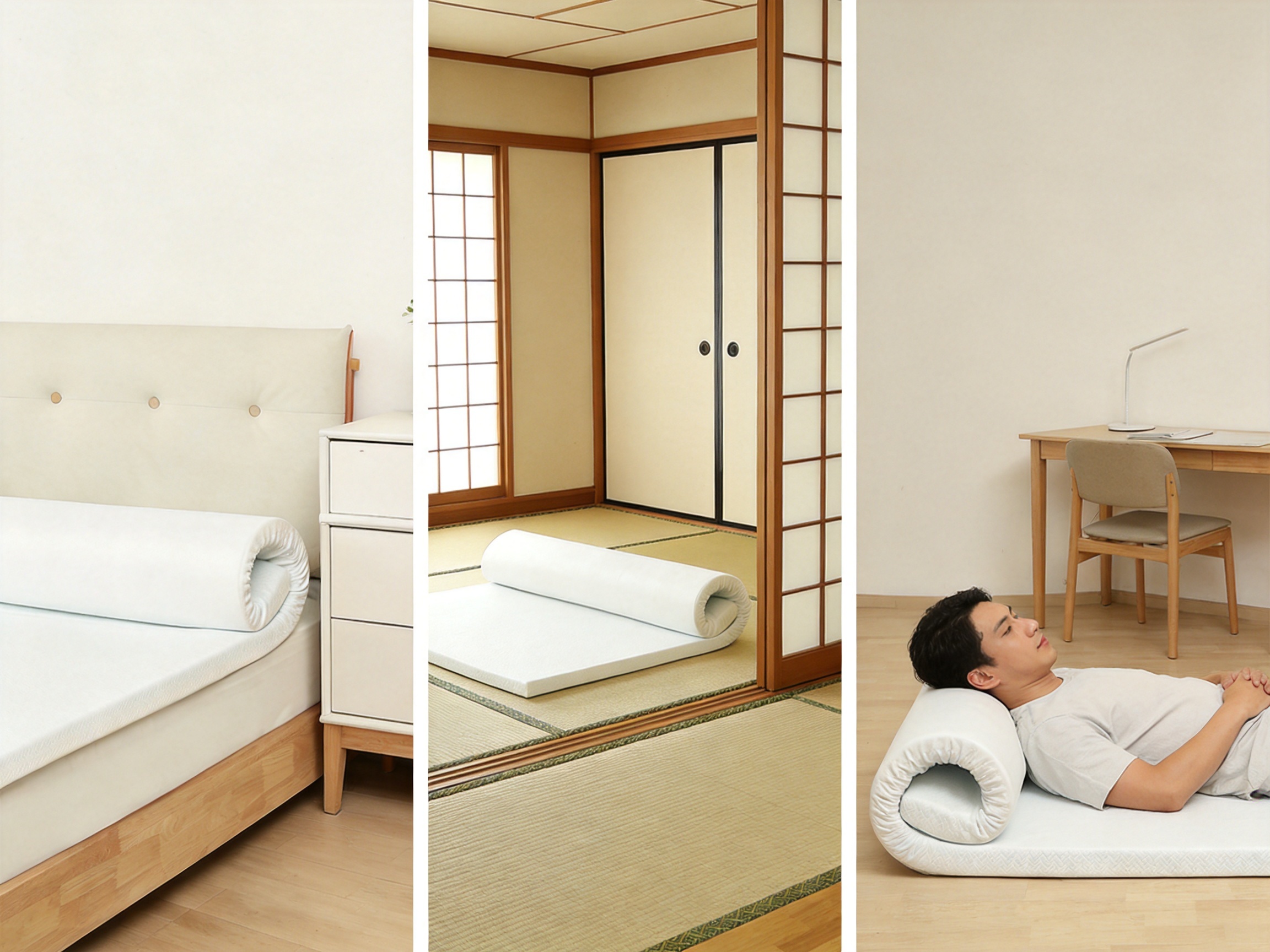
A mattress is more than a soft surface. It is a daily support system that influences sleep quality, pressure distribution, body comfort, and the usability of a bedroom or living space. The gel memory foam tatami mattress described in this article is designed to combine the contouring comfort of memory foam with the cooling benefits of gel particles. Its slim, lightweight structure allows it to be used in different environments, including bedrooms, guest rooms, rental apartments, tatami-style rooms, office rest areas, guesthouses, and temporary sleeping spaces.
Unlike traditional bulky mattresses, this product is built around a 50 mm high-density memory foam layer. The material responds gradually to body weight, conforms to the body’s curves, and provides a balanced feeling between softness and support. Gel particles incorporated into the foam are intended to improve heat dissipation, helping reduce the warm, stuffy sensation that some sleepers experience with conventional memory foam.
The mattress is covered with polyester fiber fabric in a clean white color. Its simple appearance can fit minimalist, modern, and varied interior styles. Because it does not require complicated installation, users can place it directly on a suitable bed frame, tatami surface, platform, or clean floor. It can also be rolled, folded, moved, or stored according to the packaging and handling method selected by the supplier.
Beyond the product itself, the manufacturing background is an important part of its value. Jiangsu Wellcare Household Articles Co., LTD. has developed foam and sleep-related materials for many years. Its experience includes ordinary sponge, memory foam, gel foam, temperature-insensitive memory foam, quick-dry memory foam, flame-retardant sponge, antibacterial sponge, and other specialty materials. This broad material portfolio supports systematic product development rather than relying on a single foam formula.
The following article examines the construction, comfort characteristics, practical uses, customization potential, production capabilities, and competitive advantages of this gel memory foam tatami mattress.
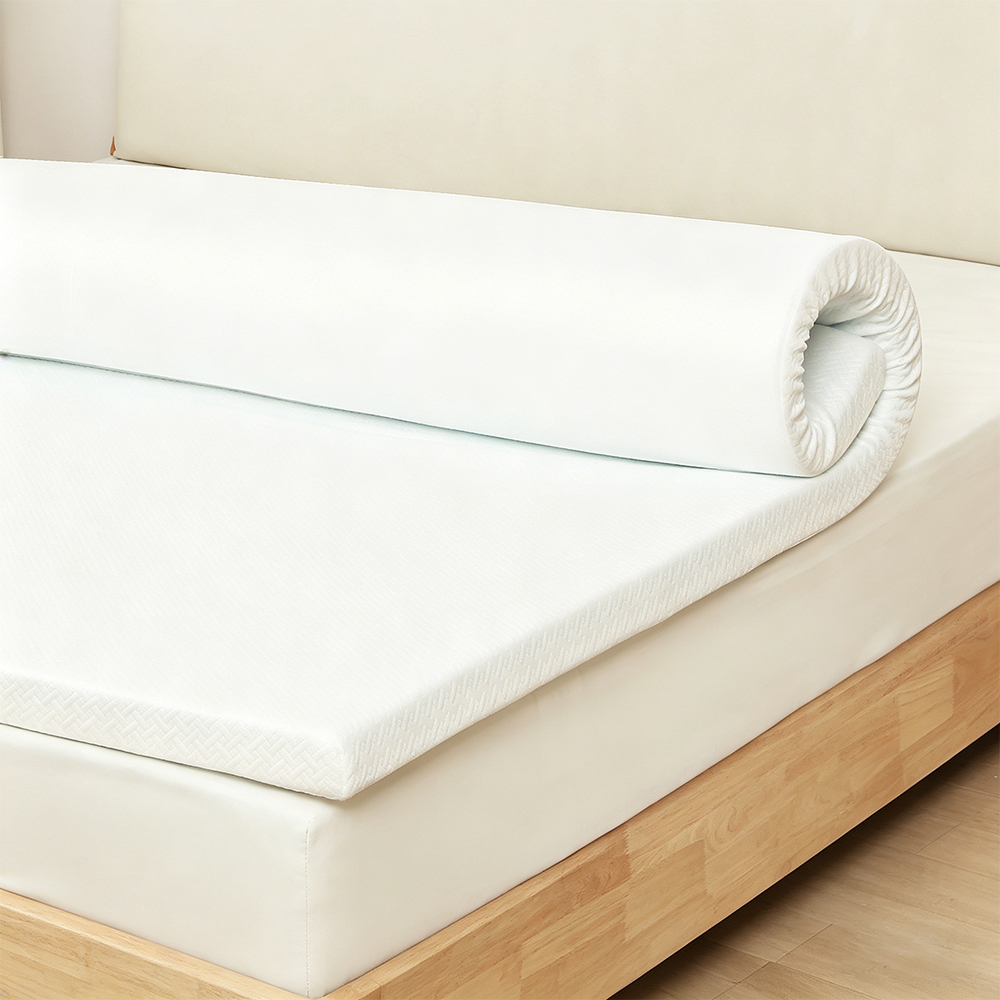
Gel memory foam tatami
1. Product Overview
The gel memory foam tatami mattress is a thin, portable sleeping surface made primarily from memory foam infused with gel particles. The listed product thickness is 50 mm, or approximately 5 cm. This format is thinner than a conventional standalone mattress but thicker and more supportive than a basic quilted mat or thin sleeping pad.
The product is identified as a gel-infused foam mattress and is associated with the item number M011. It is available in a white color and a minimalist modern style. The standard material structure includes a high-density memory foam core and a polyester fiber outer fabric. The mattress is intended to offer adaptive body support while remaining easy to transport and store.
Its design responds to several practical demands in the modern bedding market. Many users want the pressure-relieving feel of memory foam without purchasing a heavy, permanent mattress. Others need an additional sleeping surface for guests, a portable layer for rental housing, or a comfortable rest solution for an office or hospitality setting. A 50 mm foam format can address these needs while taking up less space than a full-depth mattress.
The mattress may be used as a top comfort layer on a firmer bed, as a flexible surface on a tatami mat, or as a low-profile sleeping pad on an appropriate floor. The underlying support surface remains important. A clean, dry, level, and adequately supportive base will help the foam perform more consistently and may also support better ventilation and product durability.
Key Product Specifications
| Attribute | Specification |
|---|---|
| Product type | Gel-infused foam mattress |
| Core material | Memory foam with gel particles |
| Cover material | Polyester fiber |
| Thickness | 50 mm |
| Color | White |
| Style | Minimalist modern |
| Item number | M011 |
| Brand | wellcare |
| Custom processing | Available |
| Drop-shipping support | Not listed as available |
| Product grade | Qualified product |
| Export supply | Available |
Several dimensions are associated with the product information, including 1.8 x 2 x 0.05 m, 190.5 x 99 x 5 cm, and 190.5 x 137.2 cm. Since these entries represent different size formats or may contain incomplete thickness notation, buyers should confirm the exact length, width, thickness, compression packaging, and tolerance before placing an order. This is particularly important for international sales, where bed-size standards vary between regions.
2. The Value of High-Density Memory Foam
Memory foam is a viscoelastic material known for its ability to deform gradually under pressure and recover its shape after the load is removed. When a sleeper lies on the surface, the foam responds to body weight and warmth by creating a more customized contact area. This can help distribute pressure over a broader region instead of concentrating it at the shoulders, hips, knees, or lower back.
The use of high-density foam contributes to the mattress’s supportive character. Density is not the only factor that determines comfort, but a well-formulated high-density foam can provide a more stable and durable foundation than a very low-density foam. It is also more likely to maintain its structural form under repeated use when the formulation, curing process, and finished-product quality are properly controlled.
The slow-rebound behavior described for this mattress is designed to provide a gradual response rather than an abrupt spring-back sensation. This can be useful for sleepers who prefer a stable surface that does not transfer movement as readily as some traditional spring structures. The slow response may also help the surface follow the shape of the body more closely.
At the same time, the mattress is only 50 mm thick. It should therefore be viewed as a slim comfort mattress, mattress topper, or portable sleeping layer rather than automatically being treated as a complete replacement for every type of deep, multi-layer mattress. A user’s body weight, preferred firmness, sleeping position, base surface, and intended duration of use will affect the final comfort experience.
Pressure Distribution and Body Conformity
A flat, rigid sleeping surface can create concentrated pressure in areas where the body projects outward. Memory foam responds by allowing those areas to sink gradually while supporting the surrounding regions. This contouring effect may help create a more even contact pattern and reduce the sensation of pressure points.
For side sleepers, the shoulder and hip areas often require sufficient surface accommodation. For back sleepers, stable lumbar support and even weight distribution may be more important. For occasional stomach sleepers, a surface that is too soft may feel less suitable. The adaptive nature of memory foam gives the product broad applicability, but individual comfort preferences remain important.
The foam does not force the body into one fixed posture. Instead, it is intended to follow the body’s contours while maintaining a stable base of support. This balance between conformity and resilience is one of the main reasons memory foam continues to be used in residential, hospitality, healthcare-related, and travel-oriented sleep products.
3. Gel Particles and Thermal Comfort
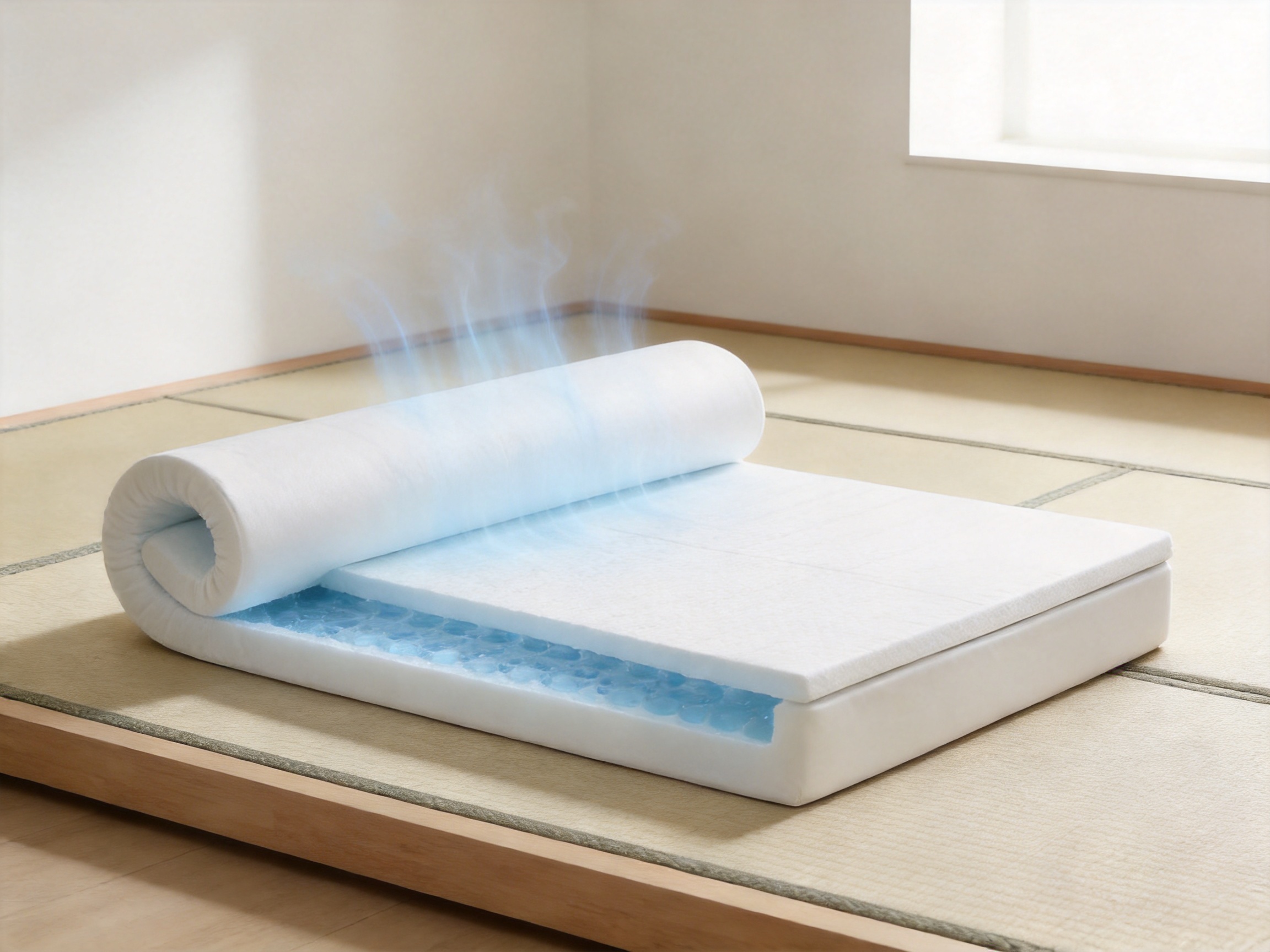
One of the main distinctions between this mattress and a standard memory foam mattress is the inclusion of gel particles. Traditional memory foam can retain warmth because its dense structure limits the speed at which air and heat move through the material. Gel particles are incorporated to improve heat management and help reduce the warm sensation associated with extended contact.
The cooling performance of a gel-infused foam product depends on several factors, including gel distribution, foam density, room temperature, fabric construction, humidity, sleeper characteristics, and the support base. Gel is not a guarantee that the mattress will remain cold throughout the night. Its role is better understood as part of a broader thermal-comfort strategy.
When combined with a suitable cover and adequate ventilation, gel-infused foam may provide a more comfortable sleeping environment than comparable non-gel foam products. The polyester fiber cover offers a smooth contact surface and can support practical cleaning and maintenance procedures when it is designed for removal and washing. Cover specifications should be confirmed with the supplier before purchase.
The ability to dissipate heat is especially relevant for warm climates, bedrooms with limited air conditioning, guesthouses in tropical regions, and users who dislike the enveloping warmth of ordinary memory foam. It also adds value in Southeast Asian, Middle Eastern, and other markets where high ambient temperatures can influence mattress preferences.
Breathability and Moisture Considerations
Thermal comfort is affected by more than the foam core. The sleeping environment should allow air circulation around the mattress whenever possible. A breathable bed base, periodic airing, and avoidance of prolonged exposure to moisture can help maintain a cleaner and more comfortable product.
Because the mattress can be placed on a floor or tatami-style surface, users should lift and air it regularly if the underside has limited airflow. This is especially important in humid environments. Keeping the foam dry can help reduce odor, moisture accumulation, and premature material deterioration.
For commercial users, such as guesthouses and rental operators, a regular inspection schedule is recommended. Staff can check the cover, seams, underside, surface condition, and odor between uses. These basic procedures support hygiene and help identify any issues before the product is returned to service.
4. Advantages Over Conventional Mattress Options
The competitive value of this product comes from the combination of adaptive foam, gel-enhanced comfort, thin construction, and flexible placement. Each feature addresses a limitation commonly found in alternative bedding formats.
Compared with Basic Foam Mats
Basic foam mats may be lightweight and inexpensive, but they often provide limited contouring and may compress unevenly under repeated use. The high-density memory foam structure of this mattress is intended to offer a more supportive and body-responsive surface. The slow-rebound behavior can also create a more refined comfort experience than standard flat foam.
Compared with Conventional Memory Foam
Non-gel memory foam can provide excellent pressure relief, but some users find it warm during long periods of contact. The addition of gel particles is designed to improve heat dissipation. This gives the product a clear functional distinction in markets where cooling and breathability are important purchase factors.
Compared with Heavy Traditional Mattresses
Many traditional mattresses are difficult to move, rotate, store, or transport through narrow spaces. This 50 mm mattress has a lightweight, low-profile structure that is easier to handle. It may be suitable for apartments, dormitory-style rooms, temporary accommodations, and homes where the sleeping arrangement changes frequently.
Compared with Inflatable Beds
Inflatable beds can be convenient for occasional guests but may require pumps, can produce movement or noise, and may lose firmness if air pressure changes. A foam mattress does not require electrical inflation or repeated air adjustment. Its firmness response comes from the material structure rather than from air pressure.
Compared with Thick Mattress Toppers
Thick toppers may offer substantial cushioning, but they usually require more storage space and may be heavier to move. The 50 mm format offers a compromise between improved comfort and efficient handling. It can be attractive to users seeking a modest comfort upgrade rather than a major change in bed height.
Compared with Fixed-Size Bedding Products
The product is associated with multiple size options and can be custom processed. This creates opportunities for distributors, hospitality providers, furniture manufacturers, and project buyers that need dimensions adapted to regional bed standards or specific room layouts.
5. Flexible Applications in Residential and Commercial Settings
The mattress is suitable for more than one room type. Its simple design and portable structure allow it to serve different purposes without requiring complex hardware.
Bedrooms
In a primary bedroom, the mattress may function as a low-profile comfort layer on a bed frame or firm platform. Its white cover and minimalist appearance can blend with modern interiors. Buyers who prefer a softer surface can use it above a firmer base, while users who need a portable sleeping solution can store it when it is not required.
Guest Rooms
A guest room often needs bedding that can accommodate different body types and sleeping preferences. A memory foam surface can offer a broadly comfortable feel, while its compact form allows the room to serve another purpose when guests are not present. The mattress may be placed on a bed, platform, or suitable floor surface depending on the room design.
Rental Apartments
Tenants may move frequently or live in rooms where space is limited. A lightweight foam mattress is easier to carry between properties than a bulky traditional mattress. It can also be useful in furnished rentals, serviced apartments, and temporary housing where flexible bedding is a selling point.
Tatami-Style Rooms
The low-profile construction is naturally compatible with tatami-inspired interiors and floor-level sleeping arrangements. Users should ensure that the tatami or floor is clean and dry, and they should periodically lift the mattress to promote underside ventilation.
Office Rest Areas
Companies may use the mattress in designated nap rooms or employee rest areas. Its body-conforming surface can make short rest periods more comfortable than a hard sofa or basic mat. A protective cover and established cleaning procedures are recommended for shared environments.
Guesthouses and Hospitality Properties
Guesthouses, hostels, and small hotels may value the mattress because it can be used in standard rooms, family rooms, temporary sleeping areas, or accommodation spaces with flexible layouts. The white color presents a clean visual appearance, while the gel-infused foam offers a comfort feature that can distinguish the property from basic budget accommodation.
Children’s and Family Use
The product category information includes children’s foam products, although this specific mattress should be selected for children only after confirming the appropriate size, firmness, cover safety, and applicable standards. Adult supervision, age suitability, and safe placement are important considerations. It should not be used as a substitute for a purpose-designed infant sleep product.
6. Design Details That Support Everyday Use
The product’s white color contributes to a clean and versatile appearance. White bedding can coordinate with neutral, contemporary, Scandinavian, Japanese-inspired, and minimalist design themes. It also makes visible maintenance easier, allowing users or hospitality staff to identify marks or discoloration that require attention.
The polyester fiber cover is described as smooth and skin-friendly. Polyester is commonly used in bedding because it can provide a soft hand feel, stable dimensional performance, and practical resistance to everyday wear. The final experience depends on the fabric weave, finishing treatment, seam quality, and cover construction.
Its low thickness makes the mattress easier to place beneath sheets or protective bedding. It is less likely to significantly change the height of an existing bed than a thick topper. This can be useful for users who want to improve surface comfort without replacing the entire bed system.
The product’s lightweight structure supports movement and storage. It may be carried between rooms, stored in a closet, or prepared for guest use when needed. For shipping and storage, the correct compression and recovery instructions should be followed. Foam products may require time to regain their intended shape after unpacking.
Maintenance Recommendations
Use a fitted sheet or protective cover to reduce direct contact with perspiration, dust, and accidental spills. Follow the supplier’s instructions regarding washing, drying, and removal of the outer cover. The foam core should not be saturated with water unless the manufacturer specifically approves that cleaning method.
Air the mattress in a dry, shaded, well-ventilated area when necessary. Avoid prolonged exposure to strong sunlight, excessive heat, or damp floors. Rotate the mattress periodically if the application and design permit rotation. Inspect the surface and edges for compression, tearing, or fabric damage.
When storing the product, keep it in a dry location and avoid placing heavy objects on top of it for long periods. Do not fold or roll it more tightly than the supplier recommends, because extreme compression may affect recovery and shape retention.
These practices are not unique to this product; they are general measures that help protect foam bedding and preserve its comfort characteristics.
7. Manufacturing Expertise and Material Development
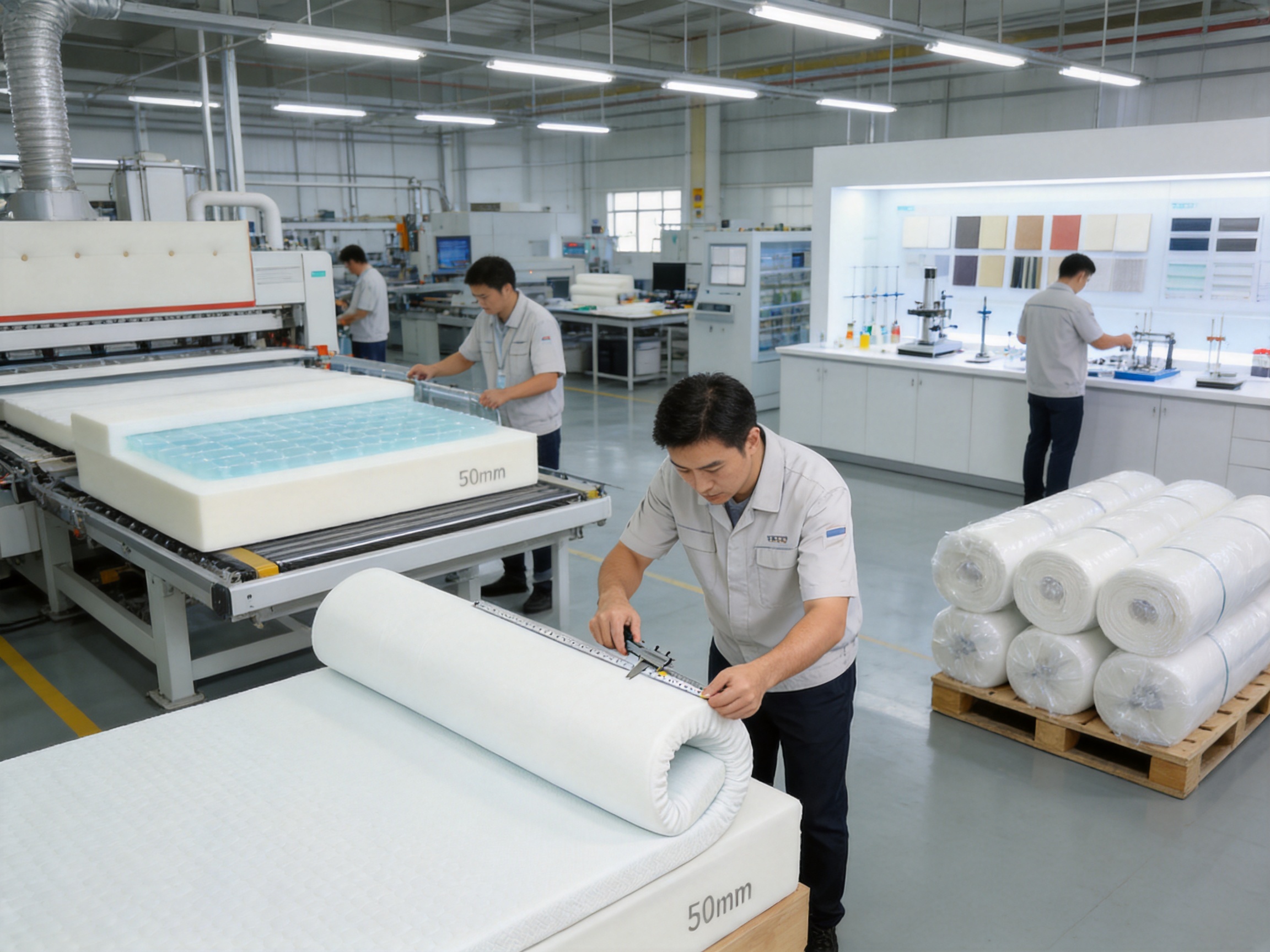
The manufacturer, Jiangsu Wellcare Household Articles Co., LTD., has operated in the sleep-material and healthy-home-product sector for many years. The company’s stated development history began in 1993 as a school-run scientific research enterprise. In 2003, it purchased a 12,000-square-meter factory building and jointly developed a new sponge material with Huai’an Institute of Technology. In 2008, it acquired 50,000 square meters of land for further development.
This history indicates a foundation that combines industrial production with technical research. Such a background is relevant to gel memory foam because product performance depends on more than the visible design. Foam formulation, mixing, foaming, curing, cutting, dimensional control, cover production, and final inspection all influence the consistency of the finished mattress.
The company reports that it is led by a doctor-led research and development team and develops more than one hundred new foam materials each year. Its portfolio includes conventional sponge, memory foam, gel foam, temperature-insensitive memory foam, quick-dry memory foam, flame-retardant sponge, antibacterial sponge, and other materials.
A broad material portfolio can support faster comparison and application-specific development. For example, a mattress intended for a hot climate may require different thermal and moisture characteristics from a cushion designed for indoor seating. A hospitality product may prioritize durability and cleanability, while a children’s product may require additional attention to safety specifications and surface softness.
Formulation and Foam Performance
The production of memory foam generally requires careful control of chemical formulation, mixing ratios, reaction conditions, cell structure, and curing time. These variables affect firmness, rebound speed, density, resilience, odor, dimensional stability, and long-term compression behavior.
For a gel-infused mattress, the distribution of gel particles is particularly important. Consistent dispersion helps avoid localized differences in feel and supports a more uniform thermal and mechanical response. The exact formulation and production parameters are proprietary, but the manufacturer’s experience with both gel foam and memory foam provides a relevant technical foundation.
High-density foam production also requires attention to uniformity throughout the block or molded component. Variations in density or cell structure can lead to differences in comfort and durability. Controlled cutting and inspection help ensure that the final 50 mm layer meets the intended size and thickness specifications.
Product Development and Custom Processing
The product information lists custom processing as available. This may create options for customized dimensions, cover treatments, packaging formats, labels, or other buyer requirements, subject to technical review and order quantities. Customization is useful for importers and private-label customers that serve different regional bed-size systems.
Before requesting customization, buyers should provide precise technical information. This may include finished length and width, thickness tolerance, foam density range, firmness target, cover fabric specification, zipper or closure requirements, logo placement, color, packaging dimensions, carton limits, and applicable testing requirements.
Clear specifications reduce misunderstandings between the buyer and factory. A written sample approval process is also recommended. The approved sample can become a reference for bulk production, particularly when the order involves multiple sizes or customized packaging.
8. Quality, Export Capability, and Supply Strengths
The product is identified as a qualified product and is listed as suitable for cross-border export supply. The company reports that its products have reached markets including the United States, Germany, Japan, the United Kingdom, Canada, Australia, Kuwait, and other regions. This international experience may help the company understand different packaging, documentation, communication, and product adaptation requirements.
The listed downstream sales platforms include eBay, Amazon, Wish, AliExpress, independent sites, Lazada, and other channels. This indicates that the product can be positioned for both business-to-business distribution and online retail programs. The manufacturer does not list drop-shipping support for this item, so resellers should confirm fulfillment arrangements before publishing delivery promises.
International buyers should verify all regulatory and testing requirements for their destination market. Depending on the country and product positioning, these may include textile composition information, flammability requirements, chemical compliance, labeling, packaging marks, import documents, and consumer-product standards. The manufacturer’s available certificates and reports should be reviewed directly for the target market.
Production Stability
A long operating history can support more stable procurement, especially when the buyer needs repeat orders in consistent specifications. The combination of factory resources, research capability, and multiple foam categories may also allow the manufacturer to respond to changes in raw materials or product requirements.
However, professional procurement should still include pre-production confirmation, sample testing, batch inspection, and shipment documentation. A manufacturer’s experience is valuable, but every specific model and customized order should be verified according to its own technical requirements.
Sustainability Orientation
The company states that it invests in eco-friendly energy systems and improves environmental management practices. It aims to integrate respect for nature into business operations and create environmental value beyond basic compliance.
For buyers with sustainability programs, it is appropriate to request specific evidence related to energy management, waste handling, material efficiency, packaging reduction, factory audits, and relevant environmental certifications. General sustainability statements are a positive starting point, while documented performance provides the basis for responsible purchasing decisions.
9. Why the Product Can Compete in the Global Market
The global mattress market includes premium mattresses, economical foam pads, mattress toppers, roll-packed products, hospitality bedding, and specialized sleep accessories. A successful product must offer a clear reason for buyers to choose it. This gel memory foam tatami mattress has several marketable strengths.
First, it combines two widely recognized consumer benefits: pressure-adaptive memory foam and improved thermal comfort from gel particles. This combination creates a stronger value proposition than ordinary foam while remaining simpler and more affordable to position than complex multi-layer mattresses.
Second, its 50 mm profile allows it to serve multiple price points and use cases. It can be sold as a mattress topper, a portable guest mattress, a tatami sleeping layer, or a compact bedding solution. Product naming and packaging can be adjusted to match the target market, provided that all descriptions accurately reflect the construction.
Third, the lightweight design reduces handling challenges. Products that are easier to move, store, and ship can be attractive to online retailers, rental operators, student housing providers, and hospitality businesses. Lower physical complexity may also simplify inventory management.
Fourth, the white minimalist appearance has broad visual appeal. Retailers do not need to build a highly specialized design story around the product. It can be presented as clean, modern, adaptable, and suitable for a variety of rooms.
Fifth, the manufacturer offers custom processing and has experience with multiple export markets. This can support private-label development, regional size adjustments, and project-based orders. Buyers can potentially create differentiated product lines without building their own foam manufacturing infrastructure.
10. Purchasing and Product-Selection Guidance
Buyers should begin by identifying the intended use. A product used as a topper on an existing mattress may require different firmness expectations from one placed directly on a tatami mat. A guesthouse may prioritize cleanability and replacement cost, while a consumer may focus on pressure relief and cooling.
Confirm the exact size before ordering. The supplied information includes several dimension entries, and these should be clarified with the manufacturer. Confirm whether each dimension represents a separate option, whether the 0.05 m value refers to thickness, and whether the listed centimeter measurements are complete.
Request details about foam density, firmness, resilience, cover construction, zipper design, compression packaging, recovery time, and acceptable dimensional tolerance. Density and firmness should not be treated as interchangeable terms. A buyer may need both values to compare this product with competing mattresses.
Ask whether the cover is removable and machine washable. If a buyer plans to supply hotels, offices, or shared facilities, this information may significantly influence the operating cost and hygiene program.
Request a sample before confirming a large order. Test the sample on the intended base surface and allow sufficient time for unpacking and recovery. Evaluate surface feel, odor, edge appearance, cover quality, dimensional accuracy, heat response, and movement during use.
For private-label or customized orders, confirm artwork, labeling language, carton dimensions, barcode requirements, country-of-origin marking, warranty wording, and packaging protection. These details should be finalized before production begins.
11. Frequently Asked Questions
What is a gel memory foam tatami mattress?
It is a slim mattress made with memory foam containing gel particles. The foam is designed to conform to the body, while the gel component is intended to help improve heat dissipation. Its low-profile structure makes it suitable for beds, tatami surfaces, platforms, and certain floor-based sleeping arrangements.
How thick is this mattress?
The listed thickness is 50 mm, equal to approximately 5 cm. Buyers should confirm the final thickness and tolerance for each size and production order.
Can it be used directly on the floor?
It can be placed on a clean, dry, level floor when the application allows. To support hygiene and ventilation, lift and air the mattress regularly, especially in humid environments. A suitable base may provide better airflow and longer-term performance.
Is it a complete replacement for a traditional mattress?
It can serve as a sleeping surface in some settings, but suitability depends on the user, base, body weight, sleeping position, and comfort preference. Because it is 50 mm thick, many users may prefer it as a topper, portable mattress, or low-profile bedding layer.
Does the gel make the mattress cold?
No product should be assumed to remain cold throughout the night. Gel particles are intended to support heat dissipation and reduce the warm sensation associated with some conventional memory foam. Room temperature, bedding, humidity, and the sleeper’s body all influence thermal comfort.
What is the cover made from?
The listed cover material is polyester fiber. The product is described as having a smooth, skin-friendly fabric surface. Buyers should confirm whether the cover is removable, washable, treated, or customized for a particular application.
What color is available?
The listed color is white. This neutral shade is designed to coordinate with minimalist modern interiors and a wide range of bedding styles.
Can the mattress be customized?
Custom processing is listed as available. Potential options may include dimensions, packaging, labels, fabrics, and other specifications, depending on technical feasibility and order quantity. Buyers should discuss all requirements with the manufacturer before production.
Does the supplier support drop shipping?
The product information states that drop-shipping support is not available. Resellers should confirm the shipping and fulfillment model directly before accepting customer orders.
Where can this product be used?
Potential applications include bedrooms, guest rooms, rental apartments, tatami-style rooms, office nap areas, guesthouses, and other spaces requiring a flexible sleeping surface. The product may also be considered for project and hospitality use after confirming the required standards.
How should the mattress be maintained?
Use a protective sheet or cover, keep the product dry, ventilate it periodically, avoid excessive heat, and follow the supplier’s cleaning instructions. Do not saturate the foam core unless an approved cleaning method is provided.
What makes the manufacturer suitable for international buyers?
The company reports a long history in foam research and manufacturing, a broad material portfolio, factory resources, custom-processing capability, and export experience across Europe, Southeast Asia, North America, the Middle East, and other regions. Buyers should still verify current certifications, testing documents, lead times, and quality-control procedures for the specific order.
12. Conclusion
The gel memory foam tatami mattress offers a practical combination of adaptive support, gel-enhanced thermal comfort, lightweight handling, and minimalist design. Its 50 mm construction makes it appropriate for users seeking a low-profile mattress, portable guest bedding, or a comfort layer that can be placed on a bed frame, tatami surface, platform, or suitable floor.
Its strongest competitive advantage is the balance between memory foam comfort and everyday flexibility. The high-density foam is designed to conform gradually to the body and provide pressure-relieving support, while the gel particles are intended to address the heat retention concerns associated with ordinary memory foam. The polyester fiber cover and white appearance add a clean, versatile finish.
For distributors, hospitality buyers, furniture businesses, and private-label brands, the product also benefits from the manufacturer’s experience in foam material development. The company’s history, research resources, diverse foam portfolio, factory investment, custom-processing capability, and international supply experience provide a foundation for further product development and global distribution.
As with any bedding product, the best result depends on accurate size selection, appropriate base support, clear technical specifications, correct care, and compliance with destination-market requirements. When these factors are properly managed, the gel memory foam tatami mattress can serve as a versatile and commercially attractive solution for modern sleep and rest environments.
References
1. Product specification and technical description supplied for the Gel Memory Foam Tatami Mattress, item M011.
2. Manufacturer information supplied for Jiangsu Wellcare Household Articles Co., LTD., including company history, product categories, research activities, and export capabilities.
3. General principles of viscoelastic memory foam behavior, pressure distribution, density, resilience, and shape recovery in bedding applications.
4. General industry guidance concerning gel-infused foam, thermal comfort, ventilation, moisture management, and mattress maintenance.
5. General procurement practices for customized foam products, including sample approval, dimensional verification, packaging review, and destination-market compliance.
Product: Gel memory foam tatami

PREV:Eight-Piece Foldable Children’s Building Block Sofa Set: A Safe, Creative, and Space-Saving Solution for Modern Families
NEXT:Ocean Cool Multifunctional Dog Bed: A Complete Guide to Comfort, Cooling, and Everyday Versatility
NEXT:Ocean Cool Multifunctional Dog Bed: A Complete Guide to Comfort, Cooling, and Everyday Versatility
Interested in cooperation or have questions?
Related News
WELLCARE was founded in 2003, boasting over a decade of profound and extensive experience.
Quick Links
Product
Media Centre
Contact Information
- [email protected]
- +86-517-84998062
- +86-15152354988
- No. 168 Nenjiang Road, Huaiyin District, Huai'an City, Jiangsu Province, China
Copyright © Jiangsu Wellcare Household Articles Co., LTD. All Rights Reserved.
Custom Memory Gel Mattress Manufacturers
