

 English
 日本語
 Español



Shen Yueqiao — After-Sales Quality Support Supervisor

Home / Author / Shen Yueqiao — After-Sales Quality Support Supervisor / Foldable Memory Foam Seat Cushion: Portable Comfort for Work, Travel, and Everyday Support
Product Category
NEW Category
Contact us
Foldable Memory Foam Seat Cushion: Portable Comfort for Work, Travel, and Everyday Support
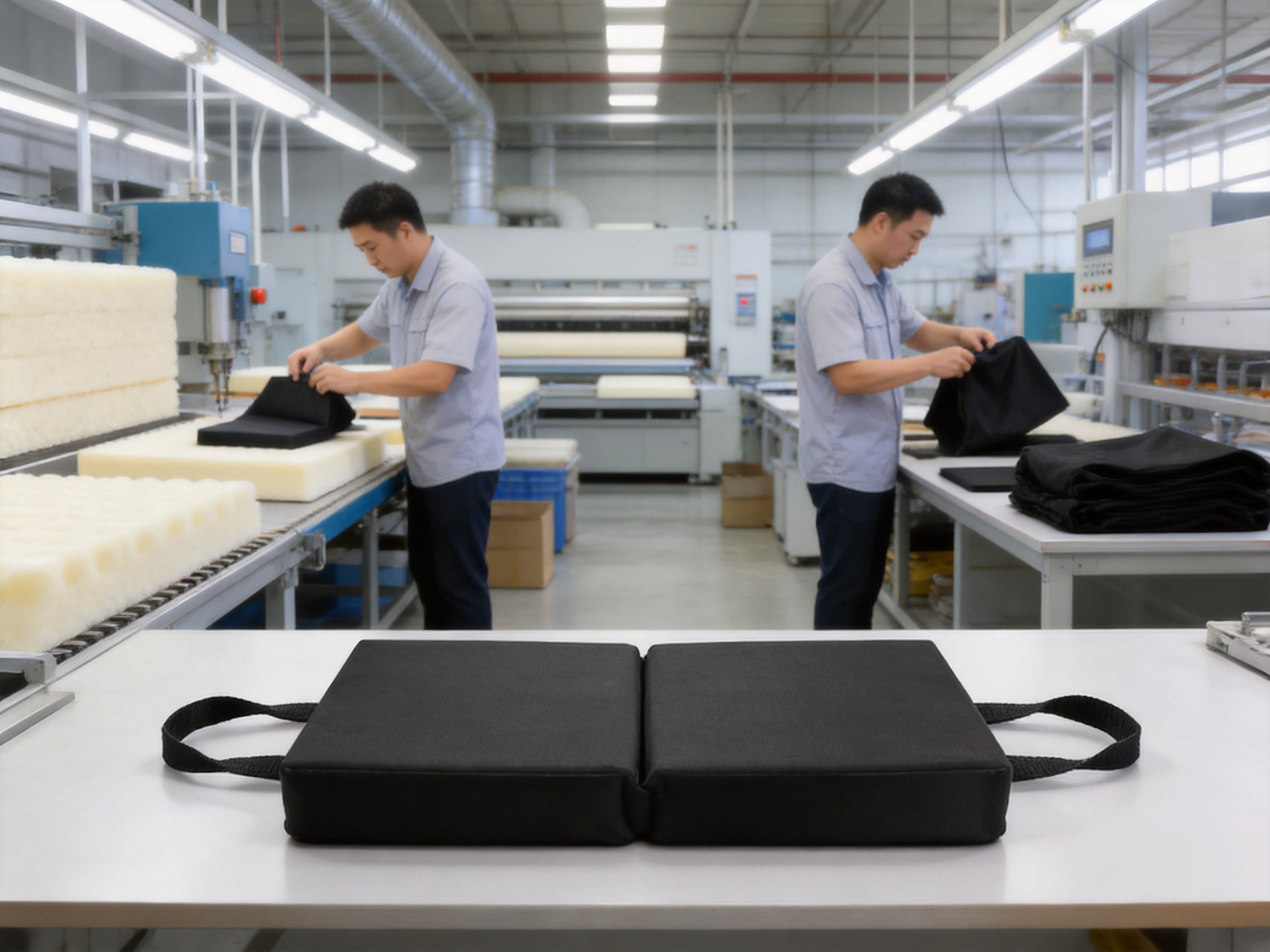
Long periods of sitting can place continuous pressure on the buttocks, pelvis, and lower back. Office workers, drivers, travelers, students, outdoor enthusiasts, and people who spend time in temporary seating environments often need more than a thin decorative pad. They need a cushion that combines pressure distribution, stable support, portability, durability, and easy maintenance in one practical design.
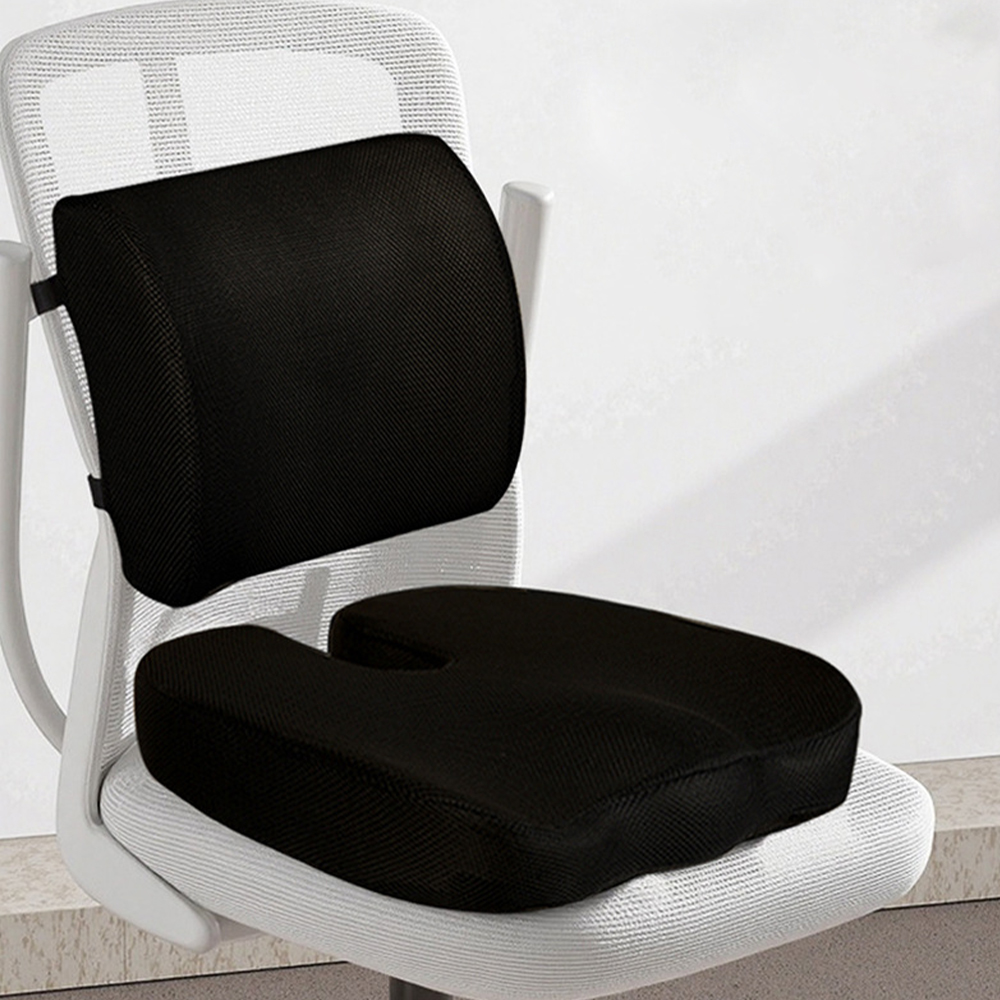
The foldable memory foam seat cushion is designed to answer that need. With a high-density slow-rebound memory foam core, a foldable structure, double-layer carrying handles, and a removable polyester-fiber cover, it provides a versatile seating solution for both fixed and mobile environments. Measuring 20 × 45 × 7.5 centimeters and finished in simple black, the cushion is compact enough for transport while offering meaningful support for everyday sitting.
Unlike basic flat chair pads that mainly add softness, this product is engineered around the user’s sitting posture and pressure points. The slow-rebound foam conforms to the body’s curves, distributes pressure more evenly around the sitting bones, and helps create a more stable base. It can be used as a chair cushion, lumbar support pad, temporary floor mat, seat booster, or compact stool cushion, making it suitable for offices, vehicles, outdoor settings, travel, and home use.
Behind the product is Jiangsu Wellcare Household Articles Co., LTD., a manufacturer with experience in foam materials, sleep products, and healthy home goods. The company combines material research, formulation development, foam processing, cover manufacturing, quality control, and customization capabilities to create products for international markets.
Why a Portable Seat Cushion Matters
Modern lifestyles require people to sit in many different places. An office chair may provide reasonable support during the workday, but a waiting-room seat, airplane seat, stadium bench, dining chair, car seat, or outdoor platform may offer very different levels of comfort. Some surfaces are too hard, some are uneven, and others lack sufficient support for the pelvis and lower back.
A portable cushion allows users to improve these seating conditions without replacing the entire chair. However, portability alone is not enough. A cushion that is easy to carry but collapses rapidly may provide little long-term value. Similarly, a cushion that is comfortable at home but bulky and difficult to transport may not be practical for travel or outdoor use.
The foldable memory foam seat cushion addresses these common limitations by combining a supportive foam structure with a space-saving form. When folded, the product becomes easier to store in a vehicle, cabinet, travel bag, or office drawer. When opened, it provides a broader surface for seating and can also be adapted to different temporary uses.
The design is especially useful for people who change locations frequently. A commuter may use it in an office chair during the day and in a car during the evening. A traveler may take it on trains, airplanes, or long road journeys. An outdoor user may place it on a bench, platform, or hard ground surface. Its relatively low weight and integrated handles make these transitions simple.
Product Overview
This chair cushion belongs to the memory foam cushion category and is identified as item C014. Its primary filler is memory foam, while its outer material is polyester fiber, also known as Terylene. The product uses a solid black color and modern minimalist styling, allowing it to fit easily into business, residential, automotive, and outdoor environments.
| Attribute | Product Information |
| Product type | Foldable memory foam seat cushion |
| Product category | Memory foam chair cushion |
| Item number | C014 |
| Dimensions | 20 × 45 × 7.5 cm |
| Filler | Memory foam |
| Filler content | 100% |
| Cover material | Polyester fiber |
| Color | Black |
| Pattern | Solid color |
| Style | Modern minimalist |
| Structure | Foldable |
| Carrying feature | Double-layer carrying handles |
| Cover care | Removable and washable |
| Customization | Size, color, and fabric adjustments available |
| Typical applications | Office, vehicle, travel, outdoor activities, home, and temporary seating |
The dimensions provide a balance between usable seating area and portability. At 7.5 centimeters in thickness, the cushion is substantial enough to create separation from hard seating surfaces while remaining manageable for folding and transport. The 20-centimeter width and 45-centimeter length support use on a variety of chairs, benches, and narrow seating areas.
Because the product is made in a solid black finish, it has a neutral appearance that does not easily show minor marks from everyday use. The restrained design can complement office furniture, car interiors, hotel environments, outdoor equipment, and modern home décor without drawing excessive attention.
Memory Foam Support and Pressure Distribution
The central advantage of the cushion is its slow-rebound memory foam core. Memory foam is a viscoelastic material that responds to body weight and temperature by deforming gradually rather than immediately collapsing. This enables the cushion to conform to the user’s sitting shape and create more continuous contact between the body and the seating surface.
When a person sits on a hard or poorly shaped surface, pressure can become concentrated around a small number of contact points, particularly the ischial tuberosities, commonly known as the sitting bones. Concentrated pressure may contribute to discomfort during extended sitting. A supportive memory foam layer helps distribute part of that load over a broader area.
The product’s high-density foam structure is intended to provide both cushioning and stability. A very soft cushion may feel comfortable for a short period but can allow the pelvis to sink too deeply, reducing postural stability. In contrast, a well-structured high-density cushion offers resistance beneath the body while still adapting to individual contours.
The slow-rebound response also helps the product maintain a shaped support profile during use. After the user changes position or stands up, the foam gradually returns toward its original form. This characteristic supports repeated daily use and helps the cushion retain a consistent feel over time when properly used and stored.
It is important to distinguish pressure-relieving comfort from medical treatment. The cushion is designed to improve seating support and comfort, but it is not a medical device and should not be presented as a cure for back pain or other health conditions. Users with persistent pain or diagnosed spinal conditions should seek advice from a qualified healthcare professional.
Advantages Over Basic Chair Pads
Many traditional chair pads are made from thin cotton, polyester batting, low-density sponge, or loosely filled textile materials. These products may add surface softness, but they do not always provide consistent support. Filling can compress unevenly, shift inside the cover, or lose thickness after repeated use.
The foldable memory foam cushion offers several practical advantages over such basic alternatives. First, the foam core is a unified support layer rather than a loose filling that can migrate. Second, the slow-rebound material responds to the body’s contours instead of remaining completely flat. Third, the high-density structure is designed to resist rapid compression during extended sitting.
Another advantage is its multipurpose format. A conventional chair pad usually serves one primary purpose: adding softness to a chair. This product can also function as a lumbar support pad, seat booster, temporary floor mat, or small temporary stool cushion. The ability to change roles increases its value for consumers who need flexible household or travel products.
Portability is another point of differentiation. A non-foldable cushion can occupy significant space in a suitcase or vehicle. The foldable construction reduces the storage footprint and makes the product easier to carry between locations. Integrated handles further improve mobility, eliminating the need for an additional carrying bag in many situations.
Maintenance is also important for products used outdoors, in vehicles, or in shared spaces. The removable polyester cover can be taken off for cleaning, helping users manage dust, light spills, and everyday contact more easily than with a permanently sewn cover. The wear-resistant outer fabric is designed to support repeated handling and regular use.
These features create a more complete product proposition: supportive enough for prolonged sitting, compact enough for transport, versatile enough for multiple applications, and practical enough for routine maintenance.
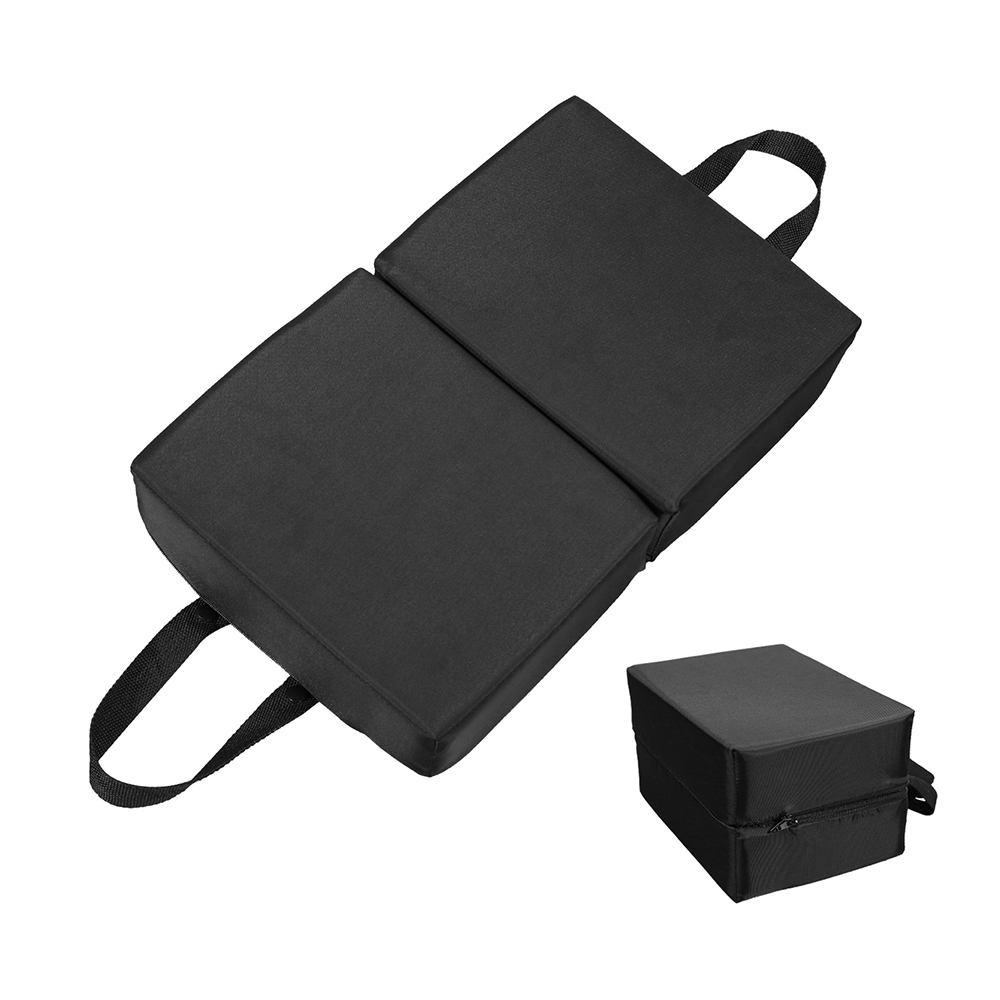
Foldable memory foam seat cushion
Foldable Construction for Mobile Use
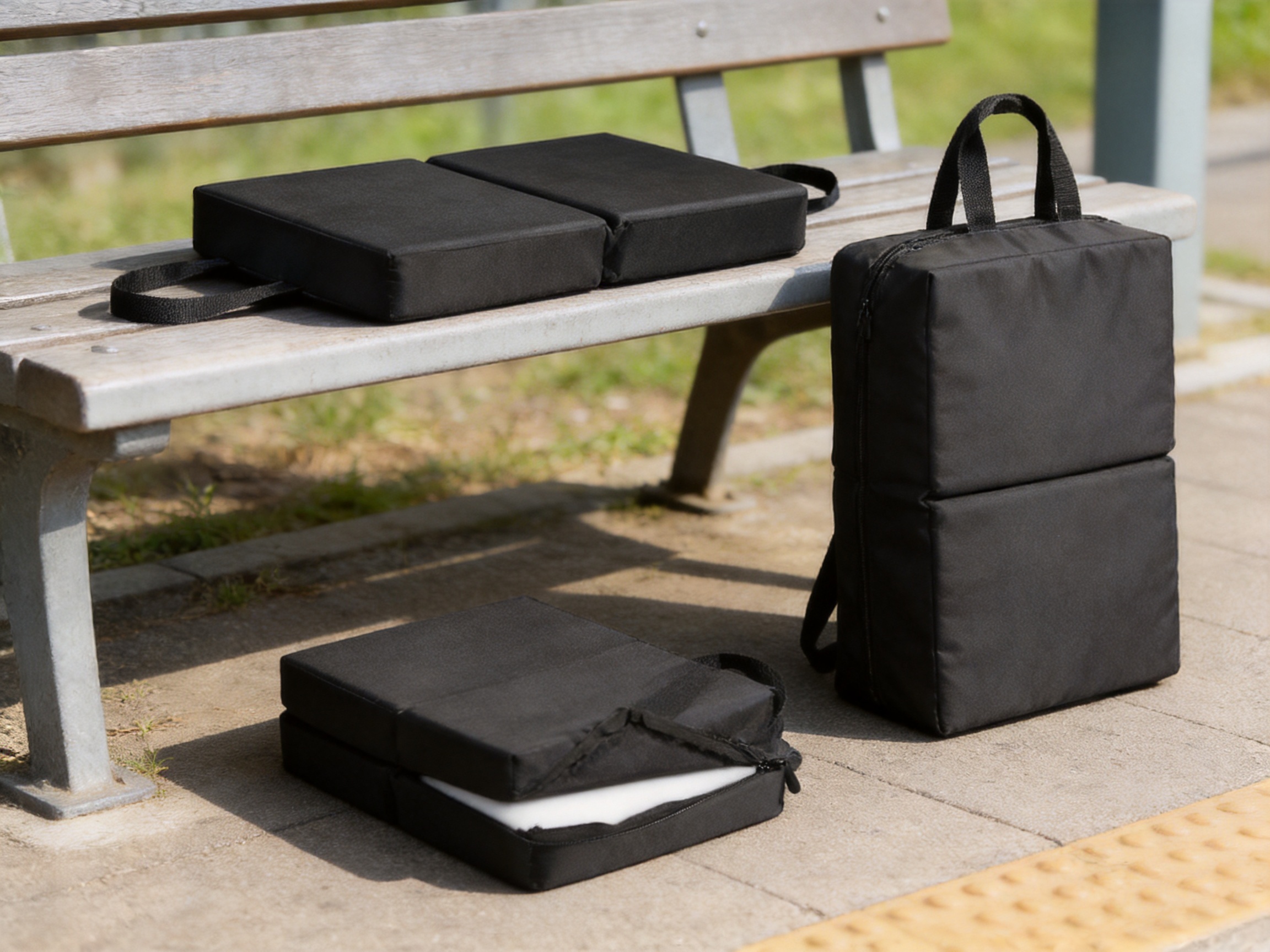
The foldable structure is one of the product’s defining features. Folding makes a long cushion easier to place in a backpack, luggage compartment, car trunk, office cabinet, or storage shelf. It also allows users to carry the cushion by hand without treating it as an oversized accessory.
For commuters, a compact folded form can reduce inconvenience when moving between home and work. For drivers, the cushion can remain in a vehicle and be taken out when needed. For travelers, the folding design makes it easier to include supportive seating in a larger luggage system. For outdoor users, it can be transported with picnic equipment, camping supplies, or sports accessories.
The folding capability also supports rapid conversion between applications. Opened flat, the product provides a seating surface. Folded or partially folded, it may be used as a raised support, temporary rest pad, or compact cushioning layer. The exact use should depend on the user’s comfort, balance, and safety requirements, but the structure allows greater flexibility than a fixed-format pad.
Foldability must be supported by durable construction. Repeated opening and closing can place stress on seams, fabric panels, handles, and the areas where the cushion bends. A professional manufacturing process therefore needs to consider foam recovery, cover fit, stitching strength, edge finishing, and the relationship between the folding line and the internal foam structure.
Wellcare’s experience in foam materials and household products provides a foundation for addressing these design considerations. Product development can evaluate not only the initial feel of the cushion but also its behavior during handling, storage, and repeated everyday use.
Carrying Handles and Everyday Convenience
The double-layer carrying handles are a small but meaningful design element. A cushion without a handle often has to be carried under one arm or held by its edges. This can be inconvenient when the user is also carrying a laptop, shopping bag, outdoor equipment, or luggage.
With integrated handles, the cushion can be picked up quickly and carried in a more controlled manner. The double-layer construction is intended to enhance handling strength and user confidence. It also reinforces the product’s identity as a portable support accessory rather than a stationary decorative cushion.
Handles are particularly valuable in workplaces, schools, transportation settings, and event venues where users may need to move frequently. The user can take the cushion from a storage area to a chair, carry it from a vehicle to an outdoor location, or move it between rooms without additional packaging.
In a commercial or hospitality environment, handles can simplify room setup and storage. Hotels, conference centers, waiting areas, and rental facilities may use portable cushions to provide additional comfort without permanently modifying every seat. For retailers, the handle is also a visible feature that communicates convenience at the point of sale.
Removable Polyester Cover
The outer cover is made from polyester fiber, a material widely used in household textiles because of its strength, dimensional stability, and ease of care. In this product, the cover contributes to durability and creates a protective surface around the foam core.
The fabric is described as wear-resistant and non-slip. These properties are useful for a cushion that may be placed on office chairs, vehicle seats, wooden benches, outdoor platforms, and other surfaces. A surface with appropriate friction can help reduce unwanted movement, although users should always check that the cushion is positioned securely before sitting.
The removable construction supports cleaning and routine hygiene. Unlike a fixed cover that requires surface-only cleaning, a removable cover can be taken off for washing according to the care instructions supplied with the product. Regular care can help preserve the appearance of the black fabric and reduce the accumulation of dust and everyday residue.
Polyester also supports consistent color presentation. The solid black design is low-key and versatile, making it appropriate for both personal and commercial applications. It can blend with dark office furniture, automobile interiors, outdoor equipment, and contemporary home furnishings.
Cover design must balance several requirements. The fabric needs to be sufficiently durable for handling, sufficiently flexible for folding, and properly fitted to the foam so that it does not become excessively loose or distorted. A professional manufacturer can adjust fabric weight, texture, stitching, zipper or closure construction, and dimensions according to the target market.
Multiple Application Scenarios
Office and Workplace Seating
Office workers may remain seated for many hours each day. Even an ergonomic chair can feel uncomfortable if the seat surface is too firm, worn, or poorly matched to the user. The cushion can be placed on an office chair to add a layer of pressure-distributing support.
Its black minimalist appearance is suitable for professional settings. It does not introduce bright colors or decorative patterns that may conflict with office interiors. When the workday ends, the user can fold the cushion and store it under a desk, in a cabinet, or in a personal bag.
Vehicle Seating
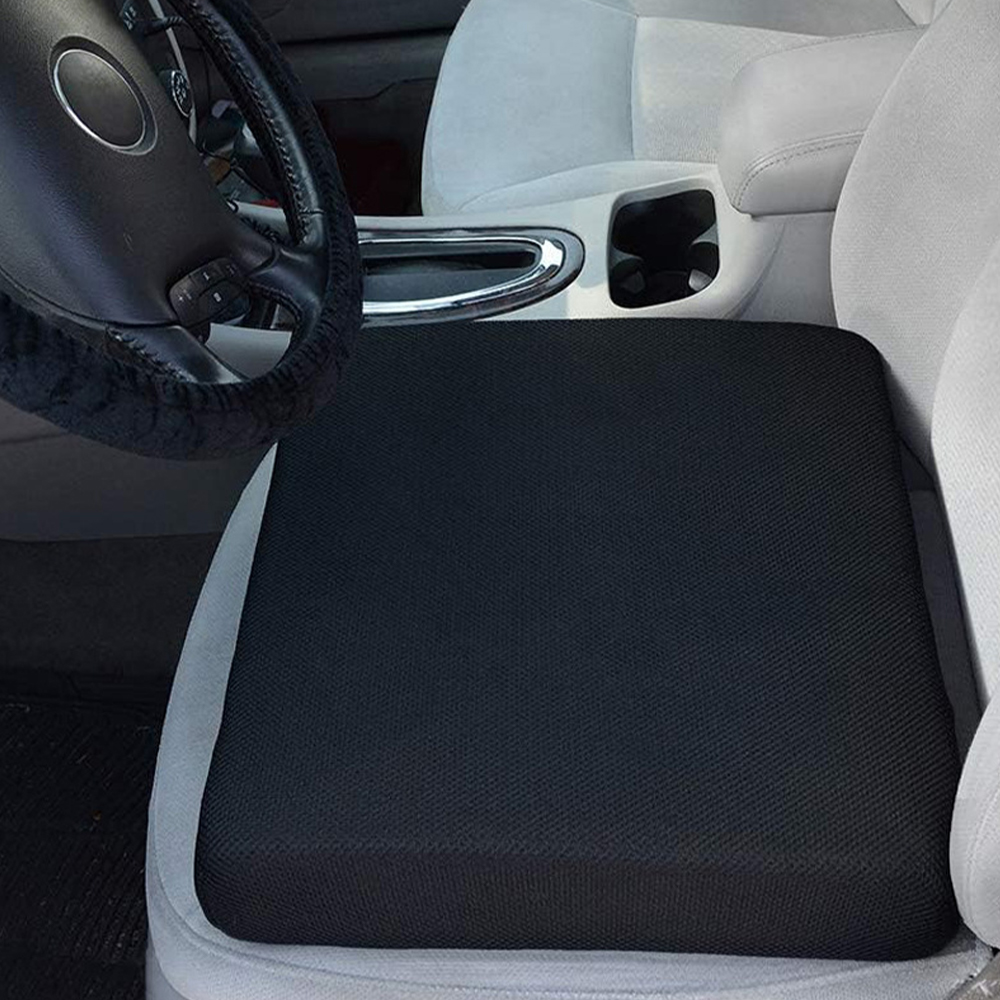
Drivers and passengers often experience discomfort during long journeys, particularly when vehicle seats are firm or lack sufficient cushioning. The foldable cushion can be placed on a suitable car seat to create an additional support layer. Its compact format makes it easier to keep in the vehicle without using excessive storage space.
Users should ensure that any cushion placed in a vehicle does not interfere with seat belts, pedals, steering controls, airbags, or the driver’s ability to operate the vehicle safely. It should be positioned securely and removed if it affects driving posture or control.
Travel and Commuting
Airports, train stations, buses, airplanes, and public waiting areas do not always offer comfortable seating. A portable cushion gives travelers a personal support option that can be used in different locations. The carrying handles make it easy to move through terminals, stations, hotels, and temporary accommodations.
The foldable design is especially useful for people who want improved comfort without carrying a large travel accessory. It can be placed in luggage during the journey and taken out when needed.
Outdoor Activities
Outdoor benches, stadium seats, camping platforms, picnic areas, and event seating may be hard, cold, or uneven. The cushion can add a layer between the user and the surface. The wear-resistant fabric is intended to support regular handling in outdoor environments, although the product should be protected from prolonged exposure to rain, mud, excessive moisture, and direct sunlight.
For outdoor use, users should place the cushion on a stable and reasonably clean surface. It should not be treated as a flotation device, climbing aid, or substitute for specialized safety equipment.
Home and Temporary Seating
At home, the cushion can be used on dining chairs, wooden stools, window seats, floor areas, or temporary seating arrangements. Its neutral appearance allows it to be moved between rooms without requiring a specific interior style.
In small apartments or multipurpose rooms, foldability can be valuable because products must often be stored after use. A single cushion that serves several household purposes can reduce the need for multiple specialized pads.

Manufacturing and Material Development Strengths
Jiangsu Wellcare Household Articles Co., LTD. was founded in 2003 and focuses on high-performance sleep materials and healthy home products. The company’s capabilities extend beyond final product assembly. Its development work includes foam research, material formulation, structural optimization, and the production of finished household goods.
The company is supported by a doctor-led research and development team and reports developing more than one hundred new foam materials each year. Its material portfolio includes ordinary sponge, memory foam, gel foam, temperature-insensitive memory foam, quick-dry memory foam, flame-retardant sponge, antibacterial sponge, and other foam solutions.
This breadth of material knowledge is relevant to the foldable cushion because the performance of a finished seat product depends heavily on the foam formulation. Density, resilience, compression behavior, temperature response, recovery speed, cell structure, and long-term stability all influence how the cushion feels and performs.
Manufacturing a reliable memory foam cushion is not simply a matter of cutting foam to size and placing it inside a cover. The manufacturer must select a foam formulation that provides an appropriate balance between softness and support. It must also ensure that the foam is cut consistently, the dimensions match the cover, the folding structure operates correctly, and the textile components withstand repeated use.
Wellcare’s background in foam research allows product development to begin with material performance rather than relying only on external components. This can support more consistent control over the relationship between the foam core and the finished product design.
From Research to Finished Cushion
The product development process can be understood as a series of coordinated stages. The first stage is application analysis. Engineers and product specialists identify the intended use environments, expected loads, portability requirements, cleaning needs, and target price range.
The second stage is foam selection and formulation evaluation. A memory foam cushion for a portable chair application may require different performance characteristics from a mattress layer, pillow, pet product, or industrial sponge. The foam must be comfortable under localized pressure but stable enough for repeated sitting and folding.
The third stage is structural design. Designers determine the overall dimensions, fold position, thickness, cover pattern, handle placement, and edge treatment. The structure must be convenient for the user while remaining compatible with cutting, sewing, assembly, packaging, and transportation.
The fourth stage is prototype evaluation. Samples may be checked for initial comfort, rebound behavior, dimensional accuracy, folding performance, handle strength, cover fit, appearance, and ease of cleaning. Adjustments can then be made to the foam, fabric, pattern, or assembly process.
The fifth stage is production preparation. Standardized procedures are established for material inspection, cutting, sewing, assembly, and finished-product inspection. Production staff and quality personnel work from defined specifications to reduce variation between batches.
The final stage is packaging and shipment preparation. Since the product is intended for export markets, packaging must protect the foam, fabric, handles, and appearance during storage and transportation. The company serves customers in Europe, Southeast Asia, North America, and other regions, requiring attention to international supply requirements.
Quality Considerations for Foam Cushions
Several quality factors affect the customer’s experience with a memory foam seat cushion. Dimensional accuracy is essential because a cover that is too tight can restrict folding or distort the foam, while a cover that is too loose may create wrinkles and reduce stability.
Foam consistency is also important. If different sections of the cushion have noticeably different density or recovery behavior, users may experience uneven support. Controlled raw-material preparation and production conditions help maintain more uniform performance.
Compression recovery should be evaluated after the cushion has been subjected to repeated loading. A quality product should be designed to return toward its original shape rather than remaining permanently flattened after normal use. Actual service life depends on user weight, frequency of use, storage conditions, temperature, and other factors.
Cover durability includes fabric abrasion resistance, seam strength, closure performance, handle attachment, and resistance to routine cleaning. Because the cushion is designed for mobile environments, these details are particularly important. A portable product may be handled more often than a cushion that remains in one chair.
Visual inspection is another part of quality control. The finished product should have clean stitching, an even black color, properly aligned panels, a smooth appearance, and secure handles. Consistent visual quality is important for both consumer confidence and commercial buyers.
Customization for Different Markets
The product supports customization of size, color, and fabric. This allows distributors, furniture brands, hospitality companies, vehicle-accessory businesses, and retailers to adapt the cushion to their target customers.
Size customization may be useful when a buyer wants a cushion designed for a particular chair, bench, vehicle seat, or packaging format. A larger model may be preferred for broad office chairs, while a narrower format may suit transportation or compact furniture.
Color customization can support private-label programs, coordinated product collections, seasonal sales, or commercial branding requirements. Although the standard product uses black, alternative colors may be considered according to production feasibility, material availability, and order requirements.
Fabric customization can address different usage conditions. A buyer may request a softer textile for home use, a more technical surface for outdoor applications, a moisture-resistant fabric for travel, or a particular texture for a hospitality product. Fabric selection should always be evaluated alongside folding, washing, abrasion, and colorfastness requirements.
Customization is most effective when specifications are clearly defined. Buyers should communicate target dimensions, foam feel, expected loading, intended environment, cover construction, washing requirements, packaging preferences, labeling needs, and inspection standards before production begins.
The company’s ability to provide customized processing is a strength for business buyers that need more than a standard catalog item. It allows the product to be integrated into a broader product strategy rather than sold only as a generic cushion.
Environmental and Sustainability Considerations
Foam manufacturing and textile production should be evaluated not only for performance but also for environmental management. Jiangsu Wellcare states that it invests in eco-friendly energy systems and works to improve environmental management practices. The company’s stated goal is to move beyond basic compliance and create lasting environmental value through more responsible operations.
For buyers, sustainability evaluation may include the durability of the product, the expected service life, packaging materials, production waste, energy use, chemical management, and the possibility of maintaining or cleaning the product rather than replacing it prematurely.
A durable cushion can support more responsible consumption when it remains useful for an extended period. The removable cover may also help extend the product’s practical life because users can clean or replace the cover without immediately discarding the foam core, subject to the condition of the components and the availability of replacement parts.
Material claims should be supported by appropriate documentation. Buyers seeking specific certifications, recycled content, low-emission foam, flame-retardant performance, antibacterial treatment, or other environmental or safety attributes should confirm the exact specification with the manufacturer before placing an order.
Why Manufacturer Experience Matters
WELLCARE’s company history reflects long-term development in foam and household products. Its origins began in 1993 as a school-run scientific research enterprise. In 2003, it purchased a 12,000-square-meter factory building and jointly developed new sponge material with Huai’an Institute of Technology. In 2008, it acquired 50,000 square meters of land.
The company later supplied products to cross-border supermarkets in the United States, Germany, and Japan. It also cooperated with Qingdao University of Science and Technology and expanded exports to the United Kingdom, Canada, Australia, Kuwait, and other markets. In 2018, it became an Alibaba-certified Gold Supplier and entered e-commerce more actively. In 2020, it became a designated supplier for five-star hotels.
This experience can benefit buyers in several ways. First, international supply experience encourages attention to packaging, documentation, product consistency, and communication. Second, hotel and commercial supply experience emphasizes reliability and repeatability. Third, cooperation with research institutions supports continued material development rather than dependence on a single fixed formula.
A manufacturer with both research and production capabilities can respond more effectively when customers request changes. Instead of modifying only the outer fabric, the company may be able to evaluate foam density, rebound speed, thickness, structure, and other performance variables as part of a coordinated development process.
Competitive Positioning
The foldable memory foam seat cushion competes in a market that includes basic textile pads, inflatable cushions, gel pads, molded foam cushions, orthopedic-style cushions, and premium ergonomic seating products. Each category has different strengths, but this product occupies a practical middle position focused on daily comfort and portability.
Compared with thin textile pads, it offers a more structured memory foam core and greater thickness. Compared with inflatable cushions, it does not require inflation, pumping, or leak management. Compared with bulky orthopedic seating systems, it is easier to transport and suitable for a wider range of ordinary applications.
Compared with fixed non-foldable foam cushions, it saves storage space and is more convenient for travel. Compared with highly specialized ergonomic products, it provides a simpler, more versatile format that can be used in multiple locations without extensive adjustment.
Its competitive strength is therefore not based on one feature alone. It comes from the combination of slow-rebound support, high-density structure, foldability, carrying handles, washable cover, minimalist appearance, multi-scenario use, and customization capability.
For retailers, these features create several selling points that are easy for customers to understand: comfortable memory foam, portable folding design, easy carrying, washable cover, and use in offices, cars, travel, and outdoor environments. For business buyers, the manufacturer’s customization and material-development capabilities add further value.
Practical Use and Care Recommendations
Before first use, remove the product from its packaging and allow it to recover according to the manufacturer’s instructions. Memory foam products may require time to return to their intended shape after compression or transportation.
Place the cushion on a stable seating surface with the intended support area facing upward. Adjust its position so that the user feels balanced and the cushion does not extend dangerously beyond the chair. On a vehicle seat, confirm that it does not interfere with seat belts, controls, airbags, or driving posture.
Keep the cushion dry whenever possible. If it becomes damp, allow it to air thoroughly before storage. Avoid placing the foam core in a washing machine unless the manufacturer specifically states that this is permitted. In most cases, the removable cover should be washed separately according to its care label.
Do not expose the cushion to excessive heat, open flames, sharp objects, harsh chemicals, or prolonged direct sunlight. These conditions may damage the cover or alter the foam’s performance. When not in use, fold it according to the designed structure and store it in a clean, dry location.
Inspect the handles, seams, cover, and foam periodically. If the cushion becomes damaged, unstable, or excessively compressed, discontinue use until it has been assessed or replaced.
Buying Considerations for Distributors and Retailers
Retailers should decide whether the product will be marketed primarily as an office cushion, travel accessory, vehicle comfort product, outdoor seat pad, or multipurpose home cushion. The same product can serve each category, but packaging and marketing emphasis may differ.
Product descriptions should accurately explain the memory foam support, foldable format, dimensions, cover material, carrying handles, and cleaning features. Claims should avoid promising medical treatment or guaranteed relief from diagnosed conditions. Clear and responsible communication supports customer trust and reduces misunderstanding.
Distributors should confirm order quantities, sample requirements, packaging dimensions, shipping conditions, customization options, production lead times, inspection procedures, and after-sales arrangements with the manufacturer. Since dropshipping is not supported for this item, buyers should plan for conventional wholesale, distribution, or inventory-based fulfillment.
For private-label or customized programs, buyers should confirm artwork, labels, packaging, fabric colors, dimensions, foam specifications, and approval procedures before mass production. A pre-production sample can help verify the appearance and feel of the final product.
International buyers should also confirm applicable market requirements. Depending on the destination and intended use, documentation may be needed for textile composition, chemical safety, packaging, flammability, labeling, or other regulatory areas. Requirements vary by market and should be reviewed by the importer or responsible compliance party.
Frequently Asked Questions
What is the main purpose of this foldable memory foam cushion?
The main purpose is to provide portable seating support for office chairs, vehicle seats, travel locations, outdoor benches, home furniture, and other temporary seating environments. Its memory foam core helps distribute pressure, while its foldable design makes it easier to store and carry.
What material is used inside the cushion?
The filler is 100% memory foam. The product uses a high-density slow-rebound sponge structure intended to provide contouring support and stable cushioning during sitting.
What is the outer cover made from?
The cover is made from polyester fiber, also known as Terylene. It is designed to be wear-resistant, non-slip, removable, and washable according to the applicable care instructions.
What are the product dimensions?
The listed dimensions are 20 × 45 × 7.5 centimeters. Customized dimensions may be available for buyers with specific seating, packaging, or market requirements.
Can the cushion be used in a car?
Yes. It is suitable for in-car use when positioned securely. Drivers must ensure that it does not interfere with seat belts, pedals, steering controls, airbags, visibility, or safe vehicle operation.
Can it be used outdoors?
Yes. It can be used on suitable outdoor benches, platforms, event seating, and other stable surfaces. It should be protected from prolonged rain, excessive moisture, mud, open flame, and harsh exposure.
Is the cover removable?
Yes. The cover supports disassembly and washing. Buyers should follow the care label and avoid washing the memory foam core unless specifically instructed by the manufacturer.
Does the product have carrying handles?
Yes. It has double-layer carrying handles designed to make transport easier and improve handling convenience.
Can the color be customized?
Customization of color is available subject to production requirements, minimum order quantities, fabric availability, and approval of the final specification. The standard color is black.
Can the fabric be customized?
Yes. Fabric customization is available. Buyers may discuss texture, color, wear resistance, care requirements, and intended application with the manufacturer.
Can the size be customized?
Yes. The manufacturer states that size customization is available. Customized dimensions should be confirmed through technical drawings or approved samples before production.
Is this cushion a medical device?
No. It is a household and seating-support product. It may improve comfort for some users, but it should not be marketed as a medical treatment or as a guaranteed solution for back pain or other health conditions.
How does it compare with an inflatable cushion?
The memory foam cushion does not require inflation and is ready to use without a pump. It also provides a solid, contouring support feel. An inflatable product may offer different advantages in extreme portability, so the best choice depends on the user’s needs.
How does it compare with a thin fabric chair pad?
This cushion provides a thicker, more structured memory foam support layer. It is designed to distribute pressure and maintain more stable support than a simple thin textile pad, while still remaining foldable and portable.
Does the company support dropshipping?
The listed product information states that dropshipping is not supported. Buyers should plan for standard wholesale, distribution, or inventory-based purchasing arrangements.
What markets does the company serve?
The company supplies products for regions including Europe, Southeast Asia, North America, and other international markets. Its product channels include eBay, Amazon, Wish, AliExpress, independent websites, Lazada, and other platforms.
What other materials does the manufacturer develop?
The company’s material portfolio includes ordinary sponge, memory foam, gel foam, temperature-insensitive memory foam, quick-dry memory foam, flame-retardant sponge, antibacterial sponge, and other foam solutions.
What should buyers confirm before placing a customized order?
Buyers should confirm dimensions, foam feel, density or performance targets, cover fabric, color, folding structure, handle design, labeling, packaging, testing requirements, order quantity, delivery schedule, and applicable market compliance requirements.
Conclusion
The foldable memory foam seat cushion is a practical solution for people who need comfortable support beyond a single fixed chair. Its slow-rebound memory foam core conforms to the body, distributes pressure across the seating area, and provides a stable foundation for extended sitting. Its high-density construction is designed to offer more support than a basic soft pad, while its foldable structure makes it suitable for travel, commuting, office use, vehicles, outdoor activities, and home applications.
The removable polyester cover, non-slip surface, double-layer handles, solid black color, and multipurpose design add convenience to the core cushioning function. These features allow the product to compete not only on comfort but also on portability, maintenance, appearance, and adaptability.
For wholesale and customized buyers, the product is supported by a manufacturer with experience in foam research, material development, finished household products, international supply, and environmental management. Jiangsu Wellcare Household Articles Co., LTD. can adjust size, color, and fabric to meet different market needs, while its broader foam expertise provides a foundation for continued product development.
By combining material innovation with a flexible everyday design, this cushion offers a balanced option for consumers and businesses seeking portable seating support. It is compact enough to carry, durable enough for routine use, versatile enough for multiple scenarios, and adaptable enough for customized commercial programs.
References
1. Product specification sheet for Foldable Memory Foam Seat Cushion, Item C014, Jiangsu Wellcare Household Articles Co., LTD.
2. Manufacturer-provided company profile and corporate development history, Jiangsu Wellcare Household Articles Co., LTD.
3. Manufacturer-provided material portfolio information covering memory foam, gel foam, temperature-insensitive foam, quick-dry foam, flame-retardant sponge, and antibacterial sponge.
4. General technical literature on viscoelastic polyurethane foam, pressure distribution, foam density, compression recovery, and seating comfort.
5. General textile-care and product-maintenance guidance for removable polyester-fiber covers and foam household products.
6. General product-development principles for portable seating accessories, including dimensional design, folding structures, handle attachment, cover construction, and quality inspection.
Product: Foldable memory foam seat cushion

PREV:Ocean Cool Multifunctional Dog Bed: Cooling Comfort, Flexible Use, and Advanced Foam Manufacturing
NEXT:Eight-Piece Foldable Children’s Building Block Sofa Set: A Safe, Creative, and Space-Saving Solution for Modern Families
NEXT:Eight-Piece Foldable Children’s Building Block Sofa Set: A Safe, Creative, and Space-Saving Solution for Modern Families
Interested in cooperation or have questions?
Related News
WELLCARE was founded in 2003, boasting over a decade of profound and extensive experience.
Quick Links
Product
Media Centre
Contact Information
- [email protected]
- +86-517-84998062
- +86-15152354988
- No. 168 Nenjiang Road, Huaiyin District, Huai'an City, Jiangsu Province, China
Copyright © Jiangsu Wellcare Household Articles Co., LTD. All Rights Reserved.
Custom Memory Gel Mattress Manufacturers
