

 English
 日本語
日本語 Español


Pan Ruoxi — Product Sales Consultant

Home / Author / Pan Ruoxi — Product Sales Consultant / Why Shredded Memory Foam Pillows Are Transforming Everyday Sleep Comfort
Product Category
NEW Category
Contact us
Why Shredded Memory Foam Pillows Are Transforming Everyday Sleep Comfort
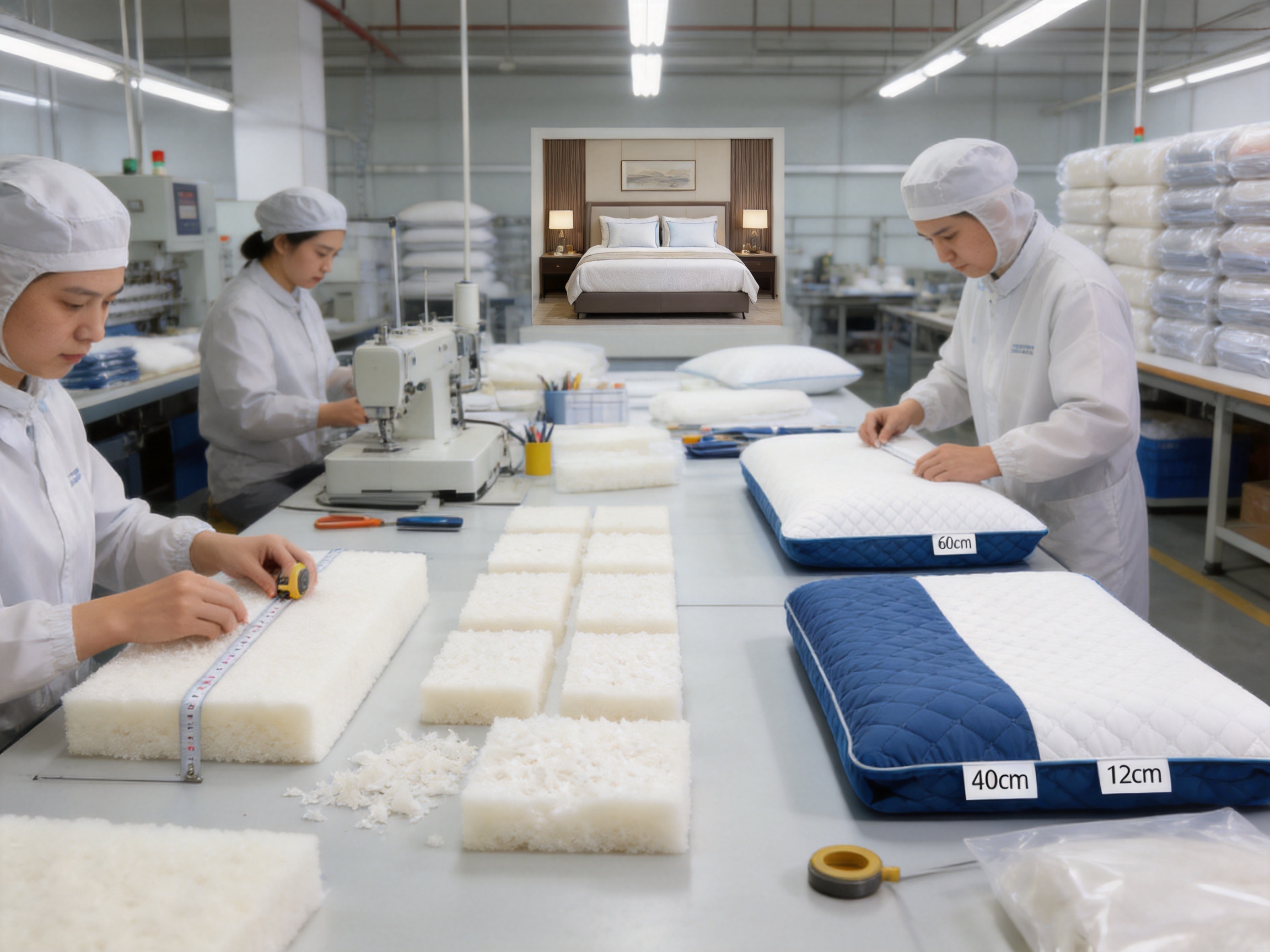
A pillow is one of the most important components of a healthy sleep environment. Although mattresses receive much of the attention in discussions about sleep quality, the pillow directly supports the head, neck, and upper shoulders for several hours every night. An unsuitable pillow may feel comfortable when first used but can gradually create pressure points, excessive heat, unstable support, or morning stiffness. A well-designed pillow must therefore balance softness, resilience, airflow, skin comfort, durability, and adaptability.
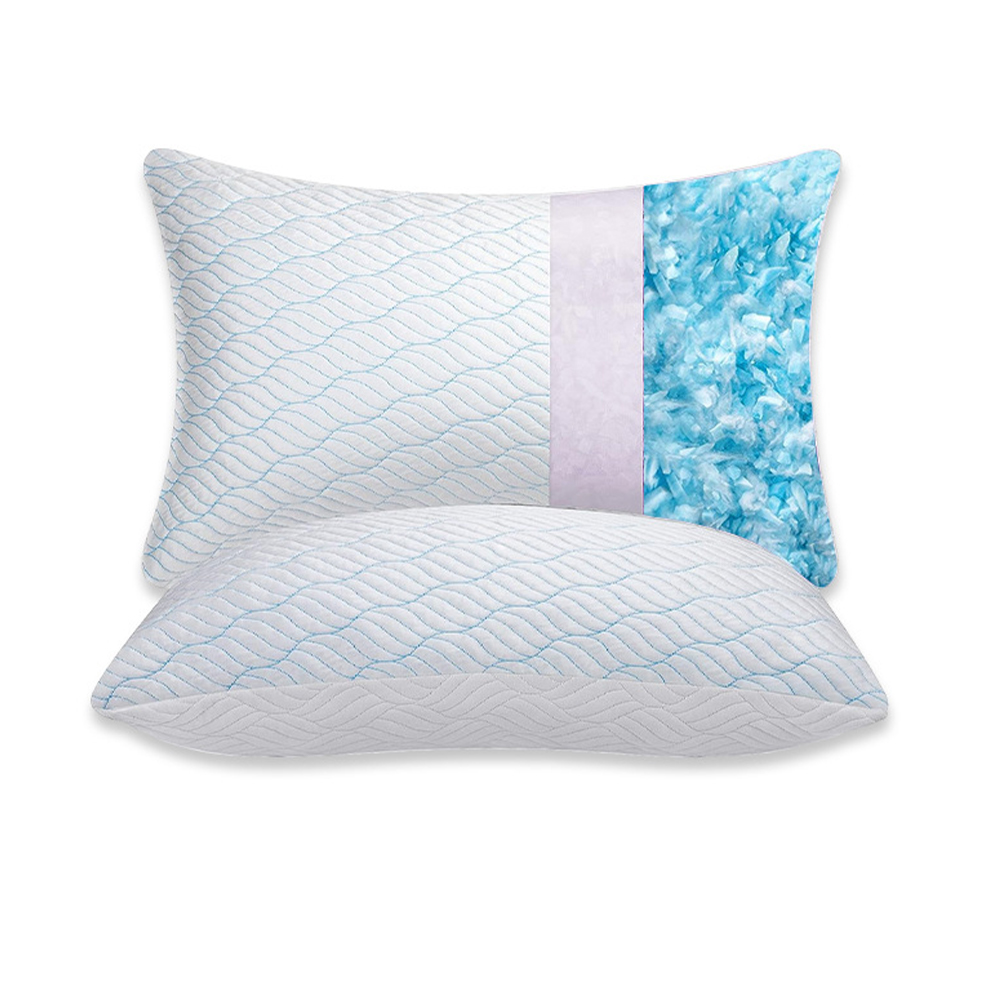
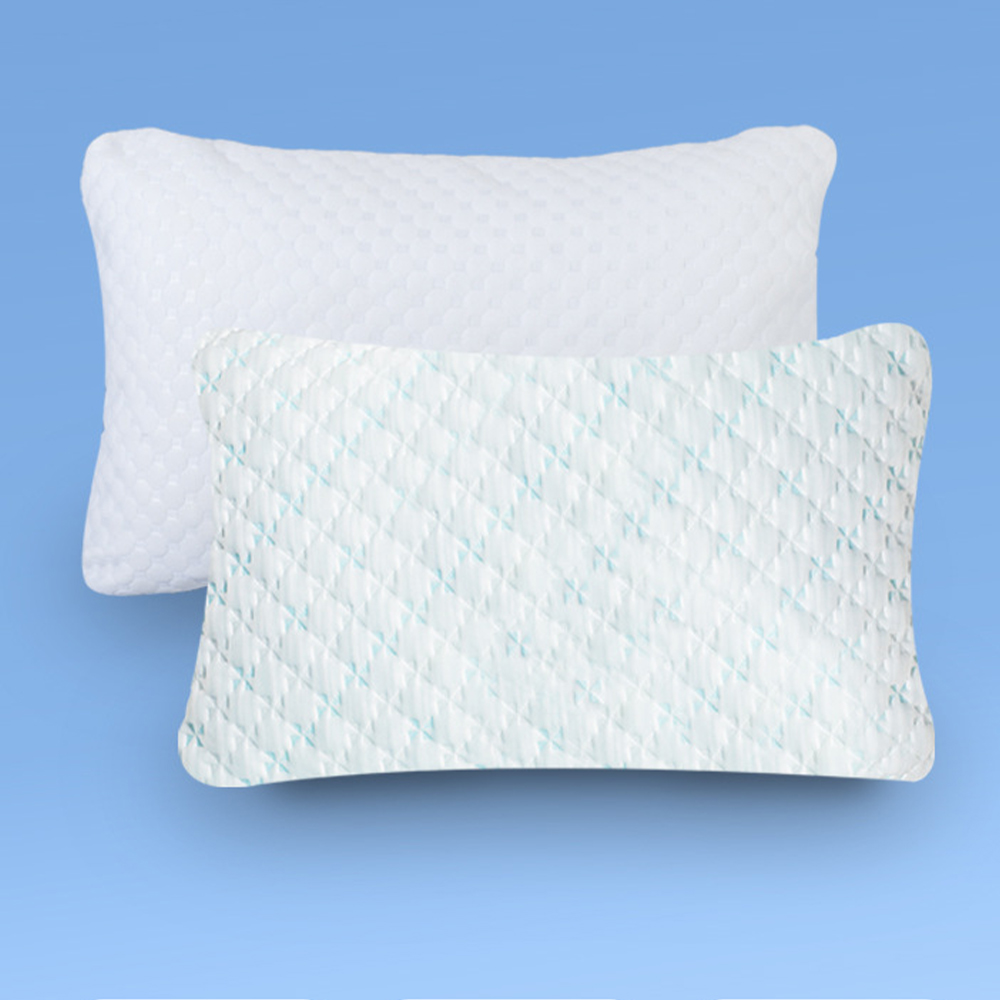
The Gel Memory Foam Sponge Pillow is designed around this balance. It combines a high-density slow-rebound memory foam structure with regularly shaped shredded sponge filling. This construction provides the contouring support associated with memory foam while introducing more flexibility and ventilation than a single solid foam block. Its rectangular shape, quilted surface, refreshing blue-and-white appearance, and customizable construction make it suitable for private bedrooms, guesthouses, hospitality projects, and other sleep-related applications.
More than a simple soft furnishing product, this pillow represents a combination of material engineering, comfort design, and practical manufacturing experience. Its value comes from the interaction between the internal filling, external fabric, shape, dimensions, and production controls. When these elements are developed as one system, the result is a pillow that supports the body without feeling excessively rigid, remains comfortable across different seasons, and can be adapted for different customers and sales channels.
Understanding the Product Structure
The core design uses slow-rebound memory foam. This material responds gradually when pressure is applied. Instead of immediately springing back like conventional fiber filling, memory foam compresses and conforms to the contours of the user’s head and neck. After the pressure is removed, it slowly returns toward its original shape.
This response is important because the human head and neck are not perfectly flat or uniform. A pillow that is too firm may create pressure around the back of the head, while a pillow that is too soft may collapse and allow the neck to bend at an uncomfortable angle. Slow-rebound foam helps distribute contact pressure over a wider area and creates a more stable support zone.
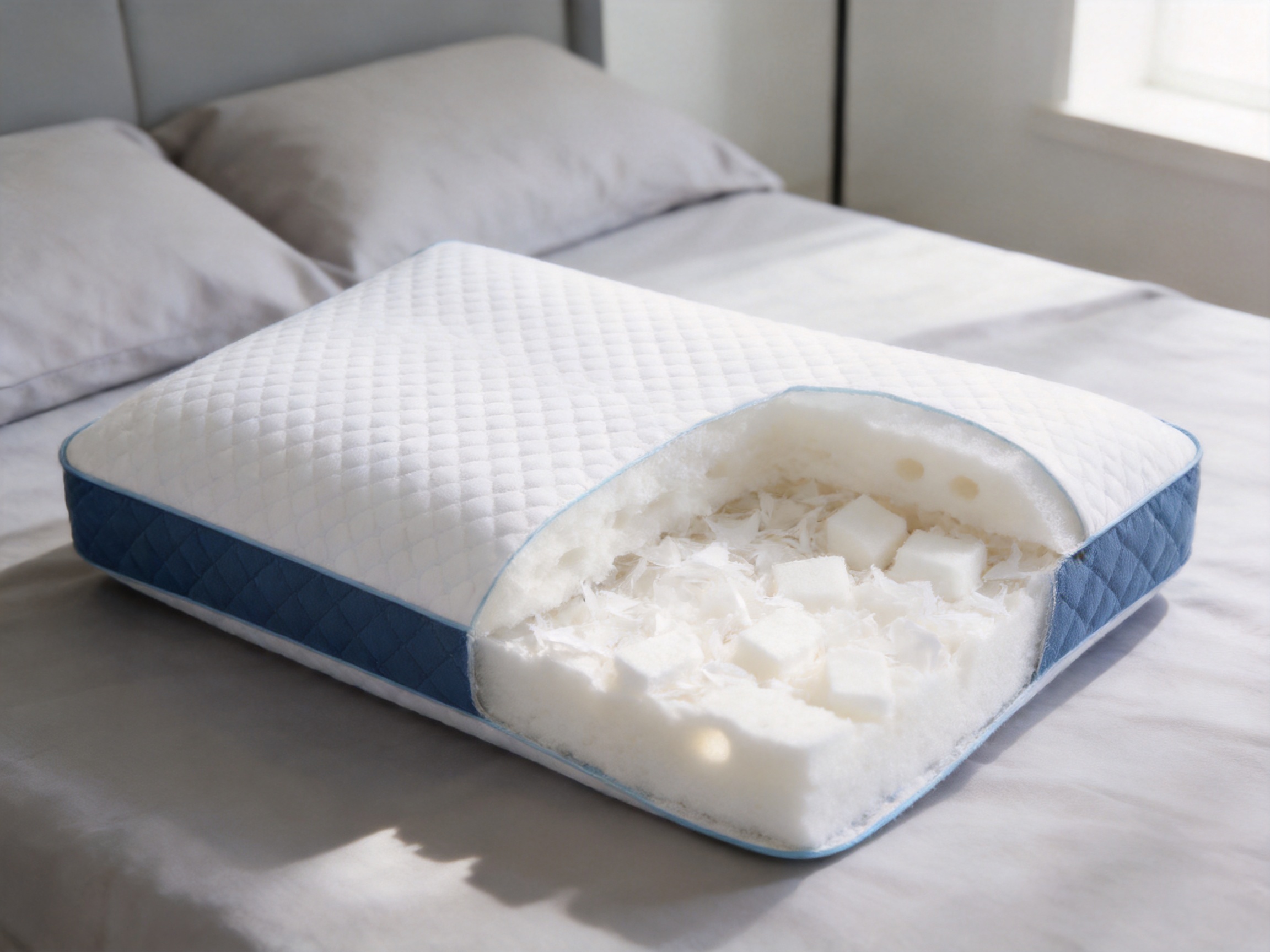
The pillow also incorporates regularly shaped shredded sponge filling. Shredded filling differs from a single molded block because it creates multiple small areas of movement within the core. These spaces help improve internal air circulation. The pieces can also adjust slightly as the user changes position, providing a lighter and more flexible feel.
The combination is especially useful for customers who want the contouring properties of memory foam but do not prefer the dense or fixed sensation that can sometimes be associated with solid foam pillows. The shredded structure introduces a degree of loft and fluffiness while retaining the supportive behavior of a high-density foam material.
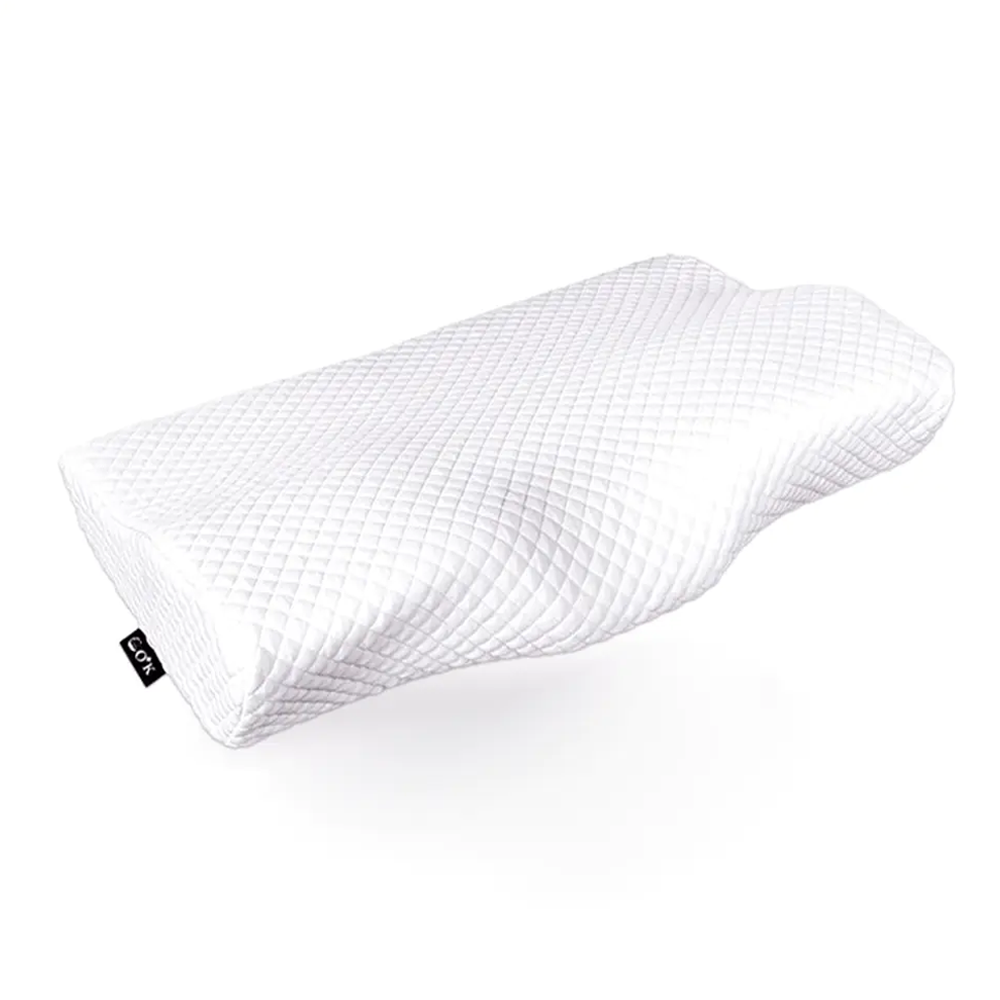
The outer construction complements the internal filling. A delicate, skin-friendly fabric creates a comfortable contact surface, while the quilted texture adds depth and helps establish a neat, three-dimensional appearance. The blue-and-white color scheme gives the pillow a clean visual character that can fit modern bedrooms, minimalist interiors, guest rooms, and hotel environments.
How the Pillow Supports Head and Neck Alignment
During sleep, the pillow should fill the space between the head and the mattress without forcing the neck upward or allowing it to drop too far downward. The correct height depends on body shape, sleeping position, mattress firmness, and personal preference. The listed pillow height of approximately 10.1 to 15 centimeters provides a practical range for adult users who need moderate support.
The 60 by 40 by 12 centimeter configuration is a familiar rectangular format. It offers enough surface area for the head while remaining easy to place on standard beds and hospitality bedding systems. The dimensions also make the pillow suitable for single-person use, as indicated by the product specifications.
Memory foam can help reduce uneven pressure because it responds to the shape of the head and neck. Instead of relying entirely on the user to find a precise position, the material adapts under load. This is particularly valuable for people who move during sleep or alternate between back and side positions.
For back sleepers, the pillow can provide a supportive cradle for the back of the head while helping maintain a natural neck curve. For side sleepers, the foam structure can help fill the greater distance between the shoulder and the head. For combination sleepers, the shredded interior offers more adjustability than a rigid, single-piece core.
It is important to recognize that no pillow is universally perfect for every sleeper. Individual comfort depends on anatomy and sleeping habits. Nevertheless, a moderate-height rectangular pillow with slow-rebound support provides a versatile starting point for adults seeking balanced cushioning and stability.
Breathability and Temperature Comfort
Heat and stuffiness are common complaints associated with densely packed bedding products. A solid, highly compact filling may restrict the movement of air within the pillow. When the head rests on the surface for a long period, heat and moisture can accumulate around the contact area.
The regularly shaped shredded sponge filling addresses this issue by creating a more open internal structure. Small gaps between the pieces allow air to move through the core more easily than it might in a completely uniform block. This does not make the pillow temperature-controlled, but it can help reduce the closed-in feeling associated with less ventilated products.
Airflow is also influenced by the cover fabric, the quilting pattern, the density of the filling, and the amount of compression applied during use. For that reason, breathability must be treated as a complete product-design objective rather than as a feature of one material alone. The pillow’s layered construction is intended to keep the interior responsive and the surface comfortable.
Improved ventilation is valuable in homes, hotels, and guesthouses because sleep environments may differ significantly in climate and air-conditioning conditions. A pillow that feels less stuffy can contribute to a more pleasant experience in warm seasons and in rooms where bedding is used by different guests.
Its structure also supports recovery after use. Shredded foam can redistribute gradually rather than remaining permanently compressed in one area. Regular care, appropriate storage, and adequate airing can further help the pillow retain a fresh and comfortable feel over time.
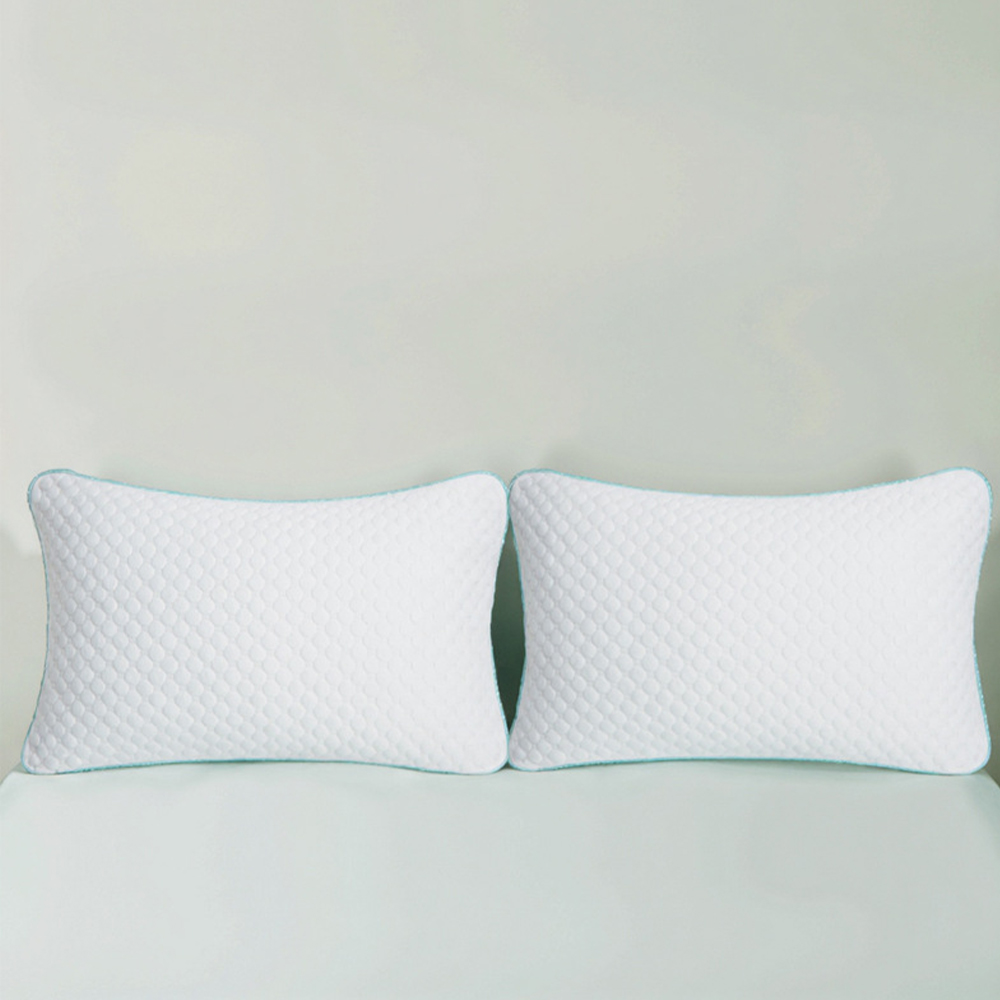
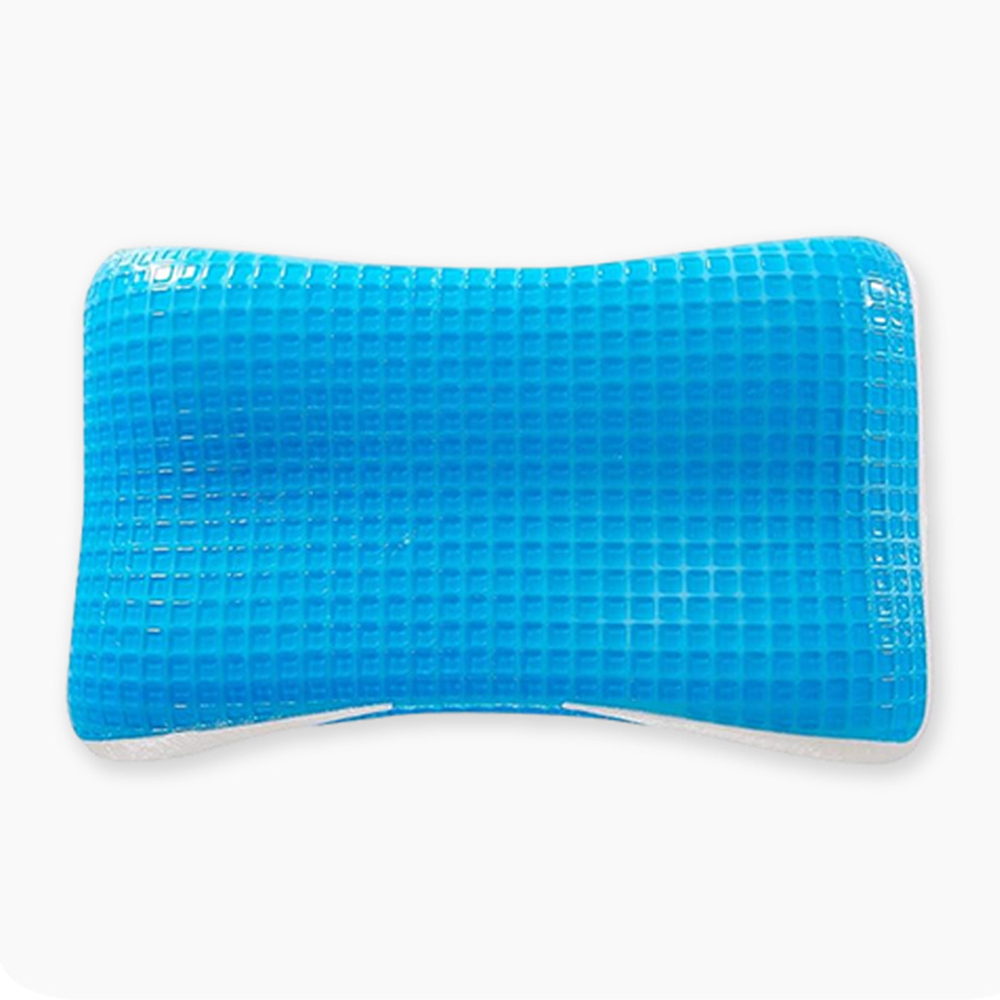
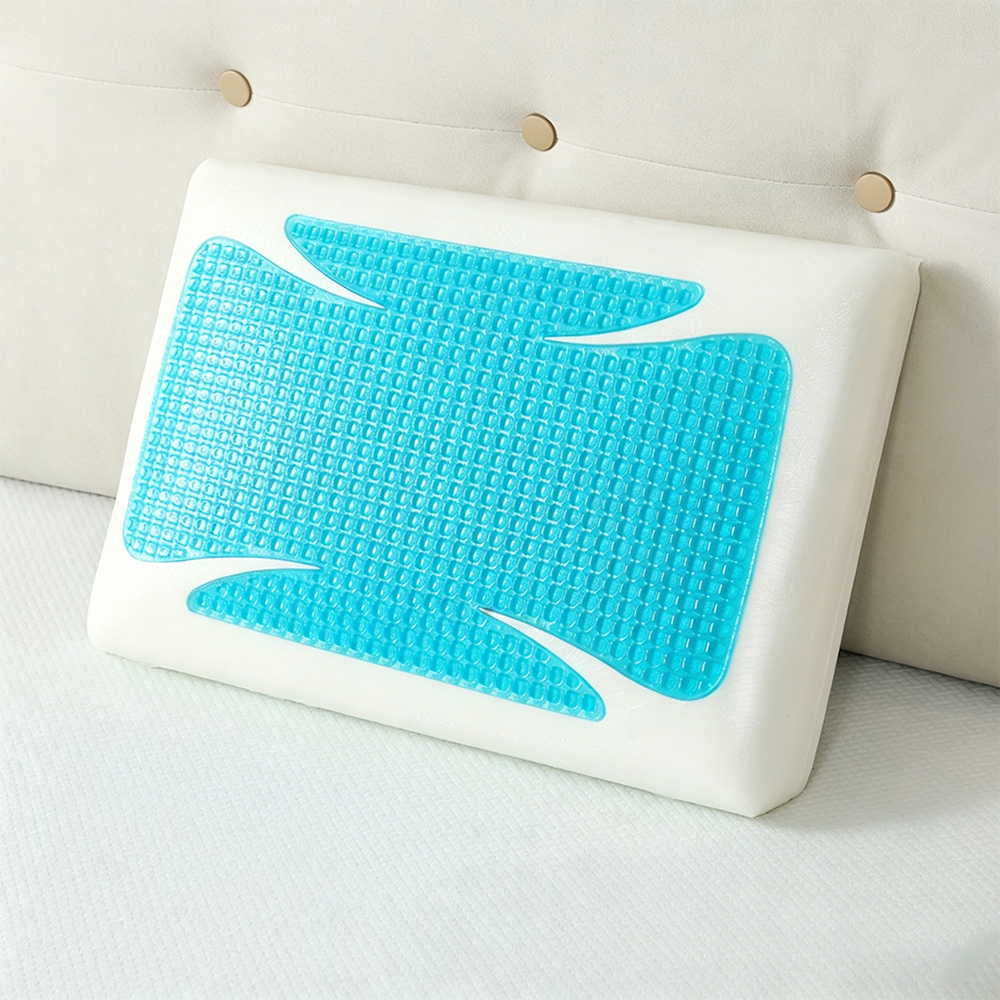
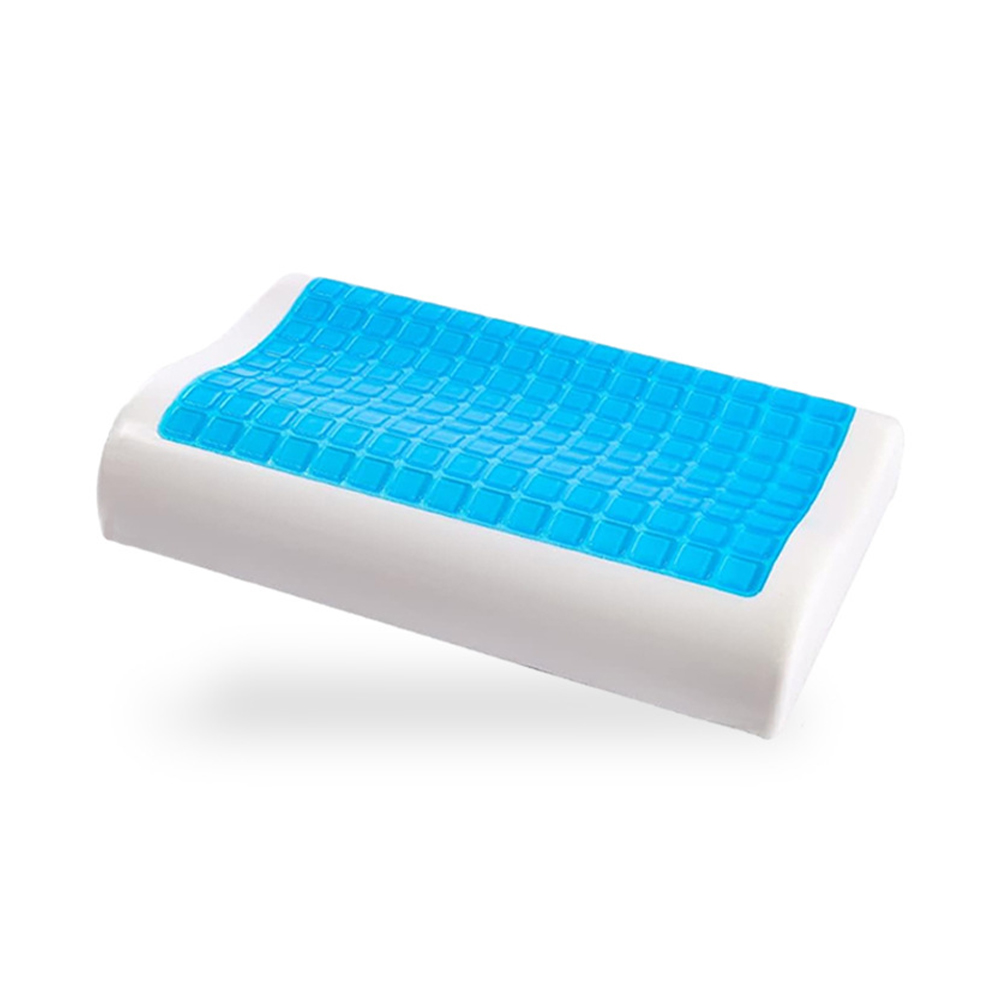
Gel memory foam sponge pillow
Softness Without Losing Support
Softness is often associated with comfort, but excessive softness can reduce support. If a pillow collapses too easily, the head may sink deeply and the neck may lose stability. Conversely, a very firm pillow may provide a strong platform but feel hard and unwelcoming.
The Gel Memory Foam Sponge Pillow is designed to occupy the middle ground. Its high-density foam provides resistance against excessive compression, while the shredded sponge filling creates a softer, more adaptable sensation. The result is not simply a soft pillow; it is a pillow intended to deliver gentle support.
The phrase “gentle support” describes the product’s main comfort objective. The surface should feel inviting when the user first places the head on it, but the inner structure should continue supporting the body after the initial compression. This two-stage response can be particularly appealing to consumers who dislike either extremely firm orthopedic pillows or loose, unstable fiber-filled pillows.
The foam’s slow rebound also contributes to a gradual pressure response. Rather than producing an abrupt pushback, the material changes shape in response to the user’s weight. This creates a more enveloping sensation and may reduce the feeling of pressure concentrated in a single point.
At the same time, the shredded component adds a lighter tactile character. The internal pieces can move in small amounts, which helps prevent the pillow from feeling like an immovable slab. This balance between support and flexibility is one of the product’s most meaningful advantages over conventional one-material pillow designs.
Advantages Compared with Conventional Pillow Designs
Compared with Traditional Fiber-Filled Pillows
Traditional polyester fiber pillows are often lightweight and initially fluffy. However, lower-quality fiber filling may flatten, migrate, or form uneven areas with repeated use. Users may need to reshape the pillow frequently to maintain an even surface.
Memory foam offers a different kind of support. Instead of depending only on lofted fibers, it uses a resilient foam structure that responds to pressure and helps preserve its general form. The shredded sponge filling retains some of the flexibility associated with fiber products while adding a more supportive internal foundation.
The quilted surface can also help create a more stable appearance than a basic, unstructured pillowcase. Although all bedding products require care, the combination of foam-based filling and structured quilting is intended to provide a more consistent experience over long-term use.
Compared with Solid Foam Pillows
Solid foam pillows can offer excellent shape retention and a clear contouring effect. However, their fixed form may not suit every sleeper. Some users find them too rigid, too dense, or less adaptable when changing positions during the night.
The shredded interior of this pillow introduces more movement and adjustability. It can provide a lighter, fluffier sensation and help improve airflow. This makes the product an attractive alternative for users who want memory foam support without the fully fixed feel of a solid molded pillow.
Because the interior is made from shredded material, manufacturers can also explore different filling amounts, piece shapes, densities, and combinations. This creates more opportunities for customization than a single predetermined molded shape.
Compared with Down and Feather Products
Down and feather pillows are known for softness and compressibility, but they may require frequent fluffing and may not provide enough stable neck support for every user. Some consumers also prefer foam-based products because of personal material preferences or concerns about feather migration.
The memory foam and shredded sponge construction provides a non-feather alternative with a more structured support response. It can still feel soft and enveloping, but it is designed around foam resilience rather than down loft. This difference gives buyers another choice in the broad pillow market.
Compared with Low-Quality Foam Fillings
Not all foam pillows provide the same experience. A low-density foam may lose resilience quickly, feel uneven, or lack the stability expected from a supportive pillow. Material selection, density control, cutting accuracy, filling distribution, and cover construction all affect final performance.
The product specification identifies a high-density slow-rebound memory foam core. This indicates a design focus on durability, pressure response, and shape retention. The manufacturing capabilities of the supplier are important because foam performance depends not only on the material name but also on formulation, processing, and quality control.
Surface Comfort and Quilted Design
The outer fabric is the first part of the pillow that the user touches. Even a technically advanced foam core may not feel comfortable if the cover is rough, poorly finished, or insufficiently breathable. A delicate textile surface helps create a smoother contact experience against the face and neck.
The quilted texture gives the cover a three-dimensional appearance. Quilting can contribute to visual appeal by creating orderly lines and surface definition. It also helps the pillow look more polished in product photography, retail displays, hotel rooms, and residential interiors.
Blue and white create a clean and refreshing visual combination. White communicates simplicity and cleanliness, while blue adds a calm, cool accent. These colors are versatile enough for contemporary bedrooms, neutral bedding arrangements, and commercial hospitality settings.
The appearance is not merely decorative. In the bedding industry, visual presentation strongly influences customer expectations. A neat, carefully quilted cover suggests attention to construction quality. It can help position the pillow as a refined sleep accessory rather than an ordinary household cushion.
Fabric customization is available for customers with specific requirements. Depending on the intended market, buyers may request different colors, fabric constructions, surface textures, or branding arrangements. This is valuable for hotels, furniture retailers, private labels, and distributors who need a consistent product identity.
Manufacturing Strengths and Material Development
Jiangsu Wellcare Household Articles Co., LTD. has been active in the development and manufacture of sleep materials and healthy home products since 2003. Its history is supported by earlier scientific research activity that began in 1993. This long-term background gives the company experience across both material development and finished-product manufacturing.
The company operates with a doctor-led research and development team and reports developing more than one hundred new foam materials each year. Its material portfolio includes ordinary sponge, memory foam, gel foam, temperature-insensitive memory foam, quick-dry memory foam, flame-retardant sponge, antibacterial sponge, and other specialized foam solutions.
This breadth is important for pillow production because different applications require different performance characteristics. A residential pillow may prioritize softness and appearance. A hotel pillow may require durability, repeated-use stability, and easy integration with standard bedding. A cross-border product may need to meet specific market expectations regarding comfort, packaging, labeling, and customization.
Material research also allows the manufacturer to refine the relationship between density, rebound speed, resilience, airflow, and hand feel. The goal is not simply to produce foam, but to select or formulate foam that works effectively within a particular product structure.
The company’s factory development has expanded over time. It purchased a 12,000-square-meter factory building in 2003 and later acquired 50,000 square meters of land in 2008. These investments indicate a foundation for larger-scale production, material processing, product assembly, storage, and quality management.
In 2003, the company jointly developed a new sponge material with Huai’an Institute of Technology. Cooperation with research institutions can support the transition from laboratory concepts to practical manufacturing. It may also help improve formulation testing, physical performance analysis, and the repeatability of production results.
Advanced Production Process for the Pillow
A high-quality shredded memory foam pillow typically begins with material preparation. Foam must be selected according to density, elasticity, rebound behavior, resilience, and intended comfort level. For this product, the core concept combines high-density slow-rebound memory foam with shredded sponge material.
The next stage is cutting or processing the sponge into regularly shaped pieces. Consistent piece size helps create more predictable filling behavior. If pieces vary too widely, the pillow may develop hard spots, soft gaps, or uneven compression. Regularly shaped pieces can distribute more uniformly and produce a more consistent feel across the surface.
Filling quantity must also be controlled. Too little filling may cause the pillow to collapse or feel insubstantial. Too much filling may make it overly firm and reduce the ability of the interior to move. The correct amount depends on the target height, the foam density, the cover dimensions, and the desired balance of support and fluffiness.
The filling is then distributed into the inner liner or core enclosure. Accurate distribution is essential because the user’s head may rest anywhere across the central area. Production teams need to check that the material reaches the corners and edges without excessive accumulation in one section.
The inner liner helps contain the shredded material and supports the finished pillow’s structure. The listed color options include white inner liners with regularly shaped square shredded sponge and other shredded sponge configurations. This suggests that different internal filling options can be considered during customization and product development.
The outer cover is cut according to the selected dimensions. For the standard configuration, the finished pillow measures approximately 60 by 40 by 12 centimeters. Cutting precision helps prevent distortion and ensures that the cover fits the inner filling properly.
Quilting follows the preparation of the fabric layers. The quilting pattern can stabilize the surface, create a three-dimensional visual effect, and help maintain a neat appearance. Stitch density, thread quality, seam allowance, and edge finishing all influence the durability of the cover.
After assembly, the pillow should undergo visual and dimensional inspection. Inspectors may examine stitching, fabric cleanliness, seam integrity, filling distribution, surface flatness, labeling, and overall appearance. Weight and size checks are also useful for confirming that production remains within the intended range.
Compression and recovery behavior can be assessed through practical testing. The pillow may be compressed repeatedly to observe whether it returns to its approximate height and whether the filling remains evenly distributed. Such evaluations are especially important for products intended for long-term use or hospitality environments.
Packaging is another important production stage. Memory foam products may require careful packing to protect them from contamination, moisture, excessive compression, and damage during storage or transport. Packaging methods should balance protection with shipping efficiency, particularly when the product is distributed through international e-commerce channels.
Quality Control and Consistency
Consistency is one of the main differences between a professionally manufactured pillow and an informal or poorly controlled product. Customers expect the second pillow they purchase to feel similar to the first. Retailers and hotels also need stable dimensions, colors, and performance across multiple production batches.
Quality control begins with incoming material inspection. Foam, fabric, thread, liners, labels, and packaging materials should be checked before entering production. Material variation can affect the final product even when assembly procedures remain unchanged.
During foam processing, manufacturers can monitor piece dimensions, density, cleanliness, and distribution. Regularly shaped shredded sponge pieces are especially suited to process control because their size and form can be evaluated more systematically than irregular scraps.
Cover production requires attention to fabric defects, quilting alignment, seam strength, zipper or closure performance where applicable, and color consistency. The blue-and-white design must remain visually balanced, especially when the pillow is produced in larger quantities for a hotel or retail program.
Finished-product inspection should verify the product number, dimensions, weight range, shape, and customization details. The listed item number is PW030, and the product is identified as a rectangular adult pillow for single-person use. Clear specifications support accurate purchasing, catalog management, and warehouse organization.
The supplier identifies the product as a qualified product and supports custom processing. This combination is useful for buyers who require a standard manufacturing baseline but also need changes to dimensions, fabrics, colors, or filling configurations.
Customization for Different Markets
Customization is a major advantage for distributors, retailers, hospitality groups, and private-label businesses. One pillow design may need to serve several markets, but different customers often have different requirements. A hotel may prefer a neutral cover and standardized dimensions, while an online retailer may request a distinctive color combination and a branded package.
Available customization can include size, color, fabric, inner liner configuration, filling type, and filling quantity. These adjustments can influence the final comfort profile. For example, a higher filling quantity may create a fuller feel, while a lighter fill may emphasize softness and flexibility.
Custom sizes can support different bed formats and regional preferences. Although 60 by 40 by 12 centimeters is the listed configuration, other dimensions may be considered when the order quantity and production requirements are appropriate.
Fabric selection can also be adapted. A buyer may choose a fabric based on softness, appearance, breathability, durability, or care requirements. Hospitality customers may prioritize a fabric that maintains a neat appearance after frequent laundering or handling, while residential customers may focus more heavily on tactile comfort and visual style.
Color customization allows the product to fit a retailer’s collection or a hotel’s interior design. The original blue-and-white combination offers a clean starting point, but other colors may be developed according to customer needs and production feasibility.
Customization should be managed through clear technical communication. Buyers should specify dimensions, tolerances, materials, filling weight, cover construction, color references, packaging, labels, and inspection standards before production begins. A detailed specification reduces the risk of misunderstanding and helps the manufacturer reproduce the desired result.
Applications in Residential and Hospitality Settings
For home users, the pillow provides a practical option for adults seeking moderate-height support and a soft, adaptive feel. Its rectangular form fits naturally into common bedroom arrangements. The surface design is attractive without being overly decorative, allowing it to coordinate with a wide range of bedding styles.
Guesthouses can use the pillow as part of a comfortable and visually consistent sleep environment. The combination of support, breathability, and clean appearance can help create a more welcoming room. Custom fabrics and sizes may also help smaller accommodation businesses establish a recognizable presentation.
Hotels often require bedding products that combine comfort with reliable supply. A supplier capable of material research, foam manufacturing, customization, and export support can be valuable for hotel procurement teams. The company became a designated supplier for five-star hotels in 2020, demonstrating experience with demanding hospitality applications.
Retailers and online sellers may also benefit from the pillow’s clear product story. The combination of memory foam support, shredded sponge breathability, quilted texture, and customization offers several understandable selling points. These features can be presented through product descriptions, packaging, catalog pages, and customer education.
The supplier lists major downstream platforms including eBay, Amazon, Wish, AliExpress, independent sites, Lazada, and other channels. It also identifies Europe, Southeast Asia, and North America as major sales regions. This international market experience may support buyers who need products prepared for cross-border distribution.
Environmental and Corporate Manufacturing Considerations
Modern bedding buyers increasingly consider how products are manufactured, not only how they feel. Foam production involves materials, energy, cutting waste, packaging, transportation, and end-of-life concerns. Manufacturers that invest in environmental management can respond more effectively to these expectations.
Jiangsu Wellcare reports investment in advanced eco-friendly energy systems and improvements to environmental management practices. Its stated objective is to go beyond basic compliance and create lasting environmental value by integrating respect for nature into business operations.
Sustainability is a continuing process rather than a single product claim. It may include energy efficiency, resource management, responsible facility operation, waste reduction, production planning, and more efficient logistics. Buyers should request specific environmental documentation when formal compliance or certification is required for a particular market.
The company’s broad foam portfolio may also support more targeted material selection. A product can be designed with only the performance characteristics it needs, avoiding unnecessary complexity. In practical manufacturing, efficient formulation, accurate cutting, and controlled production can help reduce avoidable waste.
For international customers, environmental considerations should be reviewed together with packaging and shipping requirements. Compact but protective packaging can reduce transport volume, while suitable protective materials can help prevent damage and product loss.
Why the Supplier Is Suitable for OEM and Customized Orders
A customized pillow program requires more than the ability to sew a cover. It depends on material knowledge, foam processing, filling control, pattern development, packaging coordination, and communication across the supply chain.
Jiangsu Wellcare combines research and development with manufacturing experience. Its product range includes multiple foam categories, allowing the company to compare different materials and develop solutions for varied comfort and functional requirements.
The company has experience supplying international markets and entered e-commerce as an Alibaba-certified Gold Supplier in 2018. It has also supplied products to markets including the United States, Germany, Japan, the United Kingdom, Canada, Australia, and Kuwait. This history indicates familiarity with international customer expectations and cross-border order coordination.
The supplier supports custom processing, but it does not support dropshipping according to the available product information. This distinction is important. The product is more suitable for importers, wholesalers, retailers, hotel procurement teams, private-label buyers, and businesses that manage their own fulfillment operations.
The supplier does not list an authorized own brand for this item, which may be advantageous for buyers seeking an OEM or neutral product arrangement. Customers should confirm packaging, labeling, logo application, minimum order quantities, sampling, lead times, payment terms, and export documentation directly with the manufacturer.
Important Product Specifications
| Attribute | Specification |
| Product name | Gel Memory Foam Sponge Pillow |
| Product category | Shredded Foam Pillow |
| Material | Memory Foam |
| Pillow core fabric | Polyester fiber |
| Shape | Rectangular |
| Standard dimensions | 60 x 40 x 12 centimeters |
| Core height range | 10.1 to 15 centimeters |
| Approximate weight range | 0.55 to 1 kilogram |
| Target user | Adults |
| Recommended occupancy | Single person |
| Filling structure | Slow-rebound memory foam with shredded sponge filling |
| Cover appearance | Blue and white quilted design |
| Custom processing | Supported |
| Dropshipping | Not supported |
| Item number | PW030 |
| Patent availability | No |
| Primary sales regions | Europe, Southeast Asia, and North America |
Care, Handling, and Use Recommendations
Like all foam bedding products, the pillow should be handled according to the manufacturer’s care instructions. The cover and internal filling may have different cleaning requirements. Buyers should confirm whether the cover is removable, whether it is machine washable, and which detergents or water temperatures are appropriate.
Regular airing can help maintain freshness. The pillow should be kept in a dry, well-ventilated environment and protected from prolonged exposure to excessive moisture. If the product is compressed for transportation, it should be allowed to recover according to the supplier’s instructions before use.
Users may gently reshape the pillow after extended use, particularly if the shredded filling has shifted. Excessive force, sharp objects, open flames, and high heat should be avoided because they can damage foam and textile components.
For commercial users, housekeeping teams should follow a consistent inspection routine. They can check the cover, seams, surface cleanliness, filling distribution, odor, and overall loft before placing a pillow in a guest room. Standardized handling can help extend product life and maintain a consistent guest experience.
As with any sleep accessory, users should select a pillow height that suits their sleeping position and personal comfort. People with persistent neck pain or other medical concerns should seek professional advice rather than relying on a pillow alone to address a health condition.

Purchasing Guidance for Importers and Retailers
Before placing a bulk order, buyers should request a sample of the exact configuration they intend to purchase. A sample should include the intended foam structure, filling quantity, cover fabric, quilting pattern, color, dimensions, and packaging wherever possible.
Buyers should evaluate the pillow under realistic conditions. They can inspect its initial hand feel, rebound speed, surface softness, filling distribution, edge construction, and visual quality. It is also useful to test whether the pillow maintains acceptable support after repeated compression.
Technical documents should identify the foam material, dimensions, tolerance range, weight range, cover composition, care instructions, packaging method, and applicable quality requirements. For export orders, buyers should also confirm carton dimensions, gross weight, labeling, country-of-origin information, and shipping arrangements.
Color approval is important when the product uses a two-color design. A physical color sample or recognized color reference can reduce disputes between the buyer and manufacturer. The same principle applies to fabric texture and quilting appearance.
Purchasers should clarify whether custom processing affects minimum order quantities, tooling, lead time, or price. If a product is intended for a hotel group or retail chain, a written production standard can help ensure that repeat orders remain consistent.
Because dropshipping is not supported, businesses should plan their inventory and fulfillment model accordingly. The product may be suitable for warehouse-based e-commerce, wholesale distribution, hospitality supply, or private-label retail rather than direct single-order shipment from the factory.
Frequently Asked Questions
What type of pillow is this product?
It is a rectangular shredded foam pillow that combines slow-rebound memory foam with regularly shaped shredded sponge filling. The design is intended to provide contouring support, flexibility, softness, and improved internal airflow.
Is it a solid memory foam pillow?
No. The product uses a combined structure rather than only one solid foam block. Its shredded sponge component creates a lighter and more adjustable feel, while the memory foam provides stable support and pressure-responsive comfort.
What is the standard size?
The listed standard size is 60 by 40 by 12 centimeters. The core height range is approximately 10.1 to 15 centimeters. Custom sizes can be discussed for specific projects.
Who is the pillow designed for?
The listed target user is an adult, and the recommended occupancy is one person. It may suit back sleepers, side sleepers, and combination sleepers, although individual comfort depends on body shape, mattress firmness, sleep position, and personal preference.
How does shredded sponge improve the product?
The shredded structure creates more internal space for air movement and allows small adjustments as the user changes position. It can reduce the dense sensation of a solid foam block and provide a lighter, fluffier feel.
Does the pillow provide neck support?
The slow-rebound memory foam conforms to the head and neck and is designed to provide stable support. However, the best support level depends on the user’s sleeping position and anatomy. Buyers should select the height and filling configuration that fit their intended users.
Is the cover skin-friendly?
The product is described as using a delicate, comfortable fabric intended to provide a gentle contact experience. Buyers should confirm the exact fabric composition and care instructions for a customized version.
Can the color and fabric be changed?
Yes. Customization is available for size, color, and fabric. Buyers should provide detailed specifications and confirm the production feasibility of any requested changes.
Can the filling configuration be customized?
The available information identifies different regular and irregular shredded sponge configurations. Buyers should discuss the desired piece shape, filling amount, density, and internal liner construction with the manufacturer during sample development.
Is the product suitable for hotels?
Yes. Its clean appearance, customizable construction, adult-oriented support, and breathable shredded structure make it suitable for guesthouses and hotels. The supplier also reports experience as a designated supplier for five-star hotels.
Is dropshipping available?
No. The product information states that dropshipping is not supported. It is more appropriate for wholesale, private-label, hospitality, retail, and warehouse-based e-commerce operations.
Does the supplier support international sales?
Yes. The listed downstream platforms include major e-commerce marketplaces and independent sites, while the stated sales regions include Europe, Southeast Asia, and North America. The company also reports historical exports to several international markets.
Does the product have a patent?
The listed specification states that a patent is not available. Buyers requiring patented technology or exclusive intellectual property should discuss their requirements separately with the supplier.
What should buyers request before ordering?
Buyers should request samples, technical specifications, fabric and color confirmations, filling details, packaging information, quality standards, lead times, minimum order quantities, and export documentation. These details help ensure that the delivered product matches the intended application.
Conclusion
The Gel Memory Foam Sponge Pillow is built around a practical and increasingly relevant comfort concept: combining the supportive response of slow-rebound memory foam with the airflow and flexibility of shredded sponge filling. This layered approach helps distinguish it from basic fiber pillows, rigid solid foam pillows, and unsupported soft fillings.
Its main advantages include adaptive head and neck support, moderate height, a lighter internal feel, improved breathability, quilted surface appeal, and customization potential. The standard rectangular format is suitable for adult users, while the blue-and-white appearance can complement modern homes and hospitality environments.
The product is further strengthened by the supplier’s experience in foam research, material development, factory expansion, international export, and customized production. A broad portfolio of foam technologies enables the manufacturer to approach pillow development as a material-engineering task rather than a simple assembly operation.
For retailers, importers, hotel groups, and private-label buyers, the pillow offers a flexible platform that can be adjusted in size, color, fabric, and internal configuration. Its suitability for wholesale and customized supply makes it particularly relevant for businesses that value consistent production, product differentiation, and long-term supplier cooperation.
With appropriate sampling, technical communication, quality inspection, and care guidance, this shredded memory foam pillow can serve as a dependable sleep product for residential and commercial markets. It represents a balanced solution for customers seeking softness without instability, support without excessive rigidity, and comfort without sacrificing breathability.
References
1. Jiangsu Wellcare Household Articles Co., LTD. Product specification for Gel Memory Foam Sponge Pillow, item PW030.
2. Jiangsu Wellcare Household Articles Co., LTD. Corporate information concerning foam research, material development, manufacturing history, and international supply.
3. General principles of sleep-product design concerning pillow height, head and neck support, pressure distribution, and bedding comfort.
4. General manufacturing principles for shredded foam filling, textile quilting, foam processing, product inspection, and protective packaging.
5. General considerations for customized bedding production, hospitality procurement, private-label development, and cross-border distribution.
Product: Gel memory foam sponge pillow
PREV:Slow-Rebound Memory Foam Mattress: Comfort, Support, and Custom Manufacturing Excellence
NEXT:Gray Memory Foam Leg Pillow for Modern Leg Relief and Daily Recovery
NEXT:Gray Memory Foam Leg Pillow for Modern Leg Relief and Daily Recovery
Interested in cooperation or have questions?
Related News
WELLCARE was founded in 2003, boasting over a decade of profound and extensive experience.
Quick Links
Product
Media Centre
Contact Information
- [email protected]
- +86-517-84998062
- +86-15152354988
- No. 168 Nenjiang Road, Huaiyin District, Huai'an City, Jiangsu Province, China
Copyright © Jiangsu Wellcare Household Articles Co., LTD. All Rights Reserved.
Custom Memory Gel Mattress Manufacturers
