

 English
 日本語
日本語 Español


Pan Ruoxi — Product Sales Consultant

Home / Author / Pan Ruoxi — Product Sales Consultant / Slow-Rebound Memory Foam Mattress: Comfort, Support, and Custom Manufacturing Excellence
Product Category
NEW Category
Contact us
Slow-Rebound Memory Foam Mattress: Comfort, Support, and Custom Manufacturing Excellence
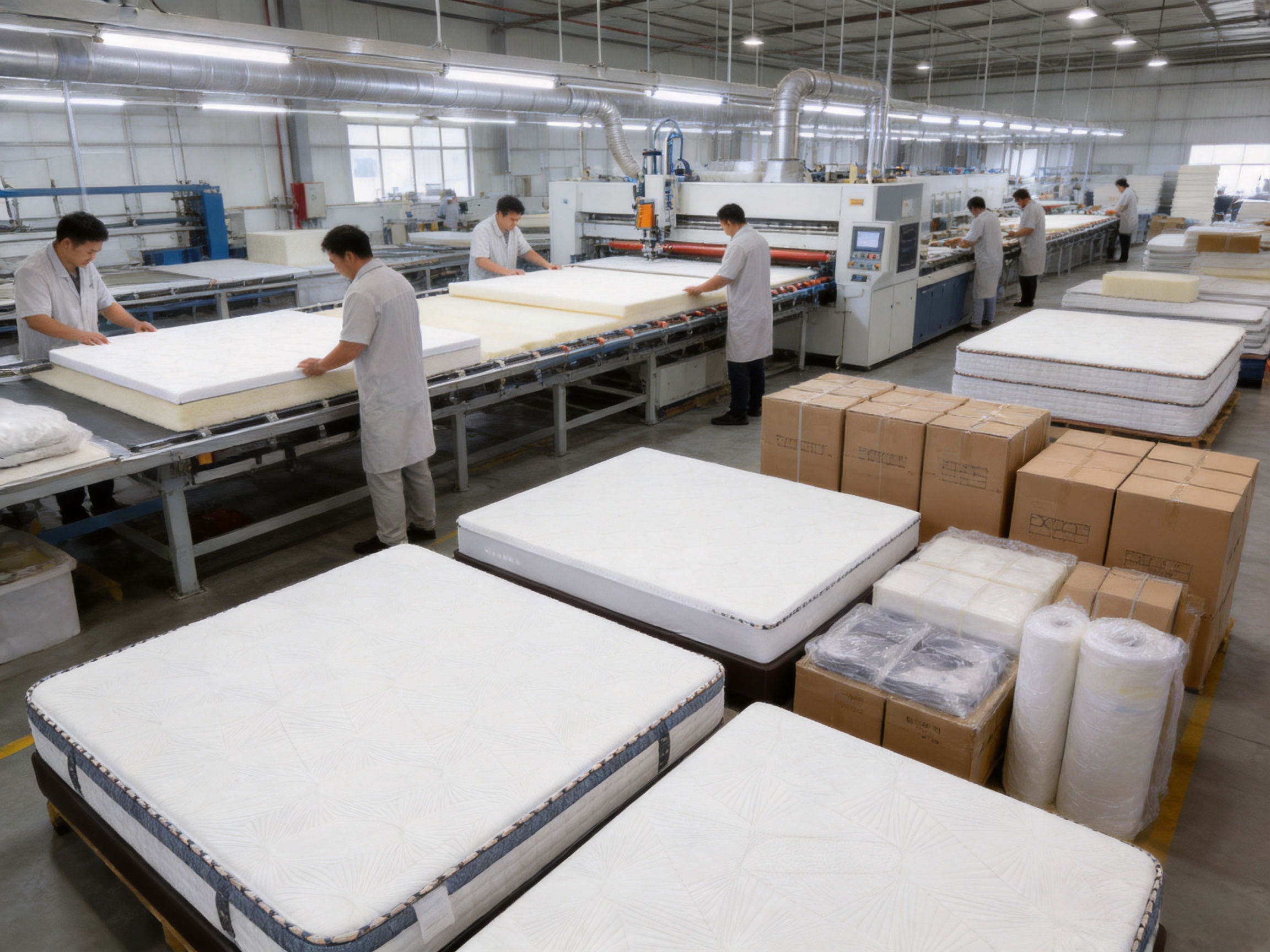
A mattress is more than a bedroom furnishing. It is a long-term comfort system that influences posture, pressure distribution, temperature management, movement, and the overall quality of rest. For buyers comparing conventional foam mattresses, basic sponge products, and more advanced memory foam designs, the slow-rebound memory foam mattress offers a balanced combination of adaptive support, pressure relief, visual refinement, and flexible customization.
This 50 mm memory foam mattress is designed for users who want the contouring comfort of memory foam without choosing an excessively thick or visually heavy sleep product. Its high-density memory foam core responds gradually to body weight, allowing the surface to conform to the natural curves of the body. At the same time, the mattress retains a stable structure that helps support the user during sleep. The result is a sleep surface that feels soft and embracing while maintaining dependable resistance against excessive compression.
The mattress also distinguishes itself through its 3D fan-shaped quilting, pure white fabric, thickened edge construction, and made-to-order sizing capability. These features help it stand apart from simpler foam pads that may provide basic cushioning but lack refined surface engineering, dimensional stability, or visual versatility. It can be used in residential bedrooms, apartments, hotels, guest rooms, and other environments where comfort and appearance must work together.
Behind the product is Jiangsu Wellcare Household Articles Co., LTD., a manufacturer with experience in foam material research, sleep products, and healthy home applications. The company combines material development, production experience, customized processing, and international supply capabilities to serve customers across multiple markets.
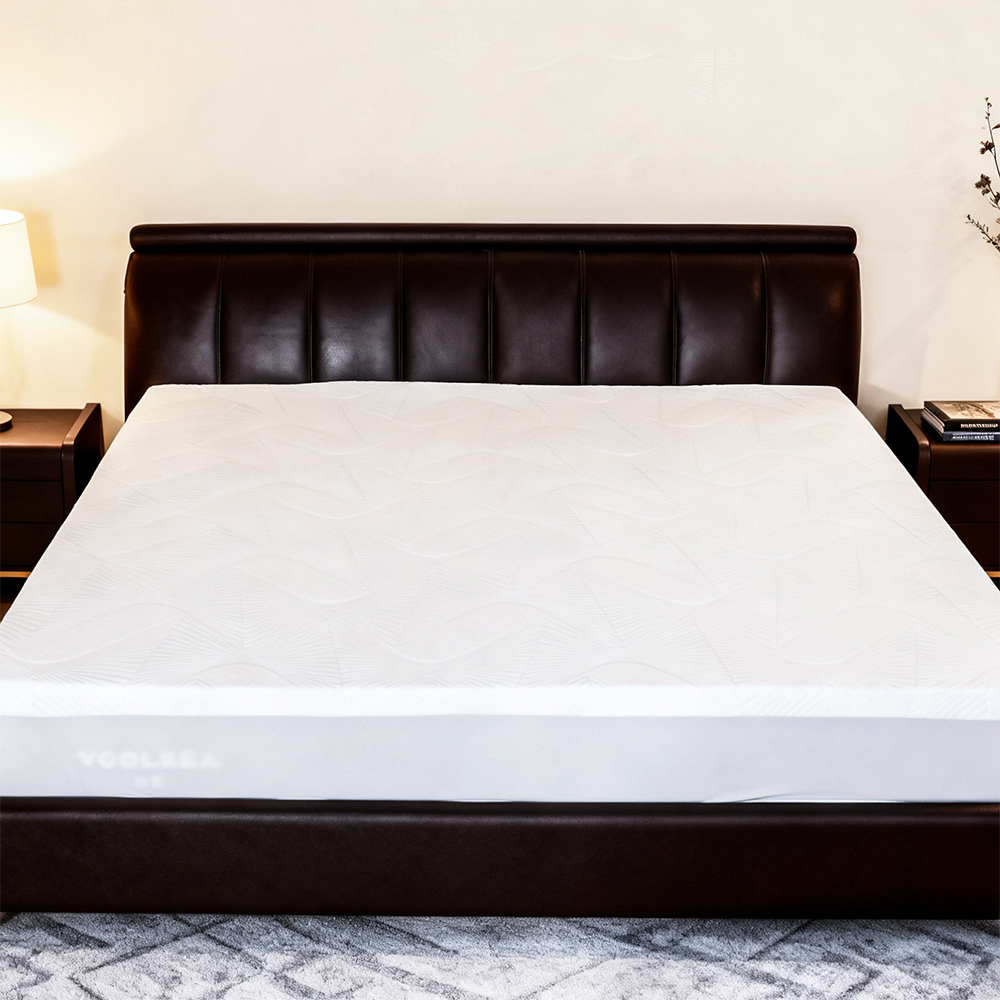
Slow rebound memory foam mattress
Product Overview and Core Specifications
The slow-rebound memory foam mattress belongs to the regular memory foam mattress category. It uses memory foam as the principal material and polyester fiber for the outer fabric. The supplied standard configuration measures 2000 by 1800 by 50 millimeters, making it suitable for a 2.0-meter bed. Because custom processing is available, buyers may also discuss other dimensions for different bed frames, room layouts, hospitality projects, or distribution requirements.
| Attribute | Specification |
|---|---|
| Product Type | Slow-rebound memory foam mattress |
| Category | Memory foam regular mattress |
| Core Material | Memory foam |
| Fabric Material | Polyester fiber |
| Standard Thickness | 50 mm |
| Standard Dimensions | 2000 × 1800 × 50 mm |
| Standard Bed Application | 2.0-meter bed |
| Color | White |
| Surface Construction | 3D fan-shaped quilting |
| Edge Construction | Thickened edge with binding |
| Style | Minimalist modern |
| Season | All-season |
| Custom Processing | Available |
| Item Number | m030 |
The 50 mm format makes this product suitable for several purchasing situations. It can be placed on an existing mattress to improve surface comfort, used as a flexible sleep layer, incorporated into selected bed systems, or supplied as part of a hospitality bedding program. Its moderate profile is also easier to handle than a very thick all-foam mattress, which can simplify installation, storage, packaging, and replacement.
The standard white color supports a clean and contemporary appearance. It can blend with minimalist, modern, understated luxury, and Italian-inspired interior styles. For hotels, serviced apartments, and furnished rental properties, a neutral white sleep product can coordinate with a wide range of bedding and room designs.
How Slow-Rebound Memory Foam Supports the Body
Traditional cushioning materials often respond primarily through immediate compression and recovery. Memory foam behaves differently. When body weight is applied, the foam gradually yields and takes on a shape that follows the pressure pattern. When the weight is removed, it returns progressively toward its original form rather than springing back instantly.
This controlled response is the central comfort feature of the mattress. The surface can accommodate the shoulders, hips, back, and legs according to the user’s body profile. By increasing contact between the body and the mattress surface, the foam can distribute pressure across a broader area instead of concentrating it at a few prominent points.
For side sleepers, this contouring behavior may help accommodate the shoulder and hip areas. For back sleepers, it can support the natural shape of the torso while reducing hard contact points. For users who change position during the night, the mattress offers a gradual recovery that avoids the abrupt rebound associated with some highly elastic foam products.
The product description emphasizes high-density memory foam, stable support, and resistance to deformation during prolonged use. Density is important because it influences the material’s ability to maintain its shape under repeated loading. A well-formulated high-density foam can provide a more stable foundation than low-density cushioning that quickly loses resilience or develops uneven areas.
It is important to understand that memory foam comfort is not identical for every individual. Body weight, sleeping position, room temperature, bed foundation, and personal firmness preference all affect the user experience. The practical advantage of this design is that it offers adaptive cushioning within a compact, manageable mattress format, rather than relying only on a rigid, one-feel surface.
Pressure Distribution and Motion Absorption
Memory foam is commonly selected for its capacity to absorb and spread movement. When one person turns or changes position, the slow-response structure can limit the immediate transfer of movement across the surface. This may be useful for couples, guest rooms, and hotel environments where minimizing sleep disturbance is a priority.
The foam’s pressure-relieving behavior also contributes to a more stable feeling at the contact surface. Instead of creating a hard impact when the body settles onto the mattress, the material gradually receives the load. The description of shock absorption refers to this cushioning effect, which can make the sleep surface feel less abrupt during lying down, turning, or repositioning.
Compared with basic sponge pads, the slow-rebound construction provides a more body-responsive experience. Ordinary sponge may offer softness, but it does not necessarily conform with the same controlled contouring or provide the same gradual recovery. Compared with highly springy surfaces, memory foam generally offers a quieter and less reactive feel, which some sleepers prefer.
Surface Engineering: 3D Fan-Shaped Quilting
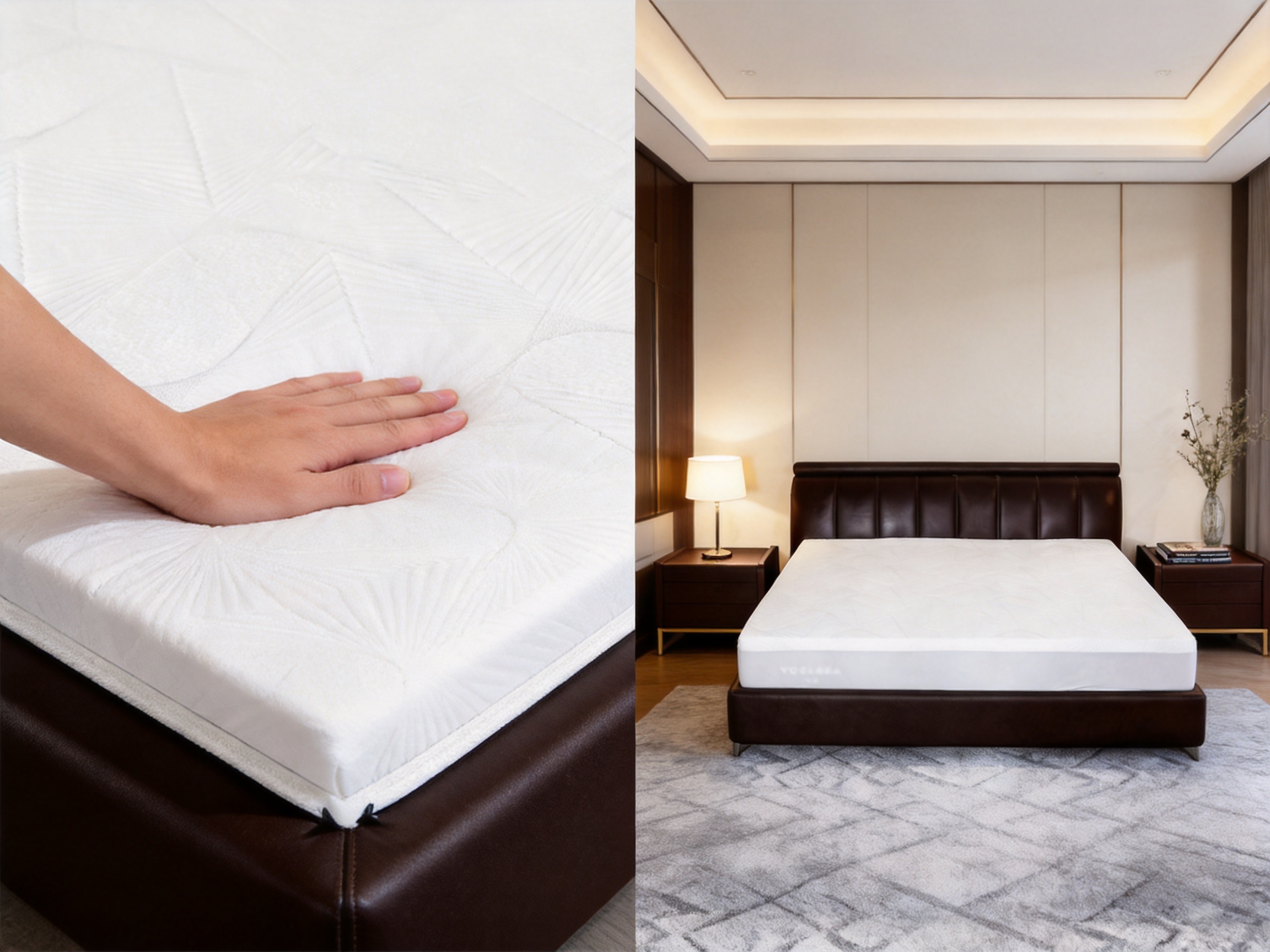
The outer surface is designed with a 3D fan-shaped quilting process. This pattern is not merely decorative. Its raised and structured texture can contribute to surface friction, air movement, and perceived product quality. The fan-shaped geometry creates a distinct visual identity while retaining the restrained appearance expected from a minimalist mattress product.
Quilting can help organize the relationship between the outer fabric and the internal cushioning layer. A well-constructed quilted cover can reduce loose fabric movement, create a more uniform surface, and help the mattress maintain a finished appearance during regular use. The 3D texture also gives the product greater visual depth than a plain, flat cover.
Another stated benefit is improved anti-slip performance. A textured surface may help reduce unwanted movement between the mattress and the bedding or between the user and the sleep surface, depending on the final configuration and application. Anti-slip performance should always be evaluated together with the bed base, fitted sheet, and installation conditions, but the textured construction provides a practical design advantage over completely smooth surfaces.
Breathability is another important consideration. The quilted structure can create small variations in the surface profile and support air exchange around the cover. Although memory foam is naturally different from open spring systems, a thoughtfully designed cover can help manage the contact environment and improve the overall sense of freshness.
For manufacturers, distributors, and hotel purchasers, the surface design also has a presentation advantage. Product appearance influences consumer perception before the mattress is used. The combination of white fabric, fan-shaped quilting, and neat edge finishing makes the mattress appear more carefully engineered than an untrimmed foam slab or a basic unquilted pad.
Thickened Edges and Structural Stability
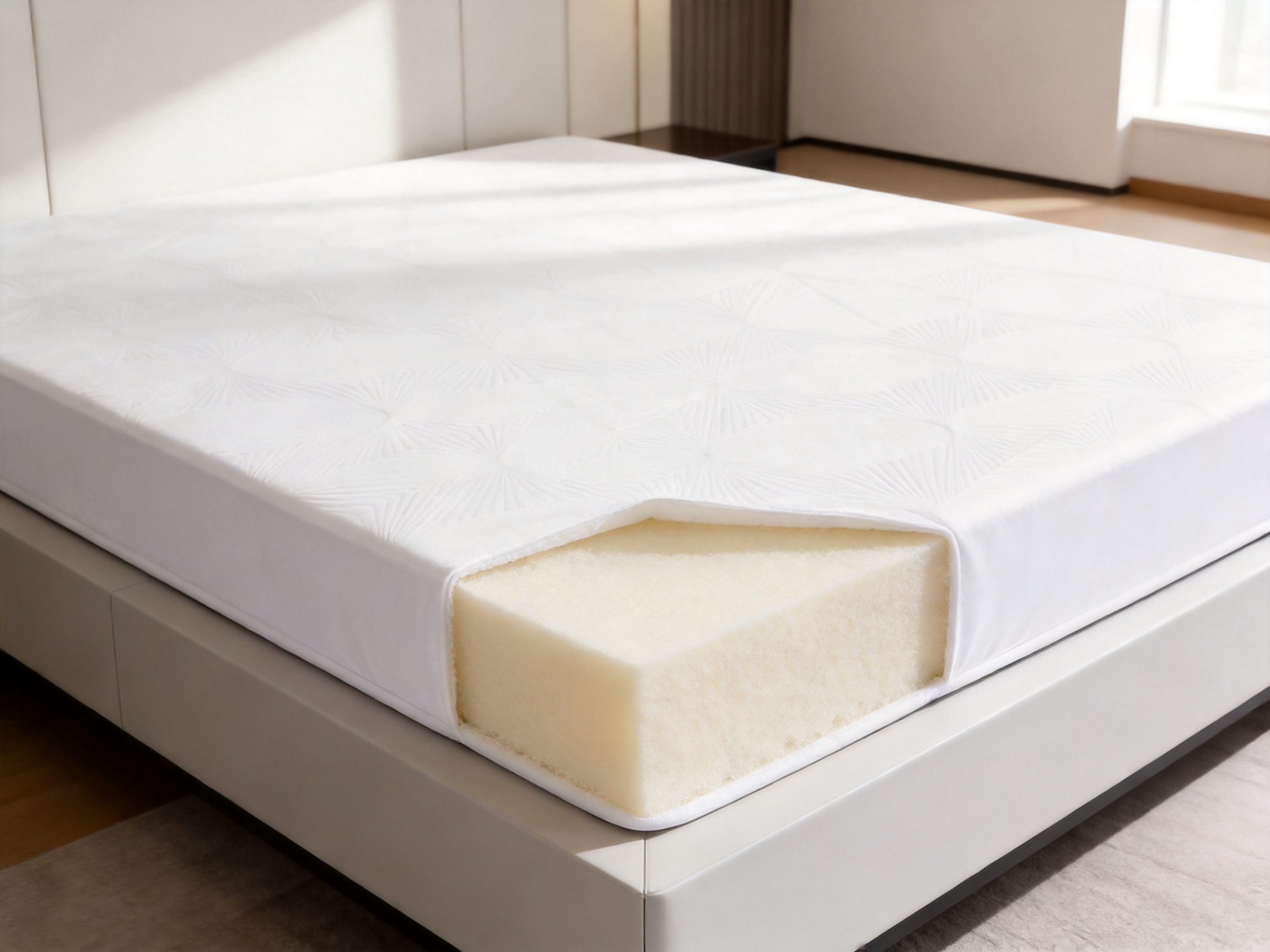
The mattress uses a thickened edge design with edge binding. Edge construction is often overlooked, even though it affects handling, appearance, and long-term usability. A weak or poorly finished edge can make a foam product appear uneven, become vulnerable to compression, or lose its shape more quickly during repeated movement and storage.
By reinforcing the perimeter, the design aims to provide a firmer and more organized boundary. This can make it easier to position the mattress on a bed frame and may help users feel more secure when sitting near the side. The bound edge also gives the cover a clean, finished outline and helps connect the top, side, and bottom sections into a cohesive product.
Compared with low-cost competitors that focus almost entirely on the foam block, this edge-oriented approach adds value at the construction level. It demonstrates that the product is designed as a complete mattress rather than as a cut piece of cushioning material placed inside a minimal cover.
Edge reinforcement can also be beneficial for commercial use. Hotel mattresses, apartment furnishings, and guest-room products may be moved, rotated, cleaned, and reinstalled more frequently than mattresses used in a private bedroom. A structured perimeter can support easier handling and help preserve a professional appearance over repeated cycles of use.
Advantages Compared with Basic Competitive Products
The memory foam mattress market includes many products with different materials, profiles, cover structures, and manufacturing standards. The advantages of this model are best understood by comparing its design approach with common alternatives.
Compared with Ordinary Sponge Pads
Ordinary sponge products are often selected for low cost and simple cushioning. However, they may offer less precise body conformity and less controlled recovery. The slow-rebound memory foam used in this mattress is intended to respond to the body gradually, which creates a more supportive and enveloping feel.
The difference is also visible in construction. A basic sponge pad may have a plain surface and minimal edge treatment. This mattress adds 3D quilting, a defined cover, and reinforced edges. As a result, it can occupy a higher position in a product range and appeal to buyers who want both practical comfort and a more finished appearance.
Compared with Very Soft, Low-Density Foam
Low-density foam can feel soft when first used, but softness alone does not guarantee stable support or long-term consistency. The high-density memory foam specification is intended to provide stronger structural resistance and improved durability against deformation under prolonged use.
The mattress therefore offers a more balanced proposition: adaptive comfort without relying only on initial softness. For distributors and project buyers, this balance can reduce the risk of offering a product that feels attractive at first but loses its intended performance quickly.
Compared with Conventional Spring Surfaces
Spring mattresses are recognized for elasticity and ventilation, but they may transfer movement more noticeably and may not provide the same close body contouring as memory foam. This model is designed for buyers who prioritize pressure distribution, quiet movement, and a stable, non-bouncy surface.
The 50 mm profile can also serve as an additional comfort layer above an existing sleep system. This gives buyers more flexibility than a full replacement mattress. Instead of discarding an existing base, a user or hospitality operator may upgrade the contact surface through a memory foam layer, subject to compatibility with the underlying mattress and bed structure.
Compared with Plain, Unquilted Mattress Covers
A plain cover may protect the foam, but it contributes less to product differentiation. The 3D fan-shaped quilted cover provides a recognizable appearance, enhanced tactile texture, and a more premium presentation. These attributes can help retailers explain the product’s value and give end users a clear visual reason to choose it over a generic alternative.
Compared with Fixed-Size Imported Products
Many ready-made mattresses are available only in a limited number of standard sizes. This can create difficulties for hospitality projects, regional bed dimensions, replacement programs, and furniture manufacturers. The availability of custom processing allows this model to be considered for a broader range of applications.
Custom sizing is particularly valuable for buyers who need a consistent mattress design across different room types. It can support coordinated procurement for hotels, apartments, dormitories, care facilities, and other projects with varying bed measurements. Final customization details, tolerances, packaging, and minimum order requirements should be confirmed with the manufacturer before purchase.
Manufacturing Capabilities Behind the Product
The product is manufactured by Jiangsu Wellcare Household Articles Co., LTD., a Chinese enterprise focused on foam materials and healthy home products. The company’s stated development history combines material research, factory investment, cooperation with technical institutions, international supply, and continued product expansion.
According to the supplied company information, WELLCARE was founded in 2003 and is dedicated to the research, development, and manufacture of high-performance sleep materials and healthy home products. The company’s earlier history began in 1993 as a school-run scientific research enterprise. This long development path provides a background in both technical exploration and commercial manufacturing.
The company states that it operates with a doctor-led research and development team and develops more than one hundred new foam materials each year. Its material portfolio includes ordinary sponge, memory foam, gel foam, temperature-insensitive memory foam, quick-dry memory foam, flame-retardant sponge, antibacterial sponge, and other foam solutions.
These capabilities are relevant to the slow-rebound mattress because memory foam performance depends heavily on formulation and structural control. Comfort, recovery speed, resilience, density, pressure distribution, and temperature behavior are not determined by the name “memory foam” alone. They are influenced by material chemistry, processing conditions, cell structure, thickness, cover design, and quality control.
Material Research and Formulation Development
A manufacturer with multiple foam categories can compare materials according to the needs of different applications. Residential mattresses may require a different balance of comfort and recovery from hotel products, pet products, cushions, or children’s products. A broad material platform gives the manufacturer more options when adjusting product performance for a specific market.
For the slow-rebound mattress, the objective is to combine body-conforming comfort with stable support. The high-density foam specification reflects an emphasis on durability and structural reliability. The material must be cut, covered, quilted, and finished without compromising the intended response of the foam.
The company’s stated research activity also supports future customization. Buyers may need alternative thicknesses, dimensions, foam types, or performance directions. A manufacturer experienced in material development is better positioned to discuss these requirements than a trading company that only sources finished products from unrelated factories.
Factory Development and Production Scale
The company reports that it purchased a 12,000-square-meter factory building in 2003 and later acquired 50,000 square meters of land in 2008. These investments indicate a long-term commitment to production infrastructure. Physical manufacturing capacity is important for buyers who require continuity, repeat orders, customized dimensions, or stable communication between development and production teams.
In 2010, the company states that its products were supplied to cross-border supermarkets in the United States, Germany, and Japan. It later expanded exports to the United Kingdom, Canada, Australia, and Kuwait. This international experience can help a manufacturer understand the practical requirements of export packaging, product documentation, regional preferences, and cross-border communication.
The company became an Alibaba-certified Gold Supplier in 2018 and entered e-commerce development. In 2020, it became a designated supplier for five-star hotels, according to the provided information. These milestones show an effort to serve both online commercial channels and professional hospitality customers.
Integrated Product and Material Knowledge
WELLCARE’s product categories extend beyond mattresses and include memory foam furniture, functional pillows, memory foam pillows, memory foam cushions, children’s foam products, and pet foam products. This wider product range allows the company to apply foam knowledge across different shapes, pressure requirements, sizes, and use conditions.
For a mattress buyer, this can provide a practical advantage. The same supplier may be able to support coordinated product programs involving mattresses, pillows, cushions, and other foam-based home products. Such coordination may simplify sourcing, communication, packaging design, and product development for retailers and hospitality groups.
Quality, Durability, and Product Lifecycle Considerations
The product information identifies the mattress as a qualified product and describes the high-density memory foam as resistant to deformation during prolonged use. These statements communicate the intended performance direction: stable support and extended usability rather than disposable, short-term cushioning.
Durability depends on more than foam density. It is also influenced by load frequency, ventilation, foundation quality, room conditions, user weight, cleaning methods, and whether the mattress is folded or stored incorrectly. The quilted cover and thickened edge are therefore meaningful components of the overall product lifecycle, but they should be considered together with proper use and maintenance.
A well-maintained foam mattress should be placed on a suitable, even foundation. Excessive moisture should be avoided, and the product should be protected from sharp objects or concentrated loads. If the cover is removable or washable in the final production version, the care instructions should be confirmed with the supplier, because cleaning procedures can differ according to the cover construction.
For commercial buyers, lifecycle planning should include inspection procedures, replacement schedules, packaging requirements, storage conditions, and spare-unit planning. The moderate thickness and manageable format may be useful in these programs because replacement layers can be transported and installed more easily than oversized full-depth mattresses.
Comfort in Residential and Commercial Applications
Home Bedrooms
In a private bedroom, the mattress can be used as a comfort upgrade for a standard bed. Its body-conforming response may be attractive to users who experience discomfort from hard surfaces or who want a less reactive sleep environment. The minimalist white cover also works with different bedding colors and room styles.
Hotels and Guest Rooms
Hotels need products that balance guest comfort, appearance, maintenance, and procurement consistency. A memory foam mattress or comfort layer can help create a more supportive sleeping surface while maintaining a clean and professional presentation. The reinforced edge and quilted cover are useful features in rooms where bedding products are handled repeatedly.
The manufacturer’s stated experience as a designated supplier for five-star hotels is relevant to buyers evaluating hospitality applications. Hotel procurement teams should still conduct their own sample testing, comfort evaluations, durability checks, and compliance reviews before placing a large order.
Serviced Apartments and Rental Housing
Serviced apartments and furnished rental properties often need standardized products that fit multiple room layouts. Custom processing can help accommodate different bed sizes or project specifications. The neutral design is also suitable for properties that change interior themes or serve international tenants.
Furniture Manufacturers
Furniture companies may integrate the mattress into platform beds, sofa-bed systems, guest beds, or modular sleep furniture. Because the product can be customized, it may be adapted to specific frame dimensions or furniture concepts. Engineering coordination is recommended to confirm the final thickness, compression behavior, cover dimensions, and installation method.
Online and Cross-Border Distribution
The product is suitable for consideration by distributors selling through eBay, Amazon, Wish, AliExpress, independent websites, Lazada, and other platforms, as indicated in the supplied product information. Its visual presentation, clear material story, and customization capability can support different retail positioning strategies.
Online sellers should provide accurate descriptions of thickness, dimensions, material composition, firmness expectations, packaging, recovery time after unpacking, and care instructions. Memory foam products may require time to recover their intended shape after compression or transport. Clear customer communication helps reduce misunderstandings and improves the post-purchase experience.
Customization and OEM-Oriented Cooperation
Custom processing is listed as available. This is one of the product’s strongest commercial advantages because mattress requirements vary substantially by country, furniture standard, hotel project, and retail channel.
Customization may involve dimensions, thickness, cover patterns, labeling, packaging, and selected material specifications. The exact scope should be discussed during technical confirmation. Buyers should provide bed-frame drawings or precise measurements where possible, especially when the mattress will be installed inside a recessed platform or integrated into a furniture product.
A professional customization process should begin with a requirement review. The buyer and manufacturer can confirm the intended application, target market, user profile, expected comfort level, packaging method, shipping constraints, and order quantity. A sample or prototype can then be evaluated before mass production.
For repeat purchasing, documented specifications are particularly important. The final file should identify foam type, dimensions, tolerance, cover material, quilting pattern, edge treatment, labels, packaging, and inspection standards. This helps maintain consistency across different production batches.
Customization also allows buyers to create a differentiated product rather than competing only on price. A retailer can position the mattress as a comfort layer for apartment living, a hotel-grade sleep accessory, a minimalist bedroom product, or a customized solution for furniture manufacturers. The core design remains recognizable while the commercial presentation can be adjusted to the target market.
Sustainability and Responsible Manufacturing Direction
The company states that it invests in advanced environmentally friendly energy systems and improves environmental management practices. It aims to go beyond basic compliance and create lasting environmental value by integrating respect for nature into its business operations.
Responsible manufacturing is increasingly important in the foam and home-furnishing industries. Buyers are paying closer attention to energy use, material efficiency, packaging, factory management, and the usable life of products. A mattress that maintains its structure for a longer period may reduce the frequency of replacement, although actual service life depends on use and maintenance conditions.
Customers evaluating environmental claims should request the specific documentation relevant to their market. This may include material declarations, test reports, chemical compliance information, packaging details, or factory environmental records. The supplied information confirms the company’s sustainability direction, while project-specific requirements should be verified before purchase.
The company’s focus on material innovation may also support sustainability through product optimization. Developing foam materials for different applications can help avoid using an unnecessarily complex or oversized product where a more suitable solution is available. In customized projects, the correct dimensions can reduce excess material and improve logistical efficiency.
Manufacturing Process from Foam Development to Finished Mattress
The production of a finished memory foam mattress involves several connected stages. The exact factory process may vary according to product configuration, but the following sequence explains how the principal product elements work together.
Stage One: Requirement and Material Selection
Production begins with an understanding of the intended use. A home mattress, hotel mattress, furniture insert, and portable comfort layer may require different specifications. The manufacturer selects an appropriate foam formulation and fabric combination according to the target performance, dimensions, and appearance.
Stage Two: Foam Production and Conditioning
The foam material is produced according to the selected formulation and processed into a stable block or sheet suitable for cutting. Conditioning and storage are important because the material must reach a consistent state before it is converted into the final product.
Stage Three: Precision Cutting
The foam is cut to the required length, width, and thickness. For the standard model, the target dimensions are 2000 × 1800 × 50 mm. Customized orders require careful dimensional confirmation to ensure the foam fits the finished cover and the intended bed structure.
Stage Four: Cover Fabric Preparation
Polyester fiber is used as the stated fabric material. The fabric is prepared for quilting and assembled according to the mattress dimensions. Pattern alignment, seam allowance, and panel consistency influence the appearance of the finished product.
Stage Five: 3D Fan-Shaped Quilting
The fan-shaped pattern is formed through a 3D quilting process. This gives the cover its characteristic texture and contributes to the intended anti-slip, breathable, and decorative functions. Consistent quilting requires accurate pattern control and stable sewing or bonding procedures, depending on the final production method.
Stage Six: Edge Binding and Reinforcement
The mattress perimeter is finished with a thickened edge and binding treatment. This step gives the product a more defined shape and helps protect the cover margins. It is also important for creating the clean white outline associated with the minimalist appearance.
Stage Seven: Assembly and Inspection
The foam core and finished cover are assembled. Inspection may include dimensional checks, visual examination, seam review, edge consistency, surface cleanliness, and packaging assessment. Buyers with specific requirements can discuss additional inspection points with the supplier.
Stage Eight: Packaging and Export Preparation
After inspection, the product is prepared for shipment. Packaging design should reflect the product’s dimensions, compression requirements, protection needs, and destination. Cross-border shipments may require additional labeling, palletization, carton specifications, or documentation depending on the destination market and sales channel.
Purchasing Guidance for Importers and Distributors
Importers should first determine whether they need the standard 2000 × 1800 × 50 mm configuration or a customized size. Bed measurements should be taken from the actual sleeping surface rather than relying only on general labels such as “king” or “queen,” because regional dimensions can differ.
Sample evaluation is recommended before a large order. The sample should be placed on the intended foundation and tested by users with different sleeping positions. Buyers can assess surface feel, recovery behavior, edge stability, cover appearance, quilting consistency, and compatibility with fitted sheets.
Packaging should also be reviewed. Importers need to know the packed dimensions, gross weight, compression method, carton or bag configuration, and estimated container utilization. These factors directly affect freight cost and warehouse planning.
Because the product supports custom processing but does not support dropshipping according to the supplied specifications, buyers should plan for inventory, fulfillment, or a distribution arrangement. The product may be more suitable for importers, wholesalers, retailers, hospitality suppliers, and furniture manufacturers than for a pure direct-shipping business model.
The product information identifies major downstream platforms including eBay, Amazon, Wish, AliExpress, independent websites, Lazada, and other channels. It also identifies sales regions across Africa, Europe, South America, Southeast Asia, North America, Northeast Asia, and the Middle East. Buyers remain responsible for checking the legal, labeling, chemical, fire, packaging, and consumer-product requirements of each destination.
Brand and Supplier Strengths
Jiangsu Wellcare Household Articles Co., LTD. presents itself as a manufacturer rather than solely as a reseller. Its combination of foam research, product development, factory investment, export experience, and customized processing supports a more integrated supply model.
The company’s R&D portfolio is a notable strength. It includes multiple foam technologies and product categories, which can help customers explore alternatives when their target market requires different firmness, temperature response, drying performance, flame-retardant characteristics, or antibacterial positioning.
The company’s history of cooperation with Huai'an Institute of Technology and Qingdao University of Science and Technology also reflects an emphasis on technical development. Academic and industrial cooperation can contribute to new formulations, performance optimization, and more systematic material research.
International market experience is another advantage. Supplying products to markets such as the United States, Germany, Japan, the United Kingdom, Canada, Australia, and Kuwait suggests familiarity with cross-border business environments. It does not replace destination-specific compliance verification, but it can make communication and export coordination more efficient.
The manufacturer’s stated experience with cross-border supermarkets, e-commerce, and five-star hotels indicates the ability to serve different purchasing structures. Retail customers may need attractive packaging and consistent dimensions, while hotel clients may emphasize repeatability, durability, and project coordination. A supplier familiar with multiple channels can better understand these differing priorities.
Maintenance and Use Recommendations
For best results, the mattress should be placed on a clean, level, and appropriately supportive base. Uneven foundations may create irregular pressure and affect the perceived comfort of the memory foam. The product should not be exposed to sharp edges, excessive moisture, or concentrated loads that exceed normal use.
Allowing the mattress to air in a clean, well-ventilated environment after unpacking can help it reach its intended shape and condition. The specific unpacking and recovery instructions should be confirmed with the supplier because packaging methods can vary.
Use a suitable fitted sheet or mattress protector to keep the white quilted surface clean. Regular bedding maintenance can reduce exposure to body oils, moisture, dust, and accidental spills. Cleaning agents, water temperature, drying methods, and cover-removal instructions should follow the manufacturer’s recommendations.
Periodic rotation may help distribute normal wear, provided that the product structure and cover design permit rotation. Flipping the mattress should only be done if both sides are designed for sleeping use. Buyers should not assume that a quilted top and reinforced bottom have identical functions.
Correct care helps protect the product’s surface, preserve its shape, and extend its useful life. In hotels and rental properties, staff should include mattress inspection in room-maintenance procedures so that stains, seam damage, edge compression, or foundation problems can be addressed early.
Frequently Asked Questions
What makes this mattress different from a standard foam pad?
It uses high-density slow-rebound memory foam, which is designed to conform gradually to the body and provide pressure-relieving support. It also includes a 3D fan-shaped quilted cover and thickened bound edges, giving it a more structured and finished construction than a basic unquilted foam pad.
What is the standard mattress size?
The listed standard size is 2000 × 1800 × 50 mm, suitable for a 2.0-meter bed. Custom processing is available, so buyers should confirm the required size and tolerance with the manufacturer.
Is the product a complete deep mattress or a thinner comfort layer?
With a thickness of 50 mm, it is a relatively compact memory foam mattress or comfort layer. It may be used over an existing mattress or incorporated into a suitable bed system. The correct application depends on the foundation and the desired comfort level.
Does the mattress provide firm or soft comfort?
The product is described as providing stable yet soft support. Individual comfort perception varies according to body weight, sleeping position, temperature, bed base, and personal preference. A sample evaluation is recommended for commercial orders.
What is the purpose of the 3D fan-shaped quilting?
The quilting creates a decorative texture and is intended to improve surface friction, breathability, durability, and visual quality. It also gives the mattress a distinctive appearance compared with a plain cover.
Why are the edges reinforced?
The thickened edge and binding help create a sturdier perimeter, resist deformation, improve handling, and provide a clean finished appearance. Edge reinforcement can be especially useful in hospitality, rental, and furniture applications where the product may be handled frequently.
Can the product be customized?
Yes. Custom processing is listed as available. Buyers can discuss dimensions and other production details with the manufacturer. Final customization options, minimum order quantities, samples, packaging, and lead times should be confirmed before ordering.
Does the supplier support dropshipping?
The supplied product information states that dropshipping is not supported. Buyers should therefore plan for wholesale purchasing, inventory management, retail fulfillment, or project-based supply.
Which sales channels can use this product?
The product information identifies eBay, Amazon, Wish, AliExpress, independent websites, Lazada, and other platforms as potential downstream channels. It may also be suitable for hotel suppliers, furniture manufacturers, apartment operators, and home-furnishing distributors.
What material is used for the cover?
The listed fabric material is polyester fiber. The cover uses a white 3D fan-shaped quilted design with bound edges.
Is the mattress suitable for all seasons?
The product is identified as all-season. Actual comfort may vary according to room temperature, humidity, bedding, user preference, and local climate. Buyers in hot or humid regions should discuss ventilation and cover requirements with the supplier.
How should importers evaluate the product before mass production?
Importers should request a sample, verify the dimensions, test the product on the intended bed base, review the cover and edge finish, confirm packaging details, and check all destination-market compliance requirements. Written specifications should be finalized before mass production.
What is the company’s experience in foam materials?
The company reports experience in ordinary sponge, memory foam, gel foam, temperature-insensitive memory foam, quick-dry memory foam, flame-retardant sponge, antibacterial sponge, and other foam materials. It also states that its R&D team develops more than one hundred new foam materials each year.
Can the manufacturer supply products for hotels and commercial projects?
Yes. The company states that it became a designated supplier for five-star hotels in 2020. Commercial buyers should still conduct project-specific tests and confirm requirements for durability, cleaning, packaging, fire performance, labeling, and other applicable standards.
Conclusion
The slow-rebound memory foam mattress combines adaptive comfort with a practical, commercially flexible construction. Its high-density memory foam is designed to conform to the body, distribute pressure, absorb movement, and maintain stable support. The 50 mm profile offers a manageable alternative to very thick mattresses and can be used in home, hotel, apartment, furniture, and distribution applications.
Its advantages extend beyond the foam core. The 3D fan-shaped quilting adds texture, visual distinction, and intended anti-slip and breathability benefits. The pure white design supports modern interiors, while the thickened bound edges contribute to structural stability and a more refined finish. Custom processing allows buyers to address different bed dimensions and project requirements.
The manufacturing background of Jiangsu Wellcare Household Articles Co., LTD. further strengthens the product proposition. The company combines material research, multiple foam technologies, factory development, international supply experience, e-commerce participation, hospitality cooperation, and sustainability-oriented manufacturing practices.
For buyers seeking a memory foam product that offers more than basic cushioning, this mattress provides a balanced platform for comfort, design, and customized supply. The best purchasing decision will come from matching the product’s specifications with the intended bed system, market requirements, packaging plan, and user expectations.
References
1. Product specification sheet for the slow-rebound memory foam mattress, item m030.
2. Manufacturer-provided information on memory foam materials, quilting construction, edge binding, customization, and commercial applications.
3. Jiangsu Wellcare Household Articles Co., LTD. company profile and development history.
4. General principles of pressure distribution, viscoelastic foam response, and mattress support design.
5. General guidance for mattress sampling, dimensional verification, packaging assessment, and cross-border product procurement.
6. Manufacturer-provided information on foam research, product categories, export markets, e-commerce channels, and sustainability initiatives.
7. General furniture and bedding maintenance principles for foam-based sleep products.
Product: Slow rebound memory foam mattress
PREV:U-Shaped Removable Memory Foam Neck Pillow: Portable Cervical Support for Comfortable Travel
NEXT:Why Shredded Memory Foam Pillows Are Transforming Everyday Sleep Comfort
NEXT:Why Shredded Memory Foam Pillows Are Transforming Everyday Sleep Comfort
Interested in cooperation or have questions?
Related News
WELLCARE was founded in 2003, boasting over a decade of profound and extensive experience.
Quick Links
Product
Media Centre
Contact Information
- [email protected]
- +86-517-84998062
- +86-15152354988
- No. 168 Nenjiang Road, Huaiyin District, Huai'an City, Jiangsu Province, China
Copyright © Jiangsu Wellcare Household Articles Co., LTD. All Rights Reserved.
Custom Memory Gel Mattress Manufacturers
