

 English
 日本語
日本語 Español


Pan Ruoxi — Product Sales Consultant

Home / Author / Pan Ruoxi — Product Sales Consultant / White Folding Sofa: Compact Comfort, Flexible Living, and Advanced Foam Manufacturing
Product Category
NEW Category
Contact us
White Folding Sofa: Compact Comfort, Flexible Living, and Advanced Foam Manufacturing
Modern homes increasingly require furniture that can perform more than one function. A single room may serve as a living area, reading corner, guest room, work space, and relaxation zone, often within the same day. In compact apartments, studios, dormitories, serviced residences, and multipurpose family rooms, every square meter must be used intelligently. The white folding sofa responds to this changing lifestyle with a practical combination of seating comfort, sleeping flexibility, compact proportions, and easy maintenance.
Designed as a single-seater sofa with sofa-bed functionality, this product offers an adaptable solution for people who want the comfort of upholstered furniture without filling a room with large, permanent pieces. Its creamy white appearance creates a calm visual foundation, while the minimalist silhouette allows it to blend with Scandinavian, Japanese, contemporary, and other understated interior styles. More importantly, its high-density slow-rebound foam provides supportive comfort for sitting, reading, working, resting, or lying down.
The product is manufactured by Jiangsu Wellcare Household Articles Co., LTD., a Chinese manufacturer with long-term experience in foam materials, sleep products, and healthy home furnishings. The company’s capabilities extend beyond simple upholstery production. Its research and development work covers ordinary sponge, memory foam, gel foam, temperature-insensitive memory foam, quick-dry memory foam, flame-retardant sponge, antibacterial sponge, and other specialized foam materials. This material knowledge supports the development of furniture that is comfortable, functional, and suitable for international markets.
This article examines the white folding sofa in detail, including its design, foam performance, fabric, folding function, maintenance advantages, manufacturing strengths, customization potential, and suitability for different commercial and residential applications.
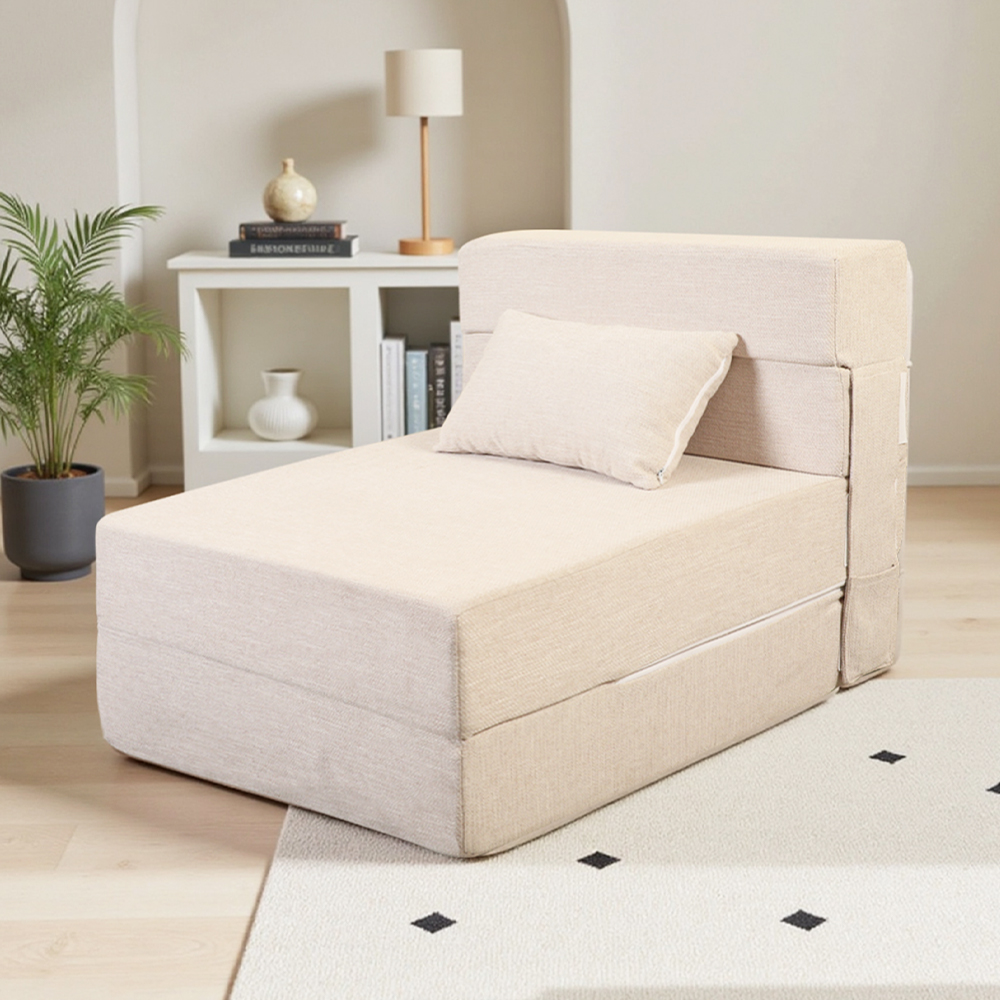
White folding sofa
1. A Furniture Solution for Flexible Modern Rooms
The central advantage of a folding sofa is its ability to change its role according to the user’s needs. During the day, it can function as a compact single-seat sofa. When additional sleeping space is needed, it can be converted into a bed. This straightforward transformation makes the product especially valuable in homes where space is limited or where rooms need to serve several purposes.
A conventional sofa may provide comfortable seating but occupy a fixed amount of floor space. A traditional guest bed may offer sleeping capacity but remain unused for much of the year. A folding sofa combines the practical benefits of both furniture types while reducing the need for separate products. This can simplify room planning and create a less crowded environment.
The sofa is suitable for living rooms, bedrooms, guest rooms, studies, home offices, reading areas, children’s spaces, and compact hospitality interiors. It can be used as an occasional guest bed, an afternoon nap surface, a reading seat, or a comfortable place for watching films. In a studio apartment, the product can support a clear distinction between daytime seating and nighttime rest without requiring a permanent bed frame.
Its single-seater category also creates advantages for placement. It can be positioned beside a window, near a bookcase, in a corner of a bedroom, or alongside a larger sofa. Unlike oversized sectional furniture, it can be moved or rearranged when the room’s function changes. This flexibility is useful for renters, young professionals, students, hospitality operators, and homeowners who frequently update their interior layouts.
Efficient use of limited floor space
Compact furniture must be more than small. It must also provide meaningful comfort and useful functions. The white folding sofa is designed around this principle. Its listed dimensions are 76.2 × 66 × 60 centimeters, creating a relatively compact footprint for a fully upholstered furniture item. This helps users furnish small rooms without sacrificing a dedicated place to sit or rest.
In smaller homes, furniture that serves a single purpose can create inefficient gaps and unused areas. A folding sofa reduces this problem by offering two primary functions in one structure. When folded, it provides a neat seating form. When opened, it creates a more extensive resting surface. This makes the product suitable for flexible room planning and occasional-use spaces.
Compact dimensions are also valuable in commercial settings. Guesthouses, serviced apartments, student accommodation, boutique hotels, treatment rooms, and office lounges may need furniture that provides comfort without overwhelming the interior. A single folding sofa can be placed in a room as an additional seating and sleeping option, creating more service value from a limited area.
Suitable for changing lifestyles
People’s furniture requirements are no longer limited to traditional room categories. A bedroom may become a home office during working hours. A study may be used as a guest room at weekends. A living room may need to support meals, entertainment, remote work, and sleep. The folding sofa is aligned with this trend because its function is not limited to one fixed setting.
Its adaptable format can also be helpful during relocation. A sofa that can be disassembled and handled more easily may be more convenient to transport than a large, rigid piece. This is an important consideration for apartment residents, rental property owners, and retailers managing delivery into buildings with narrow corridors or limited elevators.
2. Creamy White Aesthetics and Interior Compatibility
The product uses a creamy white color scheme rather than a harsh, bright white appearance. This creates a softer and warmer impression. Cream tones can make a room feel calm, welcoming, and visually uncluttered, while still preserving the clean appearance associated with neutral furniture.
Color is an important part of furniture selection because a sofa often becomes one of the largest visual elements in a room. A neutral creamy shade can coordinate with natural wood, light oak, beige textiles, gray walls, muted green accents, black metal details, and other common interior materials. It can also be refreshed seasonally through cushions, throws, rugs, and decorative accessories.
The minimalist lines support a broad range of design styles. In Scandinavian interiors, the sofa can complement pale wood, natural textures, and simple decorative objects. In Japanese-inspired spaces, it can support a quiet, uncluttered arrangement. In modern interiors, its restrained silhouette can provide a soft contrast to glass, metal, stone, or geometric architectural details.
Unlike highly patterned upholstery, a creamy neutral fabric is less likely to dominate the space or become visually outdated. This provides an advantage for retailers and hospitality operators who want a product that can be used across different interior projects. It may also reduce the need for frequent replacement when a room’s decorative scheme changes.
Comfortable visual expression
Good furniture design must communicate comfort before a person even sits down. Soft upholstery, rounded visual qualities, and a warm color palette can make a product appear inviting. The white folding sofa is intended to gently envelop everyday moments, creating a relaxed visual character rather than a formal or institutional one.
This visual softness is balanced by functional construction. The product is not merely decorative. Its appearance is supported by a high-density foam interior, detachable components, and a conversion mechanism that allows it to move between sofa and bed configurations. The result is furniture that aims to combine calm aesthetics with practical daily performance.
3. High-Density Slow-Rebound Foam Comfort
The core performance feature of the white folding sofa is its high-density slow-rebound foam filling. Slow-rebound foam, commonly associated with memory foam technology, responds gradually to body pressure. Instead of immediately collapsing or quickly returning to its original shape, the material distributes pressure and conforms to the user’s body contours.
When a person sits on the sofa, the foam can adapt to areas such as the hips, thighs, back, and shoulders. This contouring effect helps create a more personalized support experience than a basic low-density cushion. When the user changes position or stands up, the foam gradually recovers, helping the upholstery maintain a smoother and more consistent appearance.
High density is important because it contributes to the stability and durability of foam. A lower-quality, low-density filling may feel soft at first but lose resilience more quickly under repeated compression. High-density slow-rebound foam is designed to provide a balance between softness and support, which is especially valuable for furniture used for extended periods.
Softness without excessive sinking
One common weakness in soft furniture is excessive sinking. A seat can feel comfortable for a few minutes but become difficult to use if the body sinks too deeply. Excessive compression may make it harder to stand up, reduce posture support, and create uneven pressure across the body. The foam construction of this sofa is intended to avoid that overly unstable feeling.
The product aims to deliver a soft touch while maintaining stable support. This balance is useful for reading, remote work, watching television, conversation, or taking a nap. Users can experience a cushioned surface without the sensation that the seat immediately loses its structure.
Compared with ordinary sponge furniture, slow-rebound foam may offer a more body-conforming experience. Compared with very firm seating, it can provide a gentler pressure response. Compared with excessively plush furniture, its high-density structure is intended to offer better stability. These characteristics create a competitive position for buyers seeking comfort that is neither rigid nor unstable.
Support for extended sitting
Many sofas are used for longer periods than originally expected. A person may sit for several hours while reading, studying, working on a laptop, watching a film, or caring for a child. During extended sitting, insufficient support can contribute to discomfort in the lower back, hips, and legs.
The sofa’s slow-rebound foam is designed to conform to the body and distribute pressure more evenly. Stable support may help reduce the feeling of localized pressure that can occur on hard or poorly cushioned furniture. Although individual comfort depends on body shape, sitting posture, and personal preference, the material is well suited to users who value a supportive yet soft seat.
The same characteristics can be helpful when the sofa is converted into a resting surface. A material that responds to body contours can create a more comfortable experience for naps or occasional overnight use than a thin, rigid, or uneven surface.
Memory foam expertise behind the product
The manufacturer’s broader expertise in memory foam and related materials is an important strength. The company develops a wide range of foam solutions, including gel foam, temperature-insensitive memory foam, quick-dry memory foam, flame-retardant sponge, and antibacterial sponge. This suggests that the product is supported by a material-development platform rather than relying only on standard commodity foam.
Material research allows manufacturers to consider different performance requirements, such as resilience, softness, density, breathability, moisture management, safety, and long-term stability. For buyers seeking private-label or customized furniture, access to this type of technical knowledge can be a significant advantage over suppliers that only assemble pre-existing components.
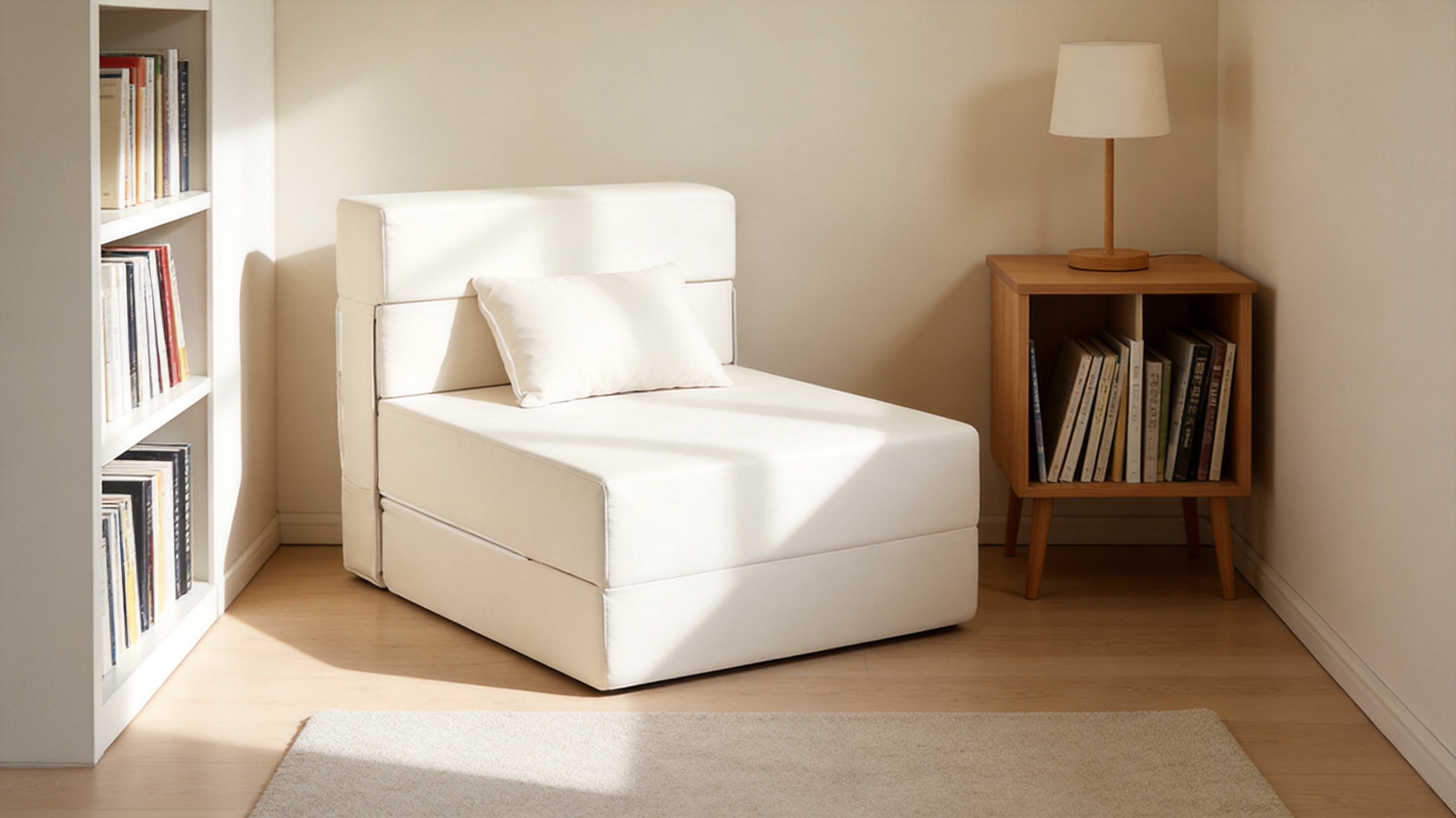
4. Sofa-to-Bed Conversion and Everyday Functionality
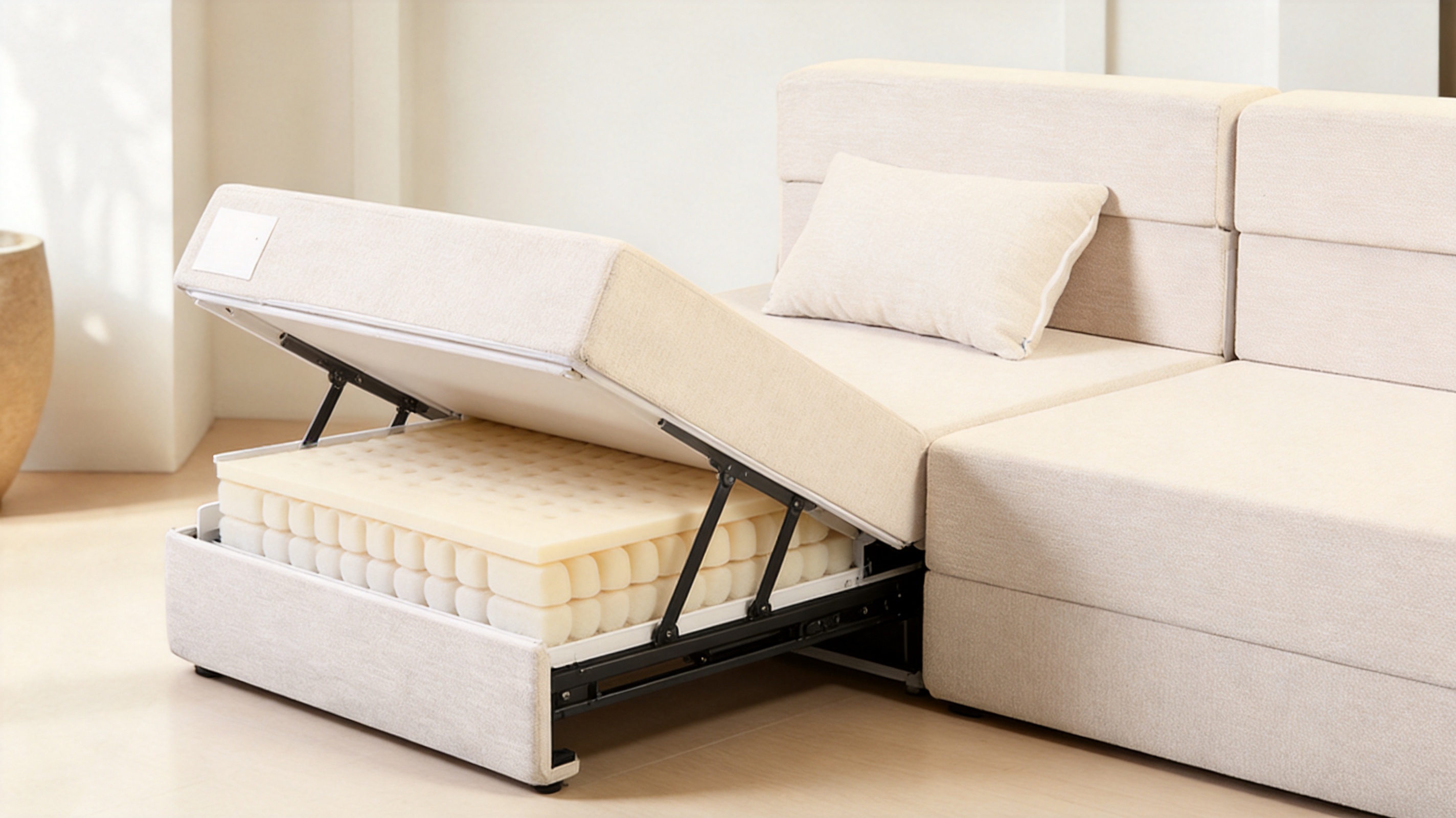
The white folding sofa is designed to transform quickly from a sofa into a bed. This conversion feature is central to its value. A user can maintain a compact seating arrangement during the day and create a resting surface when needed. The transformation is intended to be straightforward, reducing the effort associated with preparing an occasional sleeping space.
Multifunctional conversion is particularly useful for homes with limited bedrooms. A study can remain available as a workspace until a visitor arrives. A living room can provide an additional sleeping option without storing a separate folding bed. A teenager’s room can include both a lounge area and a nap surface. These applications help users make more efficient decisions when purchasing furniture.
Practical use as an occasional guest bed
Not every home requires a permanent guest bed. However, visitors may still need a comfortable place to sleep from time to time. A folding sofa can provide a convenient solution without dedicating an entire room to a bed that is rarely used.
For guesthouses and serviced apartments, convertible furniture can also increase room flexibility. A room that functions as a single-occupancy space can gain occasional additional sleeping capacity, subject to the product’s intended use, configuration, and applicable safety requirements. This can be valuable for operators managing different booking needs.
The product may also be useful in offices, wellness centers, staff lounges, and recreational rooms. It can offer a place to sit during normal use and a private resting surface during breaks or overnight operations. Its compact design allows businesses to add this functionality without undertaking major space renovations.
Ease of handling and relocation
Furniture that can be disassembled provides practical benefits throughout its life cycle. It may be easier to carry through doorways, transport between floors, load into delivery vehicles, or store temporarily during renovation. It can also simplify certain repair, replacement, or cleaning tasks.
The detachable design of the white folding sofa is intended to make handling more convenient. For retailers, this may support more efficient packaging and warehouse management. For end users, it can reduce the difficulty of moving the sofa during a home reorganization. For hospitality businesses, detachable components may make room maintenance and replacement logistics more manageable.
5. Detachable Design and Easier Maintenance
Furniture used every day is exposed to dust, skin oils, food particles, accidental spills, pet hair, and general wear. A sofa that cannot be maintained easily may lose its attractive appearance sooner, even if its internal structure remains sound. The detachable design of this product addresses this concern by making routine care more practical.
Detachable upholstery or components can support easier cleaning, depending on the specific construction and care instructions supplied with the final product. The ability to remove relevant parts may allow users or professional cleaners to access areas that would otherwise be difficult to reach. This helps support a cleaner and more hygienic furniture environment.
Maintenance is especially important for homes with children or pets. Foam pet products and other healthy home products form part of the manufacturer’s broader product category experience, giving the company familiarity with different household usage conditions. Nevertheless, users should always follow the product’s actual care label and avoid applying cleaning chemicals that may damage the polyester fabric or foam.
Preserving the creamy appearance
Light-colored furniture can create a beautiful interior effect, but it requires responsible maintenance. Regular vacuuming with a suitable upholstery attachment can help remove loose dust and debris. Small spills should be addressed promptly, using a method appropriate for polyester fabric. Excessive moisture should be avoided because foam interiors may require significant time to dry fully.
Removable components can make this process less disruptive. Instead of cleaning an entire assembled sofa in place, users may be able to handle selected sections separately. This can reduce drying time and help prevent the sofa from being unavailable for an extended period.
Retailers and commercial buyers can also benefit from explaining maintenance procedures at the point of sale. Clear instructions help customers understand how to protect a creamy fabric surface and can improve long-term satisfaction with the product.
Maintenance as a competitive advantage
Many competing sofas focus primarily on appearance and initial comfort. The white folding sofa adds another point of differentiation through its detachable structure. A sofa that is easier to clean, move, and maintain may deliver greater practical value over time than a visually similar product with a fixed, inaccessible construction.
For hospitality and rental applications, maintenance efficiency can have a direct operational impact. Faster cleaning and easier handling may reduce room turnover time and simplify routine inspections. While actual benefits depend on the final design and cleaning protocols, the detachable concept provides a useful foundation for serviceability.
6. Skin-Friendly Polyester Upholstery
The sofa uses 100% polyester fabric with a listed fabric weight of 315 grams per square meter and a fabric width of 1.5 meters. Polyester is widely used in upholstered furniture because it can provide a combination of softness, color consistency, dimensional stability, and practical durability when properly engineered.
The supplied product information describes the fabric as delicate, breathable, and smooth to the touch. These qualities are important because a sofa is in frequent contact with the skin and clothing. A rough or overly stiff surface can reduce comfort, particularly when the furniture is used for reading, resting, or sleeping.
The fabric’s smooth hand feel supports the product’s soft visual identity. It complements the slow-rebound foam by creating comfort both below the body and at the contact surface. The material is intended to be suitable for all seasons, making the sofa useful in different indoor climates and year-round room arrangements.
Understanding the fabric specification
The specification of 100% polyester provides clear information about the primary fiber composition. The listed fabric weight of 315 grams per square meter indicates a substantial upholstery material rather than an extremely light decorative textile. Fabric weight alone does not determine total durability, but it provides a useful reference when comparing materials for furniture applications.
The fabric width of 1.5 meters is relevant to manufacturing and cutting efficiency. It allows the production team to plan upholstery patterns, reduce unnecessary waste, and manage material consumption more accurately. Efficient cutting is particularly important for products that require multiple detachable panels or carefully matched sections.
Manufacturers and buyers may also consider additional performance tests when developing customized versions, including abrasion resistance, colorfastness, seam strength, pilling resistance, flammability performance, and cleaning durability. The appropriate testing program depends on the target market, product positioning, and applicable regulations.
| Parameter | Specification |
| Product type | Single-seater folding sofa with sofa-bed conversion |
| Color direction | Creamy white |
| Dimensions | 76.2 × 66 × 60 cm |
| Filling material | High-density slow-rebound foam |
| Fabric composition | 100% polyester |
| Fabric width | 1.5 m |
| Fabric weight | 315 g/m² |
| Primary functions | Seating, reclining, napping, and occasional sleeping |
| Design features | Detachable construction and multifunctional conversion |
| Recommended environments | Living rooms, bedrooms, guest rooms, studies, offices, and compact hospitality spaces |
7. Manufacturing Strengths and Material Innovation
The product’s competitive value is closely connected to the manufacturer’s technical background. Jiangsu Wellcare Household Articles Co., LTD. was founded in 2003 and focuses on high-performance sleep materials and healthy home products. Its development history includes long-term investment in foam research, factory infrastructure, product engineering, and international supply.
The company is led by a doctor-led research and development team and develops more than one hundred new foam materials each year. This level of ongoing development indicates an emphasis on formulation improvement and material experimentation. It also provides a foundation for responding to different customer requirements, such as softer or firmer comfort, enhanced resilience, improved moisture management, or specialized safety characteristics.
Research-driven foam development
Foam performance depends on more than the word “memory.” Density, cell structure, formulation, recovery behavior, temperature response, compression resistance, and production conditions all influence the final user experience. A manufacturer with dedicated material research can evaluate these factors systematically rather than treating foam as a generic filling.
The company’s portfolio includes ordinary sponge and advanced varieties such as gel foam, temperature-insensitive memory foam, quick-dry memory foam, flame-retardant sponge, and antibacterial sponge. Each category addresses different application needs. Gel foam may be selected for particular cooling or support requirements. Temperature-insensitive foam may provide more consistent behavior across changing room conditions. Quick-dry foam may be useful where moisture management is important. Flame-retardant and antibacterial options may be considered for specific regulatory or commercial applications.
Although the white folding sofa is described as using high-density slow-rebound foam, the broader material platform creates opportunities for future variants. Buyers may be able to discuss customized formulations or component options according to target market requirements, order quantities, comfort goals, and compliance standards.
Long-term industrial development
The company’s development began in 1993 as a school-run scientific research enterprise. In 2003, it purchased a 12,000-square-meter factory building and jointly developed a new sponge material with Huai’an Institute of Technology. In 2008, it purchased 50,000 square meters of land, establishing a stronger foundation for production and expansion.
This history illustrates a gradual connection between research and manufacturing. Academic cooperation can support technical experimentation, while factory investment allows successful materials to move toward commercial production. For buyers, this type of development path may be more reassuring than working with a supplier that has limited manufacturing history or depends entirely on outsourced foam components.
By 2010, the company’s products were supplied to cross-border supermarkets in the United States, Germany, and Japan. It later expanded exports to the United Kingdom, Canada, Australia, and Kuwait. International market experience can help a manufacturer understand differing customer expectations, packaging requirements, communication standards, and product documentation needs.
Integration of material and finished-product knowledge
Some furniture suppliers specialize in final assembly while purchasing all major materials from outside sources. A company with foam development capabilities can approach product engineering more comprehensively. It can consider how the foam, fabric, detachable panels, folding structure, and final comfort experience work together.
This integrated perspective may reduce communication gaps between material suppliers and furniture assemblers. It can also make it easier to adjust a product when a customer requests a different firmness, cover material, color, thickness, or application-specific feature. For private-label buyers, integrated development can shorten the path from concept to sample and from sample to production.
8. Quality, Reliability, and International Supply Capability
Furniture buyers increasingly evaluate suppliers according to more than product appearance. They also consider production consistency, delivery capability, quality control, communication, customization support, and long-term cooperation. The manufacturer’s export history and development record are relevant strengths in this context.
The company became an Alibaba-certified Gold Supplier in 2018 and entered e-commerce during the same period. In 2020, it became a designated supplier for five-star hotels. These milestones indicate experience serving professional and commercial buyers, although each customer should still confirm current certifications, testing documents, production standards, and contract requirements for a specific order.
Consistency in foam production
Foam products require consistent control of raw materials, mixing, foaming, curing, cutting, and inspection. Variations in these stages can affect density, firmness, recovery time, odor, color, dimensional accuracy, and long-term performance. A manufacturer with established foam research and production processes is better positioned to develop repeatable results.
For the folding sofa, consistency is especially important because different sections must work together during seating and conversion. If one panel is significantly softer or firmer than another, the user may experience an uneven surface. Accurate cutting and controlled assembly contribute to a more coherent product experience.
Quality control considerations
Professional buyers may request inspection standards covering dimensions, fabric appearance, seam quality, foam density, compression performance, folding operation, surface recovery, packaging integrity, and odor levels. Depending on the destination market, they may also request tests for flammability, chemical content, formaldehyde, restricted substances, or other regulatory requirements.
A clear quality-control process can help identify issues before shipment. Inspection may include incoming material checks, in-process checks, finished-product checks, and pre-shipment sampling. For customized projects, approved samples and written specifications are particularly important because they provide a reference for color, dimensions, firmness, and construction.
The white folding sofa’s listed specifications provide a starting point for product verification. Buyers should confirm whether the dimensions refer to the folded sofa, the assembled seating configuration, or another measurement position. They should also confirm the opened-bed dimensions, weight capacity, packaging dimensions, and recommended cleaning method before placing a commercial order.
9. Sustainability and Responsible Manufacturing
Environmental responsibility has become an increasingly important consideration in furniture procurement. Foam and textile products involve raw materials, energy, packaging, transportation, and end-of-life challenges. Manufacturers that actively improve environmental management can help customers pursue more responsible purchasing strategies.
WELLCARE invests in advanced eco-friendly energy systems and works to improve environmental management practices. The company states that it aims to go beyond minimum compliance by integrating respect for nature into business operations. Such efforts can include energy efficiency, improved production controls, waste reduction, responsible resource use, and better monitoring of environmental impacts.
Sustainability should be evaluated through verifiable information rather than general claims. Buyers may ask about energy systems, factory environmental permits, waste handling, foam scrap recycling, packaging materials, chemical management, and product durability. A long-lasting product can also support sustainability because replacing furniture less frequently may reduce material consumption and disposal.
Durability and product life
Durability is one of the most practical forms of environmental responsibility. A sofa that maintains its comfort, shape, and appearance over a longer period may create less waste than a low-cost product that quickly becomes unusable. High-density foam, suitable upholstery, reliable seams, and maintainable construction all contribute to the possibility of longer service life.
The detachable design can also support repair and maintenance. If a cover or component can be handled separately, certain problems may be addressed without replacing the entire product. This does not eliminate the need for responsible end-of-life planning, but it may improve the product’s usefulness during its active life.
10. Competitive Advantages Compared with Conventional Alternatives
The white folding sofa competes in a market that includes ordinary lounge chairs, fixed single sofas, futons, floor mattresses, inflatable beds, and large sofa beds. Each alternative has its own strengths, but the product offers a distinctive balance of comfort, flexibility, and compactness.
Compared with ordinary single sofas
A conventional single sofa is generally designed for sitting only. It may be comfortable, but it cannot provide a convenient sleeping surface. The white folding sofa adds a second function without requiring a separate guest bed. This makes it more versatile for homes and commercial spaces where occasional sleeping capacity matters.
Compared with large sofa beds
Large sofa beds can accommodate more people, but they often require considerable floor space and may be difficult to move. A single-seater folding sofa is more appropriate for compact interiors, individual use, and rooms where a large sofa would be disproportionate. Its smaller scale also allows users to combine several pieces or rearrange a room more easily.
Compared with basic futons
Basic futons may be economical and flexible, but some provide limited contouring support or a less substantial seating experience. The high-density slow-rebound foam in this product is intended to provide a more supportive, body-conforming feel. The upholstered structure also creates a more finished furniture appearance for interior settings where aesthetics are important.
Compared with inflatable furniture
Inflatable beds and sofas can be easy to store, but they may require inflation equipment and can be vulnerable to punctures or gradual air loss. A foam-based folding sofa is ready for use without inflation. It provides a stable, cushioned structure and can remain part of the room’s furniture arrangement rather than being stored until needed.
Compared with low-cost foam furniture
Low-cost foam products may use materials that feel soft initially but compress quickly. The high-density slow-rebound construction is positioned toward a more stable and supportive comfort experience. The detachable design and professionally developed upholstery further distinguish the product from basic, short-term furniture.
| Comparison factor | White folding sofa | Ordinary single sofa | Basic futon | Inflatable bed or sofa |
| Seating function | Yes | Yes | Yes | Yes, depending on design |
| Sleeping function | Yes, through folding conversion | Usually no | Yes | Yes |
| Foam-based body contouring | High-density slow-rebound foam | Varies by model | Usually limited or varies | Not applicable |
| Inflation required | No | No | No | Usually yes |
| Compact single-seat format | Yes | Often | Often | Often |
| Detachable design | Yes | Varies | Varies | Usually not applicable |
| Interior styling | Minimalist creamy upholstery | Varies widely | Often casual | Often temporary or utilitarian |
| Best suited to | Flexible living and occasional sleeping | Dedicated seating | Casual multipurpose use | Temporary sleeping or seating |
11. Applications in Residential Interiors
The product can be integrated into many residential environments. In a living room, it can function as an additional individual seat, a reading chair, or a flexible nap area. Placed beside a sofa, it can create a small conversational arrangement without requiring a large matching suite.
In a bedroom, the sofa can provide a comfortable place to sit while dressing, reading, or using a device. When a family member or guest needs a temporary sleeping surface, the sofa can be converted. Its creamy appearance can support a calm bedroom atmosphere.
In a study or home office, it can serve as a break area during working hours. The foam support may be useful for reading or thinking away from a desk. When the study becomes a guest room, the folding function provides additional flexibility.
In a children’s or teenager’s room, the product can create a lounge area for reading, gaming, or social activities. However, parents and guardians should assess the product’s dimensions, stability, age suitability, and safety instructions before use by children. Furniture should be positioned securely and used according to the manufacturer’s recommendations.
For apartments and studios, the space-saving format is particularly relevant. A single piece can perform the roles of sofa, lounge chair, and occasional bed, helping the resident create a more open layout. It can also be paired with a compact side table, floor lamp, or storage unit to form a complete small-space relaxation area.
12. Applications in Hospitality and Commercial Spaces
Hospitality businesses often need furniture that combines visual appeal with operational flexibility. The white folding sofa can be considered for guest rooms, serviced apartments, hotel suites, dormitories, boutique accommodation, and short-term rental properties.
In a guest room, the sofa may serve as seating for daytime use and an additional sleeping option when required. In a serviced apartment, it can help create a residential atmosphere while preserving flexible occupancy arrangements. In a boutique hotel, the creamy upholstery can contribute to a warm, tranquil design concept.
Commercial buyers should evaluate factors such as expected frequency of conversion, cleaning schedules, fire regulations, load capacity, packaging, replacement parts, and warranty conditions. Products intended for heavy commercial use may require additional testing or construction adjustments. The manufacturer’s experience supplying international markets and five-star hotels can support these discussions.
Offices and shared workspaces may use the sofa in relaxation lounges, quiet rooms, wellness areas, or private nursing spaces. The ability to convert into a resting surface can support employee wellbeing and make underused rooms more functional. Clinics, studios, and reception areas may also use it as a comfortable seating element, subject to their specific hygiene and safety requirements.
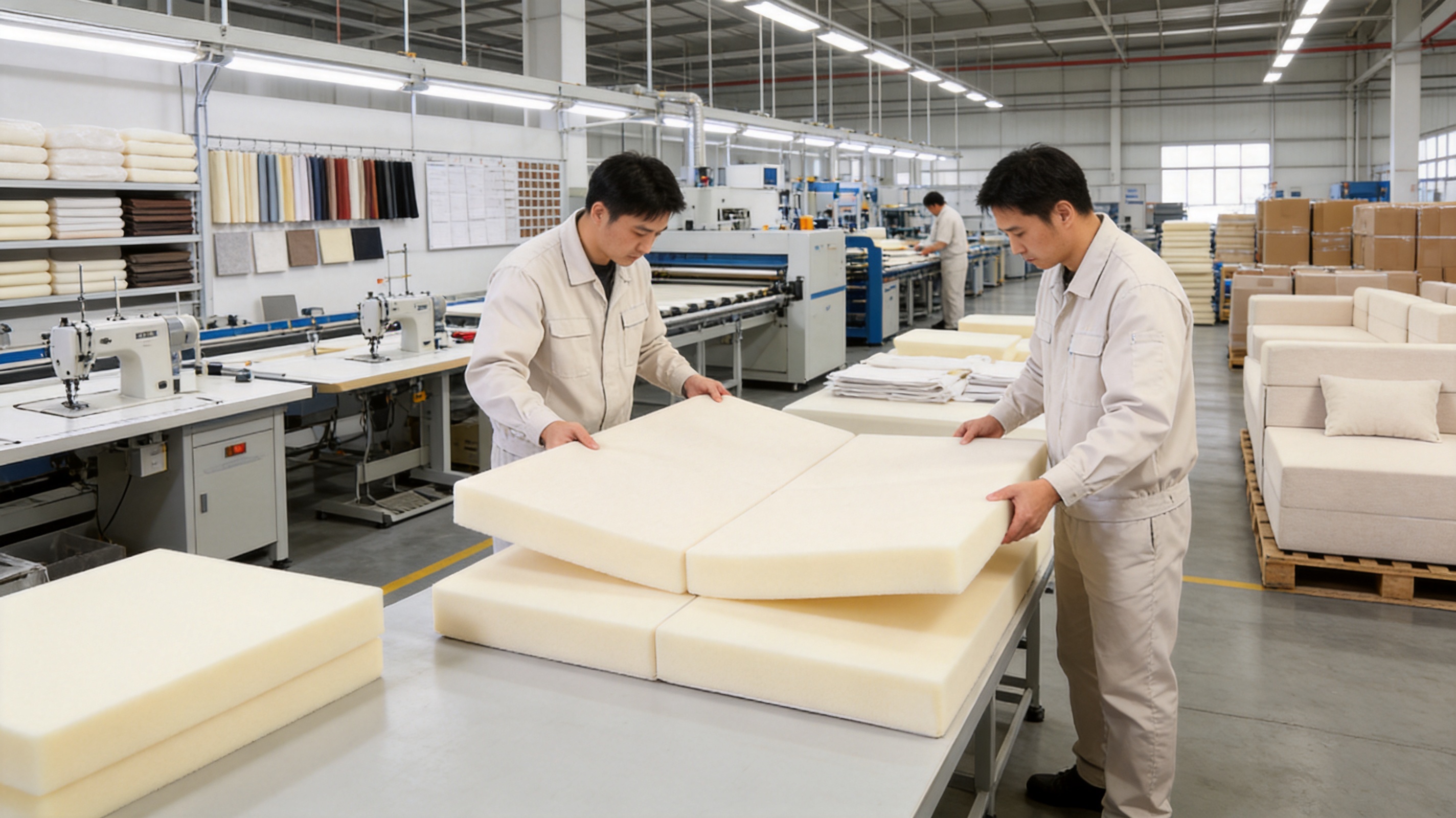
13. Customization and Private-Label Opportunities
Manufacturers with foam research capabilities are often better equipped to support customized furniture programs. Retailers, distributors, hotel groups, and private-label brands may request changes to upholstery color, fabric type, foam firmness, dimensions, packaging, labels, or conversion details.
The existing creamy white model can serve as a starting point for a broader product family. Color variations may include beige, gray, taupe, muted green, soft blue, or other tones selected for a specific collection. Different fabric textures can also create distinct market positions, from minimalist and modern to warm and tactile.
Foam customization may involve adjusting firmness, density, resilience, or layer structure. A residential model may prioritize softness and relaxation, while a hospitality version may require enhanced durability and easy maintenance. A children’s product may require additional attention to safety, dimensions, and washable components. Any such variation should be validated through sampling and testing.
Development process for customized orders
A reliable customization process begins with a detailed product brief. The brief should identify the target user, intended environment, dimensions, comfort expectations, color requirements, packaging format, target price, order quantity, and destination market. It should also identify applicable standards and labeling requirements.
The manufacturer can then propose material and construction options. Samples should be reviewed for foam comfort, cover appearance, stitching, folding operation, dimensional accuracy, and overall visual balance. Once a sample is approved, the final specifications should be documented clearly to reduce misunderstandings during mass production.
For larger projects, buyers may request a pilot production run before full-scale manufacturing. This allows both parties to evaluate production consistency, packing efficiency, delivery handling, and customer feedback. Such a process is especially useful when the product will be sold under a private label or introduced as part of a new furniture collection.
14. Packaging, Logistics, and Delivery Considerations
Folding and detachable construction can provide logistical benefits, but packaging must still be carefully planned. Furniture can be damaged by compression, moisture, friction, impact, or improper stacking during transportation. A suitable packaging design should protect the fabric, foam, seams, folding components, and corners.
Buyers should confirm the product’s packed dimensions, gross weight, carton quantity, loading plan, and storage requirements. If vacuum compression is considered for foam components, the manufacturer should confirm the appropriate compression method and recovery time. The product should not be used before it has fully returned to its intended shape after any compressed shipment.
International shipments also require attention to export documentation, labeling, customs classification, destination-country regulations, and packaging materials. The company’s experience exporting to the United States, Germany, Japan, the United Kingdom, Canada, Australia, and Kuwait may support international order coordination. However, importers remain responsible for verifying the requirements applicable to their own markets.
Retail presentation
For e-commerce, product presentation should explain the sofa’s two configurations clearly. Images, dimensions, conversion steps, fabric information, foam description, care instructions, and package details can help customers make informed decisions. Because the product is creamy white, accurate color representation is also important.
Retailers should avoid presenting the sofa as a full-size permanent mattress unless the opened dimensions and intended use support that claim. Clear wording such as “occasional sleeping,” “guest use,” or “resting surface” may be appropriate depending on the final design and testing results.
15. Care and Use Recommendations
To protect the product, users should place it on a stable, level indoor surface and avoid dragging it across rough flooring. When relocating the sofa, lifting or partially disassembling it may help reduce stress on the fabric and folding structure.
Regular light cleaning is preferable to allowing dust and debris to accumulate. A soft upholstery brush or suitable vacuum attachment can be used carefully. Spills should be blotted rather than rubbed aggressively. Cleaning products should be tested in an inconspicuous area before broader application.
Because the interior contains foam, users should avoid saturating the sofa with water. If a removable cover is washable, the care label should be followed regarding temperature, detergent, drying, and ironing. Covers should be completely dry before being reinstalled.
Users should operate the folding mechanism according to the supplied instructions. The sofa should not be forced beyond its intended range, used as a trampoline, or loaded beyond the recommended capacity. Commercial operators should inspect the folding areas, seams, fabric, and foam regularly.
Maintaining long-term comfort
Even high-quality foam benefits from balanced use. If practical, changing the direction of use or rotating compatible cushions can help distribute repeated pressure. The sofa should be protected from prolonged direct sunlight, excessive heat, and high humidity, as these conditions may affect fabric color and material performance over time.
When the product is used as a bed, users should ensure that it is fully opened and placed on a stable surface. Bedding should be selected according to the opened configuration. Proper use helps preserve both comfort and structural integrity.
16. Why the Product Is a Strong Choice for Buyers
The white folding sofa combines several features that are often purchased separately: a compact footprint, upholstered seating, slow-rebound foam comfort, sofa-bed conversion, detachable construction, and neutral styling. Its value lies in how these features support one another.
The creamy appearance makes it suitable for a wide variety of interiors. The single-seater size makes it easier to place in compact rooms. The folding function adds sleeping flexibility. The high-density slow-rebound foam supports body-contouring comfort. The polyester upholstery provides a smooth, skin-friendly contact surface. The detachable design makes maintenance and handling more convenient.
Compared with a basic sofa, it offers greater functional flexibility. Compared with a large sofa bed, it requires less space. Compared with temporary inflatable furniture, it provides a permanent upholstered form without inflation. Compared with low-cost foam seating, its material development background supports a more considered comfort and manufacturing proposition.
The supplier’s history adds further strength. More than two decades of development, cooperation with an institute of technology, investment in factory facilities, international export experience, hotel supply experience, and continuing foam research create a foundation for professional cooperation. Buyers seeking a supplier for memory foam furniture or customized sleep-related home products can use this platform to develop products for different markets.
17. Frequently Asked Questions
Q1: What is the main function of the white folding sofa?
The product functions as a compact single-seater sofa and can be converted into a bed or resting surface. It is designed for living rooms, bedrooms, guest rooms, studies, and other multipurpose spaces.
Q2: What type of foam is used?
The sofa is filled with high-density slow-rebound foam. This material is intended to conform to the body’s curves, distribute pressure, and provide a balance of softness and stable support.
Q3: Is the sofa suitable for prolonged sitting?
Its foam construction is designed for comfortable extended sitting, including reading, working, watching television, or relaxing. Individual comfort will depend on body type, posture, and personal preference.
Q4: What are the listed dimensions?
The listed dimensions are 76.2 × 66 × 60 centimeters. Buyers should confirm whether these measurements refer to the folded seating configuration and request the opened-bed dimensions before ordering.
Q5: What is the upholstery made from?
The listed fabric composition is 100% polyester. The fabric has a stated width of 1.5 meters and a stated weight of 315 grams per square meter.
Q6: Is the cover removable?
The product has a detachable design intended to make cleaning, handling, and maintenance more convenient. Buyers should confirm exactly which components are removable and review the supplied care instructions before washing or treating the cover.
Q7: Is creamy white practical for daily use?
Creamy white creates a warm, versatile appearance, but light-colored upholstery requires regular care. Prompt treatment of spills, routine vacuuming, and protection from excessive dirt can help preserve the appearance.
Q8: Where can the sofa be used?
It can be used in living rooms, bedrooms, guest rooms, studies, home offices, apartments, dormitories, serviced apartments, hotel rooms, lounges, and other indoor environments where compact multifunctional furniture is needed.
Q9: Can the product be customized?
Potential customization may include fabric color, upholstery material, foam firmness, dimensions, packaging, labels, and other construction details. Specific options depend on order quantity, technical feasibility, testing, and the final agreement with the manufacturer.
Q10: What makes the manufacturer suitable for foam furniture projects?
The manufacturer has experience in foam research, memory foam development, healthy home products, international export, and commercial supply. Its portfolio includes ordinary sponge, memory foam, gel foam, temperature-insensitive memory foam, quick-dry memory foam, flame-retardant sponge, and antibacterial sponge.
Q11: Does the sofa replace a permanent mattress?
The product is a multifunctional sofa that converts into a bed or resting surface. Whether it is suitable for regular overnight sleeping depends on the final opened dimensions, construction, user requirements, and manufacturer guidance. Buyers should request complete specifications before making a permanent mattress claim.
Q12: What should commercial buyers confirm before ordering?
Commercial buyers should confirm foam specifications, opened and folded dimensions, weight capacity, fabric test results, flammability requirements, cleaning procedures, packaging, warranty terms, lead time, minimum order quantity, customization options, and destination-market compliance.
18. Conclusion
The white folding sofa is a practical example of how modern furniture can combine comfort, space efficiency, and flexible use. Its creamy white styling creates a calm and adaptable appearance, while its compact single-seater format makes it suitable for rooms where floor space is limited. The ability to convert from sofa to bed gives it greater utility than conventional seating, and the detachable design supports easier handling and maintenance.
Its high-density slow-rebound foam is the central comfort advantage. By adapting to the body’s contours while maintaining stable support, the foam is intended to provide a comfortable experience during sitting, reclining, reading, working, and occasional sleeping. The smooth polyester upholstery adds a skin-friendly contact surface and supports year-round indoor use.
The product is also supported by a manufacturer with substantial experience in foam materials and healthy home products. Research-led development, a broad portfolio of specialized foam solutions, factory investment, academic cooperation, international export experience, and sustainability initiatives create a strong foundation for both standard purchasing and customized product development.
For homeowners, the sofa offers a flexible way to furnish compact rooms. For retailers, it provides a visually appealing multifunctional item with broad market potential. For hospitality and commercial buyers, it can add seating and occasional sleeping capability without requiring a large furniture footprint. For private-label customers, the manufacturer’s material and production knowledge may support the development of tailored versions.
By combining intelligent conversion, high-density foam comfort, maintainable construction, soft neutral aesthetics, and professional manufacturing capabilities, the white folding sofa provides a compelling solution for flexible living and modern furniture programs.
References
1. Product specification sheet for the white folding sofa, including dimensions, fabric composition, fabric width, and fabric weight.
2. Manufacturer-provided information on high-density slow-rebound foam, detachable construction, sofa-bed conversion, and intended application environments.
3. Manufacturer-provided company history and development profile, including foam research, factory investment, academic cooperation, international export, and hotel supply experience.
4. Manufacturer-provided overview of foam material categories, including ordinary sponge, memory foam, gel foam, temperature-insensitive memory foam, quick-dry memory foam, flame-retardant sponge, and antibacterial sponge.
5. General upholstery-care principles for polyester fabrics and foam-filled furniture.
6. General furniture procurement considerations covering customization, packaging, quality inspection, commercial use, and destination-market compliance.
Product: White folding sofa

PREV:Gel-Infused Memory Foam Tatami Mattress: Comfort, Cooling Support, and Flexible Everyday Use
NEXT:U-Shaped Removable Memory Foam Neck Pillow: Portable Cervical Support for Comfortable Travel
NEXT:U-Shaped Removable Memory Foam Neck Pillow: Portable Cervical Support for Comfortable Travel
Interested in cooperation or have questions?
Related News
WELLCARE was founded in 2003, boasting over a decade of profound and extensive experience.
Quick Links
Product
Media Centre
Contact Information
- [email protected]
- +86-517-84998062
- +86-15152354988
- No. 168 Nenjiang Road, Huaiyin District, Huai'an City, Jiangsu Province, China
Copyright © Jiangsu Wellcare Household Articles Co., LTD. All Rights Reserved.
Custom Memory Gel Mattress Manufacturers
