

 English
 日本語
 Español



Pan Ruoxi — Product Sales Consultant

Home / Author / Pan Ruoxi — Product Sales Consultant / Gel-Infused Memory Foam Tatami Mattress: Comfort, Cooling Support, and Flexible Everyday Use
Product Category
NEW Category
Contact us
Gel-Infused Memory Foam Tatami Mattress: Comfort, Cooling Support, and Flexible Everyday Use
Gel-Infused Memory Foam Tatami Mattress: Comfort, Cooling Support, and Flexible Everyday Use
Choosing a mattress for modern living often involves balancing comfort, temperature control, portability, durability, appearance, and cost. A traditional mattress may provide substantial support, but it can be heavy, difficult to move, and unsuitable for rooms that require flexible sleeping arrangements. A basic foam pad may be lightweight, yet it may lack the pressure-relieving performance and stable support needed for consistent rest. The gel-infused memory foam tatami mattress described in this article is designed to address these challenges through a combination of high-density memory foam, gel particles, a lightweight 50 mm profile, and a clean minimalist appearance.
This mattress is intended for users who want a versatile sleeping surface that can be placed on a bed frame, tatami mat, platform, or floor. It can serve as a primary sleeping layer, a guest mattress, a rental-apartment solution, an office nap surface, or an additional comfort layer for an existing bed. Its white polyester-fiber cover and simple shape allow it to blend into a wide variety of interiors, while its flexible structure makes storage and transportation easier than with many thick conventional mattresses.
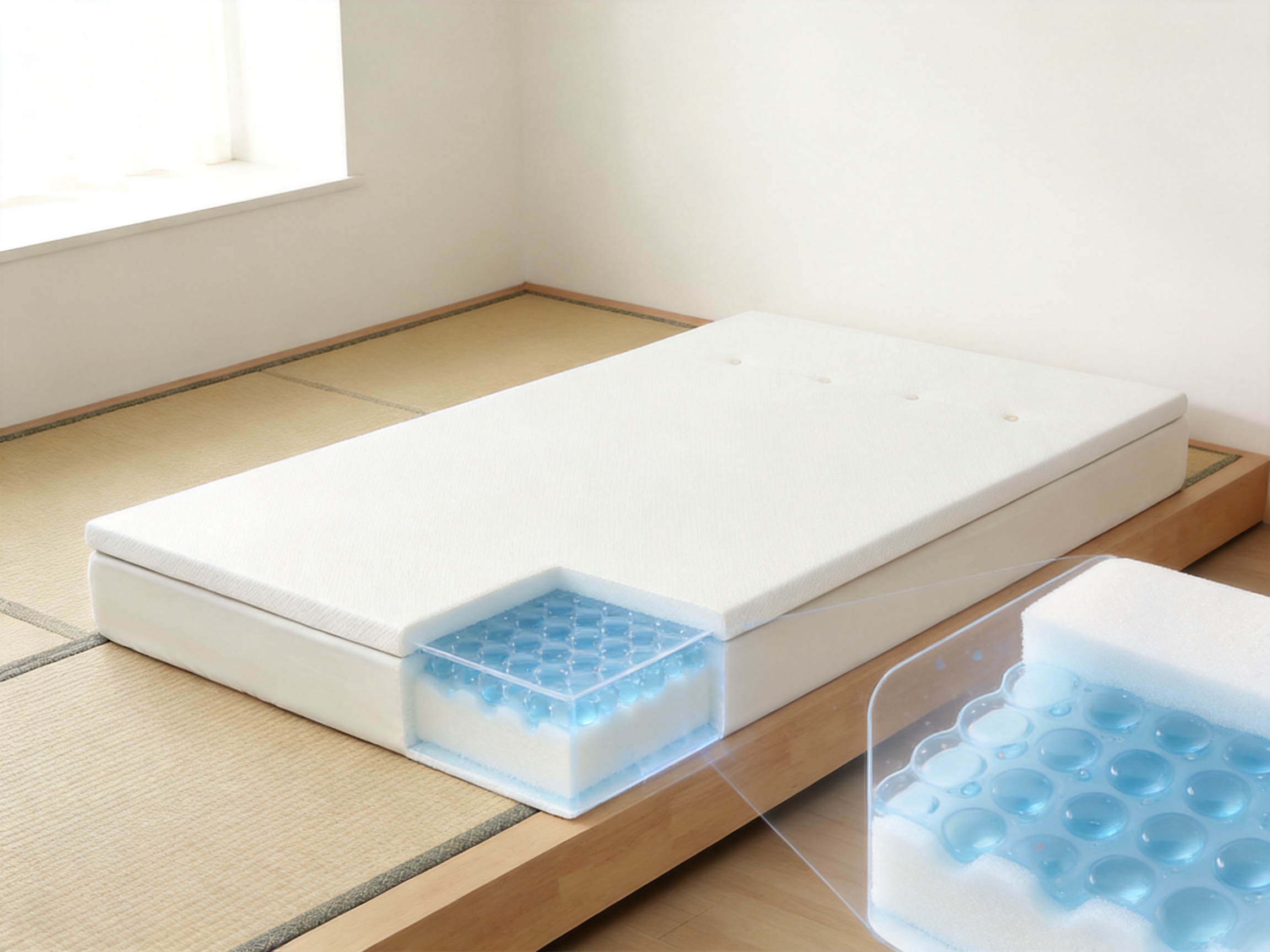
At the center of the product is a high-density memory foam base infused with gel particles. Memory foam is known for its slow-rebound behavior and its ability to conform to the body. The gel component is incorporated to help improve heat dissipation and reduce the stuffy feeling that some sleepers associate with conventional memory foam. Together, these materials create a balanced proposition: gentle contouring without excessive softness, stable support without a rigid surface, and a cooler feel than many standard memory foam products.
The product is manufactured by Jiangsu Wellcare Household Articles Co., LTD., a Chinese company with experience in foam materials, sleep products, and healthy home goods. The company’s development activities include ordinary sponge, memory foam, gel foam, temperature-insensitive memory foam, quick-dry memory foam, flame-retardant sponge, antibacterial sponge, and other specialized materials. This broad technical background is relevant because the performance of a foam mattress depends not only on its visible cover and overall shape, but also on formulation, density, rebound behavior, cutting accuracy, quality control, and consistency between production batches.
This article examines the product’s construction, benefits, potential advantages over competing mattress types, suitable applications, manufacturing capabilities, customization potential, and purchasing considerations. It also includes practical questions and answers for buyers, distributors, hospitality operators, and businesses searching for a customizable gel memory foam mattress solution.
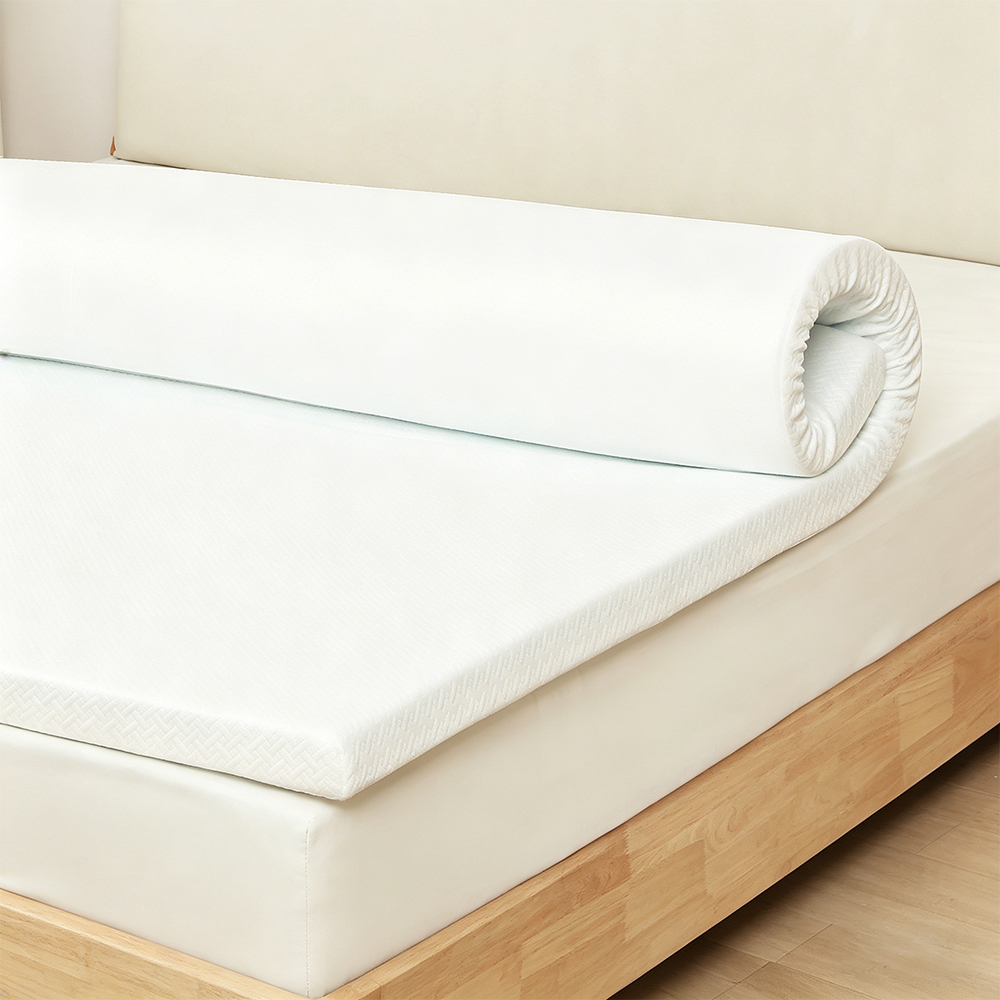
Gel memory foam tatami
Product Overview
The gel-infused memory foam tatami mattress is a compact mattress product with a thickness of 50 mm, equivalent to 5 cm. It is made from memory foam and covered with polyester fiber fabric. The listed color is white, and the design style is minimalist modern. The standard product identification number is M011, and the listed brand is wellcare.
The product’s relatively slim construction gives it a different purpose from a thick standalone spring mattress or a deep hybrid mattress. It is particularly useful where low weight, easy handling, and adaptable placement are important. Users can place it on a firm bed base, tatami surface, floor, or another stable platform. Because it has no complicated installation requirements, it can be unpacked and arranged quickly in bedrooms, temporary accommodations, guest rooms, dormitory-style spaces, and office rest areas.
The available product information includes a dimension of 1.8 x 2 x 0.05 m, as well as other listed measurements of 190.5 x 99 x 5 cm and 190.5 x 137.2 cm. These measurements indicate that different size configurations may be available or that multiple market specifications are associated with the product listing. Buyers should confirm the exact length, width, thickness, folding method, packaging size, and tolerance before placing a commercial order. This is especially important for distributors serving different countries, because bed-size conventions vary between regions.
| Attribute | Product Information |
| Product type | Gel-infused memory foam mattress |
| Material | Memory foam with gel particles |
| Fabric material | Polyester fiber |
| Thickness | 50 mm |
| Color | White |
| Style | Minimalist modern |
| Brand | wellcare |
| Item number | M011 |
| Customization | Custom processing available |
| Drop-shipping support | Not supported according to the supplied information |
| Export supply | Available for cross-border supply |
| Typical uses | Bedrooms, guest rooms, rental housing, office naps, guesthouses, tatami surfaces, and floor sleeping |
How the Gel-Infused Foam Construction Works
Memory Foam for Contouring Support
Memory foam is a viscoelastic material. Unlike ordinary polyurethane foam, which tends to compress and recover quickly in a more uniform manner, memory foam responds gradually to body weight and temperature. When a sleeper lies down, the foam can compress around the shoulders, hips, back, and other contact areas. This creates a more individualized support surface instead of forcing the body to rest on a single flat plane.
The slow-rebound effect can help distribute pressure over a larger area. A conventional firm surface may concentrate force at the shoulders or hips, especially for side sleepers. A soft but low-quality pad may relieve initial pressure while allowing the body to sink unevenly. Properly formulated memory foam aims to provide a middle path: enough conformity to reduce concentrated pressure, while maintaining sufficient resistance to keep the body from collapsing too deeply into the material.
For people who experience discomfort from rigid sleeping surfaces, this contouring effect may make a noticeable difference. It can also help the surface follow the natural curves of the spine and pelvis. However, individual comfort depends on body weight, sleeping position, room temperature, the firmness of the supporting base, and personal preference. The mattress should therefore be viewed as a pressure-relieving comfort layer rather than a medical device or a guarantee of symptom treatment.
Gel Particles for Improved Heat Management
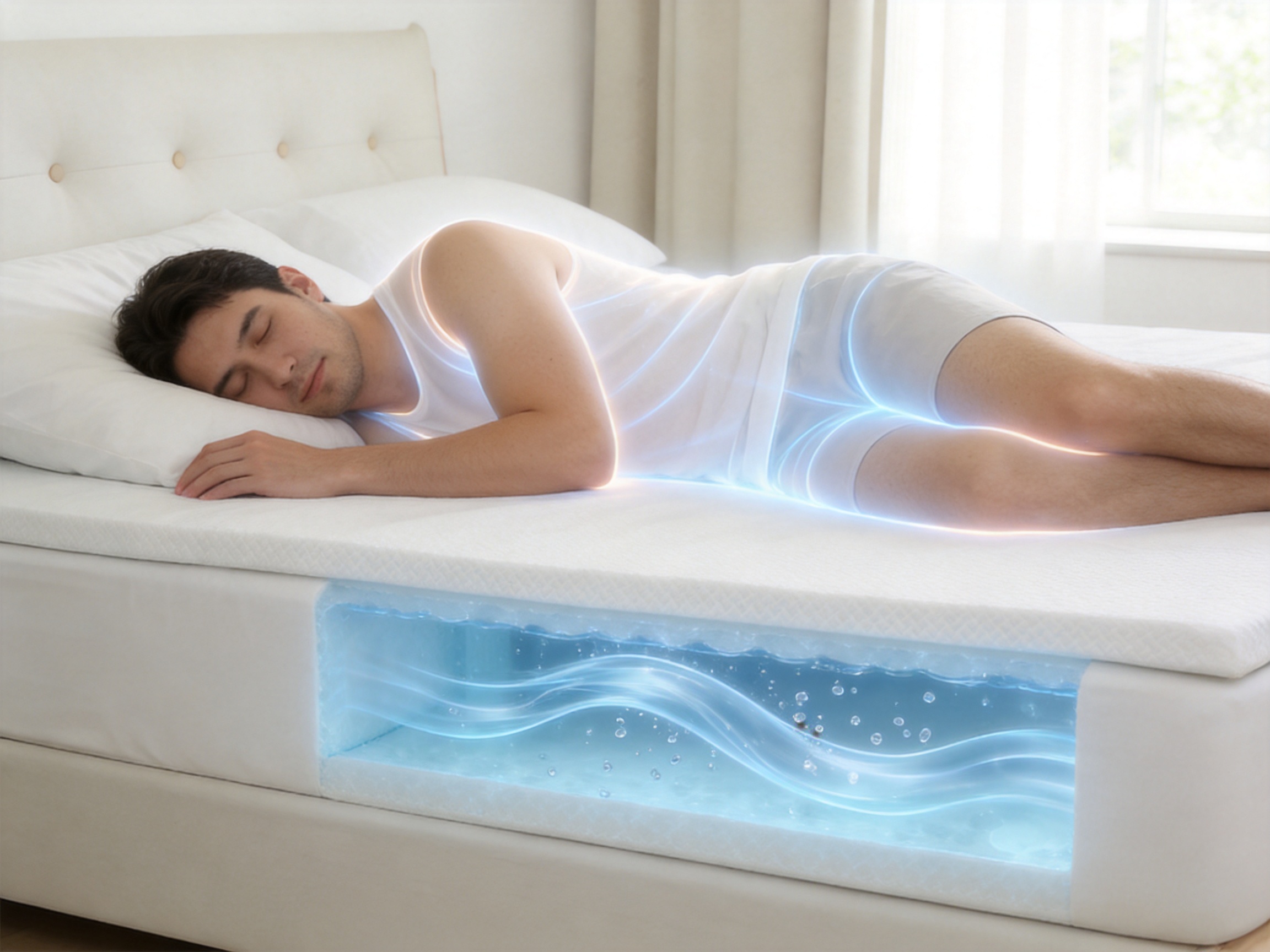
One common criticism of conventional memory foam is that it may retain warmth. The dense structure that allows memory foam to contour can also restrict air movement compared with more open or loosely structured materials. Gel particles are used in this product to help improve heat dissipation. The gel component is intended to absorb and distribute some of the heat generated during sleep, reducing the sensation of excessive stuffiness.
Gel infusion does not mean that the mattress will remain cold under all conditions. Actual sleeping temperature is influenced by room ventilation, humidity, bedding, clothing, body temperature, mattress support, and the type of cover used. Nevertheless, a gel-infused formulation can offer a practical advantage over basic memory foam when temperature comfort is an important purchasing criterion.
The combination of gel and memory foam is particularly relevant for warmer climates and regions where air conditioning is not used continuously. The product is positioned for sales in Southeast Asia, the Middle East, North America, Europe, and other regions, where users may have different climate conditions and sleeping habits. For warmer markets, the gel feature can be highlighted as part of a broader comfort package that includes breathable bedding, suitable room ventilation, and moisture management.
Low-Profile Convenience
At 50 mm thick, the mattress is easy to handle compared with many full-height mattresses. Its low profile makes it suitable for placing on top of an existing firm sleeping surface. It can also be used where floor height must remain low, such as in minimalist interiors, tatami rooms, temporary sleeping areas, and compact apartments.
A thin mattress may also be easier to rotate, fold, carry, and store. This can be useful for families that need an occasional guest bed or for businesses that must prepare rooms quickly between users. It may also be valuable in student accommodations, employee rest spaces, and short-term rental properties where storage efficiency matters.
Because the product is relatively thin, buyers should select an appropriate base. A clean, flat, stable surface is generally preferable. Users seeking the feel of a complete standalone mattress may need to combine the product with a supportive platform or another compatible mattress layer. The performance of any thin foam mattress depends partly on the surface beneath it, so the product should not be expected to correct major sagging or structural problems in an old bed base.
Advantages Compared with Common Competing Options
Compared with Basic Foam Pads
Low-cost foam pads often provide a simple layer of cushioning but may have limited contouring ability. Depending on their formulation and density, they may compress quickly, feel uneven, or lose their original shape after extended use. The high-density memory foam construction of this product is designed to provide more controlled compression and rebound.
The slow-rebound behavior allows the mattress to respond to the sleeper rather than simply flattening under pressure. This can improve the perceived quality of rest and create a more supportive surface for the back, hips, and shoulders. The gel infusion provides another point of differentiation because many basic foam pads do not include a dedicated heat-management component.
For buyers comparing products by price alone, a basic pad may appear attractive. However, a purchaser should also evaluate material density, shape retention, cover quality, intended service life, thermal comfort, and consistency. A slightly more advanced foam specification may offer better value over time, particularly in hospitality, rental, and repeated-use environments.
Compared with Traditional Spring Mattresses
Traditional spring mattresses can provide strong support and ventilation, but they are generally heavier and more difficult to move. Their internal structures may also make them less convenient for floor use, temporary rooms, or compact storage. The gel-infused memory foam tatami mattress has no metal spring system and can be managed more easily by one person, depending on its final size and packaging.
Its low-profile design also offers a different visual and functional experience. Instead of creating a tall bed structure, it supports low-level sleeping arrangements and can be layered on existing surfaces. This makes it suitable for consumers who prefer tatami-inspired interiors, flexible rooms, or uncluttered minimalist spaces.
Spring mattresses may remain preferable for buyers who want a tall, firm, highly ventilated bed or a complete permanent mattress system. The advantage of the memory foam tatami design is not that it replaces every type of mattress, but that it serves users who prioritize portability, contouring comfort, low height, and flexible placement.
Compared with Conventional Memory Foam
The most direct comparison is with ordinary memory foam without gel particles. Both products may provide slow rebound and pressure distribution, but the gel-infused version is designed to address one of the most frequently mentioned concerns about memory foam: heat retention.
The gel component can help improve thermal comfort by assisting heat dissipation within the mattress. This feature may be especially valuable for people who sleep warm or live in hot and humid regions. It may also make the product more appealing to hospitality buyers who want to offer memory foam comfort without creating an excessively warm sleeping environment.
Another advantage is the combination of functional performance and simple appearance. Some specialty cooling mattresses use complex constructions that increase weight, height, or cost. This model maintains a relatively straightforward 50 mm format, making it easier to integrate into different product packages and room arrangements.
Compared with Thick Premium Mattresses
Thicker premium mattresses may contain multiple layers, advanced covers, edge support, springs, and other features. They may provide a more complete long-term bed system, but they also require more space, cost more to transport, and may be difficult to reposition.
The gel-infused tatami mattress is more focused. It provides a portable memory foam comfort layer with cooling-oriented gel particles and a washable-looking textile exterior. Its simpler construction can be advantageous where the customer needs a practical product rather than a complex luxury mattress.
For retailers, a slim mattress may also be easier to stock and display. For accommodation providers, it may be easier to move between rooms or store when not in use. For consumers, it can provide a way to improve an existing sleeping arrangement without replacing the entire bed.
Pressure Relief and Sleeping Comfort
Pressure relief is one of the product’s most important functional benefits. When a person lies on a flat surface, body weight is distributed unevenly. Areas with prominent bones, such as the shoulders, hips, knees, and heels, may experience greater localized pressure. A conforming foam layer can spread some of this load over a wider contact area.
The slow-rebound response is intended to create a gradual contour rather than a sudden collapse. This can help the mattress accommodate different body shapes and sleeping positions. Side sleepers may appreciate cushioning around the shoulder and hip area, while back sleepers may benefit from a surface that follows the lower back and pelvis. Stomach sleepers often require a firmer and more stable arrangement, so the mattress should be evaluated together with the supporting base and the sleeper’s body type.
Comfort is subjective, and no mattress design is ideal for every user. The product’s 50 mm thickness means that it functions best on a stable base. A soft or sagging base may cause excessive sinking and reduce the support sensation. A firm, level platform can help the foam operate more predictably and preserve the intended balance between contouring and resistance.
The mattress may also reduce the need for frequent adjustment during the night. When the surface conforms to the body, some sleepers may experience less discomfort caused by hard contact points. This does not replace professional advice for people with diagnosed back, joint, or sleep disorders, but it can contribute to a more comfortable everyday sleep environment.
Breathability, Cleanliness, and Everyday Maintenance
Temperature control is only one part of maintaining a comfortable sleeping surface. Air circulation around the mattress is also important. Users should avoid placing any foam mattress in a permanently damp or poorly ventilated environment. Periodic airing can help reduce trapped moisture and maintain a fresher sleeping area.
The polyester-fiber cover provides a smooth textile surface that is gentle to the touch and visually clean in white. The neutral color can coordinate with many bedding styles, from modern bedrooms to guesthouse rooms. White also creates a bright and hygienic appearance, although it may show stains more easily than darker colors. Buyers who operate in high-use environments should confirm whether the cover is removable, washable, zippered, or available in an alternative fabric before ordering.
Routine care should include using a suitable protective sheet, keeping liquids away from the foam core, and following the supplier’s cleaning instructions. Foam should not normally be soaked, aggressively scrubbed, or exposed to excessive heat. If a spill occurs, the affected area should be treated promptly and allowed to dry completely. A breathable protective cover may help reduce contamination while preserving the feel of the mattress.
Retailers and commercial users should request detailed care instructions, packaging guidance, storage requirements, and any applicable testing documentation. These details help ensure that the product reaches end users in good condition and performs consistently throughout its intended service period.
Manufacturing Expertise and Material Development
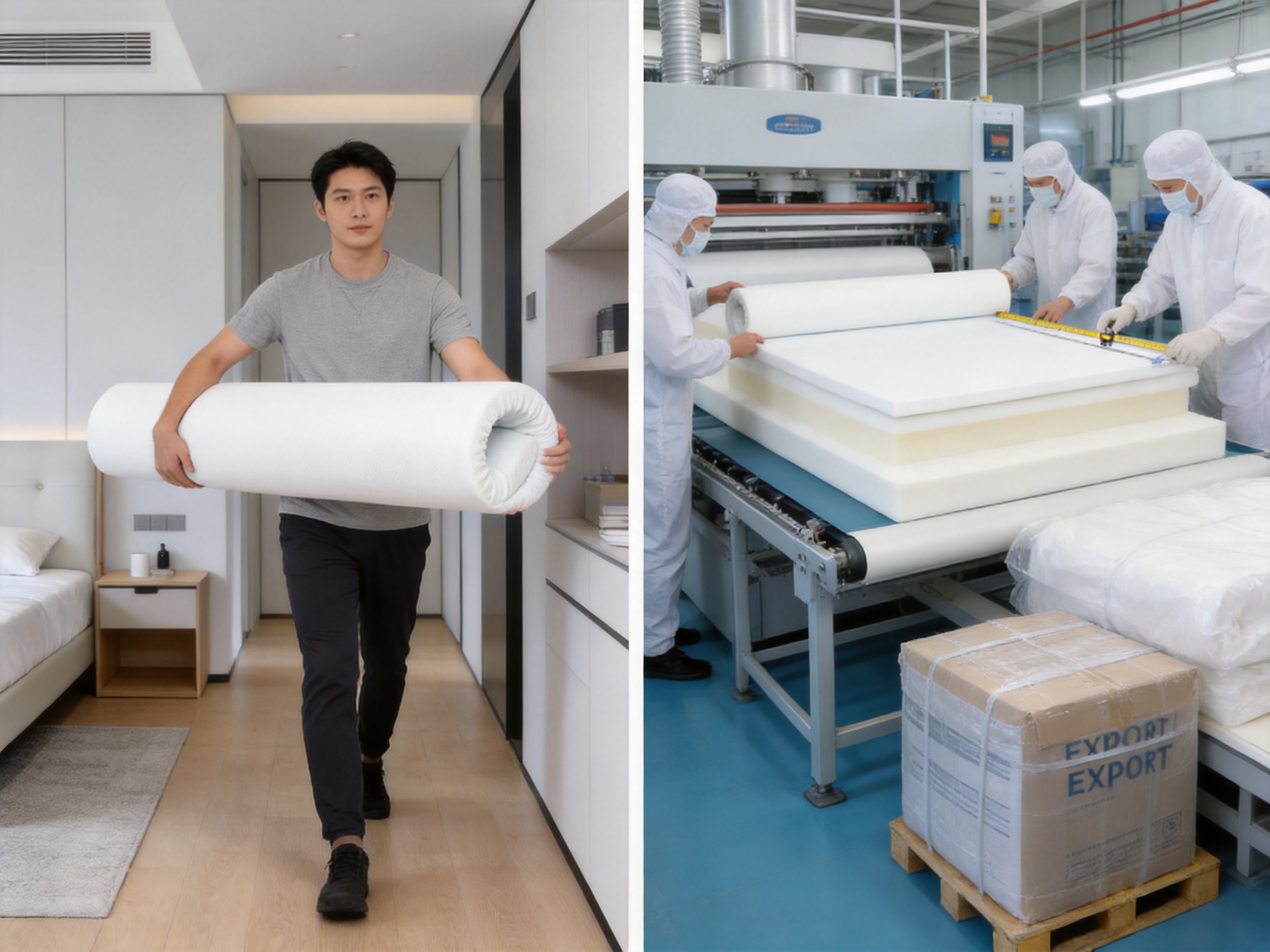
The manufacturer, Jiangsu Wellcare Household Articles Co., LTD., has operated in the sleep-material and healthy-home-products field for many years. The company’s history includes roots in scientific research activities beginning in 1993, the establishment of a factory building in 2003, later land acquisition and facility expansion, cooperation with academic institutions, and supply relationships serving international markets.
The company states that it is supported by a doctor-led research and development team and develops more than one hundred new foam materials each year. This activity indicates a substantial focus on material formulation rather than simple assembly or trading. Foam performance is strongly affected by chemical composition, cell structure, density, resilience, hardness, temperature response, recovery time, and aging behavior. A company that works across several foam categories can apply knowledge from one material family to another.
The reported product portfolio includes ordinary sponge, memory foam, gel foam, temperature-insensitive memory foam, quick-dry memory foam, flame-retardant sponge, antibacterial sponge, and other specialized materials. This range is relevant to the gel memory foam mattress because it demonstrates familiarity with different performance objectives. Cooling, pressure relief, drying speed, fire performance, and antibacterial properties are separate technical challenges, and experience in these areas can support more informed product development.
Formulation and Material Selection
A high-performance mattress begins with material selection. The foam must be formulated to deliver a controlled balance of softness, density, slow rebound, resilience, and dimensional stability. If the foam is too soft, it may allow excessive sinking. If it is too firm, it may reduce pressure relief. If rebound is too fast, the product may lose the characteristic contouring feel expected from memory foam.
Gel particles must also be incorporated in a way that maintains a reasonably uniform distribution throughout the foam. Uneven distribution could create inconsistent cooling or differences in firmness across the surface. Material development therefore involves more than adding gel to a base formula. It requires attention to mixing, reaction behavior, curing, cutting, and the relationship between gel content and the final foam structure.
The supplied company information emphasizes continued formula optimization and structural performance. This suggests that the manufacturer’s strength lies in iterative development. By evaluating multiple formulations and constructions, a factory can refine products for different markets, thicknesses, climates, and customer requirements.
Foam Production and Curing
Although the exact production line specifications for this model are not provided, a professional foam manufacturing process generally involves controlled raw-material preparation, mixing, foaming, curing, block formation or molding, and subsequent cutting. Each stage can influence the final mattress.
During mixing, raw materials must be combined consistently to support uniform chemical reactions and cell formation. During foaming, temperature, timing, expansion, and reaction conditions affect density and internal structure. Curing allows the foam to stabilize before it is cut into mattress panels. Proper curing is important because insufficiently stabilized foam may show odor, dimensional changes, or inconsistent recovery behavior.
For a thin mattress, accurate cutting is especially important. A 50 mm product must maintain an even thickness across the sleeping surface. Variations can affect comfort, appearance, packaging, and fit. Professional cutting equipment and process controls help the manufacturer produce panels that meet the required size and tolerance.
Cover Fabric and Finishing
The mattress is covered with polyester-fiber fabric. Fabric selection affects touch, appearance, abrasion resistance, moisture behavior, and overall product presentation. The white cover supports the product’s minimalist positioning and gives it a clean appearance suitable for both private homes and commercial rooms.
Finishing operations may include fabric cutting, sewing, edge construction, fitting, inspection, labeling, and packaging. Seam quality is important because the cover must remain attractive and functional after repeated handling. A well-finished cover also helps protect the foam core during normal use, movement, and storage.
For customized orders, buyers can discuss cover color, fabric specification, label placement, logo treatment, packaging design, dimensions, and other processing requirements. The supplied information confirms that custom processing is available, although individual customization options, minimum order quantities, additional charges, and lead times should be confirmed directly with the manufacturer.
Quality Management and International Supply Capability
The product is identified as a qualified product and is listed for cross-border export supply. The company reports experience serving international markets, including Europe, Southeast Asia, North America, the Middle East, and other regions. Its products have reportedly reached markets such as the United States, Germany, Japan, the United Kingdom, Canada, Australia, and Kuwait.
International supply requires attention to more than manufacturing. Packaging must protect the foam from contamination, compression damage, moisture, and handling stress. Carton dimensions and shipping weight affect logistics costs. Product labels may need to meet the requirements of a destination market. Retailers may also require barcodes, care labels, product inserts, inspection records, or customized packaging.
For distributors, consistent quality is essential. A mattress that varies in thickness, firmness, color, or cover finish between batches can create customer complaints and higher return rates. A capable manufacturing partner should be able to discuss raw-material controls, production inspection, finished-product inspection, packaging procedures, and sample approval.
The company’s long-term development in foam materials and its relationships with academic and commercial partners may support product consistency and technical problem-solving. The company also reports being an Alibaba-certified Gold Supplier since 2018 and becoming a designated supplier for five-star hotels in 2020. These milestones suggest experience with formal procurement expectations, although buyers should still request current certifications and test reports relevant to their specific destination market and product configuration.
Customization Opportunities for Business Buyers
Custom processing is listed as available, making this mattress potentially suitable for wholesalers, retailers, hotels, guesthouses, rental operators, and private-label businesses. Customization can help a buyer adapt the product to a particular market rather than selling a single universal specification.
Size Customization
Different countries use different bed-size standards. A retailer may need single, twin, double, queen, king, or region-specific dimensions. Custom cutting can help match local bed frames, tatami platforms, sofa beds, or floor-sleeping arrangements. Buyers should provide precise length, width, thickness, corner shape, tolerance, and packaging requirements.
Cover and Appearance Customization
White is versatile and visually clean, but some markets may prefer gray, blue, beige, or other colors. A buyer may also request a different textile texture, a quilted surface, a branded label, or a removable cover. The feasibility of each option depends on the factory’s equipment, material availability, minimum order quantity, and production schedule.
Packaging and Branding
Private-label packaging can help a retailer establish a distinct market identity. Possible elements include printed cartons, product sleeves, instruction cards, care labels, barcode labels, and brand tags. Because the supplied product information states that the brand is not an authorized own brand, buyers should clarify trademark ownership and labeling rights before using any brand-related material.
Packaging design should also account for the product’s recovery time after compression. If the mattress is rolled or compressed for transport, the buyer should receive clear instructions about unpacking, expansion time, ventilation, and acceptable temporary odor. Sample testing under actual shipping conditions is advisable before a large order.
Applications in Residential and Commercial Settings
Bedrooms and Guest Rooms
In a home bedroom, the mattress can be used as a comfort layer on a firm platform or existing bed. It may be useful for families who need an additional sleeping surface for visitors without permanently occupying a room with a bulky bed. Its white appearance can coordinate with existing sheets and bedroom décor.
Guest rooms can benefit from products that are easy to prepare, clean, move, and store. A host may keep the mattress folded or stored when the room is used for other purposes. The low height can also make the room more flexible for children, visitors who prefer floor sleeping, or households with multifunctional spaces.
Rental Apartments and Compact Housing
Rental properties often have limited storage and changing occupancy requirements. Tenants may move frequently and prefer products that do not require specialized transportation. A lightweight foam mattress can be carried more easily than a thick spring mattress and may be used in apartments where bed frames are not included.
Its suitability for floor use also offers flexibility in small rooms. During the day, the mattress can be moved to create space for work, exercise, or other activities. Users should ensure that the mattress is aired and the floor is dry and clean to protect the foam from moisture.
Office Naps and Rest Areas
Workplaces increasingly create rest areas for employees, particularly in industries with long shifts or demanding schedules. A compact memory foam mattress can provide a more comfortable surface than a thin blanket or ordinary foam mat. Its portability allows the space to be reconfigured when necessary.
For office use, cleaning and replacement procedures should be considered. A protective cover, clear maintenance schedule, and suitable storage system can help preserve hygiene. Commercial buyers should also confirm whether the cover can be removed for laundering and whether additional covers are available.
Guesthouses and Hospitality Properties
Guesthouses, hostels, serviced apartments, and budget hotels may value a mattress that combines comfort with manageable logistics. The gel-infused construction can be marketed as a cooling-oriented memory foam feature, while the low profile can simplify room preparation and storage.
Hospitality operators should evaluate the product through practical testing. Important criteria include comfort for different body types, recovery after repeated use, cover durability, resistance to stains, ease of cleaning, packaging, and replacement availability. The manufacturer’s reported experience supplying hotels and overseas markets may be useful during supplier evaluation.
Environmental and Corporate Development Considerations
WELLCARE reports investment in eco-friendly energy systems and improvements to environmental management practices. These activities are relevant to buyers who evaluate suppliers according to broader sustainability objectives. Foam production can involve energy consumption, chemical handling, offcuts, packaging materials, and transportation emissions, so responsible manufacturing requires attention to the full production cycle.
The company describes its environmental approach as going beyond basic compliance and integrating respect for nature into its business operations. Buyers seeking sustainability claims should request specific documentation, such as material declarations, energy-management information, waste-handling procedures, packaging composition, and any applicable environmental certifications. General sustainability statements are useful as a starting point, but commercial claims should be supported by verifiable records.
Material efficiency can also contribute to sustainability. Accurate cutting may reduce waste, while optimized packaging can lower shipping volume. A lightweight mattress may require fewer resources to transport than a heavier mattress, although the complete environmental impact depends on foam composition, manufacturing energy, service life, replacement frequency, and disposal options.
Durability is another important environmental factor. A product that maintains its shape and comfort over a longer period may reduce the need for frequent replacement. The company’s work on foam formulation and structural performance can support this objective, but buyers should request relevant durability testing and define acceptance standards before ordering.
Purchasing and Evaluation Guide
Confirm the Exact Size
The product information lists several dimensions, so buyers should confirm which size is being quoted. The specification should identify length, width, thickness, dimensional tolerance, and whether the stated measurement is taken before or after packaging. A retailer should also confirm whether the dimensions correspond to standard bed sizes in the intended sales region.
Request a Sample
A physical sample allows a buyer to evaluate firmness, rebound speed, surface feel, odor, cover quality, color, and actual thickness. Samples should be tested by several people with different sleeping positions and body types. If the product will be sold in a warm climate, testing should take place under realistic temperature and humidity conditions.
Clarify Packaging
Packaging can significantly influence the customer experience. Buyers should ask whether the mattress is flat-packed, folded, rolled, or compressed. They should also confirm carton dimensions, gross weight, expansion instructions, and the recommended time before use.
If the mattress is compressed, the foam should be allowed to recover according to the supplier’s instructions. Buyers should avoid making immediate judgments about final thickness or comfort before the product has had sufficient time to expand. Commercial purchasers should test samples after shipping to determine whether compression and transportation affect the product’s recovery.
Review Technical and Compliance Documents
Depending on the destination market, buyers may need documents relating to material safety, flammability, chemical content, textile composition, labeling, packaging, and general product quality. Requirements differ by country and product category. A supplier evaluation should therefore include a review of current documents applicable to the exact model, materials, and production batch.
Discuss Customization and Order Conditions
Custom processing is available, but buyers should clarify minimum order quantities, mold or cutting charges, sample fees, lead times, payment terms, production capacity, inspection arrangements, and warranty conditions. They should also establish who is responsible for artwork approval, packaging design, shipping documents, and destination-market labeling.
The supplied information states that dropshipping is not supported. This means the product is more appropriate for importers, wholesalers, retailers, project buyers, and businesses that manage their own inventory and fulfillment. Buyers should plan warehousing, domestic transportation, and customer delivery before committing to a commercial purchase.
Why the Product Offers a Balanced Market Position
The product occupies a useful position between a simple foam mat and a full premium mattress. It has more specialized functionality than an ordinary pad because it combines memory foam with gel particles. At the same time, it remains compact and relatively easy to handle because it is only 50 mm thick.
Its competitive appeal can be summarized in four areas. First, the memory foam offers contouring support and pressure distribution. Second, gel particles are intended to improve heat dissipation. Third, the lightweight low-profile format supports flexible use and storage. Fourth, the white minimalist design allows the product to fit residential and commercial interiors without a complicated visual identity.
The manufacturing company adds another layer of value. Its experience with multiple foam categories, long-term research activity, international sales, customized processing, and reported environmental initiatives can make it a suitable candidate for buyers seeking more than a generic imported mattress. A supplier with material-development capabilities may be better positioned to adjust density, firmness, cover construction, or dimensions than a supplier that only resells finished goods.
Competitiveness should nevertheless be assessed through samples, specifications, testing, pricing, logistics, and after-sales support. No mattress should be selected solely because of a gel claim or a manufacturer’s years in business. The strongest purchasing decision combines documented performance with a clear understanding of the intended application.
Care and Use Recommendations
Place the mattress on a clean, dry, and stable surface. Avoid sharp edges, protruding hardware, and uneven platforms that could damage the cover or create pressure points. If it is used directly on the floor, lift and air it periodically so that moisture does not accumulate underneath.
Use a fitted sheet or protective mattress cover to reduce contact with dust, skin oils, and accidental spills. Follow the supplier’s instructions for washing or replacing the cover. Do not expose the foam core to excessive water, direct high heat, or harsh cleaning chemicals unless the manufacturer specifically approves them.
Allow sufficient ventilation after unpacking. Foam products may have a temporary manufacturing odor that usually decreases with airing. If an unusual odor persists or the product shows visible damage, buyers should contact the supplier rather than continuing to use it without assessment.
Rotate the mattress from time to time if recommended for the specific construction. Avoid folding it sharply unless the product has been designed for repeated folding. During storage, keep it in a dry, ventilated area away from direct sunlight, heavy objects, and sources of heat. Correct care can help preserve the foam’s shape and the cover’s appearance.
Q&A
What is a gel-infused memory foam tatami mattress?
It is a low-profile mattress made from memory foam containing gel particles. The foam is designed to conform gradually to the body and provide pressure-relieving support, while the gel component is intended to assist heat dissipation. The tatami-style format allows it to be placed on a bed frame, tatami mat, platform, or floor.
How thick is the mattress?
The listed thickness is 50 mm, or 5 cm. Because several dimensions appear in the product information, buyers should confirm the exact size and thickness of the selected configuration before ordering.
Is the mattress suitable for use on the floor?
Yes. The product can be placed directly on the floor, provided that the surface is clean, dry, level, and free from sharp objects. It should be aired periodically to reduce the risk of moisture accumulation underneath.
Does the gel make the mattress cold?
The gel is intended to improve heat dissipation and reduce stuffiness compared with some standard memory foam products. It does not guarantee a continuously cold surface. Room temperature, bedding, humidity, ventilation, and individual sleeping habits also influence thermal comfort.
Is it a complete replacement for a thick bed mattress?
It can function as a sleeping surface or comfort layer, but its 50 mm profile is different from a full-height mattress. Users should place it on a suitable supportive base if they require stronger structural support or a taller bed arrangement.
What fabric covers the mattress?
The listed fabric material is polyester fiber. The product is presented in white with a smooth, minimalist appearance. Buyers should confirm whether the cover is removable, washable, or customizable before placing an order.
Can the product be customized?
Custom processing is listed as available. Potential options may include dimensions, cover materials, colors, labels, packaging, and other production details. The exact options, minimum order quantities, costs, and lead times must be confirmed with the manufacturer.
Does the supplier support dropshipping?
No. The supplied product information states that dropshipping is not supported. The product is therefore more suitable for companies that purchase inventory and manage their own distribution or fulfillment process.
Which markets can the product serve?
The listed sales regions include Europe, Southeast Asia, North America, the Middle East, and other areas. The company also reports historical supply to several international markets. Buyers remain responsible for confirming destination-specific regulations, labeling, testing, and import requirements.
What makes the manufacturer suitable for foam-product buyers?
The manufacturer reports long-term experience in foam materials, a doctor-led research and development team, development of more than one hundred new foam materials annually, a broad product portfolio, international supply experience, custom processing capability, and investments in environmental management. These strengths may be valuable for buyers seeking customized and technically supported foam products.
How should buyers evaluate the mattress before a large order?
Buyers should request a sample, verify the exact dimensions, test comfort and rebound, inspect the cover and seams, assess odor and recovery after packaging, confirm technical documents, review packaging, and agree on quality standards in writing. Commercial buyers should also evaluate shipping, storage, replacement, and after-sales procedures.
Conclusion
The gel-infused memory foam tatami mattress is designed for consumers and businesses seeking a practical balance of comfort, cooling support, portability, and adaptable placement. Its high-density memory foam base provides slow-rebound contouring and pressure distribution, while the gel particles are intended to improve heat dissipation. The 50 mm profile keeps the product lightweight and easy to move, making it suitable for bedrooms, guest rooms, rental apartments, office rest areas, guesthouses, tatami surfaces, and floor sleeping.
Its advantages over basic foam pads include more deliberate contouring support and a specialized gel component. Compared with thick conventional mattresses, it is easier to handle, store, and integrate into flexible spaces. Compared with ordinary memory foam, it offers a design focus on improved thermal comfort. These benefits make it a useful option for retailers and project buyers who need a versatile mattress rather than a single-purpose luxury bed system.
The manufacturer’s experience in foam research and production strengthens the product’s commercial potential. Its reported work with memory foam, gel foam, quick-dry materials, temperature-insensitive foam, flame-retardant sponge, antibacterial sponge, and other formulations indicates a broad technical foundation. Its international supply history, custom processing capability, and stated environmental initiatives may also support long-term cooperation with buyers in different regions.
Before purchase, customers should confirm exact dimensions, firmness, packaging, cover construction, testing documents, customization conditions, and import requirements. When matched with an appropriate base and maintained in a dry, ventilated environment, this mattress can provide a comfortable, flexible, and space-efficient sleeping solution for both household and commercial use.
References
1. Product specification and technical information supplied for the gel-infused memory foam tatami mattress, item M011.
2. Manufacturer-provided company profile and development history for Jiangsu Wellcare Household Articles Co., LTD.
3. General principles of viscoelastic memory foam behavior, pressure distribution, and slow-rebound cushioning in sleep products.
4. General textile and mattress-care guidance for polyester-fiber covers and polyurethane-based foam materials.
5. General supply-chain considerations for customized foam mattresses, international packaging, product inspection, and cross-border distribution.
Product: Gel memory foam tatami

PREV:Gray Double Sofa: A High-Performance Foam Seating Solution for Modern Interiors
NEXT:White Folding Sofa: Compact Comfort, Flexible Living, and Advanced Foam Manufacturing
NEXT:White Folding Sofa: Compact Comfort, Flexible Living, and Advanced Foam Manufacturing
Interested in cooperation or have questions?
Related News
WELLCARE was founded in 2003, boasting over a decade of profound and extensive experience.
Quick Links
Product
Media Centre
Contact Information
- [email protected]
- +86-517-84998062
- +86-15152354988
- No. 168 Nenjiang Road, Huaiyin District, Huai'an City, Jiangsu Province, China
Copyright © Jiangsu Wellcare Household Articles Co., LTD. All Rights Reserved.
Custom Memory Gel Mattress Manufacturers
