

 English
 日本語
 Español



Luo Jinyi — Senior After-Sales Service Specialist

Home / Author / Luo Jinyi — Senior After-Sales Service Specialist / Multifunctional Tri-Fold Memory Foam Pad: Flexible Comfort for Modern Living
Product Category
NEW Category
Contact us
Multifunctional Tri-Fold Memory Foam Pad: Flexible Comfort for Modern Living
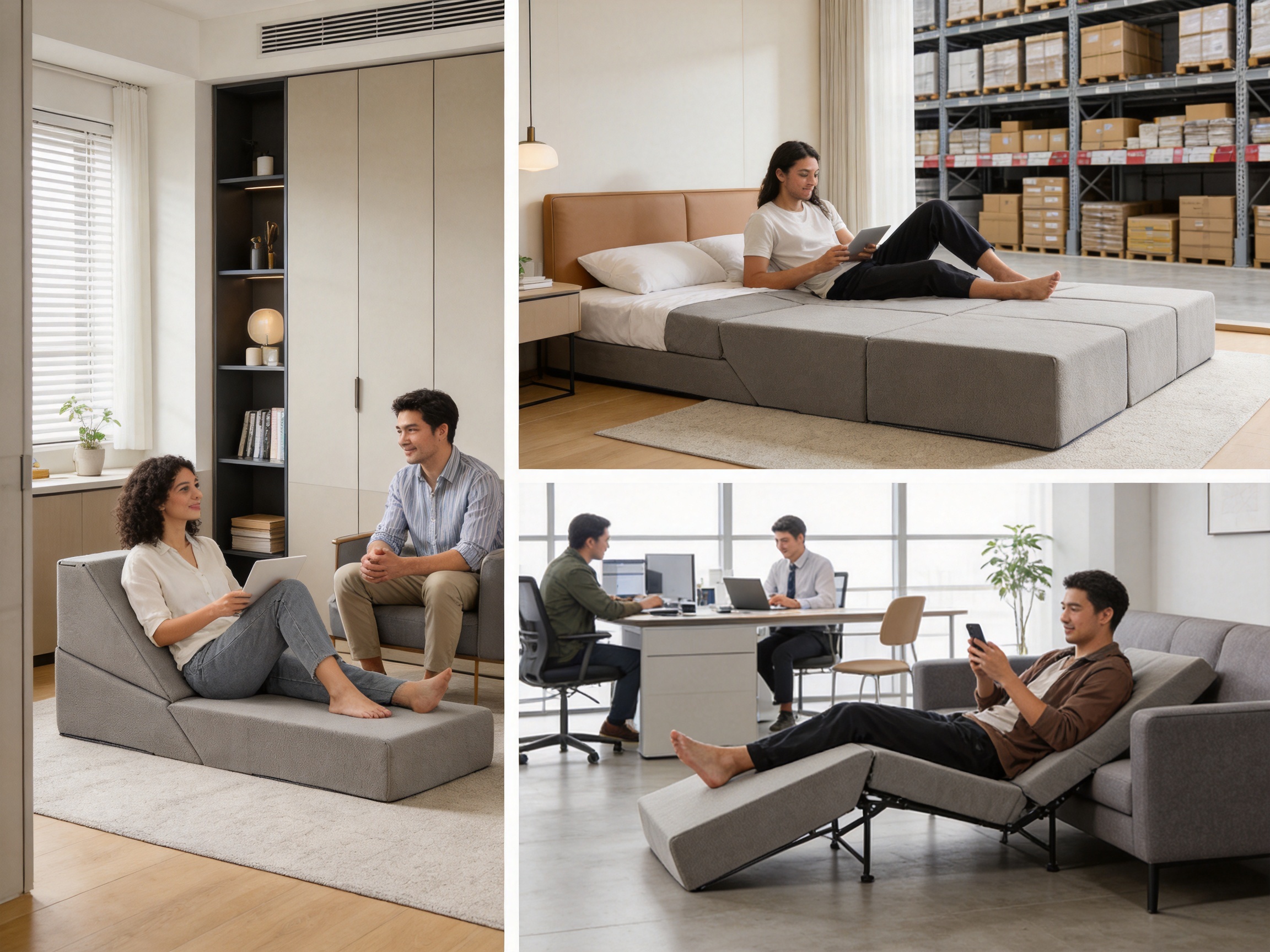
Modern homes increasingly require furniture that can do more than one job. A guest room may also function as a home office, a living room may need to become a sleeping area, and a small apartment may not have enough space for a separate sofa, bed, and lounge chair. The multifunctional tri-fold memory foam pad addresses these challenges with a compact, adaptable design that combines comfort, support, portability, and everyday practicality.
Designed as a tri-fold memory foam mat, this product can be used as a floor sofa, reclining pad, temporary mattress, lounge chair, reading surface, or rest area. Its three-section construction allows the user to adjust the overall shape according to the occasion. It can be opened for lying down, partially folded for reclining, or arranged as a supportive sitting surface. This flexibility makes it suitable for bedrooms, living rooms, balconies, studies, offices, rental properties, homestays, and temporary guest rooms.
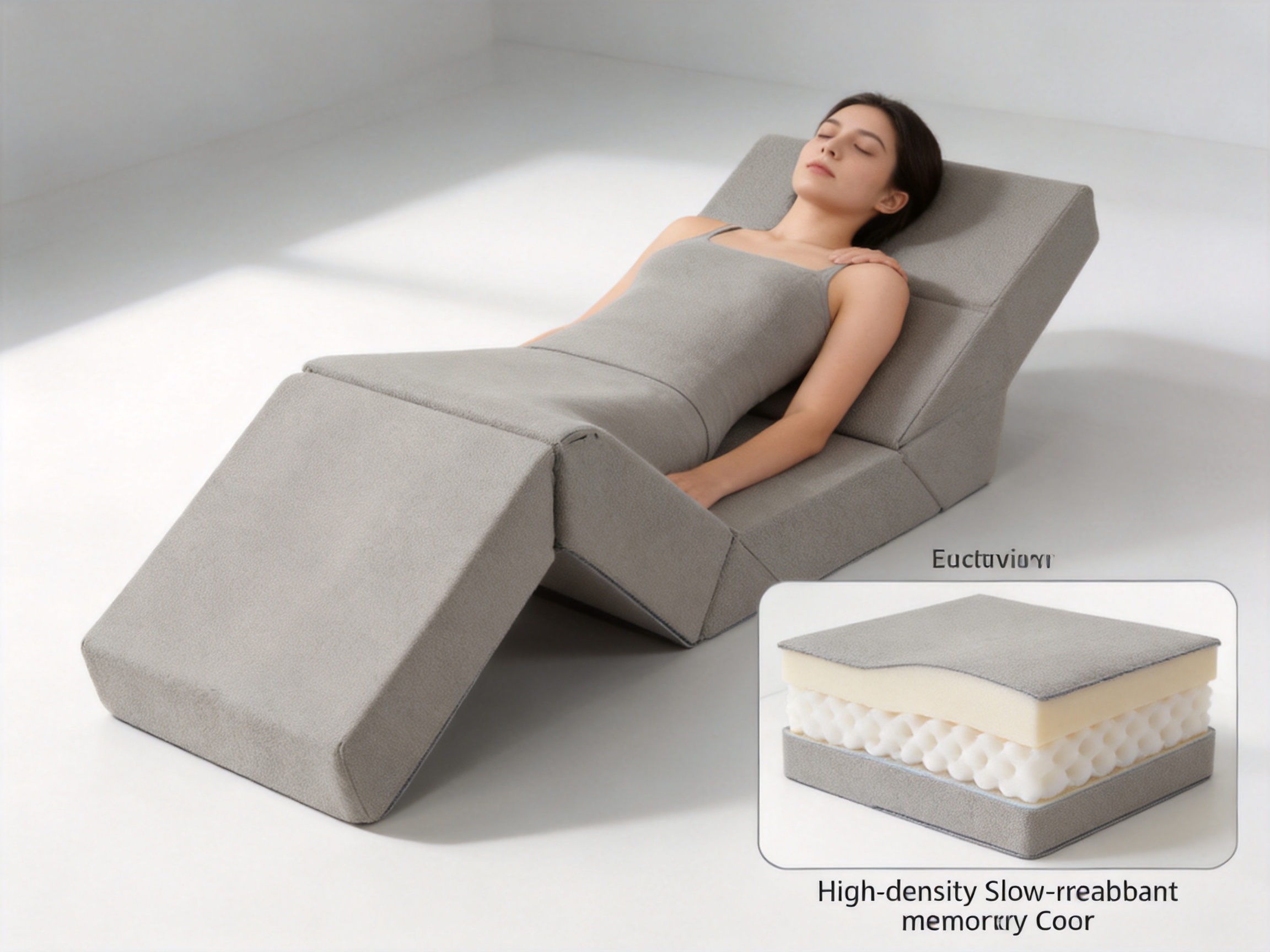
The pad is built around high-density slow-rebound memory foam. Unlike basic foam products that may flatten quickly or provide uneven support, slow-rebound memory foam is designed to respond gradually to body weight and pressure. It conforms to the body’s contours while helping distribute pressure across a broader surface. The result is a balanced combination of softness and stability, which can support comfortable rest without creating the overly firm feeling associated with some conventional folding mats.
Its minimalist modern appearance also gives it an advantage in contemporary interiors. The grey color, low-saturation visual style, smooth lines, and simple structure allow the pad to coordinate with a wide range of furniture and décor. It does not need to be hidden when not in use; instead, it can remain part of the room as a practical and understated furnishing.
Manufactured by Jiangsu Wellcare Household Articles Co., LTD., the product reflects the company’s long-term focus on foam materials, sleep products, and healthy home solutions. With experience in material research, foam formulation, customized processing, and cross-border supply, the manufacturer is positioned to serve distributors, retailers, hospitality businesses, and customized project buyers.
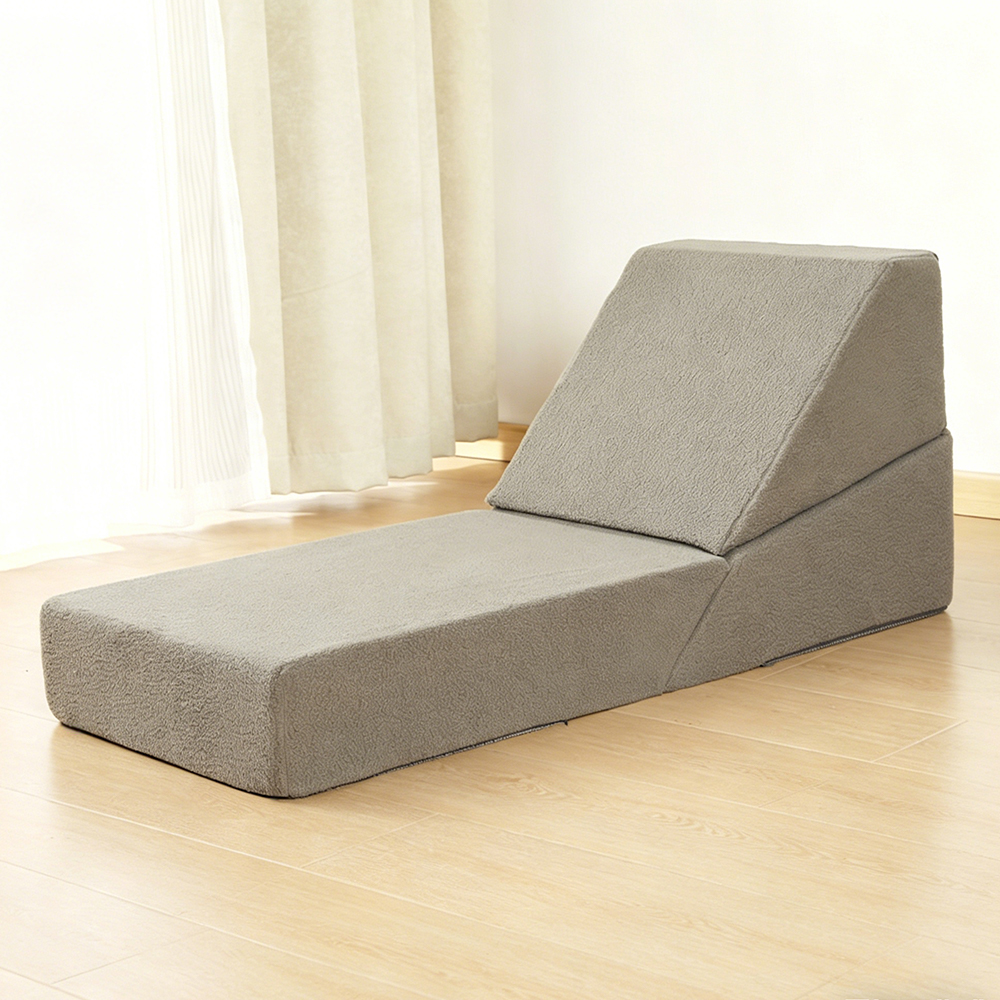
Multifunctional memory foam three-fold pad
1. A Practical Answer to Space Limitations
Space efficiency is one of the most important considerations in modern furniture purchasing. Large conventional furniture may provide a single function, but it can occupy valuable floor area even when it is not being used. A tri-fold pad offers a different approach. It provides a usable resting surface while remaining easy to fold, move, and store.
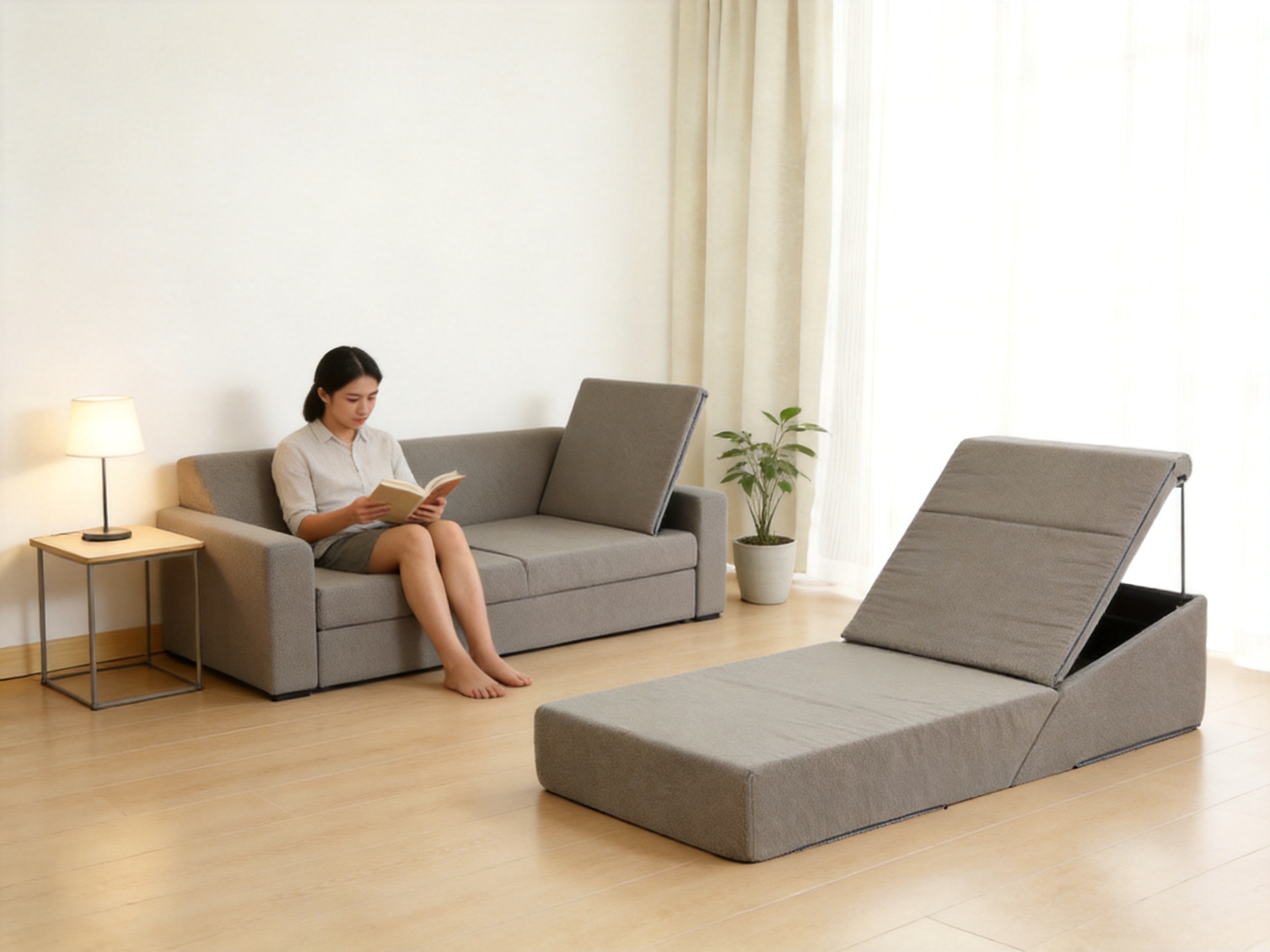
When fully opened, the pad can serve as a temporary mattress or floor sleeping surface. When partially folded, it can provide a supportive backrest for reading, watching films, working on a laptop, or relaxing. When arranged in a more upright position, it can function similarly to a low lounge chair or floor sofa. This means that one product can replace several occasional-use items.
This versatility is particularly valuable in small apartments and rental homes. Tenants may not want to purchase bulky furniture that is difficult to transport during a move. The tri-fold structure is easier to handle than a traditional sofa bed and does not require complicated assembly. It can be placed in a bedroom during the night, moved to a living room during the day, or stored against a wall when floor space is needed.
The product is also suitable for temporary accommodation. Homestays, serviced apartments, dormitories, and guest rooms often need flexible sleeping and seating solutions. A foldable memory foam pad can be prepared for visitors without permanently dedicating an entire room to a bed. After use, it can be folded and stored until the next guest arrives.
For offices and studios, the pad can provide a comfortable rest area without requiring a permanent sofa. In a creative workspace, it may be used as a floor lounge for informal discussions. In a home office, it can offer a convenient place for short breaks. This ability to move between functions gives the product a practical advantage over furniture designed for only one purpose.
One Product, Multiple Configurations
The three-fold structure is the central feature of the design. Each fold creates an opportunity to alter the angle, footprint, and intended use. The pad can be laid flat for resting, folded into a reclining arrangement for reading, or raised into a sitting configuration. Users can select the position that best suits their activity instead of adapting their body to a fixed piece of furniture.
Adjustability is especially useful for people who change activities throughout the day. A user may sit upright in the morning while reading, recline in the afternoon for a nap, and open the product fully at night. The same item can support all three activities without the need to purchase separate furniture.
Because the product does not require installation, it is ready for use after unpacking and arranging. This lowers the effort associated with setting up a temporary rest area. It also makes the pad attractive for online retail, where customers generally value products that are straightforward to receive, position, and use.
2. High-Density Slow-Rebound Memory Foam
The interior material plays a major role in the comfort and durability of any folding mattress or floor pad. This model uses high-density slow-rebound memory foam, a material known for its pressure-responsive behavior and ability to conform to the body. When weight is applied, the foam gradually compresses and then slowly returns toward its original shape after the pressure is removed.
This slow response helps create a more even support experience than ordinary low-density foam. Instead of immediately collapsing beneath heavier areas, the foam is intended to distribute pressure across the surface. This can help reduce the feeling of concentrated pressure at the shoulders, hips, and lower back during rest.
The product description emphasizes a balance between softness and support. This balance is important because an excessively soft pad may allow the body to sink too deeply, while an excessively firm surface may feel uncomfortable during prolonged use. High-density memory foam is designed to provide cushioning without losing its structural stability too quickly.
The foam also conforms to natural body curves. This characteristic is useful when the product is used as a mattress, recliner, or lounge pad because the body may be positioned differently in each configuration. Whether the user is lying flat or leaning back, the foam can respond to the areas receiving the greatest pressure.
Long-term shape retention is another important consideration. A folding pad may be opened and closed repeatedly, moved between rooms, and used by people of different weights. A high-density construction is intended to resist premature deformation under normal use. While all foam products require suitable care and ventilation, the density and slow-rebound design provide a stronger foundation for repeated everyday use than basic lightweight foam alternatives.
Comfort Without Excessive Complexity
The product avoids unnecessary mechanisms. There are no complicated frames, hinges, motors, or assembly steps. Its comfort comes primarily from the foam structure, the fold arrangement, and the fabric covering. This simplicity can reduce maintenance requirements and make the product easier for customers to understand.
A simple structure can also be an advantage in distribution and retail. Customers can quickly see how the product works, and sellers can demonstrate its different positions with minimal explanation. For hospitality and rental applications, uncomplicated operation reduces the chance of misuse by guests or temporary users.
The 15-centimeter thickness provides a substantial cushioning layer for a tri-fold floor product. Thickness contributes to the separation between the user and the floor, while the memory foam core supplies pressure-responsive comfort. The exact comfort experience will vary according to body weight, floor surface, temperature, and personal preference, but the listed thickness positions the product as a substantial rest pad rather than a thin decorative mat.
3. Surface Fabric and Everyday Maintenance
The outer cover is made from polyester fiber. This material is commonly used in home textiles because it offers a practical combination of softness, strength, and ease of maintenance. The product description characterizes the fabric as delicate and skin-friendly, helping create a more comfortable surface for sitting or lying down.
Easy cleaning is particularly valuable for a product used directly on floors. Floor furniture may come into contact with dust, clothing, pets, children, and food during daily use. A practical fabric surface allows users to maintain the appearance of the pad more easily than delicate upholstery that requires specialized care.
Users should follow the care instructions supplied with the product, especially regarding removable-cover cleaning, water temperature, drying, and exposure to direct heat. Memory foam itself should not generally be soaked or aggressively compressed during cleaning. Proper care helps preserve both the cover and the internal foam structure.
The grey color has broad interior compatibility. It can complement light wood, white walls, black metal furniture, neutral carpets, and colorful decorative accessories. A neutral tone is also useful for commercial environments because it can fit multiple room styles without requiring a large redesign.
The minimalist exterior is not merely an aesthetic choice. Simple lines help the pad appear organized when placed in a living room or office. The product can be used as functional furniture instead of being treated as an emergency mattress that must be hidden between uses.
4. Advantages Compared with Conventional Alternatives
When evaluating a tri-fold memory foam pad against competing furniture categories, it is helpful to consider the complete user experience rather than a single feature. Traditional sofas may provide strong seating support but are difficult to move and cannot usually become a full sleeping surface. Standard mattresses provide a better-defined sleeping area but are not convenient for daily seating. Thin folding mats are easy to store but may not provide the same level of cushioning or pressure response.
The multifunctional tri-fold design occupies a useful position between these categories. It aims to deliver more comfort than a thin floor mat, more flexibility than a fixed sofa, and easier storage than a conventional bed. This combination is one of its strongest competitive advantages.
Versus Fixed Sofas
A fixed sofa is a familiar choice for living rooms, but it requires a permanent location and generally serves one primary purpose. Moving a sofa may require two or more people, and its size can make it unsuitable for small rooms. The tri-fold pad is lighter and more adaptable in use. It can be positioned against a wall, placed on the floor for guests, or folded for storage when the room needs to be cleared.
The pad may not replace a large structured sofa for every household. However, it can provide a more flexible solution for buyers who value portability, temporary use, and multiple configurations over formal upholstered furniture.
Versus Conventional Foldable Mats
Many foldable mats prioritize low weight and compact storage, but some use thin or low-density materials that provide limited support. The high-density slow-rebound memory foam in this product is intended to offer a more supportive and pressure-responsive surface. The 15-centimeter thickness also gives it a more substantial feel than a basic exercise mat or thin sleeping pad.
This makes the product more appropriate for extended relaxation, occasional sleeping, and daily lounging. The foam is designed to conform to the user rather than simply creating a flat barrier between the body and the floor.
Versus Inflatable Furniture
Inflatable furniture can be compact when deflated, but it requires inflation equipment or manual pumping and may be vulnerable to punctures or air leakage. A foam pad is ready for use without an inflation process. It also provides a more consistent surface because its support does not depend on maintaining air pressure.
The trade-off is that foam products may occupy more space during storage than a deflated inflatable item. Buyers should select the format that best matches their storage conditions. For users who value immediate readiness and stable support, the foam construction offers clear practical benefits.
Versus Traditional Guest Beds
A traditional guest bed can offer excellent sleeping comfort but usually requires a dedicated room or a large amount of floor space. A tri-fold pad can be stored and brought out only when required. It is therefore well suited to occasional guests, children’s sleepovers, temporary accommodation, and small homes.
Its ability to function as seating after the guest leaves also improves space utilization. Instead of storing a bed that remains unused for most of the year, the homeowner has a product that can serve several purposes every day.
5. Suitable Applications Across Residential and Commercial Spaces
The product is designed for broad application. In a bedroom, it can serve as a temporary mattress, reading pad, or supplementary lounge surface. In a living room, it can provide additional seating or a relaxed floor-level area for watching movies. On a covered balcony, it can create a comfortable place for reading or resting, provided that it is protected from rain and excessive moisture.
In a study or home office, the pad can support short rest periods and flexible working positions. Users may place it near a bookshelf, under a window, or in a quiet corner. Its neutral color and simple design allow it to fit into professional-looking spaces without appearing out of place.
In homestays and serviced apartments, flexibility is a major operational benefit. A property manager can use the pad as a spare bed for children, a lounge surface for guests, or additional seating during gatherings. Its multi-purpose nature can help accommodation providers offer more sleeping capacity without purchasing permanent beds for every room.
In offices, the pad can contribute to a more comfortable break area. Modern workplaces increasingly include informal spaces for short recovery periods, creative collaboration, and flexible seating. A foldable foam product allows the layout to be changed as needs evolve.
The product can also be considered for family homes with children or pets. It creates a soft floor-level surface for play, reading, or supervised rest. However, parents and pet owners should use it according to appropriate safety practices and should keep the cover and foam clean and dry.
Small Apartments and Rental Homes
Small-space living requires furniture that can change function. A resident may not have room for a dedicated guest room or large sofa. The tri-fold pad allows the same floor area to serve as a living space during the day and a sleeping area at night.
Rental customers may also prefer products that do not require drilling, permanent installation, or structural modification. The pad can be used immediately in a new home and transported to another location later. This makes it especially suitable for students, young professionals, short-term tenants, and people who relocate frequently.
Hospitality and Temporary Accommodation
Hotels, hostels, homestays, and guesthouses often need flexible furnishing options. A compact foldable pad can be kept in a storage room and brought out when additional sleeping capacity is requested. It can also be used as a floor lounge in properties that emphasize informal, home-like environments.
For commercial buyers, consistency and supply reliability are as important as comfort. The manufacturer’s experience with international sales, customized processing, and cross-border export supply can support buyers who need products for different markets. Packaging, labeling, color, cover specifications, and order details should be confirmed directly according to the requirements of each project.
6. Product Specification Overview
The following table summarizes the principal specifications supplied for this model. Buyers should confirm final production details, packaging dimensions, tolerances, and available customization options before placing a commercial order.
| Attribute | Specification |
| Product Type | Tri-fold memory foam mat |
| Product Name | Multifunctional memory foam three-fold pad |
| Material | Memory foam |
| Foam Feature | High-density slow-rebound construction |
| Thickness | 15 centimeters |
| Fabric Material | Polyester fiber |
| Color | Grey |
| Style | Minimalist modern |
| Item Number | M015 |
| Listed Dimensions | 55 by 113 by 51 centimeters |
| Applicable Bed Size | 0.5 meter, as listed |
| Brand | wellcare |
| Season | All-season |
| Custom Processing | Available |
| Product Grade | Qualified product |
| Cross-Border Export Supply | Available |
| Main Sales Regions | Europe, Southeast Asia, and North America |
| Main Downstream Platforms | eBay, Amazon, Wish, AliExpress, independent sites, Lazada, and others |
The listed dimensions should be reviewed carefully because the product is foldable and its measurements may describe a particular folded or configured state. Commercial buyers should request a dimensional drawing or sample confirmation when accurate packaging, room planning, or retail listing information is required.
7. Manufacturing Strength and Material Research
The product’s value is supported not only by its visible design but also by the manufacturer’s long-term experience in foam research and home-product manufacturing. Jiangsu Wellcare Household Articles Co., LTD. was founded in 2003 and focuses on high-performance sleep materials and healthy home products.
The company’s technical development is led by a doctor-led research and development team. According to the supplied company information, the team develops more than one hundred new foam materials each year. This ongoing activity indicates a strong emphasis on formulation development, material testing, structural performance, and application-specific solutions.
The company’s foam portfolio includes ordinary sponge, memory foam, gel foam, temperature-insensitive memory foam, quick-dry memory foam, flame-retardant sponge, antibacterial sponge, and other specialized materials. Such a broad material range can help the manufacturer select or develop foam solutions for different comfort requirements, climate conditions, safety expectations, and product categories.
For the tri-fold pad, the relevant strengths include knowledge of memory foam formulation, density control, rebound behavior, comfort design, and integration with textile covers. These capabilities are important because a successful folding product must balance softness, structural recovery, flexibility, durability, and ease of handling.
Development History and Production Experience
The company’s development history began in 1993 as a school-run scientific research enterprise. In 2003, it purchased a 12,000-square-meter factory building and jointly developed a new sponge material with Huai’an Institute of Technology. In 2008, it purchased 50,000 square meters of land, supporting further expansion of its manufacturing and development capabilities.
By 2010, the company’s products were supplied to cross-border supermarkets in the United States, Germany, and Japan. It also cooperated with Qingdao University of Science and Technology. The company later expanded exports to the United Kingdom, Canada, Australia, and Kuwait.
This international experience is relevant to buyers who need products for different consumer markets. Foam products may be subject to different packaging expectations, labeling requirements, shipping conditions, and customer preferences in different countries. Familiarity with cross-border trade can support more efficient communication between the factory, distributors, and retail channels.
In 2018, the company became an Alibaba-certified Gold Supplier and entered e-commerce. In 2020, it became a designated supplier for five-star hotels. These milestones reflect experience in both online distribution and commercial hospitality supply, two channels in which consistency, delivery coordination, and product presentation are important.
8. Manufacturing Processes Relevant to the Product
The precise production process may vary according to order specifications, but a high-quality tri-fold memory foam pad generally depends on several coordinated manufacturing stages. These stages include material selection, foam preparation, shaping, cutting, assembly, cover production, inspection, and packaging.
Material Selection and Foam Formulation
Material selection establishes the foundation of the product. The manufacturer must consider foam density, rebound speed, firmness, resilience, compression behavior, and recovery after repeated use. High-density slow-rebound foam is selected to provide a supportive yet cushioning experience.
Because foam performance depends on formulation and processing conditions, research and development capabilities are important. A manufacturer with experience across ordinary sponge, memory foam, gel foam, and specialized foam categories can compare material characteristics and adapt them to product requirements.
Foam Shaping and Precision Cutting
After the foam material is prepared, it must be shaped and cut to create the required dimensions and folding sections. Accurate cutting helps maintain consistent thickness and alignment across the three panels. Consistency is important for both comfort and appearance, especially when the product is opened flat or folded into a sitting configuration.
The folding design also requires careful consideration of panel proportions and joining areas. If the sections are not properly aligned, the product may not fold smoothly or may create uneven support. Precision in this stage helps the finished pad transition between its intended positions.
Cover Manufacturing and Assembly
The polyester fiber cover must be cut and sewn to fit the foam core. A well-fitted cover helps preserve the intended shape and reduces unnecessary movement of the internal material. The fabric must also accommodate repeated folding without excessive strain at seams and corners.
Assembly may include the addition of closure systems or other design details, depending on the final order specification. Buyers seeking private-label or customized versions should confirm available options directly with the manufacturer, including color, fabric, labeling, packaging, and dimensional changes.
Inspection and Quality Control
Quality control for a folding memory foam product may include checks of dimensions, thickness, surface appearance, seam quality, folding alignment, cover fit, and foam recovery. Packaging inspection is also important because compression and transportation can affect the product’s condition upon arrival.
Commercial buyers should establish acceptance criteria before production. Depending on the market, these may include requirements for fabric composition, foam performance, odor management, flammability, chemical compliance, packaging materials, and labeling. The product information identifies the item as a qualified product, but market-specific documentation should be requested when required by local regulations or retail channels.
9. Sustainability and Responsible Production
Material efficiency and environmental management are increasingly important in the furniture and bedding industries. The supplied company information states that WELLCARE invests in advanced eco-friendly energy systems and improves environmental management practices. The company aims to go beyond basic compliance by integrating respect for nature into its business operations.
For foam-product buyers, sustainability should be evaluated across the full product life cycle. Relevant considerations may include the efficiency of material use, manufacturing energy, packaging design, product durability, transport volume, and end-of-life handling. A durable product that remains useful for multiple functions may reduce the need to purchase several separate items, although the environmental impact of any product depends on actual usage and disposal practices.
The tri-fold design can contribute to practical resource efficiency by combining sofa, lounge chair, and sleeping-pad functions. It may also reduce the need for separate occasional-use furniture in smaller homes and hospitality environments. Its storage-friendly form can help customers use existing rooms more efficiently rather than expanding living spaces or purchasing additional permanent furnishings.
Responsible buyers should request current documentation concerning materials, testing, packaging, and environmental practices when such information is necessary for a specific sales channel. Product claims should always be matched to verified documentation and the requirements of the destination market.
10. Customization and Commercial Supply Potential
The product supports custom processing, which creates opportunities for importers, distributors, hospitality operators, and private-label retailers. Customization may involve fabric color, cover design, labels, packaging, dimensions, logo application, or product configuration. The feasibility of each option depends on order volume, tooling, production schedules, and technical requirements.
Custom color development can help retailers coordinate the pad with a particular furniture collection. While grey provides a versatile starting point, other neutral or seasonal colors may be considered for different markets. A customized cover can also help a retailer create a consistent visual identity across several foam products.
Packaging customization is equally important for online sales. Clear product instructions, folding diagrams, care information, and protective packaging can improve the customer experience. Retailers should evaluate the relationship between package size, shipping cost, storage efficiency, and product recovery after unpacking.
Private-label buyers should confirm whether brand labels, woven tags, printed packaging, barcodes, instruction sheets, and carton markings are available. The supplied information states that the product is not an authorized own brand, so brand ownership and labeling arrangements should be discussed before commercial production.
The company does not support dropshipping for this item according to the listed information. This means that buyers should plan for conventional wholesale, distributor, or inventory-based arrangements. The manufacturer does support cross-border export supply, which can be valuable for importers serving Europe, Southeast Asia, North America, and other markets.
11. Purchasing Considerations for Importers and Retailers
Before ordering, buyers should identify the primary use case. A retailer selling the pad as a home lounge product may emphasize its tri-fold design, grey color, and modern appearance. A hospitality buyer may focus on easy storage, temporary sleeping capacity, and repeated use. An online marketplace seller may highlight the no-installation setup and multiple positions.
Samples are recommended before a large order. A sample allows the buyer to evaluate foam firmness, rebound speed, cover texture, odor, seam quality, folding alignment, and actual dimensions. It also provides an opportunity to test the packaging and determine how quickly the foam returns to its intended shape after transportation.
Buyers should clarify whether the listed dimensions refer to the folded or unfolded product. The supplied specification of 55 by 113 by 51 centimeters may represent a particular configuration, so an accurate dimensional diagram should be requested for product listings and room-planning purposes.
Shipping conditions should also be discussed. Memory foam products may be compressed or packed for transportation, depending on the manufacturer’s process and the buyer’s requirements. The buyer should confirm the recommended unpacking procedure, ventilation period, storage conditions, carton dimensions, gross weight, and pallet information.
Retail descriptions should be accurate and should not promise medical treatment or guaranteed relief from a specific health condition. The product is designed to provide supportive comfort and pressure-responsive cushioning, but individual experiences vary. Clear descriptions help protect both customers and sellers.
Important Questions for Commercial Buyers
Buyers should ask about minimum order quantity, sample availability, production lead time, customization charges, fabric options, packaging, inspection procedures, export documents, payment terms, and shipping arrangements. They should also confirm whether the available product is intended for residential use, commercial hospitality use, or both.
If the product will be sold in a regulated market, buyers should ask which material and safety documents are available. Depending on the destination, this may include foam composition information, fabric test reports, flammability documentation, chemical compliance records, and packaging declarations.
12. Care, Storage, and Product Longevity
Proper care can help preserve the comfort and appearance of the tri-fold pad. Users should place it on a clean, dry, and reasonably even surface. Prolonged exposure to moisture, direct rain, or excessive heat should be avoided. If the product is used on a balcony or other semi-outdoor area, it should be protected from weather and stored indoors when not in use.
Regular airing can help maintain freshness, particularly after unpacking or extended storage. The pad should be allowed to recover according to the manufacturer’s instructions before heavy use. It should not be folded or compressed in a way that places excessive stress on the foam or cover.
When storing the pad, users should keep it away from sharp objects, damp areas, and sources of extreme heat. If it is stored for a long period, occasional ventilation can help prevent stale odors and moisture accumulation. The cover should be cleaned according to its care label.
Although the product is designed for repeated use, no foam product should be treated as indestructible. Excessive jumping, dragging across rough floors, exposure to liquids, or use beyond the intended load conditions can shorten its service life. Clear care instructions should accompany every retail or hospitality installation.
13. How the Product Fits Current Furniture Trends
Furniture preferences are moving toward flexibility, compact living, wellness-oriented comfort, and adaptable room design. Consumers increasingly want products that work in more than one setting and can change with their lifestyle. A tri-fold memory foam pad aligns with these trends by combining the comfort expectations of a mattress with the flexibility of movable furniture.
The product also fits the growing interest in informal seating. Floor-level furniture can create a relaxed atmosphere in living rooms, media areas, studios, and hospitality spaces. The memory foam core provides a more cushioned experience than many rigid floor seats, while the folding design enables the room to be reorganized quickly.
Remote work and hybrid schedules have also increased the need for flexible home environments. A room may serve as an office during working hours, a living area in the evening, and a guest room at night. Multi-purpose products help users change the function of a room without purchasing additional large furniture.
For retailers, the product can be positioned within several categories, including memory foam furniture, folding mattresses, lounge furniture, floor sofas, guest bedding, and space-saving home products. This broad positioning potential can help reach different customer groups, provided that each product description remains accurate and consistent.
14. Overall Product Assessment
The multifunctional memory foam three-fold pad is a practical solution for users who need comfort without sacrificing flexibility. Its key strengths are the high-density slow-rebound foam, 15-centimeter thickness, adjustable tri-fold configuration, polyester cover, neutral grey appearance, and ability to function as a sofa, mattress, lounge chair, or reclining surface.
Compared with fixed furniture, it is easier to move and store. Compared with thin folding mats, it offers a more substantial foam structure. Compared with inflatable products, it is immediately ready for use and does not rely on air pressure. Compared with a dedicated guest bed, it uses less permanent space and can serve additional functions between guest visits.
The manufacturer adds value through its history in foam research, broad material portfolio, specialized development capabilities, international supply experience, customization support, and environmental initiatives. These strengths are relevant to both individual customers and commercial buyers seeking a reliable source for memory foam home products.
The product is not intended to replace every type of sofa or mattress. Buyers who require a raised bed frame, formal seating height, specialized orthopedic support, or outdoor weather resistance may need a different solution. However, for flexible indoor comfort, temporary sleeping, floor seating, and space-saving furniture, the tri-fold memory foam pad offers a compelling combination of functions.
Its greatest advantage is the way it transforms according to the user’s needs. One day it can be a reading chair; the next, a guest mattress; later, a lounge pad for watching a film. That adaptability makes it particularly relevant to modern homes, rental properties, compact rooms, homestays, and commercial spaces where every square meter must work efficiently.
Questions and Answers
What is a tri-fold memory foam pad?
A tri-fold memory foam pad is a three-section cushioned product that can be folded into different positions. It may be used as a floor sofa, reclining pad, lounge chair, temporary mattress, or flat resting surface.
What material is used inside the product?
The product uses high-density slow-rebound memory foam. This foam is designed to respond gradually to pressure, conform to body contours, and provide a balance between cushioning and support.
How thick is the pad?
The listed thickness is 15 centimeters. Buyers should confirm whether the specified thickness applies uniformly across all sections and whether compression during packaging affects the initial measurement.
What is the cover made from?
The cover is made from polyester fiber. It is described as soft, skin-friendly, and easy to clean when maintained according to the supplied care instructions.
Can the pad be used as a bed?
Yes. When opened flat, it can be used as a temporary sleeping or resting surface. Users should confirm the actual unfolded dimensions and suitability for the intended sleeper before purchase.
Can it replace a regular sofa?
It can provide sofa-like floor seating and reclining support, but it does not replace every feature of a conventional raised sofa. It is best suited to buyers who value flexibility, portability, and low-profile seating.
Is installation required?
No complicated installation is required. The product is designed to be arranged and used after unpacking. Buyers should follow the manufacturer’s instructions regarding unpacking and foam recovery.
Where can the product be used?
It is suitable for bedrooms, living rooms, studies, balconies with suitable protection, offices, homestays, rental rooms, temporary guest rooms, and other dry indoor environments.
Is the product suitable for small apartments?
Yes. Its foldable construction allows it to serve several purposes while occupying less permanent space than separate sofa and bed furniture. It can be folded and stored when the floor area is needed for another activity.
What color is available?
The listed color is grey. The neutral tone is designed to complement minimalist, modern, and many other interior styles. Custom color options should be confirmed with the manufacturer.
Can the product be customized?
Custom processing is listed as available. Possible options may include fabric, color, dimensions, labeling, packaging, or other specifications, subject to order quantity and technical feasibility.
Does the manufacturer support dropshipping?
The supplied product information states that dropshipping is not supported. Buyers should therefore plan for wholesale, distributor, inventory, or project-based purchasing arrangements.
Does the manufacturer support international supply?
Yes. The product is listed as suitable for cross-border export supply, with main sales regions including Europe, Southeast Asia, and North America. Shipping and documentation requirements should be confirmed for each destination.
What should buyers confirm before placing an order?
Buyers should confirm dimensions, folded and unfolded measurements, foam specifications, cover details, packaging, sample availability, minimum order quantity, lead time, customization, export documents, inspection requirements, and local compliance needs.
How should the pad be cleaned?
The cover should be cleaned according to its care instructions. The memory foam core should be protected from soaking and excessive moisture unless the manufacturer provides a specific cleaning method. The product should be dried and ventilated properly after cleaning.
What makes this product different from a thin folding mat?
The main differences are its high-density slow-rebound memory foam, 15-centimeter thickness, pressure-responsive cushioning, and multi-position tri-fold design. These features are intended to provide a more substantial and supportive experience than a basic thin mat.
References
1. Product specification sheet for Multifunctional Memory Foam Three-Fold Pad, Item M015.
2. Manufacturer-provided company profile for Jiangsu Wellcare Household Articles Co., LTD.
3. General technical literature on viscoelastic memory foam density, pressure response, and recovery behavior.
4. General textile-care guidance for polyester upholstery and removable furniture covers.
5. General product-development principles for foldable furniture, temporary bedding, and space-saving residential furnishings.
Product: Multifunctional memory foam three-fold pad

PREV:Striped Memory Foam Pet Bed for Comfortable, Hygienic, and Flexible Everyday Rest
NEXT:Striped Pet Staircase: A Safer, More Comfortable Route for Dogs and Cats
NEXT:Striped Pet Staircase: A Safer, More Comfortable Route for Dogs and Cats
Interested in cooperation or have questions?
Related News
WELLCARE was founded in 2003, boasting over a decade of profound and extensive experience.
Quick Links
Product
Media Centre
Contact Information
- [email protected]
- +86-517-84998062
- +86-15152354988
- No. 168 Nenjiang Road, Huaiyin District, Huai'an City, Jiangsu Province, China
Copyright © Jiangsu Wellcare Household Articles Co., LTD. All Rights Reserved.
Custom Memory Gel Mattress Manufacturers
