

 English
 日本語
日本語 Español


Shen Yueqiao — After-Sales Quality Support Supervisor

Home / Author / Shen Yueqiao — After-Sales Quality Support Supervisor / Adaptive 2-Inch Memory Foam Mattress for Fresh, Supportive Sleep
Product Category
NEW Category
Contact us
Adaptive 2-Inch Memory Foam Mattress for Fresh, Supportive Sleep
A mattress is not only a bedroom product; it is a daily health companion that influences sleep quality, pressure distribution, posture comfort, and the overall feeling of rest after waking. The 2-inch memory foam mattress described here is designed for users who want soft cushioning, reliable support, clean visual style, and flexible customization without moving into an overly bulky bedding system. Built with high-density memory foam and a slow-rebound structure, it adapts to the natural curves of the body and helps reduce concentrated pressure on the back, shoulders, hips, and legs. Its fresh bamboo leaf print, white-and-green visual tone, quilted surface, and thickened edge design create a mattress that is functional, durable, and suitable for a wide range of interiors.
This article introduces the product’s material advantages, design features, manufacturing value, practical applications, and competitive benefits. It also explains why high-density memory foam remains one of the most preferred materials for modern sleep products, especially when it is produced by a manufacturer with strong research capability, advanced foam formulation experience, and long-term export supply experience. The mattress is suitable for homes, apartments, guest rooms, hotels, furnished rental spaces, and cross-border retail channels that require reliable comfort, stable quality, and customizable sizes.
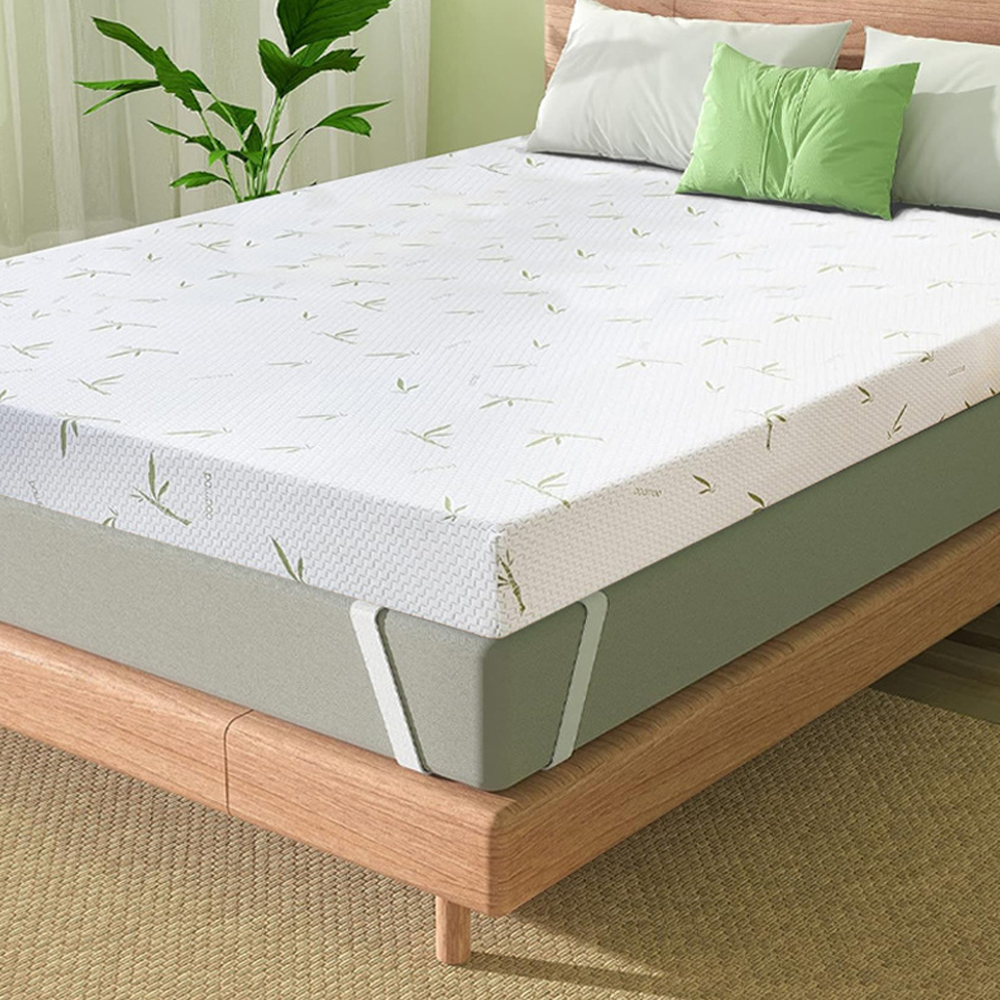
Product Overview: A Soft Yet Stable Memory Foam Sleep Layer
This memory foam mattress is a regular memory foam mattress with a 2-inch thickness specification and customizable dimensions. The standard listed size includes 60 inches by 80 inches, while additional sizes and thicknesses can be produced according to business quotation and project requirements. The mattress uses memory foam as its main material and fabric-related material, emphasizing adaptive comfort, slow rebound, and pressure relief. It is intended for all-season use, making it suitable for markets with different climates and households with varying comfort preferences.
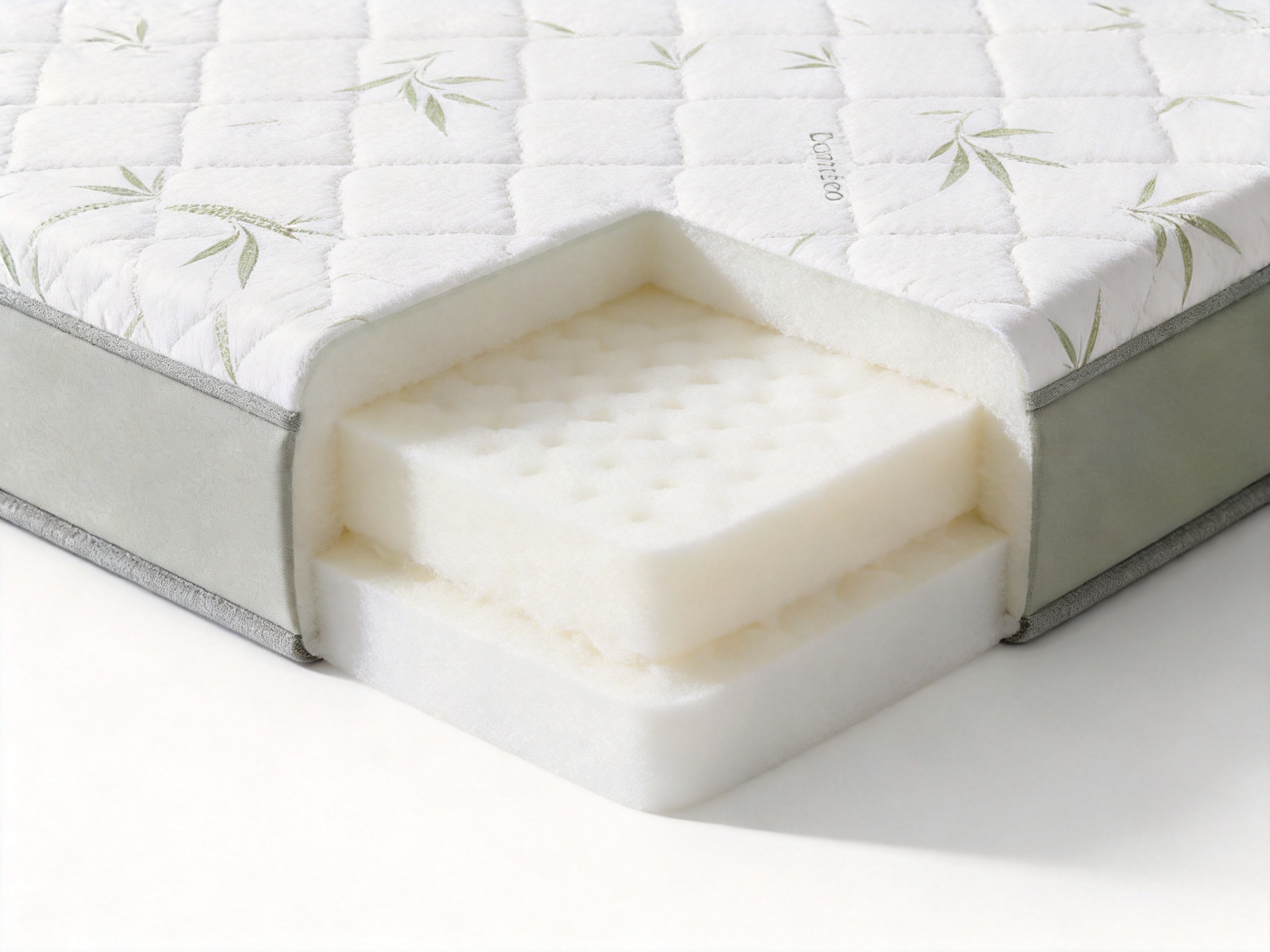
The central performance feature is the high-density memory foam base. Unlike ordinary low-density foam that may collapse quickly under repeated compression, high-density memory foam is engineered to provide more consistent support and better recovery. When a sleeper lies down, the material responds gradually to body weight and contour, allowing the mattress to cradle the body instead of pushing back abruptly. This is especially valuable for users who dislike overly rigid bedding but still need stable support for the spine and back.
The surface features a bamboo leaf print pattern that gives the mattress a refreshing and natural visual identity. This decorative choice is practical for modern retail because many consumers now value both comfort and appearance. Bedding products are increasingly displayed in open home environments, compact apartments, guest rooms, and rental accommodations where visual cleanliness matters. The white base color combined with green bamboo leaf elements creates a calm, natural tone that fits modern, Japanese-inspired, Scandinavian, minimalist, and guesthouse-style interiors.
The simple quilting process improves the surface texture and helps enhance anti-slip properties. While many basic foam pads use a plain cover or simple flat fabric, this mattress adds a more refined surface structure. Quilting contributes to a sense of craftsmanship and helps the mattress remain visually neat. The three-dimensional thickened edge design provides structural stability, reduces the likelihood of edge deformation, and improves the mattress’s service life. These details separate the product from low-cost commodity foam layers that focus only on price and ignore durability, design, and user experience.
Key Specifications
| Attribute | Value | Practical Meaning |
| Product Type | Memory Foam Regular Mattress | A versatile foam mattress suitable for homes, hotels, apartments, and guest spaces. |
| Main Material | Memory Foam | Provides slow rebound, body contouring, pressure relief, and soft support. |
| Thickness | 2 inches | Works well as a comfort layer, mattress topper, guest mattress, or customized bedding component. |
| Standard Dimension Example | 60 inches × 80 inches | Compatible with common queen-size sleeping arrangements in many markets. |
| Customization | Available | Sizes and thicknesses can be adjusted for different beds, regions, retail channels, and projects. |
| Surface Design | Bamboo leaf print with simple quilting | Creates a fresh appearance and improves the sense of surface texture. |
| Edge Structure | Thickened edge design | Improves shape stability and helps resist deformation during long-term use. |
| Season | All-season | Suitable for year-round household and hospitality use. |
| Export Supply | Available for cross-border supply | Appropriate for international procurement and retail distribution. |
Comfort Advantage: Slow Rebound Support That Follows the Body
The defining comfort feature of this mattress is slow rebound memory foam. Slow rebound means that the foam compresses under pressure and then gradually returns to its original shape after the pressure is removed. This behavior is different from ordinary sponge or basic polyurethane foam, which often springs back quickly and can feel bouncy or unstable. Memory foam’s slower response allows it to distribute body weight across a wider surface area, reducing localized pressure that can disturb sleep.
For back sleepers, the material helps fill the natural curve of the lumbar area and supports the back more evenly. For side sleepers, it cushions the shoulders and hips, two areas that often experience higher pressure on firmer mattresses. For combination sleepers, it provides a stable comfort layer that responds without excessive bounce. For users who spend time sitting or reclining on a bed, the mattress can soften contact pressure while maintaining a supportive base.
Many competing thin mattress products are either too soft or too firm. If the foam is too soft, the body may sink unevenly and the sleeping posture may become unstable. If the foam is too firm, pressure points may become uncomfortable, especially for lighter users or side sleepers. This product aims to balance softness and support through a high-density memory foam base. The result is a mattress layer that feels gentle at the surface but does not immediately collapse under body weight.
The pressure-relieving effect can also help improve perceived sleep quality. When pressure points are reduced, users may turn less frequently during the night. Fewer sleep interruptions often lead to a more restful experience, even when the total sleep time remains the same. For hotels, guesthouses, and furnished apartments, this matters because guest comfort directly affects satisfaction. A mattress that feels welcoming to a broad range of users is more valuable than a specialty mattress that only suits a narrow preference.
Why a 2-Inch Memory Foam Mattress Can Be a Smart Choice
Some buyers assume that thicker always means better, but thickness should match the intended use. A 2-inch memory foam mattress or comfort layer can be especially practical in several scenarios. It can refresh an existing bed without replacing the entire mattress. It can provide additional pressure relief on a firm base mattress. It can serve as a guest sleep surface where storage and handling matter. It can be used in apartments, dormitories, rental rooms, or compact spaces where bulky mattresses are inconvenient.
Compared with very thick mattresses, a 2-inch design is easier to transport, store, move, and customize. For cross-border commerce, packaging efficiency and shipping volume are important. A thinner foam mattress can often be compressed and packed more efficiently than a heavy, thick mattress, reducing logistics challenges. For retailers, this can improve warehouse handling and inventory flexibility. For project buyers, it can simplify installation across multiple rooms.
Compared with very thin foam pads, a 2-inch memory foam structure provides a meaningful comfort upgrade. Ultra-thin pads may add only minimal softness and may wear out quickly. This product’s high-density memory foam and edge reinforcement are designed to offer better shape retention and longer usability. It is not simply a decorative cover; it is a functional sleep layer with contouring and pressure-relief properties.
Another advantage is compatibility. A 2-inch memory foam layer can be used with wooden platform beds, box springs, existing spring mattresses, firm foam mattresses, guest beds, folding beds, and temporary sleeping arrangements. Custom dimensions allow the product to fit different regional bed standards, from North American sizes to custom hospitality specifications. This flexibility is a major competitive advantage for procurement teams that need one product concept adapted to multiple markets.
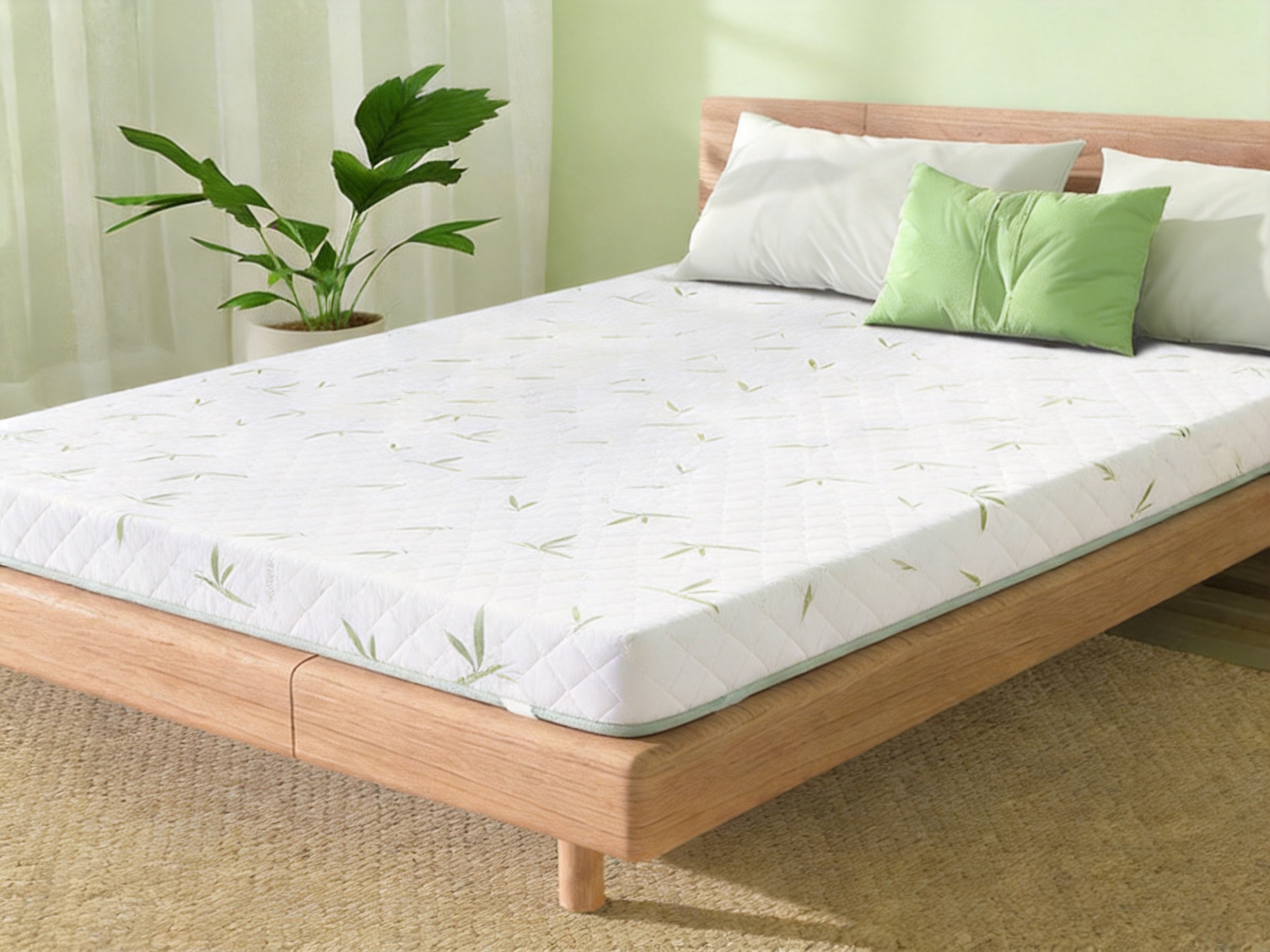
Material Advantage: High-Density Memory Foam for Long-Term Stability
The product uses high-density memory foam, a material selected for strong support, slow rebound, and resistance to deformation. Density is one of the most important indicators in foam performance. While density alone does not determine every comfort characteristic, it strongly influences durability, compression resistance, and recovery. Low-density foam may feel comfortable at first, but it can lose resilience more quickly after repeated use. High-density memory foam is better suited for products expected to maintain comfort over time.
The mattress is designed to respond to body pressure with a controlled, gradual feel. This creates an impression of being gently held rather than abruptly pushed upward. In practical sleep terms, the material can help reduce pressure concentration and absorb movement. Motion absorption is particularly useful when the mattress is used on shared beds, in hotels, or in spaces where users may be sensitive to movement. Although this is a 2-inch layer rather than a full multi-layer mattress, the memory foam still contributes to a calmer sleep surface.
High-density memory foam also helps maintain a smoother surface appearance. Cheap foam products may develop dents, uneven areas, or edge collapse after repeated compression. The reinforced edge design further improves structural stability. These features are important in commercial environments where products must withstand frequent use, cleaning cycles, guest turnover, and visual inspection. A mattress that keeps its shape better supports both comfort and brand reputation for retailers and accommodation providers.
In addition, high-density memory foam is highly suitable for customization. Different markets may request different dimensions, thicknesses, softness levels, cover styles, packaging methods, or labeling approaches. A manufacturer with strong foam formulation capability can adjust material performance while maintaining consistent quality. This is especially important for international buyers because comfort expectations vary by region. North American consumers may prefer thicker, softer comfort layers, while some Asian markets may prefer moderate firmness and compact design. A customizable memory foam platform allows one product line to serve many market needs.
Surface Design: Bamboo Leaf Print for a Calm and Natural Style
The bamboo leaf print is more than decoration. In the bedding market, appearance influences purchase decisions, especially for online retail. Customers often judge mattress pads and foam mattresses through images before they experience the actual feel. A fresh, clean surface design can increase perceived value and make the product stand out from plain white or gray competitors. The bamboo leaf pattern communicates freshness, calmness, and natural comfort, which aligns well with the promise of restful sleep.
The white and green color scheme is also highly versatile. White suggests cleanliness and simplicity, while green creates a natural accent. Together, they fit multiple interior styles. In a modern bedroom, the mattress looks crisp and understated. In a Japanese-style or Scandinavian-inspired home, the natural pattern supports a peaceful atmosphere. In guest rooms or guesthouses, the surface looks welcoming without being visually overwhelming. This design flexibility is commercially useful because one design can appeal to different customer groups.
The simple quilting improves the mattress’s tactile and visual texture. Quilting adds surface definition, helping the product appear more finished and premium. It can also reduce fabric shifting and improve the anti-slip feeling between the surface and bedding layers. While the user may cover the mattress with a fitted sheet during use, the quality of the uncovered product still matters for display, photography, packaging presentation, and first impression after unpacking.
Competitor products at the low end often use plain covers with minimal finishing. They may look like industrial foam slabs rather than finished sleep products. This mattress, by contrast, is designed as a complete consumer-ready product. The combination of pattern, quilting, clean color matching, and edge workmanship makes it more appealing for retail shelves, online listings, hotel procurement presentations, and customized private-label programs.
Edge Design: Structure That Helps Resist Deformation
The thickened edge design is a key detail. Edges are often the first area to show weakness in foam mattresses and toppers. Users sit on edges, pull products during handling, fold corners during installation, and compress sides during packaging and transport. If the edge structure is weak, the product may quickly appear worn even when the central foam still performs adequately. Reinforced edges help preserve the mattress’s shape and improve the overall user experience.
Edge stability matters for both comfort and safety. When a sleeper moves near the side of the bed, a weak edge may compress excessively and create a rolling sensation. A sturdier edge helps the user feel more secure. For older adults, children, hotel guests, or temporary sleeping arrangements, stable edges can improve confidence when getting in and out of bed. While a 2-inch mattress layer cannot perform like a thick reinforced hybrid mattress, thoughtful edging still adds meaningful structural value.
From a durability perspective, reinforced edges reduce deformation caused by repeated handling. This is valuable for hospitality environments where bedding may be moved during cleaning, airing, replacement, or room preparation. It is also useful for e-commerce because products must withstand compression packaging, shipping, unpacking, and customer installation. A mattress that looks neat after unpacking reduces return risk and improves satisfaction.
In comparison with ordinary foam pads, the edge finish gives the product a more refined and durable identity. Buyers increasingly evaluate not only material claims but also visible construction details. Clean seams, three-dimensional edging, and stable corners all signal better manufacturing control. These details support higher perceived quality and help the product compete in crowded bedding categories.
Manufacturing Strength: Foam Innovation Built on Long-Term Expertise
The manufacturer behind this mattress has a long history in foam research, sleep materials, and healthy home products. Founded in 2003 and developed from earlier scientific research activity beginning in 1993, the company has accumulated decades of knowledge in sponge and foam material development. This background is important because memory foam performance depends on formulation precision, process control, curing conditions, cutting accuracy, cover finishing, and quality inspection.
The company’s R&D team is doctor-led and develops more than one hundred new foam materials every year. This research capability allows the manufacturer to respond to market changes quickly. Sleep product buyers increasingly request specialized properties such as gel foam, temperature-insensitive memory foam, quick-dry memory foam, flame-retardant sponge, antibacterial sponge, and optimized support foams. A factory that continuously develops new materials can create better product solutions than suppliers that only copy existing foam formulas.
Advanced foam manufacturing begins with material selection and formulation. Polyurethane-based memory foam requires careful balancing of softness, rebound speed, density, airflow, compression set resistance, and durability. Small changes in formulation can significantly affect the final feel. Manufacturers with strong R&D capacity can tune these properties for different product categories, including mattresses, pillows, cushions, children’s products, pet products, and functional home items. This cross-category experience strengthens product development because knowledge from one category can improve another.
The manufacturer has expanded its production foundation over time, including the purchase of a 12,000-square-meter factory building in 2003 and a later land expansion of 50,000 square meters in 2008. Such development reflects manufacturing scale and long-term commitment to the bedding industry. A stable production base supports larger orders, consistent supply, customized projects, and international shipment schedules. For importers, distributors, and e-commerce brands, supply reliability is as important as product comfort.
Process Control: From Foam Development to Finished Mattress
Producing a reliable memory foam mattress involves more than cutting foam to size. The process begins with product planning: target thickness, density, softness, recovery speed, surface design, edge structure, packaging requirements, and market positioning. Engineers and product teams determine the foam formula and physical specifications according to buyer requirements. The goal is to achieve a balance between comfort, durability, cost efficiency, and customization flexibility.
Foam production requires controlled mixing and reaction. Raw materials must be measured accurately, combined under controlled conditions, and processed to create a stable cellular structure. The cell structure influences compression, resilience, airflow, and long-term performance. After foaming, the material must cure properly before cutting and finishing. Insufficient curing or inconsistent foam blocks can lead to odor issues, uneven feel, or unstable dimensions. Experienced manufacturers understand how to manage these variables.
Cutting accuracy is essential for customized sizes. A mattress specified as 60 inches by 80 inches, or a custom size such as 90 by 190 by 7.62 centimeters, must fit the intended bed frame or packaging format. Inaccurate cutting can cause customer complaints, poor sheet fit, or installation problems. Skilled production lines maintain dimensional control and inspect finished pieces to confirm compliance with order requirements.
Cover processing and quilting add another layer of manufacturing value. The bamboo leaf print fabric must be cut, aligned, stitched, and finished neatly. The quilting pattern should be consistent, and the edge workmanship should be clean. Three-dimensional edging requires attention to seam strength and shape control. These finishing steps transform raw foam into a refined mattress product suitable for direct consumer sale or hospitality use.
Packaging is another important stage, especially for cross-border export. Memory foam products are often compressed and rolled or packed to reduce shipping volume. However, excessive compression, improper timing, or poor packaging materials can affect recovery and appearance. A capable factory designs packaging methods that protect the product while improving logistics efficiency. This is particularly important for e-commerce platforms, where the customer’s first physical interaction with the product happens during unpacking.
Quality Advantages Over Ordinary Competitors
The mattress offers several advantages over many competing products in the same general category. First, it uses high-density memory foam rather than low-cost foam with limited resilience. This improves support, pressure relief, and long-term shape stability. Second, it combines comfort with visual design. The bamboo leaf print and quilted surface make the product more attractive than plain foam toppers. Third, it includes thickened edge construction, a detail that many budget products ignore.
Another competitive advantage is customization. Many suppliers only offer fixed sizes, forcing buyers to adapt their retail or project plans around available inventory. This mattress can be customized for different bed sizes, thickness requirements, and market preferences. Customization is especially valuable for hotels, apartments, regional distributors, and private-label brands. A product that can be adjusted without losing its core performance is easier to scale across multiple channels.
The manufacturer’s material portfolio also creates an advantage. Because the company works with ordinary sponge, memory foam, gel foam, temperature-insensitive memory foam, quick-dry memory foam, flame-retardant sponge, antibacterial sponge, and other foam materials, it can support product upgrades and variations. If a buyer wants a cooler version, a firmer version, a hotel-grade version, or a specialized cover, the manufacturer has the technical foundation to develop it. This is very different from trading companies or small workshops that lack formulation capability.
Export experience is another major strength. The company’s products have been supplied to cross-border supermarkets and exported to markets such as the United States, Germany, Japan, the United Kingdom, Canada, Australia, and Kuwait. The product information also identifies main sales regions including South America, Southeast Asia, and North America. International experience helps a manufacturer understand packaging expectations, documentation requirements, labeling differences, seasonal demand, and buyer communication standards.
For retailers, a mattress must not only be comfortable; it must also be marketable. This product has clear selling points: high-density memory foam, slow rebound pressure relief, fresh bamboo leaf print, quilted texture, reinforced edging, all-season use, and customizable sizing. These features can be communicated easily in product listings, showroom displays, and procurement proposals. A product with clear, visible, and experience-based benefits is easier to promote than a generic foam pad.
Applications in Homes, Guest Rooms, Hotels, and Apartments
In household bedrooms, the mattress can be used to improve the comfort of an existing bed. Many families own mattresses that are still structurally usable but feel too firm or lack pressure relief. Adding a 2-inch memory foam layer can provide a softer and more adaptive sleep surface without the cost of replacing the whole mattress. This is a practical solution for families who want comfort improvement with controlled spending.
In guest rooms, comfort and storage matter. Guest room bedding may not be used every night, but when visitors arrive, the host wants to provide a pleasant sleeping experience. A customizable 2-inch memory foam mattress can be used on guest beds, foldable beds, or temporary sleep arrangements. Its fresh design also helps the room look clean and inviting before sheets are added.
Hotels and guesthouses can benefit from the product because guest sleep experience directly influences reviews and repeat business. Replacing every mattress in a hotel can be expensive, but adding a memory foam comfort layer can improve surface comfort across rooms. The thickened edge and high-density material support repeated use, while the quilted bamboo print creates a quality impression during room preparation. Custom sizing allows the product to match different bed configurations in hospitality properties.
Apartments, rental housing, and furnished accommodation providers often need bedding products that are comfortable, durable, and easy to maintain. A memory foam mattress layer can upgrade basic bedding while remaining manageable for installation and replacement. Because the product supports customization, property managers can order consistent sizes for multiple units or adjust dimensions for special bed frames.
Cross-border e-commerce sellers can position the mattress as a memory foam topper, comfort mattress, guest mattress, or sleep upgrade solution depending on local market language and regulatory classification. The product’s simple yet attractive appearance makes it suitable for photography and online presentation. Its practical benefits are easy to explain, which supports customer education and conversion.
All-Season Usability and Everyday Practicality
The product is listed as suitable for all-season use. All-season bedding products are valuable because they reduce the need for seasonal inventory changes. While memory foam is often associated with warmth, a 2-inch profile and breathable cover design can make it practical for year-round use in many environments. The bamboo leaf visual design also creates a refreshing impression that aligns with warm-season and natural-style marketing.
Everyday practicality includes ease of placement. A 2-inch mattress layer is easier to handle than a thick full mattress. Users can place it on top of an existing mattress, align it with a bed frame, or move it between rooms when needed. For customers living in apartments or shared housing, this convenience is important. Moving a heavy mattress through narrow hallways or elevators can be difficult, while a thinner memory foam product is more manageable.
The white and green surface design also works well in different environments. Although many users will cover the mattress with sheets, the product still needs to look presentable when unpacked, photographed, inspected, or prepared by housekeeping staff. A clean and fresh design supports the perception of hygiene and comfort. For guest accommodations, this matters because visual cleanliness can influence trust before the guest even lies down.
The mattress is also adaptable to different user types. Adults can use it for pressure relief and comfort enhancement. Families can use it in guest spaces. Hotels can use it to improve bed comfort. Retailers can sell it to customers looking for a practical sleep upgrade. The same product concept can serve many channels because its benefits are broad and easy to understand.
Customization: Meeting Regional and Project-Based Requirements
Customization is one of the most important features for international bedding procurement. Bed sizes vary greatly by country and region. Even within the same country, buyers may need twin, full, queen, king, single, double, custom hotel sizes, camper sizes, dormitory sizes, or special project dimensions. This mattress supports customizable sizing, allowing buyers to match their market needs rather than forcing customers into limited options.
Thickness can also be customized based on quotation and order requirements. While the listed mattress is 2 inches, some buyers may request similar products in different thicknesses for different comfort tiers. For example, a retailer might offer a basic 2-inch version, a plus 3-inch version, and a premium version with additional functional foam. A manufacturer with strong foam and production capabilities can support this type of product-line strategy.
Customization may also include fabric design, packaging format, labeling, firmness adjustment, and performance upgrades. The bamboo leaf pattern is fresh and versatile, but some customers may want alternative colors or private-label presentation. Hotels may prefer neutral covers, while e-commerce brands may request distinctive packaging. A flexible manufacturing partner can help create market-specific versions while retaining the proven memory foam core.
This is a major advantage over suppliers that only sell standard stock items. Standard products may be suitable for small-volume buyers, but growing brands and project purchasers often need differentiation. Customization enables brand identity, regional fit, and competitive positioning. It also allows buyers to create exclusive offerings instead of competing only on price with identical products.
Sustainability and Responsible Manufacturing Direction
The manufacturer also emphasizes sustainability and environmental management. The company has invested in advanced eco-friendly energy systems and works to improve environmental practices beyond basic compliance. In modern bedding procurement, sustainability is increasingly important. Buyers, retailers, hotels, and consumers want products that are comfortable and reliable, but they also expect suppliers to operate responsibly.
Foam manufacturing can involve energy use, chemical management, waste handling, and packaging decisions. A manufacturer that integrates environmental responsibility into operations is better prepared for long-term global business. Sustainability efforts may include improved energy efficiency, better process control, reduced material waste, more responsible packaging, and stronger environmental management systems. These practices can help buyers align with their own corporate responsibility goals.
For international buyers, responsible manufacturing reduces risk. Environmental compliance expectations are becoming stricter in many markets. A supplier that understands environmental management is more likely to support stable cooperation and future regulatory adaptation. While product comfort remains the primary selling point for consumers, responsible manufacturing strengthens the total value proposition for professional buyers.
Why This Mattress Fits Modern Sleep Market Trends
The modern sleep market has shifted from simple bedding replacement to personalized comfort solutions. Consumers now compare materials, pressure relief, surface design, packaging, brand values, and product reviews. They want sleep products that feel comfortable, look clean, and provide clear benefits. This memory foam mattress fits these trends because it combines adaptive support, visual freshness, customization, and practical handling.
Memory foam remains popular because it addresses common sleep discomforts. Many people experience pressure points from firm mattresses, uneven support from aging beds, or discomfort when sleeping in guest accommodations. A memory foam layer offers an accessible upgrade. The slow rebound feel is easy for consumers to understand once they touch or use the product. It creates a noticeable difference compared with ordinary foam or thin fabric pads.
The bamboo leaf design supports the trend toward natural, calming bedroom aesthetics. Consumers often associate nature-inspired patterns with relaxation, freshness, and wellness. Even if the product is not marketed as a botanical or bamboo-fiber mattress, the visual design helps communicate a peaceful sleep environment. In online retail, this can improve click appeal and product differentiation.
Customization supports the trend toward niche markets and private-label programs. Instead of selling one generic item, brands can develop tailored versions for different audiences: apartment dwellers, guest room hosts, hotel buyers, students, compact-space users, or international marketplaces. A manufacturer with strong technical and production capacity can support these variations while maintaining consistent quality.
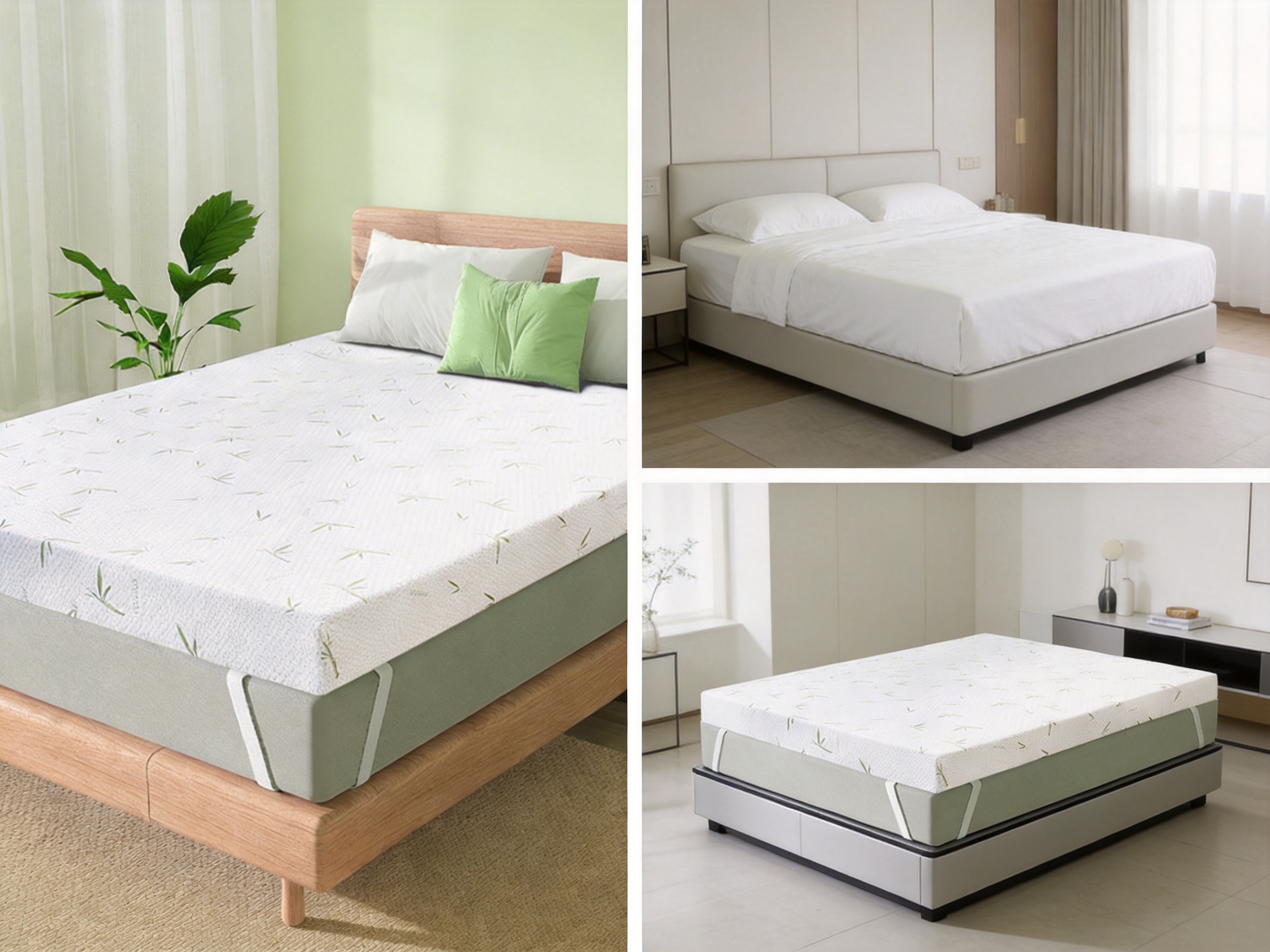
Buyer Benefits: Retail, Hospitality, and Distribution Value
For retail buyers, this mattress provides a balanced product that can be positioned as affordable comfort with premium details. The high-density memory foam offers a meaningful performance claim. The quilting and bamboo leaf print provide visual differentiation. The edge design supports durability messaging. Custom sizing helps the retailer serve more customers. These features combine into a product that is more persuasive than a simple foam slab.
For hospitality buyers, the mattress can improve guest comfort without requiring complete bed system replacement. Hotels often need scalable comfort upgrades that are cost-effective and easy to implement. A 2-inch memory foam layer can be installed across rooms, used to standardize comfort, or applied selectively to premium rooms and guest requests. Its all-season usability and stable construction make it suitable for repeated hospitality use.
For distributors, the product is attractive because it serves multiple sales channels. It can be offered to home goods stores, online sellers, apartment suppliers, hotel procurement teams, and regional bedding retailers. Customization allows distributors to create versions for different customers while working from a common manufacturing base. This improves supply chain efficiency.
For e-commerce sellers, the product has strong listing potential. Key selling points can be presented clearly: pressure relief, slow rebound, high-density foam, fresh bamboo leaf print, quilted cover, reinforced edge, and customizable size. Product images can show the clean surface, thickness, edge workmanship, and foam flexibility. Because the mattress solves common comfort problems, it can be marketed with practical use cases such as upgrading a firm bed, improving a guest room, or adding comfort to an apartment mattress.
Comparison With Common Alternatives
Compared with ordinary sponge pads, this memory foam mattress offers more adaptive contouring and better pressure distribution. Ordinary sponge may feel soft initially, but it typically lacks the slow-response behavior that makes memory foam effective for pressure relief. Sponge can also compress quickly and may not provide the same stable support over time. For users seeking comfort improvement, memory foam is generally a more advanced material choice.
Compared with spring mattresses, this 2-inch memory foam layer is more flexible and easier to customize. Spring mattresses provide deep support but are heavier, thicker, and harder to ship. They may also transfer more motion depending on construction. A memory foam mattress layer can be used independently in certain settings or combined with an existing support base to enhance comfort. It is not intended to replace every full mattress system, but it offers a practical upgrade path.
Compared with low-cost toppers, this product has stronger design and construction. Many budget toppers are plain, thin, and easily deformed. They may not include refined surface quilting or reinforced edges. This mattress’s bamboo print, quilting, high-density foam, and edge design make it more suitable for buyers who care about both comfort and presentation.
Compared with overly thick foam mattresses, the 2-inch design is easier to handle, store, and ship. Some customers do not need a full thick mattress; they need a comfort layer that improves the feel of an existing bed. The product satisfies that need while reducing bulk. This makes it especially attractive for cross-border commerce, guest spaces, and multi-room projects.
Care, Handling, and Use Recommendations
To get the best performance, users should place the mattress on a clean, flat, supportive surface. If it is used as a topper, the existing mattress should be relatively even and structurally sound. A memory foam layer can improve comfort, but it cannot fully correct a severely sagging base mattress. For best results, the underlying surface should support the foam evenly.
After unpacking, memory foam products may need time to recover their full shape, especially if they have been compressed for shipping. Users should allow the mattress to expand in a well-ventilated area before use. Recovery time can vary depending on compression duration, ambient temperature, and foam formulation. Warmer environments often help memory foam recover more quickly because the material responds to temperature and pressure.
Regular rotation can help promote even wear, especially in high-use environments such as guest rooms or hotels. A protective sheet or cover can help keep the mattress clean and extend its service life. Avoid placing the foam near open flames or exposing it to excessive moisture unless the product has been specially designed for such conditions. For commercial buyers, care instructions can be included in packaging or guest-service guidelines.
When storing the product, it should be kept dry and clean. Long-term folding or heavy compression should be avoided if possible, because it may affect shape recovery. If compressed packaging is used for shipping, the product should be unpacked according to recommended procedures. Proper handling supports customer satisfaction and protects the product’s comfort performance.
Company Strengths Supporting the Product
Jiangsu Wellcare Household Articles Co., LTD. brings substantial manufacturing and research strength to this product. The company focuses on high-performance sleep materials and healthy home products, with continuous development of foam solutions for the global sleep market. Its long-term dedication to foam innovation helps ensure that products are not merely assembled but engineered from material science to finished goods.
The company’s R&D capability is one of its most important strengths. A doctor-led team develops more than one hundred new foam materials annually, covering a broad portfolio that includes memory foam, gel foam, temperature-insensitive memory foam, quick-dry memory foam, flame-retardant sponge, antibacterial sponge, and other specialized materials. This allows the company to create solutions for multiple product categories and customer requirements.
Its export and supply history also strengthens buyer confidence. Products have reached international markets and have been supplied to cross-border supermarket channels. The company has experience with e-commerce supply and has served hospitality needs, including becoming a designated supplier for five-star hotels in 2020. This background indicates the ability to support both consumer retail and professional procurement standards.
The company’s location in Huai’an City, Jiangsu Province, China, supports manufacturing and export operations. Its development over decades, including facility expansion and cooperation with academic institutions, reflects a stable growth path. For buyers, this means access to a supplier with production capacity, technical knowledge, customization ability, and international business experience.
Q&A Section
What is the main material of this mattress?
The main material is memory foam. The product uses high-density memory foam designed for slow rebound, pressure relief, and stable support.
What does slow rebound mean?
Slow rebound means the foam compresses under body pressure and gradually returns to its original shape after the pressure is removed. This helps the mattress conform to body curves and reduce concentrated pressure points.
Is the mattress suitable as a topper?
Yes. With a 2-inch thickness, it can be used as a comfort layer on top of an existing mattress, provided the base mattress is flat and supportive.
Can the size be customized?
Yes. The product supports customizable sizes and thickness-related requirements according to business quotation and order needs.
What type of rooms can use this mattress?
It can be used in bedrooms, guest rooms, apartments, hotels, guesthouses, dormitory-style spaces, and furnished rental properties.
What makes the surface design special?
The surface uses a refreshing bamboo leaf print with a white and green color scheme. The simple quilting improves texture and helps create a refined, natural appearance.
How does the thickened edge design help?
The thickened edge design improves structural stability, helps resist deformation, and gives the mattress a more durable and finished look.
Is this mattress suitable for all seasons?
Yes. It is designed for all-season use, making it practical for year-round home, hospitality, and retail applications.
How is it different from ordinary sponge pads?
Ordinary sponge usually rebounds quickly and may not contour as effectively. This memory foam mattress offers slower rebound, better body adaptation, improved pressure distribution, and a more refined cover design.
Why is the manufacturer’s R&D capability important?
Foam comfort and durability depend on formulation and process control. A strong R&D team can develop and adjust foam materials for different markets, comfort levels, and performance requirements.
Conclusion: A Practical, Customizable, and Market-Ready Memory Foam Mattress
This 2-inch memory foam mattress combines comfort, design, durability, and customization in a practical format. Its high-density memory foam provides slow rebound support and pressure relief, helping the sleep surface adapt to the body’s natural curves. Its bamboo leaf print and quilted texture create a fresh, calming appearance that fits modern interiors. Its thickened edge design improves stability and helps resist deformation. Its customizable size options make it suitable for different bed types, markets, and project requirements.
For consumers, it offers an accessible way to upgrade sleep comfort. For hotels and guest accommodations, it provides a scalable comfort improvement. For retailers and distributors, it delivers clear selling points and flexible market positioning. For international buyers, it is supported by a manufacturer with long-term foam expertise, advanced material research, export experience, and sustainability awareness.
In a competitive bedding market, successful products must do more than feel soft. They must provide reliable support, attractive presentation, durable construction, flexible customization, and trustworthy manufacturing support. This memory foam mattress meets those needs with a balanced design that can serve households, hospitality spaces, apartments, and global retail channels.
References
1. Dement, W. C., and Vaughan, C. The Promise of Sleep: A Pioneer in Sleep Medicine Explores the Vital Connection Between Health, Happiness, and a Good Night’s Sleep.
2. Walker, M. Why We Sleep: Unlocking the Power of Sleep and Dreams.
3. Kumar, V., and Gupta, R. Polyurethane Foams: Processing, Properties, and Applications.
4. International Sleep Products Association. Mattress Industry Trends and Consumer Comfort Preferences.
5. Mills, N. Polymer Foams Handbook: Engineering and Biomechanics Applications and Design Guide.
6. Grand View Research. Mattress Market Analysis and Bedding Product Development Trends.
Product: Memory foam mattress
PREV:Gel Wave Pillow: Cool Contour Support for Modern Sleep Comfort
NEXT:Foldable Memory Foam Seat Cushion for Portable Comfort and Everyday Support
NEXT:Foldable Memory Foam Seat Cushion for Portable Comfort and Everyday Support
Interested in cooperation or have questions?
Related News
WELLCARE was founded in 2003, boasting over a decade of profound and extensive experience.
Quick Links
Product
Media Centre
Contact Information
- [email protected]
- +86-517-84998062
- +86-15152354988
- No. 168 Nenjiang Road, Huaiyin District, Huai'an City, Jiangsu Province, China
Copyright © Jiangsu Wellcare Household Articles Co., LTD. All Rights Reserved.
Custom Memory Gel Mattress Manufacturers
