

 English
 日本語
日本語 Español


Pan Ruoxi — Product Sales Consultant

Home / Author / Pan Ruoxi — Product Sales Consultant / Multifunctional Tri-Fold Memory Foam Pad for Flexible Living Spaces
Product Category
NEW Category
Contact us
Multifunctional Tri-Fold Memory Foam Pad for Flexible Living Spaces
Modern homes increasingly demand furniture that is comfortable, compact, adaptable, and easy to maintain. The multifunctional memory foam three-fold pad answers this demand by combining the pressure-relieving qualities of high-density slow-rebound memory foam with a practical tri-fold structure that can serve as a sofa, lounge chair, nap pad, guest mattress, reading recliner, or temporary rest surface. Designed for small apartments, rental rooms, guest spaces, balconies, home offices, dormitories, homestays, and multipurpose living areas, this tri-fold memory foam mat offers a simple way to transform limited space into a more comfortable and versatile environment.
Unlike many ordinary foldable mats that rely on thin sponge, low-resilience foam, or unstable filling, this product uses memory foam engineered to conform to body curves while maintaining stable support over time. Its 15 cm thickness provides a more substantial feel than lightweight floor cushions, making it suitable not only for brief sitting but also for longer periods of relaxation, reading, movie watching, afternoon rest, or overnight use. The pad’s minimalist modern style, grey color, and clean lines allow it to blend naturally into bedrooms, living rooms, offices, and commercial accommodation interiors without overwhelming the space.
Multifunctional memory foam three-fold pad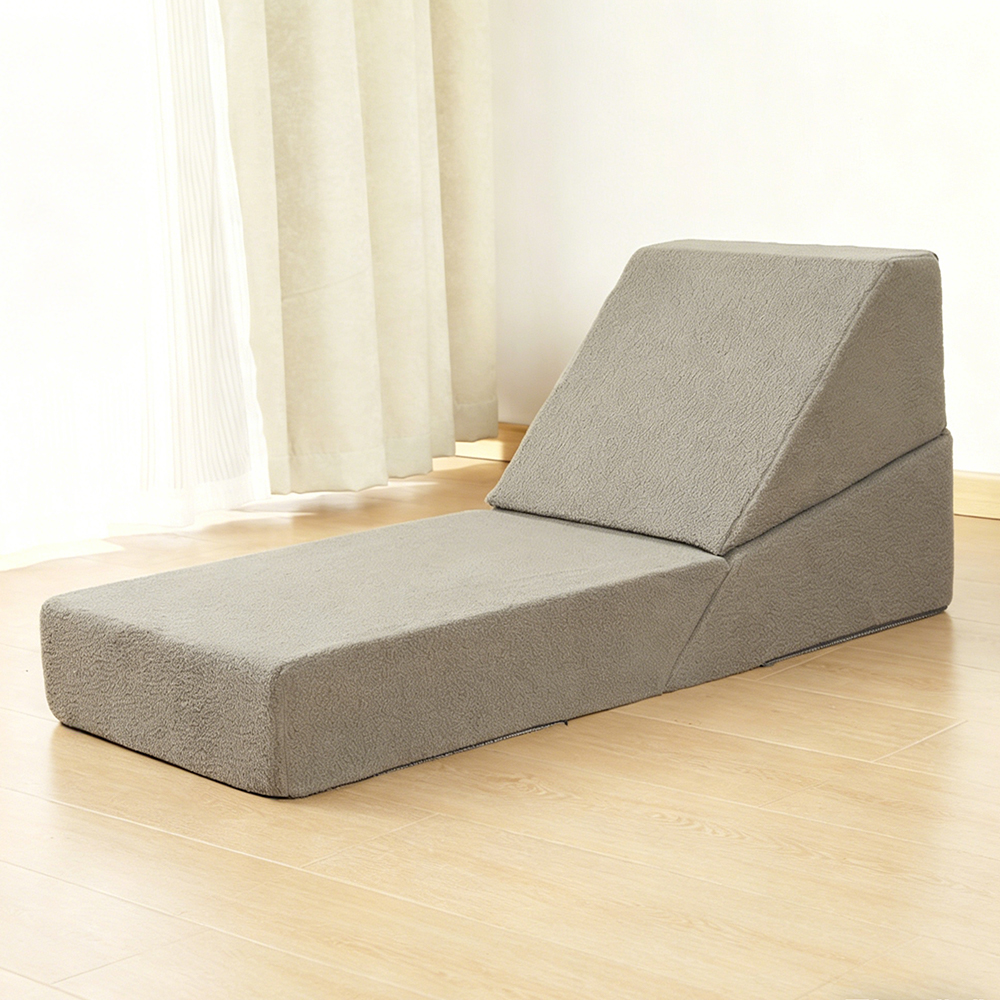
Product Overview: A Compact Pad with Multiple Uses
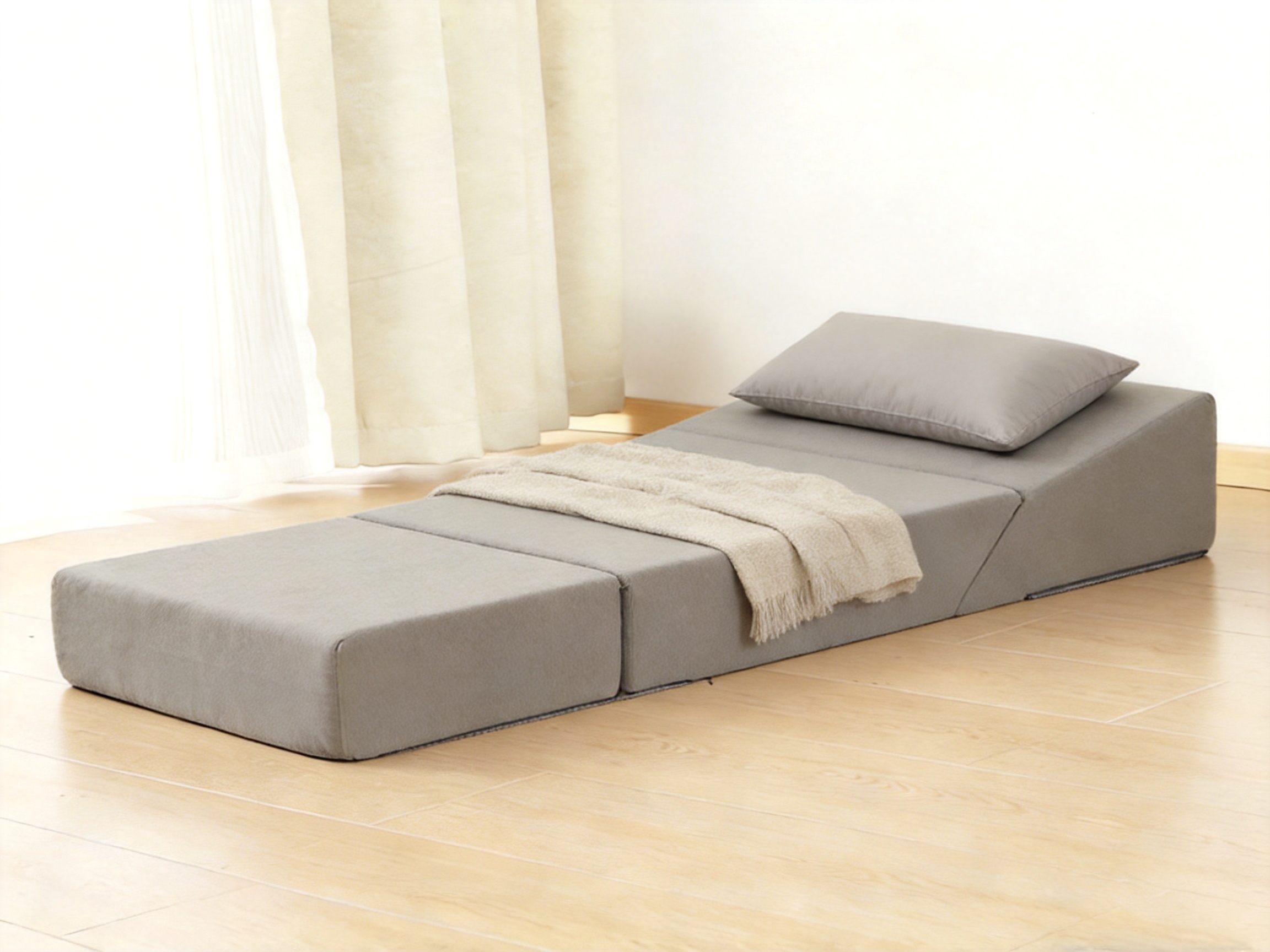
The multifunctional memory foam three-fold pad is categorized as a tri-fold memory foam mat. It is built around a simple but highly practical concept: one foldable product should serve several daily scenarios without requiring complicated installation, bulky storage, or fixed furniture placement. When unfolded, it can function as a soft resting surface or temporary mattress. When partially folded, it can become a recliner-style pad for reading or watching videos. When folded into a seat-like shape, it provides a casual sofa alternative for compact rooms.
This flexibility is especially valuable in contemporary living environments. Many consumers live in apartments where every square meter must be used wisely. Guest rooms are often unavailable, and traditional sofas or beds may be too large for multifunctional rooms. A foldable memory foam pad helps solve these problems by giving users the freedom to switch between sitting, reclining, and lying down. After use, it can be folded and stored more easily than a conventional mattress or fixed sofa.
The product’s design emphasizes comfort without unnecessary complexity. No mechanical frame, assembly tools, or complex installation process are required. Users can place it directly on the floor, on a platform, against a wall, or in a relaxation corner. The tri-fold configuration supports free angle adjustment, allowing the user to create multiple postures according to the room layout and activity. This simplicity makes the product suitable for residential users, hospitality operators, office rest areas, student housing, and temporary accommodation providers.
Core Materials: High-Density Slow-Rebound Memory Foam
The central comfort advantage of this tri-fold pad comes from its high-density slow-rebound memory foam. Memory foam is known for its ability to respond gradually to body weight and temperature, allowing the material to contour around the shoulders, back, hips, and legs. This contouring effect helps distribute pressure more evenly, reducing concentrated stress points that can occur when sitting or lying on hard surfaces or low-quality cushions.
In practical use, high-density memory foam provides a balance between softness and structural support. A pad that is too soft may feel pleasant at first but can collapse quickly, causing the body to sink excessively and lose support. A pad that is too hard may feel stable but uncomfortable for long rest periods. The slow-rebound foam used in this product is designed to provide a cloud-like comfort experience while still resisting deformation after extended use.
This material choice gives the product an advantage over many competing foldable mats made with ordinary foam or low-density sponge. Lower-grade foam often loses height and elasticity after repeated compression, especially in fold lines and seating areas. By using a more supportive memory foam structure, the tri-fold pad maintains a more consistent surface feel and helps extend product life. This durability is important for users who expect the pad to serve not merely as an occasional spare item but as a regular part of daily home life.
Comfort Performance for Sitting, Reclining, and Resting
The comfort needs of a multifunctional pad are more complex than those of a single-purpose cushion. A mattress must support the body while lying down, a sofa must provide stable seating, and a recliner must support angled rest. This product is designed to address all three modes. Its tri-fold structure allows different sections to be arranged into functional positions, while the 15 cm foam thickness gives each section enough depth to cushion the body effectively.
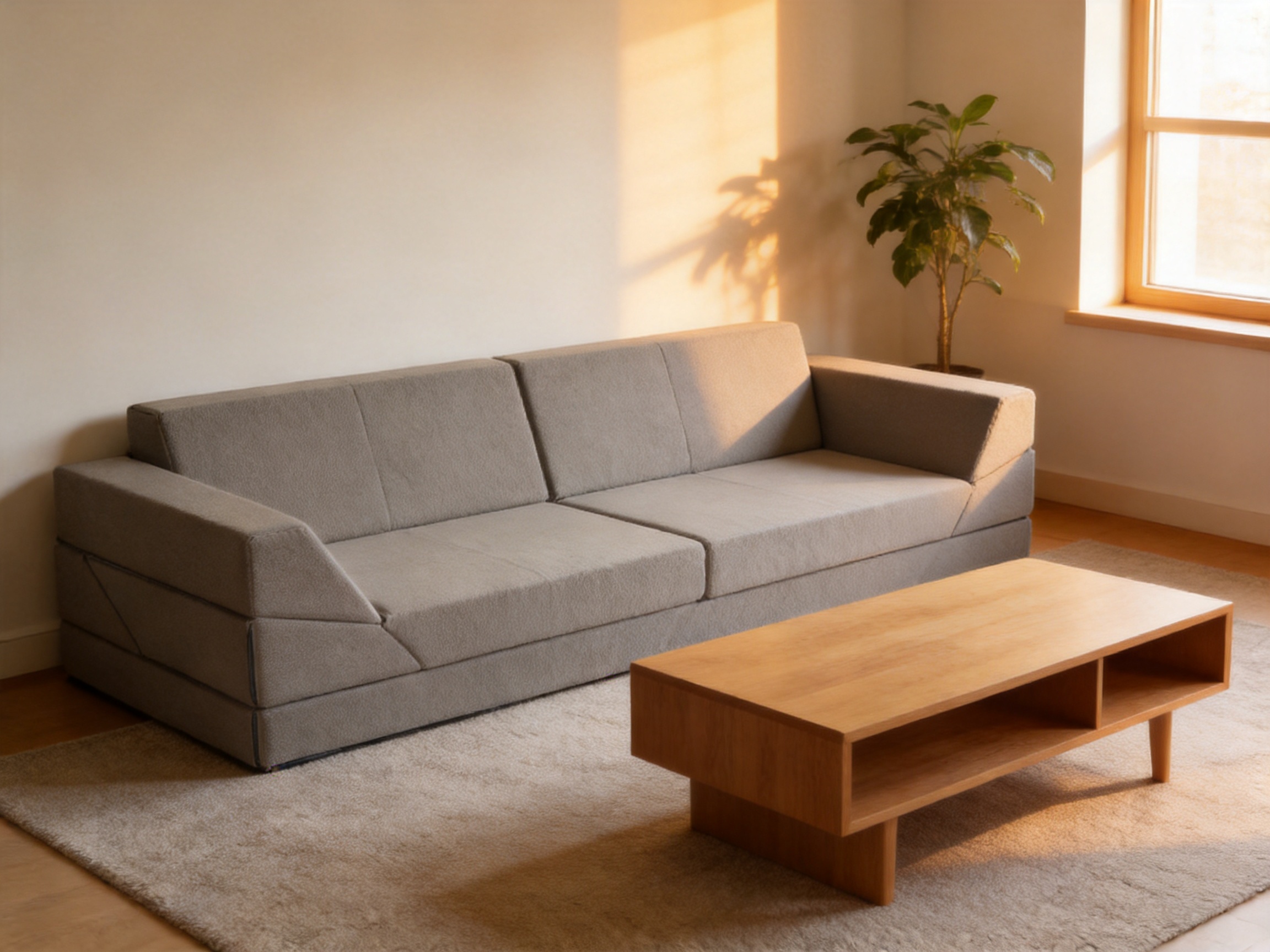
When used flat, the pad can support naps, guest sleeping arrangements, stretching, or casual floor lounging. The memory foam conforms to the natural curve of the spine and helps reduce pressure on the lower back. When folded into a reclining form, it can support the back at an angle, making it useful for reading, working on a tablet, watching movies, or taking a short afternoon break. When folded into a sofa-like shape, it offers a compact seating option for small rooms or informal living spaces.
This multi-posture functionality distinguishes it from standard floor mattresses, which usually provide only a flat surface, and from traditional sofas, which are difficult to move and do not convert easily into rest surfaces. It also offers a more comfortable alternative to inflatable beds, which may feel unstable, noisy, or prone to air leakage. The memory foam structure is quiet, supportive, and immediately ready for use.
Design Aesthetics: Minimalist, Modern, and Easy to Match
Comfort alone is not enough for a product intended for visible living spaces. Appearance also matters. The multifunctional memory foam three-fold pad adopts a minimalist modern style with smooth lines and a grey color. This low-saturation color choice helps the product coordinate with a wide range of interior styles, including Scandinavian, contemporary, Japanese-inspired, urban apartment, student housing, and simple hospitality interiors.
The clean silhouette allows the pad to be placed in a bedroom corner, living room, balcony rest area, office lounge, or study without appearing visually heavy. It can serve as a soft accent piece rather than a bulky furniture item. For small rooms, the ability to maintain a clean visual impression is especially important. Oversized furniture can make a compact space feel crowded, while a foldable pad with a simple shape helps preserve openness and flexibility.
The surface fabric is made from polyester fiber, selected for its practical balance of softness, durability, and ease of care. The fabric is skin-friendly for daily contact and easier to maintain than delicate upholstery materials. For a product that may be used by families, guests, renters, or hospitality customers, easy cleaning and practical fabric performance are major advantages.
Product Specification Table
| Attribute | Specification | User Benefit |
| Product Type | Tri-Fold Memory Foam Mat | Supports multiple postures and space-saving storage |
| Material | Memory Foam | Conforms to body curves and relieves pressure |
| Thickness | 15 cm | Provides more substantial cushioning than thin floor pads |
| Fabric Material | Polyester Fiber | Skin-friendly, practical, and easy to clean |
| Color | Grey | Versatile for modern interiors |
| Style | Minimalist Modern | Blends with bedrooms, living rooms, studies, and offices |
| Design | Tri-Fold Foldable Structure | Can be used as a sofa, bed, or lounge pad |
| Season | All-Season | Suitable for year-round indoor use |
| Dimensions | 55 x 113 x 51 cm | Compact size for flexible placement |
| Item Number | M015 | Clear product identification for sourcing and customization |
| Custom Processing | Available | Supports tailored production requirements |
| Main Sales Regions | Europe, Southeast Asia, North America | Designed for cross-border market demand |
Advantages Over Conventional Foldable Mats
Many foldable pads on the market are designed primarily for low cost. They may use thin foam, cotton filling, or loosely assembled cushion layers. While these products may be easy to store, they often fail to deliver long-term comfort. They can flatten quickly, develop uneven surfaces, or provide insufficient back support. The multifunctional memory foam three-fold pad improves on these limitations through thicker foam, slow-rebound comfort, and a more supportive material structure.
Compared with ordinary sponge mats, memory foam provides better pressure distribution. Ordinary sponge rebounds quickly and may push back unevenly against the body, creating discomfort during extended rest. Memory foam responds more gradually and adapts more closely to the user’s shape. This makes it more suitable for reading, lounging, or sleeping, especially for users who are sensitive to hard surfaces.
Compared with inflatable mattresses, this pad offers greater stability and convenience. Inflatable products require pumps, valves, and air retention. They can deflate, squeak, or shift during use. A memory foam pad requires no inflation and no mechanical preparation. It is ready immediately after placement and provides a quieter, more grounded rest experience.
Compared with traditional sofa beds, the tri-fold memory foam pad is lighter, simpler, and more adaptable. Sofa beds often require metal frames and complex mechanisms, which can increase weight, cost, and maintenance issues. This pad offers a softer, simpler alternative for users who prioritize flexible living over fixed furniture. It may not replace a full-size permanent sofa bed in every scenario, but it provides excellent value for compact spaces and temporary rest needs.
Space-Saving Value for Small Apartments and Rental Rooms
Urban housing trends continue to favor compact apartments, shared homes, and rental rooms. In these environments, furniture must perform more than one function. A bed may need to become a daytime seating area. A living room may need to become a temporary guest room. A balcony may become a reading nook. A study may double as a rest space. The tri-fold memory foam pad supports these transformations without permanent installation.
For renters, portability is a major advantage. Traditional mattresses and sofas are difficult to move and may not fit narrow stairways, elevators, or temporary leases. A foldable pad is easier to transport and reposition. Users can move it between rooms as needed, store it when not in use, or take it to a new residence with less effort.
For small apartment owners, the product helps avoid clutter. Instead of purchasing separate furniture pieces for seating, lounging, and guest sleeping, one multifunctional pad can cover several needs. This reduces cost, saves space, and keeps the interior more open. The grey minimalist design also helps prevent the room from feeling visually crowded.
Application in Homestays, Guest Rooms, and Hospitality Settings
Hospitality operators increasingly need flexible sleeping and relaxation solutions. Homestays, serviced apartments, hostels, and short-term rental properties often receive different types of guests, including families, business travelers, couples, and groups. A tri-fold memory foam pad allows operators to add flexible rest capacity without permanently occupying floor space.
When guests require an extra sleeping surface, the pad can be unfolded quickly. When not needed, it can be folded and placed aside. Its simple design suits many interior themes, and the easy-care fabric helps support practical turnover between guests. For commercial operators, the combination of comfort, portability, and storage efficiency can improve room usability.
The product is also suitable for office rest areas, employee lounges, wellness rooms, and temporary break spaces. Many companies are paying more attention to employee comfort and short rest opportunities. A foldable memory foam pad can provide a simple solution for lunch breaks, recovery spaces, or quiet rooms, especially where permanent furniture is not practical.
Manufacturing Strength Behind the Product
The product is supported by the manufacturing expertise of Jiangsu Wellcare Household Articles Co., LTD., a company dedicated to the research, development, and production of high-performance sleep materials and healthy home products. Founded in 2003, the company has built its strength around material innovation, foam technology, production experience, and responsiveness to global market requirements.
The company’s development is rooted in a long history of foam material research. Its origins trace back to a scientific research enterprise established in 1993. In 2003, the company purchased a 12,000-square-meter factory building and cooperated with Huai'an Institute of Technology to develop new sponge materials. In 2008, it expanded further with the purchase of 50,000 square meters of land. Over time, its products entered cross-border supermarket channels in the United States, Germany, and Japan, and later reached markets such as the United Kingdom, Canada, Australia, and Kuwait.
This manufacturing background matters because foam products depend heavily on formulation, density control, curing, cutting precision, fabric assembly, and quality inspection. A tri-fold memory foam pad may look simple, but consistent comfort and durability require mature production systems. The company’s long-term experience in foam development allows it to optimize material behavior for different applications, including mattresses, pillows, cushions, children’s products, pet products, and multifunctional furniture.
Research and Development: Material Innovation as a Competitive Advantage
One of the company’s strongest advantages is its doctor-led research and development team. The team develops more than one hundred new foam materials every year, covering ordinary sponge, memory foam, gel foam, temperature-insensitive memory foam, quick-dry memory foam, flame-retardant sponge, antibacterial sponge, and other specialized materials. This broad material portfolio gives the company the ability to match foam properties to specific product needs.
For a tri-fold memory foam pad, material selection must consider compression resistance, recovery speed, support balance, comfort, durability, breathability, and manufacturability. A company with deep foam R&D capability can adjust formulas and structures to improve user experience. For example, slow-rebound performance can be tuned to provide contouring without excessive sinking. Density can be managed to balance support and portability. Surface feel can be improved through coordinated fabric and foam design.
This R&D capability creates a competitive advantage over manufacturers that simply purchase standard foam blocks and assemble basic cushions. Product performance begins at the material level. When foam is developed with specific comfort and durability goals, the final product can offer more reliable support, more consistent rebound, and a better long-term user experience.
Advanced Foam Manufacturing Processes
High-quality memory foam products require careful control at every stage of production. The manufacturing process typically begins with formulation development, where raw materials are selected and proportioned to achieve target density, resilience, softness, and recovery behavior. Mixing quality is essential, because uneven chemical distribution can cause inconsistent foam texture or performance differences across the pad.
After foaming, curing and stabilization are critical. Foam must reach stable physical properties before cutting and assembly. Proper curing helps ensure that the material maintains its shape, recovers predictably after compression, and meets comfort requirements. The company’s long-term foam production experience helps maintain consistency from batch to batch.
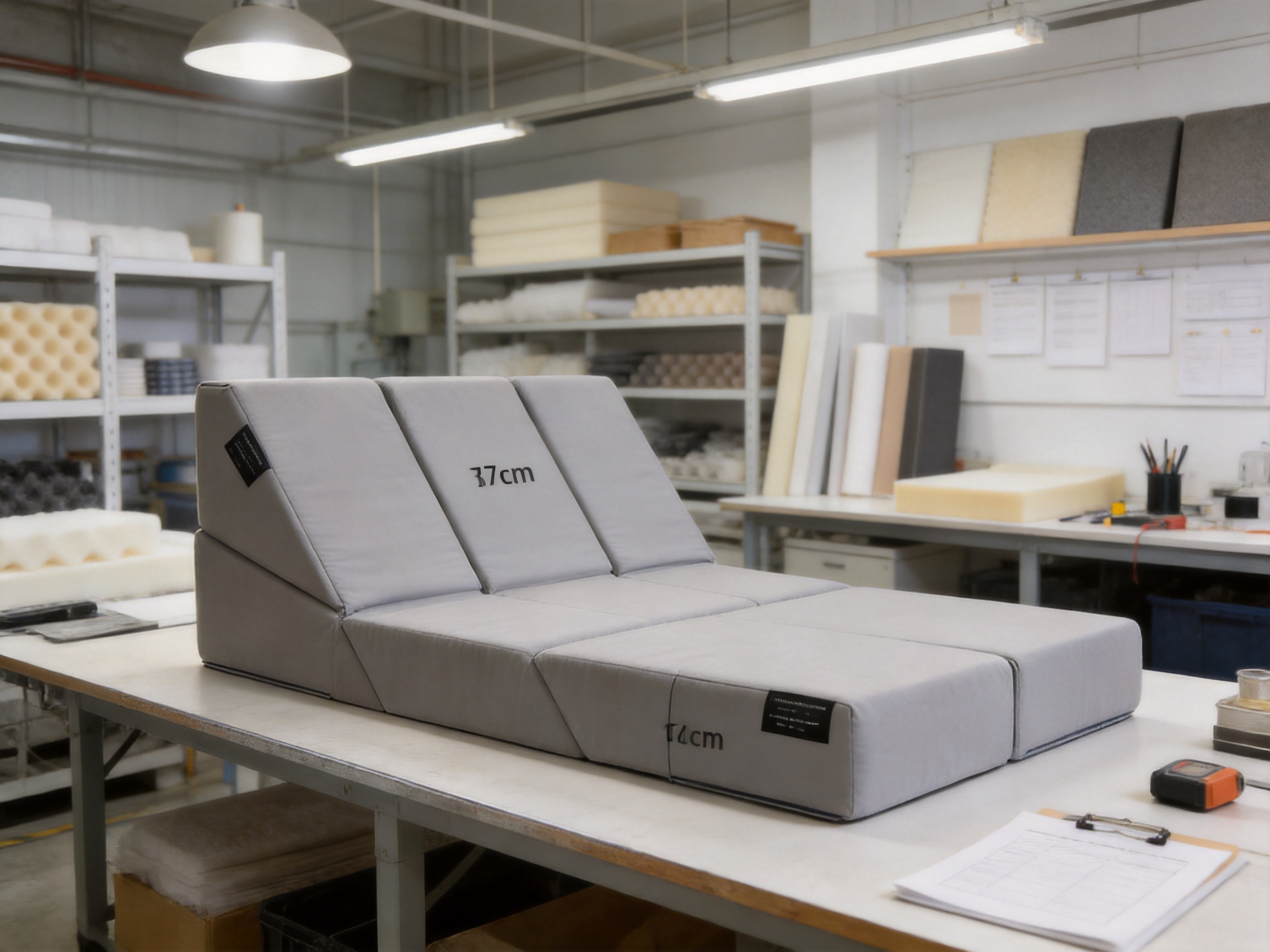
Cutting and shaping are also important for a tri-fold product. The foldable structure must align accurately so that the pad folds neatly and supports multiple configurations. Poor cutting precision can create uneven edges, uncomfortable transitions, or weak fold sections. Professional manufacturing equipment and process control help ensure that the three segments work together smoothly.
Fabric covering requires attention to sewing, fit, surface smoothness, and durability. A cover that is too loose may wrinkle and shift, while one that is too tight may restrict foam recovery or stress seams. The polyester fiber surface must be assembled in a way that preserves comfort and supports daily use. These details are part of the reason mature manufacturing capability matters.
Quality Control and Product Reliability
Comfort products are judged not only when they are new but also after repeated use. A foldable pad may be compressed daily, folded frequently, used in different postures, and moved between rooms. Quality control must therefore address foam density, dimensional accuracy, compression performance, seam strength, surface appearance, and packaging condition.
A qualified tri-fold memory foam pad should recover after pressure, maintain a stable shape, and provide consistent support across the sections. It should not develop severe sagging after normal use, and the cover should remain practical and comfortable. The company’s focus on high-performance sleep materials supports a quality-oriented approach, helping ensure that products meet the expectations of cross-border customers in Europe, Southeast Asia, and North America.
For international buyers, consistent quality is essential. Online platforms and independent sites rely heavily on customer reviews, return rates, and product reliability. A memory foam pad that arrives compressed poorly, expands unevenly, or feels different from batch to batch can create customer dissatisfaction. A manufacturer with established process control can reduce these risks and support more stable supply.
Customization and Cross-Border Market Support
The product supports custom processing, making it suitable for buyers who need tailored specifications, packaging, branding approaches, or market-specific adjustments. Customization is valuable because different markets may prefer different sizes, firmness levels, cover fabrics, colors, packaging methods, or usage positioning. A supplier with strong foam manufacturing capability can adapt product details to match buyer needs.
The listed downstream platforms include eBay, Amazon, Wish, AliExpress, independent sites, Lazada, and other channels. These platforms require products that are visually appealing, easy to understand, practical to ship, and suitable for diverse consumers. The tri-fold memory foam pad is well aligned with e-commerce sales because its benefits are clear: foldable design, multiple uses, memory foam comfort, compact storage, and modern appearance.
Cross-border export supply also requires reliable communication, product documentation, packaging awareness, and stable production scheduling. The company’s experience with international markets supports buyers who serve Europe, Southeast Asia, North America, and other regions. For distributors, wholesalers, and online sellers, this background can reduce sourcing uncertainty and help build a more dependable product line.
Sustainability and Responsible Manufacturing Direction
Modern consumers and business buyers increasingly consider environmental responsibility when selecting home products. Foam manufacturing must address energy use, process efficiency, waste management, and material development. The company has invested in advanced eco-friendly energy systems and continues to improve environmental management practices. Its sustainability approach aims to go beyond basic compliance by integrating respect for nature into business operations.
For a product such as a tri-fold memory foam pad, sustainability can be supported through durability and multifunctionality. A product that lasts longer and replaces multiple single-purpose items may reduce unnecessary consumption. A pad that functions as a seat, recliner, and temporary mattress can help users avoid buying separate furniture pieces, especially in small spaces. Durable foam performance also helps reduce premature replacement.
Responsible manufacturing is not a single feature but a continuing process. It involves improving energy systems, optimizing production methods, developing better foam formulas, and maintaining quality so that products remain useful for longer. This direction strengthens the company’s position in global markets where environmental management and supply chain responsibility are becoming more important.
Why the 15 cm Thickness Matters
Thickness is a critical factor in foldable pad comfort. Thin pads may be easy to store, but they often allow the user to feel the hard floor beneath, especially at pressure points such as hips, shoulders, and knees. A 15 cm thickness provides a more substantial support layer, helping the product perform more like a true rest surface rather than a simple mat.
The thickness also improves versatility. For sitting, it provides enough cushion depth to reduce pressure on the hips. For reclining, it supports the back more comfortably than thin folding cushions. For lying down, it helps distribute body weight and creates a more comfortable temporary sleep or nap surface. This makes the product suitable for both short-term and extended use.
However, thickness must be balanced with foldability. A product that is too thick or too heavy may become difficult to fold and store. The tri-fold structure of this pad allows it to remain practical while still offering meaningful cushioning. This balance is one of its key design strengths.
All-Season Indoor Use
The pad is suitable for all-season use, making it a practical year-round addition to the home. In colder months, it can provide a warmer and softer resting surface than hard flooring. In warmer months, it can serve as a casual lounge pad in a ventilated room, balcony, or shaded indoor area. Its removable placement also allows users to move it according to seasonal comfort preferences.
Unlike seasonal furniture or specialized bedding, this pad has broad daily utility. It can be used for weekend relaxation, guest accommodation, children’s reading areas, casual seating, meditation, stretching, or movie nights. Families may use it in living rooms during the day and store it away in the evening. Students may use it as both seating and rest support in dormitories. Remote workers may use it for short breaks in a home office.
Ease of Use: Ready Out of the Box
One of the strongest user-friendly features is that the pad requires no complicated installation. Traditional sofa beds may require assembly, frame adjustment, or mechanical operation. Inflatable mattresses require pumping and deflation. Fixed furniture requires delivery planning and placement decisions. This tri-fold pad is ready to use after unpacking and positioning.
This simplicity improves the user experience from the first day. A buyer can place it in a bedroom, living room, study, or balcony and begin using it immediately. The folding design is intuitive, so users do not need instructions for basic transformations. For commercial users, the ease of setup reduces labor time and makes it practical to prepare rooms quickly.
Easy storage is equally important. When the pad is not needed, it can be folded into a more compact form. This makes it suitable for closets, corners, under elevated furniture, or storage rooms, depending on the available space. In flexible living environments, the ability to disappear when not in use is as valuable as comfort during use.
Competitive Positioning for Online and Offline Sales
The product is well positioned for both online retail and offline distribution. Online shoppers often look for products that solve clear lifestyle problems. This pad addresses several: lack of guest sleeping space, uncomfortable floor seating, limited apartment space, need for portable rest furniture, and desire for simple modern design. Its visual form is easy to communicate through product images, and its benefits are easy to explain in product descriptions.
Offline retailers can also present the pad as a flexible furniture solution. Customers can test the foam feel, fold the sections, and see how it transforms into different postures. The tactile comfort of memory foam is often easier to appreciate in person, which can help convert shoppers who are comparing it with cheaper mats.
For wholesalers and distributors, the product’s broad application range is valuable. It can be marketed as memory foam furniture, a guest mattress, a floor sofa, a lounge pad, a small apartment solution, a homestay accessory, or a multifunctional rest mat. This flexibility increases sales opportunities across different customer groups.
Use Scenarios in Daily Life
In a bedroom, the pad can serve as a reading corner or an extra guest sleeping surface. It can be placed near a window, at the foot of a bed, or beside a low table. When guests visit, it can be unfolded to create a quick rest area.
In a living room, it can act as informal seating for movie nights, family gatherings, or children’s playtime. Its soft memory foam surface makes the floor more comfortable, while its modern grey color avoids disrupting the room’s design.
On a balcony or enclosed sunroom, it can become a quiet lounge pad for afternoon tea, reading, or rest. Its foldable form allows it to be moved indoors when not in use.
In a study or home office, it can provide a short break area. Remote workers often need a comfortable place to rest briefly between tasks, and a foldable pad can support healthier work-life balance within limited space.
In a rental room or dormitory, it can replace multiple pieces of furniture. Students and renters can use it as a seat during the day and a nap surface when needed. Its portability is especially helpful for people who move frequently.
In a homestay or serviced apartment, it can add flexible guest capacity. Operators can store several pads and deploy them as needed, improving room adaptability without permanent furniture changes.
Care and Maintenance Considerations
The polyester fiber surface is designed for practical everyday use. To keep the pad in good condition, users should place it in a clean, dry indoor environment and avoid prolonged exposure to excessive moisture. Regular light cleaning can help maintain the fabric surface. If local stains occur, gentle spot cleaning according to the fabric care guidance is recommended.
Because memory foam is a pressure-responsive material, it is best to avoid placing heavy objects on the same area for extended periods when the pad is not in use. Folding should be done along the intended fold lines to preserve the structure. Periodic unfolding can help the foam maintain its natural shape and ventilation.
For hospitality or commercial settings, operators should create a regular inspection routine. This may include checking the surface fabric, seams, foam recovery, and general cleanliness. Proper maintenance helps extend the product’s service life and preserves guest comfort.
Company Contact and Supply Information
Jiangsu Wellcare Household Articles Co., LTD. is located at No. 168 Nenjiang Road, Huaiyin District, Huai'an City, Jiangsu Province, China. The company can be contacted by telephone at +86-517-84998062 or +86-15152354988, and by email at [email protected]. Its product categories include boneless sofa products, memory foam mattresses, memory foam children’s products, foam pet products, functional pillows, memory foam pillows, memory foam cushions, and related foam-based home products.
The company’s experience across these product categories supports a comprehensive understanding of comfort materials. A manufacturer that produces mattresses, pillows, cushions, children’s products, and pet products must understand different support needs, safety expectations, and usage environments. This knowledge can be applied to multifunctional furniture products such as the tri-fold memory foam pad.
Q&A Section
What makes this tri-fold pad different from an ordinary floor mat?
The main difference is the use of high-density slow-rebound memory foam and a 15 cm thickness. Ordinary floor mats are often thinner and may use low-density sponge or cotton-like filling. This pad provides better contouring, pressure distribution, and long-term support, making it more suitable for sitting, reclining, and lying down.
Can the pad be used as both a sofa and a bed?
Yes. The tri-fold design allows it to be arranged in different positions. It can be used flat as a rest pad or temporary mattress, partially folded as a recliner, or folded into a sofa-like seating form. This makes it useful for small apartments, rental rooms, guest spaces, and homestays.
Is it suitable for long-term daily use?
The high-density memory foam is designed to resist collapse and deformation better than many low-quality foam products. With proper use and maintenance, it can support regular daily relaxation, reading, napping, and temporary sleeping needs.
Does it require assembly?
No complicated installation is required. The product is ready to use after unpacking and positioning. Users can fold or unfold it according to the desired posture.
What kind of spaces is it best for?
It is especially suitable for bedrooms, living rooms, balconies, studies, offices, rental rooms, dormitories, guest rooms, homestays, and other compact or multipurpose spaces. It is useful wherever flexible seating or temporary rest space is needed.
Why is memory foam beneficial for this product?
Memory foam conforms to the body’s curves and helps distribute pressure more evenly. This can reduce discomfort in the back, hips, shoulders, and legs compared with harder surfaces or thin cushions. The slow-rebound feel also creates a more comfortable lounging experience.
Is the fabric easy to maintain?
The surface uses polyester fiber, which is practical, skin-friendly, and relatively easy to clean. Users should keep the pad in a dry indoor environment and follow gentle cleaning practices for stains or surface dust.
Can the product be customized for wholesale or cross-border sales?
Yes. Custom processing is available, and the company has experience serving cross-border markets and platforms such as Amazon, eBay, AliExpress, Lazada, independent sites, and other sales channels. Buyers may discuss customization needs such as size, firmness, cover, color, or packaging.
What manufacturing strengths support product quality?
The manufacturer has long-term experience in foam material research and production, a doctor-led R&D team, and the capability to develop numerous foam materials annually. Its expertise includes memory foam, gel foam, temperature-insensitive memory foam, quick-dry foam, flame-retardant sponge, antibacterial sponge, and other advanced materials.
Is the product suitable for commercial accommodation?
Yes. Homestays, serviced apartments, hostels, and short-term rental properties can use it as an extra rest surface or flexible lounge pad. Its foldable structure makes it easy to deploy and store, while its modern design suits many room styles.
Conclusion: A Practical Upgrade for Flexible Comfort
The multifunctional memory foam three-fold pad is more than a simple cushion. It is a compact, adaptable, and comfort-focused solution for modern living. Its high-density slow-rebound memory foam provides pressure relief and stable support, while the 15 cm thickness creates a more substantial resting experience than many ordinary foldable mats. The tri-fold design allows users to switch between sofa, recliner, and bed-like functions, making it ideal for small apartments, rental rooms, offices, homestays, and multipurpose interiors.
Its minimalist modern style, grey color, and easy-care polyester fiber surface enhance its everyday practicality. It can blend into diverse spaces while remaining simple to move, fold, and store. Compared with thin floor mats, unstable inflatable beds, or bulky sofa beds, it offers a strong balance of comfort, convenience, and space efficiency.
Behind the product is the manufacturing strength of Jiangsu Wellcare Household Articles Co., LTD., supported by years of foam material research, broad product category experience, international market exposure, and continuous R&D. The company’s ability to develop advanced foam materials and support custom processing gives the product a solid foundation for both consumer use and wholesale sourcing. For buyers seeking flexible memory foam furniture, guest rest solutions, or compact comfort products for modern interiors, this tri-fold memory foam pad represents a practical and competitive choice.
References
1. Zhang, H. and Li, M. Principles of Polyurethane Foam Materials and Comfort Applications. Materials Science Press.
2. Miller, R. Ergonomics in Home Furniture Design: Support, Pressure Distribution, and User Comfort. Interior Product Studies Journal.
3. Chen, Y. Memory Foam Technology in Modern Sleep and Rest Products. Advanced Bedding Materials Review.
4. Smith, A. Compact Living and Multifunctional Furniture Trends in Urban Housing. Global Home Design Research.
5. Wang, J. Quality Control Methods for Foam Cushioning Products in Cross-Border Manufacturing. International Manufacturing Practice Series.
Product: Multifunctional memory foam three-fold pad
Interested in cooperation or have questions?
Related News
WELLCARE was founded in 2003, boasting over a decade of profound and extensive experience.
Quick Links
Product
Media Centre
Contact Information
- [email protected]
- +86-517-84998062
- +86-15152354988
- No. 168 Nenjiang Road, Huaiyin District, Huai'an City, Jiangsu Province, China
Copyright © Jiangsu Wellcare Household Articles Co., LTD. All Rights Reserved.
Custom Memory Gel Mattress Manufacturers
