

 English
 日本語
 Español



Luo Jinyi — Senior After-Sales Service Specialist

Home / Author / Luo Jinyi — Senior After-Sales Service Specialist / Memory Foam Massage Pillow: Cooling Comfort, Cervical Support, and Reliable Manufacturing
Product Category
NEW Category
Contact us
Memory Foam Massage Pillow: Cooling Comfort, Cervical Support, and Reliable Manufacturing
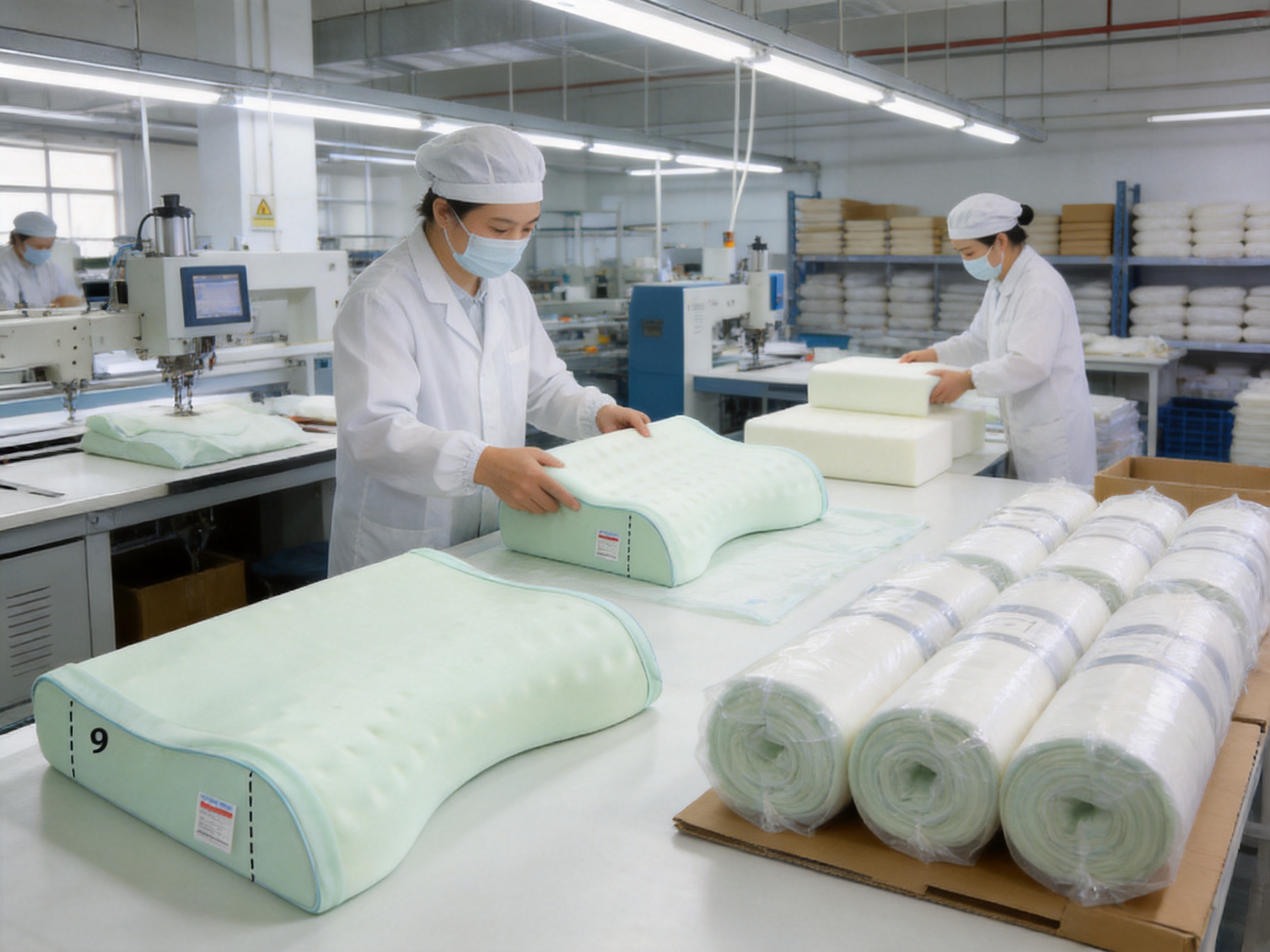
A well-designed pillow does more than fill the space beneath the head. It influences sleeping posture, neck alignment, pressure distribution, temperature comfort, and the ability of the body to relax during the night. The memory foam massage pillow described in this article combines several features intended to address these needs in one compact sleep product: slow-rebound memory foam, a structured rectangular profile, a cool-feeling ice silk fabric, breathable construction, and a surface incorporating three-dimensional massage particles.
With its light green appearance, portable format, and adult-oriented dimensions, the pillow is positioned as a practical option for bedrooms, guest rooms, hotels, travel, and cross-border home-product markets. It is designed for single-person use and is available in a standard size of approximately 54 x 40 cm, with a core height of about 9 to 10 cm. Different weight configurations are available, including approximately 900 g and 1,500 g versions, depending on the selected construction and filling specification.
The product is manufactured by Jiangsu Wellcare Household Articles Co., LTD., a Chinese developer and producer of foam-based sleep and healthy-home products. The company has built its business around material research, foam formulation, product customization, and large-scale manufacturing. Its capabilities include ordinary sponge, memory foam, gel foam, temperature-insensitive memory foam, quick-dry memory foam, flame-retardant sponge, antibacterial sponge, and other engineered foam materials.
This article examines the pillow’s construction, comfort benefits, manufacturing strengths, customization potential, competitive advantages, and possible applications for distributors and consumers. It also explains what buyers should consider when comparing a memory foam massage pillow with conventional fiber, polyester, latex, or basic foam pillows.
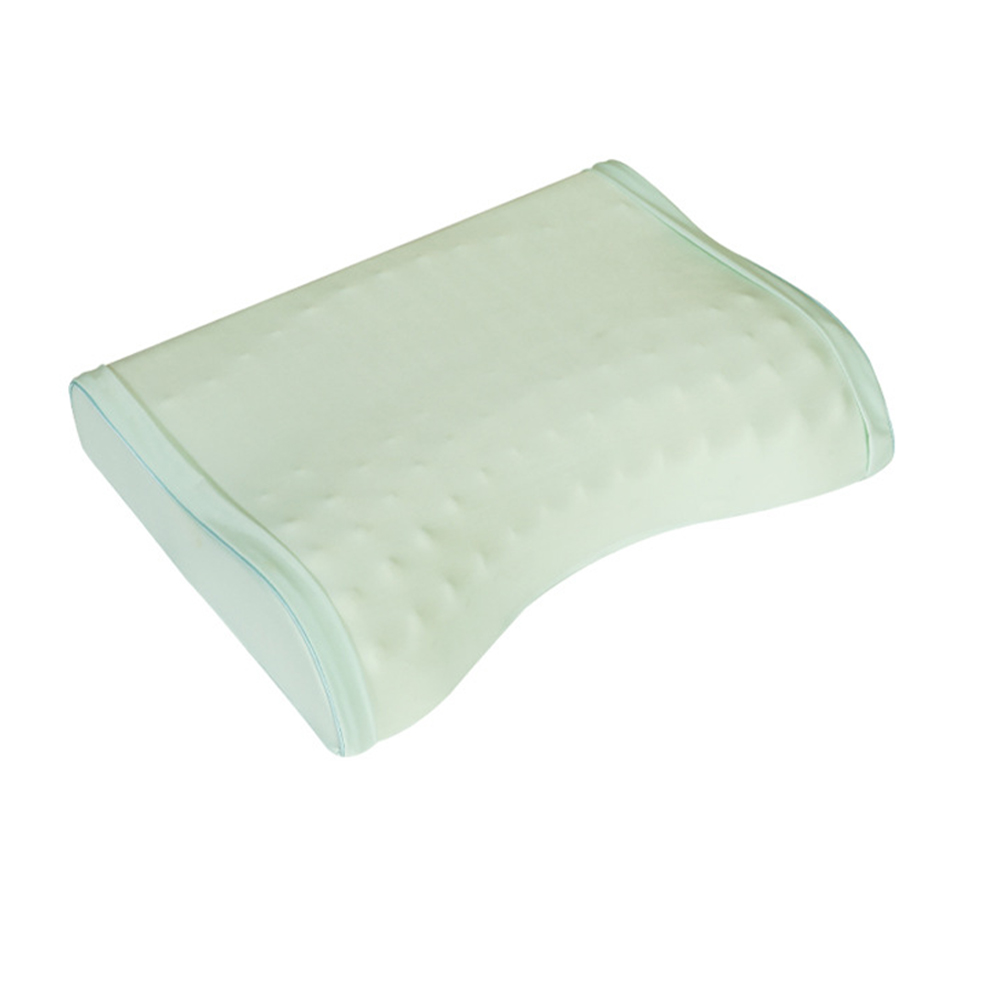
Memory foam massage pillow
Product Overview
The memory foam massage pillow is a rectangular adult pillow made with a slow-rebound memory foam core and a cool-feeling ice silk fabric covering. Its overall design is intended to support the natural curve of the head and neck while providing a soft, gently enveloping sensation. Unlike a conventional fiber-filled pillow that may compress unevenly, the memory foam core is designed to respond gradually to body weight and retain its form after use.
The stated pillow core height is within the 10.1 to 15 cm specification range, while the listed product dimensions are approximately 54 x 40 x 9/10 cm. The structure is relatively compact compared with oversized hotel-style pillows, making it easier to place in a travel bag, guest-room cabinet, or storage compartment. The pillow can be rolled for storage, helping reduce the space needed during transport or seasonal organization.
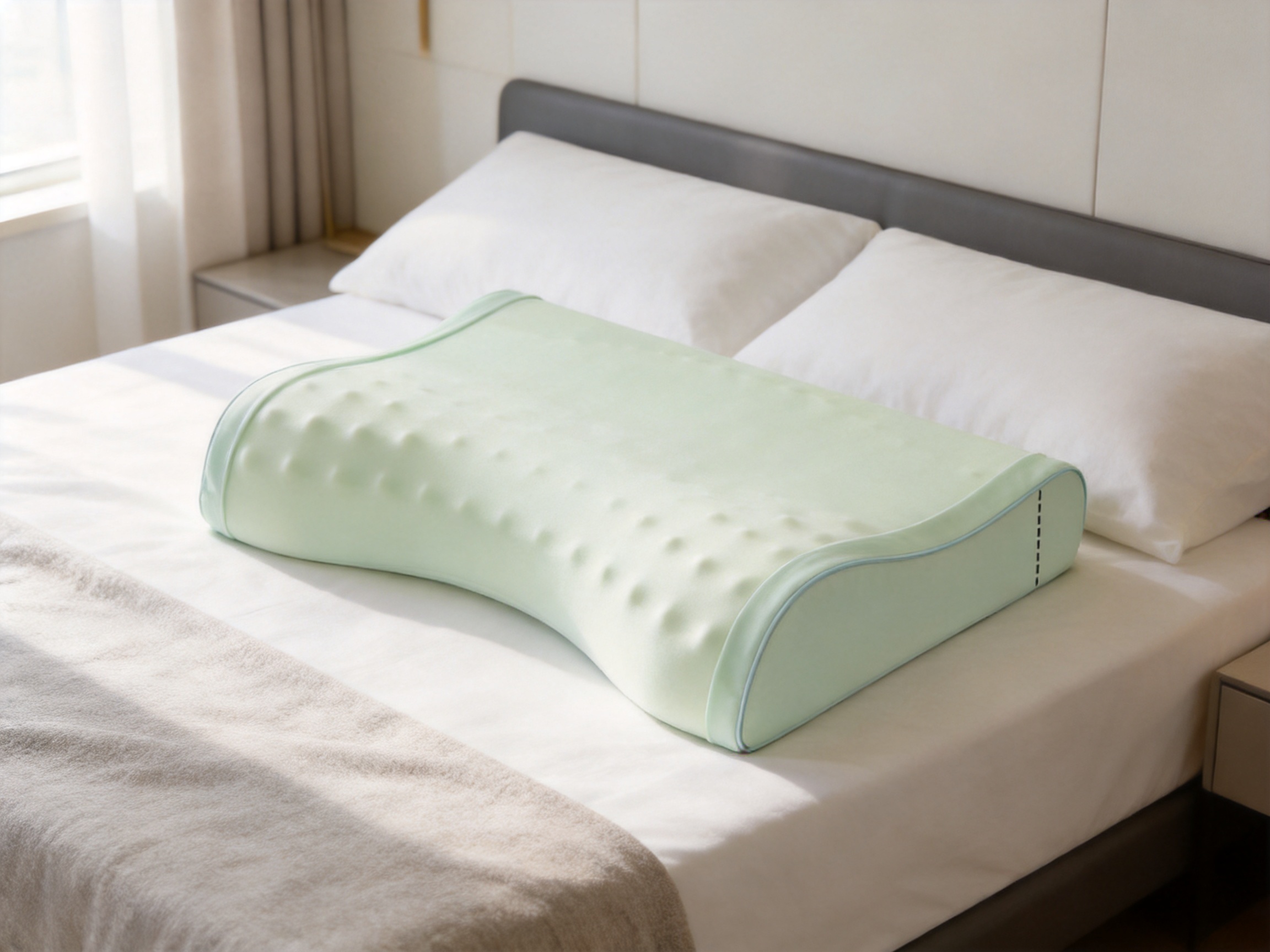
The light green color gives the product a fresh and modern appearance. It can coordinate with neutral bedding, contemporary bedroom furniture, minimalist interiors, and hospitality environments. Although appearance does not determine support performance, visual consistency is important for retailers and home-product brands seeking a pillow that can be presented as part of a coordinated sleep collection.
The pillow is classified as a regular memory foam pillow rather than a specialized medical device. Its massage-particle surface and cervical-support structure are intended to promote relaxation and comfort, but the product should not be presented as a treatment for injury, chronic pain, or a diagnosed medical condition. Individuals with persistent neck discomfort should consult a qualified healthcare professional.
| Product Attribute | Specification or Description |
| Product Type | Memory foam massage pillow |
| Category | Regular memory foam pillow |
| Core Material | Slow-rebound memory foam |
| Cover Fabric | Cool-feeling ice silk fabric |
| Shape | Rectangular |
| Approximate Dimensions | 54 x 40 x 9/10 cm |
| Approximate Weight Options | 900 g and 1,500 g configurations |
| Color | Light green |
| Recommended User | Adults and single-person use |
| Design Style | Modern minimalist |
| Customization | Size, color, and fabric can be adjusted |
| Portability | Lightweight and rollable for storage or travel |
| Item Number | P036 |
How the Memory Foam Core Supports Comfort
The central advantage of memory foam is its ability to respond progressively to pressure. When the head rests on the pillow, the foam compresses in the loaded areas and conforms to the general shape of the head and neck. This can help distribute contact pressure more evenly than a pillow that collapses immediately or remains rigid beneath the body.
Slow rebound is particularly important for people who prefer a stable sleeping surface. A conventional soft fiber pillow may feel comfortable when first arranged, but its filling can shift during the night. The result may be an uneven surface, a flattened center, or a need to repeatedly reshape the pillow. A molded or formed memory foam core generally remains more consistent because the material itself provides the primary structure.
The foam’s conforming behavior can also help reduce the sensation of gaps beneath the neck. When a pillow is too flat, the head may tilt backward or sideways, depending on sleeping position. When a pillow is too high, the neck may be pushed forward or angled unnaturally. A memory foam pillow with an appropriate height can fill the space between the head and mattress while offering gradual pressure response.
Comfort is affected by more than softness. A pillow that feels very soft may not provide sufficient support, while an excessively firm pillow may create pressure at the side of the head or shoulder. The high-density, slow-rebound construction described for this model is intended to balance cushioning and support. It creates a surface that feels gentle but does not immediately lose its shape under normal use.
Density and resilience also influence product durability. Although actual service life depends on use, room temperature, humidity, weight, care, and foam formulation, a higher-quality memory foam core is generally more resistant to rapid flattening than low-density filling. The manufacturer’s focus on foam research allows different material properties to be developed for different product requirements, including conventional memory foam and temperature-insensitive formulations.
Three-Dimensional Massage Particle Surface
The pillow’s three-dimensional massage particles are designed to add texture to selected contact areas around the neck and shoulders. As the user changes position, the raised points may create a gentle stimulating sensation. This feature differentiates the product from a plain memory foam pillow, whose surface usually provides support but no intentionally textured interaction.
The massage particle structure is not intended to deliver aggressive pressure. Its purpose is to provide mild stimulation that may help users feel relaxed before or during sleep. Some people enjoy a lightly textured surface because it creates a more noticeable sense of contact around the upper neck. Others may prefer a smoother pillow. For this reason, the perceived comfort of the particles is personal and should be considered alongside the softness of the cover and the user’s preferred sleeping position.
The combination of a slow-rebound core and a textured surface is one of the product’s main competitive distinctions. A massage pillow made only from rigid bumps may feel uncomfortable or provide insufficient support. A standard memory foam pillow may offer conformity but lack tactile stimulation. This product attempts to combine both functions: the foam provides the underlying support, while the raised surface introduces a gentle massage-oriented experience.
For retailers, the massage feature creates a clear point of differentiation in a crowded pillow category. It gives the product a more specific identity than a basic cooling pillow or generic memory foam pillow. It can also be presented as part of a relaxation-focused sleep collection, particularly when paired with other products such as memory foam mattresses, cushions, or supportive home textiles.
Cooling and Breathability
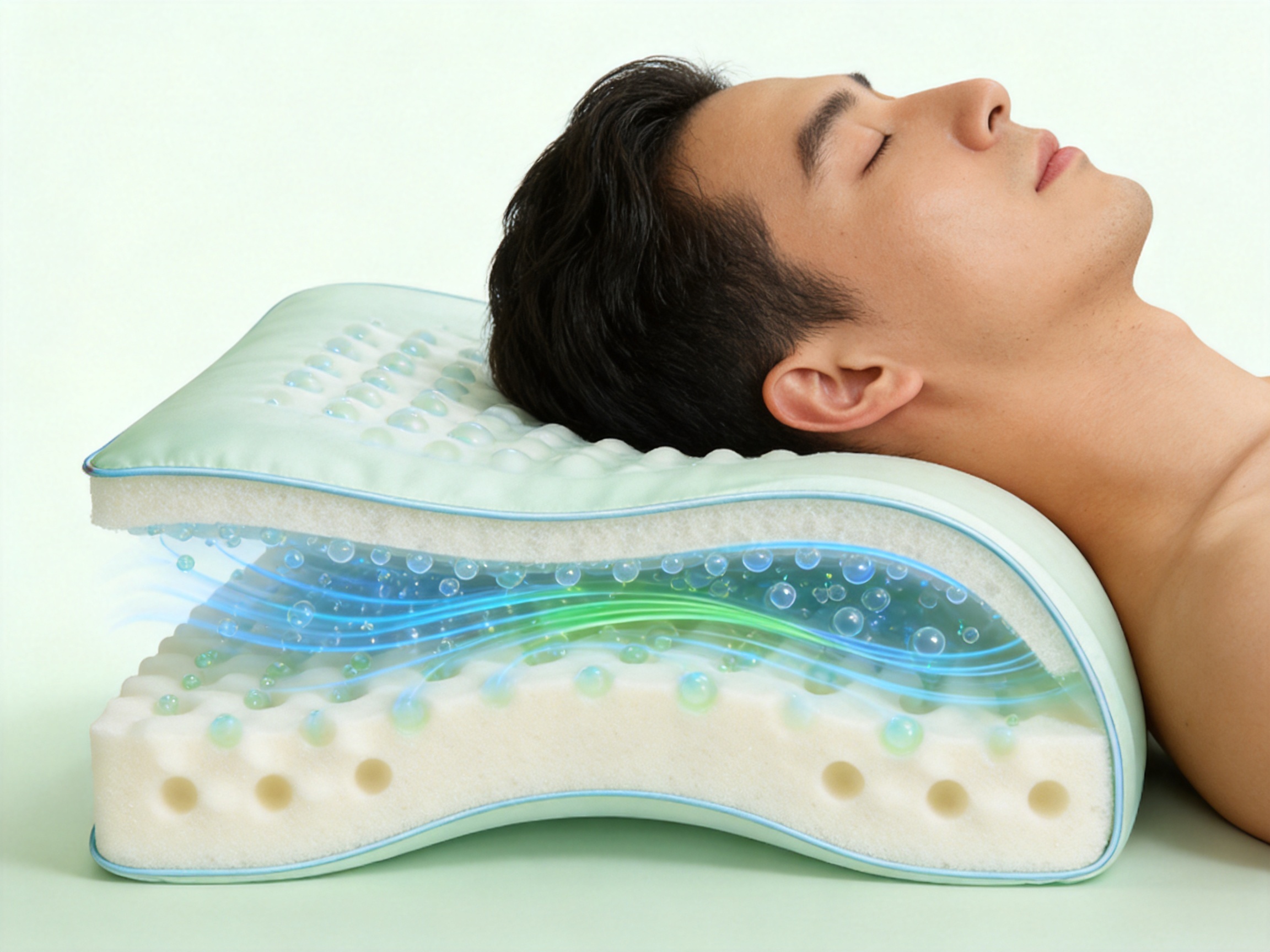
Heat accumulation is one of the most common complaints associated with dense foam products. Because memory foam can conform closely to the body, some users may experience reduced airflow at the contact surface. The pillow addresses this concern through the use of cool-feeling ice silk fabric and a porous foam structure intended to encourage air circulation.
Ice silk fabric is valued for its smooth, cool sensation against the skin. It can be especially appealing during warm weather, in humid climates, or for people who tend to sweat while sleeping. The fabric is also described as skin-friendly and breathable, helping reduce the stuffy feeling that may occur when a pillow cover traps warmth and moisture.
The cover does not make the pillow permanently cold. Rather, its value comes from the initial cool hand feel, smooth contact, and ability to support a more comfortable microclimate. Actual temperature performance will depend on room temperature, bedding, humidity, body heat, mattress ventilation, and the user’s sleeping habits.
The foam’s porous structure contributes to ventilation by creating pathways through which air can move as the pillow is compressed and released. Breathability is useful not only for temperature comfort but also for moisture management. A pillow that allows more air exchange may feel less damp after extended use, although regular airing and proper cover care remain important.
Compared with a standard non-breathable foam pillow covered in heavy fabric, this construction offers a stronger emphasis on warm-weather usability. It may be suitable for summer product assortments, tropical and subtropical markets, hospitality rooms without excessive bedding layers, and customers who prioritize a fresh, smooth sleeping surface.
Cervical Support and Sleeping Posture
The pillow’s overall structure is designed to support the natural curve of the cervical spine. In practical terms, this means the pillow should help maintain a reasonably neutral relationship among the head, neck, and upper shoulders. The objective is not to force the neck into a rigid position, but to provide enough support to reduce the need for the muscles to work continuously while the user rests.
Sleeping posture varies considerably. Side sleepers generally require more height because the shoulder creates a larger gap between the head and mattress. Back sleepers often prefer a moderate height that supports the neck without pushing the head too far forward. Stomach sleepers may prefer a lower, softer profile. The listed 9 to 10 cm dimensions and slow-rebound construction are designed for general adult use, but individual comfort should always guide selection.
The rectangular format offers a familiar surface for users who do not want a highly contoured orthopedic shape. It can be used as a traditional pillow while still incorporating supportive foam technology. This broadens its market appeal because some consumers want cervical support but prefer the appearance and handling of a standard rectangular pillow.
Support performance depends on correct positioning. The pillow should be placed so that the head is centered and the neck receives continuous support. Side sleepers may need to position the pillow close to the shoulder rather than leaving a gap. Back sleepers should avoid folding or excessively compressing the pillow, as this changes the designed height.
A product description should communicate support benefits responsibly. The pillow may help promote a comfortable sleeping posture and reduce the feeling of pressure associated with poorly matched bedding. However, no general-purpose pillow can guarantee relief from all neck soreness or improve every sleep problem. Comfort depends on body size, mattress firmness, sleeping position, previous injuries, and personal preference.
Materials and Construction Quality
Material selection is central to the performance of a foam pillow. The core must have an appropriate balance of density, resilience, compression response, and recovery. The outer cover must provide a pleasant hand feel, adequate breathability, and compatibility with the intended climate. The connection between these components must also be stable enough to withstand routine handling, compression, packaging, and use.
The product uses memory foam as its main supporting material and cool-feeling ice silk fabric for the pillow core cover. The combination creates a contrast between internal support and external softness. The foam provides structural performance, while the textile layer directly influences the user’s first impression of coolness, smoothness, and comfort.
High-density sponge technology can help the pillow maintain its shape over time. A uniform foam structure is important because irregular density can produce inconsistent support across the surface. Manufacturing controls should therefore address mixing, foaming, curing, cutting, shaping, and inspection. The company’s research background in multiple foam categories supports the development of materials for different performance targets.
The manufacturer also develops temperature-insensitive memory foam, quick-dry memory foam, flame-retardant sponge, antibacterial sponge, and gel foam. These capabilities indicate that the company is not limited to one basic foam recipe. Instead, it can work with different material characteristics depending on the customer’s application, market regulation, climate, and product concept.
For buyers evaluating competing pillows, material transparency is useful. A product should be assessed not only by the phrase “memory foam” but also by the type of foam, density, recovery behavior, cover material, ventilation strategy, dimensions, and quality-control process. A branded name or attractive photograph cannot replace clear specifications.
Manufacturing and Research Strengths
Jiangsu Wellcare Household Articles Co., LTD. has a long development history in foam and household products. The company was founded in 2003 in its current business phase and has continued to focus on the research, development, and manufacturing of sleep materials and healthy-home products. Its technical foundation traces back to a school-run scientific research enterprise established in 1993.
The company operates from a manufacturing base in Huai'an, Jiangsu Province, China. Its development history includes the purchase of a 12,000-square-meter factory building in 2003, cooperation with Huai'an Institute of Technology, and later expansion through the purchase of 50,000 square meters of land in 2008. These milestones reflect an effort to develop production capacity alongside material research.
Research is a major part of the company’s stated manufacturing strategy. A doctor-led research and development team works on more than one hundred new foam materials each year. This activity includes the development and optimization of foam formulas, physical properties, comfort characteristics, and structural performance. For a pillow manufacturer, such a research base can support more precise adjustments to softness, resilience, breathability, recovery speed, and temperature response.
Foam innovation is valuable because different end users require different performance profiles. A travel pillow may need compactness and quick recovery after compression. A summer pillow may need improved airflow and a cooler textile. A hotel pillow may require consistent dimensions and reliable repeatability across large orders. A child-oriented product may require additional attention to softness, safety, and cover construction. A manufacturer with multiple foam technologies is better positioned to adapt to these requirements.
The company’s product portfolio includes ordinary sponge, memory foam, gel foam, temperature-insensitive memory foam, quick-dry memory foam, flame-retardant sponge, antibacterial sponge, and related materials. This portfolio creates opportunities for product families rather than isolated items. The massage pillow can therefore be developed alongside mattresses, cushions, pet products, children’s products, and other foam-based articles.
Manufacturing expertise also supports consistency. Retailers and distributors need products that match approved samples in dimensions, color, firmness, cover texture, packaging condition, and overall appearance. Stable production processes help reduce variation between batches. Quality control should be applied to incoming materials, foam forming, cutting, sewing, assembly, final inspection, packing, and shipment preparation.
From Foam Formulation to Finished Pillow
The manufacturing process begins with the selection and preparation of raw materials. Foam chemicals and additives must be measured accurately to create the desired reaction and final performance. The formulation can influence density, cell structure, resilience, rebound speed, firmness, and durability. Small changes in formula or processing conditions may produce noticeable differences in the finished pillow.
After mixing, the foam is formed and allowed to cure. Curing time and environmental conditions affect the stability of the material. Once the foam reaches the required condition, it can be cut, shaped, or processed into pillow components. Accurate cutting is important because the final height and dimensions directly affect sleeping posture and packing efficiency.
The surface design may require additional processing to integrate or position the three-dimensional massage particles. These elements must be arranged consistently and attached securely enough for normal handling. The design should create a mild tactile effect without producing sharp, unstable, or excessively rigid contact points.
The ice silk fabric cover is then cut and sewn according to the pillow’s dimensions. Sewing quality influences appearance, edge durability, fit, and user comfort. A properly fitted cover should hold the core securely without excessive looseness or compression. Seams should be neat, and the fabric should maintain a smooth surface around the massage area.
Finished pillows may undergo visual inspection, dimensional checks, weight checks, cover examination, and packaging inspection. Depending on the target market and order requirements, additional evaluations may address compression recovery, odor, fabric performance, color consistency, and material safety. Buyers should confirm the precise testing and certification requirements that apply in their destination market.
Packaging is particularly important for rollable memory foam products. Compression can reduce shipping volume, but the product must be allowed to recover according to the manufacturer’s instructions before evaluation or sale. Clear labeling should explain unpacking, airing, recovery time, cleaning limitations, and storage recommendations.
Competitive Advantages Compared with Conventional Pillows
The first competitive advantage is structural stability. Conventional fiber-filled pillows are usually easy to reshape, but their filling may move or flatten during use. The memory foam core is more cohesive and offers a more consistent support surface. This can appeal to customers who want a pillow that retains its general profile without frequent fluffing.
The second advantage is pressure-conforming support. A rigid foam or basic sponge pillow may offer a fixed shape but fail to adapt adequately to the head and neck. Slow-rebound memory foam responds more gradually, helping distribute pressure over a wider area. This feature can make the pillow feel more personalized during use.
The third advantage is the integrated massage texture. Standard memory foam pillows usually focus on support and cushioning. The three-dimensional particles give this product an additional relaxation-oriented feature that can be highlighted in retail presentation, online listings, hotel amenities, and wellness-themed product lines.
The fourth advantage is cooling-oriented construction. Some competing foam pillows use thick or poorly ventilated covers that create a warm, enclosed feeling. The ice silk fabric and porous foam structure are intended to provide a smoother, cooler, and more breathable experience. This is particularly relevant in summer markets and regions with warm or humid climates.
The fifth advantage is portability. A rectangular foam pillow that can be rolled and stored is easier to transport than a large, rigid, high-loft pillow. Travelers can use it in hotels or temporary accommodation, while retailers can benefit from more efficient packaging and shipping. Compact packaging may also reduce warehouse volume.
The sixth advantage is customization. The manufacturer supports adjustments to size, color, and fabric. This allows distributors and private-label customers to tailor the product to local preferences, brand identity, seasonal collections, or specific channel requirements. Customization can be more valuable than a single fixed specification when selling across multiple markets.
Finally, the product benefits from the manufacturer’s broader foam expertise. A company that develops multiple foam materials can make informed adjustments rather than treating every pillow as a simple textile product. This technical foundation may help customers create differentiated versions with specific cooling, drying, firmness, flame-resistance, or antibacterial objectives, subject to appropriate testing and regulatory compliance.
Customization for Distributors and Private-Label Buyers
Customization is available for dimensions, colors, and fabric selection. Size adjustments may be useful for different sleep markets, mattress widths, body types, or channel requirements. A retailer focused on compact apartments may prefer a smaller travel-friendly model, while a hospitality customer may request a more generous standard size.
Color customization can support brand identity and coordinated bedding collections. The existing light green color presents a soft, natural, and modern visual impression. Other colors may be selected for hotel interiors, sports and wellness collections, children’s ranges, seasonal campaigns, or private-label packaging. Color consistency should be approved through physical samples because digital images can vary across screens.
Fabric customization provides an opportunity to adjust the product’s hand feel, appearance, care requirements, and climate positioning. Ice silk fabric is suitable for a cool-touch concept, while other textile choices may be considered for winter collections, premium packaging, washable covers, or special branding requirements. Any substitute fabric should be evaluated for breathability, durability, skin contact, colorfastness, and compatibility with the foam core.
Buyers should establish a detailed product specification before placing a customized order. The specification may include core density, firmness range, rebound behavior, dimensions, allowable tolerance, cover composition, zipper or closure details, color standard, label placement, packaging method, carton quantity, and inspection requirements. Clear documentation helps ensure that samples and mass production remain aligned.
Customization can also extend to packaging and market presentation, although the available options should be confirmed directly with the manufacturer. Retail packaging may include multilingual care instructions, product benefits, unpacking guidance, warnings, barcode labels, and private-label artwork. E-commerce sellers should make sure that promotional claims match tested product characteristics and do not imply medical treatment.
Applications in Retail, Hospitality, and Travel
The pillow is suitable for direct-to-consumer sleep-product retail because it has several easy-to-communicate benefits: memory foam support, a cool-feeling cover, massage texture, breathability, and portability. These features can be presented through product pages, packaging, showroom displays, and demonstration samples.
It may also fit wellness-oriented retail channels. Massage particles and relaxation language can connect the product with home relaxation, post-work rest, and sleep preparation. Retailers should describe the tactile feature accurately as gentle stimulation rather than making unsupported therapeutic promises.
Hotels and serviced apartments may consider the pillow for guest rooms, premium room upgrades, seasonal bedding packages, or wellness suites. Its light green color and minimalist form can fit modern interiors. For hospitality use, buyers should assess cleaning procedures, cover replacement, storage conditions, recovery after compression, and the ability to maintain consistent supply.
Travel retailers can position the rollable design as a portable comfort product. Customers may use it in hotels, trains, offices, temporary accommodation, or while visiting family. The pillow is not necessarily a compact neck pillow in the traditional U-shaped sense, but its rollable rectangular structure offers a familiar sleeping surface in a more transportable format.
Furniture and home-product brands can include the pillow in a broader foam collection. The manufacturer’s product categories include memory foam mattresses, cushions, pet products, children’s products, functional pillows, and other foam-based goods. A coordinated product line can make it easier for distributors to develop a consistent brand story around comfort, material innovation, and healthy home living.
Care, Storage, and User Guidance
Memory foam products should be unpacked and allowed to recover in a clean, ventilated area. If the pillow has been compressed or rolled for shipment, it may require time to return to its intended shape. The exact recovery period depends on packaging conditions, temperature, humidity, and foam formulation.
The cover should be cared for according to its label instructions. If the cover is removable, washing and drying instructions should be followed carefully. The foam core should generally be protected from soaking, harsh chemicals, direct high heat, and aggressive machine washing unless the manufacturer specifically approves those methods.
Regular ventilation can help reduce accumulated odor and moisture. Users should avoid placing the pillow in prolonged direct sunlight or near intense heat sources, as excessive heat may affect foam performance and fabric color. The pillow should be kept dry and stored in a cool, clean location when not in use.
A pillowcase may be used over the supplied cover, provided it does not compress the pillow excessively or interfere with the massage-particle surface. A breathable pillowcase can preserve the cooling concept, while a very thick or non-breathable cover may reduce the cool-touch sensation.
Users should replace the pillow if the foam develops permanent deformation, significant cracking, strong persistent odor, damaged seams, or other conditions that affect comfort and hygiene. Actual replacement timing varies according to use and care. The best indicator is the condition and performance of the product rather than a fixed calendar period.
Responsible Product Positioning
Product marketing should focus on comfort, support, cooling feel, breathability, tactile relaxation, and portability. These are meaningful and understandable benefits that can be communicated without overstating the function of the pillow. Claims should be supported by product specifications, internal testing, or documentation appropriate to the sales market.
Statements about relieving soreness, stimulating acupoints, promoting circulation, or improving sleep should be phrased carefully. The pillow is designed to support relaxation and comfortable rest, but individual outcomes vary. It should not be described as a substitute for medical diagnosis or treatment.
For international markets, buyers should review applicable requirements for textile labeling, chemical safety, flammability, packaging, consumer-product warnings, and import documentation. Requirements may differ among Europe, North America, South America, Southeast Asia, the Middle East, and other regions. The manufacturer’s export experience can support communication, but the importer remains responsible for confirming local compliance.
Clear product education can improve customer satisfaction. Online listings should show dimensions, height, material composition, care instructions, unpacking guidance, recommended user group, and appropriate sleeping-position information. Transparent descriptions reduce the chance that customers expect a highly contoured orthopedic pillow when the product is actually a rectangular general-use model.
Why the Manufacturer Matters
A pillow may appear simple, but reliable production requires control over chemistry, foam processing, cutting, textile assembly, quality inspection, and packaging. The manufacturer’s history in foam research provides a foundation for managing these interconnected stages.
WELLCARE’s development from a scientific research enterprise into a manufacturer and exporter demonstrates a long-term emphasis on technical development. Its cooperation with academic institutions, expansion of factory and land resources, and experience serving overseas customers indicate familiarity with both product innovation and commercial production.
The company began supplying cross-border supermarkets in the United States, Germany, and Japan by 2010 and later expanded exports to markets including the United Kingdom, Canada, Australia, and Kuwait. It became an Alibaba-certified Gold Supplier in 2018 and a designated supplier for five-star hotels in 2020. These milestones do not replace independent product verification, but they show experience with international channels and demanding buyers.
The company also reports investment in eco-friendly energy systems and environmental management. Sustainability in foam manufacturing requires attention to energy consumption, material efficiency, production waste, packaging volume, and responsible factory operations. Buyers interested in environmental claims should request current documentation and verify precisely which products, processes, and facilities are covered.
The combination of research, manufacturing infrastructure, export experience, customization, and multiple foam technologies gives the company a strong platform for developing differentiated sleep products. For purchasers, this may simplify supplier management because one manufacturer can potentially support pillows, cushions, mattresses, pet products, and other foam applications.
Quality Evaluation Checklist
Before approving a purchase, buyers should request a representative sample and compare it against the agreed specification. The sample should be evaluated for dimensions, weight, firmness, rebound speed, surface feel, color, cover fit, seam quality, massage-particle arrangement, odor, and packaging condition.
Dimensional tolerance is important because height influences sleeping posture and because inconsistent sizes can create problems in pillowcases, cartons, hotel bedding, and retail photographs. Weight can provide a useful production-control reference, although it should not be treated as the only indicator of quality.
The foam should recover evenly after compression. A sample that remains deeply indented, recovers very slowly under normal conditions, or shows uneven firmness may require further investigation. Buyers should evaluate samples under similar temperature and humidity conditions because memory foam behavior can change with the environment.
The cover should be examined for smoothness, breathability, stitching, color consistency, pilling resistance, and compatibility with the foam. The massage particles should feel stable and appropriately gentle. If the product will be sold in a warm climate, airflow and moisture comfort should be considered during testing.
For large orders, a written quality agreement is recommended. It can define acceptable tolerances, inspection procedures, packaging standards, labeling, defect classifications, replacement policies, and shipment approval. These details help protect both the buyer and manufacturer by creating a shared understanding of the finished product.
Frequently Asked Questions
What is the main function of this memory foam massage pillow?
Its main function is to provide head and neck support through a slow-rebound memory foam core while adding a gently textured massage surface. The cover is designed to feel cool, smooth, and breathable, making the pillow suitable for users who prefer a fresher sleeping surface.
Is the pillow suitable for adults?
Yes. The listed target user is adults, and the product is intended for single-person use. Users should select pillow height based on body size, mattress firmness, and sleeping position.
Can side sleepers use this pillow?
Side sleepers can use it if the height provides sufficient support for the space between the shoulder and head. The listed dimensions offer a general adult profile, but comfort varies. A side sleeper with broad shoulders or a soft mattress may prefer a higher specification.
Is the pillow a medical or orthopedic device?
No. It is a general-use memory foam pillow designed for comfort, support, and relaxation. It should not be marketed as a treatment for cervical disease, chronic pain, injury, or other medical conditions without appropriate evidence and authorization.
Does the ice silk fabric keep the pillow permanently cold?
No. Ice silk fabric generally provides a cool initial hand feel and supports a smoother, more breathable contact surface. Actual temperature comfort depends on the room, bedding, humidity, body heat, and ventilation.
What are the massage particles for?
The three-dimensional particles create a mild textured sensation around the contact area. They are intended to promote a relaxing tactile experience. The sensation may be more noticeable than that of a smooth pillow, so customers should consider personal preference.
Can the size and color be customized?
Yes. The product information indicates that size, color, and fabric can be adjusted. Customized specifications, minimum order quantities, sampling procedures, and lead times should be confirmed before ordering.
Can the pillow be rolled for shipping?
Yes. It is described as lightweight, space-saving, and rollable for storage and travel. After unpacking, the pillow should be allowed to recover in a ventilated area according to the manufacturer’s instructions.
Can the foam core be machine washed?
The foam core should not be machine washed unless the manufacturer specifically confirms that method. Care should follow the product label. If a removable cover is supplied, it should be washed and dried according to the stated instructions.
What makes this pillow different from a conventional fiber pillow?
The memory foam core offers slow-rebound conformity and more stable structural support, while the three-dimensional surface adds a massage-oriented feature. The ice silk cover and breathable foam construction also provide a cooling-focused alternative to many basic fiber pillows.
What makes the manufacturer suitable for customized projects?
The manufacturer has experience in foam research, multiple foam categories, household products, overseas supply, and customization. Its product development capabilities include memory foam, gel foam, temperature-insensitive foam, quick-dry foam, flame-retardant sponge, and antibacterial sponge.
What should importers verify before selling the product?
Importers should verify dimensions, material composition, labeling, packaging, care instructions, testing documents, chemical requirements, flammability rules, textile requirements, and any local consumer-product regulations. Requirements differ by destination country and sales channel.
Conclusion
The memory foam massage pillow combines several practical features in a familiar rectangular format. Its slow-rebound memory foam core is designed to conform to the head and neck, distribute pressure, and retain its general shape. Its three-dimensional massage particles create a distinct tactile experience, while the ice silk cover contributes a cool, smooth, and breathable feel.
The product’s light green appearance, rollable construction, moderate dimensions, and customizable specifications make it suitable for direct retail, hospitality, travel, private-label, and home-product applications. Compared with ordinary fiber pillows, it offers more structured support. Compared with plain memory foam pillows, it adds a massage-oriented surface. Compared with heavily insulated foam pillows, it places greater emphasis on cooling and airflow.
Its competitive position is strengthened by the manufacturer’s broader capabilities. Jiangsu Wellcare Household Articles Co., LTD. combines foam-material research, manufacturing infrastructure, academic cooperation, export experience, customization support, and a portfolio covering numerous foam technologies. These strengths can help buyers develop consistent product lines and adjust specifications for different climates, markets, and customer groups.
For the best results, buyers should evaluate samples carefully, define specifications in writing, use responsible product claims, and confirm all destination-market requirements. When matched with the right customer and supported by clear care instructions, this pillow can serve as a practical, cooling-oriented, relaxation-focused addition to the modern sleep-product market.
References
1. Product specification and descriptive materials for the memory foam massage pillow, item P036, Jiangsu Wellcare Household Articles Co., LTD.
2. Manufacturer-provided company history and development profile for Jiangsu Wellcare Household Articles Co., LTD.
3. General technical literature on viscoelastic memory foam, pressure distribution, resilience, and slow-rebound behavior.
4. General textile literature concerning cool-touch fabrics, moisture comfort, breathability, and skin-contact performance.
5. General guidance on consumer bedding product labeling, care instructions, packaging, and international product compliance.
Product: Memory foam massage pillow
PREV:No previous article
NEXT:Gray Pet Stairs: A Safer, More Comfortable Way to Help Pets Reach Higher Places
NEXT:Gray Pet Stairs: A Safer, More Comfortable Way to Help Pets Reach Higher Places
Interested in cooperation or have questions?
Related News
WELLCARE was founded in 2003, boasting over a decade of profound and extensive experience.
Quick Links
Product
Media Centre
Contact Information
- [email protected]
- +86-517-84998062
- +86-15152354988
- No. 168 Nenjiang Road, Huaiyin District, Huai'an City, Jiangsu Province, China
Copyright © Jiangsu Wellcare Household Articles Co., LTD. All Rights Reserved.
Custom Memory Gel Mattress Manufacturers
