

 English
 日本語
日本語 Español


Luo Jinyi — Senior After-Sales Service Specialist

Home / Author / Luo Jinyi — Senior After-Sales Service Specialist / Building Block Pet Stairs for Safer Everyday Mobility
Product Category
NEW Category
Contact us
Building Block Pet Stairs for Safer Everyday Mobility
Modern homes are built for human comfort, but many everyday surfaces are still challenging for pets. Beds, sofas, window seats, vehicle interiors, and lounge chairs may feel easy for people, yet they can become repeated stress points for puppies, senior dogs, small breeds, cats, and pets with sensitive joints. The Building Block Pet Stairs are designed to solve this daily mobility problem with a thoughtful combination of high-density memory foam, a stable stepped structure, an anti-slip textured surface, and a modular tier system that adapts to different furniture heights.
This product belongs to the foam pet stairs category and is developed for households that want more than a simple pet accessory. It is a mobility aid, a safety upgrade, and a comfort-focused home product. By using a thickened memory foam core and a wear-resistant striped fabric, the stairs provide a steady route for pets to move up and down without relying on risky jumps. For many animals, especially small to medium-sized dogs and active felines, reducing repetitive jumping can help lower strain on hips, knees, shoulders, elbows, and the spine.
The Building Block Pet Stairs are especially suitable for owners who value safety, appearance, hygiene, and long-term usability. Unlike lightweight plastic steps that may slide across the floor or hard wooden stairs that may feel uncomfortable under the paws, this product uses a soft yet supportive foam structure. It cushions each step while maintaining enough firmness to carry the pet’s body weight. The widened base helps resist tipping, and the textured surface improves grip so pets can climb with greater confidence.
Jiangsu Wellcare Household Articles Co., LTD. brings significant foam manufacturing experience to this product. Founded in 2003, the company has built its capabilities around the research, development, and manufacturing of high-performance sleep materials and healthy home products. Its background in memory foam, gel foam, temperature-insensitive foam, quick-dry foam, antibacterial foam, flame-retardant sponge, and other functional materials supports the development of pet products that are not only comfortable but also structurally reliable.
In a competitive market where many pet stairs are designed mainly for appearance or low cost, the Building Block Pet Stairs stand out because they are based on material performance. They are not merely decorative blocks. They are engineered to help pets travel safely between height levels in real home environments. Their modular 2-step, 3-step, and 4-step combinations allow users to select a height configuration according to bed, sofa, car, or chair height. This adaptability gives the product practical value across rooms and across stages of a pet’s life.
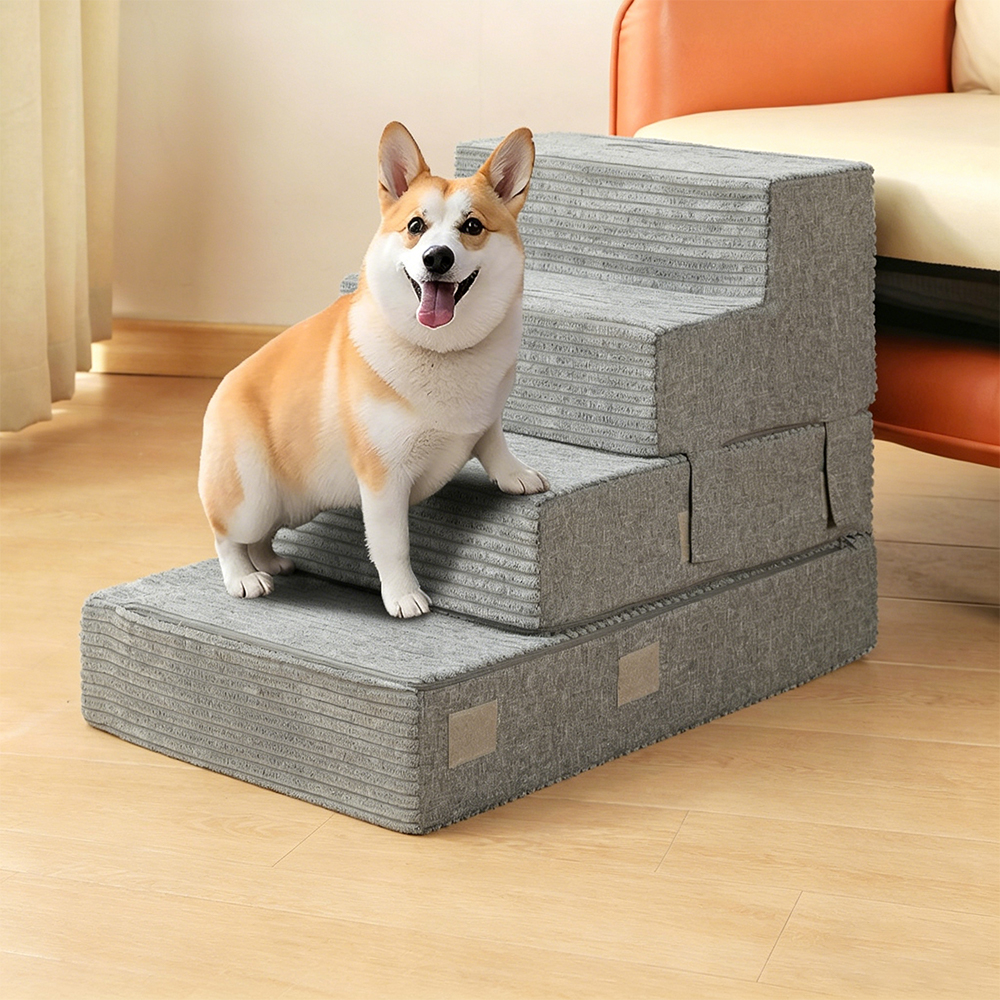
Why Pet Stairs Matter in Modern Homes
Pet stairs have become increasingly important as companion animals spend more time indoors and share more living spaces with their owners. Sofas, mattresses, and raised platforms are common parts of home life, but they often require pets to jump repeatedly. For young animals, frequent jumping may encourage careless movement before coordination is fully developed. For senior animals, jumping may aggravate stiffness. For small breeds with short legs, even a standard sofa can be a significant height difference.
Dogs such as Corgis, Bichons, Pomeranians, Dachshunds, Chihuahuas, Toy Poodles, and other small to medium-sized breeds often need assistance reaching furniture. Cats may be agile, but senior cats, heavier cats, kittens, or cats recovering from discomfort can also benefit from a stable stair route. A pet stair system reduces the need for sudden upward leaps and downward impacts. This helps make the home more accessible without forcing owners to constantly lift the animal.
Many owners do not realize that the downward jump is often more stressful than the upward jump. Landing from a sofa or bed concentrates force through the paws and joints. Over time, repeated impact may contribute to discomfort, hesitation, or injury risk. A stair product provides a controlled descent. The animal can place weight step by step, distributing movement across several smaller transitions rather than one large landing.
The Building Block Pet Stairs are designed with this concern in mind. The product provides a steady route up and down beds, sofas, and cars. Its high-density memory foam core absorbs pressure and supports movement. Its 3D anti-slip texture increases friction under the paws. Its widened base design improves balance. Together, these features make the stairs a practical daily tool rather than a temporary convenience.
For owners, pet stairs can also reduce physical effort. Constantly lifting a pet onto furniture may be difficult for elderly owners, people with back problems, or busy families. A properly designed stair system encourages pet independence. The animal can move between spaces more freely, and the owner can feel more confident that the route is safer than jumping.
Product Overview: Structure, Materials, and Intended Use
The Building Block Pet Stairs are made with a thickened, high-density memory foam core and a durable non-slip striped fabric. The stairs are offered in grey and can be configured in 2-tier, 3-tier, or 4-tier forms. The modular concept allows users to match the stair height to the furniture height, making the product useful in bedrooms, living rooms, and vehicles. The clean matte grey look blends easily with contemporary interiors and does not visually dominate the space.
The structure is designed for small to medium-sized pets. It is stable enough for repeated daily use while still being soft enough to provide comfort under the paws. The stair surface includes a 3D embossed anti-slip texture, which enhances friction and reduces the chance of slippage. This is particularly valuable for pets with short legs, long bodies, older joints, or uncertain footing.
The product’s appearance is intentionally simple. Pet furniture can sometimes look playful but visually disruptive. The Building Block Pet Stairs use clean lines and a neutral grey color scheme, allowing them to sit beside beds, sofas, and chairs without clashing with home décor. This balance between functionality and aesthetics is one of the reasons the product is suitable for modern apartments, family houses, hotel-style rooms, and compact living spaces.
The surface is also designed for easier maintenance. Pet products must withstand hair, dust, paw marks, and everyday household contact. A wipeable surface helps users maintain a cleaner environment. Easy care is important because pet stairs are used frequently and placed in high-contact areas. When a product is difficult to clean, owners may stop using it; when maintenance is simple, the product becomes a lasting part of the home.
The inner foam core is the foundation of performance. Memory foam is valued because it can provide cushioning, pressure distribution, and comfort. In pet stairs, however, softness alone is not enough. The material must also support the pet without collapsing. The high-density core used in this stair system helps maintain shape and resist deformation during long-term use. This gives the product an advantage over low-density foam stairs that may flatten, sag, or lose stability after repeated climbing.
Core Advantages Over Common Pet Stair Products
In the pet stair market, common materials include plastic, wood, metal frames, low-density foam, and fabric-covered cardboard. Each has limitations. Plastic may be easy to clean but can be slippery, noisy, or visually unattractive. Wood can be stable but hard, heavy, and unforgiving on joints. Metal frames may be strong but cold and industrial. Low-density foam may feel soft at first but can compress too easily. Cardboard-style structures may lack durability and water resistance.
The Building Block Pet Stairs address these weaknesses through a balanced foam-based design. The memory foam core provides cushioning without sacrificing support. The widened base improves stability. The textured fabric increases traction. The modular step configuration enhances versatility. The neutral grey style improves décor compatibility. These features work together rather than existing as isolated claims.
Compared with plastic stairs, this product offers a quieter and more comfortable climbing experience. Pets may feel anxious on plastic because the surface can be slick and the structure may make hollow sounds. A foam stair absorbs movement and reduces noise, creating a more reassuring feel. For cautious pets, this can make training easier and increase long-term acceptance.
Compared with wooden stairs, the Building Block Pet Stairs are softer and safer for accidental contact. A pet rushing up a wooden stair may knock paws against hard edges. Children or adults may also bump into hard corners in small rooms. Foam construction creates a gentler contact surface while retaining practical firmness. It is also easier to move and reposition than heavy wood.
Compared with low-cost sponge stairs, the product’s high-density core is a clear differentiator. Ordinary sponge may deform quickly, especially under repeated use by energetic pets. Once steps lose shape, safety decreases because the surface becomes uneven. The Building Block Pet Stairs are designed with stable load-bearing performance to resist long-term deformation. This improves usability and reduces replacement frequency.
Compared with single-height stair products, the modular configuration is more adaptable. A fixed stair may work for one sofa but not for a higher bed or vehicle seat. The ability to choose 2, 3, or 4 tiers makes the product more useful across multiple settings. This adaptability is especially valuable for families that rearrange furniture, move homes, or need different stair heights in different rooms.
Another advantage is the combination of safety and appearance. Some highly functional pet products look clinical or bulky. Some attractive products lack serious performance. The Building Block Pet Stairs take a minimalist approach with a matte grey finish, clean lines, and practical proportions. This makes the product suitable for visible placement in living rooms and bedrooms, where owners prefer pet equipment that does not interrupt the design of the space.
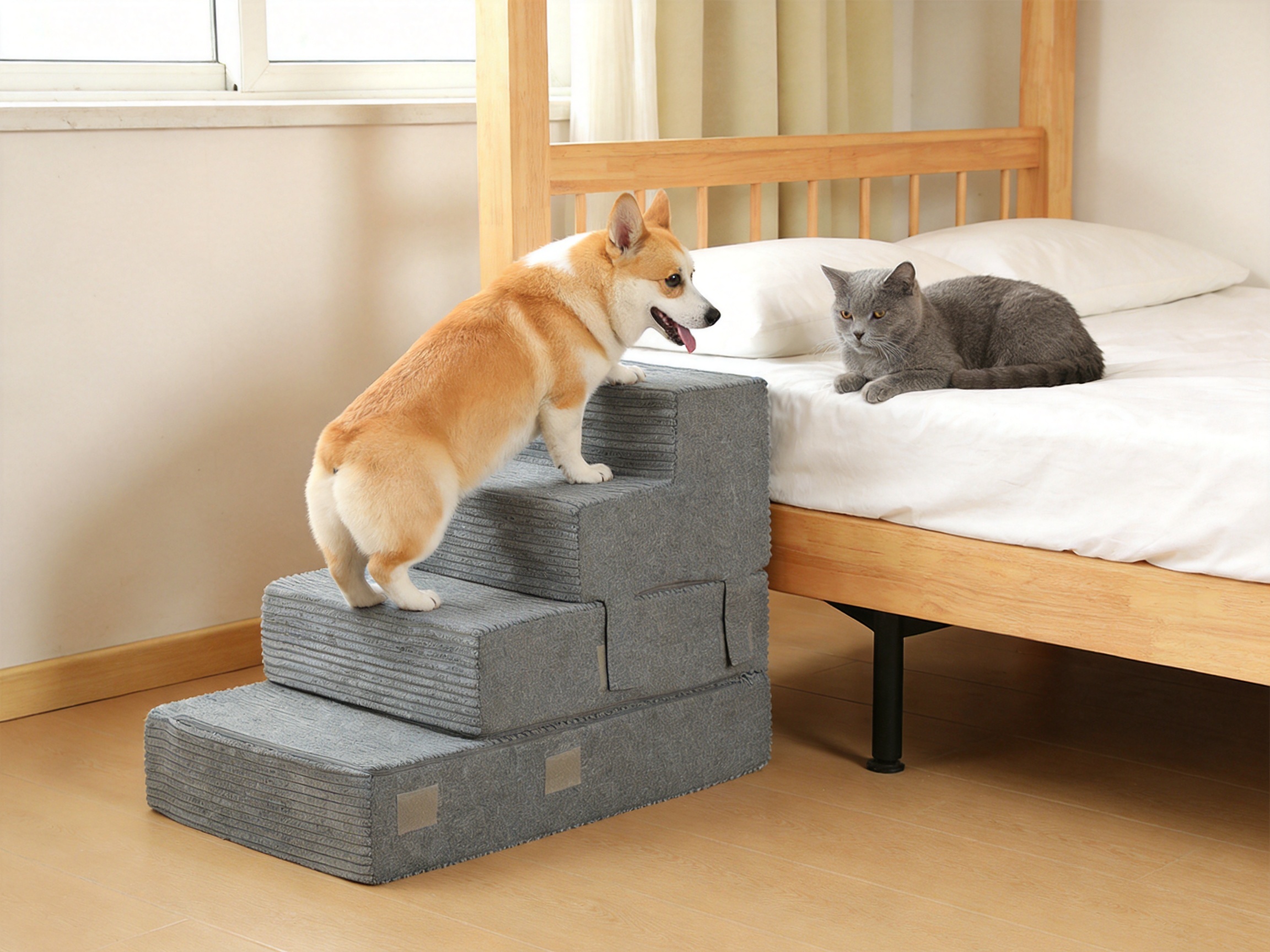
3D Anti-Slip Texture and Paw-Friendly Grip
The 3D anti-slip texture is one of the most important safety features of the Building Block Pet Stairs. Pets rely heavily on paw contact and body balance when climbing. If a surface is too smooth, even confident animals may slip. The embossed texture increases surface friction and helps paws maintain grip during upward and downward movement. This reduces hesitation and supports a smoother climbing rhythm.
For small dogs, grip is especially important because their short legs create a different climbing angle. A steep or slippery surface may force them to overextend. For older animals, reduced strength or stiffness may make them more cautious. The textured surface gives them more secure contact with each step. It also helps active pets that tend to move quickly and may otherwise slide on smooth fabric.
The striped fabric contributes both traction and durability. Wear resistance matters because claws repeatedly contact the surface. A weak cover can tear or pill quickly, which affects appearance and safety. The chosen fabric is intended to withstand frequent daily use and maintain a neat look. Its texture also provides visual guidance to pets, helping them recognize the step layout.
Anti-slip design should not rely on one feature only. In this product, the surface texture works with the stable foam core and widened base. If the surface grips well but the entire stair shifts, safety is still compromised. If the base is stable but the surface is slick, the pet may still slip. The Building Block Pet Stairs combine these safety elements into a unified structure.
High-Density Memory Foam Core: Comfort With Support
The memory foam core is central to the product’s performance. Memory foam is known for its ability to cushion pressure and respond to weight. In a pet stair application, it helps reduce the harshness of each step. When a pet places a paw on the stair, the foam provides a softer landing than plastic or wood. This is particularly beneficial for pets with sensitive paws, aging joints, or anxiety about hard surfaces.
However, pet stairs require more than softness. If the foam compresses too much, the pet may feel unstable. The Building Block Pet Stairs use a thickened, high-density foam structure to provide support while still offering cushioning. This balance is essential. A stair must feel dependable under the animal, not spongy or collapsing. High-density foam also contributes to long-term shape retention.
The manufacturer’s foam expertise supports this design. Jiangsu Wellcare Household Articles Co., LTD. has long focused on foam material development, including memory foam and other advanced sponge categories. The company’s experience in sleep materials is relevant because both mattresses and pet stairs require careful control of density, resilience, support, softness, and durability. The same manufacturing mindset used to create reliable sleep surfaces can be applied to pet mobility aids.
A high-density core also helps improve load-bearing performance. While the product is intended for small to medium-sized pets, these animals still create repeated dynamic loads when climbing. A static weight rating alone does not reflect real use. Pets may jump onto the first step, turn around, pause, or push off with force. Durable foam must withstand this movement without cracking, sagging, or separating from the cover.
By using a supportive foam core, the Building Block Pet Stairs help maintain consistent step geometry. Each tier must remain level and predictable. If steps deform unevenly, the pet may misjudge footing. Long-term shape stability is therefore not only a durability issue but also a safety issue. This is where a high-density material gives the product a performance advantage over softer, cheaper alternatives.
Modular 2-Step, 3-Step, and 4-Step Configuration
Furniture heights vary widely. A low sofa may need only two steps. A standard bed may require three. A higher mattress or vehicle seat may require four. A fixed-height stair can be inconvenient because it may be too short for one location and too tall for another. The Building Block Pet Stairs solve this by supporting customizable tier options, including 2-tier grey, 3-tier grey, and 4-tier grey configurations.
This modular approach gives the user more control. Instead of buying several separate products, owners can choose the tier count that matches the intended use. The design concept also supports changing needs. A young puppy may start with a lower stair configuration and later use a taller setup. A senior pet may need a gentler height transition as mobility changes. Modular thinking makes the product more future-oriented.
The building block concept also makes the product easier to integrate into various spaces. In a compact apartment, a two-step version may be placed beside a low sofa without taking up excessive floor area. In a bedroom, a three- or four-step version may help a pet access a higher bed. In a car interior, the appropriate configuration can reduce the need for lifting the pet into the vehicle.
Customization by number of tiers is a practical advantage for retailers and distributors as well. It allows a product line to serve different consumer needs while maintaining a consistent design language. The same grey finish and material system can be offered across tier options, simplifying merchandising and improving brand presentation.
Stable Load-Bearing and Widened Base Design
Stability is a critical factor in pet stair design. A stair that wobbles, slides, or tips can frighten pets and discourage use. The Building Block Pet Stairs include a widened base design to enhance stability and reduce the risk of tipping. This is especially important when pets approach the stairs from an angle or descend quickly.
The widened base spreads contact over a larger floor area, helping the structure remain balanced. This design is valuable for energetic pets that may not move slowly and carefully every time. It also helps senior pets, which may shift weight unevenly. A stable base builds confidence, and confidence is essential for regular use.
The high-density inner core further supports load-bearing performance. A foam stair must remain firm enough to support the animal’s weight without rolling or collapsing. The product is designed to resist deformation after long-term use, which helps preserve safety and appearance. Competitor products made with low-grade foam may look similar when new but lose function as the foam compresses.
For owners, stability also reduces anxiety. Many people purchase pet stairs because they are worried about falls. If the stair itself feels unstable, it does not solve the problem. A widened base, textured fabric, and supportive foam core create a more complete safety solution.
| Feature | Building Block Pet Stairs | Common Low-Cost Alternatives | User Benefit |
| Core Material | Thickened high-density memory foam | Low-density sponge, plastic, or cardboard | Better cushioning, support, and long-term shape retention |
| Surface Design | 3D embossed anti-slip striped fabric | Smooth fabric or hard plastic | Improved paw grip and reduced slipping risk |
| Structure | 2, 3, and 4-step modular options | Single fixed height | Adaptable to beds, sofas, and cars |
| Base Stability | Widened base for stronger balance | Narrow base or unstable frame | Lower tipping risk and greater confidence for pets |
| Appearance | Minimalist matte grey design | Bulky, bright, or mismatched styles | Fits modern living rooms and bedrooms |
| Maintenance | Wipeable surface for easy cleaning | Difficult-to-clean textures or absorbent covers | Cleaner daily use and simpler upkeep |
| Material Safety | OEKO-TEX certified material approach | Unclear material standards | Greater confidence for pet-contact use |
Safe and Environmentally Conscious Materials
Pet products are in close contact with animals and homes, so material safety matters. The Building Block Pet Stairs are described as using safe and environmentally friendly materials, with OEKO-TEX certification. This indicates attention to non-toxic, odor-conscious material selection. For products placed in bedrooms and living rooms, low odor and safe contact performance are important purchasing considerations.
Pets may lick, sniff, sleep near, or rub against their stairs. A strong chemical smell can discourage use and create discomfort for owners. A product designed with safer materials supports a more pleasant home environment. It also reflects a broader shift in the pet product market: consumers increasingly expect pet accessories to meet standards closer to those used for human home goods.
Jiangsu Wellcare Household Articles Co., LTD. has also emphasized sustainability in its broader manufacturing strategy. The company invests in advanced eco-friendly energy systems and improves environmental management practices. This matters because buyers are not only evaluating the final product but also the production background behind it. Responsible material development and environmental management help create long-term trust.
In foam manufacturing, sustainability can involve more efficient production, better process control, lower waste, improved energy systems, and ongoing formulation optimization. A company with a doctor-led research and development team is better positioned to improve foam performance while considering environmental and safety concerns. This gives the product a stronger foundation than generic pet stairs sourced from manufacturers with limited material expertise.
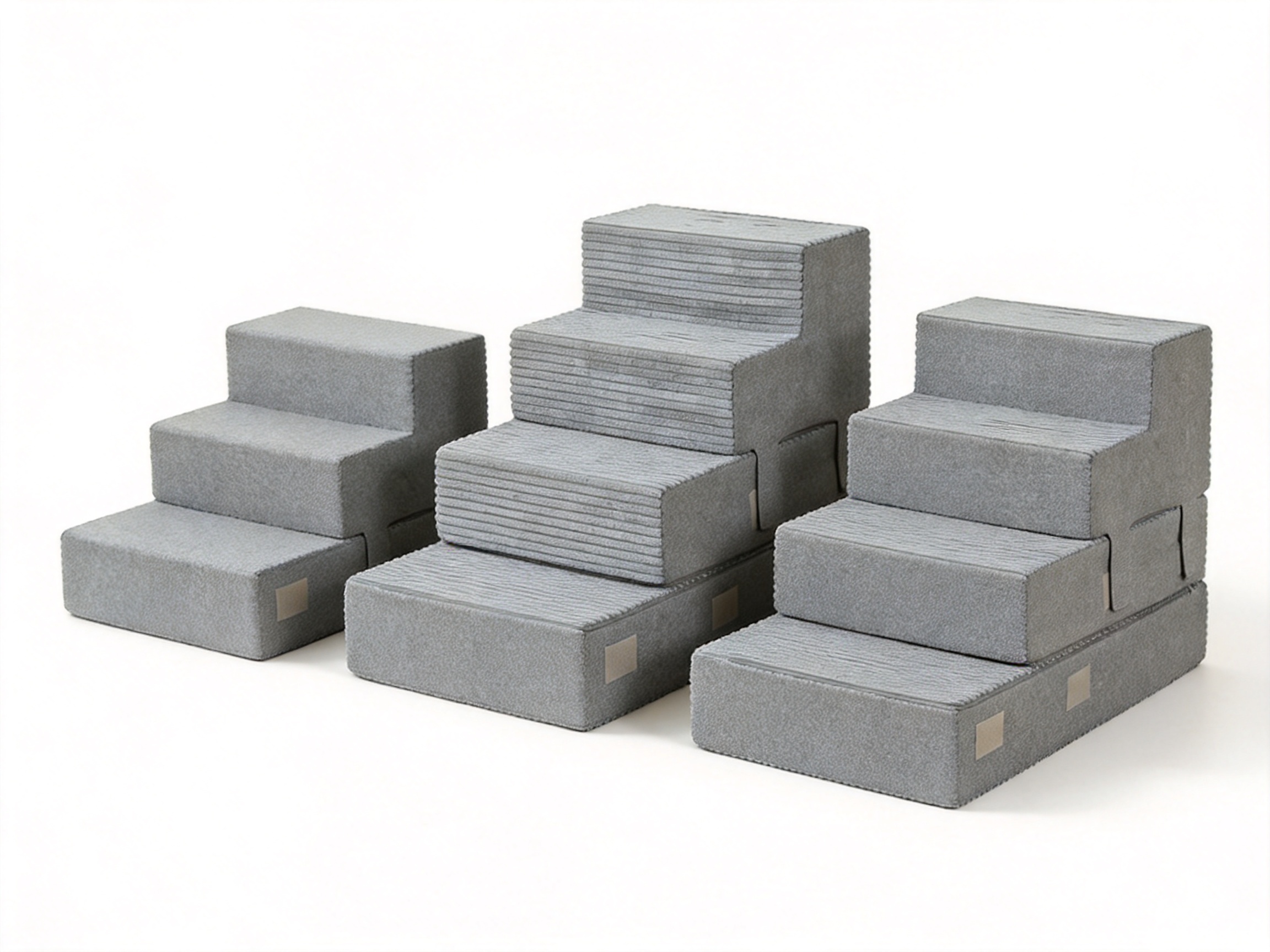
Clean Minimalist Design for Modern Interiors
Pet products often remain visible in the home. A stair placed beside a bed or sofa is not stored away after each use; it becomes part of the room. For this reason, appearance matters. The Building Block Pet Stairs use a matte grey finish and simple geometric lines. This color and shape language allows the product to blend with modern furniture, neutral carpets, wood flooring, and contemporary bedding.
Grey is a practical color for pet furniture because it hides minor dust and hair better than pure white while remaining softer and more refined than black. It works with a wide range of interior styles, including minimalist, Scandinavian, modern, transitional, and casual family spaces. The product’s understated design helps it look intentional rather than improvised.
The clean form also supports space saving. Bulky pet furniture can obstruct walking paths or make small rooms feel crowded. The Building Block Pet Stairs maintain a compact stepped structure and can be selected by tier count to suit the available space. A two-tier version can serve lower furniture without unnecessary height, while taller versions can be used where needed.
For hotels, serviced apartments, and pet-friendly hospitality settings, appearance is particularly important. A product that looks clean and professional can improve the guest experience without making the room appear cluttered. Since Jiangsu Wellcare became a designated supplier for five-star hotels in 2020, its understanding of professional home and hospitality standards supports the development of products that balance comfort, durability, and presentation.
Daily Use Scenarios
The most common use for the Building Block Pet Stairs is beside a bed. Many pets sleep near owners or enjoy resting on the bed during the day. However, beds can be high, especially when paired with thick mattresses or mattress toppers. A stair system gives pets a predictable route and reduces the need for night-time jumping. This can be especially helpful when rooms are dark and pets are less able to judge distance.
Another common location is beside a sofa. Sofas are social spaces where pets often want to join family members. Without stairs, small pets may scratch at upholstery, bark for help, or attempt unsafe jumps. A stair beside the sofa encourages independent access and reduces damage to furniture caused by repeated clawing.
Vehicle use is also valuable. Getting into a car can be difficult for small or senior pets, and lifting them is not always convenient. A suitable stair configuration can help pets enter or exit more gradually. This is useful for vet visits, travel, grooming appointments, and family outings. The non-slip texture is particularly important in this scenario because outdoor paws may be dusty or slightly damp.
The product can also be used near window seats, lounge chairs, low platforms, and pet resting areas. Cats may use the stairs to reach sunny spots. Dogs may use them to access favorite cushions. The modular tier system allows owners to place the stairs where they create the greatest daily convenience.
Who Benefits Most From This Product
The Building Block Pet Stairs are suitable for a wide range of animals, but some pets benefit especially strongly. Senior pets are a key group. As animals age, they may experience reduced flexibility, weaker muscles, or joint sensitivity. Even if they can still jump, a stair route can make movement less stressful and more controlled.
Puppies are another important group. Young dogs are energetic but not always coordinated. They may attempt jumps that exceed their ability, especially when excited. Stairs teach a safer movement habit and allow owners to control access to furniture more responsibly. The soft foam structure is more forgiving than hard stairs if a puppy missteps during learning.
Small and medium-sized breeds also benefit. Dogs with shorter legs or longer backs may face greater strain when jumping from furniture. Breeds such as Corgis, Bichons, Pomeranians, and similar companion dogs are good examples. A pet stair can support their lifestyle while reducing repetitive impact.
Active felines can also use the product. Although cats are excellent jumpers, not all cats are young, slim, or injury-free. A stair helps kittens, senior cats, heavier cats, or cats with reduced confidence. The textured surface provides paw grip, and the grey design blends naturally into living spaces where cats already climb and rest.
Owners benefit as well. Pet stairs reduce the need for repeated lifting and provide peace of mind. They help make the home more pet-inclusive without requiring major furniture changes. For families with multiple pets, a stable stair may serve several animals throughout the day.
Manufacturing Strength Behind the Product
A pet stair is only as good as the materials and processes used to produce it. Jiangsu Wellcare Household Articles Co., LTD. has a manufacturing background that strengthens the credibility of the Building Block Pet Stairs. The company was founded in 2003 and focuses on the research and manufacturing of high-performance sleep materials and healthy home products. Its work is centered on foam innovation, which is directly relevant to this pet stair product.
The company’s development history shows long-term growth and technical investment. Its roots began in 1993 as a school-run scientific research enterprise. In 2003, it purchased a 12,000-square-meter factory building and jointly developed new sponge materials with Huai'an Institute of Technology. In 2008, it purchased 50,000 square meters of land, expanding its production foundation. These milestones indicate a long commitment to foam materials rather than short-term product assembly.
The company’s R&D capabilities are particularly important. Led by a doctor-led research and development team, it develops more than one hundred new foam materials every year. This continuous development allows the company to optimize formulas, refine structural performance, and respond to changing market needs. In a product like pet stairs, this expertise supports the selection of foam that balances softness, density, resilience, and durability.
The company’s foam portfolio includes ordinary sponge, memory foam, gel foam, temperature-insensitive memory foam, quick-dry memory foam, flame-retardant sponge, antibacterial sponge, and other materials. Such diversity suggests strong process knowledge and formulation control. While the Building Block Pet Stairs use high-density memory foam, the broader material background provides a technical base for future customization and performance upgrades.
Production experience across international markets also adds strength. By 2010, the company’s products were supplied to cross-border supermarkets in the United States, Germany, and Japan. Later, products were exported to the United Kingdom, Canada, Australia, and Kuwait. Export experience matters because different markets often have different expectations for packaging, consistency, safety, documentation, and quality. A manufacturer with global supply experience is better prepared to support distributors and retailers.
In 2018, the company became an Alibaba-certified Gold Supplier and entered e-commerce. This demonstrates adaptability to modern business channels. In 2020, it became a designated supplier for five-star hotels, showing that its products can meet demanding professional standards. These capabilities support trust in foam-based household and pet products that require consistent comfort and quality.
Advanced Foam Process Control
High-quality foam products require precise control over formulation, curing, density, cutting, shaping, covering, and finishing. A pet stair may look simple, but every layer affects user experience. If density is inconsistent, one step may feel firmer than another. If cutting is inaccurate, the stairs may not align cleanly. If the cover does not fit properly, fabric can wrinkle or shift. Advanced manufacturing reduces these problems.
Foam formulation begins with material selection and performance targets. For pet stairs, the target is not the same as for a soft pillow or a mattress topper. The foam must provide enough compression resistance for repeated paw pressure while still feeling comfortable. The manufacturer’s experience in memory foam and related materials helps determine the right balance.
Density control is another crucial factor. High-density foam generally offers better support and durability than low-density foam, but it must be manufactured consistently. Inconsistent density can lead to weak points. Strong process control helps ensure that the entire stair body maintains reliable performance.
Cutting and shaping are also important. The stepped profile must be accurate so each tier provides a safe surface. Uneven steps can cause pets to stumble. Clean cutting improves both appearance and function. A manufacturer experienced in foam home products understands the need for smooth edges, consistent dimensions, and reliable assembly.
Fabric application contributes to durability and safety. The non-slip striped fabric must sit securely over the foam and maintain tension. A loose or poorly fitted cover may move under the pet’s paws. Proper finishing supports a neat look and safer use. The Building Block Pet Stairs benefit from a manufacturing approach that treats the cover and core as one integrated system.
Quality inspection is the final layer. Products should be checked for shape, surface appearance, odor, stability, and packaging condition. For export and e-commerce markets, packaging must protect the product during transportation. A compressed or foam-based product must also recover properly after unpacking. Experienced manufacturers understand how to balance packaging efficiency with product performance.
Why Material Innovation Matters in Pet Furniture
Pet furniture is evolving. Consumers increasingly expect products that are comfortable, safe, attractive, and durable. In the past, many pet accessories were made as simple add-ons with limited engineering. Today, pets are family members, and owners want products that meet higher standards. This shift makes material innovation important.
Foam technology allows pet furniture to achieve comfort and support at the same time. Memory foam, high-resilience sponge, temperature-insensitive foam, and antibacterial materials can each solve different problems. A company that develops new foam materials every year can adapt to emerging needs. For example, future pet stairs may require improved ventilation, enhanced odor control, increased water resistance, or specialized firmness for different animal sizes.
The Building Block Pet Stairs already reflect this material-focused philosophy. Their high-density memory foam core provides the support needed for climbing. Their surface texture addresses traction. Their modular design addresses furniture height variation. Their safe material approach addresses household contact concerns. This combination shows that the product is developed from real use conditions rather than from appearance alone.
Competitors that rely on generic components may struggle to achieve the same balance. They may use attractive fabric but weak foam, or firm plastic with poor grip, or a stable shape with a hard uncomfortable surface. The Building Block Pet Stairs integrate material, structure, safety, and design in a more complete way.
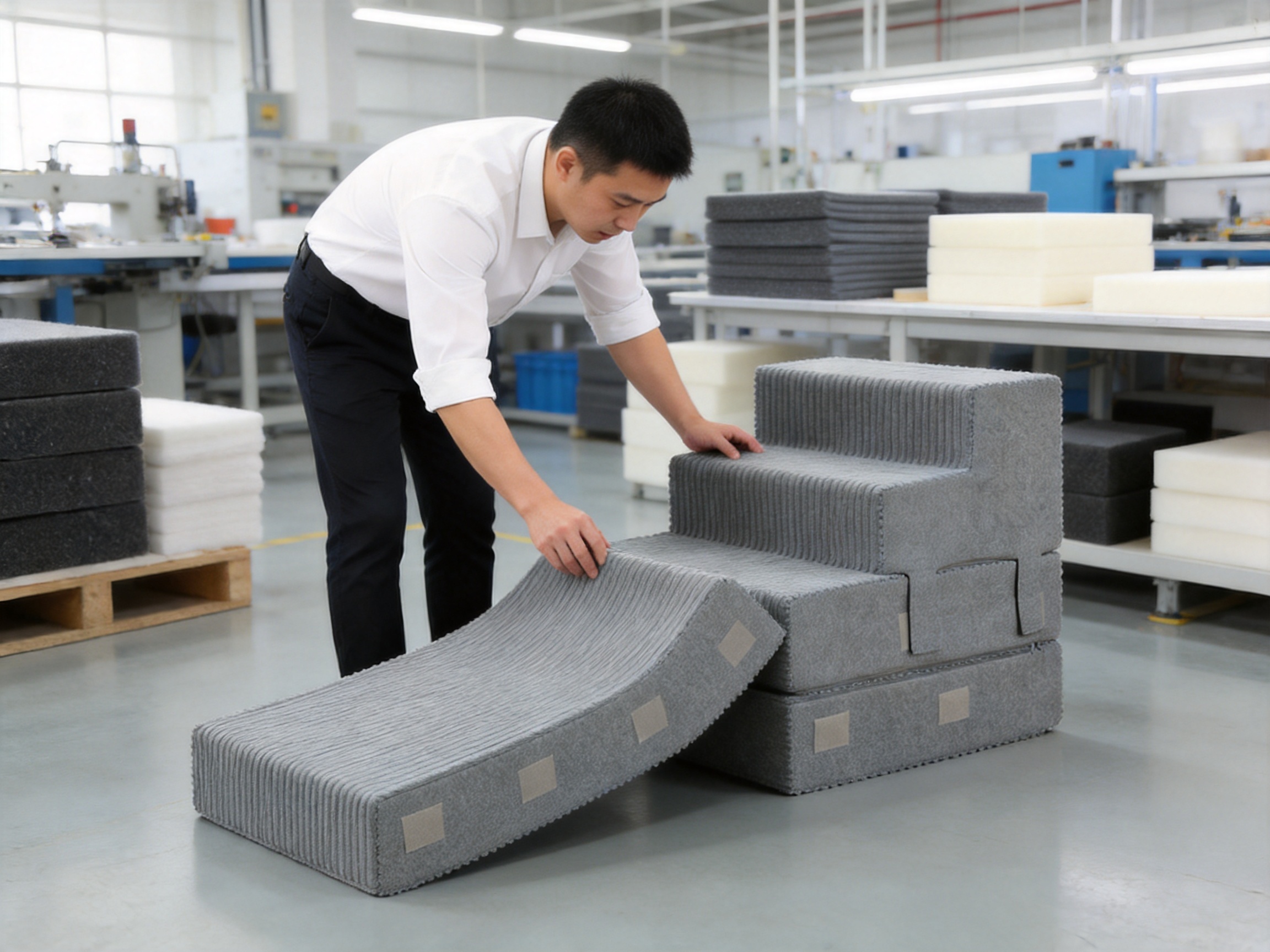
Cleaning, Maintenance, and Long-Term Care
Pet products must be easy to maintain. The Building Block Pet Stairs use a wipeable surface that helps owners keep the product clean and hygienic. Regular wiping can remove dust, paw marks, and loose hair. This is useful in living rooms and bedrooms, where cleanliness affects both comfort and appearance.
Owners should place the stairs on a flat, dry surface for best stability. The product should be positioned close enough to the furniture that the pet does not need to jump from the top step. The top tier should align reasonably with the destination height. Proper placement improves safety and encourages the pet to use the stairs naturally.
For pets new to stairs, training may be necessary. Owners can guide the pet slowly using treats, praise, or a favorite toy. It is best to let the animal explore at its own pace. The soft foam and textured surface can help reduce fear, but patience is still important. Once the pet understands the route, daily use usually becomes easier.
To extend the service life, owners should avoid placing extremely heavy objects on the stairs for long periods. Although the high-density core is designed for stable load-bearing, it is still a foam product intended for pets, not for human standing or furniture support. Keeping the stairs dry and clean will also help preserve appearance and performance.
When used in cars, the stairs should be placed securely before the pet climbs. After outdoor use, owners can wipe the surface to remove dirt. This helps maintain hygiene before returning the product to indoor areas. The neutral grey fabric helps maintain a clean look, but regular care is still recommended.
Commercial Value for Distributors and Retailers
The Building Block Pet Stairs offer strong commercial value because they address a clear and growing consumer need. Pet ownership continues to expand, and owners are investing more in products that improve pet health, comfort, and home integration. Mobility products are especially meaningful because they solve a visible daily problem.
The product’s modular tier options support differentiated merchandising. Retailers can offer 2-tier, 3-tier, and 4-tier versions for different furniture heights and pet sizes. This creates a complete product family rather than a single item. The grey color scheme is broadly marketable and suitable for many interior styles, reducing the risk associated with highly specific colors.
The safety-focused features provide clear selling points: 3D anti-slip texture, high-density memory foam, widened base, safe materials, easy cleaning, and stable load-bearing design. These points can be communicated easily in online product descriptions, showroom displays, and sales conversations. The product is also visually understandable, which is valuable in e-commerce.
For distributors, manufacturing reliability is essential. Jiangsu Wellcare Household Articles Co., LTD. offers a background in foam production, international supply, R&D development, and hospitality-grade product standards. This reduces risk compared with sourcing from factories that have limited experience with foam performance or export quality control. The company’s location in Jiangsu, China, and its established production history support scalable supply.
Customization potential is another advantage. Since the product specifications are customizable by number of tiers, buyers can adapt the offering to market needs. A retailer focused on small apartments may emphasize two-step models, while a distributor serving pet specialty stores may carry multiple tiers. This flexibility improves market fit.
Quality, Trust, and Brand Responsibility
Trust is built through consistent product performance. Pet owners want to know that the stairs will remain stable after weeks and months of use. They want the surface to remain grippy, the foam to retain shape, and the product to look acceptable in the home. The Building Block Pet Stairs are designed around these expectations.
Company responsibility also matters. Jiangsu Wellcare Household Articles Co., LTD. has a long-term focus on foam materials and healthy home products. The company’s history of cooperation with academic institutions and its doctor-led R&D team show commitment to technical progress. Its export experience shows that it can serve different markets. Its sustainability efforts show awareness of environmental impact.
In a marketplace where many pet products are similar at first glance, the manufacturing story helps differentiate the product. A stair made by a company with deep foam expertise is different from a stair assembled only for low cost. The difference may not always be visible immediately, but it becomes clear through stability, comfort, odor control, durability, and user confidence.
Practical Selection Guide
When choosing a tier configuration, owners should consider the height of the furniture, the pet’s size, and the available floor space. A two-step version is suitable for lower sofas, lounge chairs, or low platforms. A three-step version may fit many standard sofas and beds. A four-step version is appropriate for higher beds, thicker mattresses, or vehicle access situations.
The pet’s movement style also matters. A cautious senior pet may prefer more gradual transitions, while an active young pet may adapt quickly. If the destination height is high, more tiers generally create a gentler climb. The goal is to make each step feel manageable and to align the top step with the furniture as closely as practical.
Owners should also measure the space beside the furniture. The widened base improves stability, so the product should have enough floor area to sit flat. Avoid placing the stairs on uneven rugs, slippery mats, or cluttered areas. A stable setup makes training easier and helps pets trust the product.
For homes with multiple pets, choose the configuration that suits the pet with the greatest need. A senior dog or shortest-legged pet should be the priority. More agile pets can usually adapt to a safer route, while less mobile pets require careful height selection.
Q&A: Common Questions About the Building Block Pet Stairs
What pets are these stairs designed for?
The Building Block Pet Stairs are designed mainly for small to medium-sized dogs and cats. They are especially useful for breeds such as Corgis, Bichons, Pomeranians, and similar companion animals, as well as British Shorthairs and other cats that benefit from easier access to raised surfaces.
Can the stairs help senior pets?
Yes. Senior pets often need a safer and more gradual way to reach beds, sofas, or cars. The high-density memory foam core, anti-slip textured surface, and widened base help create a steadier route that reduces the need for jumping.
What makes the surface safer than ordinary fabric?
The stair surface uses a 3D embossed anti-slip texture and striped fabric. This increases friction under the paws and helps reduce slipping during climbing or descending. It is more secure than smooth fabric or hard plastic surfaces.
Are the stairs hard or soft?
The stairs are soft enough to provide comfort but firm enough to support movement. The high-density memory foam core is designed to resist deformation and maintain stable step support during long-term use.
What tier options are available?
The product supports 2-tier, 3-tier, and 4-tier grey configurations. This allows owners to select the option that best matches the height of beds, sofas, vehicle seats, or other furniture.
How do these stairs compare with plastic pet stairs?
Plastic stairs may be easy to wipe, but they can be slippery, noisy, and hard under the paws. The Building Block Pet Stairs provide a quieter, cushioned, paw-friendly experience with a textured grip surface and stable foam construction.
How do these stairs compare with low-density foam stairs?
Low-density foam stairs may compress or lose shape quickly. The Building Block Pet Stairs use a thickened high-density memory foam core to improve load-bearing performance, shape retention, and long-term stability.
Are the materials safe for pets?
The product is described as using safe and environmentally friendly materials with OEKO-TEX certification. It is designed to be non-toxic, odor-conscious, and suitable for pet-contact home use.
Where can the stairs be used?
They can be used in bedrooms, living rooms, car interiors, and other areas where pets need help reaching raised surfaces. Common placements include beside beds, sofas, chairs, and vehicle doors.
How should owners clean the stairs?
The surface is wipeable, so owners can remove dust, hair, and paw marks with routine cleaning. Keeping the stairs dry and placing them on a flat surface will help maintain performance and appearance.
Why is the widened base important?
The widened base improves stability and helps reduce tipping risk. This is important when pets climb quickly, descend at an angle, or shift weight unevenly.
What company manufactures the product?
The product is manufactured by Jiangsu Wellcare Household Articles Co., LTD., a company founded in 2003 with long-term expertise in foam materials, memory foam products, healthy home goods, and international supply.
Conclusion
The Building Block Pet Stairs are a thoughtful solution for pets that need safer, easier access to beds, sofas, cars, and other raised surfaces. By combining a thickened high-density memory foam core, 3D anti-slip texture, widened base stability, modular tier options, and a minimalist grey appearance, the product addresses the real concerns of modern pet owners: safety, comfort, durability, cleanliness, and interior compatibility.
Its advantages over many competing products are clear. It is softer and quieter than plastic, more paw-friendly than wood, more supportive than low-density foam, and more adaptable than fixed-height designs. It is suitable for puppies, senior pets, small to medium-sized dogs, and cats that benefit from stable step-by-step movement. The product does not simply help pets climb; it helps them move with confidence and reduces the risks associated with repeated jumping.
The manufacturing strength behind the product further improves its value. Jiangsu Wellcare Household Articles Co., LTD. brings decades of development experience, a doctor-led R&D team, advanced foam material capabilities, international export experience, and sustainability awareness. This foundation supports a pet stair product that is not only visually simple but also technically considered.
For households, the Building Block Pet Stairs can become an everyday comfort tool. For retailers and distributors, they offer strong market potential through clear safety benefits, tier customization, neutral design, and reliable manufacturing support. In a market where pets are increasingly treated as family members, products that combine comfort, protection, and home-friendly design will continue to stand out. The Building Block Pet Stairs meet that demand with a practical, attractive, and material-driven solution.
References
American Kennel Club. Canine Mobility, Joint Care, and Home Safety Guidelines.
Pet Product News International. Trends in Pet Furniture, Mobility Aids, and Home Integration.
OEKO-TEX Association. Standard 100: Textile Safety and Consumer Product Confidence.
Grand View Research. Global Pet Care Market Analysis and Consumer Product Trends.
Journal of Animal Physiology and Animal Nutrition. Studies on Companion Animal Mobility and Weight-Bearing Stress.
Foam Industry Technical Association. Flexible Polyurethane Foam Performance, Density, and Durability Principles.
International Journal of Industrial Ergonomics. Design Considerations for Safe Step Geometry and Surface Traction.
Product: Building Block Pet Stairs
Interested in cooperation or have questions?
Related News
WELLCARE was founded in 2003, boasting over a decade of profound and extensive experience.
Quick Links
Product
Media Centre
Contact Information
- [email protected]
- +86-517-84998062
- +86-15152354988
- No. 168 Nenjiang Road, Huaiyin District, Huai'an City, Jiangsu Province, China
Copyright © Jiangsu Wellcare Household Articles Co., LTD. All Rights Reserved.
Custom Memory Gel Mattress Manufacturers
