

 English
 日本語
日本語 Español


Deng Caiwei — International Sales Manager

Home / Author / Deng Caiwei — International Sales Manager / Why a U-Shaped Semi-Enclosed Double Sofa Creates a More Comfortable and Flexible Home
Product Category
NEW Category
Contact us
Why a U-Shaped Semi-Enclosed Double Sofa Creates a More Comfortable and Flexible Home
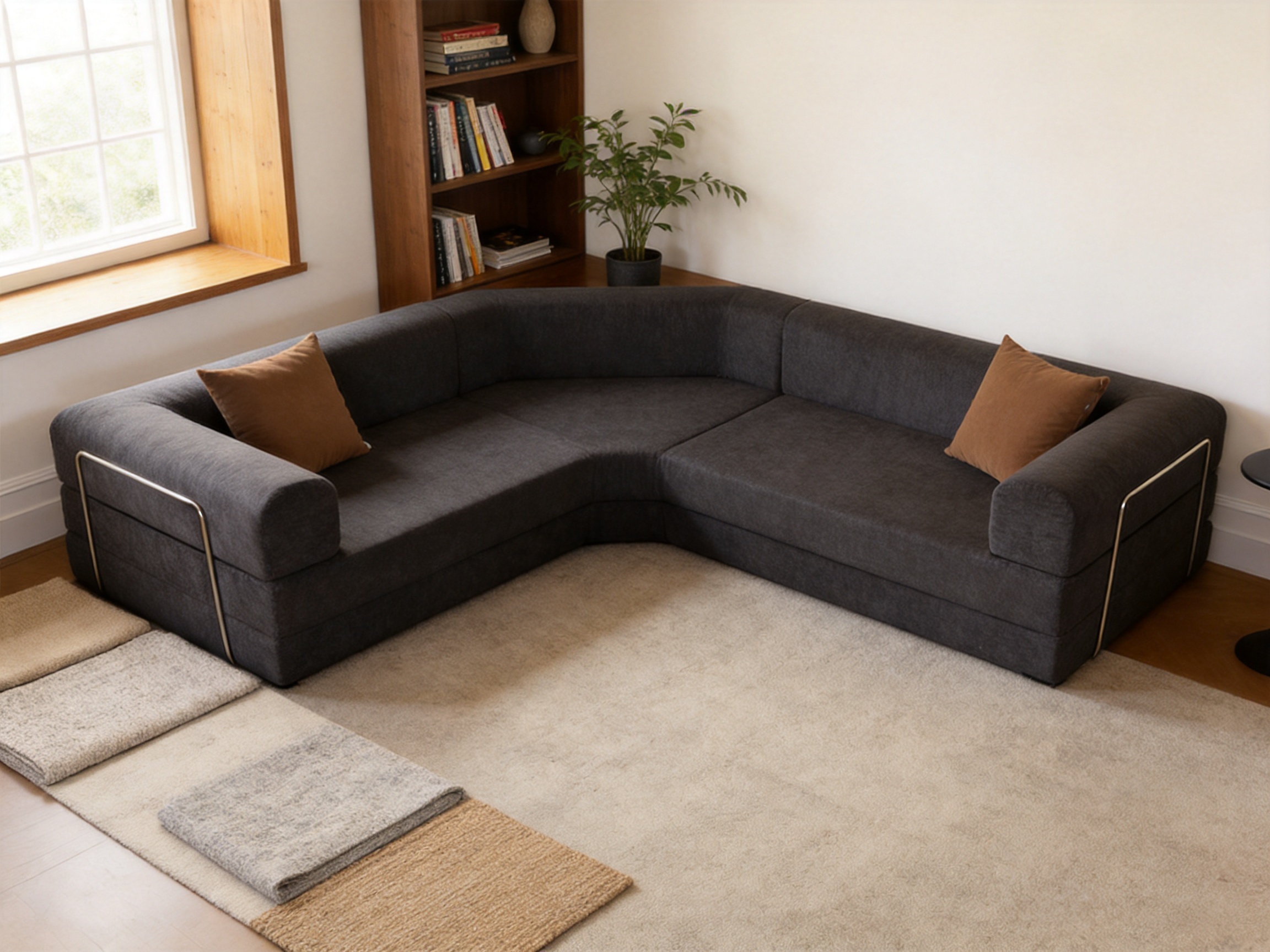
Modern homes increasingly require furniture to do more than serve one basic purpose. A sofa may need to function as a place for conversation, a reading seat, a nap area, a temporary bed, and a visual centerpiece. At the same time, buyers expect comfort, durability, easy maintenance, and a design that works with different interior styles. The U-shaped semi-enclosed double sofa is designed to answer these needs through a combination of supportive foam, an embracing structure, durable chenille upholstery, and a practical removable construction.
Measuring 180 × 100 × 68 centimeters, this two-seater sofa provides generous room for two people without requiring the footprint of a large sectional. Its U-shaped form creates a partially enclosed relaxation area, helping users feel supported and protected while sitting or reclining. The design is suitable for living rooms, reading corners, study areas, guest spaces, children’s relaxation rooms, and other residential environments where comfort and space efficiency are important.
Unlike a conventional straight sofa, the product is built around a stronger sense of enclosure. Unlike a bulky fully enclosed lounge chair, it retains enough openness for conversation and shared use. This balance allows it to compete effectively with ordinary two-seater sofas, oversized lounge chairs, floor cushions, and temporary daybeds. Its value comes not from a single feature, but from the way the structure, foam, fabric, removable components, and manufacturing expertise work together.
A Sofa Designed Around the Human Need for Comfort
Sitting for a short conversation and sitting for several hours are very different experiences. A sofa that feels comfortable for ten minutes may not provide enough support during reading, working on a laptop, watching a film, or taking an afternoon nap. The U-shaped semi-enclosed double sofa is designed to create a more stable and enveloping sitting environment. Its surrounding shape helps define the user’s personal area, while the cushioning provides a soft surface with underlying support.
The U-shaped structure gently surrounds the body from multiple directions. This can make the seat feel more secure than a simple flat bench or open-backed sofa. The side sections provide a natural sense of boundary, which is useful in shared living spaces where users may want to create a quiet personal corner without completely separating themselves from the room.
The semi-enclosed configuration also supports multiple postures. A user can sit upright with the back supported, lean against one side while reading, stretch out for a short rest, or share the sofa with another person. Its shape provides more flexibility than furniture designed only for formal upright seating.
Comfort is also influenced by the relationship between softness and support. Excessively soft furniture can feel pleasant at first but may allow the body to sink too deeply. Excessively firm furniture can provide stability but may feel rigid during extended use. This product uses high-density slow-rebound foam to create a balance between pressure distribution, resilience, and body support.
Slow-rebound foam responds gradually to applied weight. When a person sits down, the material conforms to the body rather than immediately collapsing or behaving like a hard block. After the pressure is removed, it returns toward its original shape. This characteristic helps the sofa accommodate different users and sitting positions while reducing the flattened appearance often associated with low-quality soft furnishings.
Key Product Specifications
| Product Type | Two-seater sofa |
| Structural Design | U-shaped semi-enclosed form |
| Dimensions | 180 × 100 × 68 cm |
| Primary Upholstery | Chenille fabric |
| Fabric Composition | 100% polyester |
| Fabric Width | 1.5 meters |
| Fabric Weight | 315 g/m² |
| Filling Material | High-density slow-rebound foam |
| Cover Construction | Removable cushions and removable covers |
| Color Direction | Dark gray |
| Primary Applications | Living rooms, studies, bedrooms, children’s relaxation spaces, and guest areas |
The specifications show that this is not simply a decorative lounge product. The dimensions provide practical seating capacity, while the foam and upholstery are selected for everyday use. The removable construction also gives the sofa a maintenance advantage over products whose covers are permanently fixed.
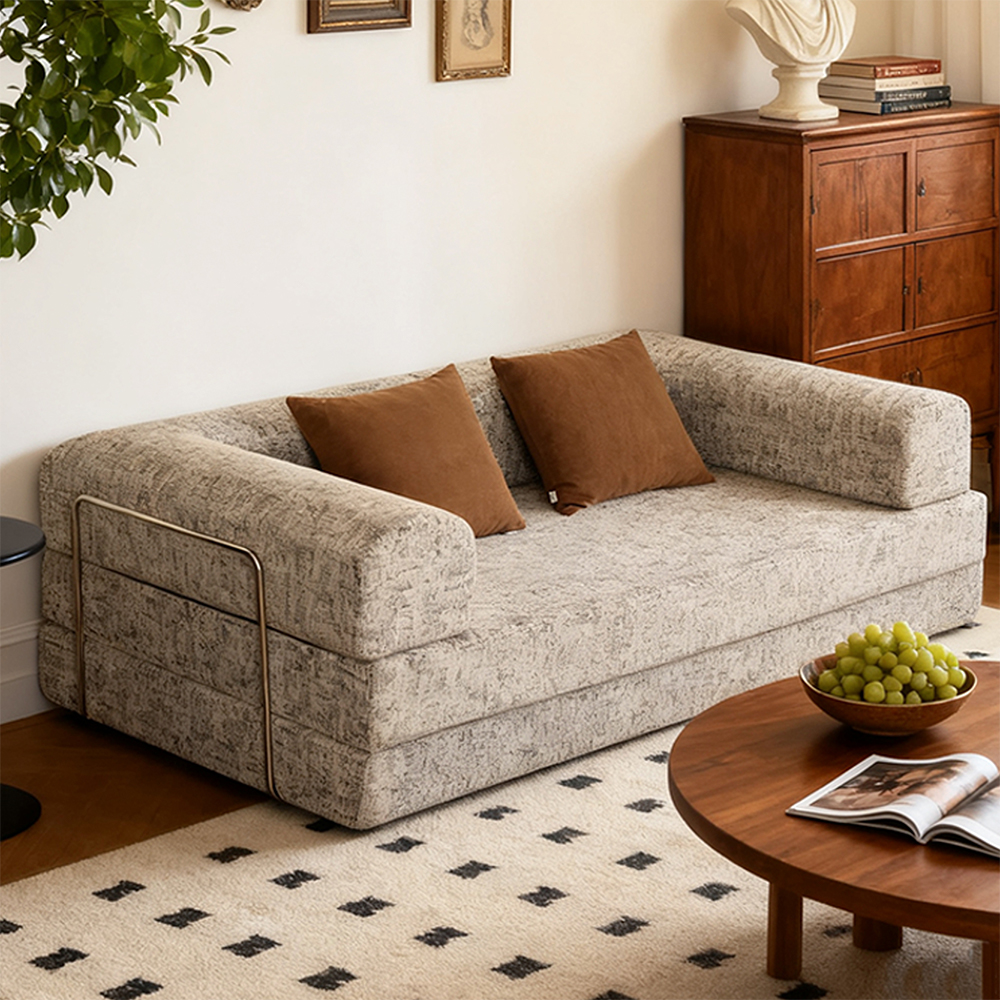
U-shaped semi-enclosed double sofa
The Advantage of a Semi-Enclosed U-Shaped Structure
Furniture shape has a direct influence on how people use a room. A standard straight sofa is open on the sides and generally encourages users to sit facing forward. It works well for group seating, but it may not create a strong feeling of privacy. A separate armchair may offer better individual comfort, but it usually accommodates only one person. A daybed may provide room to recline, but it can occupy more floor area and may look less integrated in a living room.
The U-shaped semi-enclosed double sofa occupies a useful middle position. It offers the visual and physical support of an enclosed lounge seat while retaining space for two users. The surrounding back and side structure can make the sofa feel like a dedicated retreat within a larger room. This is especially valuable in open-plan apartments, multifunctional family rooms, and compact homes where a complete private room is not available.
The semi-enclosed form can also help reduce visual distraction. The higher surrounding structure creates a defined zone, allowing the user to focus on reading, resting, or watching content. It does not claim to provide acoustic isolation, but its physical arrangement can make the seating experience feel more separate from the surrounding environment.
For families, the form offers additional versatility. One person can use the sofa as a reading nook, while two people can sit together for conversation or entertainment. In a children’s relaxation area, the soft enclosed outline can create a welcoming place for quiet activities. In a guest room, it can serve as an occasional sleeping or resting surface without requiring a permanent bed.
Compared with a large sectional sofa, the product can be easier to position. Its two-seat capacity avoids the visual heaviness of a full corner sofa while still offering a distinctive silhouette. It may be placed against a wall, positioned near a window, used as a centerpiece, or incorporated into a larger seating arrangement.
Support for Multiple Daily Activities
A competitive sofa should adapt to daily life rather than limit the user to one posture. This product can be used for:
Reading: The surrounding sides provide a comfortable boundary for leaning and maintaining a relaxed position.
Resting: The broad seat and slow-rebound foam create a suitable surface for short naps and quiet breaks.
Conversation: The two-seat arrangement supports direct interaction between users without the formal appearance of a dining chair.
Entertainment: The semi-enclosed structure can make movie watching, gaming, and casual media use feel more immersive.
Guest accommodation: When needed, the sofa can function as a temporary resting or sleeping area.
Family relaxation: The design can serve as a shared space for parents and children during quiet time.
This multifunctional character gives the sofa an advantage over products designed for only formal seating. It can support different routines without requiring users to purchase separate furniture for every activity.
High-Density Slow-Rebound Foam and Long-Term Sitting Comfort
The inner filling is central to a sofa’s performance. Upholstery can make a product attractive, but the underlying material determines how it feels over time. High-density slow-rebound foam is used in this sofa to provide a combination of cushioning and support. Its gradual response helps distribute pressure across a wider area, which may reduce the concentrated pressure that occurs on low-quality flat foam or overly firm seating surfaces.
Density is important because foam with insufficient density can lose resilience quickly under repeated loading. The seat may develop visible depressions, uneven areas, or a generally tired appearance. High-density foam is better suited to products intended for repeated everyday use because it is engineered to provide stronger internal support.
Slow rebound is also useful for individual comfort. Different users have different body shapes, weights, and sitting habits. A material that responds progressively can adapt more naturally than a fixed rigid cushion. When a user shifts from upright seating to a reclining position, the foam can continue to provide contact and support across changing pressure points.
The product description emphasizes resistance to sagging during prolonged sitting. In practical terms, this means the foam is intended to maintain its structure and support more effectively than basic low-density filling. Performance will always depend on use, room conditions, loading patterns, and maintenance, but the material selection provides a strong foundation for durability.
Foam performance also depends on manufacturing precision. A well-designed sofa requires consistent foam cutting, correct placement, suitable compression, and proper alignment within the cover. If the foam is unevenly installed, even a high-quality material may feel inconsistent. A manufacturer with experience in foam formulation and processing can better control these details during production.
Why Foam Expertise Matters
The manufacturer behind the product specializes in sleep materials and healthy home products. Its portfolio includes ordinary sponge, memory foam, gel foam, temperature-insensitive memory foam, quick-dry memory foam, flame-retardant sponge, antibacterial sponge, and other foam materials. This breadth of material experience is relevant to furniture production because comfort is not determined only by exterior styling. It depends on chemical formulation, cell structure, resilience, density, recovery behavior, and processing consistency.
A company that develops multiple foam types can compare material behaviors across different applications. This creates a stronger basis for selecting foam for sofas, cushions, mattresses, and other comfort products. The same technical background supports product customization when buyers require different firmness levels, densities, recovery speeds, or functional properties.
The company’s doctor-led research and development team reportedly develops more than one hundred new foam materials each year. This ongoing research indicates a focus on material innovation rather than reliance on a single traditional formulation. For buyers and commercial partners, such research capacity may provide greater flexibility in developing products for different markets and user preferences.
Chenille Upholstery: Texture, Appearance, and Practical Use
The sofa is covered in chenille fabric made from 100% polyester. Chenille is valued for its soft hand feel and rich surface texture. The yarn structure creates a visually substantial appearance that can make a sofa look more refined than a plain woven fabric. Its matte finish contributes to an understated style, avoiding excessive shine while still adding depth to the dark gray color.
Dark gray is a practical interior color because it can work with warm wood, white walls, neutral flooring, metal accents, and muted textiles. It fits modern, Scandinavian, industrial, contemporary, and understated luxury environments. The color also helps create a calm visual center without overwhelming smaller rooms.
The specified fabric weight of 315 g/m² indicates a substantial upholstery textile suitable for furniture applications. Fabric weight alone does not determine total durability, since weave construction, yarn quality, abrasion performance, seam strength, and finishing also matter. However, the specification provides useful information for buyers comparing materials and planning product applications.
Polyester chenille offers several practical advantages. Polyester is widely used in home furnishings because it can provide good color stability, dimensional consistency, and resistance to everyday wear when properly manufactured. The surface is designed to be relatively easy to care for, an important consideration for a sofa used by families, children, or guests.
The fabric’s tactile quality is equally important. A sofa is touched repeatedly, and a harsh or rough surface can reduce comfort even when the foam is well designed. The soft chenille texture makes the sofa more inviting for extended sitting and reclining. It also reinforces the product’s role as a relaxation-focused piece rather than purely formal furniture.
Balancing Appearance and Maintenance
Upholstered furniture must balance attractive appearance with practical maintenance. A fabric that looks beautiful but cannot be cleaned conveniently may become difficult to manage in a busy household. The removable cushions and covers address this concern by allowing users to remove selected components for washing or replacement according to care instructions.
Removability also supports long-term product ownership. If a cover becomes worn, stained, or visually outdated, it may be possible to replace the cover rather than discard the entire sofa. This can extend the useful life of the furniture and reduce the cost of future maintenance.
Regular care remains important. Users should follow the fabric supplier’s cleaning instructions, remove dust periodically, address spills promptly, avoid unsuitable chemicals, and allow washable components to dry completely before reassembly. Proper care helps preserve color, texture, and overall hygiene.
Removable Construction as a Competitive Advantage
Many sofas have permanently attached upholstery. Such designs can look clean when new, but they may be more difficult to maintain. Dust, crumbs, pet hair, and accidental spills can accumulate in areas that are hard to access. Professional cleaning may be required more frequently, and replacing damaged upholstery can be expensive or impractical.
This product uses a removable structure for both cushions and covers. That feature provides a meaningful advantage over fixed-cover alternatives. Users can remove cushions to clean underneath them, wash suitable covers, and replace individual components when necessary. The result is a more manageable maintenance routine.
Removable components also make logistics easier for certain buyers. Retailers, hospitality projects, residential developers, and furniture distributors may value products that can be serviced or refreshed without replacing the entire unit. For export customers, replaceable covers can help support after-sales service and regional customization.
The construction requires careful engineering. Removable covers must fit securely without excessive looseness or distortion. Zippers, seams, attachment points, and cushion dimensions need to be controlled accurately. If the cover is too tight, removal becomes difficult; if it is too loose, the sofa may appear untidy. Consistent production tolerances are therefore essential.
A manufacturer experienced in foam and textile assembly can coordinate the relationship between foam dimensions, cover dimensions, seam allowances, and finished appearance. This coordination is one of the areas where factory capability can create a noticeable difference between a carefully engineered product and a visually similar but less refined competitor.
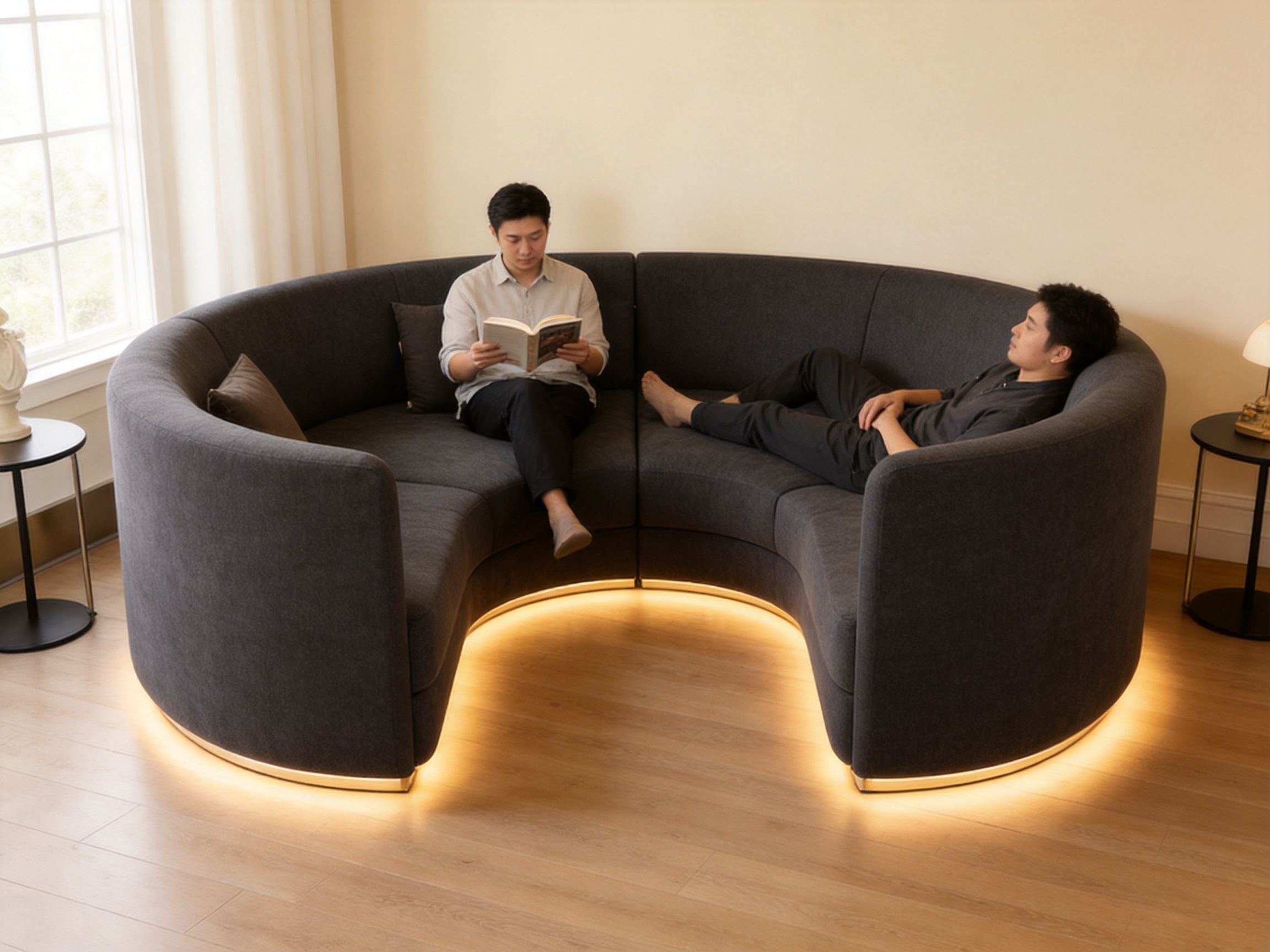
Manufacturing Strengths Behind the Product
The sofa is produced by a company with a long history in foam research, home products, and manufacturing. The business was established in 2003 and is focused on high-performance sleep materials and healthy household products. Its origins extend to a scientific research enterprise formed in 1993, providing a longer technical background than the current corporate establishment date alone suggests.
The company acquired a 12,000-square-meter factory building in 2003 and jointly developed new sponge materials with a technological institute. In 2008, it acquired 50,000 square meters of land, creating a larger foundation for production and development. These investments indicate a commitment to maintaining physical manufacturing capacity rather than functioning only as a trading organization.
Cooperation with universities and research institutions has supported the development of foam materials and processing knowledge. Such cooperation can help connect laboratory research with industrial production. It also creates opportunities to evaluate material formulas, structural performance, resilience, and application requirements in a more systematic way.
The company’s product history includes supply to cross-border supermarkets in the United States, Germany, and Japan, followed by exports to the United Kingdom, Canada, Australia, and Kuwait. Experience with different international markets can improve understanding of packaging, product documentation, quality expectations, customer service, and compliance requirements. These capabilities are especially valuable for overseas furniture buyers and distributors.
From Material Formulation to Finished Sofa
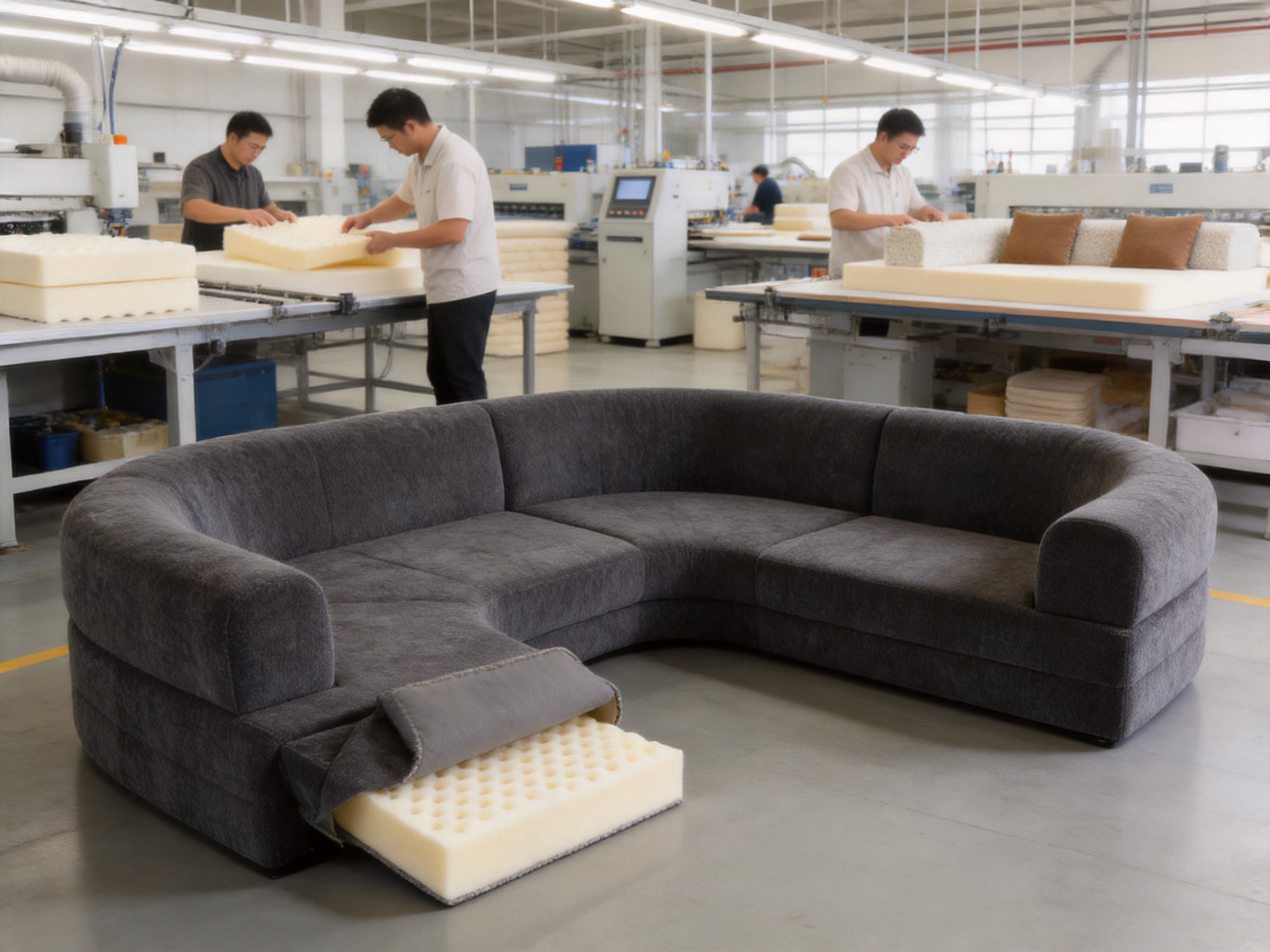
The manufacturing process begins with material selection and formulation. Foam performance is influenced by the formulation used to create its cellular structure. The desired result for a sofa is not necessarily the same as the desired result for a mattress or pillow. Furniture foam must support repeated sitting, accommodate changing postures, recover after loading, and work with the dimensions of the surrounding structure.
After formulation, the foam must be produced with consistent density and physical properties. Production controls can include raw-material handling, mixing, foaming conditions, curing, cutting, and inspection. Consistency at each stage is important because variations can affect comfort and finished-product uniformity.
Once the foam is ready, it is cut and shaped according to the sofa’s design. The U-shaped form requires accurate coordination between the main body, side sections, seat area, back support, and removable cushions. The pieces must fit together to create a stable silhouette without unwanted gaps or pressure points.
The chenille upholstery is then cut according to controlled patterns. Efficient pattern planning helps reduce material waste while maintaining visual consistency. Directional texture, seam placement, and color alignment are important considerations for chenille fabrics because the surface can appear different depending on the direction of the pile or yarn.
During assembly, the upholstery is fitted around the foam and structural components. Seams must be aligned, edges must be finished neatly, and the removable elements must operate smoothly. Quality checks can evaluate dimensions, appearance, stitching, zipper operation, foam placement, and overall stability.
Packaging is another important stage. A sofa must be protected from compression damage, moisture, dust, and impact during storage and transportation. Packaging design should also consider shipping efficiency and ease of handling. A manufacturer serving international customers needs to coordinate product protection with container loading, warehouse storage, and final delivery requirements.
Research and Development as a Product Advantage
Research and development is particularly important in foam-based products because small changes in material structure can influence comfort and durability. The company’s development of numerous foam materials each year demonstrates an active approach to performance improvement. Its work includes materials with different recovery speeds, temperature responses, drying characteristics, flame-retardant properties, and antibacterial functions.
Although the sofa described here uses high-density slow-rebound foam and does not claim every specialized foam property in the company’s portfolio, the wider research base remains relevant. It provides a platform for future versions, private-label programs, and customized furniture projects. Buyers may be able to discuss alternative foam specifications depending on target price, comfort preference, climate, market regulation, or intended use.
Customization can be valuable for furniture brands and project purchasers. Possible areas of discussion may include fabric color, cover design, foam firmness, dimensions, packaging, labeling, and application-specific construction. Any final customization should be confirmed through technical sampling and formal product specifications, but the presence of an established R&D function can make such cooperation more practical.
How the Sofa Compares with Common Alternatives
Product comparisons should consider the complete user experience rather than one isolated feature. A low-cost sofa may have a lower purchase price but less resilient foam, fixed covers, or a less adaptable shape. A large sectional may provide more total seating but occupy substantially more space. An ordinary armchair may be easier to place but cannot accommodate two users. A daybed may be better for fully extended lying but may not provide the same enclosed social seating experience.
| Alternative | Typical Strength | Potential Limitation | Advantage of the U-Shaped Sofa |
| Standard two-seater sofa | Familiar shape and easy placement | Less enclosure and less distinctive relaxation space | Provides a more embracing seating environment |
| Single lounge chair | Good individual seating | Normally suitable for only one person | Combines personal comfort with two-person capacity |
| Large sectional sofa | High seating capacity | Requires more floor area and may feel visually heavy | Offers a compact alternative with strong visual character |
| Fixed-cover sofa | Simple exterior construction | More difficult to clean and service | Removable cushions and covers improve maintenance flexibility |
| Basic foam sofa | Lower initial cost | May lose shape or support more quickly | High-density slow-rebound foam is intended for better resilience |
| Temporary daybed | Suitable for lying down | May not integrate naturally into social seating arrangements | Supports sitting, conversation, rest, and occasional reclining |
The comparison does not mean that the U-shaped sofa is ideal for every application. Buyers who need a very large number of seats may prefer a sectional. Users who require a dedicated full-time bed may need a conventional mattress and bed frame. However, for homes seeking a flexible two-person relaxation product, the combination of enclosure, foam support, chenille texture, and removable construction is highly competitive.
Interior Design Compatibility
Furniture should be functional, but it also needs to integrate with the visual language of a room. The sofa’s dark gray color and simple lines make it adaptable across several design styles. In a modern room, it can complement clean architectural forms and neutral surfaces. In a Scandinavian-inspired setting, it can be paired with light wood, wool textures, and soft natural colors. In an understated luxury interior, it can work with brushed metal, stone, glass, and carefully selected lighting.
The semi-enclosed silhouette gives the sofa a strong identity without relying on excessive decoration. It can become the focal point of a room through its shape rather than through bright color or complicated ornamentation. This makes it suitable for buyers who want furniture with character but prefer a restrained visual effect.
In a living room, the sofa may be positioned as a central conversation piece or placed near a window as a dedicated reading area. In a study, it can soften the atmosphere by introducing a comfortable alternative to a desk chair. In a bedroom, it can serve as a resting bench with greater comfort and enclosure than a typical bench. In a children’s area, it can provide a defined space for books, quiet play, or supervised relaxation.
The dimensions should always be checked against the available floor area, doorways, elevators, staircases, and circulation paths before purchase. A room layout should leave enough clearance around the sofa for safe movement and easy cleaning. Because the product is 180 centimeters wide and 100 centimeters deep, it offers substantial seating but still requires deliberate placement.
Cleaning, Care, and Product Longevity
Regular maintenance can help preserve the sofa’s appearance and comfort. Dust and loose particles should be removed using suitable upholstery-cleaning methods. Spills should be treated promptly rather than allowed to penetrate deeply into the textile. Covers should be removed and washed only according to the manufacturer’s care instructions, including recommended water temperature, detergent type, drying method, and ironing restrictions.
The foam should not be exposed unnecessarily to excessive moisture. If a removable cover is washed, it should be fully dry before being placed back over the cushion. Reassembling a damp cover may encourage odor or moisture retention. Users should also avoid harsh bleach or aggressive solvents unless the care label specifically permits them.
Periodic rotation or repositioning of removable cushions may help distribute wear more evenly when the design allows it. Users should avoid standing on the sofa, dragging it across the floor, or placing sharp objects directly on the upholstery. Keeping the product away from prolonged direct sunlight can help preserve the fabric color.
These practices are common for quality upholstered furniture, but the removable design makes them easier to perform. The ability to access cushions and covers improves housekeeping and can extend the visual life of the product. When a component eventually requires attention, the entire sofa may not need to be replaced.
Suitability for Residential and Commercial Projects
The product is primarily suited to residential use, but its flexible design can also interest selected commercial buyers. Boutique accommodation, serviced apartments, model homes, reading lounges, private offices, wellness spaces, and family-oriented hospitality environments may benefit from a sofa that combines comfort with a distinctive form.
For residential developers and interior designers, the sofa can help create a recognizable relaxation feature without requiring a complex built-in installation. For furniture retailers, its shape provides a point of differentiation from standard straight sofas. For online sellers, the functional story is easy to communicate: two-person capacity, a semi-enclosed design, slow-rebound foam, chenille upholstery, and removable covers.
Commercial users should consider traffic levels, cleaning schedules, fire-safety requirements, contract specifications, and local regulations before selecting the product. Residential and commercial versions may require different material tests or construction details. The manufacturer’s experience with international markets and multiple foam categories can support technical discussions, but project requirements should always be confirmed in writing.
Quality, Reliability, and International Supply Experience
For overseas buyers, product quality is only one part of a successful supply relationship. Consistent communication, stable production, packaging reliability, documentation, and after-sales cooperation are equally important. A manufacturer with experience supplying supermarkets, exporting to several countries, and participating in international e-commerce has exposure to the operational demands of cross-border business.
The company became an Alibaba-certified Gold Supplier in 2018 and later became a designated supplier for five-star hotels in 2020. These milestones suggest experience with formal buyer expectations and professional procurement environments. They do not replace independent inspection or product testing, but they can provide confidence that the company is familiar with structured commercial cooperation.
Quality assurance for this sofa should include checks of foam density and resilience, finished dimensions, seam quality, upholstery alignment, zipper function, cushion fit, structural stability, and packaging condition. Buyers can request samples, inspection standards, technical data, and customized approval procedures before placing larger orders.
For private-label or wholesale projects, clear specifications are especially important. The agreement should identify fabric composition, fabric weight, color standard, foam requirements, dimensions, packaging method, labeling, acceptable tolerances, and inspection procedures. Such documentation reduces ambiguity and supports repeatable production.
Sustainability and Responsible Manufacturing
Furniture sustainability involves material selection, product life, maintenance, manufacturing efficiency, packaging, and end-of-life considerations. A durable sofa that remains useful for many years can reduce the frequency of replacement. Removable covers and serviceable components may also help extend the product’s practical life.
The manufacturer states that it invests in advanced environmentally friendly energy systems and improves environmental management practices. Its stated goal is to go beyond basic compliance and create lasting environmental value by integrating respect for nature into business operations. These efforts are relevant to buyers who evaluate suppliers according to environmental performance as well as product quality.
Foam production must be managed carefully because chemical handling, energy use, emissions, waste, and worker safety all require attention. A responsible manufacturing system should include appropriate process controls, safe storage, waste management, and environmental monitoring. Buyers may request relevant certifications, test reports, or factory documentation when required by their market or procurement policy.
The sofa’s removable construction supports a more repair-oriented approach. If a cover becomes damaged while the foam and structure remain usable, replacing the cover may be more resource-efficient than replacing the complete product. This does not make the sofa automatically sustainable, but it is a practical feature that can support longer ownership.
Ordering and Customization Considerations
Before purchasing, buyers should identify the intended use and target market. A home user may prioritize softness, appearance, and easy cleaning. A hotel or serviced apartment may prioritize durability, standardized replacement covers, and project documentation. A retailer may focus on packaging, color options, lead time, and product photography. A furniture brand may require private labeling, custom dimensions, or a special foam specification.
Important questions include whether the dark gray color is available in multiple shades, whether additional fabric options can be supplied, how the covers should be cleaned, whether replacement covers are available, and what packaging method is used for export. Buyers should also confirm whether the sofa is shipped assembled or partially disassembled and what tools are needed for installation.
For foam customization, buyers may discuss density, firmness, rebound speed, thickness, and support requirements. Any change to the foam can affect the cover dimensions and overall sitting height, so modifications should be evaluated through a sample rather than approved only from a written description.
Sampling is particularly important for furniture. A physical sample allows buyers to assess seating comfort, fabric hand feel, color, stitching, cushion fit, and overall scale. It also creates a reference point for mass production. Once the sample is approved, changes should be documented carefully to maintain consistency.
Frequently Asked Questions
What type of product is this?
It is a two-seater sofa with a U-shaped semi-enclosed design. It is intended for sitting, reading, resting, conversation, entertainment, and occasional temporary sleeping or reclining.
What are the dimensions?
The listed dimensions are 180 × 100 × 68 centimeters. Buyers should confirm packaging dimensions and any installation requirements before arranging delivery.
Why is the sofa semi-enclosed rather than fully enclosed?
The semi-enclosed structure creates a stronger sense of privacy and support while keeping the sofa open enough for conversation, shared use, and visual connection with the room.
How many people can use it?
The sofa is designed as a two-seater. Its actual comfort level may vary according to user size, posture, and activity, but its stated category is a two-person sofa.
What kind of foam is used?
The product uses high-density slow-rebound foam. This material is intended to provide gradual body-conforming comfort, strong support, and improved resistance to flattening during repeated use.
Is the foam the same as mattress memory foam?
The product uses a slow-rebound foam designed for furniture seating. Although similar material technologies may be used in mattresses, the final foam specification should be evaluated according to the sofa’s support, resilience, and structural requirements.
Can the covers be removed?
Yes. The cushions and covers are designed to be removable. Washing and drying should follow the specific care instructions supplied with the product.
What is the upholstery made from?
The upholstery is 100% polyester chenille. The listed fabric width is 1.5 meters, and the listed fabric weight is 315 g/m².
Is chenille suitable for everyday use?
Chenille is widely used in furniture because it offers a soft, textured surface and an attractive matte appearance. Daily care, prompt spill treatment, and compliance with cleaning instructions are important for preserving its condition.
What interiors suit the dark gray color?
The dark gray finish can coordinate with modern, Scandinavian, contemporary, industrial, and understated luxury interiors. It can be combined with light wood, neutral walls, soft textiles, metal details, and natural materials.
Can the sofa be used as a bed?
It can serve as a temporary resting or sleeping area, but it is not described as a replacement for a dedicated full-time bed. Users who need nightly sleeping support should select a purpose-built mattress and bed system.
Where can the sofa be placed?
It can be used in living rooms, study corners, bedrooms, guest areas, children’s relaxation spaces, reading rooms, and other areas where a flexible two-person relaxation seat is needed.
What makes it different from a regular two-seater sofa?
Its main differences are the U-shaped semi-enclosed form, high-density slow-rebound foam, chenille upholstery, and removable cushions and covers. Together, these features create a more private, supportive, and maintainable seating experience.
Can the product be customized?
Customization should be discussed with the manufacturer. Potential areas may include fabric, color, dimensions, foam characteristics, packaging, labeling, and project-specific construction. Technical samples and written specifications are recommended for any customized order.
What should buyers inspect before placing a large order?
Buyers should evaluate a sample for comfort, dimensions, fabric quality, stitching, cushion fit, cover removability, foam recovery, structural stability, packaging, and overall appearance. They should also confirm production tolerances and inspection procedures.
Conclusion
The U-shaped semi-enclosed double sofa is designed for homes and spaces that require more than conventional seating. Its structure creates a personal relaxation zone while preserving two-person capacity. High-density slow-rebound foam supports the body during extended use, and chenille upholstery adds softness, texture, and a refined matte appearance. Removable cushions and covers improve cleaning, servicing, and long-term practicality.
Its advantages over many competing products come from the combination of these features. It offers more enclosure than a standard sofa, more shared capacity than a single lounge chair, a more compact alternative to a large sectional, and more maintenance flexibility than a fixed-cover model. Its dark gray color and simple lines also make it adaptable to a wide range of interior styles.
The product is supported by a manufacturer with a substantial background in foam research, material development, factory investment, international supply, and environmental improvement. Its doctor-led research team and broad foam portfolio provide a technical foundation for comfort-product development, while its experience with overseas markets supports professional cooperation with distributors, retailers, designers, hospitality buyers, and private-label customers.
For buyers seeking a distinctive but practical two-seater sofa, the product offers a balanced solution. It combines privacy, flexibility, comfort, appearance, and maintenance in one integrated design. With suitable care and properly controlled manufacturing, it can become a durable focal point for reading, rest, conversation, and everyday relaxation.
References
1. Product specification sheet for the U-shaped semi-enclosed double sofa, including dimensions, upholstery composition, fabric weight, and structural features.
2. Manufacturer-provided company profile describing foam research, product development, factory investment, international supply history, and environmental initiatives.
3. General upholstery furniture care principles for polyester textiles, removable covers, cushions, and foam-filled seating products.
4. General technical literature on high-density slow-rebound foam, resilience, pressure distribution, and repeated-load performance.
5. General furniture design references concerning ergonomic seating, multifunctional living spaces, modularity, and residential interior planning.
Product: U-shaped semi-enclosed double sofa
PREV:Grooved Memory Foam Leg Pillow: Ergonomic Elevation, Portable Comfort, and Reliable Foam Manufacturing
NEXT:Anti-Slip Pet Stairs for Safer Everyday Mobility
NEXT:Anti-Slip Pet Stairs for Safer Everyday Mobility
Interested in cooperation or have questions?
Related News
WELLCARE was founded in 2003, boasting over a decade of profound and extensive experience.
Quick Links
Product
Media Centre
Contact Information
- [email protected]
- +86-517-84998062
- +86-15152354988
- No. 168 Nenjiang Road, Huaiyin District, Huai'an City, Jiangsu Province, China
Copyright © Jiangsu Wellcare Household Articles Co., LTD. All Rights Reserved.
Custom Memory Gel Mattress Manufacturers
