

 English
 日本語
日本語 Español


Deng Caiwei — International Sales Manager

Home / Author / Deng Caiwei — International Sales Manager / Ergonomic Butterfly Memory Foam Pillow for Natural Neck Support
Product Category
NEW Category
Contact us
Ergonomic Butterfly Memory Foam Pillow for Natural Neck Support
Modern sleep products are expected to do more than feel soft at first touch. A pillow must support the cervical spine, adapt to different sleeping positions, remain breathable through the night, keep its shape after repeated use, and fit naturally into both home and hospitality environments. The memory foam butterfly-shaped pillow described here is designed around those practical expectations. With a high-density memory foam core, a slow-rebound response, a raised butterfly structure, a concave center, and a breathable 3D quilted fabric cover, it offers a balanced solution for adults who want stable neck support without sacrificing comfort.
This pillow belongs to the regular memory foam pillow category, but its structure gives it a more specialized ergonomic role than an ordinary rectangular pillow. The butterfly shape is not simply decorative. Its raised side areas help support the shoulders and guide the neck into a more natural position, while the central depression allows the head to rest with a gentle floating sensation. This combination helps reduce excessive pressure on the cervical curve and may help minimize the stiffness, soreness, and discomfort often associated with poorly matched pillows.
The product is also built for commercial practicality. It is lightweight, rollable for storage, suitable for single adult users, and available for customization in size, fabric, and packaging. These features make it relevant for household retail, hotels, guesthouses, e-commerce sellers, and cross-border distributors. Behind the product is Jiangsu Wellcare Household Articles Co., LTD., a manufacturer with long-term experience in foam material research, product development, and export supply. The company’s technical background gives the pillow an important advantage: it is not only shaped for comfort, but also supported by advanced foam formulation and manufacturing know-how.
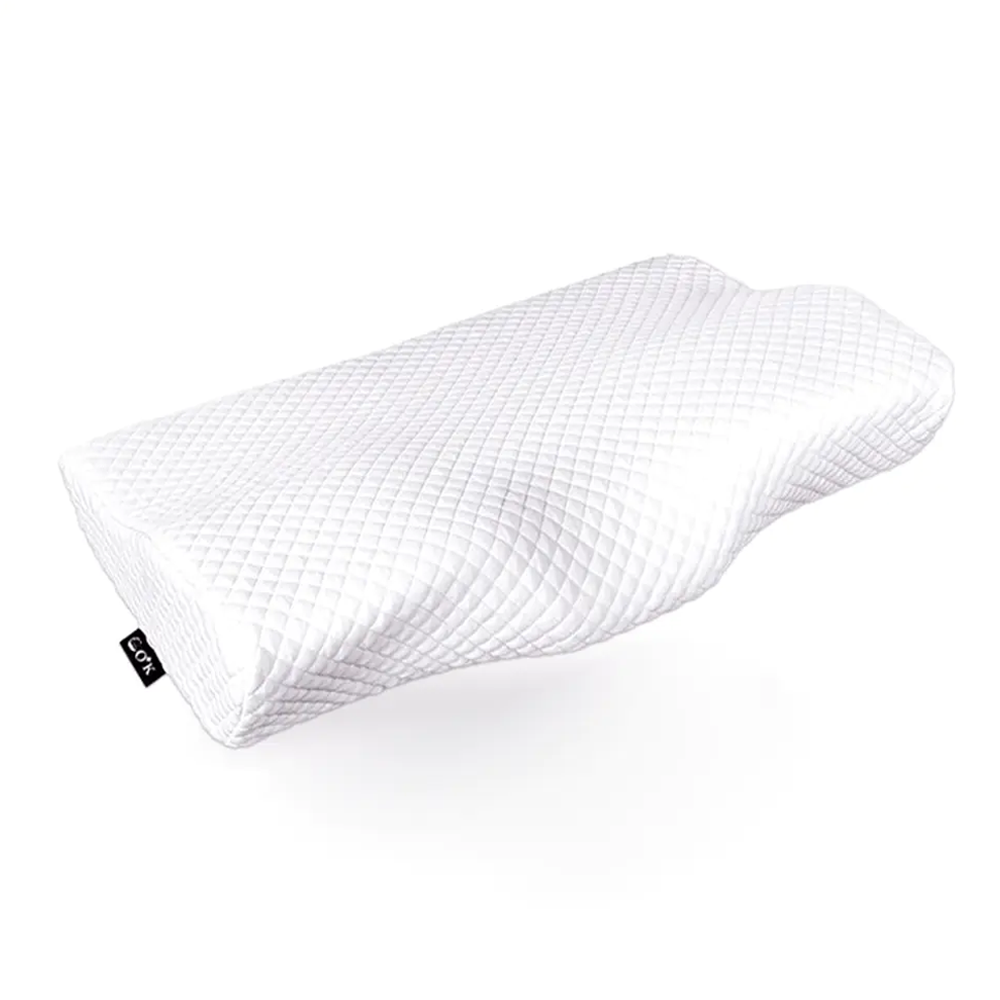
Memory foam butterfly-shaped pillow
1. A Pillow Designed Around the Real Needs of Sleep
A well-designed pillow should fill the space between the head, neck, and mattress without forcing the body into an unnatural angle. Many people experience neck soreness not because their pillow is too hard or too soft in a simple sense, but because it does not match the cervical curve. A flat pillow may allow the neck to collapse downward, while an overfilled pillow may push the head too far upward. Both situations can create tension. The butterfly-shaped memory foam pillow solves this problem by combining contour support with adaptive memory foam.
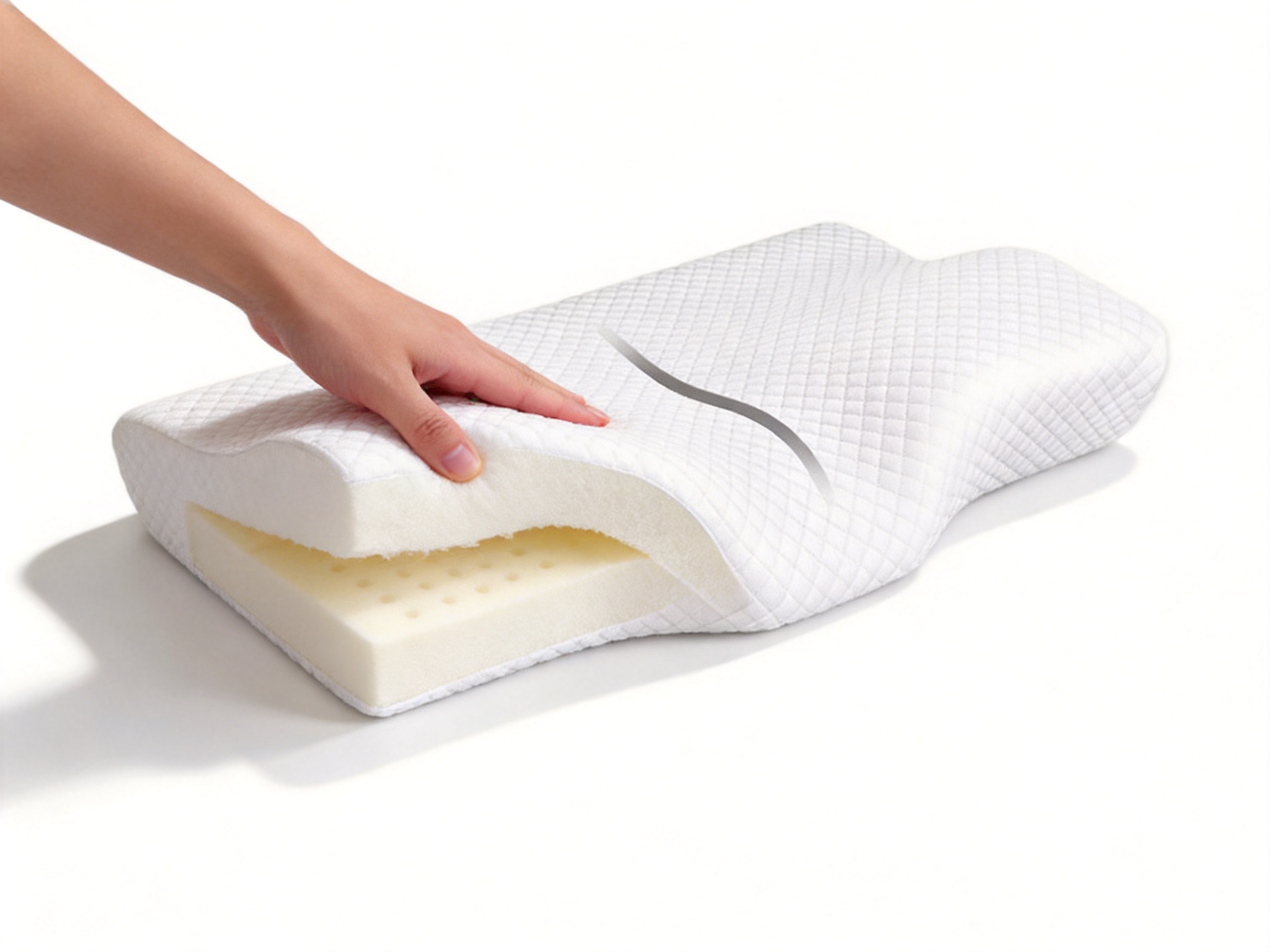
The high-density memory foam core slowly responds to body pressure and heat. Instead of bouncing back immediately like ordinary sponge, it compresses gradually and conforms to the user’s head and neck. This slow rebound behavior helps distribute pressure across a wider surface area. For adult sleepers, especially those who spend long hours in one position, this can create a more stable and relaxed sleeping experience.
The pillow’s height of approximately 12 cm is selected to provide meaningful support without becoming excessively bulky. It is suitable for single-person use and is designed for adults who need stable cervical support. The weight range, approximately 0.55 to 1 kg, gives the pillow a solid feel while still keeping it easy to handle, package, and transport. These specifications make it practical for both personal use and commercial distribution.
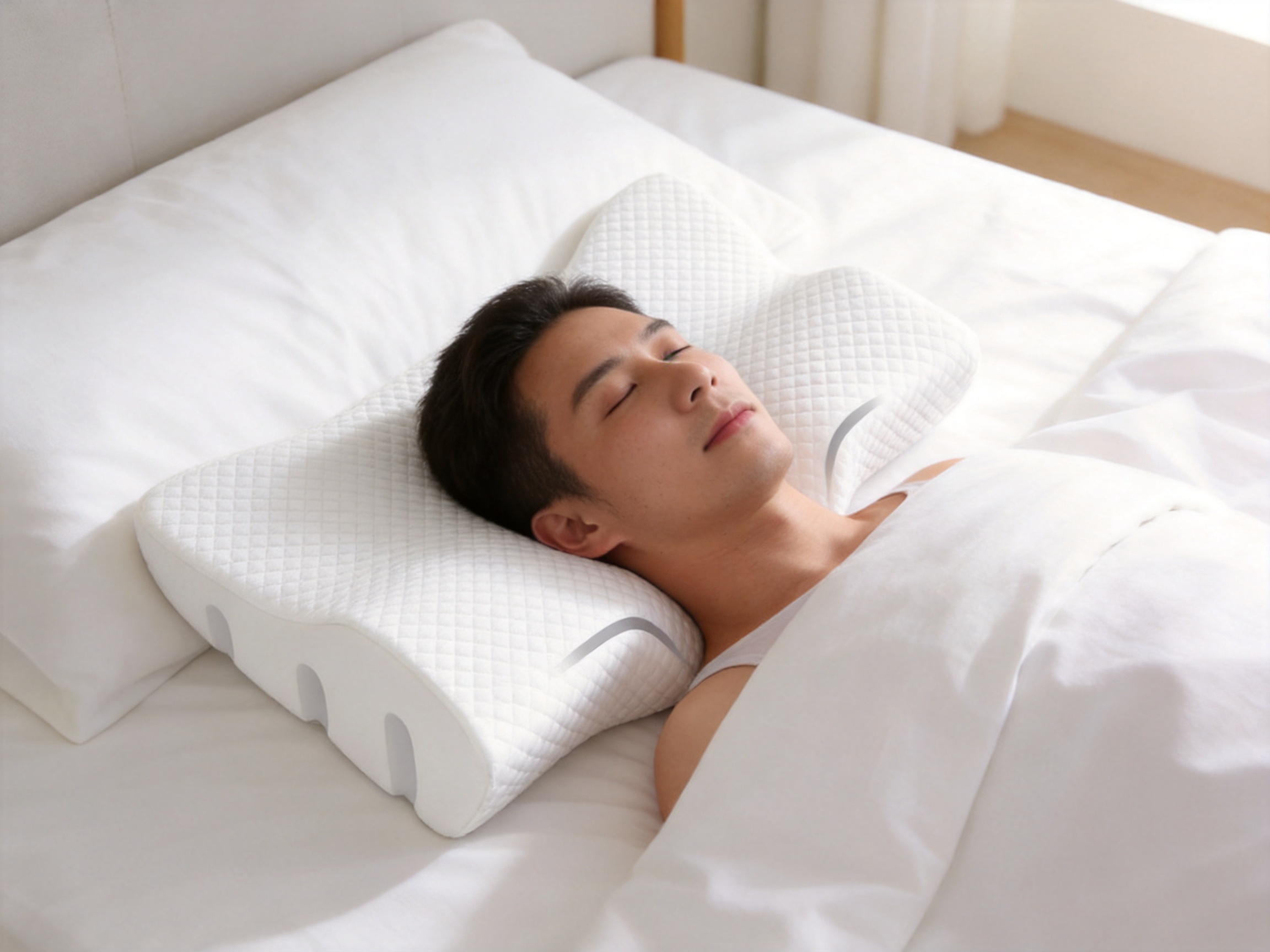
The butterfly shape is particularly important because it provides support zones. The central concave area allows the head to settle naturally, while the raised sides can help stabilize the neck and shoulders. This structure may be especially useful for people who frequently wake up with a stiff neck, because it reduces the likelihood that the head will shift into an unsupported angle during sleep. Compared with traditional pillows that provide one uniform surface, this design gives different areas of the body the support they need.
2. High-Density Memory Foam and Slow-Rebound Comfort
The core material of the pillow is memory foam, also known as viscoelastic polyurethane foam. Its key characteristic is slow rebound: after pressure is applied, the foam gradually returns to its original shape. This behavior allows the pillow to contour to the user instead of resisting the body with rigid force. For neck support, this is an important advantage because the cervical spine requires both stability and gentle adaptation.
Low-quality pillows often feel comfortable in the first few minutes but fail during extended use. They may flatten quickly, become uneven, or lose resilience. A high-density memory foam pillow has better shape retention and more consistent support. The product described here is designed to maintain its structure even after prolonged use, reducing the need for frequent replacement and improving long-term value for buyers.
Memory foam is especially useful for sleepers who prefer a pressure-relieving surface. Because it adapts to the shape of the head and neck, it can reduce concentrated pressure points. This is different from ordinary sponge, which may compress too easily and fail to support the cervical curve, or from very hard pillows, which may create discomfort at the contact points. The ideal pillow is neither excessively soft nor rigid; it should provide responsive support. This product is designed to achieve that middle ground.
Another advantage of slow-rebound foam is motion stability. When a sleeper changes position, the pillow adjusts without abrupt spring-back. This creates a calm, quiet, and secure feeling. For hotels and guesthouses, this feature can improve the perceived quality of the sleep experience. For home users, it can help create a more restful night by reducing the need to constantly readjust the pillow.
3. Butterfly Structure for Head, Neck, and Shoulder Alignment
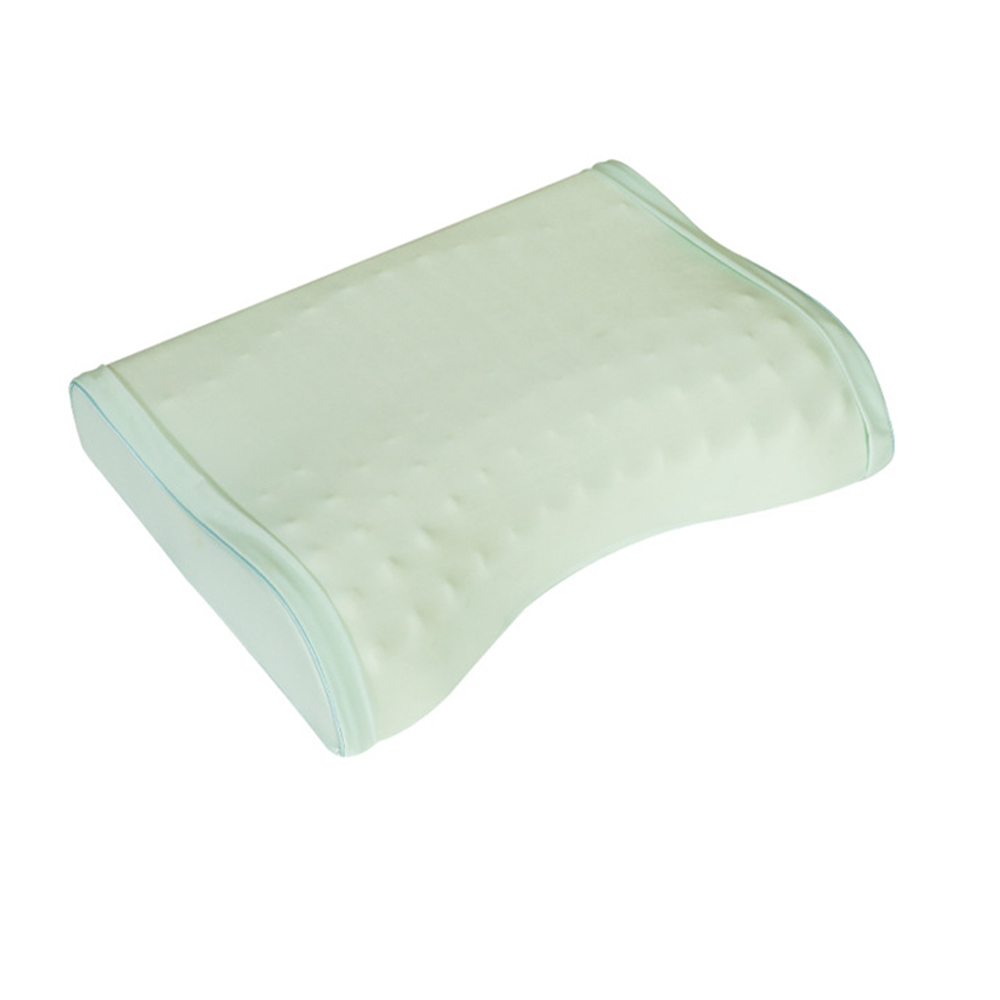
The butterfly structure is the defining feature of this pillow. Its visual form is simple, clean, and elegant, but its functional purpose is more important. The raised sides support the shoulder and neck areas, while the concave center cradles the head. This creates a supportive sleep surface that encourages a more natural posture.
When the head lies on a completely flat surface, the neck may not receive enough support. When the pillow is too high at the center, the head may be pushed forward or upward. The butterfly-shaped pillow resolves this problem by creating a gentle central resting area and higher support at the sides. This structure helps the head feel suspended rather than compressed, producing the “floating” comfort described in the product material.
The design is especially relevant for people who sleep on their back or alternate between back and side sleeping. Back sleepers need a central area that supports the natural curve of the neck without lifting the head too high. Side sleepers need additional height and structure to fill the space between the shoulder and head. The butterfly layout helps accommodate these needs more effectively than a simple rectangular pillow.
Another practical benefit is positional guidance. The shape naturally encourages the user to place the head in the central zone. This can help reduce random shifting and improve sleep posture. While no pillow can force a perfect sleeping position for every person, a thoughtfully contoured pillow can reduce the likelihood of unsupported alignment. This makes the product valuable for adults who are concerned about neck comfort, posture, and morning stiffness.
4. Breathable 3D Quilted Fabric for All-Season Comfort
Comfort is not only about support. Temperature and airflow also affect sleep quality. A pillow that traps heat can cause sweating, restlessness, and frequent turning during the night. To address this issue, the pillow uses a 3D quilted fabric surface designed to improve air circulation and breathability. The quilted texture helps create micro-spaces for ventilation, reducing stuffiness and improving the feeling of freshness.
The fabric is soft and skin-friendly, giving the pillow a gentle touch. This is important because the face and neck often remain in contact with the pillow for many hours. A rough or poorly finished cover can reduce the comfort of even a good foam core. By combining high-density sponge support with a soft surface fabric, the pillow provides both structural and tactile comfort.
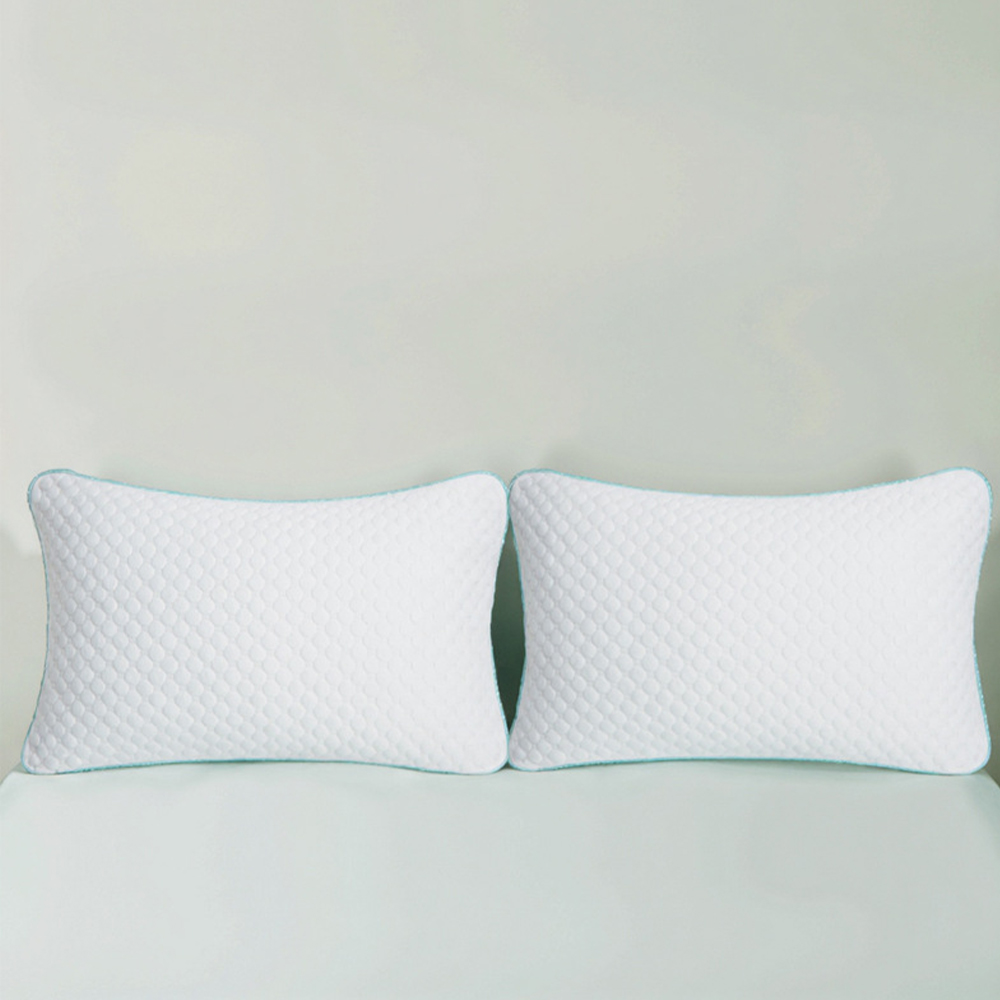
The pure white appearance also contributes to its usability. White is clean, simple, and versatile. It blends easily into bedrooms, hotels, guest rooms, wellness spaces, and travel settings. For hospitality buyers, a white pillow is practical because it matches a wide variety of bedding styles and conveys cleanliness. For retailers, the minimalist appearance makes the product easy to position as a modern, health-oriented sleep accessory.
All-season comfort is another selling point. In warm months, breathability helps reduce heat buildup. In cooler months, memory foam provides a comforting, enveloping feel. This versatility improves the pillow’s value because users do not need separate pillows for different seasons. For commercial buyers, a year-round product is easier to stock, promote, and distribute.
5. Product Specifications and Practical Details
The following table summarizes the main product information and commercial attributes. These specifications are useful for retailers, distributors, hospitality buyers, and procurement teams comparing pillow options for adult users.
| Attribute | Specification |
| Product Type | Memory foam butterfly-shaped pillow |
| Category | Regular memory foam pillow |
| Core Material | Memory foam |
| Core Fabric | Polyurethane |
| Pillow Shape | Butterfly shape with raised sides and concave center |
| Approximate Height | 12 cm |
| Approximate Weight | 0.55 to 1 kg |
| Target User | Adults |
| Suitable Use | Single-person sleep support |
| Fabric Feature | Breathable 3D quilted surface |
| Customization | Size, fabric, and packaging can be adjusted |
| Certification Feature | OEKO-TEX certified material option described as non-toxic and odorless |
| Commercial Application | Home, hotel, guesthouse, e-commerce, travel, and export supply |
These details show that the pillow is not positioned as a generic low-end cushion. It has an ergonomic shape, a defined height, a memory foam core, a breathable cover, and customization options. This combination supports both end-user comfort and commercial adaptability.
6. Advantages Over Ordinary Rectangular Pillows
Traditional rectangular pillows remain common because they are simple to manufacture and familiar to consumers. However, they often lack targeted support. A rectangular pillow usually has the same thickness and structure across its surface, which means it cannot simultaneously accommodate the head, neck, and shoulders with precision. Some users compensate by folding the pillow, stacking pillows, or constantly adjusting their position. These habits can create unstable support and uneven pressure.
The butterfly-shaped memory foam pillow improves on that design by creating zones. The concave center is intended for the head, while the raised side areas assist neck and shoulder support. This can reduce the “one-shape-fits-all” limitation of traditional pillows. Instead of asking the body to adapt to a flat block, the pillow adapts more intelligently to the body’s natural curve.
Compared with ordinary cotton-filled pillows, memory foam also provides better contouring. Cotton pillows may be soft, but they can shift, clump, or flatten over time. Once the filling becomes uneven, support declines. A high-density memory foam core is more stable and maintains a more consistent shape. For users who care about long-term comfort, this is a major advantage.
Compared with very hard ergonomic pillows, this product offers a gentler experience. Some contour pillows provide strong support but feel too rigid for many sleepers. The slow-rebound memory foam used here creates a smoother transition between softness and support. It is designed to cradle the body without feeling like a hard support block. That balance makes it suitable for a broader range of adult users.
Compared with low-cost foam pillows, the breathable 3D quilted fabric is another advantage. Many inexpensive foam pillows use plain covers that trap heat and moisture. The quilted surface improves airflow and creates a more refined feel. This difference can be important in markets where consumers increasingly compare not only shape and price, but also breathability, fabric comfort, and visual quality.
7. Advantages for Hotels, Guesthouses, and Travel Settings
Hotels and guesthouses need pillows that satisfy a wide range of guests. The ideal hospitality pillow should look clean, feel comfortable, support different sleeping habits, and remain durable under repeated use. The memory foam butterfly-shaped pillow is suitable for this environment because it combines a simple white appearance with functional ergonomic design.
The pure white style is especially useful in hospitality settings. White bedding is associated with hygiene, simplicity, and professional presentation. The pillow can blend into many interior design styles without clashing with existing bedding. Its minimalist appearance also helps communicate a premium sleep experience without requiring complex patterns or decorative details.
The pillow’s roll-up storage feature is beneficial for bulk delivery and inventory management. Hotels, guesthouses, and distributors often need products that can be stored efficiently. A pillow that can be rolled for storage helps save space, reduce logistical complexity, and simplify transportation. For travel scenarios, the lightweight structure also makes the pillow easier to carry or pack.
Guest comfort can influence reviews, repeat bookings, and perceived room quality. A pillow that supports the neck while remaining breathable can improve the guest’s overall sleep impression. Even when guests do not consciously analyze pillow design, they notice whether they wake up comfortable or stiff. A well-designed memory foam pillow can therefore contribute to a better hospitality experience.
8. Advantages for E-Commerce and Cross-Border Distribution
The product is well suited for e-commerce channels because its benefits are easy to communicate visually and verbally. The butterfly shape immediately signals ergonomic design, while the memory foam core, slow rebound behavior, 3D quilted fabric, and portable storage feature provide strong selling points. Online shoppers often compare multiple similar products, so clear differentiation is essential. This pillow has several visible and functional features that help it stand out.
Commercial information indicates relevance for platforms such as eBay, Amazon, Wish, AliExpress, independent sites, Lazada, and other channels. Its main sales regions include South America, Southeast Asia, North America, and the Middle East. These regions include diverse climates and consumer expectations, making breathability, portability, and customization important.
Customization support is particularly valuable for e-commerce sellers. Different markets may require different sizes, packaging styles, fabric preferences, and branding approaches. The ability to adjust these elements allows distributors to build localized product lines rather than selling a completely standardized item. This improves market adaptability and can support better retail margins.
For cross-border export supply, consistency and packaging efficiency matter. A product that can be rolled, packed, and shipped in bulk can help reduce storage and transportation challenges. At the same time, memory foam’s shape recovery supports consumer satisfaction after unpacking, provided the product is compressed and packaged according to proper standards. This makes the pillow practical not only as a sleep product but also as a supply chain item.
9. Manufacturing Strength Behind the Product
The quality of a memory foam pillow depends heavily on material engineering and manufacturing control. A good pillow cannot be made by shape alone. The foam density, rebound speed, resilience, cutting accuracy, cover construction, odor control, and packaging process all influence the final user experience. This is where the manufacturer’s background becomes important.
Jiangsu Wellcare Household Articles Co., LTD. was founded in 2003 and has developed around the research, development, and manufacturing of high-performance sleep materials and healthy home products. The company’s history reaches back to a scientific research foundation that began in 1993, and its later expansion included factory investment, collaboration with technical institutions, export development, e-commerce growth, and hotel supply. This background demonstrates long-term engagement with foam materials rather than short-term assembly production.
The company is supported by a doctor-led research and development team and develops more than one hundred new foam materials every year. This matters because memory foam performance is determined by formulation. Differences in polymer structure, additives, cell openness, density, curing conditions, and finishing processes can significantly affect comfort and durability. A manufacturer with ongoing material research is better positioned to adjust foam properties for different products, climates, markets, and user preferences.
The company’s product portfolio includes ordinary sponge, memory foam, gel foam, temperature-insensitive memory foam, quick-dry memory foam, flame-retardant sponge, antibacterial sponge, and other materials. This broad material capability supports innovation. For example, experience with quick-dry foam can inform breathability solutions, while experience with antibacterial sponge can support hygiene-focused product development. Experience with flame-retardant sponge is relevant for markets or customers with specific safety requirements.
Advanced manufacturing also means repeatability. For commercial buyers, a pillow sample must match the delivered batch. Good manufacturing control helps ensure consistent height, density, softness, fabric quality, and packaging. When a pillow is sold through e-commerce or supplied to hotels, inconsistent batches can lead to complaints, returns, and brand damage. A manufacturer with established systems and export experience reduces that risk.
10. Material Innovation as a Competitive Advantage
Many pillow suppliers compete mainly on price. While price is important, it should not be the only factor, especially for a product that directly affects sleep comfort. Material innovation gives this memory foam butterfly-shaped pillow an advantage over lower-cost alternatives. The foam must be soft enough to relieve pressure, dense enough to provide support, and resilient enough to maintain its shape. Achieving that balance requires formulation expertise.
The slow-rebound characteristic is central to the user experience. If rebound is too fast, the pillow may feel springy and fail to contour. If rebound is too slow or the foam is too soft, the head may sink excessively. If the foam is too firm, pressure points can develop. The ideal formulation provides controlled adaptation. The manufacturer’s experience with diverse foam categories helps support this balance.
Temperature stability is another area where foam expertise matters. Some traditional memory foams become firmer in cool environments and softer in warm environments. A manufacturer that understands temperature-insensitive memory foam can better manage comfort across different regions and seasons. Even when a specific product uses regular memory foam, the company’s broader technical knowledge supports improved material selection and product optimization.
Odor control and safety are also important. The product information highlights safe and environmentally friendly materials, with OEKO-TEX certification described as non-toxic and odorless. For consumers, this helps build trust. For retailers and hospitality buyers, it reduces concerns about customer complaints related to smell or chemical safety. In competitive markets, material confidence can be a decisive purchasing factor.
11. Precision Design and Production Process
A butterfly-shaped pillow requires more precision than a plain block pillow. The contour must be formed accurately so that the raised sides, central depression, and shoulder support areas work together. If the shape is uneven, the ergonomic benefit may be reduced. If the foam is cut poorly, the pillow may feel unstable. Therefore, design translation from concept to production is a critical manufacturing step.
The production process begins with foam formulation and foaming. Memory foam materials are developed using polyurethane chemistry, where raw material ratios and process conditions affect density, elasticity, rebound speed, and cell structure. After foam formation and curing, the material must be prepared for cutting or shaping. The butterfly contour then requires controlled processing to achieve the intended height and surface geometry.
Cover production is also important. The 3D quilted fabric must be soft, breathable, and properly finished. Stitching or quilting should remain consistent, because uneven surface tension can affect how the cover fits over the foam core. A well-fitted cover preserves the ergonomic shape rather than distorting it. For a white pillow, cleanliness and fabric finish are especially visible, so production handling must maintain a neat appearance.
Quality inspection should cover dimensions, weight, appearance, rebound performance, odor, fabric condition, packaging, and overall comfort. Commercial buyers should care about these checkpoints because they determine the product’s reliability in the marketplace. A manufacturer with long-term export experience is more likely to understand these expectations and provide stable production outcomes.
12. Comfort, Safety, and Environmental Responsibility
Consumers are increasingly aware of safety and environmental responsibility in sleep products. A pillow is used close to the face, often for many hours every night, so material quality matters. The product information describes safe and environmentally friendly materials and OEKO-TEX certification, indicating attention to non-toxic and odorless use. This is a meaningful advantage when compared with low-grade foam products that may have strong odors or uncertain material origins.
Environmental management is also part of the manufacturer’s broader development. Jiangsu Wellcare Household Articles Co., LTD. has invested in advanced eco-friendly energy systems and improved environmental management practices. The company’s goal is not merely to meet minimum compliance requirements, but to integrate respect for nature into business operations. For international buyers, this direction is increasingly important because sustainability expectations are rising in retail, hospitality, and cross-border supply chains.
A durable pillow can also contribute to sustainability by reducing replacement frequency. Products that flatten quickly or lose support must be discarded sooner. High-density memory foam with good shape retention can extend the useful life of the pillow, improving value and reducing waste. While no foam product is impact-free, better durability and responsible manufacturing practices can reduce environmental burden compared with disposable low-quality alternatives.
Safety, comfort, and sustainability should not be treated as separate topics. A pillow that uses reliable materials, provides stable support, and is produced under responsible management offers a more complete value proposition. This is especially important for buyers who want to build long-term consumer trust rather than pursue short-term low-cost sourcing.
13. Customization for Different Markets and Buyers
Customization is one of the product’s practical advantages. The pillow can be adjusted in size, fabric, and packaging to meet individual or market-specific needs. This flexibility is valuable because sleep preferences vary across regions. Some markets prefer softer pillows, while others prefer firmer support. Some retailers want premium packaging, while others need compact packaging for cost-effective shipping. Some hospitality buyers may prioritize clean white covers, while e-commerce brands may request differentiated fabric textures or labels.
Size customization allows the product to fit different bedding systems and consumer expectations. A pillow designed for hotel use may need to match standard room bedding dimensions, while a retail pillow may be optimized for packaging and shelf display. Fabric customization can support climate adaptation, tactile preference, or brand positioning. Packaging customization can support gift-box retail, compressed shipping, bulk hotel delivery, or online marketplace fulfillment.
For distributors, customization reduces direct competition. If every seller offers the exact same pillow, price competition becomes intense. A customized version with selected fabric, packaging, and positioning can create a more defensible product line. This is especially useful on online platforms, where visual differentiation and feature communication affect conversion.
The manufacturer’s broad foam material capabilities further support customization. Because the company develops many foam materials and works with diverse foam categories, it can better respond to buyer requests involving comfort, density, resilience, breathability, or special functional requirements. This makes the pillow a flexible foundation for multiple business models.
14. User Experience: From First Touch to Long-Term Use
The user experience begins with appearance. The pillow’s pure white exterior gives a clean and calm impression. The butterfly shape immediately suggests ergonomic intention, while the quilted texture adds softness and visual depth. When a user touches the pillow, the skin-friendly fabric should feel gentle and smooth. When pressure is applied, the memory foam responds gradually, creating the familiar slow-rebound sensation associated with quality comfort products.
During sleep, the central concave zone helps position the head. The raised sides assist with shoulder and neck support. Instead of feeling like the head is resting on a flat surface, the sleeper experiences a more enveloping and supported sensation. The pillow is designed to conform to the cervical curve and reduce discomfort associated with prolonged sleep in awkward positions.
Over time, shape retention becomes increasingly important. A pillow that performs well for only a few nights cannot satisfy users. The memory foam core is designed to maintain its shape after prolonged use, helping preserve support. This is an advantage for individuals and commercial buyers alike. Home users want durability; hotels and guesthouses need products that withstand repeated guest use; retailers need products that reduce complaints and returns.
Breathability also influences long-term satisfaction. A pillow that feels too hot may be abandoned even if it supports well. The 3D quilted fabric helps reduce stuffiness, making the pillow suitable for all seasons. The combination of support, softness, ventilation, and clean appearance creates a well-rounded sleep product.

15. Why This Pillow Stands Out in a Competitive Market
The pillow market is crowded with products claiming comfort, support, or orthopedic benefits. To stand out, a product needs credible design and manufacturing advantages. This memory foam butterfly-shaped pillow has several. First, its shape is functional rather than merely decorative. Second, its high-density memory foam provides slow-rebound pressure relief. Third, its breathable 3D quilted fabric improves surface comfort. Fourth, its pure white design suits home and hospitality environments. Fifth, its rollable structure supports storage and logistics. Sixth, customization options improve commercial adaptability.
Compared with competitors that offer only a standard shape, this pillow provides more targeted cervical and shoulder support. Compared with competitors that rely on low-density foam, it offers better contouring and shape retention. Compared with competitors that ignore breathability, it offers a quilted fabric surface designed to reduce stuffiness. Compared with competitors without strong manufacturing support, it is backed by a company with long-term foam research, broad material development, export experience, and sustainability investment.
These differences matter because modern buyers evaluate products from multiple angles. Consumers want comfort and safety. Retailers want differentiation and repeat purchases. Hotels want guest satisfaction and durability. Distributors want reliable production and flexible customization. This pillow addresses all of those needs in one product.
Its strongest competitive advantage is the integration of material science and ergonomic structure. A pillow can look ergonomic but fail if the foam is poor. A foam can be high quality but fail if the shape is unsuitable. This product combines both: supportive memory foam and a butterfly-shaped structure that guides natural alignment. That integration is what makes it more valuable than a generic pillow.
16. Recommended Applications
This pillow is suitable for adult home users who want improved neck support and a more comfortable sleep posture. It can be used in master bedrooms, guest rooms, apartments, dormitories for adult users, and wellness-focused living spaces. Its clean design makes it easy to match with different bedding styles.
It is also suitable for hotels, guesthouses, serviced apartments, and short-term rental properties. A comfortable pillow can improve guest experience without requiring major room renovation. Because the pillow is visually simple and functionally supportive, it can fit both economy and premium hospitality settings depending on packaging and presentation.
For travel, the pillow’s rollable storage feature adds convenience. Although it is not a tiny travel neck pillow, its ability to roll and store more compactly makes it practical for business trips, temporary stays, and portable sleep comfort. For distributors, this feature supports packaging efficiency and easier stock management.
For e-commerce sellers, the product is visually distinctive and feature-rich. The butterfly shape, slow rebound, breathable fabric, and cervical support can be clearly explained in product listings. Customization allows sellers to adapt the product to different online markets and customer segments.
17. Buyer Considerations and Positioning Strategy
When purchasing or sourcing this pillow, buyers should consider target user preference, market climate, packaging requirements, and positioning level. In hotter climates, emphasizing breathable 3D quilted fabric and reduced stuffiness may be especially effective. In markets where consumers are concerned about posture and cervical support, the butterfly structure and slow-rebound memory foam should be highlighted. In hospitality markets, clean appearance, durability, and guest comfort may be the main selling points.
Retail packaging should communicate the pillow’s support zones clearly. Since the butterfly shape is a core advantage, product images and diagrams can show the raised side areas, concave center, and shoulder support function. E-commerce listings should emphasize slow rebound, high-density memory foam, breathable cover, skin-friendly touch, and rollable storage.
For bulk buyers, consistency should be a key procurement requirement. Buyers may request samples, test rebound performance, review fabric quality, confirm dimensions, and evaluate packaging. The manufacturer’s ability to support customization and export supply can help streamline this process.
Positioning can range from affordable ergonomic comfort to hotel-grade sleep support, depending on the final configuration. With upgraded fabric, refined packaging, and strong product storytelling, the pillow can be positioned as a premium comfort item. With compact packaging and efficient logistics, it can also serve as a competitive e-commerce product.
18. Frequently Asked Questions
Q1: What makes the butterfly-shaped pillow different from a regular pillow?
The butterfly-shaped pillow has raised side areas and a concave center. This structure helps support the shoulders, neck, and head more effectively than a flat rectangular pillow. It is designed to encourage a natural sleeping posture and reduce the risk of waking with neck stiffness.
Q2: What material is used in the pillow core?
The pillow uses memory foam, a slow-rebound polyurethane-based material. It conforms to the curve of the head and neck, distributes pressure, and returns gradually to its original shape after use.
Q3: Is the pillow suitable for adults?
Yes. The product is designed for adult single-person use. Its approximate 12 cm height and ergonomic shape are intended to support adult head, neck, and shoulder alignment.
Q4: Does the pillow feel hard or soft?
The pillow is designed to offer a balance of softness and support. The high-density memory foam provides gentle pressure relief while maintaining enough structure to support the cervical curve.
Q5: Is the pillow breathable?
Yes. The surface uses breathable 3D quilted fabric that helps improve air circulation and reduce stuffiness. This makes the pillow suitable for all-season use.
Q6: Can the pillow help with stiff neck?
The pillow is designed to support the natural curve of the cervical spine and reduce awkward sleeping posture, which may help reduce soreness and stiffness caused by poor pillow support. However, users with serious or chronic medical conditions should consult a healthcare professional.
Q7: Is customization available?
Yes. Size, fabric, and packaging can be customized according to buyer requirements. This is useful for retailers, hotels, distributors, and e-commerce sellers targeting different markets.
Q8: Is the pillow suitable for hotels?
Yes. Its clean white appearance, ergonomic comfort, breathable fabric, and durable memory foam core make it suitable for hotels, guesthouses, serviced apartments, and other hospitality environments.
Q9: Can the pillow be rolled for storage?
Yes. The roll-up storage design helps save space and supports easier transport, storage, and bulk delivery.
Q10: What manufacturing strengths support this product?
The pillow is supported by a manufacturer with long-term foam research and production experience, a doctor-led research and development team, broad material capabilities, export supply experience, and attention to environmental management. These strengths help improve product consistency, comfort, and commercial reliability.
19. Conclusion
The memory foam butterfly-shaped pillow is a practical and ergonomic sleep product designed for adults who need better head and neck support. Its high-density slow-rebound memory foam core conforms to the cervical curve, while the butterfly structure supports the shoulders and cradles the head. The breathable 3D quilted fabric improves airflow and surface comfort, helping reduce stuffiness and making the pillow suitable for year-round use.
Its advantages over ordinary competitors are clear. It offers more targeted support than rectangular pillows, better shape retention than many filled pillows, a softer and more adaptive feel than rigid contour pillows, and better breathability than many low-cost foam products. It also provides commercial advantages, including rollable storage, clean white styling, customization options, and suitability for e-commerce, hospitality, and cross-border distribution.
The manufacturing strength behind the product further increases its value. Jiangsu Wellcare Household Articles Co., LTD. brings extensive experience in foam materials, research and development, export supply, and sustainable manufacturing practices. With a doctor-led technical team and a wide range of foam material capabilities, the company is positioned to deliver consistent quality and adapt products to different market needs.
For home users, the pillow offers comfortable support and a clean, modern sleeping experience. For hotels and guesthouses, it can improve guest comfort and room quality. For retailers and distributors, it provides a differentiated product with strong selling points and customization potential. In a crowded pillow market, this butterfly-shaped memory foam pillow stands out because it combines ergonomic design, material performance, breathable comfort, and reliable manufacturing strength.
References
1. Chou, R., and Huffman, L. H. Nonpharmacologic Therapies for Acute and Chronic Low Back Pain: A Review of the Evidence for an American Pain Society Clinical Practice Guideline. Annals of Internal Medicine.
2. Gordon, S. J., Grimmer-Somers, K., and Trott, P. Pillow Use: The Behavior of Cervical Stiffness, Headache and Scapular or Arm Pain. Journal of Pain Research.
3. Kumar, A., and Kothiyal, K. Ergonomic Evaluation of Pillow Design for Cervical Spine Support. Applied Ergonomics.
4. Mills, N. J. Polymer Foams Handbook: Engineering and Biomechanics Applications and Design Guide. Butterworth-Heinemann.
5. OEKO-TEX Association. Standard 100 by OEKO-TEX: Testing and Certification Principles for Textiles.
6. Zhang, Y., and Li, J. Viscoelastic Polyurethane Foam Materials and Their Application in Sleep Products. Journal of Polymer Materials.
Product: Memory foam butterfly-shaped pillow
PREV:Striped Pet Staircase: A Safer, Softer, and Smarter Way for Pets to Reach Higher Places
NEXT:No next article
NEXT:No next article
Interested in cooperation or have questions?
Related News
WELLCARE was founded in 2003, boasting over a decade of profound and extensive experience.
Quick Links
Product
Media Centre
Contact Information
- [email protected]
- +86-517-84998062
- +86-15152354988
- No. 168 Nenjiang Road, Huaiyin District, Huai'an City, Jiangsu Province, China
Copyright © Jiangsu Wellcare Household Articles Co., LTD. All Rights Reserved.
Custom Memory Gel Mattress Manufacturers
